Portneuf Medical Center kicks off Breast Cancer Awareness Month with free drive-thru breakfast

Sam Ross

POCATELLO, Idaho (KIFI)– Portneuf Medical Center hosted its 26th annual ‘Brake for Breakfast’ event on Wednesday to raise awareness for breast cancer and spread resources for screenings and checkups.

The drive-thru-style breakfast event is a free tradition that draws hundreds to kick off National Breast Cancer Awareness Month in October.

“We want to give people information on breast cancer awareness,” said Rob Dye, clinical social worker for the Portneuf Cancer Center. “One of the major things is catching it early–the earlier that people can find the cancer, the better we can get on it, better outcomes, easier process; that’s a major thing we want people to know.”

Drivers who showed up to the Brake for Breakfast event were given a gift bag with some breakfast foods and pamphlets with resources and contacts for breast cancer screenings and mammograms.

According to the American Breast Cancer Foundation, women over the age of 40 should have annual mammograms. Women with a family history of breast cancer or those with health concerns should speak with their doctor about the best time to start screenings and checkups.

For more information about Breast Cancer Awareness Month and local resources, visit the Portneuf Medical Center website.

Click here to follow the original article.

Conservationist Jane Goodall, whose work revolutionized the study of primates, has died

CNN Newsource

Originally Published: 01 OCT 25 14:21 ET

Updated: 01 OCT 25 14:55 ET

By Tricia Escobedo, Michael Rios, CNN

(CNN) — Jane Goodall, whose lifelong work as a primatologist helped broaden the world’s understanding of animal behavior and emotions, has died, her institute said Wednesday. She was 91.

Her field studies with chimpanzees not only broke barriers for women and changed the way scientists study animals, but documented emotions and personality traits within these primates that blurred the line between humans and the animal kingdom.

She passed away due to natural causes in California during a speaking tour in the United States, according to her institute.

“Dr. Goodall’s discoveries as an ethologist revolutionized science, and she was a tireless advocate for the protection and restoration of our natural world,” the institute said in a statement on social media.

The United Nations, which named her a Messenger of Peace in 2002, mourned her death, said on X she “worked tirelessly for our planet and all its inhabitants, leaving an extraordinary legacy for humanity and nature.”

Goodall arrived in Tanzania’s Gombe Stream Chimpanzee Reserve in 1960 at the request of her boss, renowned anthropologist and paleontologist Dr. Louis Leakey. There, the 26-year-old who had long been fascinated with Africa and its animals – but had no formal higher education – began her groundbreaking work observing and studying these intellectual primates in their natural habitat.

At first, the chimps ran away from her.

“They’d never seen a white ape before,” Goodall told Deepak Chopra in 2019.

That all changed when she met an older chimp she named David Graybeard. After following David through the forest, she offered him a palm nut.

“He took the nut, he dropped it, but very gently squeezed my fingers,” Goodall recalled. “That’s how chimpanzees reassure each other.

“So in that moment, we communicated in a way that must have predated human language.”

Living among the chimpanzees in Gombe, Goodall discovered that chimps ate meat and not only used tools – but made them too.

“I watched, spellbound, as the chimps set off to a termite mound, picked a small leafy twig, then stripped of it of its leaves,” Goodall said in the 2017 documentary “Jane.” The chimps poked the stripped twigs into the mound and easily gathered clumps of termites to eat.

“That was object modification, the crude beginning of tool making – it had never been seen before.”

This young Briton, who was pursuing her Ph.D in animal behavior despite not having an undergraduate degree, spent months ingratiating herself with the local chimpanzee population, instead of studying them at arm’s length. She gave them names and learned to read their emotions.

“When I first began studying the chimpanzees there was nobody to tell me how I do it,” Goodall recalled. “In 1960, the world knew nothing about chimpanzees in the wild.”

Goodall’s discoveries and her methodology caused quite a stir within academic and scientific circles:  Crawling through the forest to study chimpanzees that she named instead of numbered, documenting their personalities and feelings — this shocked her fellow ethologists. She was told she’d conducted the whole study wrong, but Goodall held firm in her beliefs.

“My observations at Gombe would challenge human uniqueness,” Goodall said. “There were some who tried to discredit my observations because I was a young, untrained girl and should therefore be disregarded.”

Goodall was one of three women selected by Leakey to study primates in their natural habitat as part of his effort to better understand human evolution. While Goodall focused on chimps, Dian Fossey studied gorillas and Birutė Galdikas studied orangutans. They were sometimes referred to as “Leakey’s Angels” – a nod to the 1970s TV hit series “Charlie’s Angels.”

The world would learn about Goodall and her work in 1963 after her first article appeared in National Geographic titled “My Life Among Wild Chimpanzees.”

Leakey secured a grant from the National Geographic Society for Goodall to continue her work, and in 1962, National Geographic sent filmmaker Baron Hugo van Lawick to Gombe to document Jane’s work with the chimpanzees. The two fell in love, married in 1964 and had a son three years later.

Goodall earned her doctorate in ethology – the study of animal behavior – from Cambridge University in 1965, and that same year she and van Lawick established the Gombe Stream Research Center.

To this day, the small forest of Gombe on the banks of Lake Tanganyika is home to the longest, most detailed study of an animal in its natural habitat anywhere in the world.

A budding scientist

Born in London, Goodall says her fascination with animal behavior was sparked when her mother took her to visit a country farm when she was four and a half years old.

“It was really exciting, I can still remember meeting cows and pigs and sheep face to face,” Goodall recalled in 2019 on Chopra’s Infinite Potential podcast.

At the farm, she wandered off to an empty henhouse where she waited patiently to observe a hen laying an egg.

“Mom had been desperately looking for me, nobody knew where I was, they’d called the police,” Goodall said.

“You can imagine how worried she was, but when … she saw my shining eyes (she) sat down to hear the wonderful story of how a hen lays an egg.”

She credited her mother’s support at that moment – and later in life – for paving the way for her career.

“A different kind of mother might have crushed that scientific curiosity – and I might not have done what I have done.”

Goodall spent much of her childhood outside, at the top of her favorite tree reading “in my own private world … daydreaming about life in the forest with Tarzan.”

That’s when she decided she wanted to go to Africa to live with the animals and write about them.

She never wavered from her dream and, as a young woman, she worked and “saved every penny I could” to travel to Africa.

“Everybody laughed at me because I was just a girl, we didn’t have any money (and) World War Two was raging,” she recalled.

She was always encouraged by her mother, who told her to “work hard, take advantage of opportunity, but above all, never give up.”

Taking her message to the world

Jane Goodall’s original mission in Gombe was to learn everything she could about chimpanzees – humans’ closest living relatives – in the hopes that their behavior “might provide us with a window on our past,” she said.

“I always am amazed at how similar we are to chimpanzees and, for that matter, other animals, too – sharing emotions like fear and pain and anger and things like that,” Goodall said.

“Chimpanzees learn by observing … but (humans) can with words discuss the past and tell stories about it, and perhaps make use of it. Chimpanzees can certainly make plans for the immediate future – but we can make plans for what we’re going to do 10 years ahead.”

And she said that ability to communicate verbally gives humans a unique responsibility to preserve the planet.

“Isn’t it bizarre that the most intellectual creatures to ever walk the planet is destroying its only home? It seems to me there’s a disconnect between this extremely intellectual mind and the human heart, which is love and compassion.”

Goodall started focusing her efforts on environmental preservation after attending a conference on conservation in Africa in 1986.

“It was shocking to see right across Africa, wherever chimps were being studied, forests were disappearing,” she said.

“That’s when I realized that … the role that I must play was to make sure the next generation was better stewards than we’d been. And I needed to take that message to the world.”

“I went to the conference as a scientist. I left as an activist.”

Today, the Jane Goodall Institute that she founded in 1977 devotes a huge portion of its efforts to wildlife conservation, working closely with Gombe National Park’s surrounding communities to advance human prospects and guard its natural treasures.

In 2017, the Institute partnered with Google Earth, using the state-of-the-art satellite technology to closely monitor the park and its chimps.

Goodall showed no signs of slowing down in her 80s, traveling some 300 days a year to meet with world leaders about climate change, visit conservation projects, and support her Roots & Shoots youth environmental program.

The Covid-19 outbreak brought her travel to a halt in 2020, but Goodall continued spreading her message virtually, speaking out about climate change as well as her thoughts on what led to the coronavirus pandemic.

“Our too close relationship with wild animals in the markets or when we use them for entertainment has unleashed the terror and misery of new viruses,” she said on Anderson Cooper Full Circle.

When asked what she thought her legacy should be, Goodall told CNN’s Becky Anderson that she hoped it would be “giving young people hope and … a sense of empowerment.”

CNN’s Thomas Page and Olivia Yasukawa contributed to this report

The-CNN-Wire™ & © 2025 Cable News Network, Inc., a Warner Bros. Discovery Company. All rights reserved.

Click here to follow the original article.

Recognize this Car? Rexburg Police ask public for help identifying driver

News Team

REXBURG, Idaho (KIFI) — The Rexburg Police Department is asking for the community’s assistance in locating the driver of a vehicle reportedly connected to an incident that occurred last month at a business on South 2nd West.

The department released photographs of the vehicle, which appears to be a gray Honda SUV, via a post on its official Facebook page.

The incident reportedly took place in September, though a specific date or additional details were not provided.

If you have any information about this vehicle or its driver, law enforcement asks that you please call the dispatch line immediately at 208-372-5001.

Click here to follow the original article.
Idaho Falls Mayoral Candidate Forum kicks off tonight at Snake River Event Center

News Team

IDAHO FALLS, Idaho (KIFI) — The race for Idaho Falls Mayor heats up tonight as candidates Jeff Aldridge, Christian Ashcroft, and Lisa Burtenshaw take the stage for a public forum, offering residents an opportunity to directly question those vying to lead the city.

The forum is structured to give each candidate time to address why they believe they should be elected and articulate their vision for the city before turning the floor to residents for a challenging question-and-answer session.

As the local advocacy group Stand Up for Idaho stated in a recent Facebook post, “What happens with the city of Idaho Falls affects all of eastern Idaho. It is very important to learn about candidates for all elected positions because what they do will affect you and your family.”

Doors open at 6 and the forum starts at 6:30 p.m. Tonight at the Snake River Event Center at the Shilo Inn at 780 Lindsay Blvd., Idaho Falls. Admission is free.

Click here to follow the original article.

Here’s what is affected by the government shutdown

CNN Newsource

Originally Published: 26 SEP 25 07:00 ET

Updated: 01 OCT 25 07:42 ET

By Tami Luhby, CNN

(CNN) — The federal government has shut down as congressional lawmakers remain at odds over funding the government beyond September 30.

Although Republicans control Capitol Hill and the White House, they need at least seven Democrats in the Senate to join them to pass a spending package under the chamber’s rules. Senate Minority Leader Chuck Schumer, however, is demanding any funding bill contain an extension of the enhanced Affordable Care Act premium subsidies, along with several other items, to get his party’s support. GOP leaders want an extension of funding for seven weeks, with additional money for security for the legislative, executive and judicial branches.

With the impasse unresolved, the government shutdown could be unlike any other in recent memory. While no two shutdowns are exactly the same, President Donald Trump and the White House Office of Management and Budget have already signaled that they are willing to use a totally different playbook — urging agencies to downsize workers in programs whose funding has lapsed and which don’t align with Trump’s priorities.

OMB Director Russell Vought on Tuesday said the government can cut jobs and programs, rather than just furlough workers during a shutdown.

“We have the authority to make permanent change to the bureaucracy here in government,” Vought said on Fox Business.

Trump is no stranger to government shutdowns. The most recent one occurred during his first term, starting in late December 2018 and lasting 35 days, the longest on record.

Here’s what we know about the government shutdown:

What is a government shutdown?

Congress must provide funding for many federal departments and functions every fiscal year, which begins on October 1. If lawmakers fail to pass a spending package for the full year or extend funding for a shorter period, known as a continuing resolution, then many agencies and activities must shutter until Congress appropriates more money.

Since lawmakers have yet to pass through both chambers any of the 12 appropriations bills that make up the federal discretionary spending budget, this government shutdown will be considered a full shutdown.

During prior impasses, Congress approved annual funding for certain agencies, which allowed them to continue operating while other federal departments went dark. That situation is known as a partial shutdown.

Since 1980, there have been 14 government shutdowns, not counting the current impasse, according to the Bipartisan Policy Center.

What is the shutdown deadline?

The shutdown began on October 1, first thing Wednesday morning, since Congress did not act before that.

What programs and payments will stop?

Every government shutdown differs somewhat, but typically functions that are critical to the protection of lives and property are deemed essential and remain open. Agencies file what are known as contingency plans that detail what operations will continue and how many employees will remain on the job, many of them without pay.

However, in an unusual move, OMB this time is not posting agencies’ shutdown contingency plans on its website. Instead, the plans are hosted only on each agency’s site — making it harder to assess how the Trump administration will handle the shutdown and which activities it will deem essential.

The US Food and Drug Administration’s ability to provide public health oversight will be harmed in a shutdown, according to an updated Department of Health and Human Services’ contingency plan. The agency will be limited in the inspections it can conduct, though it will still respond to emergencies.

“In the event of a lapse in appropriations, FDA’s ability to protect and promote public health and safety would be significantly impacted, with many activities delayed or paused,” the plan said.

Meanwhile, the Department of Education said it will furlough most of its staffers in a shutdown, though it will continue to dole out Pell Grants and federal student loans and keep making Title I and IDEA grant funding available. States, schools and others can still access the billions of dollars in awards the department made over the summer.

On the other hand, most Department of Homeland Security personnel will continue working. Most employees in Customs and Border Patrol will be retained, as well as those who work for Immigration and Customs Enforcement, the Transportation Security Administration, the Secret Service, Citizenship and Immigration Services and the Federal Emergency Management Agency.

Previous shutdowns canceled immigration hearings; and delayed some federal lending to homebuyers and small businesses, among other impacts.

In the most recent prior shutdown, students had trouble getting needed tax documents from the Internal Revenue Service to get financial aid for the spring semester, and the US Department of Agriculture warned that it could only guarantee to provide food stamp benefits through February.

Some government functions can continue – at least for a certain period of time – if they are funded through fees or other types of appropriations. For instance, the Internal Revenue Service said it can use some of the funding it received from the Inflation Reduction Act to keep all of its roughly 74,300 staffers on the job — as it said it would do previously when shutdowns loomed. The IRS is currently in the midst of putting into place dozens of tax law changes contained in the Republicans’ One Big Beautiful Bill Act, including some that take effect this year.

It’s likely that immigration, border patrol and defense activities funded through the GOP’s tax and spending package, which Trump signed into law in July, will continue.

“Thankfully, H.R. 1 provided ample resources to ensure that many core Trump Administration priorities will continue uninterrupted,” OMB wrote in its memo to agencies about preparing mass layoff plans, referring to the president’s domestic agenda package.

The Defense Department said in its contingency plan that it considers its highest priorities to be securing the southern border, Middle East operations, the Golden Dome missile defense system, among others.

Agencies and administrations have some amount of choice in which services they deem essential, said Molly Reynolds, interim director of the governance studies program at the Brookings Institution.

In Trump’s first term, Reynolds noted that the administration took some measures to make the shutdown less painful, such as allowing the IRS to process tax refunds — a departure from prior shutdowns.

But that may not be the case this year.

“The OMB memo threatening wide-scale federal layoffs if there is a shutdown suggests that this time around, they might be looking to make the shutdown more painful,” she said.

Will Social Security be affected?

Social Security payments to senior citizens, people with disabilities and other Americans will not be interrupted, according to the Social Security Administration’s updated contingency plan.

“In the event of a lapse in appropriation, SSA will follow the contingency plan for continued activities, and Social Security beneficiaries would continue receiving their Social Security, Social Security Disability Insurance and SSI (Supplemental Security Income) payments,” the agency told CNN.

Also, the unemployed will continue to receive their jobless benefits, as long as state agencies have administrative funding to process them, according to the Department of Labor.

Medicare and Medicaid payments will also continue to be distributed, the Department of Health and Human Services said in its contingency plan.

Will national parks stay open?

The impact of shutdowns on the 400-plus national park sites has differed greatly in recent shutdowns.

In 2013, an estimated 8 million recreation visits and $414 million were lost during the 16-day shutdown, according to the National Parks Conservation Association, citing National Park Service data. During the most recent shutdown in 2019, many parks remained open though no visitor services were provided. The Park Service lost $400,000 a day from missed entrance fee revenue, according to the association’s estimates. What’s more, park visitors would have typically spent $20 million on an average January day in nearby communities.

States have also stepped in to keep some national parks open using their own funds. When a shutdown loomed in the fall of 2023, Utah said it would keep the Mighty 5 parks – Arches, Bryce Canyon, Canyonlands, Capitol Reef and Zion – open, while Arizona planned to keep the Grand Canyon operational. Colorado also said it would also keep its four national parks and other federal lands open.

What’s the impact on airline travel?

Air traffic controllers and Transportation Security Administration officers are typically deemed essential and must remain on the job, though they are not paid. But staffing shortages during past shutdowns have snarled flights.

Critical support staff would be furloughed and vital support programs would be suspended in a shutdown, the National Air Traffic Controllers Association said in a statement. That would make it more difficult for air traffic controllers and other aviation safety workers to operate at full capability.

“In a time when aviation safety is under heightened public concern, a government shutdown would significantly add to the distractions our members must manage on the job every day,” Nick Daniels, the union’s president, said.

The decision by 10 air traffic controllers to stay home in January 2019 helped end that shutdown. Their absence temporarily shut down travel at New York’s LaGuardia airport and caused delays at other major hubs, including in New Jersey, Philadelphia and Atlanta, driving Trump to agree to a temporary government funding measure.

How about the impact on federal workers?

Federal workers bear the brunt of government shutdowns. Some are furloughed, while others are considered essential and have to continue working. But many don’t get paid until the impasse ends — though they may not feel an immediate impact since many won’t receive their pay for October until later in the month.

In March, the last time a federal government shutdown loomed before being averted, more than 1.4 million employees were deemed essential, according to Rachel Snyderman, managing director of economic policy at the Bipartisan Policy Center. About 750,000 of them would have continued to be paid since their salaries were funded through other sources.

Another nearly 900,000 workers would have been furloughed without pay. (Snyderman noted that the estimates did not include the layoffs and departures that occurred in the early weeks of the Trump administration.)

The Defense Department informed active duty and reserve military members, as well as civilian employees,in late September that they will not be paid after September 30 until Congress approves funding for the agency, according to a memo viewed by CNN. Active duty members will have to continue to report for work.

Also, judiciary officials warned in late Septemberthat federal courts could be affected by a shutdown within days, much sooner than in previous occurrences, because of tight budgets. While judges and Supreme Court justices would continue to be paid, many other judicial employees would not.

Federal workers are guaranteed to receive their back pay after the impasse is resolved. However, the same is not true for federal contractors who may be furloughed or temporarily laid off by their employers during a shutdown.

Will services for veterans be affected?

Medical care and critical services for veterans will not be interrupted during a government shutdown, the Department of Veterans Affairs said in its contingency plan. This includes suicide prevention programs, homelessness programs, the Veterans Crisis Line and caregiver support.

The agency will also keep processing and paying claims for education benefits, disability compensation and pensions, as well as loan guarantee programs. And its National Cemetery Administration will continue to inter veterans and eligible family members.

However, certain functions will cease until the impasse ends. The GI Bill Hotline will be suspended, as will assistance programs to help service members shift to civilian life. Also, the permanent installation of headstone and cemetery grounds maintenance will not occur until the shutdown is over.

What does a shutdown do to the economy?

Shutdowns can have real consequences for the economy since federal spending is delayed, and many federal workers pull back on their purchases while they aren’t receiving paychecks.

The five-week shutdown in 2018-2019 resulted in a $3 billion loss in economic growth that would not be recovered, according to a Congressional Budget Office estimate. It noted that some private sector businesses would never make up their lost income.

Also, because the IRS reduced its compliance activities during the shutdown, CBO estimated that tax revenues would be roughly $2 billion lower — much of which would not be recouped.

What’s more, it would become difficult to determine the health of the economy — which is currently in flux — during a shutdown. The Bureau of Labor Statistics will not issue any economic reports, including the closely watched monthly jobs report on October 3, during the shutdown, the Department of Labor said in its updated shutdown plan.

The impact stretches beyond the federal government.

The US Travel Association wrote a letter to congressional leaders in late September urging them to avoid a shutdown, which it said would result in flight delays, longer airport security lines and canceled trips.

“A shutdown is a wholly preventable blow to America’s travel economy — costing $1 billion every week — and affecting millions of travelers and businesses while placing unnecessary strain on an already overextended federal travel workforce,” wrote Geoff Freeman, the association’s CEO. “The consequences of inaction and immediate and severe.”

This story and headline have been updated with additional details.

The-CNN-Wire™ & © 2025 Cable News Network, Inc., a Warner Bros. Discovery Company. All rights reserved.

Click here to follow the original article.

ITD’s popular “Name a Snowplow” Contest returns

News Team

BOISE, Idaho (KIFI) — In preparation for winter, the Idaho Transportation Department is excitedly bringing back its popular “Name a Snowplow’ contest, inviting students across the Gem State to put their creativity to the test.

“Our snowplow drivers are thrilled to see students getting involved in this fun, educational opportunity that also highlights the importance of winter driving safety,” said Scott Stokes, Director of ITD.

How to Enter

Who: 6th-12th-grade classrooms across Idaho.

When: Submissions are open starting today, October 1, through the end of the month.

How: Teachers can work with their students to submit creative names directly to the ITD.

The ITD will select two winning names in each of its six regions, for a total of 12 newly-named plows. ITD employees will vote on the final names.

Each winning classroom will receive a special visit from “their” named snowplow and driver for a winter safety presentation. The winning names will be displayed directly on the plows, and local media will be invited to attend the naming events, giving students and their teachers statewide recognition.

The contest is specifically designed to help teachers introduce important winter safety messages to students, many of whom may soon be enrolling in driver’s education classes. ITD hopes that adding distinctive names to the plows will also encourage all motorists to notice and be patient when driving near these vehicles, ensuring a safer winter for everyone on Idaho roads.

For full contest rules, click HERE.

Click here to follow the original article.
Richfield woman dies in head-on crash on US-93 in Jerome County

News Team

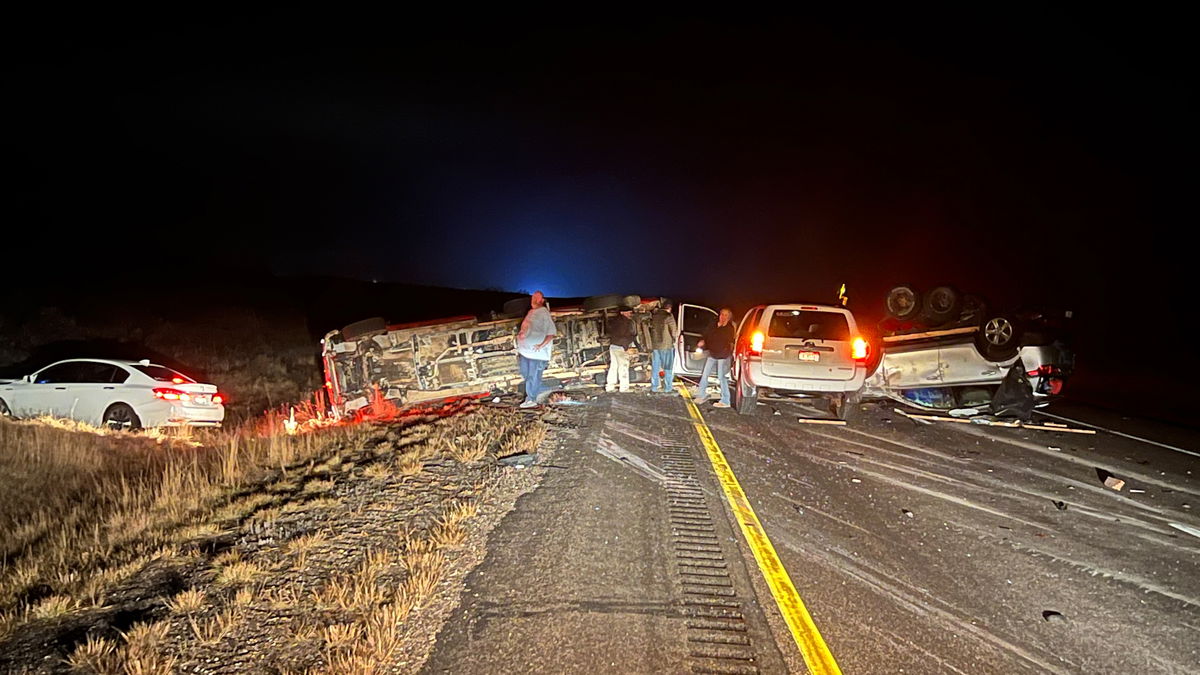
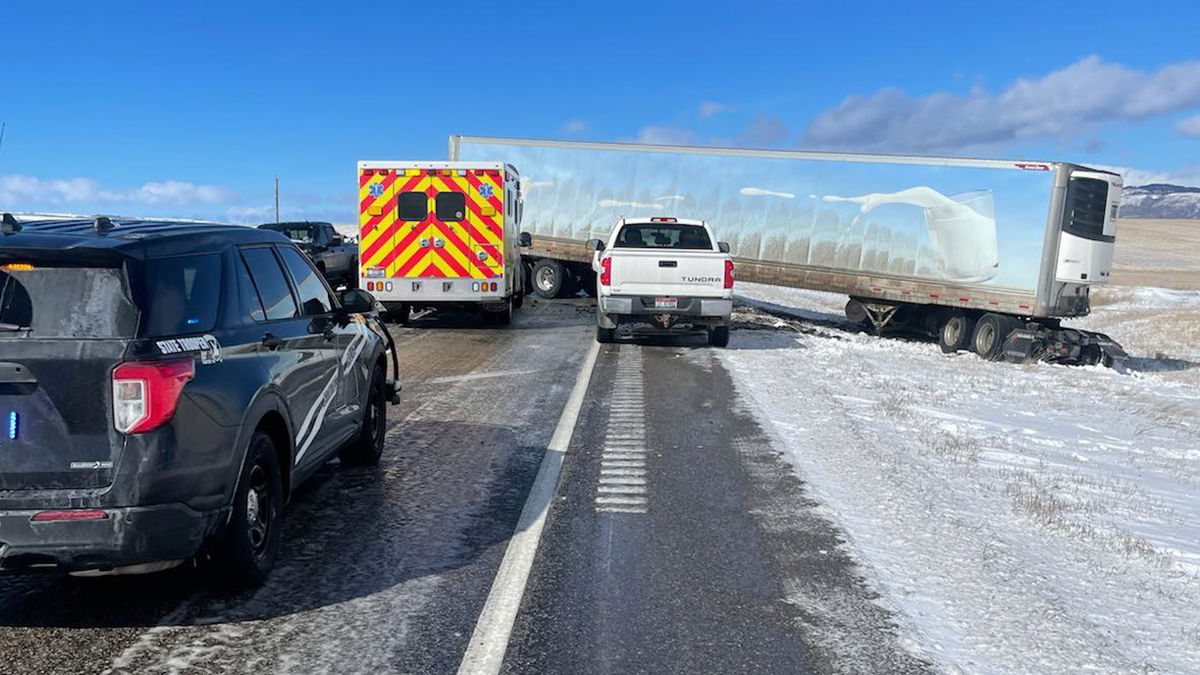
JEROME, Idaho (KIFI) — A 46-year-old woman from Richfield was killed Tuesday night in a two-vehicle crash on US Highway 93 in Jerome County.

The fatal head-on collision happened just after 9:30 p.m. near the intersection of US93 and E 200 N.

According to a report released by the Idaho State Police (ISP), a 2015 Ram 2500 pickup was traveling south on US93. The Ram, driven by a 56-year-old male from Jerome and carrying a 51-year-old male passenger, collided head-on with a northbound 2022 Subaru Crosstrek, driven by the 46-year-old woman from Richfield.

The driver of the Crosstrek was not wearing a seatbelt and was pronounced dead at the scene from her injuries. The driver and passenger of the Ram were both reportedly wearing seatbelts. The passenger was transported by ground ambulance to a nearby hospital for treatment.

The cause of the crash remains under investigation by the Idaho State Police.

Click here to follow the original article.

Poaching problems: The challenge of solving poaching cases in the mountain west

Maile Sipraseuth

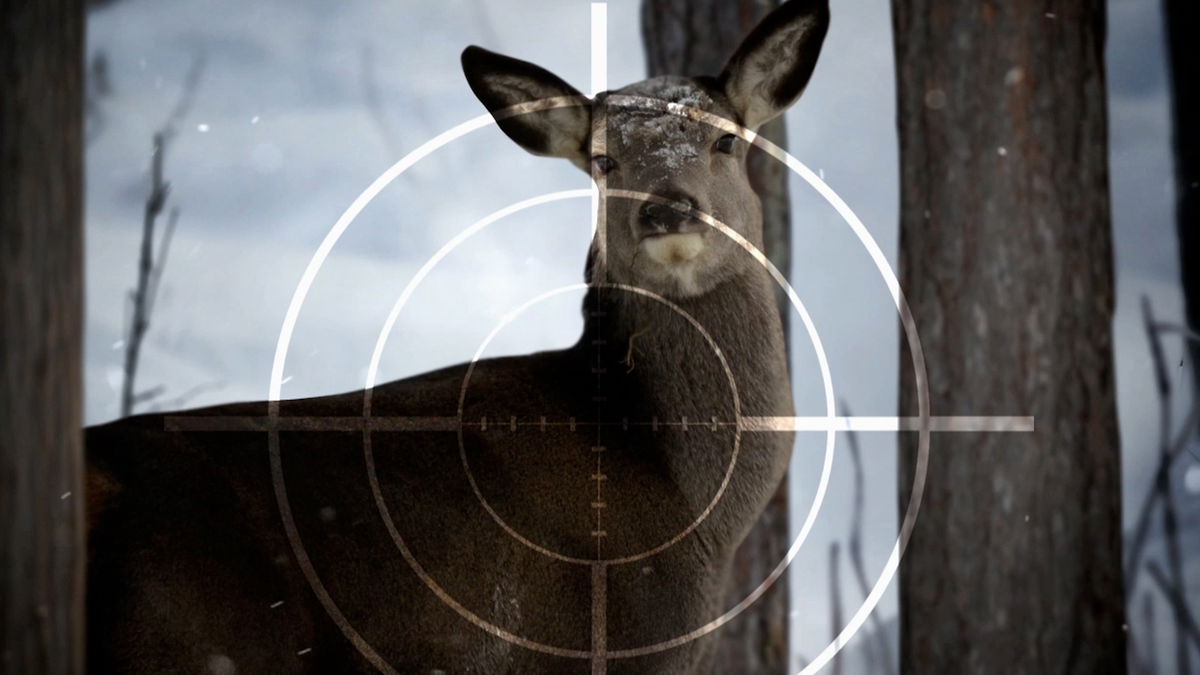
IDAHO FALLS, Idaho (KIFI) – While Autumn means hunting season is in full swing, the issue of poaching affects wildlife worldwide, even in Idaho and Wyoming. A recent report by the Boone and Crockett Club estimates that only four percent of poaching incidents in the U.S. are detected.

Robert Howe, District Conservation Officer in Idaho Falls, says part of the issue is that the majority of poaching, either intentionally or unintentionally, happens in the woods without eyewitnesses.

“The challenging part about solving poaching cases is, an elk doesn’t have neighbors or family members that we can talk to and look for suspects. And so we’re often left with a lot of questions,” said Howe.

Howe confirms that an unfortunate amount of poaching does occur in southeast Idaho.

Amanda Fry, spokesperson for Wyoming Game and Fish, tells us their efforts to combat poaching depend heavily on tips from the public. She urges citizens to take an active role in protecting the region’s natural resources.

“The best thing you can do is report a violation when you see it. If you see something, say something. We depend very heavily on our tips from concerned citizens,” Fry said.

To help put a stop to poaching, Howe and Fry recommend calling the poaching hotline immediately, collecting identifying features such as the poacher’s vehicle, and marking the location.

Anonymous Hotlines for Reporting Wildlife Crime:

Idaho (Citizens Against Poaching – CAP): 1-800-632-5999

Wyoming (Stop Poaching Hotline): 1-877-WGFD-TIP (1-877-943-3847)

Click here to follow the original article.
Flu season is here, Daycares urge parents to vaccinate children

Ariel Jensen

REXBURG (KIFI) — It’s that time of year again. Flu season is ramping up, and with the virus spreading rapidly—often before symptoms even show—local daycares are reminding parents that it’s crucial to take proactive steps to protect your family.

Staff are doubling down on disinfection efforts to keep shared spaces safe for all children. This busy season is a firm reminder to all parents: vaccination is key.

“The vaccine is important, especially for children, because it helps build that immunity to the flu or at least the flu from the previous season so that kids have a little bit better of a chance of fighting off the illness if they are exposed to it and not getting as sick or hopefully not getting sick from the flu,” said Brittnee McMinn RN Nurse & Owner NiNI’s Daycare.

McMinn reminds us that illness prevention starts with good hygiene, especially in public. Everything you touch—from grocery carts to restaurant menus—can be contaminated. Wash your hands frequently to drastically reduce the risk of spreading illness.

Click here to follow the original article.

Bannock County extends Burn Ban through October 15

News Team

POCATELLO, Idaho (KIFI) — Bannock County has extended its burn ban until October 15, 2025, citing persistent hazardous fire conditions. The ban is comprehensive, applying to all areas of the county, including all municipalities and fire districts.

The decision to keep the ban in effect was made following close consultation with local fire officials and is based on two primary factors:

Great Basin Critical Fuel Status: The Great Basin’s critical fuel status remains above average. This indicates that the vegetation and other potential fuels on the ground are arid and highly susceptible to ignition.

Below Average Moisture: The local weather service has confirmed that Bannock County is experiencing below-average moisture for this time of year. This lack of precipitation contributes to the dry conditions and increases the risk of a wildfire starting and spreading rapidly.

“We understand that people are eager to get back to their normal outdoor activities, but the risk is simply too high at this time,” said Pocatello Assistant Chief/Fire Marshal Dean Bullock. “With the dry fuels and the continued lack of substantial moisture, we are uncomfortable making the call to lift the ban with current conditions. The safety of our residents and our community is our top priority.”

The extended ban strictly prohibits all open burning within the Wildland-Urban Interface Areas of Bannock County.

Exemptions to the Burn Ban:

The use of commercial gas fire pits, gas grills, and/or charcoal briquettes are exempted from the ban when used according to the manufacturer’s instructions.

Campfires and recreational fires are also allowed in developed campgrounds and private residences, provided they comply with the following limitations:

Fires must be contained within a pit or ring

Fires should not exceed 3 feet in diameter, 3 feet in flame height

Fires must be 25 feet from structures or ignitable objects and should be screened to eliminate airborne embers.

The Bannock County Commissioners and local fire departments say they are continuously monitoring the weather and fuel conditions and will provide updates as conditions change.

Click here to follow the original article.