Public schools will be forced to cut budgets — even if state funding remains flat

Ryan Suppe

Originally posted on IdahoEdNews.org on February 25, 2026

By: Ryan Suppe

Some public school leaders are preparing to cut their budgets if lawmakers keep state funding flat next school year — even though K-12 is exempt from nearly statewide cuts.

Budget-setting lawmakers this month advanced a $2.77 billion public school funding bill for 2026-27. It’s roughly the same amount the state appropriated this school year. And so far, brick-and-mortar public schools have been shielded from proposed spending cuts that apply to most state-funded agencies and institutions. 

But stagnant funding is effectively a reduction amid increasing costs to operate public schools — costs for utilities, employee insurance, computer software, classroom supplies, fuel and other items affected by inflation.

“The cost of doing business has outpaced state funding,” said Republican state superintendent Debbie Critchfield. “Even a flat budget is a cut.”

Public school advocates have pointed to state savings accounts as an option that could spare K-12 from cuts. But Idaho’s $1.3 billion stockpile of reserve funds remains mostly untouched as Republican Gov. Brad Little and the GOP-dominated Legislature consider other ways to balance the budget amid a revenue shortfall. The governor and legislative leaders argue these savings should be used only in a recession.

This means school leaders will have to cover increasing costs by cutting their own budgets, leaning on local reserves or asking property taxpayers for higher supplemental levies.
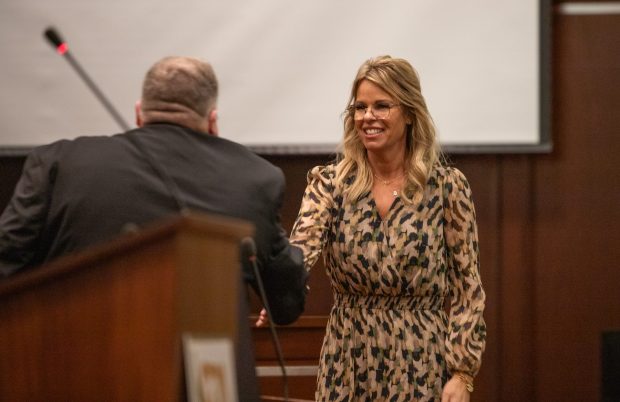
State superintendent Debbie Critchfield shakes hands with Idaho School Boards Association President Jason Sevy at the ISBA Day on the Hill on Feb. 16. (Sean Dolan/EdNews)

School leaders hope to counter ‘held-harmless’ messaging from the Statehouse

The Bonneville School District is planning staff cuts to make up a projected shortfall estimated at $5 million to $6 million. The shortfall is tied to increasing costs for utilities, food and employee health insurance, according to Superintendent Scott Woolstenhulme. 

“We are cutting our budget. I think that’s probably true of almost every district in the state,” Woolstenhulme told a group of public school trustees last week.

Scott Woolstenhulme, Bonneville School District superintendent

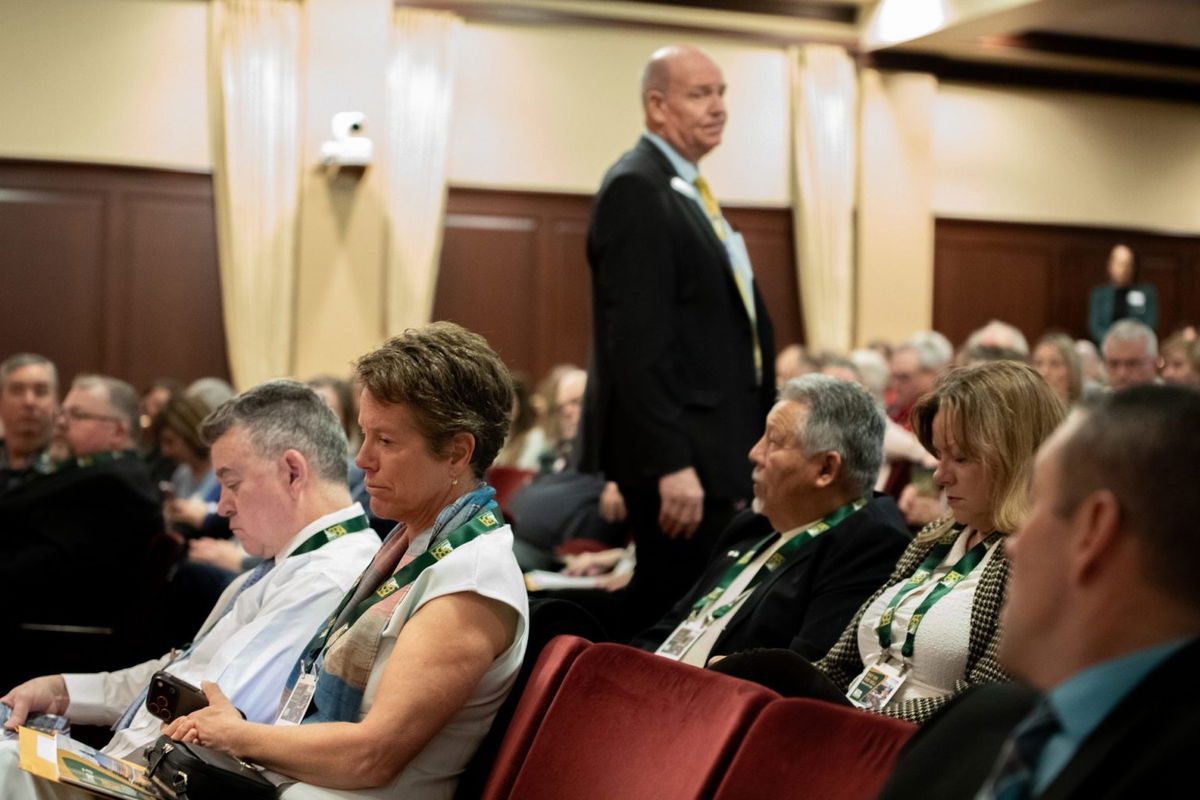
Woolstenhulme was a panelist for a workshop on “overseeing budget reductions” hosted by the Idaho School Boards Association. The advocacy group, composed of trustees from across the state, gathered in Boise for ISBA’s annual “Day on the Hill.” 

Part of the workshop focused on how districts and charter schools could implement cuts in ways that minimize effects on students. The other part focused on how trustees will explain to patrons why cuts are necessary — particularly as state leaders paint a rosier picture of K-12 funding ahead of this year’s election.

Brick-and-mortar public schools are exempt next fiscal year from 5% budget reductions affecting most state agencies, including colleges and universities. The proposed cuts — including 3% from Little and an additional 2% from budget-setting lawmakers — come after state revenue underperformed over the last year, while $453 million in tax cuts and credits took effect. The Legislature passed the GOP-backed tax cuts, and the governor signed them into law. 

During his State of the State address last month, Little touted a 70% increase in state support for public schools since he took office in 2019. And he promised to protect “classroom funding” from the budget cuts. Legislative leaders have also said they’re pushing to hold the K-12 budget harmless. 

“My message to the Legislature has been very simple: Don’t you dare cut public education,” Sen. Kelly Anthon told ISBA members last week. The Rupert Republican is the Senate’s president pro tem.

Critchfield said she’s “thrilled” that state K-12 funding isn’t going backward. Her top priority this legislative session is keeping the public school budget flat, and she’s been successful for the most part. 

Still, public schools won’t be immune from the impact of the state’s tightening budget: 

The $2.77 billion public schools bill, which the Joint Finance-Appropriations Committee (JFAC) approved on Feb. 13, represents an $18 million increase, or 0.7%. But it doesn’t account for cuts that could come later in the legislative session, including a $33 million reduction to virtual public schools and the state’s online learning platform. 

K-12 will get about $24 million less through the state’s attendance-based formula, which distributes funds based on “support units.” The metric essentially represents the cost to operate a classroom, and next year’s calculation assumes a small enrollment decline. Fall enrollment this school year was down 1%.

Public schools that aren’t on the state’s employee insurance plan won’t be fully funded for benefit cost increases. While schools that participate in the state plan will get an additional 14.4%, those on a non-state plan will get 10.8%. The unfunded benefits total $9 million statewide, although the local effects will depend on how much each district’s insurance costs change. Some could be higher or lower than 10.8%. 

Budget cuts to other state agencies likely will trickle down to K-12. Taking 5% from the Division of Career Technical Education, for instance, could defund 164 CTE programs in public high schools, according to the governor’s office. 

And the K-12 budget doesn’t include an increase in discretionary funding, which public schools use for operating costs.

Anne Ritter, a trustee at Meridian Medical Arts Charter High School and former West Ada school board member, said during last week’s workshop that local leaders will have to explain these “whys” to their parents and staff. 

“I don’t think a lot of people think that a ‘held-harmless’ budget is something that’s difficult for all of us to deal with,” she said.
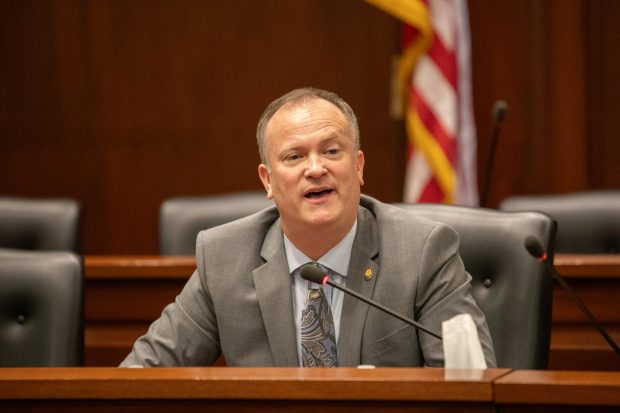
Senate President Pro Tempore Kelly Anthon, R-Rupert, speaks to reporters on Jan. 8, at the Idaho Press Club’s legislative preview. (Sean Dolan/EdNews)

School operations funding remains flat amid inflation

Along with Bonneville, administrators in the Coeur d’Alene, Nampa, Middleton, Kellogg and Grangeville school districts have said in recent weeks that they’re weighing budget cuts and/or increased supplemental levies. 

Some administrators pointed to static state discretionary funding. Public schools won’t see an ongoing increase in discretionary funding for the second consecutive school year under JFAC’s proposed budget. 

Schools typically use state discretionary dollars for operating costs like utilities, maintenance, supplies and other expenses affected by inflation. They also use it to supplement employee pay and benefits when state funding falls short of their staffing needs.

“Flat isn’t really flat,” Stephany Bales, executive director of community relations for the Coeur d’Alene School District, told EdNews by email. “We’d still be looking at budget reductions as inflation and operating costs (i.e., insurance) increase.”

The last time lawmakers made a permanent increase to discretionary funding was an additional $47 million ahead of the 2024-25 school year. Since then, inflation is about 3%, according to the U.S. Bureau of Labor Statistics’ Consumer Price Index. 

The Nampa School District will have to make “significant cuts” if discretionary funding is flat again, said Matthew Sizemore, Nampa’s director of community and media relations. On top of increasing power and gas prices, software costs are up between 5% and 10%, he said by email. 

“And none of the products we buy for supplies have gotten any cheaper,” he added.
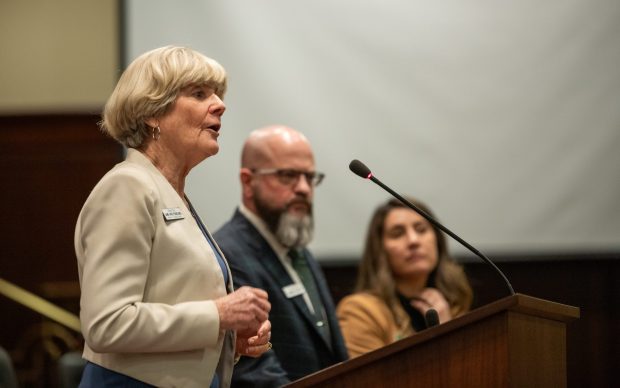
Sen. Janie Ward-Engelking, D-Boise, addresses the audience at the Idaho School Boards Association Day on the Hill on Feb. 16. To her left is Sen. James Ruchti, D-Pocatello, and Quinn Perry, deputy director of the ISBA. (Sean Dolan/EdNews)

But what about the 70% increase to public schools since 2019? 

The 70% increase to public schools since 2019 was largely driven by targeted investments — facilities, teacher pay and literacy — and local leaders have limited flexibility to spend this money.

The $1 billion that districts got for facilities two years ago can be spent only on capital building projects, and $78 million in annual literacy money must support improving reading outcomes.

“They’re not fungible,” Critchfield said. “There’s no flexibility within the categories.”

A school district in the Treasure Valley, for instance, can’t use money earmarked for literacy to pay its bill from Idaho Power, which increased its rates 7.5% this year. 

Previous state increases also fulfilled needs that local taxpayers had covered. Last year, districts requested $234 million in bonds and levies during the May and November elections. That was a 67% decrease since the record-setting March 2017 election when districts asked for $715 million.

And the state has yet to address a glaring hole in local budgets: an estimated $100 million gap between what districts spend on special education and what they get from state and federal governments. Grangeville’s interim superintendent, Amanda Bush, said last week that local funds cover 75% of the newly created district’s special education costs. 

For Critchfield, this problem traces back to a familiar foe: the state’s antiquated school funding formula, which hasn’t had a major upgrade since 1994. “How we do the funding has not kept pace with what the actual day-to-day operations of a school look like,” she said. 

There won’t be any major formula changes this legislative session. But in the short-term, Sen. Janie Ward-Engelking worries that a flat K-12 budget will shift the burden to fund public schools back onto property taxes — the “most onerous tax of all,” she said.  A Boise Democrat and longtime JFAC member, Ward-Engelking has pushed Republican leaders to cover schools’ increasing costs using state reserves. 

“We’re not using this bucket of money, but districts are going to have to run more levies,” Ward-Engelking told EdNews. “It’s a cost shift.”
Click here to follow the original article.

Wanted man arrested after attempting to run from traffic stop

Curtis Jackson

IDAHO FALLS, Idaho (KIFI) – Bonneville County Sheriff’s deputies arrested 29‑year‑old Ryker Thomas Masson on Tuesday after he attempted to run from a traffic stop near Broadway and Skyline Drive.

Deputies pulled over a vehicle around 4:45 p.m., and Masson, who was riding in the passenger seat, immediately got out and took off on foot. Deputies recognized him and were aware he was wanted on two felony probation‑violation warrants tied to previous drug‑related cases.

Deputies chased Masson through an empty lot and into a nearby alley, where they deployed a Taser while repeatedly ordering him to stop. He eventually complied and was taken into custody. During the chase, officers saw Masson throw several items, including a needle believed to be drug paraphernalia, which were later recovered.

Additional Bonneville County deputies and Idaho Falls Police officers responded to assist. During the chase, a deputy from the initial stop slipped and fell onto a concrete curb, breaking his arm. He was taken to the hospital for treatment.

Masson was also taken to the hospital for a medical check before being booked into the Bonneville County Jail on his two outstanding felony warrants and a misdemeanor charge of resisting arrest.

Click here to follow the original article.

Beyond the Books: Upcoming Elections

Phillip Willis

IDAHO FALLS, Idaho (KIFI) — It’s filing week, and the 2026 races are officially underway. With the primary election approaching fast, 105 legislatives seats, seven statewide offices, and the gubernatorial seat are up for grabs. Governor Brad Little filed to run for reelection Tuesday, and will appear May 19th on the Republican Primary ballot.

There are several high-stakes races in Eastern Idaho, among those are the following:

District 32 (Idaho Falls and Ammon) – Republican Representative Stephanie Mickelson already has a primary challenger, Kelly Golden

District 35 (Bonneville and Caribou Counties) – Former Republican Representative Chad Christensen is back, challenging representative Michael Veile

District 30 (Bingham and Butte Counties) – Another former Republican State Representative, Julianne Young, has filed to run against Representative Ben Fuhriman – Fuhriman defeated Young in 2024, winning by only 4 votes

In the State Superintendents race, no challengers have emerged as of yet

Idaho Districts lean heavily Republican, so in some races a win in the May Primary could send the victor straight to the statehouse. Cuts that could go into effect after this session would largely impact higher education, but this election year’s changeups will have an impact on future budget decisions.

The deadline to file is Friday at 5 P.M., and any entries made before then have the potential to shake things up.

For information on the contested primaries, open seats, and who’s drawing money and endorsements early, visit idahoednews.org.

Click here to follow the original article.

Beaver fever killing trees along the Snake River

Par Kermani

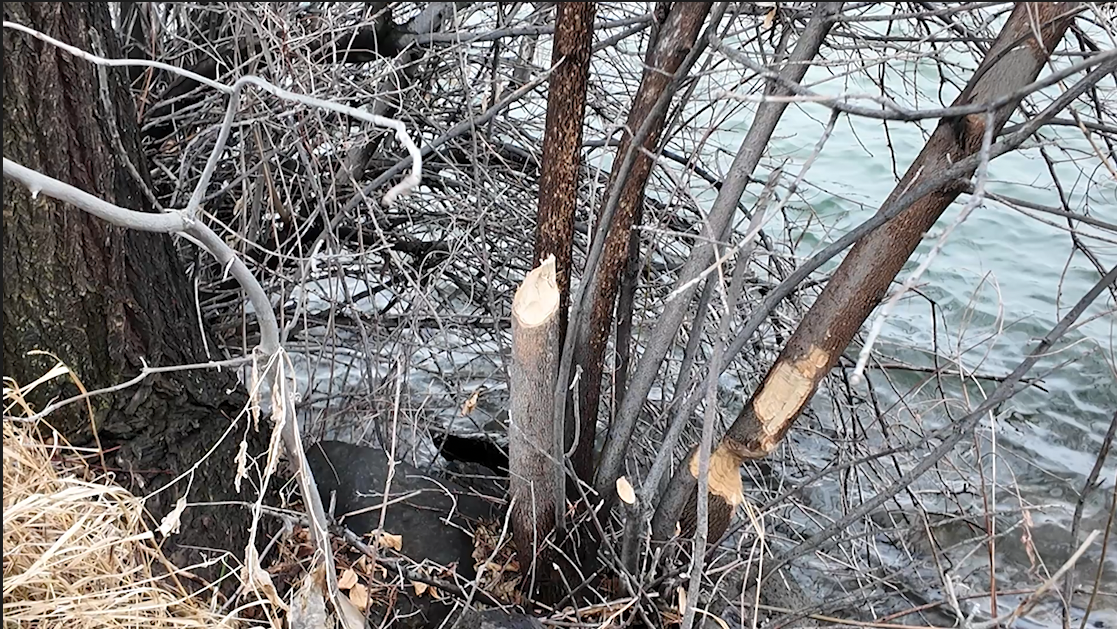
IDAHO FALLS, Idaho (KIFI) — City officials are addressing concerns regarding beaver activity along the Riverwalk, as the animals continue to gnaw on trees lining the Snake River. While the sight of damaged trunks has drawn public attention, the city describes this year’s activity as typical.

“This is not a new issue for the city,” said Kimberly Felker, a PIO for the City of Idaho Falls. “Some years it’s worse, some years we don’t have as much beaver activity… this year’s pretty average for what we see.”

The Idaho Falls Parks and Recreation Department’s horticulturist team is actively monitoring the area. To mitigate the damage, crews have begun wrapping tree trunks with fencing or chicken wire. However, protection is difficult because the beavers primarily target trees that are partially submerged in the water, making it hard for teams to reach the lower portions of the trunks.

Despite the loss of some trees, Felker says there is a silver lining. The trees being targeted are native to the riverbanks and are capable of regrowing on their own without the need for the city to replant them.

Additionally, the beavers have not yet targeted the more ornamental trees that the city has planted throughout the Riverwalk area.

“We’ll still watch over those trees to make sure that no issues arise,” Felker said, adding that the Parks Department takes pride in maintaining the space for residents.

To further manage the issue, the city plans to hire a trapper within the next few weeks to relocate the beavers to a different area.

Click here to follow the original article.

Rexburg native loses contact with family caught in “El Mencho” fallout in Mexico

Ariel Jensen

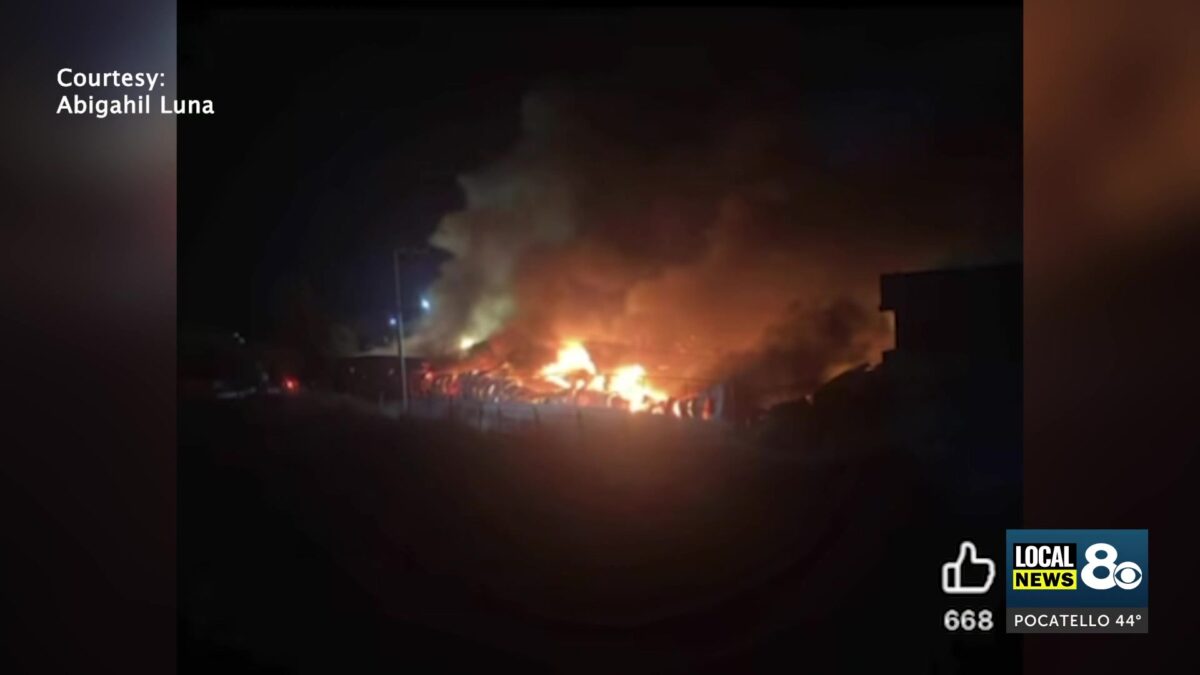
REXBURG, Idaho (KIFI)– Violence has erupted across several areas in Mexico, and there are still a lot of unknowns about what’s going on. A local Rexburg woman tells Local News 8 she has family stuck there. Abigahil Luna of Rexburg learned that her father and grandmother are caught in the center of the chaos sparked from the recent killing of the top drug lord, “El Mencho.

Luna shares with local news 8 videos sent to her from her dad of buildings in flames and the mass discussion he witnessed. In one of the videos, you can see the stock room of a grocery store in perfect condition, and in another video, taken shortly after, shows the store in ashes. This was a store her family was staying near by.

“It went from 1 P.M to having a great grocery store to 1 A.M., and it’s burned up,” said Luna. “I don’t know if my family is okay. My grandma’s over there. She’s actually, like, two minutes from that grocery store. And so, you know, it’s a little scary.”

Normal communication and ways to send financial support have been cut off. 

“My Dad asked me for money yesterday, and I haven’t actuallyn’t heard a response from him at all since, like, 3 P.M. yesterday,” said Luna.

This is the last photo Luna got from her Father. Not knowing what is happening to her family, Luna can only hope for the best, knowing what’s at stake.

“If my grandma were to go out there right now, she probably would get shot up. That’s how scary it is right now for them,” said Luna.

While she has family in Mexico, Luna was born in Idaho. She wants her community to know why this is such a special place for her and her family. 

“This is why people come to the United States. They fear what we’re going through right now. That happens all the time,” said Luna.

Click here to follow the original article.

WATCH LIVE: President Trump to deliver State of the Union Address

ABC News

President Donald Trump will deliver his 2026 State of the Union Address to a joint session of Congress and to millions of Americans from home. The address is expected to begin at 7 p.m. MT.

The theme of tonight’s address will be “America at 250: Strong, Prosperous and Respected,” according to White House officials familiar with a draft of the speech.

“A large portion of the speech will, yes, focus on the economy. The president will lay out the case for why he and Republicans are better suited to tackle, continue tackling the affordability crisis that was created by the Biden administration and Democrats on Capitol Hill,” Karoline Leavitt, White House Press Secretary said.

“It’s going to be a long speech,” President Trump said. “We have so much to talk about.”

The official Democratic Party response will come from Virginia Gov. Abigail Spanberger, whose speech from Colonial Williamsburg is likely to address protecting American Democracy as the country approaches its 250th birthday.

Spanberger, who swept into the governor’s mansion last year after a 15-point win, offered what many Democrats hope is a preview of a winning election season. She said she would address “rising costs, chaos in their communities, and a real fear of what each day might bring.”

Click here to follow the original article.

Pocatello business under repair after SUV crashes into storefront

Hadley Bodell

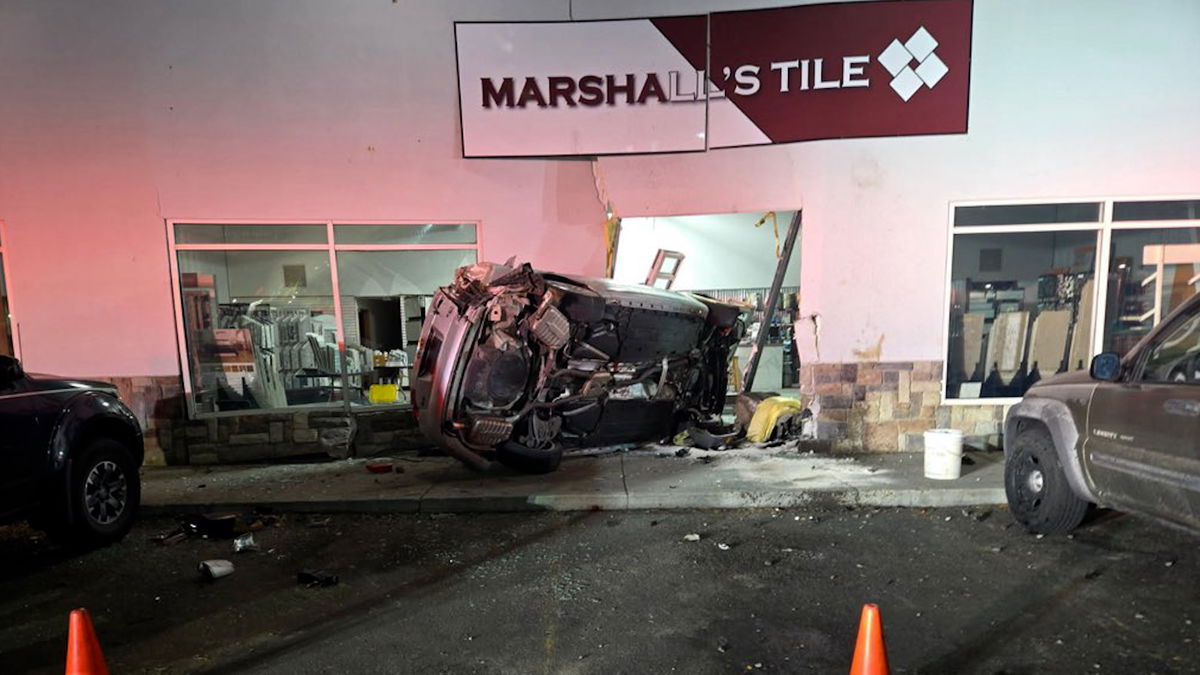
POCATELLO, Idaho (KIFI) — Restoration crews are working rapidly to repair Marshall’s Tile in Pocatello after a speeding SUV crashed through the building’s storefront early Tuesday morning.

The incident took place around 12:30 AM, after a silver Audi SUV ran a stop sign, going 80mph, flew over the curb, and crashed into the front of the building on 215 East Cedar Street. Following the crash, the driver fled the scene on foot. The driver has yet to be identified, but the incident remains under investigation by the Pocatello Police.

Courtesy Marshall’s Tile

Restoration teams arrived on-site within an hour to assess the damage. In the wake of the crash, the storefront had caved in approximately five feet. Workers have already hammered the frame back into position and secured the entrance with temporary plywood, with major permanent repairs scheduled for completion by Wednesday.

Marshall’s tire is currently operating under normal hours and using a side entrance to the building.

Click here to follow the original article.

Idaho lawmakers face backlash following “brownface” display at Idaho House Committee hearing

Maile Sipraseuth

**EDITOR’S NOTE** The following article contains descriptions of an incident involving “brownface” and the use of racial stereotypes during a public legislative hearing.

Reader discretion is advised, as the subject matter involves themes of racial mockery and systemic controversy that may be distressing to some audiences.**

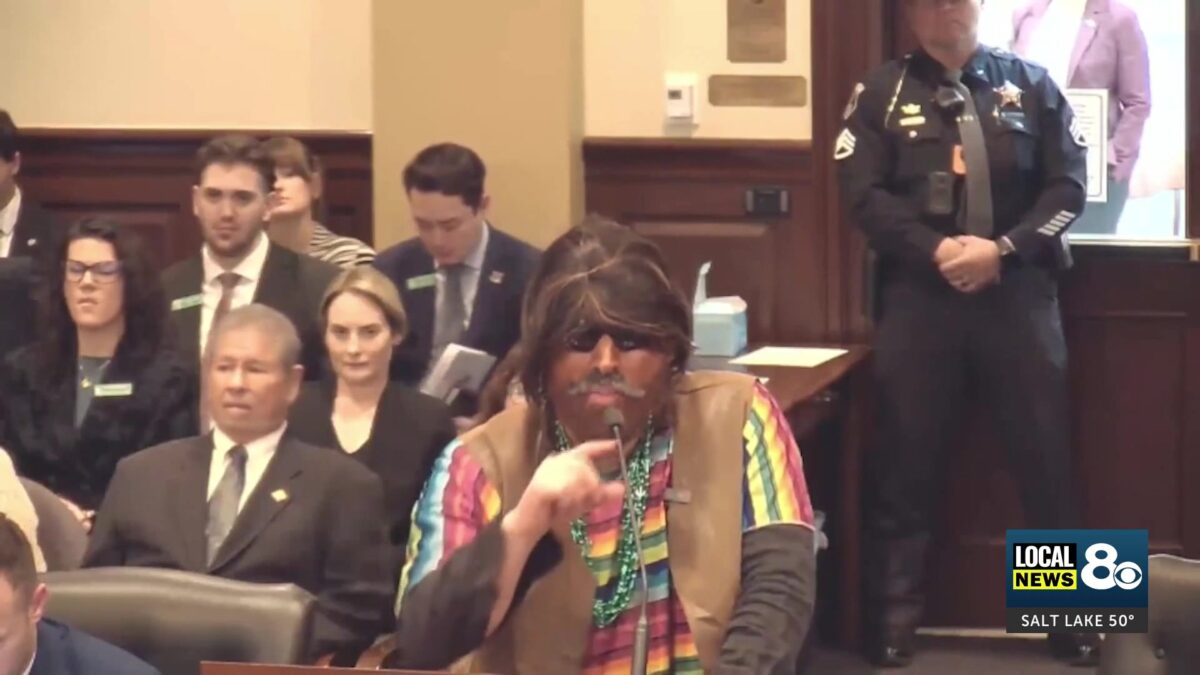
BOISE, Idaho (KIFI) — Idaho lawmakers are facing criticism after allowing a man to testify before the House Business Committee while appearing in what critics described as “brownface.”

Eagle resident David Pettinger addressed lawmakers regarding House Bill 704, which would implement the federal E-Verify system, requiring employers to verify the legal status of workers. But instead of delivering conventional testimony, Pettinger appeared wearing a wig and brownface, pretending he could not speak English. He was accompanied by another person he referred to as a “translator.”

Pettinger, who has staged protests across the state in the past and has previously been arrested in connection with demonstrations, is no stranger to controversy.

The American Civil Liberties Union (ACLU) condemned the act, describing it as inappropriate and an “obscene mockery” of Latino communities in the state.

Now, lawmakers who were present during the exchange are facing backlash for how they responded to the incident.

“I was horrified. A lot of my colleagues were actually there, and when they had told me their experience, I was just outraged. The fact that they had to sit through that, there are a lot of people, who were not white, who were there [and] who were watching, and that they had to sit there and be subjected to that and to have the same committee, that has gaveled us for doing the most innocuous things, uphold that. That was absolutely infuriating,” Rebecca De León, Communications Director of ACLU, said.

A press release sent out by the ACLU condemned the reactions of the panel, claiming members should have shut down the demonstration and claiming the lack of action as “unacceptable”. Statehouse rules state that “demonstrations, applause, clapping, and signage are prohibited during a committee meeting.”

District 35 Representative Josh Wheeler, the Vice Chair of the House Business Committee, was on the panel when Pettinger stepped up to make his testimony.

“Mr. Pettinger demonstrated himself to be a career agitator, and we did the best we could within the committee to maintain decorum and allow everyone who had come there to testify to have an opportunity to have their words heard,” Rep. Wheeler said.

Click here to follow the original article.

Recognize them? IFPD releases video of suspects in local burglary

News Team

IDAHO FALLS, Idaho (KIFI) — The Idaho Falls Police Department is asking for the public’s help in identifying two suspects linked to a residential burglary earlier this month.

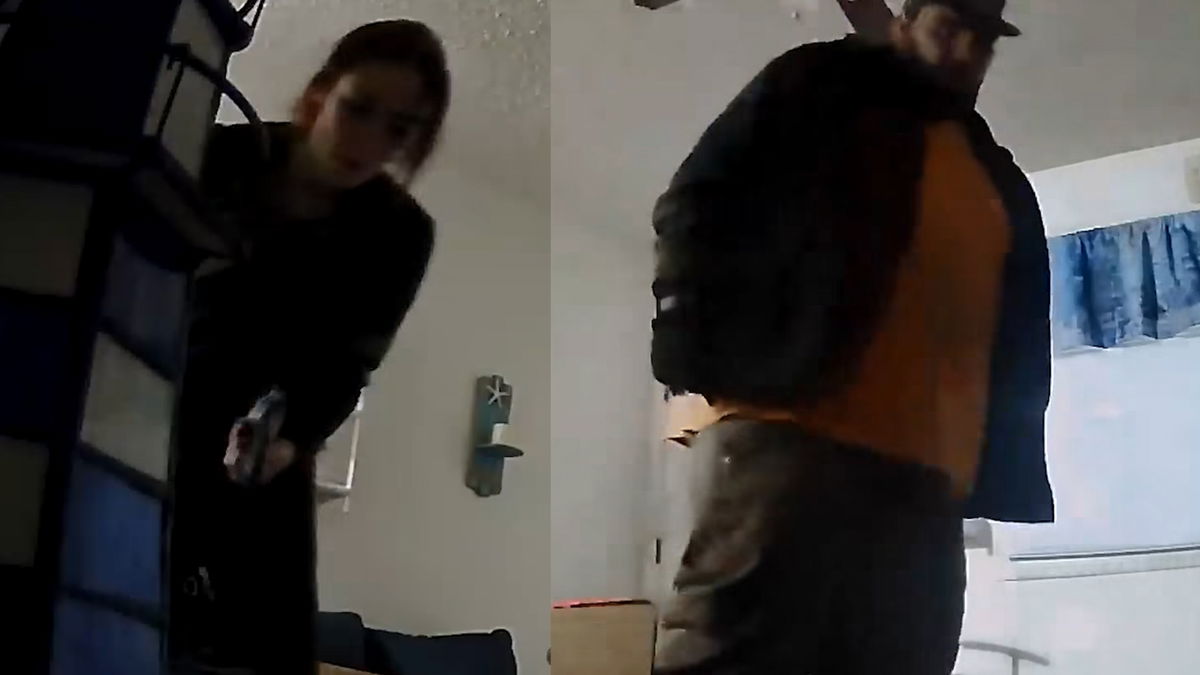
Police recently released home security footage from a local apartment on Facebook that captured both suspects during the incident. To view the videos, click HERE.

Screenshots, courtesy IFPD via Facebook.

The first suspect appears to be a woman with a thin build and brown hair in a ponytail, last seen wearing dark clothing. The second suspect is a large-framed man with a short beard who was wearing a yellow shirt, a black jacket, khaki or brown pants, and a baseball cap.

Police urge anyone with information regarding this case or the identity of these individuals to contact dispatch immediately at (208) 529-1200, referencing case number 2026-954.

For those who wish to remain anonymous, tips can also be reported to East Idaho Crime Stoppers.

Click here to follow the original article.

Judge declines to dismiss prosecutors from the case against alleged Charlie Kirk shooter Tyler Robinson

CNN

Originally Published: 24 FEB 26 12:59 ET

Updated: 24 FEB 26 14:05 ET

By Elizabeth Wolfe, Andi Babineau, CNN

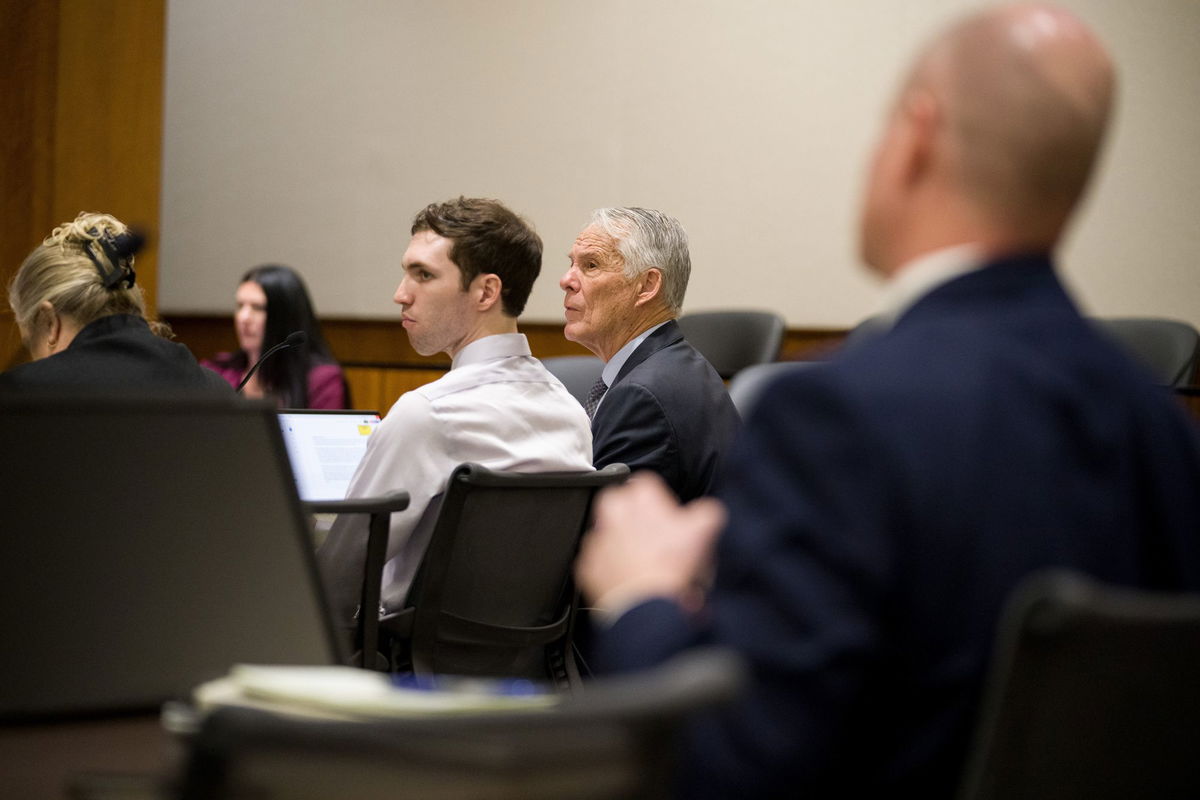
(CNN) — A Utah County prosecutor’s office will be allowed to continue building its death penalty case against Charlie Kirk’s alleged killer, Tyler Robinson, despite the defense’s claims that it mishandled a potential conflict of interest.

Robinson’s defense attorneys had asked for the entire Utah County Attorney’s Office to be recused from the case, arguing that the presence of a lead prosecutor’s child at the event where Kirk was assassinated had tainted the office’s decisions. But a judge on Tuesday ruled the child’s attendance “did not materially influence” prosecutors’ actions.

During a split two-day hearing earlier this year, deputy attorney Chad Grunander testified his child attended the Turning Point USA event where Kirk was shot last year. The 18-year-old, who is a student at Utah Valley University where the event was held, did not see the fatal moment or witness anybody in the crowd who may have been a suspect, prosecutors argued.

In the hours and days following the shooting, Grunander informed many of his colleagues that his child was present, he said. Even so, Utah County Attorney Jeffrey Gray appointed Grunander as one of the attorneys tasked with prosecuting Robinson.

Gray told the court he believes the child’s presence was “completely irrelevant” to decisions made in the case, including the choice to pursue the death penalty against Robinson.

Utah District Court Judge Tony Graf appeared to agree in his ruling Tuesday.

“The court is unpersuaded that Mr. Grunander’s relationship with (his child) creates an appearance of bias in this case,” Graf told the court.

Graf determined the child had “no unique, relevant information” about Kirk’s killing that would lead them to be called as a potential witness at trial.

Prosecutors have said they have no plans to call the child as a witness. Graf told Robinson’s defense team that they may subpoena the child if they believe the teenager’s testimony is relevant to the case.

The Utah County Attorney’s Office disclosed the possible conflict to Robinson’s team on October 20, a little over a month after Kirk was killed, Gray testified.

But Robinson’s defense attorney, Richard Novak, insisted Gray has taken an “inappropriately casual approach” to the issue. He argued Grunander should have been sequestered from the case, and defense attorneys should have been immediately notified of the potential conflict.

“The decision as to what charges to file, the decision as to whether or not to seek the death penalty, should never, ever have been made in consultation with Mr. Grunander,” Novak said in closing arguments.

But the judge concluded there is no evidence that Gray’s choice to pursue the death penalty was influenced by Grunander’s concern for his child’s safety.

Novak fought for the full recusal of the attorney’s office instead of the dismissal of Grunander or a handful of attorneys. The issue in front of the court, he argued, was not whether the child’s presence was a conflict of interest. Instead, he asked the judge to consider the office’s handling of the issue.

Asked during the early February hearing whether his child’s presence that day impacted his decision making in the case, Grunander said, “No, not at all.”

He said it was clear his child was not in the “zone of danger,” referring to a legal doctrine that in part determines whether people are placed in immediate risk of physical harm.

The deputy prosecutor said his office disclosed his child’s presence out of “an abundance of caution,” not because they believed it was an issue.

“Don’t mistake our disclosure, my disclosure, our abundance of caution, our professionalism, integrity, to be a concession that we believe there’s merit to this alleged conflict,” he told the court.

One of Robinson’s attorneys, Kathy Nester, was notably absent from the virtual hearing Tuesday. Nester also represents Kouri Richins, whose murder trial began this week in Park City. Richins is accused of poisoning her husband with fentanyl in 2022, then writing a children’s book to help her sons grieve.

Robinson has not yet entered pleas for the slew of charges he’s facing, including aggravated murder, felony use of a firearm, obstruction of justice and witness tampering, along with several victim targeting enhancements and an aggravating factor of having committed a violent offense in the presence of a child.

He won’t be arraigned until after his preliminary hearing, which has been scheduled to begin May 18 and is expected to last three days.

The-CNN-Wire™ & © 2026 Cable News Network, Inc., a Warner Bros. Discovery Company. All rights reserved.

Click here to follow the original article.