Local nonprofits receive over $900,000 from Pocatello Light the World Giving Machines

Kaelyn Blessinger

POCATELLO, Idaho (KIFI) — After a tremendous winter season of giving, the Light the World Giving Machine presented checks to local nonprofits in Pocatello Tuesday morning.

Sponsored by The Church of Jesus Christ of Latter-day Saints, the machines work as “vending machines in reverse”, allowing people to donate various items in a simple purchase, such as meals, clothing, hygiene supplies, school materials, and livestock.

Over 48 days (from November 15th to January 1st), more than 95,000 people visited the machines. 78,000 donations were made across Pocatello, Rexburg, and Idaho Falls. 

The total donations raised in Pocatello was $960,534.

Care USA – $177,032

Right to Play – $189,345

Bannock Youth Foundation – $151,970

Bright Tomorrows – $125,050

Aid For Friends – $120,680

United Way of Southeastern Idaho – $119,488

South Eastern Idaho Community Action Agency (SEICAA) – $76,969

All of the money raised for these nonprofits is a wonderful showcase of the care within the community. This money could be life changing for so many people. The nonprofits are very grateful for all donations.

The Light the World will present Idaho Falls’ numbers on Thursday, April 2nd.

Click here to follow the original article.

SCOTUS set to to tackle Birthright Citizenship Wednesday; Idaho AG backs Trump’s executive order

Seth Ratliff

BOISE, Idaho (KIFI) — The U.S. Supreme Court is scheduled to hear oral arguments tomorrow, April 1, in the landmark case Trump v. Barbara, a legal battle challenging President Trump’s executive order on birthright citizenship.

In anticipation of the hearing, Idaho Attorney General Raúl Labrador announced that Idaho has joined 23 other states in an amicus brief supporting the executive order. Labrador is urging the high court to overturn current interpretations and restore what he calls the “original understanding” of the Fourteenth Amendment’s Citizenship Clause.

Interpreting “Subject to the Jurisdiction thereof.”

Idaho Attorney General Raúl Labrador, Courtesy Photo.

In an op-ed published on his official website, Labrador argued that the current interpretation of the clause—which grants automatic citizenship to nearly anyone born on U.S. soil regardless of their parents’ legal status—is legally flawed.

Labrador argues that the “original understanding” requires more than just physical presence to lead to citizenship, asserting that parents must be lawful residents or domiciled in the United States for their children to be born citizens.

The legal battle centers on the exact phrasing of the Fourteenth Amendment. The clause reads: “All persons born or naturalized in the United States, and subject to the jurisdiction thereof, are citizens of the United States and of the State wherein they reside.”

Labrador emphasized that the phrase “subject to the jurisdiction thereof” creates a specific legal condition that current interpretation ignores.

“That second phrase matters. It was added deliberately, and it means something. When the Fourteenth Amendment was ratified in 1868, its primary purpose was clear: to constitutionally protect the citizenship rights of freed slaves after the Civil War,” wrote Labrador. “Senator Lyman Trumbull, who drafted the related Civil Rights Act of 1866, explicitly stated that the citizenship provision excluded ‘persons temporarily resident in [the United States] whom we would have no right to make citizens.'”

Labrador ended his op-ed calling on the Supreme Court to “provide clarity on this fundamental issue.” To read his complete op-ed, click HERE.

ACLU argues SCOTUS already settled the Issue

The Supreme Court case is the result of a class action lawsuit by the American Civil Liberties Union to block Trump’s executive order. The ACLU and its partners are representing “Barbara”—a pseudonym for a Honduran citizen suing on behalf of her family and others in similar circumstances—to block the executive order.

The ACLU argued in its filings that withholding citizenship from future children born in the United States would create a distinct, unauthorized nationwide class of individuals.

In a legal brief filed in October 2025, the ACLU maintained that the Supreme Court already settled the issue of birthright citizenship over a century ago in the case United States v. Wong Kim Ark.

That 1898 case revolved around a San Francisco man born to Chinese citizens. After a trip to visit his parents in China, Wong Kim Ark was denied re-entry into the United States on the grounds that he was not a citizen. The Supreme Court ultimately ruled 6-to-2 that the Citizenship Clause of the Fourteenth Amendment automatically made him a U.S. citizen, establishing the current interpretation of the clause, argues the ACLU.

Attorneys for the Trump administration, however, argue that Wong Kim Ark has been misinterpreted for decades. They argue that the 1898 ruling applied specifically to children of parents who were granted authorization to reside in the U.S. at the time of birth—a distinction they claim does not extend to those in the country illegally.

The highest court is set to hear oral arguments starting at 10 a.m ET (8:00 am MST).

Click here to follow the original article.

University of Utah scientists have made a discovery that could help battle Great Salt Lake dust

Fox13

Originally Published: 31 MAR 26 16:51 ET

By Ben Winslow

Click here for updates on this story

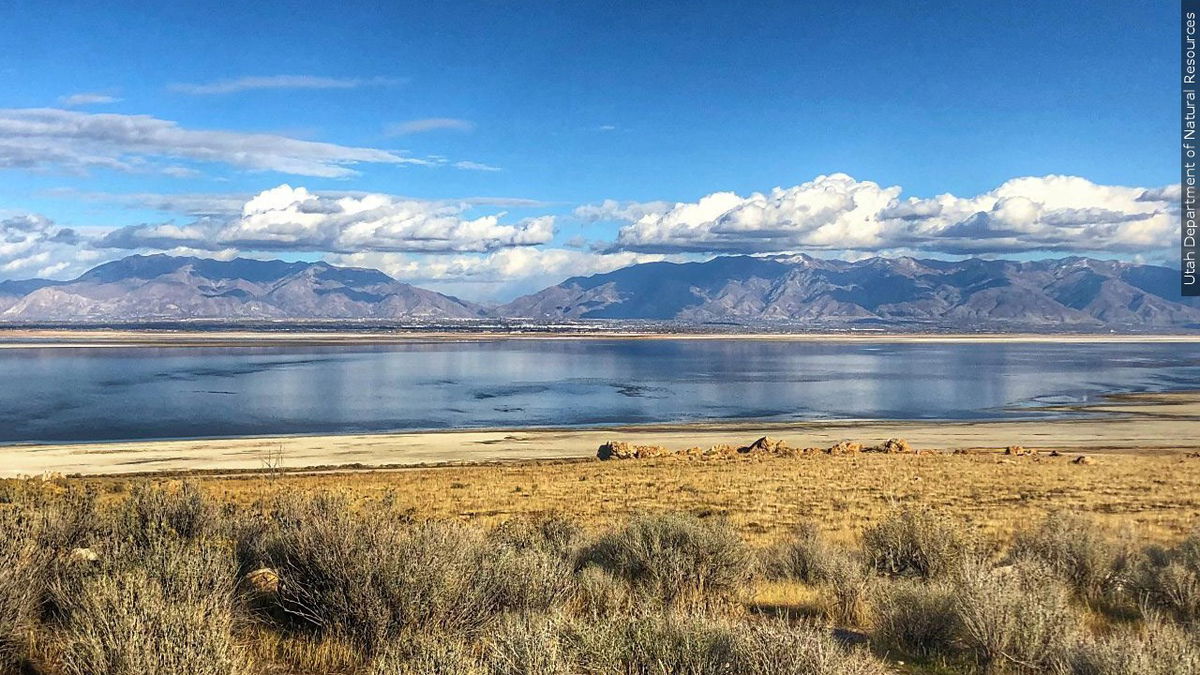
    FARMINGTON BAY, Utah (KSTU) — A recent scientific find by University of Utah researchers could help combat the problem of toxic dust blowing off the exposed Great Salt Lake bed.

They have found a freshwater reservoir underneath the lake’s salty playa, in an area between Antelope Island and Farmington Bay. It started when scientists observed “islands” of the invasive plant phragmites in the exposed lake bed.

“They require a lot of fresh water and the question was that Great Salt Lake has salty water, so how [does] this phragmites grow on the salt water because they require a lot of fresh water?” University of Utah geology and geophysics professor Michael Zhdanov told FOX 13 News.

Using helicopters and specialized equipment to send electromagnetic pulses into the ground, they were able to confirm the existence of a freshwater reservoir. The research, recently published in Scientific Reports, offers promise for a threat to surrounding communities. As the Great Salt Lake declines due to water diversions, drought and impacts from a changing climate, strong winds pick up dust and blow it into nearby communities.

The lake bed has naturally-occurring toxins, like arsenic, that are typically covered by water. The University of Utah is conducting other research on the impacts of the dust on the environment and human health. But Professor Zhdanov said this could help provide a new water source to help reduce the impact of the dust.

“This, we believe, is one of the most important and firsthand applications of this, but this requires more work because we need to cover the entire Great Salt Lake. We need to find exactly how much, where it’s located, and then make some educated decision where to drill and how to use it,” he said.

It remains unknown the extent of the reservoir. But more broadly, the techniques used to find the freshwater reservoir could be used in other parts of the world to help discover new sources of water.

The Utah Department of Natural Resources funded some of the research as part of its efforts to reverse the Great Salt Lake’s declines. The U. will seek additional funding to expand the research to other parts of the lake.

For Dave Foerber, a Kaysville-area birder who came out on Monday to look at the migratory birds on the Great Salt Lake, it was interesting research. But he believed there was a broader work that must be done.

“It’d be better if we could get some more water in the lake,” he told FOX 13 News. “That’d be the best thing.”

This article is published through the Great Salt Lake Collaborative, a solutions journalism initiative that partners news, education and media organizations to help inform people about the plight of the Great Salt Lake—and what can be done to make a difference before it is too late. Read all of our stories at greatsaltlakenews.org.

Please note: This story was provided to CNN Wire by an affiliate and does not contain original CNN reporting. This content carries a strict local market embargo. If you share the same market as the contributor of this article, you may not use it on any platform.

The-CNN-Wire™ & © 2026 Cable News Network, Inc., a Warner Bros. Discovery Company. All rights reserved.

Click here to follow the original article.

Utah man sentenced to 7 months jail in death of his daughter

CNN Newsource

Originally Published: 31 MAR 26 14:34 ET

By Tim Vandenack

Click here for updates on this story

    OGDEN, Utah (KSL) — An Ogden man charged in the death of his 4-month old daughter has been sentenced to about seven months jail.

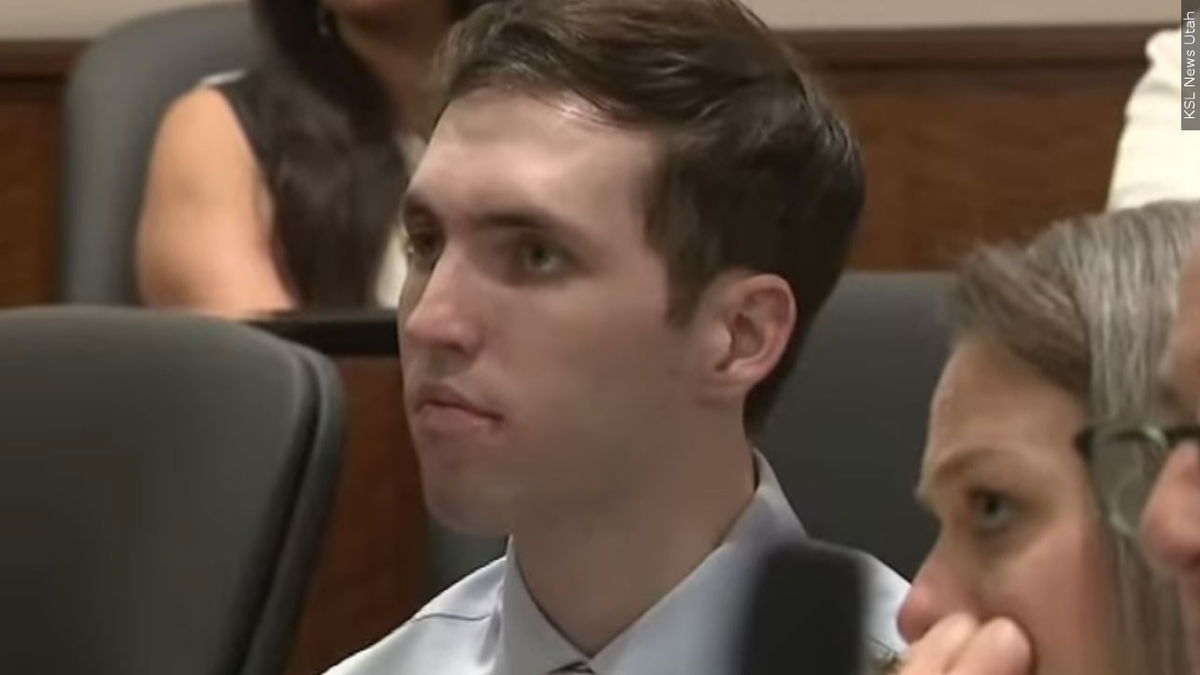
Nicholas James Horsley, 28, pleaded guilty on Feb. 4 to reduced charges of aggravated child abuse, a second-degree felony, and endangerment of a child, a third-degree felony, in connection with the Dec. 27, 2024, incident that led to the death of his daughter. Judge Craig Hall sentenced him on March 18 to 210 days of jail, with credit for 148 days already served, and placed him on probation for four years.

Horsley also received suspended prison sentences of one to 15 years on the aggravated child abuse charge and zero to five years on the child endangerment charge. Sentencing documents say Horsley is to serve his remaining jail time “on electronic monitoring” but don’t specify where he’s to serve it.

Horsley was originally charged with child abuse homicide, a first-degree felony, but pleaded guilty to reduced charges as part of a plea deal. The plea deal doesn’t specify exactly what happened to Horsley’s daughter, but says medical scans show the girl “had sustained a catastrophic brain bleed, which was caused by nonaccidental abusive head trauma.” The girl’s mom had reported that the girl was “responsive and normal” before Horsley took her to another room.

The child endangerment charge stemmed from the presence of marijuana in Horsley’s home when authorities were called to the scene. “While investigators were on scene, the couple’s 18-month-old toddler was observed reaching for a pile of marijuana on the coffee table and had to be encouraged to leave the marijuana alone,” court documents state.

Horsley was ordered to get therapy “with a particular focus on boundary setting, victim empathy and parenting skills.” The two sides reached accord that the “sentencing matrix” in the case calls for 105 days of incarceration, according to the plea deal.

“Nick presents with an intellectual disability alongside symptoms of anxiety and depression. These conditions, supported by diagnostic history, appear to have influenced his functioning and may help explain aspects of the behavior underlying the current allegations,” reads a mitigation report in the case prepared by his lawyer. It said he has used marijuana “to regulate emotions” but no longer uses the drug “and understands the importance of sobriety moving forward.”

Horsley’s partner and the mother of the girl who died defended the man in a statement to the court as part of sentencing.

“I am not saying that the way things played out should have happened or that we should have let things get as bad as they did, but I am saying that we tried. Nick loves all the kids with all his heart and would do anything for them even today and I know he is not the monster people are trying to make him believe he is,” she wrote.

Weber County Attorney Christopher Allred said some “evidentiary issues” with medical examiners factored in reducing the charge Horsley faced from child abuse homicide to aggravated child abuse. According to a spokeswoman from Utah State Courts, “the child was also seriously ill at the time of death, which the attorneys acknowledge could have contributed to the death.”

The sentence, Allred said, was consistent with recommendations from state probation and parole officials. Hall asked prosecutors if they would seek additional jail time, “and the prosecution responded that they were not,” said the court spokeswoman.

Please note: This story was provided to CNN Wire by an affiliate and does not contain original CNN reporting. This content carries a strict local market embargo. If you share the same market as the contributor of this article, you may not use it on any platform.

The-CNN-Wire™ & © 2026 Cable News Network, Inc., a Warner Bros. Discovery Company. All rights reserved.

Click here to follow the original article.

Human remains found in Utah mountains bring up mixed emotions for families of missing people

CNN Newsource

Originally Published: 31 MAR 26 14:28 ET

By Shelby Lofton

Click here for updates on this story

    SPRINGVILLE, Utah (KSL) — The discovery of human remains in the mountains above Springville over the weekend is stirring a mix of hope and anxiety for families of missing people across Utah.

The Utah County Sheriff’s Office confirmed that human bones were found in a remote, rugged area above Springville after a horseback rider came across them Saturday. Investigators believe the remains had been there for some time.

Sheriff’s officials said they would return to the scene on Monday to complete evidence collection. The remains will be sent to the Utah Office of the Medical Examiner. Officials said they do not have updates on the investigation at this time.

The location where the remains were found has no cell service and is difficult to access, investigators said. Authorities have not released additional details about the exact location.

Utah maintains a cold case database through the Department of Public Safety that includes hundreds of unsolved homicides, missing persons cases and unidentified human remains. Local law enforcement agencies are responsible for adding and updating information in the database as investigations continue.

The database includes images and descriptions of unidentified remains, such as sketches, photographs of clothing and footwear, estimated age ranges, and the dates on which the remains were found. A public tip hotline is also available for anyone with information related to cases.

As of Monday, there were no recently logged unidentified remains from Utah County in the state database.

Brock Best, executive director of Utah Homicide Survivors, an organization that provides legal and therapy resources for families of homicide victims, said discoveries like this often bring complicated emotions.

“For some families, getting that call can help them take the next steps and provide some closure,” Best said. “For others, it can be deeply retraumatizing.”

Best said families coping with missing loved ones often live in a state of uncertainty, making moments like this particularly difficult.

“They have to go through all of those emotions again, not only, ‘Gosh, we were so sad when our loved ones were missing,'” he said. “Now to find out that they have been out in the elements alone and have been taken from us in an unnatural way, it’s got to be incredibly difficult.”

Utah Homicide Survivors has not received any calls connected to the remains found in Utah County, Best said, but the organization is closely monitoring developments.

Authorities said updates will be released if new information becomes available. While the remains have not been identified, the discovery has reignited conversations about missing person and cold cases across the state.

Please note: This story was provided to CNN Wire by an affiliate and does not contain original CNN reporting. This content carries a strict local market embargo. If you share the same market as the contributor of this article, you may not use it on any platform.

The-CNN-Wire™ & © 2026 Cable News Network, Inc., a Warner Bros. Discovery Company. All rights reserved.

Click here to follow the original article.

Idaho Legislature passes bill requiring schools/doctors to report ‘social transitions’ to parents

Seth Ratliff

UPDATED: MARCH 31 4:30 PM

BOISE, Idaho (KIFI) — A bill aimed at ending what supporters call “secretive transitions” in Idaho schools and healthcare settings is heading to the Governor’s desk. House Bill 822, also known as the Pediatric Secretive Transitions Parental Rights Act, passed the Idaho Senate on Monday in a 27–8 vote.

Opponents have criticized the bill, saying it forces trusted adults to either ‘out’ minors to their parents within 72 hours or face devastating civil penalties.

Trans Idahoans argue the bill puts youth at risk

Also known as the Pediatric Secretive Transitions Parental Rights Act, the bill would mandate that teachers or healthcare providers report any request by a child to change their name, pronouns, or dress to a gender different from their biological sex to parents. Under the proposed law, schools or doctors who fail to comply could face lawsuits and civil penalties of up to $100,000.

While supporters say the measure strengthens parental rights, critics argue it could put youth at risk. Leah McNeal, a trans woman and local LGBTQ advocate, argues that forcibly outing a child could have catastrophic consequences.

“What I worry is that children already sometimes don’t feel safe. And the concept of identity is so complicated,” said McNeal. “Let that stay with teachers, counselors, and the children by forcibly outing a child who might be questioning something. It’s going to have catastrophic effects. And I think that I worry about the mental health of some of these kids.”

Closing the ‘Social Transition’ Loophole

Supporters of the legislation argue it comes down to a parental rights issue. Senate co-sponsor Ben Toews (R-Coeur d’Alene) told lawmakers that the legislation builds on Idaho’s Vulnerable Child Protection Act, which banned gender affirming care for minors. While the law has faced legal challenges, in 2024 the U.S. Supreme Court ruled allowed Idaho to enforce the law while litigation proceeds in lower courts.

Toews says HB 822 is intended to close a loophole in that law that allows for social transitions.

“This legislation upholds parental rights through transparency. It is about protecting the most important relationships in a child’s life, and allowing parents to do their job without being kept in the dark,” Toews told lawmakers Monday.

Critics Warn of State Overreach

Opponents argue that several major medical groups support gender-affirming care as medically safe and even necessary. Senator Melissa Wintrow (D-Boise) argued that the majority of those who signed up to speak on the bill in committee, including Idaho physicians, were opposed to the legislation.

“I think this bill is one more that’s just over-controlling overreach and just goes far beyond what’s necessary. And again, we respect parents, absolutely. But we also have to respect the people doing their jobs,” said Wintrow.

Two Senate Republicans, Sen. Jim Guthrie (McCammon) and Sen. Jim Woodward (Sagle), joined Democrats in opposing the bill, citing concerns over the state inserting itself into family dynamics and the severity of the $100,000 fines.

The legislative debate surrounding the bill has been marked by significant tension between parties. Earlier this month, the House Republican supermajority voted to suspend rules to block a formal minority report from the official House Journal, an action Democrats called an “egregious abuse of power.” Monday, the Senate Republican majority allowed Senate Democrats to submit a six-page minority opinion.

ACLU Denounces Bill as ‘Weaponized’ Government Overreach

Following Monday’s vote, the ACLU of Idaho released a statement denouncing the bill as “a sweeping act of government overreach.”

“Idaho lawmakers have offered no credible evidence that a young person’s choice of name, pronouns, dress, or appearance poses any short or long-term harm to them; instead, HB 822 weaponizes the law to police youth expression and silence trusted adults, undermining free speech protections and violating the privacy of every Idaho student,” wrote spokesperson Taylor Munson.

The ACLU argues the “extreme and unconstitutional bill” would curtail teachers, counselors, and medical professionals’ ability to provide support and medical and mental health care to minors who need a trusted adult.

Governor Little now has five days to sign the bill, veto it, or allow it to become law without his signature.

Click here to follow the original article.

Attorneys for accused Charlie Kirk assassin file to delay key hearing following inconclusive ballistics report

News Team

PROVO, Utah (KIFI) — Attorneys for Tyler Robinson, the man accused of killing conservative activist Charlie Kirk, filed a motion Friday to postpone a key preliminary hearing scheduled for May. The defense argues they need more time to review evidence, specifically a federal bullet analysis that failed to link the bullet that killed Kirk to the weapon found near the scene.

The motion, filed March 27, contained a summary report from the Bureau of Alcohol, Tobacco, Firearms, and Explosives (ATF) saying they couldn’t conclusively connect a bullet fragment recovered during an autopsy to the rifle found near the scene, according to reports by CBS.

His lawyers argue that the analysis could contribute to Robinson’s defense.

“The defense may very well decide to offer the testimony of the ATF firearm analyst as exculpatory evidence,” the motion states. “It is necessary for the defense and its firearm expert to review the ATF case file and protocols… which have not yet been provided.”

The motion states that the FBI is running additional tests. Robinson’s attorneys argue that to continue the preliminary hearing scheduled for May would violate Robinson’s rights under Utah Rule of Criminal Procedure 7B(a) and the U.S. Constitution.

“Mr. Robinson has the right at a preliminary hearing to present evidence, to call his own witnesses, and to have a meaningful opportunity to cross-examine the state’s witnesses through the effective assistance of counsel,” states the motion.

Robinson has been charged with aggravated murder in the September shooting of the conservative activist on the Utah Valley University campus in Orem.

While prosecutors have stated they intend to seek the death penalty, Robinson’s defense has not yet entered a plea. He is still currently scheduled for a court appearance on April 17.

Click here to follow the original article.

‘This illusion that they’re working with us is a farce’: Idaho Senate advances ICE bill

KIVI Staff

By: Victoria Rodriguez , Ellie Sullivan

Posted 3:26 PM, Mar 30, 2026

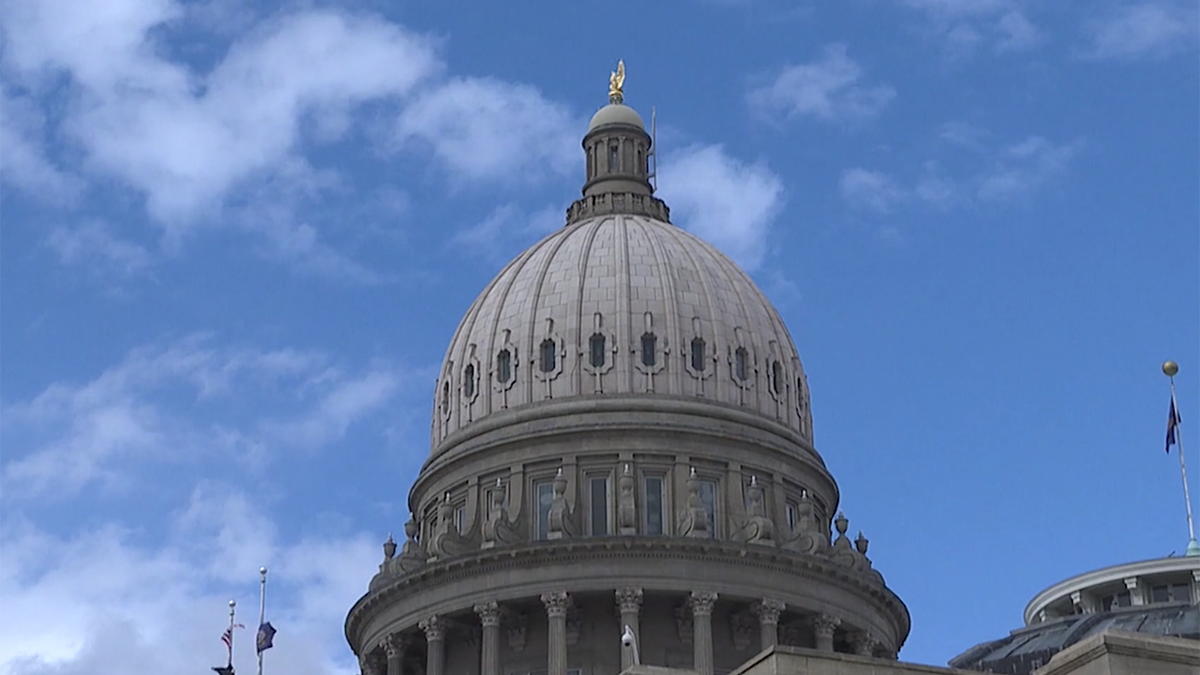
BOISE, Idaho — A revived immigration bill that would require local law enforcement agencies to work with federal immigration officials is moving forward at the Idaho Statehouse — but not without continued pushback from local sheriffs.

PREVIOUS COVERAGE | “We don’t need a law to tell us to do so”: Idaho sheriffs oppose revived ICE partnership bill

On Monday, the Senate State Affairs Committee voted 6-3 to advance Senate Bill 1441, sending it to the Senate floor.

The proposal comes after a similar bill, House Bill 659, failed earlier this session. Lawmakers say the new version is intended to address concerns raised by law enforcement while still strengthening cooperation with federal agencies like Immigration and Customs Enforcement (ICE).

“You’ll recall that we had a similar bill to 1441 in the committee before which failed. And so when that failed because there was enough interest in my caucus, I began working on another piece of legislation…” said Republican Senator Kelly Anthon of District 27.

Like its predecessor, SB 1441 would require local law enforcement agencies to apply for participation in a federal 287(g) program, which allows local officers to assist with certain immigration enforcement duties.

The updated version includes new language allowing county commissioners or city councils to opt out of participation under specific conditions — particularly if it would interfere with their ability to provide essential services.

Despite those changes, local sheriffs say their concerns remain.

This marks the third time sheriffs have testified against legislation tied to immigration enforcement this session.

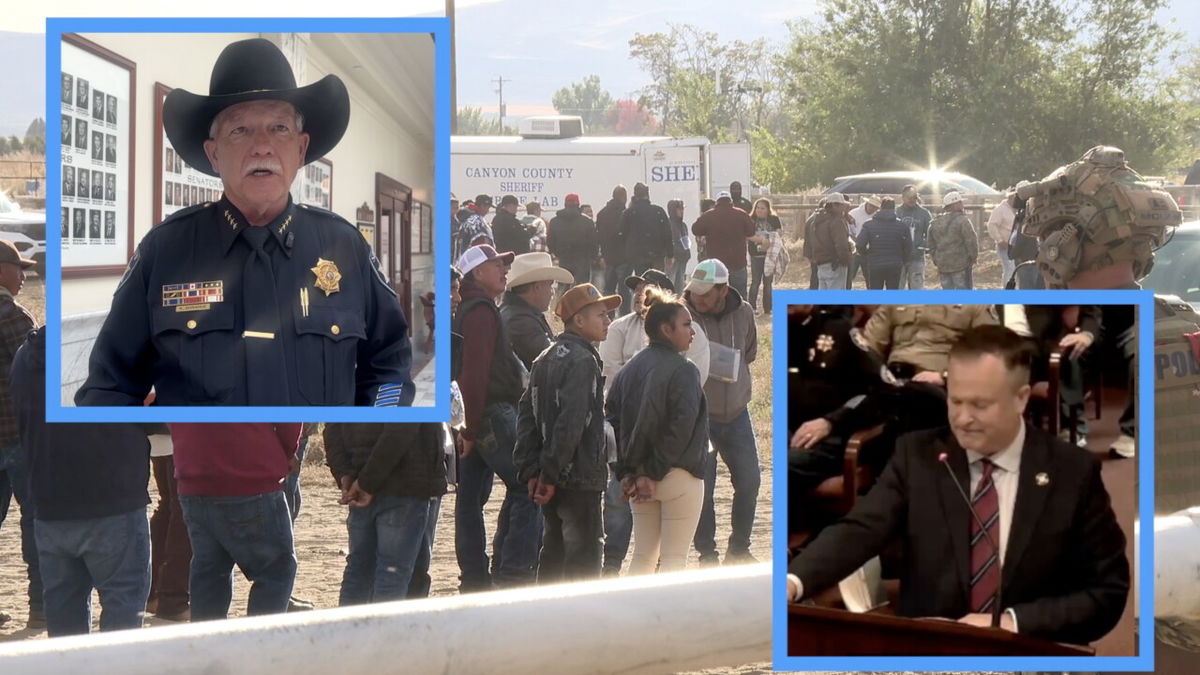
Canyon County Sheriff Kieran Donahue said the revised bill still gives too much authority to the federal government and raises questions about local control.

“This illusion that they’re working with us is absolutely a farce,” Donahue said. “It’s offensive for him to say that they have been, because they haven’t been.” Donahue also raised concerns about the role of local governing bodies in the decision-making process.

“There are many… things not known to the board of county commissioners,” he said. “So to have them decide whether we can participate or not is misleading, to be polite.”

He added that communication from the bill’s sponsor has been lacking.

“Let’s make no mistake — he has never asked us into a room to talk about this bill… prior to it being tabled a couple of weeks ago, nor since.”

Other law enforcement leaders warned about how the bill could play out under future federal administrations.

Ada County Sheriff Matt Clifford said the requirements could limit local flexibility depending on who is in power.

“What happens when Kamala Harris gets, if she gets elected here in 2 years, everybody in here is gonna be crying because now we have to comply by this law and I don’t have an inability to work with the 287G program”, Clifford said.

In a joint press release issued last week, the Idaho Sheriffs’ Association and its 44 elected county sheriffs said lawmakers may be moving too quickly without sufficient input from local law enforcement.

They also claimed federal officials, including the Department of Homeland Security, have been in contact with state leaders advocating for mandatory participation.

Idaho News 6 reached out to Senator Anthon for comment but has not yet received a response.

Supporters of the bill argue it is necessary to address illegal immigration and ensure local agencies are working proactively with federal partners.

“I want you guys to be proactive on this too,” said Senator Ben Adams, District 12. “If this legislation goes forward this year, you will be.”

With the committee’s approval, SB 1441 now heads to the Senate floor for further debate.

Click here to follow the original article.
Raising Cane’s Chubbuck location celebrates its grand opening with all-day festivities

Danielle Mullenix

Chubbuck, ID (KIFI) – The wait is almost over for chicken-finger fans in eastern Idaho. Raising Cane’s is opening its first Chubbuck location today — bringing fresh meals, community pride, and a full day of festivities.

Raising Cane’s newest location in Chubbuck, ID

The new restaurant at 4310 Yellowstone Avenue officially opens at 9 a.m., but eager customers are encouraged to arrive early as the celebration kicks off well before doors open.

Known for its focused menu and made-to-order approach, Raising Cane’s serves hand-battered chicken fingers marinated for at least 24 hours, alongside favorites like buttery Texas toast, crispy fries, coleslaw, and its signature Cane’s Sauce. Every item is prepared fresh daily—no heat lamps, no shortcuts—just hot, quality food made in real time.

The Chubbuck restaurant marks the brand’s fourth Idaho location, following recent openings in Meridian, Twin Falls, and Coeur d’Alene. Founder Todd Graves says the company is excited to continue growing across the state and connect with the local community.

Inside, the space is designed with Chubbuck pride in mind. Customers will find memorabilia from nearby schools, such as Highland High School and Pocatello High School, along with displays featuring Idaho State University and nods to the gem state’s outdoor lifestyle and local sports culture.

Opening day is packed with excitement, including:

A “Lucky 20” giveaway where 20 guests will win free Cane’s for a year

Free branded hats and a Box Combo card for the first 100 combo purchases

A special prize package for the very first customer in line

Free coffee from Idaho Coffee Company before opening, while supplies last

A ribbon-cutting ceremony with the Pocatello-Chubbuck Chamber of Commerce around 8 a.m.

A donation presentation to the local school district

Appearances by the Idaho State cheer team and mascot Benny Bengal

Restaurant leaders say the goal is to create not just a place to eat, but a welcoming, high-energy spot where the community can gather.

“I’m excited to open the first Raising Cane’s in Chubbuck and fourth in the state of Idaho,” said Raising Cane’s owner and founder, Todd Graves. “Our Crew is looking forward to opening our doors and serving Craveable Chicken Finger Meals to this great community.” 

The new location will be open Sunday through Thursday from 10 a.m. to 1 a.m., and Friday and Saturday from 10 a.m. to 2 a.m.—making it a late-night option for those craving a Box Combo.

With more than 1,000 locations worldwide and plans for continued expansion across Idaho, Raising Cane’s is quickly becoming one of the fastest-growing restaurant brands—and now, Chubbuck is officially part of the excitement!

Click here to follow the original article.

Church of Jesus Christ of Latter-day Saints announces changes to meeting schedule

Abi Martin

IDAHO FALLS, Idaho — The First Presidency for the Church of Jesus Christ of Latter-day Saints has announced changes to its Sunday worship schedule. 

Beginning on September 6, Sunday school classes along with the Relief Society, Elders Quorum, Young Women, and Aaronic Priesthood meetings will be held each week during the second hour. 

Sacrament meeting will remain at sixty minutes, followed by Sunday school for 25 minutes and then men’s and women’s classes for 25 minutes. Primary will also continue for the full hour. 

This comes just before the LDS Church’s General Conference, set for this weekend. 

You can read about the changes here.

Click here to follow the original article.