Utah man charged with manslaughter in death while practicing drawing handguns from holsters

CNN Newsource

Originally Published: 11 MAR 26 15:38 ET

By Tim Vandenack

Click here for updates on this story

    ROY, Utah (KSL) — A Roy man has been charged with manslaughter in the shooting death of another person while the two were practicing drawing handguns from holsters.

Benjamin Garrett Davis, 24, is charged with manslaughter, a second-degree felony; reckless endangerment, a class A misdemeanor; and committing a violent offense in the presence of a child, a class B misdemeanor in the incident last Sunday.

Roy police were called to Davis’ apartment on Sunday after receiving a report a male had been shot in the head. On arriving, they found Davis kneeling over the other person’s body repeatedly saying “the shooting was his fault,” according to charging papers filed Tuesday. Security video footage in Davis’ apartment shows the incident.

“Both individuals are seen drawing handguns from holsters and pointing the firearms toward one another. During one of the drills, Davis draws his handgun, points it toward (the other male), and pulls the trigger. The firearm discharges and (the other male) is immediately struck in the head and collapses to the floor,” charging papers read. Davis later told authorities he and the victim were practicing firearm-draw drills but that he thought his gun was not loaded.

A 2-year-old was in the apartment when the incident occurred and visible in the video authorities retrieved, leading to the charge for committing an offense in the presence of a child. “The child is seen walking within several feet of Davis and (the other person) while the firearms were being drawn and manipulated,” charging papers read.

According to the police booking affidavit in the case, video taken from the apartment shows Davis after the shooting. “Benjamin is seen with a panicked expression, and he drops the gun,” the affidavit reads.

The apartment complex where the incident occurred is at 4608 S. 1900 West. Davis is being held without bail in the Weber County Jail.

Please note: This story was provided to CNN Wire by an affiliate and does not contain original CNN reporting. This content carries a strict local market embargo. If you share the same market as the contributor of this article, you may not use it on any platform.

The-CNN-Wire™ & © 2026 Cable News Network, Inc., a Warner Bros. Discovery Company. All rights reserved.

Click here to follow the original article.

Local 12-Year-Old Battling Brain Cancer Finalist in National Art Contest

Par Kermani

Roberts, Idaho (KIFI) — In a bedroom filled with sketches of apex predators and prehistoric giants, 12-year-old Caellum Hebdon is reclaiming a voice that cancer nearly took away.

For Hebdon, a middle-schooler from Idaho Falls, the last year has been defined by a battle more formidable than the dinosaurs he draws. After being diagnosed with brain cancer in 2025, his journey has been marked by emergency life-flights, life-saving surgeries, and a grueling recovery process that forced him to relearn the most basic human functions.

“They were able to tell us that he had a tumor that was bleeding,” said Jayc Hebdon, Caellum’s father. “They life-flighted him down to Primary Children’s Hospital. They performed the first surgery, which saved his life.”

The medical crisis was compounded by a stroke that occurred during his treatment, resulting in a loss of mobility on his right side and the loss of his ability to speak. What followed was three weeks of hospitalization and seven weeks of combined radiation and chemotherapy.

Through months of intensive speech and physical therapy, Hebdon began the slow process of recovery. He has since regained his ability to speak and, perhaps most importantly to him, his ability to draw.

“I drew that Spinosaurus drawing after my surgery,” Caellum Hebdon said. “It’s scary, but it’s also pretty… I’d say that he’s probably the strongest predator.”

While he often sketches to pass the time at home, his artwork is now vying for a national title. Hebdon is currently a finalist in the “America’s Most Artistic Kid” competition. For the Hebdon family, the contest represents more than just a trophy; the prize money would provide a significant dent in the mounting medical expenses accumulated over a year of emergency care and rehabilitation.

Despite the weight of the past year, those around him say he has maintained a positive outlook.

“I try to keep as happy as I can be,” Hebdon said when asked about hearing his parents discuss the hardships of his diagnosis.

The family reached a significant milestone in October 2025 when Hebdon was finally able to return home. Now, in March 2026, the focus has shifted from daily treatment to a pivotal moment of hope. This Friday, the family is scheduled to receive the results of a follow-up MRI. It is the first scan since the post-treatment inflammation has subsided, and it will determine if Hebdon is officially cancer-free.

“The weight is all the time,” said Kaylene Hebdon, Caellum’s mother. “Friday he has his first MRI since all the inflammation should be gone… we should get a clearer reading in a couple days. It’s highly stressful.”

As the community waits for the medical update, they can support Hebdon by voting for his prehistoric artwork in the national competition.

Details on how to vote for Hebdon and support the family’s medical fund

If you want to help Caellum bring home that national title and help his family with those medical bills, there are a few ways to get involved. The “America’s Most Artistic Kid” contest relies on community support. You can cast one free vote every 24 hours by heading to the contest website.

https://artistickid.org/2026/caellum-3f31

There is also an option to make a donation to “Blood Cancer United” through his profile page—those donations not only support cancer research, but they also act as “double votes” for Caellum. Every bit helps as he tries to maintain his spot at the top of the leaderboard.

https://www.crowdfunder.com/p/caellums-medical-fund

Click here to follow the original article.
Idaho Sheriffs’ and Chiefs of Police Associations stand against controversial immigration bill

David Pace

IDAHO FALLS, Idaho (KIFI) – Idaho law enforcement associations continue to oppose an immigration enforcement bill that passed the Idaho House of Representatives on Friday.

The Idaho Chiefs of Police Association and Idaho Sheriffs’ Association testified against the measure during committee.

House Bill 659 would require “each law enforcement agency in this state to make an application for a section 287(g) program for which the local or county law enforcement agency is eligible.”

“You have the state government telling the local government to do the job of the federal government,” said Bonneville County Sheriff Sam Hulse, immediate past president of the Idaho Sheriffs’ Association. “It’s just the wrong pathway. Now, we should certainly support the law. We should work with the federal partners to make sure that we help them in their efforts, but make no mistake, these are federal efforts.

“That’s where this is going to be resolved. It should be resolved by federal resource in cooperation with local resource,” he said. “Having the state government tell the local government that you’re going to enforce federal law, I think is setting a precedence that we do not want to be on as the state of Idaho.”

You can watch our full 32-minute interview with Sheriff Hulse below for more information on immigration and law enforcement.

Section 287(g) of the Immigration and Nationality Act “enables specially trained local peace officers to perform specific functions relating to the investigation, apprehension or detention of noncitizens during a predetermined time frame and under federal oversight by immigration and customs enforcement,” the bill states.

The three distinct programs Section 287(g) includes are:

Warrant Service Model

This allows Sheriff’s deputies to “serve administrative warrants inside the jail facility,” on illegal immigrants, Hulse explained.

Bonneville County Sheriff’s Office is already cooperating with Immigration and Customs Enforcement on this program.

Jail Enforcement Model

This provides additional training for jail personnel, providing further access to immigration systems so personnel can “research and place warrants themselves, without as much federal involvement,” according to Hulse.

His office is also participating in this program.

Task Force Model

This involves sending officers or deputies out in the community to find individuals who are not in the United States lawfully and taking action against them.

Bonneville County Sheriff’s Office is not currently involved in this program.

Hulse said this third program is more controversial than the other two.

“(Illegal immigrants) are not here lawfully, but they may not be committing any other crimes,” Hulse said. “So for a lot of communities, they see that as problematic. They feel like that is causing their local law enforcement to do things that are not really the focus of local law enforcement. We recognize that it’s certainly the focus of Immigration and Customs Enforcement and/or border protection, but it’s not really the job of local law enforcement to be on the front lines of that.”

While the Bonneville County Sheriff’s office currently participates in two 287(g) programs, the office will implement the law if the current bill passes.

H.B. 659 also obligates local law enforcement agencies to “participate in any future program or successor to an existing program,” without specifying what those programs are or what the requirements would be.

“Now we’re seeing a situation where the state government feels like the proper thing is to force local enforcement entities to just do this in a blanket approach. I think that’s a mistake, and I don’t think we need that law,” Hulse said. “I think the majority of sheriffs are doing what they can within their resources to cooperate and enforce the law.”

If this bill does become law, agencies that could not fully participate will be required to publish a statement declaring why.

Despite law enforcement’s opposition, the measure sailed through the House on a 41-27 vote.

Local News 8 reached out to the bill’s sponsor Rep. Dale Hawkins, R-Fernwood in north Idaho, for comment, but did not receive a response in time for this report.

Local legislators Reps. David Cannon, Barbara Ehardt, Marco Erickson and Rod Furniss voted for the bill.

Reps. Erin Bingham, Rick Cheatum, Ben Fuhriman, Dustin Manwaring, Stephanie Mickelsen (via William Athay), Britt Raybould, Jerald Raymond, Michael Veile, Jon Weber, and Josh Wheeler voted against it.

The bill now advances to the State Affairs Committee in the Idaho Senate.

Click here to follow the original article.

Lemhi County Sheriff’s Office closes nearly 7-year-old missing person case

Seth Ratliff

LEMHI COUNTY, Idaho (KIFI) — The Lemhi County Sheriff’s Office has officially closed a nearly seven-year-old missing persons investigation after investigators positively identified human remains discovered late last year using DNA evidence.

The case began on November 8, 2019, when the Lemhi County Sheriff’s Office received a report from the Springdale (Arkansas) Police Department regarding Bobby Lee Rodriguez. Rodriguez had last been seen on September 30, 2019, near Wagonhammer Spring south of North Fork, Idaho.

According to investigators, a taxi driver dropped Rodriguez off at the location, with Rodriguez telling the driver he was meeting a relative who was camping nearby. Rodriguez was carrying a boxed firearm, which he claimed was intended as a gift for that relative.

A Lemhi County Sheriff’s Deputy immediately canvassed the area surrounding Wagonhammer, speaking with residents and local businesses to gather possible information about Rodriguez. However, no one in the area had seen Rodriguez or anyone matching his description.

While the Lemhi County Sheriff’s Office maintained contact with the Springdale Police Department and periodically checked to see if any new information had developed, the case eventually ran cold.

The breakthrough came six years later, when a fisherman on the Salmon River, west of North Fork, Idaho, discovered human remains while climbing a hillside to get warm.

The man led law enforcement to the remains, where investigators uncovered a rusted shotgun with a spent hull in the chamber and a note that suggested that suicide may have been a factor.

The Lemhi County Coroner’s Office took custody of the remains, which were recently confirmed to be those of Bobby Lee Rodriguez through a DNA match with a relative. LCSO states that no evidence of foul play was uncovered during the multi-jurisdictional investigation.

“The Lemhi County Sheriff’s Office would like to extend its deepest condolences to the family of Bobby Lee Rodriguez,” the office said in a news release.

The Lemhi County Sheriff’s Office expressed its gratitude to all of its state, regional, and Federal partners who had a hand in bringing this case to a close.

Click here to follow the original article.
Idaho Democrats blast GOP for blocking Minority Report criticizing bill on trans students

Seth Ratliff

BOISE, Idaho (KIFI) — Idaho House Democrats are decrying what they call an ‘egregious abuse of supermajority power’ after the Republican supermajority voted to suspend House rules to block a formal minority report from being entered into the official House Journal.

The move followed the passage of House Bill 822, a measure aimed at ending “secretive transitions” in Idaho schools and healthcare settings.

A “Supermajority” Maneuver

Though HB 822 passed the House floor 59-9, the primary conflict erupted after the vote. Idaho House Minority Leader Rep. Ilana Rubel moved to submit a Minority Report to the House Journal—the official daily record of proceedings.

In a swift counter-maneuver, Rep. Jason Monks (R-Meridian) moved to suspend Rule 27, which would have allowed the report’s inclusion. The House supported Monks’ motion in a 57-7 vote, effectively “censoring” the formal dissent from the record.

Rep. Rubel blasted the move as an egregious abuse of power.

“That report lays out exactly what they do not want on the record: that this bill invites constitutional challenge, imposes draconian penalties, and puts vulnerable children at risk,” Rubel said following the vote. “If Republicans were confident in the merits of this bill, they would not be afraid of a report in the journal. That is not transparency. That is censorship.”

Following the floor session, House Speaker Mike Moyle said the report took “personal stabs” and was “pushing inappropriate,” according to a report by IdahoEdNews.

To read the full Minority Report on House Bill 822 here.

Understanding House Bill 822

Also known as the Pediatric Secretive Transitions Parental Rights Act, HB 822 would mandate that healthcare providers, schools, and childcare entities notify parents within three days of any request by a minor to “participate in or facilitate a social transition.”

The bill would impose up to $100,000 civil penalties on schools or doctors that fail to notify parents when a student requests help in a “social transition.”

According to the bill’s text, social transition is defined as “the process by which an individual goes from identifying with and living as a gender that corresponds to the individual’s sex to identifying with and living as a gender different from the individual’s sex and may involve social, legal, or physical changes, including adopting a name, pronouns, appearance, or dress that does not correspond to the individual’s sex.”

The bill’s sponsor, Rep. Bruce Skaug, argues the legislation is a parental rights issue. 

“Hiding critical information for a child’s well-being from parents is not in the child’s best interest, nor does it allow for a holistic, well-rounded health decision,” Rep. Skaug told lawmakers ahead of Wednesday’s vote.

“It is the parents who know the child’s health history throughout that child’s life. A doctor or counselor only has a snapshot in time of that child’s health policies that forced teachers and others to hide this information are certainly anti-family in the Idaho sense.”

Testimony Cut Short in Committee

The floor debate followed a controversial committee hearing where acting chairman Rep. Joe Alfieri (R-Coeur d’Alene) cut off public testimony early after 14 minutes of limited debate. Democratic leadership noted that nearly three times as many people—including several Idaho Doctors—had signed up to testify against the bill as for it.

Opponents of the legislation argue that the bill violates the First Amendment rights of medical professionals by dictating how they communicate with patients.

In a statement released after Wednesday’s vote, Taylor Munson of the ACLU of Idaho called the bill “dangerously vague, overbroad, and unconstitutional.”

“Courts have repeatedly held that the First Amendment protects medical professionals when they provide information or referrals for patients,” said Munson. “Make no mistake: this bill will jeopardize the safety and well-being of all Idaho kids, regardless of their gender identity. Any time we have a law that forces people to express themselves in rigid ways dictated by the government, everyone is at risk. It is not the government’s place to decide how we look, what we wear or how we express ourselves. ”

Click here to follow the original article.

Grammy & Emmy-nominated Broadway star Cheyenne Jackson hitting the Colonial Theatre Stage

Danielle Mullenix

Idaho Falls, ID (KIFI) – The Idaho Falls Arts Council proudly presents an unforgettable evening with Cheyenne Jackson—celebrated Broadway star, acclaimed film and television actor, and renowned recording artist—live on stage in Idaho Falls. Experience the excitement of the “Mid Life Torso Tour” as it arrives at the Colonial Theatre on Thursday, March 12th, offering local audiences a rare opportunity to see Jackson’s exceptional talent live on stage.

Famed for his powerhouse vocals and charismatic stage presence, Jackson has enthralled audiences worldwide. His impressive Broadway résumé features starring roles in hits such as “Xanadu,” “Finian’s Rainbow,” “Thoroughly Modern Millie,” “Into the Woods,” and “Aida.” On television, he’s a familiar face from acclaimed series like “30 Rock,” “American Horror Story,” “Glee,” “Call Me Kat,” and “Julie and the Phantoms.” He has also appeared in major films, including the Oscar-nominated film “United 93” and “The Green”, and the beloved “Descendants” series on Disney.

Cheyenne Jackson’s concerts are a dazzling blend of Broadway classics, pop favorites, and heartfelt personal storytelling, creating an evening that is both intimate and electrifying. Audiences can expect emotional depth, quick wit, and vocal brilliance—an extraordinary chance to experience the magic of a Broadway-caliber artist up close.

Don’t miss this exclusive Idaho Falls performance! Tickets are available now at idahofallsarts.org or in person at our ticket office: 498 A Street, Idaho Falls, ID 83402. Click here for a direct link to tickets.

For an exclusive, behind-the-scenes treat, don’t miss Cheyenne Jackson live on the Local News 8 Noon show the day of the concert! Get a front-row seat to an exciting sneak peek as he shares stories, surprises, and a taste of the spectacular performance awaiting Idaho Falls that night.

Click here to follow the original article.
Newly proposed Kratom bill introduced in the Idaho State Affairs Committee

Danielle Mullenix

Idaho (KIFI) – Idaho lawmakers are considering legislation to make Kratom illegal—a major development for advocates pushing for stricter regulation of the substance and its use.

House Bill 864 could classify Kratom as a Schedule 1 Controlled Substance, Idaho’s most restrictive drug category. If enacted, all forms of Kratom would be added to the Schedule 1 list, effectively prohibiting and criminalizing its sale and use.

The bill also equips the Idaho State Police to test for Kratom’s chemicals, whether natural or synthetic, should they become illegal. Under these provisions, Kratom’s entry into the supplemental market in Idaho would not just face barriers—it would be fully prohibited.

If the bill passes, even simple possession would become a criminal offense. Anyone found with Kratom—including products purchased legally before the law’s enactment—would be guilty of a misdemeanor, facing up to one year in prison, a $1,000 fine, or both.

Kratom is a plant-based substance indigenous to Southeast Asia, primarily used to relieve muscle pain, boost alertness and energy, and reduce stress. Currently, it is sold without specific regulation in Idaho and many other states.

Although Kratom is widely available and sold as an herbal supplement in smoke shops and convenience stores across Idaho, many doctors warn that it can carry health risks.

Bonneville County Coroner Shante Sanchez has reported six Kratom-related deaths in the past year alone and believes restrictions are necessary.

“I strongly believe Kratom should have more warning labels and restrictions, and not be so readily available,” Sanchez said. “You can’t drive down the street without seeing advertisements everywhere. People don’t truly know what Kratom is or what it does—the benefits and the dangers—so it shouldn’t be advertised as openly as it is.”

The Idaho State Affairs Committee voted on March 10th to advance the proposal, but for now, Kratom remains legal.

If lawmakers approve House Bill 864 and it is signed by Governor Little, the distribution of Kratom in Idaho could change dramatically.

Local News 8 will continue to monitor this bill’s activity.

Click here to follow the original article.

DOE approves key safety milestone for INL’s MARVEL microreactor

News Release

The following is a news release from the Idaho National Laboratory:

IDAHO FALLS, Idaho — The U.S. Department of Energy’s Idaho Operations Office has approved a key safety document for the MARVEL microreactor at Idaho National Laboratory. The approved document, called a Preliminary Documented Safety Analysis (PDSA), marks a major milestone toward building and operating the microreactor for research, development and end-user demonstrations.

MARVEL, the Microreactor Applications Research Validation and Evaluation project, is a sodium-potassium-cooled microreactor developed at INL to produce 85-100 kilowatts of thermal energy and approximately 20 kW of electricity.

The PDSA outlines a dry initial criticality configuration, a near zero-power experiment that will generate essential data on reactor physics behavior. This configuration is a foundational step on the pathway to full power operation.

The approval reflects the culmination of extensive safety calculations and engineering analyses that define the safety basis for MARVEL’s initial criticality. The PDSA affirms that the reactor can operate safely under this configuration and paves the way for final safety documentation and full assembly of the reactor.

“This is more than just a regulatory requirement — it’s a blueprint for the future of advanced nuclear,” said INL’s Abdalla Abou-Jaoude, MARVEL microreactor lead. “By receiving approval for our safety documentation, we are now able to share this template with developers to learn from our process and streamline their own timelines.”

“This is a pivotal moment,” added John Jackson, national technical director for the DOE Office of Nuclear Energy’s Microreactor Program. “We’re proud to play a leading role in helping to make microreactors commercially available.”

The approved PDSA builds on a 2024 version and incorporates updated modeling, lessons learned and a risk-informed methodology — an approach that uses risk analysis to guide design decisions and enhance safety. MARVEL’s approach has already influenced other DOE-authorized reactor projects such as Pele, the Molten Chloride Reactor Experiment and the Versatile Autonomous Lightweight Kilowatt-class Reactor Experiment, commonly known as VALKRE. 

Researchers will conduct the dry criticality experiment at INL’s Transient Reactor Test Facility, a DOE-authorized research facility that supports a variety of reactor experiments. The next phase includes engagement with DOE-Idaho and project stakeholders to finalize the safety basis for full reactor assembly and fuel loading. This phased approach is designed to identify and address potential issues earlier in development.

The MARVEL team encourages the public and stakeholders to follow progress via INL’s social media channels and the MARVEL project webpage.

Click here to follow the original article.

Wyoming Governor signs “Human Heartbeat Act” into law

Seth Ratliff

CHEYENNE, WY (KIFI) — Governor Mark Gordon has signed Wyoming’s “Human Heartbeat Act,” the state’s strict new abortion ban. The legislation, also known as HB 126, prohibits abortion once a fetal heartbeat can be detected, which usually happens around 6 weeks before many women even know they’re pregnant.

According to the Bill’s text, violators face felony charges punishable by up to five years in prison, a fine of up to $10,000, or both. While the legislation includes narrow exceptions to protect the life or physical health of the mother, critics say it lacks exceptions for pregnancies resulting from rape or incest.

HB 126 reached the Governor’s desk after passing with significant majorities in both the Wyoming House and Senate. Despite his signature, Governor Gordon expressed skepticism regarding the law’s ability to withstand inevitable litigation. In a statement released on Facebook, Gordon described the act as a “well-intentioned but likely fragile” effort, warning that it risks ending in a protracted court battle rather than becoming “lasting, durable policy.”

“The solution I had hoped for is to put the issue before a vote of the people of Wyoming, from whom, according to Article 1 of our Wyoming Constitution, all governmental power derives,” wrote Gordon.

Legal Challenges on the Horizon

Several groups in Wyoming have already signaled their intent to challenge the ban in court. Julie Burkhart, president of Wellspring Health Access—Wyoming’s only abortion clinic—labeled the ban an “attack on Wyomingites’ constitutional freedom to make their own health care decision.”

“Every day that this law is in effect means people in our state will face even greater barriers to abortion care — and some may be denied this care altogether,” said Burkhart in a statement to ABC. “With so many across Wyoming already struggling to access reproductive health care, restrictive policies like these take us further in the wrong direction.”

Click here to follow the original article.
Unique training for emergency responders takes place in vacant houses along Highway 20 in Ashton

Danielle Mullenix

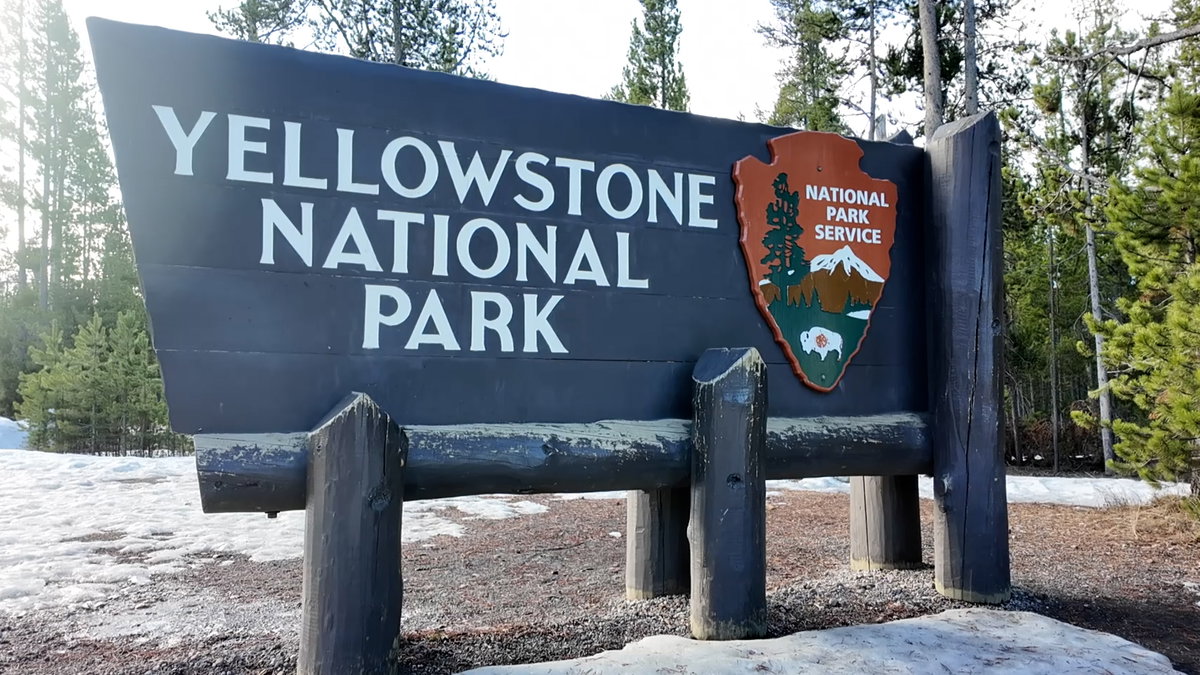
Ashton, ID (KIFI) – Upper Valley emergency responders in Eastern Idaho are getting a new training opportunity thanks to a partnership with the Idaho Transportation Department (ITD). Drivers traveling along Highway 20 may see law enforcement and emergency response vehicles around vacant properties located just south of the Tri-State Tire building.

An agreement between ITD and the Upper Valley Special Response Team now allows state-owned properties along U.S. Highway 20 to be used for emergency services training.

On Wednesday, March 11, the team will host its first training exercise near Ashton. The Upper Valley Special Response Team includes emergency responders from Fremont County, Madison County, and Teton County.

ITD has been purchasing properties along Highway 20 between Chester and Ashton as part of early planning for a future four-lane divided highway. The agency says these acquisitions are made when sellers are willing and when design plans are sufficiently finalized, with approval from the Federal Highway Administration.

Before the buildings are demolished, they will serve a new purpose: realistic training environments for emergency responders.

Officials say the Upper Valley Special Response Team will use several of the homes along the corridor for monthly training exercises until they are eventually demolished. Road construction for the highway project is currently anticipated to begin around 2031.

Fremont County Sgt. Colter Cannon says the opportunity will significantly improve how teams prepare for emergencies.

“This opportunity for us is huge,” Cannon said. “We’ve formerly had to train in schools, but being able to work in actual houses and different layouts with all of our gear will help the team so much in the long run.”

ITD says that more information about the Highway 20 project between Chester and Ashton is available on the agency’s website.

Click here to follow the original article.