Spring biking offers rare, quiet way to experience Yellowstone National Park

Danielle Mullenix

Yellowstone National Park, WY (KIFI) – While this winter has been relatively warm across eastern Idaho and parts of Wyoming and Montana, there are still plenty of ways to enjoy the outdoors—including a unique opportunity inside Yellowstone.

Inside the Yellowstone National Park, April 2026.

For a few weeks each spring, before the park fully reopens to vehicle traffic, Yellowstone looks a lot different. Roads that are typically packed with cars become quiet, open pathways—creating ideal conditions for cyclists.

According to the National Park Service, bikes are allowed on select park roads during this early-season window, until the roads reopen to vehicles later in the spring.

That means visitors can ride past geysers, rivers, and even wildlife in a way that’s nearly impossible during peak tourist season.

“The craziest thing I’ve seen in springtime biking is baby bison being born,” said local cyclist Kelli Hart, as she poured an espresso shot for the new customer who listened to her across the small bike shop cafe countertop.

Just outside the park’s entrance in West Yellowstone, MT, Freeheel and Wheel Bike Shop is helping visitors make the most of the short biking season. Shop owners Kelli Hart and Melissa Alder say this time of year offers a completely different Yellowstone experience.

Freeheel and Wheel Bike Shop, located in West Yellowstone

“My favorite part about biking in Yellowstone this time of year is being able to just go in there without the cars,” Hart said.

She says the experience is all about slowing down and taking in the natural surroundings.

“We tell people—it’s so calm. You can ride side-by-side with somebody and not feel the danger of cars and vehicles,” Hart said.

From bike rentals and repairs to gear and local expertise, the shop sees more visitors eager to hit the road during this limited window.

While biking is typically limited to April, warmer weather and clearer road conditions this year have allowed cyclists to get an early start, with some already riding in March.

Still, conditions can change quickly. Park officials encourage visitors to check current road conditions before heading out and to be prepared for limited services inside the park this time of year.

Cyclists are also reminded to stay alert, share the road with wildlife, and plan ahead for changing weather conditions.

Yellowstone is set to reopen to vehicle traffic on April 17th, bringing this quiet biking season to a close.

As more people look for unique outdoor experiences, spring biking in Yellowstone is quickly becoming a must-do adventure—offering a rare chance to see the park in near silence before the crowds return.

Click here to follow the original article.

ISU Graduate manning Mission Control in Houston for Artemis II Mission

David Pace

POCATELLO, Idaho (KIFI) – As astronauts today journeyed to the furthest distance in deep space ever reached by humankind, an Idaho State University (ISU) graduate is one of three scientists advising the Artemis II team from Mission Control at the Johnson Space Center.

Angela Garcia graduated from ISU with a master’s degree in geosciences around 2019, and has taken her career to new heights ever since.

“She’s just a brilliant scientist and researcher who’s been working with NASA in the years since, doing a lot of work to be able to prepare for these missions, and has been qualified as a flight controller to be in the flight control room supporting science for Artemis II,” said Dr. Shannon Kobs Nawotniak, a professor and chair of Idaho State University’s Geosciences Department.

“She is going to be monitoring all the science work that the astronauts are doing up there – answering questions for them, relaying questions that they have to the science evaluation room in the back, helping make sure that we’ve got solid support for those astronauts as they do science.”

Dr. Kobs Nawotniak said the astronauts will be researching the impact of meteorites on the far side of the moon.

“This is our first human return to the moon, circling around it in over 50 years. … You can imagine if we’re trying to ultimately put a lunar base up there, it really behooves us to know a lot more about how the stuff is going to go,” she said. “We’re also interested in sort of the size of the distribution, the changes, all of these different things. So that’s going to be one of their key things, is looking for these micrometeorite impacts through flashes on the surface as they’re going by.”

Researchers from ISU have been heavily involved with NASA from 2014 to the present, performing work at Craters of the Moon for the FINESSE (Field Investigations to Enable Solar System Science and Exploration), BASALT (Biologic Analog Science Associated with Lava Terrains), and IDEAS (Integrated Display and Environmental Awareness System) programs. 

“The FINESSE program, we’re actually doing work out here with the lava tubes, with the alteration of the rocks, things like that, to understand how the shapes of the landscape and the geochemistry of the rocks all tie together,” Dr. Kobs Nawotniak said.

The research was vital preparing for the Artemis program and an eventual mission to Mars.

“BASALT was about using volcanoes here, in the space here, and in Hawaii as a testbed for high-fidelity simulations of crewed missions,” Dr. Kobs Nawotniak said. “In that case, we were actually aiming it for Mars, but all the stuff we were doing there was also relevant to this, and we used s some of those lessons learned also to be able to inform later tests where they’re actually preparing for Artemis to be able to design the backroom team. How do you support these phenomenal astronauts?”

The lunar-like volcanic landscape at Craters of the Moon is also ideal for practicing astronauts’ navigation techniques required on the moon.

“We’re also working on navigation systems to be able to help astronauts as they’re working around the surface of the moon,” she explained. “We don’t have GPS or compasses for the moon, so they’re actually going to be doing dead reckoning navigation, using printed paper atlases with air photos and alphanumeric grids. It turns out that’s really easy to get yourself turned around. … How we can better support the astronauts for their training and the back corrections afterwards, to be able to ensure that we actually have them in the right place at the right time?”

The ISU researchers and rangers at Craters of the Moon hope the Artemis program and its work will help inspire the next generation of scientists.

“What I love about being a park ranger is that I’m able to work with a lot of young people and people that they get really excited about science,” said Craters of the Moon Chief of Education and Interpretation Michael Irving. “I’m able to help nurture and help grow that love and hopefully get them to go on and pursue fields or pursue careers in those types of fields.”

ISU graduate Angela Garcia and Dr. Shannon Kobs Nawotniak smile at Mission Control in the Johnson Space Center.

Click here to follow the original article.

Exploding propane tank sparks fire at Idaho Falls home

Seth Ratliff

IDAHO FALLS, Idaho (KIFI) — A local family’s home is still standing tonight thanks to the quick response of Idaho Falls firefighters following a possible propane explosion Monday afternoon.

Emergency crews raced to the home on Deloy Drive just before 4 p.m. in April, finding flames consuming the exterior siding of the building. Smoke had already begun to spread into the interior of the home as firefighters arrived on the scene.

Working quickly, IFFD says crews knocked down the exterior fire, preventing it from spreading to the inside of the home. To ensure the home was truly safe, crews stripped away sections of the siding to check for hidden “hot spots” within the wall.

While the investigation is ongoing, preliminary reports suggest a propane tank connected to a grill exploded, sparking the fire.

In total, the fire caused an estimated $20,000 in damage. While smoke entered the structure, IFFD says fire damage inside the home appears minimal. Fortunately, no injuries were reported.

In the wake of the fire, the Idaho Falls Fire Department is reminding residents to use caution when operating outdoor grills and to keep them a safe distance from structures.

Click here to follow the original article.
Investigation continues following deadly Power County Shooting; Two survivors in stable condition

News Team

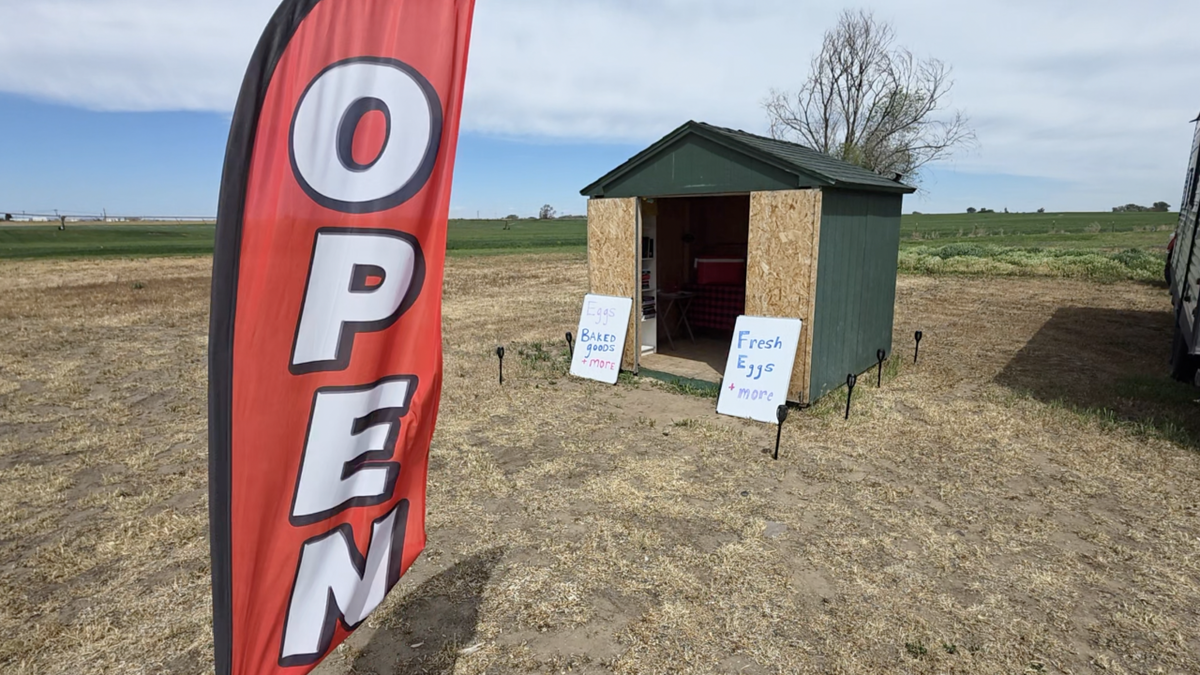
POWER COUNTY, Idaho (KIFI) — Both surviving victims of the deadly shooting in Power County on Friday are now in stable condition, Bannock County authorities confirmed over the weekend. One victim has already been released from the hospital as the investigation continues.

What We Know

The incident began around 2:40 p.m. Friday when deputies responded to reports of gunfire in northern Power County. As they arrived, the officers discovered a grim scene. Two people were dead at the scene, and a third person was injured. The surviving victim was treated at the scene and rushed by ground ambulance to a local hospital.

While securing the perimeter, investigators heard additional shots fired nearby. A fourth victim—a bystander in a boat—was struck by gunfire as the suspect attempted to escape police. Emergency responders stabilized the man at the scene, and he was airlifted to the Portneuf Medical Center for further treatment. Bannock County Public Information Officer Emma Iannacone confirmed Saturday that he has since been released.

As the search continued, deputies located an unnamed suspect hiding near the Portneuf River. As they tried to negotiate, the suspect brandished a firearm. Officers responded with deadly force, and the suspect was pronounced dead at the scene, according to the sheriff’s office.

Next Steps in the Investigation

The Idaho Falls Police Department will lead the Eastern Idaho Critical Incident Task Force investigation into the officer-involved shooting.

The names of the deceased victims and the shooter have not been released at this time pending notification of the next of kin. Local News 8 is in contact with the Bannock County Sheriff’s and Coroner’s offices and will provide updates as more information is released.

Click here to follow the original article.

Today is the last day to apply – CEI’s Dental Hygiene Program

Kaelyn Blessinger

IDAHO FALLS, Idaho — The College of Eastern Idaho is launching a new Dental Hygiene program with applications closing today, April 6th.

The program was developed in response to a growing shortage of dental hygienists across the region, with many local dental offices reporting open positions and increasing demand for qualified professionals.

This two-year program will admit 10 students each fall semester, giving them the opportunity to train locally and work towards a career in dental health care and strengthen the region’s healthcare workforce.

The program has been granted Initial Accreditation by the Commission on Dental Accreditation (CODA) and will welcome its first cohort of students in August 2026.

You can find more information and the application HERE.

Click here to follow the original article.
Sky’s the Limit: Portneuf invites Idaho youth to name new rescue helicopter

Seth Ratliff

POCATELLO, Idaho (KIFI) — The Porneuf Medical Center is asking Idaho’s youth for help naming its new air medical rescue helicopter.

From now until 11:59 pm MST on April 21, 2026, the Pocatello-based hospital is accepting names from youth 17 years old and younger throughout the region. The contest finalists and winner will be announced on May 6th, 2026.

For more information or to enter, click HERE.

Click here to follow the original article.

New US-30 wildlife crossings near Montpelier breaks ground this month

Seth Ratliff

MONTPELIER, Idaho (KIFI) — Construction is about to get started on three new wildlife underpasses along US-30 near Montpelier.

According to Idaho Fish and Game, the project will add two culverts, one bridge, and six miles of fencing along a key stretch of highway between mileposts 442 and 448, also known as Rocky Point.

The 20-mile stretch of road is a notorious spot for mule deer collisions. In fact, according to data collected by Idaho Fish and Game and ITD, about 70% of deer deaths happen right here.

The project is expected to finish up this fall. Once it’s done, IDFG and ITD say the underpasses will make the highway safer for drivers while protecting deer and other wildlife.

“This project is equally important to both ITD and Idaho Fish and Game and has received broad support from the Bear Lake County community because of the benefits to both human and wildlife safety,” said Regional Wildlife Manager Zach Lockyer with Idaho Fish and Game. “Hunters and other wildlife enthusiasts value this mule deer resource, and protecting it has added benefits to both the economy and quality of life in this part of southeast Idaho.”

The 12 million dollar project is part of a $125 million federal program supporting wildlife crossings nationwide. ITD District 5 Environmental Planner Alissa Salmore says it’s a big win people have been asking for for decades.

We are excited to get this project fully-funded and built,” Salmore said. “Local citizens and our Montpelier shed crew have been asking for a solution here for decades. It will be good to finally deliver this project, both for people and for wildlife.”

Click here to follow the original article.
The waiting game: Teachers’ union bill now sits on Little’s desk

Kevin Richert

By: Kevin Richert

Originally posted on IdahoEdNews.org on April 6, 2026

BOISE, Idaho — Gov. Brad Little has more than a week to act on an anti-teachers’ union bill that raced through the Legislature in three days.

Lawmakers sent the heavily rewritten House Bill 516 to Little’s desk Thursday, the 81st and final day of the 2026 session. Because the Legislature has adjourned for the year, Little has additional time to mull over HB 516.

Post-adjournment, governors have 10 days to act on legislation, Sundays excluded. That means Little has until April 14 to sign or veto HB 516, or allow it to become law without his signature.

Little has not vetoed a single bill this year.

HB 516 was one of the last bills addressed by this year’s Legislature; the House passed it Thursday afternoon. It passed both houses only after an extensive overhaul.

The House originally passed HB 516 as a bill limiting LGBTQ+ instruction in the classroom. The Senate last week stripped HB 516 down to its bill number, replacing the old wording  with language prohibiting taxpayer support of teachers’ unions. This total rewrite is known by the Statehouse metaphor of “radiator capping” — as in, taking a single part from one car, and attaching it to a second vehicle.

As now written, HB 516 forbids school districts from using public payroll systems to collect union dues, increasing teacher salaries to cover union dues, or giving teachers paid time off for union activities. The bill also includes civil penalties — of up to $1,500 for a first offense and $2,500 for a repeat violation.

As Little’s HB 516 deadline nears, he will undoubtedly face heavy lobbying.

The Freedom Foundation, a Washington state-based group that has pushed for Idaho union restrictions for years, is urging Little to sign the amended bill. Supporters also include two conservative groups that are fixtures at the Statehouse — the Idaho Family Policy Center and the Idaho Freedom Foundation, which is unaffiliated with the Washington-based Freedom Foundation.

The state’s largest teachers’ union, the Idaho Education Association, is urging members to call Little to push for a veto. The grassroots group Reclaim Idaho is also rallying its members against HB 516.

Idaho EdNews asked Little’s office for a tally of phone calls for and against HB 516, but received no response Monday.

If Little vetoes HB 516, it wouldn’t be without precedent.

In March, Wyoming Gov. Mark Gordon vetoed a similar union bill, also promoted by Washington’s Freedom Foundation.

“I am frustrated with the increasing trend of out-of-state interests foisting out-of-state solutions on Wyoming,” wrote Gordon, who is, like Little, a Republican. “With alarming regularity, these think-tanks-for-hire use our legislative process to enact solutions to problems we do not have.”

Little will likely get the last word on HB 516.

Because the Legislature adjourned for the year — instead of going into a short recess — lawmakers would be unable to reconvene and override a veto. But the rewritten HB 516 fell short of two-thirds support in both the House and the Senate, suggesting a veto would survive a legislative challenge anyway.

Click here to follow the original article.

TCSAR urges caution as Spring transitions lead to to back-to-back emergency calls

Seth Ratliff

JACKSON, Wyo. (KIFI) — After a weekend of back-to-back emergency missions, Teton County Search and Rescue is reminding outdoor enthusiasts of the danger that comes with springtime adventures in the Tetons.

“Saturday was a great reminder of the threats that come with springtime adventures in the Tetons: incidents can happen on skis, snowmobiles, bikes, boats, and rock walls. As such, TCSAR volunteers are ready to respond to it all thanks to their rigorous training and ‘rescue-ready’ equipment,” said TCSAR in a Facebook post. “Please continue to use caution wherever you choose to adventure, be it in avalanche terrain or just beyond the trail.”

The weekend began at 12:20 p.m. Saturday, with an emergency alert to rescue a skier who’d been caught in an avalanche. According to TCSAR, a 27-year-old local woman had been skiing near the White Hump area when she was caught and carried away by a significant slide above a cliff band. Her partners rushed to find her and provided first aid as they waited for emergency teams to arrive.

A TCSAR helicopter and a backup ground team on snowmobiles quickly worked to airlift the woman out of the backcountry and to an awaiting ambulance.

Around 4 hours later, TCSAR received another call for a local 55-year-old man who’d been badly cut during a rockfall while climbing at Hoback Shield south of Jackson. Tip Top Search & Rescue contacted TCSAR for support. The rescue crews were able to safely move the man down to the road, where he was able to drive himself to the hospital for further treatment.

Click here to follow the original article.

Lunar Flyby: Artemis II set to break all-time deep space record today

Seth Ratliff

More than half a century after the dust settled on the final Apollo moonwalk, humanity is back in the lunar neighborhood. Monday, April 6th, marks Day 6 of the historic Artemis II mission, as the Orion spacecraft prepares for a flyby that will take humanity further into space than ever before.

According to NASA, the last time a crewed vessel ventured this deep into the void was Apollo 17 in 1972. Today, that record is set to fall.

Local News 8 is streaming NASA’s broadcast of the Artemis II lunar flyby from cameras mounted on Orion’s solar arrays. The lunar flyby will start around 1:00 p.m. EDT, reaching peak distance by 7:07 p.m EDT. Watch below as humanity ventures further into space than ever before:

According to NASA, the Orion spacecraft will come within 4,000 to 6,000 miles of the moon’s surface as it uses lunar gravity to slingshot back toward Earth. During this maneuver, the mission is expected to shatter the long-standing distance record set by Apollo 13. In April 1970, that crew reached a distance of 248,655 miles from Earth during their emergency return; today, NASA says Artemis II is projected to reach a staggering peak distance of 252,706 miles.

NASA has outlined the key moments of the lunar flyby:

Monday, April 6

1:30 p.m. Science Briefing: Mission Control in Houston briefs the crew on lunar science objectives.

1:56 p.m. Record Breaking: Orion officially surpasses the Apollo 13 distance record.

2:45 p.m. Eyes on the Moon: Lunar observations and photography begin.

6:44 p.m. Radio Silence: Communication is lost as Orion passes behind the far side of the moon.

7:02 p.m. Hello Neighbor: Orion reaches its closest approach to the Moon at 4,070 miles above the surface.

7:07 p.m. Maximum Distance: The crew reaches the mission’s furthest point from Earth.

7:25 p.m. Earthrise: Home comes back into view; communications are re-established.

8:35 p.m. Solar Eclipse: The sun passes behind the moon from the crew’s perspective.

9:20 p.m. That’s All Folks: Lunar observations conclude. 

Click here to follow the original article.