Man arrested, charged in fatal e-bike crash that killed Desert Hot Springs woman in 2025

Tommy Gallegos

DESERT HOT SPRINGS, Calif. (KESQ) — A man who was previously identified in investigative documents but had not been charged in connection with a fatal e-bike crash in Desert Hot Springs was arrested Thursday after a warrant was issued in the case, authorities confirmed.

Oscar Pinuelas was identified in California Highway Patrol investigative documents as the driver of a Ford F-150 pickup that struck and fatally injured 67-year-old Laura Harker of Desert Hot Springs on Sept. 7, 2025.

Harker was riding an electric bicycle on Pierson Boulevard near Western Avenue shortly after 7 a.m. when the collision occurred, according to CHP records.

Investigators said Pierson Boulevard is a two-way road with one lane in each direction and a posted speed limit of 55 mph. The surrounding area is mostly open desert.

According to the court documents, Pinuelas was driving a blue Ford F-150 when the pickup struck Harker’s bicycle as she rode near the edge of the roadway.

CHP investigators examined the pickup and bicycle, documenting damage that they said was consistent with the truck striking the bicycle from behind. The pickup sustained damage to its right front bumper.

Investigators also reviewed data recovered from Pinuelas’ cellphone under a search warrant. According to the documents, the phone showed activity involving Instagram several minutes before the collision, followed by the Pandora music application, which appeared to be manipulated up to approximately the time of the crash.

Harker was wearing brightly colored clothing and a bicycle helmet at the time of the collision, investigators said.

She suffered multiple traumatic injuries and was transported to Desert Regional Medical Center in Palm Springs, where she was pronounced dead.

Video sent into our newsroom shows the moment Pinuelas was arrested Thursday afternoon in Palm Desert by the Riverside County District Attorney’s Gang Impact Team.

The crash was investigated by the California Highway Patrol. The arrest follows the issuance of a warrant in connection with Harker’s death.

We will continue to follow this developing story as more information becomes available.

Click here to follow the original article.

Palm Springs to host grand opening of $5.1M Demuth park pickleball complex

City News Service

PALM SPRINGS (CNS) – Palm Springs will celebrate the grand opening of a $5.1 million pickleball complex at Demuth Park later this month.

The grand opening will take place at 4 p.m. Oct. 21 at 4365 E. Mesquite Ave.

The event will feature a ribbon-cutting ceremony, refreshments, music, giveaways, prizes, open play and demonstrations.

The new complex will feature 22 pickleball courts, seating areas, planters, drinking fountains, lighting and shade structures, expanding recreational opportunities at Demuth Park.

The courts are scheduled to be open daily from 7 a.m. to 10 p.m., with one-hour reservations available from 11 a.m. to 3 p.m. Funding for the project was provided in part by Measure J, a voter-approved sales tax measure supporting city services and infrastructure improvements.

“The Demuth Park pickleball complex gives residents and visitors a beautiful place to be active and connect with friends and neighbors,” Mayor Naomi Soto said in a statement. Soto said the complex is part of a series of investments in Demuth Park intended to improve recreational facilities and residents’ quality of life.

Click here to follow the original article.

10 years later, Palm Springs Police honor fallen Officers Vega and Zerebny

Tommy Gallegos

PALM SPRINGS, CA (KESQ)- Ten years after Palm Springs police officers Jose “Gil” Vega and Lesley Zerebny were killed in the line of duty, members of the Palm Springs Police Department gathered Thursday to remember the two officers and reflect on their lasting impact on the department and the community.

Vega and Zerebny were killed on Oct. 8, 2016, in a shooting that deeply affected the Palm Springs community and the law enforcement family. A decade later, their colleagues, friends and loved ones continue to remember their service, personalities and dedication to the community.

Rather than hold a public memorial this year, the Palm Springs Police Department organized a private hike Thursday morning for current and former members of the department and members of their extended family. The department said the decision was made with consideration for the emotional significance of the anniversary and to provide an opportunity for those closest to Vega and Zerebny to gather privately, reflect and support one another.

In reflecting on the 10-year anniversary, Chief Stjerne said the department is reminded of Vega and Zerebny’s kindness, their ability to bring energy to a room and the courage they demonstrated throughout their service.

“Their ferocious spirit and courageous service” continue to encourage those who served alongside them, Stjerne said, while their positive impact continues to inspire others to make a difference in their community.

The 10th anniversary remembrance will continue Saturday, Oct. 10, when the Palm Springs POA hosts its Memorial Ride. The event will honor Vega and Zerebny, as well as other fallen officers who made the ultimate sacrifice in service to their communities.

For those who knew them, the anniversary marks a decade of loss—but also a decade of remembrance. Their names remain a lasting part of the Palm Springs Police Department and the community they served.

Click here to follow the original article.

Riverside County to hold public listening sessions on Sheriff’s oversight options

Tommy Gallegos

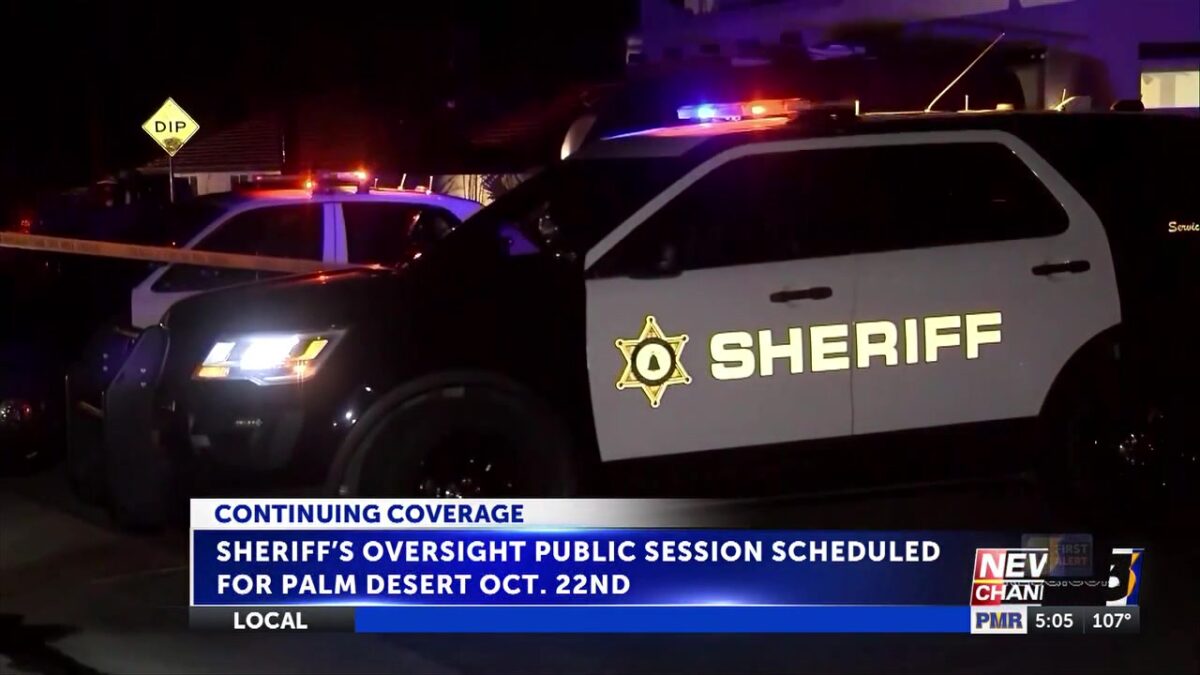
RIVERSIDE COUNTY, Calif. (KESQ)— Riverside County residents will soon have several opportunities to weigh in on how the Riverside County Sheriff’s Department is overseen as a Board of Supervisors Ad Hoc Committee begins gathering public input on potential oversight options.

The Board of Supervisors voted in July to establish the committee, which will examine ways to strengthen oversight of the Sheriff’s Department and evaluate different models used by counties and cities throughout California and elsewhere. The committee is expected to consider existing oversight capabilities, as well as the potential legal, financial and operational impacts of any changes.

The committee will now hold three public listening sessions throughout Riverside County, with one locally in Palm Desert, giving residents an opportunity to share their experiences, concerns and perspectives directly with county supervisors.

“The purpose of these listening sessions is to hear directly from the people we serve,” Board Chair and Second District Supervisor Karen Spiegel said. “Community input is essential as we explore oversight options and evaluate what approaches may best support transparency, accountability and public trust in Riverside County.”

First District Supervisor Jose Medina also encouraged residents to participate.

“Meaningful public engagement is a critical part of good governance,” Medina said. “We encourage residents to take part in this process and share their perspectives as we work toward recommendations that reflect the needs and values of Riverside County communities.”

Three Listening Sessions Planned

The first session will take place in the Riverside area:

Tuesday, October 13, 2026 6 p.m. to 8 p.m. Riverside County Administrative Center Board Hearing Room, First Floor 4080 Lemon Street, Riverside

The second session will be held in the Coachella Valley in Palm Desert:

Thursday, October 22, 2026 6 p.m. to 8 p.m. Coachella Valley Water District Steve Robbins Administration Building 75515 Hovley Lane East, Palm Desert

A third session will be held virtually:

Monday, October 26, 2026 6 p.m. to 8 p.m. English and Spanish livestreams will be available online.

Residents who want to speak during the virtual session must register before the meeting begins through the county’s online speaker form.

The county says feedback from the listening sessions, along with written comments submitted through the committee website, will be summarized and posted online. Personal identifying information will be removed before the comment summaries are published.

The county’s examination of sheriff oversight comes as Riverside County also prepares for a major change involving the Sheriff’s Department.

On September 30, Governor Gavin Newsom signed Senate Bill 1379, legislation authored by Riverside County-area Senator Sabrina Cervantes that requires Riverside County to separate the offices of sheriff and coroner by July 1, 2027, and establish an independent medical examiner’s office.

The new law also establishes public reporting requirements concerning deaths in county custody, including requirements for the county to make information about in-custody deaths available to the public.

The legislation requires the Board of Supervisors to appoint a medical examiner who is a licensed physician and surgeon qualified as a specialist in pathology. It also includes timelines for public reporting following an in-custody death and notification of next of kin after a cause of death has been determined.

The separation of the coroner function is separate from the Board of Supervisors’ current examination of broader sheriff oversight options, but both developments could shape the county’s approach to transparency, accountability and independent review.

The Ad Hoc Committee will continue examining oversight models and gathering public input over the coming months. The committee’s findings and recommendations are expected to return to the Board of Supervisors by the end of January 2027.

Click here to follow the original article.

Parker Palm Springs presents inaugural monthly event series on culture in new amphitheater

Angela Chen

Parker Palm Springs is introducing a new monthly culture series centered around influential voices in art, film, music, design and more.

Hosted on the grounds of the 13-acre estate, “Parker Sessions” brings what organizers are calling an “intimate cultural experience” to attendees at the hotel’s new amphitheater, which can seat 130 people.

The first session kicks off October 16, featuring a partnership with Desert X, alongside contemporary artist Nicholas Galanin and art collector Nancy Magoon. The conversation will be followed immediate with a live performance by Galanin’s band Ya Tseen.

“You have the most tremendous views of our mountain landscape,” said Kelly Teo, the Director of Commercial Strategy for Parker. “It is an outdoor amphitheater with this beautiful stone seating, and it was landscaped by Judy Camion, who had been our landscape artist since 2004, when the hotel was built, and so it is just a gem of a location. The idea again, is to create the intimacy with the audience, so you can actually interact with the artists.”

Upcoming sessions include interior design Jonathan Adler, singer Ann Hampton Callaway, landscape artist Judy Kameon, and jazz singer Cyrille Aimée.

For tickets and more information, head to parkerpalmsprings.com/parker-sessions.

Click here to follow the original article.

Food needs continue beyond Hunger Action Month in the Coachella Valley

Kiera McKinney

CATHEDRAL CITY, Calif. (KESQ) — Hunger Action Month has ended, but the need for food assistance continues across the Coachella Valley.

For 80-year-old Michael Goodman, getting groceries comes with two challenges: paying for food on a limited income and making a difficult drive.

FIND Regional Food Bank’s Homebound Delivery Program brings groceries to his Cathedral City home twice a week, including fresh fruits and vegetables.

“But somehow I’m able to make it work because FIND Food Bank helps,” Goodman said.

Goodman says his Social Security income leaves little room in his budget. Having groceries delivered also helps him avoid trips that are difficult for him.

“If that didn’t get delivered to me, I’d have to struggle with driving out there. And driving is hard for me,” he said.

Goodman is one of more than 200 homebound clients FIND Regional Food Bank serves. The program delivers groceries to seniors, people with disabilities and others who cannot access traditional food distribution sites.

In Palm Desert, Grill-A-Burger supports that work throughout the year by donating proceeds from milkshake sales. The restaurant also held a fundraiser on September 22 during Hunger Action Month.

General Manager Nancy Rhine says customers have embraced the effort.

“It means a lot to know that that provides meals for the community, for people here. And our customers here are very supportive of that, too,” Rhine said.

The restaurant’s individual fundraising total was not yet available.

FIND Regional Food Bank is now preparing for increased holiday demand. Kelly Mui-Chesterton, its vice president of development and community engagement, says money raised during Hunger Action Month will help sustain assistance through the end of the year and into the next.

FIND Regional Food Bank by the numbers

122,000 people served on average each month across its service area. More than 200 homebound clients receive grocery deliveries. More than $15,000 raised overall during Hunger Action Month. 10% to 12% increase in food need typically seen during the holidays. 21 million pounds of food distributed in 2025 across eastern Riverside and southern San Bernardino counties.

For Goodman, that support makes a difference in his daily life. His message to those who donate is simple.

“You’re really doing a great service to other people in the community,” he said.

To learn about food assistance, donations or volunteering, contact FIND Regional Food Bank at 760-775-3663

Click here to follow the original article.

Brian Grazer and Ron Howard receive Palm Springs Honors Award

Tommy Gallegos

LOS ANGELES, CA (KESQ)- The Palm Springs International Film Festival (PSIFF) launched its inaugural Palm Springs Honors at Soho House West Hollywood, celebrating outstanding achievement in filmmaking and honoring the legacy of Harold Matzner.

Filmmaking icons Ron Howard and Brian Grazer received the Harold Matzner Distinguished Achievement Award, presented by renowned film historian Leonard Maltin. The honor recognized the duo’s four-decade creative partnership and the enduring legacy of Imagine Entertainment.

Director Karina Lomelin Ripper was also recognized with the Harold Matzner Impact Award, receiving a $25,000 finishing grant for her short film Silver Blankets.

The evening brought together members of the PSIFF leadership, including Chairman Nachhattar Singh Chandi and Artistic Director Lili Rodriguez, alongside distinguished guests from the film community.

Bringing the spirit of PSIFF to Los Angeles, the inaugural event celebrated cinematic excellence while advancing Matzner’s legacy of leadership, philanthropy, and dedication to the Palm Springs International Film Society.

The Palm Springs International Film Festival is set for January 7th through the 18th, tickets are available now. For coverage of all thing PSIFF related, check News Channel 3 on air and online.

Click here to follow the original article.

Desert Water Agency customers to see rate changes in 2027; how much could bills increase?

Raymond Kalra

PALM SPRINGS, Calif. (KESQ) – Water bills are going up for Desert Water Agency customers starting January 1, 2027, and some Coachella Valley residents are already raising concerns about what another increase could mean for their household budgets.

The agency says the upcoming rate adjustments will result in an average 6.25% increase, with the additional revenue helping cover aging infrastructure, rising operational expenses and improvements to the region’s water system.

But for some residents, the question isn’t just how much more they’ll pay. It’s why their bills keep increasing.

“I’d like to know why. And I’d like to understand why the service charge is so hard, is so high. It just. It doesn’t make sense to me as a consumer,” said Kenneth Morris, a local resident.

Morris told News Channel 3 he is already paying significantly more in fixed service fees than he is for the water he actually uses.

He questioned why those fees are necessary, particularly as the cost of other everyday expenses continues to rise.

“It’s crazy. I mean I mean I don’t understand how it could be like 4 or 5 times what the, the actual charge for the water is. So it’s offensive really,” Morris said.

How much more will customers pay?

According to Desert Water Agency, the upcoming adjustments are part of a previously approved five-year rate plan.

Victoria Llort, the agency’s Director of Public Affairs and Conservation, told News Channel 3 that the average water customer will see an increase of approximately 6.25%.

For customers with a standard residential water meter, the fixed monthly service charge will increase by $2.70, from $43.27 to $45.97.

The charge for water consumption will also increase by 17 cents per unit, from $2.75 to $2.92.

One unit of water equals 748 gallons.

That means the total increase will vary depending on how much water a household uses.

What could this mean for the average household?

Using an illustrative single-family household consuming 26 units of water each month, or approximately 19,448 gallons, here’s how the changes would affect its monthly water service charges:

Water service 2026 2027 Fixed monthly charge $43.27 $45.97 Water usage (26 units) $71.50 $75.92 Total $114.77 $121.89

For a household using that amount of water consistently, the increase would total approximately $7.12 more per month, or $85.44 over a full year.

Actual bills will vary depending on water consumption, meter size and additional charges. The example does not include wastewater fees, taxes or other applicable assessments.

Why is Desert Water Agency increasing rates?

Llort says the adjustments are necessary to keep up with the growing costs of operating the water system.

“Our fixed costs represent essentially ongoing system maintenance, the infrastructure, our aging pipelines, also the increased cost of supplies due to inflation and everything of that nature,” Llort explained.

According to the agency, the additional revenue will support ongoing operations, infrastructure replacements and compliance with state regulations.

DWA is also working on long-term capital improvement projects involving water pipelines, wells, booster systems and emergency water storage.

Llort says many of those improvements involve infrastructure that customers rarely see but depend on every day.

The agency also maintains that, as a public water provider, it cannot collect more revenue than the cost of providing its services.

DWA says its rate structure is informed by an independent cost-of-service study that evaluates the expenses associated with maintaining and delivering water.

The agency’s Board of Directors approved the latest phase of the five-year rate plan on June 16, 2026. The original plan was approved in 2023.

Residents raise concerns about affordability

While DWA says the additional funding is necessary to maintain reliable service, some residents are questioning how much more households can reasonably afford.

James Simpson told News Channel 3 that people living on fixed incomes could be particularly affected by continued increases.

“My thought is many people are on fixed income, Social security retirements that don’t always go up each year,” Simpson said.

Simpson believes utility increases should better reflect the financial circumstances of residents, particularly retirees whose incomes may not increase at the same pace as their expenses.

Morris also expressed concerns about the cost of living for seniors, telling News Channel 3 that expenses such as health insurance have become increasingly difficult to manage.

News Channel 3 asked DWA directly how the agency responds to customers who say they cannot afford another utility increase.

Llort said the agency recognizes those concerns and offers programs designed to help qualifying households manage their bills.

Financial assistance available for customers

DWA offers a financial assistance program called Help2Others, administered in partnership with Inland SoCal United Way.

The program provides eligible customers with a one-time $300 credit toward their water bill within a 12-month period.

According to Llort, the credit could cover several months of water expenses, depending on a customer’s typical monthly bill.

The agency also offers payment plans for customers experiencing financial difficulties.

Llort encouraged residents dealing with unexpected expenses, including water leaks that result in unusually high bills, to contact DWA directly to discuss possible assistance.

Customers can learn more about available programs through the Desert Water Agency website.

Another rate increase is planned for 2028

The upcoming January adjustment will not be the final increase under the agency’s existing rate plan.

Llort confirmed that another increase is scheduled for January 1, 2028.

Under the published rate schedule, the fixed monthly charge for a standard residential water meter would rise again, from $45.97 to $48.84.

The water consumption rate would also increase from $2.92 to $3.10 per unit.

Llort said customers who want to voice concerns about future rates can participate in the agency’s public board meetings.

The Desert Water Agency Board of Directors meets on the first and third Tuesday of each month at 8 a.m.

Meetings take place at the agency’s headquarters at 1200 South Gene Autry Trail in Palm Springs, with options for virtual participation.

Residents can find meeting information, agendas and details about the agency’s rate structure at www.dwa.org.

A separate water-related tax is decreasing

While water service rates are increasing, DWA says property owners within its service area will see a decrease in the State Water Project property tax rate.

According to Llort, that rate is being reduced from six cents to five cents per $100 of assessed property value.

The tax helps support California’s State Water Project, which transports water from Northern California to Southern California.

The reduction is separate from the agency’s monthly water service charges and does not eliminate the upcoming increase on customers’ water bills.

For now, residents like Morris are hoping the agency will provide clear explanations about why their costs continue to rise.

The new drinking water and wastewater rates take effect January 1, 2027, with the changes expected to appear on February bills.

Click here to follow the original article.

Palm Desert City Council passes new AI policy

Dakota Makinen

PALM DESERT, Calif. (KESQ) – UPDATE: 10/8: Palm Desert City Council approved a new policy Thursday in a 5-0 vote outlining how the city can use artificial intelligence and what safeguards would be required.

The proposed policy will classify AI uses as low, moderate or high risk, with different levels of oversight depending on how the technology is used. Examples include helping city employees draft documents, assisting residents through a website chatbot and tools that could influence decisions affecting people or businesses.

City Clerk Anthony Mejia says the city wants to protect its data and ensure higher-risk applications receive additional review. The city has already decided not to move forward with a proposed AI-assisted building plan review system because officials did not believe the technology was ready.

Now that the policy is approved, the city plans to create a public webpage listing approved AI tools and their uses.

The proposed policy also outlines safeguards for protecting city data and requires additional review for higher-risk AI applications. City officials say they want to use the technology to improve efficiency while ensuring its use is evaluated and monitored.

Click here to follow the original article.

Desert Hot Springs addresses allegations of animal abuse and neglect at partner rescue organization in Washington

Jesus Reyes

DESERT HOT SPRINGS, Calif. (KESQ) – The city of Desert Hot Springs issued a statement addressing serious allegations of animal abuse and neglect at Pittie Project PNW, one of its partner rescue organizations located in Washington state.

On Monday, approximately 30 dogs living in extremely poor and unsanitary conditions were rescued this week from Pittie Project PNW. Authorities said photographs provided to investigators showed multiple dogs appearing injured and in poor health.

Detectives also observed numerous dogs in what seemed to be extremely poor condition, living in unsanitary environments, with no apparent access to adequate food or water.

According to the Whatcom County Sheriff’s Office, injuries and conditions visually observed by investigators included, but were not limited to:

Open wounds on dogs’ bodies, legs, and tails Evidence of worms in feces Matted and discolored fur consistent with prolonged exposure to feces and urine Significantly underweight, with ribs, hips, and leg bones visible Strong foul odors throughout the living areas where the dogs were housed.

Investigators also learned that various volunteers had previously removed 13 additional dogs from the property after discovering the animals’ condition.

Authorities in Washington said the investigation is ongoing. Ashley Georgia, 38, the founder and director of the Pittie Project PNW, was officially charged with 30 counts of first-degree animal cruelty on Wednesday.

The Desert Hot Springs Animal Care and Control has sent over dogs to the Pittie Project PNW as part of its partnership. There is no word on how many dogs have been sent to the organization.

Desert Hot Springs said it is fully cooperating with local law enforcement and remains committed totransparency and accountability to residents and stakeholders.

“Animals entrusted to our care are part of our Desert Hot Springs family. Their safety and well-being are priorities for us, and our dedication to their welfare continues after placement with a rescue partner. The City is committed to reviewing and strengthening its rescue partnership protocols to uphold the highest standards of animal welfare”

– Desert Hot Springs statement (10/7/26)

Click here to follow the original article.