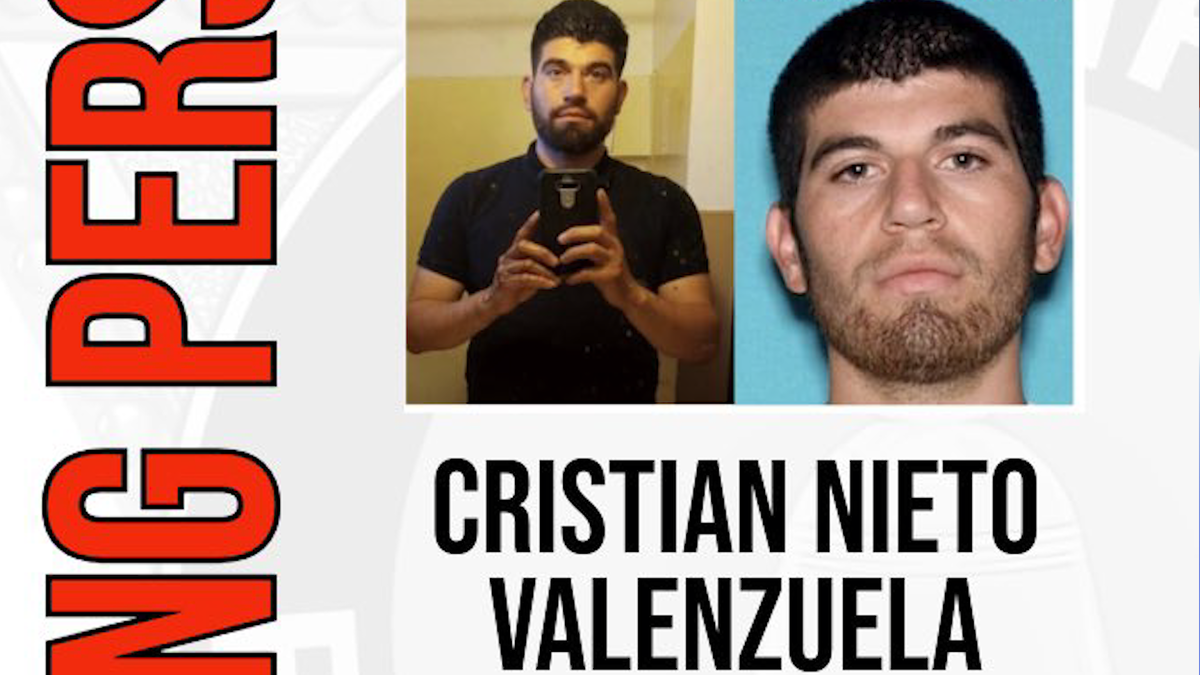
Bill ends free rides for defendants seeking mental health diversion

City News Service

RIVERSIDE (CNS) – Legislation backed by the Riverside County District Attorney’s Office to prevent potentially violent criminal offenders from exploiting courts’ mental health treatment allowances by using claims of psychiatric disorders to avoid incarceration is now enshrined in state law.

Gov. Gavin Newsom on Monday signed Assembly Bill 46, introduced by Assemblywoman Stephanie Nguyen, D-Sacramento, and sponsored by the California District Attorneys’ Association. It was immediately chaptered by the Office of the Secretary of State, becoming part of the state’s statutory scheme.

“Our office was proud to stand with the coalition of public safety advocates that worked for years to advance these important reforms,” Chief Deputy District Attorney Ivy Fitzpatrick said, adding that AB 46’s provisions will “better protect victims, support treatment and enhance public safety.”

Earlier this year, Riverside County District Attorney Mike Hestrin emphasized the need for changes to state law “after repeated tragic cases in which dangerous defendants committed new violent crimes while on mental health diversion.”

Diversion is permitted under Penal Code section 1001.36, which provides criteria for when an offender is eligible for mental health treatment in lieu of jail or prison. In recent years, a high volume of cases, ofteninvolving violence, have been removed from the criminal adjudication process in Riverside County and assigned to diversion.

The main requirement for judicial approval of diversion generally consists of affidavits from at least one mental health specialist affirming the defendant has a psychological disorder that likely contributed to perpetration of the crime. Additionally, the defendant, through his or her attorney, is supposed to submit a specific plan for treatment of the disorder, usually involving therapy.

However, even without a treatment plan, some judges have been subject to appellate review and invalidation of their decisions to reject diversion, according to supporters of AB 46.

The bill established a new standard that must be met before pretrial diversion can be permitted: “The defendant will not pose a substantial and undue risk to the physical safety of another person, if treated in the community” and out of custody.

Judges will now be free to consult with prosecutors, defense attorneys, victims, as well as scrutinize a defendant’s criminal history, before making a decision on whether to grant psychiatric treatment.

In a 2024 case out of San Diego County, a judge attempted to squash diversion for a repeat criminal offender, Jeanette Sarmiento, who tried to rob a person but used a post-traumatic stress disorder diagnosis and other factors to argue that mental health diversion was a viable option in lieu of standardcriminal adjudication. But she did not come forward with a specific treatment plan. The California District Attorneys’ Association cited the case as an example of excessive leniency favoring an offender.

“The record showed that the defendant `for many years has been under the care of a psychiatrist or other physician and has been treated for PTSD and depression or has been offered treatment, and despite such treatment or offers, she continued to abuse methamphetamine and to commit crimes,”’ the CDAA stated.

The judge’s cancellation of diversion led the defendant to appeal, culminating in the state Court of Appeals for the Fourth District, a jurisdiction that includes Riverside County, countermanding the lower court judge’s decision and permitting Sarmiento to proceed with a non-specific diversion plan.

The CDAA cited multiple instances in which defendants placed in diversion had failed to curb their criminal conduct, sometimes with fatal results.

In Sacramento County, a defendant who perpetrated two takeover robberies in 2024 was nonetheless granted diversion, only to fatally stab a 40- year-old man, apparently without provocation, the organization said.

In Orange County, a defendant who served seven years behind bars for assault with a deadly weapon stabbed a pedestrian with a machete for no reason. After he was later granted diversion in that case disposed in Orange County Superior Court, “he absconded from his treatment program and stabbed another bystander 34 times with a box cutter in Los Angeles,” the CDAA said. That victim survived.

In Stanislaus County, a defendant granted diversion in a neighboring jurisdiction after he admitted carjacking a senior went on to use his vehicle to run over and kill his girlfriend — whom he was charged with assaulting on several prior occasions, according to the CDAA.

Defendants who complete diversion programs can still have their offenses expunged from criminal records.

Click here to follow the original article.

Report reveals highest paid on Riverside County government payroll

City News Service

RIVERSIDE (CNS) – The 10 highest paid officials in Riverside County government last year were working almost entirely in public health, according to a report released today by the California State Controller’s Office.

The agency on Tuesday published its 2025 Government Compensation in California analysis, showing how taxpayer funds were spent in the previous year, and who was receiving what for being on the public payroll. The data is available at publicpay.ca.gov.

As in 2024, the individual who received the largest income in county government was an unnamed staff psychiatrist for the Riverside University Health System’s Department of Behavioral Health. That doctor received a total $608,296, a large part of which may have been related to overtime claims.

Amounts documented by the controller’s office include base pay, overtime and lump sum disbursals, which are often tied to banked vacation and sick leave time that went unused, sometimes for years, then cashed out.

The second- and third-highest paid in 2025 were also Behavioral Health psychiatrists, both unnamed, taking home $569,294 and $560,356, respectively.

No. 4 on the list was Director of Behavioral Health Dr. Matthew Chang, who has consistently landed in the top 10 since the beginning of the decade. His composite salary last year was $553,240. Just behind him was another unidentified psychiatrist, whose total earnings were $545,811.

No. 6 was Riverside University Health System-Medical Center CEO Jennifer Cruikshank, whose total comp last year was $517,042, according to the report.

Figures showed next in line was another RUHS psychiatrist, identity not disclosed, who received $508,604,An unidentified sheriff’s master investigator was at No. 8 and the only non-medical classification in the top 10, with a total intake of $501,453, some of which may have been tied to a lump sum payout.

Rounding out the 10 highest paid were unnamed psychiatrists, one assigned to detention health to service the jails, and the other designated broadly as a Behavioral Health specialist, with annual incomes of $496,506 and $489,415, respectively.

County CEO Jeff Van Wagenen was at No. 20 for earnings in 2025, compared to No. 30 in 2024. His total compensation last year was $439,606, according to figures.

The five members of the Board of Supervisors were way down the list for annual comp packages, making less than District Attorney Mike Hestrin, whose earnings totaled $392,002, Sheriff Chad Bianco, at $391,069, or Public Defender Steve Harmon and Chief Counsel Minh Tran, who received $366,407 and$365,912, respectively. The supervisors were also behind many sheriff’s sergeants, deputy district attorneys, deputy public defenders, registered nurses, pharmacists, medical administrators and others.

The supervisors’ composite pay ranged from a high of $257,439 to a low of $133,913 in 2025, with Supervisor Jose Medina at the bottom. In keeping with a standard set by his District 1 predecessor, retired Supervisor Kevin Jeffries, Medina has vowed to keep his salary frozen for the duration of his service.

The controller’s website indicated that the average pay for a county employee last year was $73,713, compared to $65,739 in 2024. County government is the single largest employer in Riverside County, maintaining more than 26,000 positions. Roughly $2.36 billion in total wages were paid in 2025.

Click here to follow the original article.

Palm Springs City Council approves new convention center food service contract

Luis Avila

PALM SPRINGS, Calif (KESQ) – The Palm Springs City Council has unanimously approved a new contract putting OVG Hospitality in charge of food and beverage service at the Palm Springs Convention Center for the next five years.

Council members approved the agreement during a special meeting Tuesday. OVG Hospitality, a division of Oak View Group, already manages the convention center under a separate agreement approved last year, along with the Palm Springs Plaza Theatre and Acrisure Arena.

The vote came one week after council members postponed a decision, directing city staff to continue negotiations with OVG Hospitality and the current food service provider, Savoury’s.

Mayor Naomi Soto said that extra week of negotiations ultimately resulted in a stronger agreement.

“What you see on this council is that we have a variety of expertise, perspectives and I think that makes the business we do at the City of Palm Springs stronger,” Soto said.

One of the biggest concerns raised during last week’s meeting was whether local restaurants and independent vendors would still have a place at the convention center under a single food service operator.

City officials say the contract now requires more opportunities for Coachella Valley restaurants and vendors to participate in convention center events and creates a separate process for local nonprofit groups to provide food at certain events. Staff will return to the council within 30 days with additional details on how those programs will work.

“We are so excited that within this new contract with our new management fee structure we are able to get a lot of bells and whistles that are confirmed and secured in this contract and working with local brands is a key part of that,” Soto said. “Now we have direct promises from OVG that they’re going to make that Palm Springs feel real in the building.”

The agreement also changes how the city will receive revenue. Instead of collecting a percentage of food and beverage sales, the city will now collect the revenue directly while paying OVG Hospitality a management fee.

According to city staff, the agreement guarantees Palm Springs at least $750,000 annually and is expected to generate more than $17 million over the next five years—about $3.4 million more than the previous payment structure.

City leaders say the agreement isn’t just about food service. Soto said having a long-term operator in place gives meeting planners more confidence when booking events years in advance, helping attract more conventions, visitors and tourism dollars to Palm Springs.

“People want to book conferences and events and experience and travel when they know what to anticipate, especially for conferences,” Soto said. “The fact that we have a five-year contract with a globally known company able to do food and beverage at the convention center means that planners and conferences are able to book out saying, ‘Wow, I’m excited for what’s happening at Palm Springs.'”

OVG Hospitality is expected to take over food and beverage operations at the Palm Springs Convention Center beginning July 1.

Oak View Group declined News Channel 3’s request for an on-camera interview following Tuesday’s vote.

Stay with News Channel 3 for more.

Click here to follow the original article.

Grand jury says Riverside County code enforcement isn’t ‘living up to code’

Garrett Hottle

RIVERSIDE, Calif. (KESQ) A Riverside County civil grand jury says the department responsible for enforcing county rules often fails to apply them fairly to the public or to its own employees.

The 19-page report titled “Code Enforcement: Not Living up to Code,” was released June 24. It drew on more than two dozen interviews with current and former employees and a labor union representative, along with personnel records, complaint files and internal documents. Its central conclusion the culture of the department doesn’t match its mission.

Code Enforcement is part of the county’s Transportation and Land Management Agency. With about 81 funded positions and five district offices, it handles complaints across unincorporated Riverside County illegal dumping, unpermitted cannabis grows, junk piles, noise, swap meets and short-term rentals.

The grand jury says that work has been undercut from the inside.

Retaliation and ‘highway therapy’

Employees told investigators that managers shouted, bullied and spread rumors, and that workers who pushed back were punished. Several described being moved to far-off offices without warning transfers they called “highway therapy” or “punishment detail” which they said were meant to force people to quit, transfer or retire.

Current Code Enforcement and TLMA managers denied using those tactics, the report says.

Promotions the grand jury calls ‘unprincipled’

The report says some promotions were based on favoritism rather than qualifications. In one case, investigators say a candidate who didn’t meet the minimum experience for senior code enforcement officer was advanced after copying the job’s requirements word-for-word into a resume, beating out officers with far more time on the job.

In another instance the report says a manager intervened to get a favored applicant back onto a hiring list after that person had been cut for not qualifying.

Pressure to ‘stand down’

The most serious findings involve the enforcement itself. The grand jury says officers were told to “stand down” and “tread lightly” on certain properties in the county’s tourist-heavy areas, and that the directives came from the offices of the Board of Supervisors.

Some employees said the orders were given verbally, by phone.

According to the report, employees tied the leniency to certain constituents’ relationships with — and contributions to the board. Investigators point to compliance deadlines stretched up to 18 months, dismissed noise citations, unpermitted events, and two rental “party houses” in a luxury community that were left alone while complaints went unanswered.

Upper management told the grand jury it was unaware of any “stand down” orders.

It is not the first time the issue has surfaced. The report notes a 2015-2016 grand jury reached a similar conclusion about supervisors’ offices and selective enforcement.

Complaints and turnover

The grand jury also faulted how the county handles internal complaints. It says roughly 80% of harassment complaints were downgraded to “rude and discourteous behavior” and went no further, and that the count of complaints employees said they filed didn’t match what Human Resources produced.

Leadership has also been in a state of change with 12 interim or permanent directors in 15 years according to the report.

Statement from the County

The county declined an interview request, citing respect for the grand jury process, and provided a statement below:

“The County of Riverside has received the Riverside County Civil Grand Jury report and is currently reviewing its findings and recommendations. The County will provide a formal response within the timeframe required by California law.

“The mission of the Riverside County Code Enforcement Department is to enhance public safety and improve the quality of life in partnership with our communities through fair, consistent, and professional enforcement of county ordinances. The County remains committed to providing courteous, equitable, and unbiased service to all residents while continually evaluating opportunities to strengthen its programs and operations.”

The report carries nine findings and eight recommendations, from FMLA training for managers to documenting any communication from elected officials that touches an enforcement case.

Under state law, the Board of Supervisors must respond to all nine findings and eight recommendations by Sept. 24. TLMA and Code Enforcement were invited to respond as well.

Tune into News Channel 3 at 6pm for the full report on this story.

Click here to follow the original article.
SCOTUS rules against President Trump’s birthright citizenship executive order

Matthew Pearce

THOUSAND PALMS, Calif. (KESQ) — The U.S. Supreme Court ruled in a 6-3 decision against President Trump’s executive order, upholding birthright citizenship. The Supreme Court states the order does not align with the language of the fourteenth amendment, which states:

“All persons born or naturalized in the United States, and subject to the jurisdiction thereof, are citizens of the United States and of the State wherein they reside.”

This executive order was signed on Jan. 20, 2025, the first day of President Trump’s second term, making it a key point of his campaign. This executive order states those born in the United States to noncitizens parents are not subject to the jurisdiction of U.S. law.

The 14th Amendment was proposed by Congress in 1866 and ratified in 1868, less than five years after the American Civil War. The purpose was to prohibit states from depriving any person of “life, liberty or property without due process of law.”

Locally, members of the immigrant community are reacting to this news, taking it as a relief. José Garduño, president of Comité Latino, a local pro-migrant organization, said the Latino community has experienced enough injustice and discrimination.

“Thank you for passing this law, the children born in this country are respected, because where we are born, we are from.”

Samantha Rodriguez, Founder of United Youth We Stand and child of immigrant parents, said this ruling is a defining moment for her generation and beyond.

“Being a daughter of immigrants, I think this is super important for me because this determines my future and it determines the future of thousands of kids, millions probably, around the world.”

President Trump used immigration policy as a focal point of his campaigns during his first and second terms as he continues to press Congress to get legislation through.

Click here to follow the original article.
Two Coachella Valley hospitals recognized for LGBTQ+ inclusive care during Pride Month

Kiera Seapy

COACHELLA VALLEY, Calif. (KESQ) – As Pride Month comes to a close, two of Coachella Valley hospitals are receiving national recognition for their efforts to provide inclusive care for LGBTQ+ patients.

Eisenhower Health in Rancho Mirage has been named an LGBTQ+ Healthcare Equality High Performer by the Human Rights Campaign Foundation.

Desert Regional Medical Center in Palm Springs was named a Healthcare Equality Leader and received a perfect score of 100 on the index.

The designation is apart of the Healthcare Equality Index, which is a national tool that evaluates hospitals on polices and practices related to LGBTQ+ patient care, visitor experience, and workplace inclusion.

Mike Thompson, the CEO of LGBTQ Community Center of the Desert said “often times people come to us because they’ve had frustrations in accessing the appropriate type of care.”

They then look to the center to find out who they can go to and what care one needs based on their identity, then they “Point to Eisenhower because we know they’re going to get the care they need at Eisenhower Health ” said Thompson.

Hospitals included in the index say they will continue expanding efforts to ensure respectful and equitable care for all patients.

“It’s a wonderful recognition of the time, energy and effort we as an organization have put into delivering health care to everyone in our community, especially the LGBTQ plus community who come to us with special needs and concerns and requests.” said Carl Enzor, Chief Administrative officer of primary care and speciality care, Eisenhower health.

Click here to follow the original article.

Average Riverside County gas price drops for 40th time in 41 days

City News Service

RIVERSIDE (CNS) – The average price of a gallon of self-serve regular gasoline in Riverside County dropped today for the 40th time in 41 days, falling 2.6 cents to $5.261, its lowest amount since March 11.

The average price has dropped 79.4 cents over the past 41 days, including three-tenths of a cent Monday, according to figures from the AAA and Oil Price Information Service. It dropped 18 consecutive days, was unchanged June 8 and resumed decreasing the following day.

The average price is 12.5 cents less than one week ago and 66.3 cents lower than one month ago, but 84.9 cents more than one year ago. The national average price dropped for the 39th time in 40 days, falling 1.3 cents to $3.847, its lowest amount since March 18. It is 7.9 cents less than one week ago and 50.9 cents lower than one month ago, but 66.1 cents more than one year ago.

The national average price has dropped 71.7 cents over the past 40 days, including seven-tenths of a cent Monday. It decreased 33 consecutive days, rose two-tenths of a cent Wednesday and resumed decreasing Thursday.

“Average gasoline prices fell in 46 states over the last week,” Patrick De Haan, head of petroleum analysis at GasBuddy, which provides real-time gas price information from more than 150,000 stations, said in a statement released Monday.

“The declines came despite a turbulent week, as fresh attacks were traded between the U.S. and Iran before both sides agreed to halt hostilities just in time Sunday, preventing what could have been a significant spike in oil prices.“For now, GasBuddy anticipates the national average will continue drifting lower this week, though the situation remains anything but predictable.”

Click here to follow the original article.
Law enforcement outlines the ways residents should report illegal fireworks

Gavin Nguyen

RIVERSIDE COUNTY, Calif. (KESQ) – Ahead of the Fourth of July, law enforcement wants to be clear: not all live fireworks are an emergency.

The Riverside County Sheriff’s Office posted an announcement to residents of the county on Instagram and said reporting illegal fireworks should not involve calling 911.

“Every second counts when lives are on the line. Help us keep our 9-1-1 lines clear for emergencies.

Please do not call 9-1-1 to report fireworks, instead, use our online reporting form at riversidesheriff.org or call 800-950-2444.

Let’s all work together to keep our communities safe!”

Riverside County Sheriff’s Office

Online portal to report illegal fireworks on RSO’s website

We checked in with other local agencies, too.

The Palm Springs Police Department echoed RSO and cautioned residents to only call 911 for emergency situations. For reporting fireworks, they listed a non-emergency number: (760) 324-1441.

Tonight, we’re also hearing from other agencies like the Indio Police Department. They say they have the “Harmony Line,” which is used for illegal firework reports. You can call that number at (442) 300-3104. Dispatchers there assured the public that calling the Harmony Line will not delay response times; instead, they said it could even speed up how quickly your information is taken, since you won’t have to wait for available dispatchers.

We had an opportunity to see inside Indio Police Department’s dispatch center. They called it the biggest and best centers in the valley, staffed with the best dispatchers – but admitted even it could be overwhelmed by a flood of 911 calls reporting fireworks.

“It was pretty bad. We had a lot of calls,” said dispatcher Priscilla Avina. “We [did not have] enough lines to get a hold of all the critical calls. They were taking up the lines and it was hard to get to through it, through to every call.”

Dispatchers classify critical calls as ones that involve life-and-death emergencies, medical aids, and incidents that require a police response. Illegal fireworks, notably, do not fall under that category in most situations, especially if residents are reporting loud booms. Of course, it’s a different story when fireworks light fires.

Stephanie Monroy, who was selling safe & sane fireworks at the corner of Avenue 44 and Jackson Street in Indio to raise money for her church, had a close call a few years back.

“A couple of years ago, there was a neighbor of mine. They were doing [an] illegal fireworks show, and our house caught on fire,” she recounted.

“I just saw it land on my neighbor’s tree, and then it spread from their tree to our trees in our home. And thankfully, someone was driving around with some hoses, like water hoses. We were able to put it out because it does take a while for, you know, responders to arrive at the scene.”

With the risks associated with illegal fireworks, Sgt. Abraham Plata, with the Indio Police Department, noted $2,000, $3,000, and $5,000 fines that residents lighting them could face.

His advice ahead of the holiday weekend: “We need somebody from the household to be the adult in the house, to tell others in the house not to light up illegal fireworks. Someone from every household needs to step up to the plate and not allow it. Or we need cooperation from the community to report it.”

Click here to follow the original article.
Keeping pets safe during Fourth of July fireworks

Dakota Makinen

COACHELLA VALLEY, Calif. (KESQ)- As families get ready to celebrate the Fourth of July, veterinarians are reminding pet owners to prepare for the holiday before the fireworks begin.

Dr. Michael Hyder with VEG ER for Pets says fireworks are just one of several concerns this time of year. Emergency veterinarians also see pets suffering from anxiety, heat-related illnesses, escapes, and illnesses caused by eating foods they shouldn’t.

“Pets don’t understand what’s happening,” Hyder said. “They simply hear loud, unpredictable sounds, and many react by trying to hide or escape.”

Experts recommend bringing pets indoors well before dark, securing doors and gates as guests come and go, and creating a quiet room where pets already feel comfortable. Running a television, fan, or white noise machine can also help reduce the sound of fireworks as part of an overall plan.

If a pet has a history of severe anxiety during fireworks, Hyder recommends talking with your veterinarian before the holiday to discuss ways to help keep them calm.

“The biggest piece of advice I can offer is to think about the holiday from your pet’s perspective,” Hyder said. “A little planning ahead can prevent many of the emergencies we see every Fourth of July.”

Click here to follow the original article.
Fourth of July celebrations spark reflection ahead of Nation’s 250th Birthday

Timothy Foster

COACHELLA VALLEY, Calif. (KESQ) — As Americans prepare to celebrate the Fourth of July, a broader national conversation is emerging about how the country should mark its upcoming 250th birthday, with opinions varying on what the milestone should represent.

Across the Coachella Valley, Independence Day traditions like backyard barbecues, neighborhood gatherings, and community fireworks shows continue to draw families and friends together, marking one of the most widely celebrated holidays of the summer. However, some residents say this year’s celebrations also come with added reflection about the nation’s history, identity, and future direction.

Some residents say there is noticeable tension surrounding national celebrations in recent years, but they also emphasize that the Fourth of July remains a meaningful symbol of freedom, patriotism, and shared American values.

Others say the country’s history should be examined more closely during major national milestones, including the upcoming 250th anniversary of the Declaration of Independence. They argue that national celebrations should include a range of perspectives that reflect the complexity of American history and what independence means to different communities today.

Despite differing viewpoints, many residents agree that the Fourth of July continues to serve as an important opportunity for community gathering, reflection, and connection, regardless of political or historical perspective.

As large crowds are expected at events throughout the valley this weekend, local officials are also reminding residents to prioritize safety, follow all fireworks regulations, and attend only permitted celebrations as the holiday weekend gets underway.

Click here to follow the original article.