Coachella breaks ground on $50 million Avenue 50 bridge project aimed at improving safety, boosting economic growth

Raymond Kalra

COACHELLA, Calif. (KESQ) – A decades-long flooding concern in Coachella could soon become a thing of the past as city leaders officially broke ground Thursday on a roughly $50 million bridge project along Avenue 50.

The project will replace an existing low-water crossing over the Coachella Valley Stormwater Channel, which has been prone to flooding and road closures during major storms.

But city officials say the investment is about more than improving public safety. They believe it could help reshape Coachella’s future by improving transportation connections, attracting new businesses, creating opportunities for economic development, and supporting the city’s continued growth.

The groundbreaking ceremony took place Thursday morning at Sierra Vista Park, with Mayor Frank Figueroa, city councilmembers, regional transportation representatives, and community leaders in attendance.

Addressing decades of flooding concerns

For years, flooding along Avenue 50 has forced the city to close the roadway during significant storms, creating challenges for residents, commuters, and emergency vehicles.

City Councilmember Denise said the flooding has been a longstanding concern for the community.

“For many, many years, for decades, this area here floods and floods enormously, to the point that we have to shut down the street,” she explained.

The new bridge will allow drivers to cross above the stormwater channel instead of traveling through the existing low-water crossing.

The project also includes widening and realigning Avenue 50, along with improvements to Tyler Street.

Mayor Frank Figueroa said the project will provide a safer, more reliable connection for residents, agricultural workers, and visitors traveling through the eastern Coachella Valley.

Figueroa, who regularly uses Avenue 50 to commute to work, said the existing roadway can create challenges for drivers trying to access Expressway 86.

He believes the new bridge will help eliminate a major obstacle for those traveling through the area during storms.

A major investment in Coachella’s economic future

Beyond flood protection, city officials see the bridge as a critical investment in Coachella’s economic development.

The improvements are expected to provide better connections between Expressway 86, nearby industrial areas, and downtown Coachella.

“This is going to be an economic driver for our city, because this is going to signal to people, this is where Coachella is open for business,” Figueroa said.

City Engineer and Public Works Director Andrew Simmons explained that limited transportation infrastructure has historically presented challenges for certain types of development.

According to Simmons, industrial areas near Avenue 52 have significant potential for growth, but access to major transportation routes remains an important consideration for developers.

He believes the Avenue 50 improvements could help attract new investment while supporting housing, industrial development, tourism, and job opportunities.

“So a project like this is really going to help with jobs, with industrial growth, with housing growth, and with the whole tourism aspect of being able to come in and access our downtown area,” Simmons said.

Simmons also pointed to the proposed passenger rail connection between Los Angeles and Coachella as another reason transportation infrastructure will be increasingly important.

The planned rail service would connect the eastern Coachella Valley to Southern California’s broader passenger transportation network, with Coachella envisioned as a future station location.

City officials believe improving access to downtown and surrounding areas now could help position Coachella for additional economic opportunities in the years ahead.

More than a decade in the making

Although Thursday marked the official groundbreaking, work to bring the bridge project to life began more than a decade ago.

Simmons said the project dates back to 2014, when the city began the environmental review process.

He joined the project in 2019, following approximately five years of environmental work.

Since then, the city has worked through property acquisitions, design requirements, and coordination with multiple agencies.

Simmons explained that the project required cooperation among the City of Coachella, the Cabazon Band of Indians, the Coachella Valley Water District, and Caltrans because of their respective interests and jurisdictions in the surrounding area.

The process also included eminent domain proceedings as the city worked to secure property needed for construction.

City Councilmember Juan Martinez said Thursday’s ceremony represented years of work by city leaders, regional partners, and those who originally envisioned the project.

Martinez emphasized that the bridge will improve connections for residents while also providing better access for emergency vehicles responding to calls.

What drivers can expect during construction

While construction is expected to take approximately two years, city officials say drivers will still be able to use the existing Avenue 50 crossing while work is underway.

According to Simmons, the new bridge will be constructed approximately 600 feet south of the current low-water crossing.

That design will allow crews to build the new roadway without requiring a complete closure of the existing crossing throughout construction.

“The main thing just for the community to remember is that Avenue 50 low-water crossing will remain open during the construction,” Simmons said.

The city also plans to repave the existing crossing to help minimize traffic impacts during the construction period.

Officials are still encouraging drivers to remain alert around construction zones, follow posted traffic signs, and watch for crews working near the roadway.

Although the existing crossing is expected to remain available during construction, it may still be subject to weather-related restrictions when flooding occurs.

Part of a larger infrastructure investment

The Avenue 50 bridge is one component of a broader infrastructure effort across Coachella.

Figueroa said the city is pursuing roughly $200 million in infrastructure investments involving roads, water and sewer systems, transportation connections, and other improvements.

He described the projects as part of a phased effort to connect different areas of the city and prepare for future growth.

Other improvements discussed by city leaders include additional roadway work, future bridge planning, and upgrades to nearby community facilities.

The mayor also emphasized that the bridge project is being funded through grants and other funding sources rather than the city’s general fund.

He credited partnerships with regional, state, and federal transportation agencies for helping make the project possible.

For city leaders, Thursday’s groundbreaking represents more than the beginning of construction.

It marks the start of a long-awaited effort to improve public safety, strengthen transportation connections, and create new opportunities for one of the Coachella Valley’s growing communities.

Construction is expected to continue over the next two years.

Stay with News Channel 3 for continuing coverage of the Avenue 50 bridge project and other major developments across the Coachella Valley

Click here to follow the original article.
Agua Caliente opens new gas station in Cathedral City

Dakota Makinen

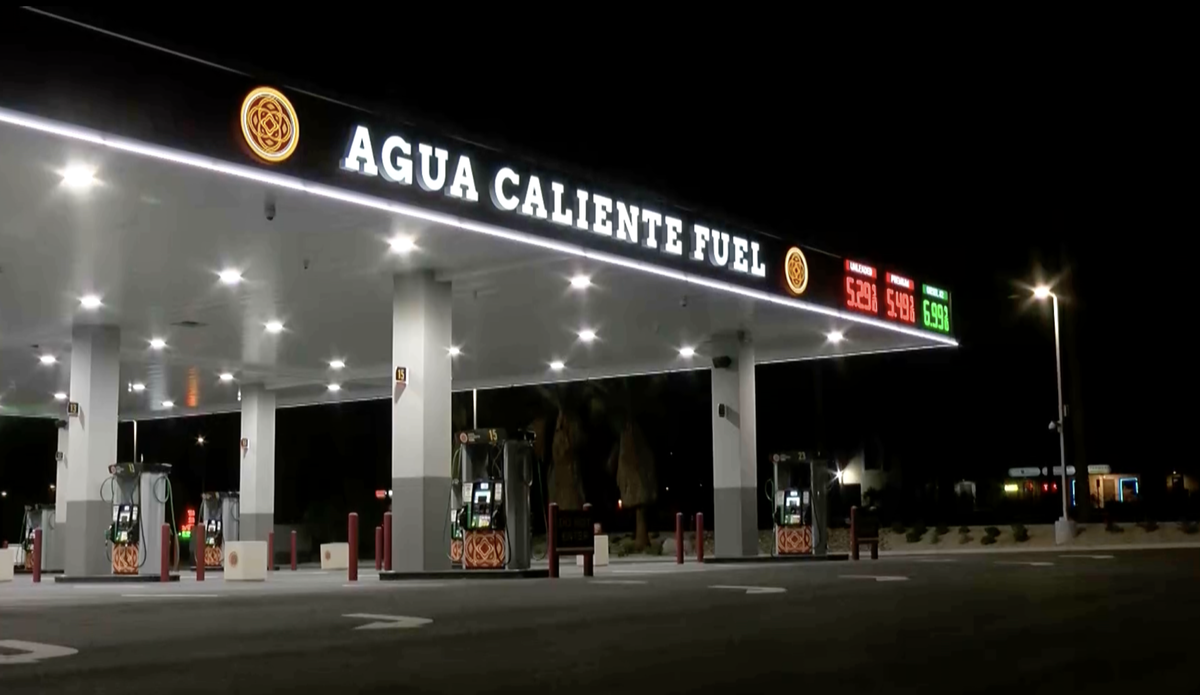
CATHEDRAL CITY, Calif. (KESQ)- A new Agua Caliente fuel station opened this morning in Cathedral City, adding another gas station option for Coachella Valley drivers as high fuel costs continue to strain household budgets.

The station is Agua Caliente’s third fuel location in the valley. Company officials say it is designed to help drivers fuel up quickly, with lights indicating which pumps are available.

For opening day, Agua Caliente also provided gas gift cards after News Channel 3 asked the company to help give drivers some relief at the pump. Drivers were randomly selected to receive the cards.

Anette Flores, a Cathedral City resident, said the gift card would help with the cost of gas.

“It is so helpful, especially now,” Flores said.

Jenny, who drove to the station from Yucaipa, called the gift card “a godsend,” saying gas prices can affect whether she and her family feel able to go places.

“It’s a big relief because it’s like we’re not going anywhere. We’re stuck, you know? … It helps us get out,” she said.

Agua Caliente officials say they monitor fuel prices in the area and aim to remain competitive.

Drivers can compare prices at the new Cathedral City station with other gas stations nearby.

More information on the lowest gas prices in the valley can be found on our Gas Gauge page on our website.

Click here to follow the original article.
Former Palm Springs CEO William Rodriguez back in court as defense moves to toss refiled murder charge

Garrett Hottle

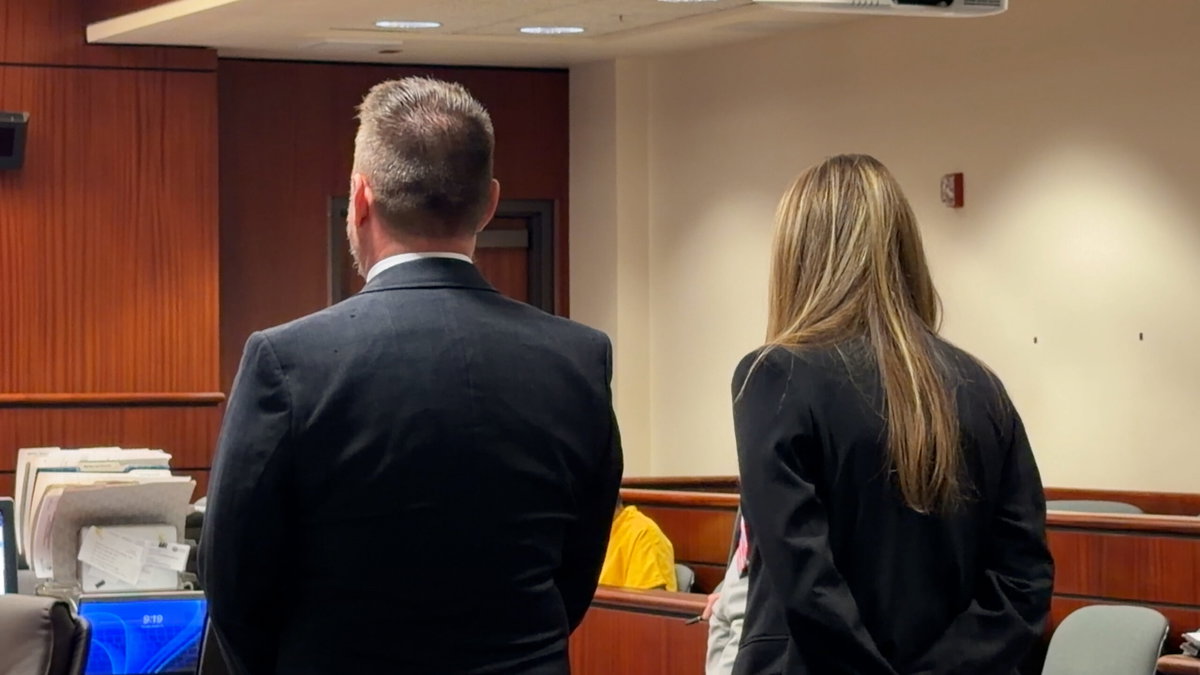
INDIO, Calif. (KESQ) William “Billy” Rodriguez was back in court Thursday morning, where his attorney is asking a judge to throw out the murder charge prosecutors refiled against him last month.

The hearing was pushed to Monday at 8:30 a.m. after the Riverside County District Attorney’s Office asked for more time. Defense attorney Molly Tucker objected to the delay in a written filing.

Rodriguez, the former CEO of Silvercrest Advertising, is accused of hitting 60-year-old Christina Barrington from behind as she rode her scooter on East Palm Canyon Drive in Cathedral City in October 2024 and driving off. She died the next day. He has pleaded not guilty.

Judge John Ryan dismissed the murder count in August at the end of the preliminary hearing, ruling there wasn’t enough evidence to for Rodriguez to stand trial for second degree murder.

He ordered Rodriguez to stand trial on felony hit-and-run causing death and driving on a suspended license. Prosecutors refiled the murder charge two weeks later, saying they still believe the evidence supports it.

Tucker’s motion asks the court to review the preliminary hearing testimony and dismiss the charge again. If a judge agrees, state law would make it very difficult for prosecutors to bring it a third time.

There was also a brief discussion in court Thursday about whether Ryan, who already ruled on the evidence once, should be the one to decide the motion.

Rodriguez remains free on $2 million bail. He is required to wear a GPS monitor and an alcohol-monitoring device and has surrendered his passport.

Click here to follow the original article.
Fire breaks out at News Channel 3 station early Thursday morning

Jeff Stahl

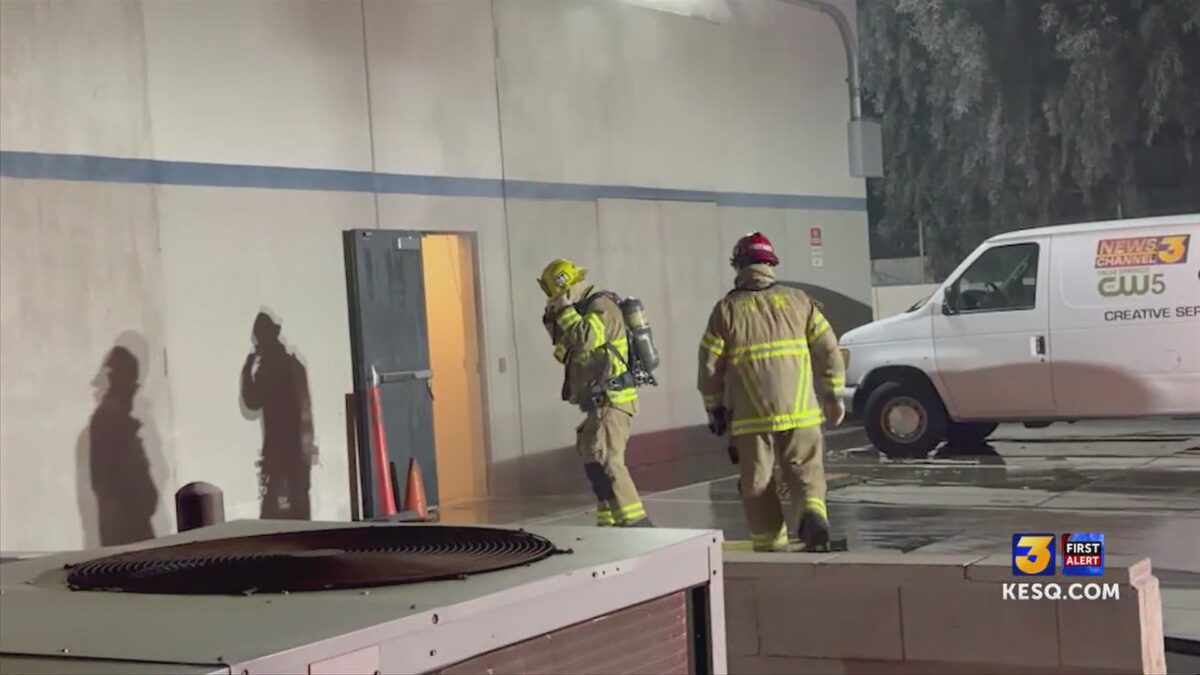
THOUSAND PALMS, Calif. — A fire broke out at the News Channel 3 television station just after 5 a.m. Thursday.

Everyone at the station is safe, and no injuries have been reported.

The cause of the fire remains unknown.

News Channel 3 has returned to regularly planned newscasts and are pleased that the flames were controlled quickly, with minimal damage outside of our news studios.

View this post on Instagram

A post shared by KESQ News Channel 3 (@kesq_news_channel_3)

View this post on Instagram

A post shared by Angela Chen (@angelachenonair)

Click here to follow the original article.
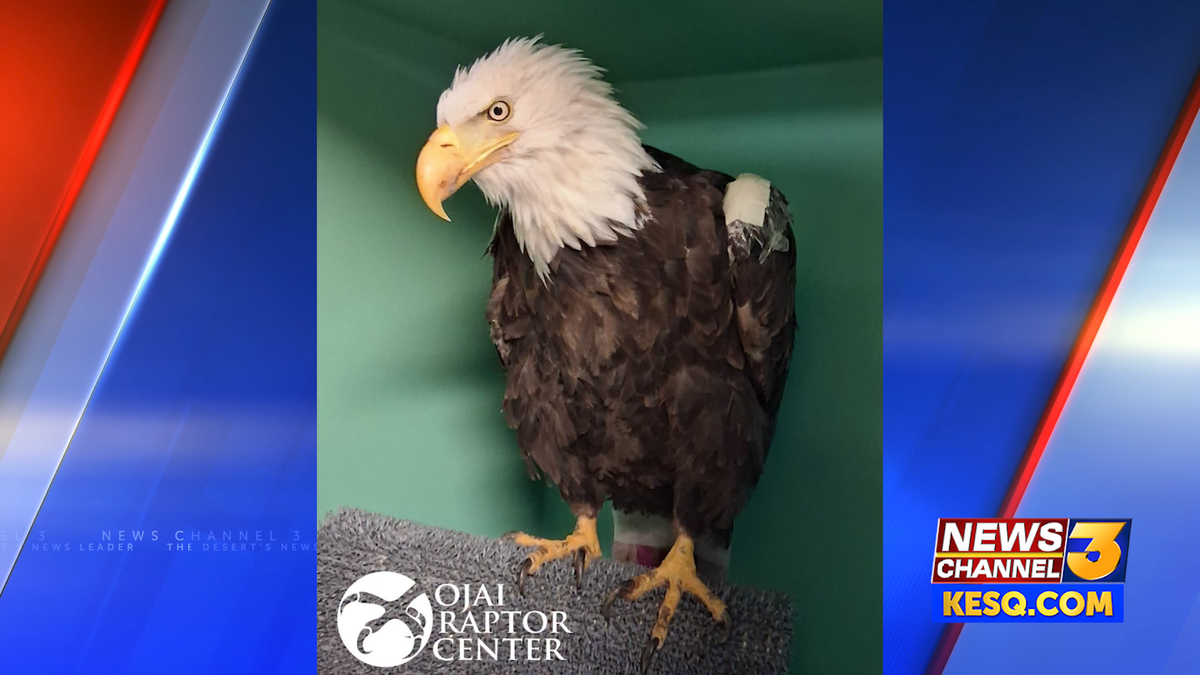
Avian Influenza identified as primary underlying cause of Big Bear bald eagle Jackie’s decline

Jesus Reyes

BIG BEAR, Calif. (KESQ) – The final necropsy report on Jackie the Big Bear bald eagle’s death was released on Wednesday, revealing Highly Pathogenic Avian Influenza as the underlying primary cause of her decline.

“The necropsy, performed by veterinary pathologists at the San Diego Zoo Wildlife Alliance, along with extensive additional laboratory and toxicology testing, provided new information about the complex medical condition that led to Jackie’s decline and death,” reads a news release by the California Department of Fish and Wildlife (CDFW).

Jackie died on August 10 after more than three weeks of intensive medical care at the Ojai Raptor Center.

Officials said the “necropsy revealed a complex and unusual disease process involving severe, chronic inflammation and ulceration of the stomach, persistent internal bleeding, anemia and secondary bacterial sepsis.”

Further diagnostic testing confirmed Highly Pathogenic Avian Influenza (HPAI) within the affected tissues.

HPAI is an infectious disease that primarily affects birds and has been circulating in wild bird populations throughout the United States, the CDFW reports. Waterfowl and shorebirds are natural hosts of avian influenza viruses, while eagles and other raptors may be exposed through contact with infected birds or by consuming infected prey.

Officials identified HPAI as an underlying cause of Jackie’s severe stomach ulceration. Multiple complications developed over time and ultimately contributed to her decline and death.

“Jackie’s necropsy confirmed Highly Pathogenic Avian Influenza (HPAI) as the primary underlying cause of her decline,” said Steve Kubiski, Director of Disease Investigations, San Diego Zoo Wildlife Alliance. “In an uncommon presentation of the virus, the infection caused a severe ulcer in her stomach that led to persistent internal bleeding, anemia, and the development of bacterial sepsis.”

The agency added that Jackie showed signs of chronic disease involving the ventriculus, the muscular portion of a bird’s stomach, commonly called the gizzard. The damaged and ulcerated tissue contributed to ongoing blood loss and her persistent severe anemia.

It also allowed bacteria to enter the body, resulting in a serious secondary bacterial infection.

Severe inflammation and blood clot formation were also found in the heart and several major blood vessels. Follow-up testing showed that HPAI virus genetic material was present in several tissues throughout her body, including the ulcerated tissue in the ventriculus.

Together, the findings showed that Jackie was suffering from multiple severe and interconnected disease processes that had been developing over time and ultimately led to her decline and death.

“The necropsy results have helped connect many of the findings we were seeing throughout the eagle’s hospitalization,” said Chris Eksteen, Executive Director of Ojai Raptor Center. “We are grateful to the many veterinary specialists, laboratories, wildlife agencies and partner organizations who worked alongside our team to understand her illness and provide her with the best possible care. Caring for her was an extraordinary privilege for our entire team.”

Consistent with established procedures intended to prevent the transmission of HPAI to wildlife or humans, Jackie’s remains were cremated by the U.S. Fish and Wildlife Service’s National Eagle Repository.

Click here to follow the original article.

Motorcyclist suffers major injuries after crash on SR-86

Jesus Reyes

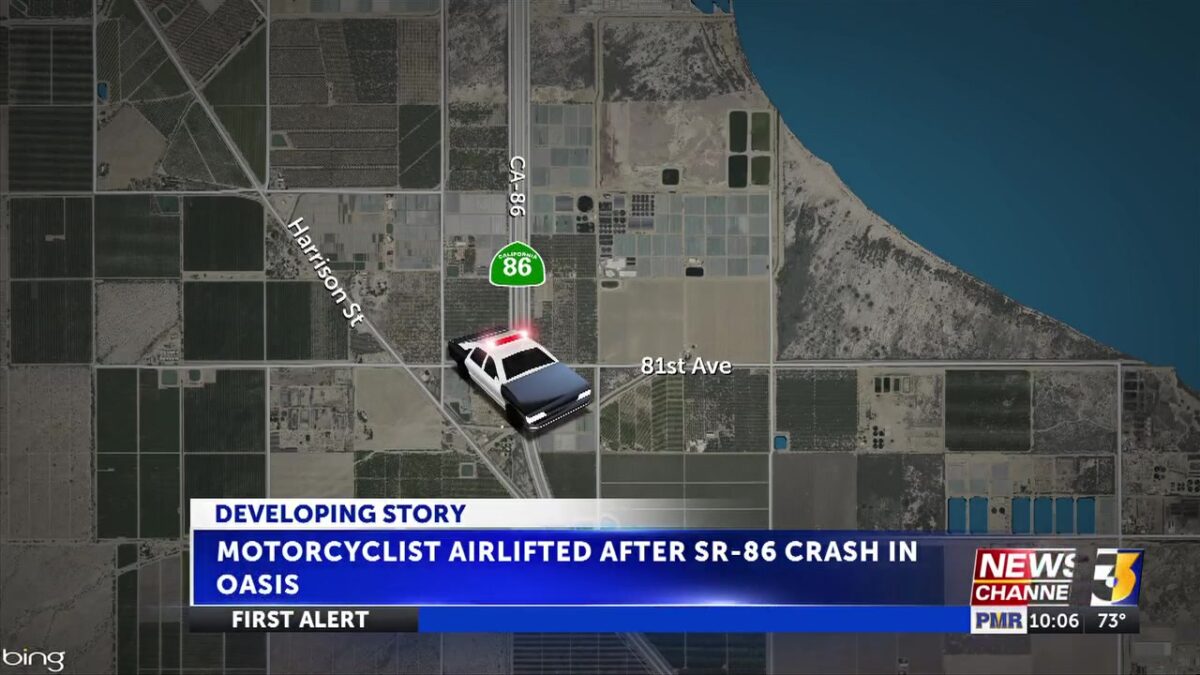
OASIS, Calif. (KESQ) – A motorcycle rider was airlifted to the hospital with major injuries after a crash along SR-86 in Oasis Wednesday afternoon.

The two-vehicle crash was reported at approximately 3:40 p.m., near 81st Avenue.

According to the California Highway Patrol, the motorcyclist was traveling on State Route 86 when a Ford F-150 entered SR-86 from 81st Avenue. The Ford struck the motorcycle as it entered SR-86.

The driver of the Ford was not injured.

CHP briefly closed all southbound lanes of SR-86 near 81st Ave. Lanes were reopened shortly before 4:40 p.m.

Stay with News Channel 3 for continuing updates.

Get the News Channel 3 app here.

Click here to follow the original article.
Lung cancer awareness highlights importance of early detection

Tommy Gallegos

PALM DESERT, CALIF. (KESQ)- News of Pope Leo’s lung cancer diagnosis and surgery is bringing renewed attention to the importance of early detection and screening.

Lung cancer remains the leading cause of cancer death in the United States, and many eligible people may not realize screening is available.

Dr. Justin Thomas, a board-certified interventional pulmonologist at Eisenhower Health, says lung cancer is often diagnosed in its later stages because it may not cause symptoms.

“The problem with lung cancer is that it’s caught in the late stages, most of the time, about 80% of the time, and that’s because it just doesn’t cause symptoms,” Thomas said.

For patients who are good candidates, surgery is the preferred treatment, Thomas said. Others may have options such as radiation or ablation.

Thomas encourages eligible patients to talk with their healthcare providers about annual low-dose CT scans, which can detect lung cancer before symptoms appear.

Under current guidelines, adults ages 50 to 80 with a significant smoking history who currently smoke or quit within the past 15 years may qualify for screening.

Early detection can help patients explore treatment options sooner.

Click here to follow the original article.
Signs of the Season: Do campaign signs really change votes?

Garrett Hottle

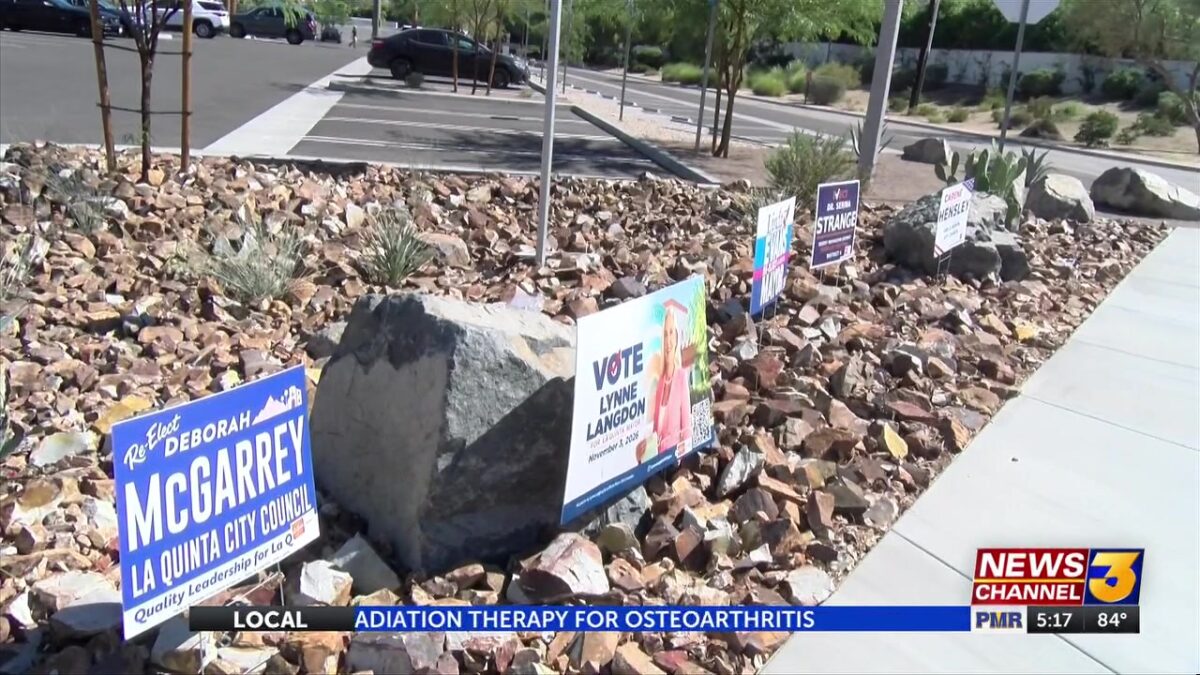
COACHELLA VALLEY, Calif. (KESQ) – Campaign signs are everywhere right now. Some are getting stolen, and one first-time candidate in La Quinta says she paid seven hundred dollars just to put hers up.

It’s not neccessarily on top of anybody’s mind. But it’s in your face. Every corner. Every fence. The yard next door.

“I think they work in a general way,” Kevin Fleming, a volunteer at Democratic Headquarters of the Desert, explained. “When you drive around and see the name, you become familiar.”

Fleming sells them at democratic headquarters in Cathedral City. $12 for a yard sign, $5 for a window.

“They help, David Middleton, another volunteer at Democratic Headquarters of the Desert, said. “Reminding them who’s running and sort of helps build up the enthusiasm.”

But do the signs actually work? One study on this says signs don’t get more people to vote. They nudge the ones who do. About one-point-seven points.

“One percent sometimes settles these things,” Middleton said. “So yeah it does make a difference.”

Carene Hensley is running in her first race for La Quinta city council. Her first three signs are free if she wants more. She would have to get a permit and place city stickers on every sign.

She says it cost her $700. The city listed it at $624; $200 dollars of it is a deposit she gets back if her signs are taken down on time.

“I had to fundraise pretty much for a whole month or even more to try and get enough to do that,” Hensley explained.

Then some of her signs disappeared.

“I noticed that there was another person’s sign up there, and mine was gone,” Hensley said.

She’s not blaming anyone. But Riverside County deputies have taken three sign theft reports and one vandalism report this month. Both are crimes.

If your sign goes missing, report it. In La Quinta, check for the city sticker before you blame the neighbors. Code enforcement pulls the ones without it.

Click here to follow the original article.
Palm Springs Police present Flock camera report amid transparency concerns

Luis Avila

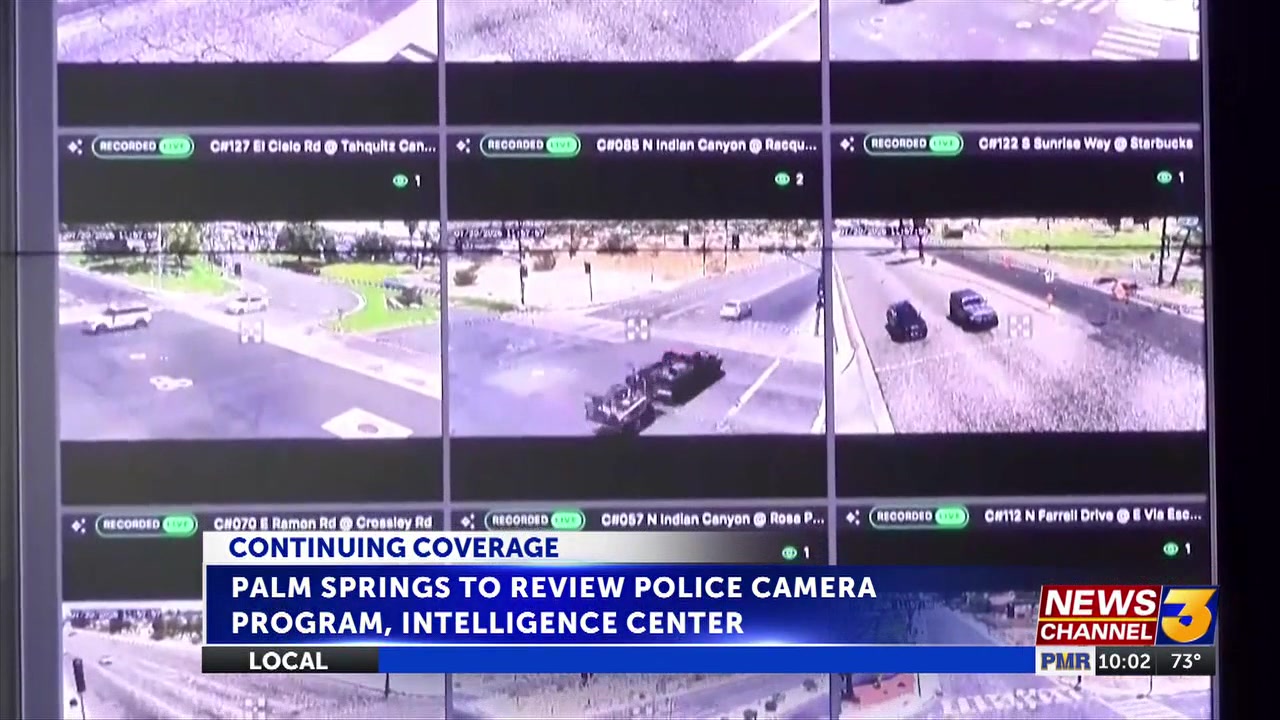
PALM SPRINGS, Calif. (KESQ) – Palm Springs police say the city’s public safety camera system is helping investigators make arrests and recover stolen vehicles, but some residents are raising questions about transparency, audits and how surveillance data is shared.

The department presented an update to the Palm Springs City Council on Wednesday, October 14, outlining the system’s reported results and addressing concerns about public access to information.

The program includes 55 automated license plate reader cameras and 159 video cameras at about 55 intersections. The department’s Real Time Intelligence Center, which began operating in December 2025, uses camera footage and alerts to help officers respond to incidents and investigate crimes.

According to the report, police documented 138 arrests supported by the camera system between March 10 and September 30, 2026. Data covering July 2025 through June 2026 also showed 47 cases cleared by arrest, 36 stolen vehicles recovered and more than $365,000 in recovered property in camera-assisted cases where values were reported.

Police also reported a 70% decline in vehicle thefts, from 132 incidents between April and June 2024 to 39 during the same period in 2026. The department said the decline cannot be attributed to cameras alone, citing other crime-prevention efforts, including directed patrols and partnerships with retailers.

“We’re already having successes, even with the challenges we’re identifying. That’s a good thing,” said council member Ron deHarte.

During Wednesday’s meeting, resident Joshua Handrich questioned how much information about the system’s use is available to the public.

Handrich said he has been seeking audit results through public records requests but has not received the information he requested.

“I personally have not seen a single audit,” Handrich said. “I’ve been asking for three months for those audit results and they’ve refused to produce them to me.”

Police said some audit information contains confidential data and the department is working with the city attorney’s office to determine what can be released.

Police Chief Kyle Stjerne also addressed questions about whether the city’s citizen oversight board receives data from the system.

“We haven’t shared any level of data with them,” Stjerne said, adding that the department would consider whether information could be released without compromising investigations or disclosing confidential data.

Council members also questioned how camera footage is shared with outside agencies. Police clarified that sharing a specific video clip does not give another agency direct access to the city’s camera system.

The department says license plate data is automatically deleted after 30 days, sharing is generally limited to California law enforcement agencies, and its policy prohibits sharing the data for federal immigration enforcement, subject to certain legal exceptions. Police also conduct regular audits of system use.

Palm Springs police plan to provide quarterly updates to the City Council on the system’s use, public safety outcomes and accountability measures.

The city is also preparing a proposed ordinance that would establish penalties for the improper use of automated license plate reader systems.

Stay with News Channel 3 for more.

Click here to follow the original article.
Cleanup efforts still underway in North Shore following storm Rachel

City News Service

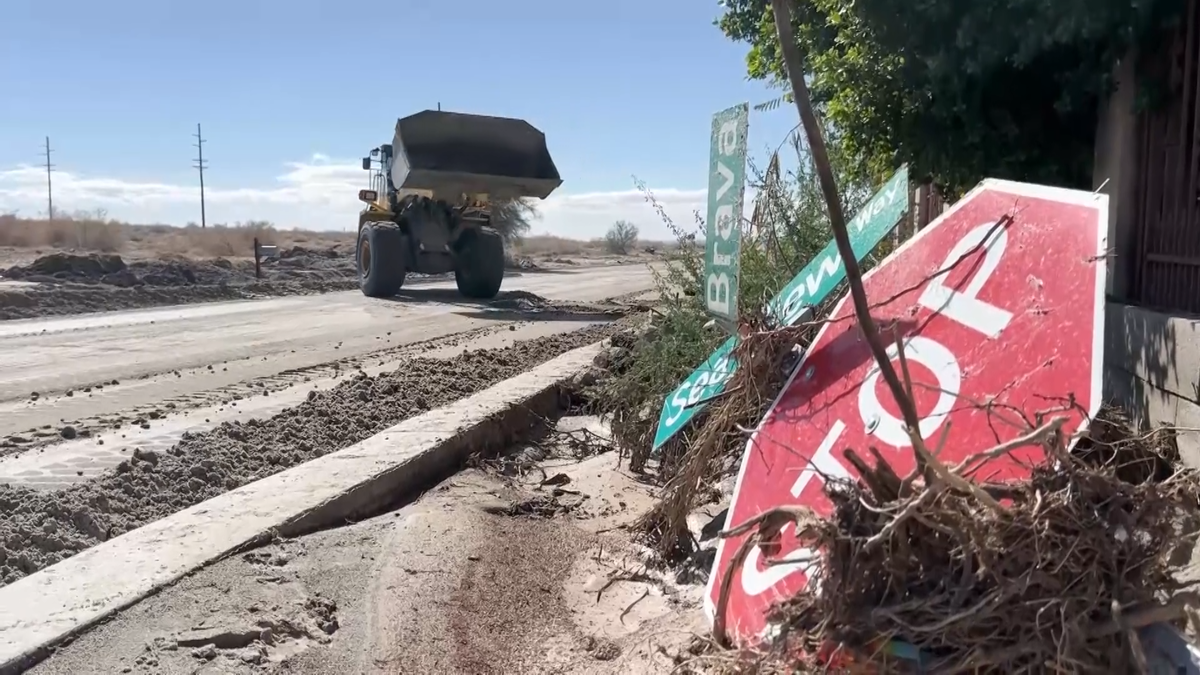
NORTH SHORE (CNS) – Cleanup and recovery efforts were ongoing today in North Shore following the hazardous conditions created by Tropical Storm Rachel over the weekend.

Tropical Storm Rachel left roads covered in mud and debris across parts of the Coachella Valley, creating hazardous driving conditions in the East Valley. Especially the unincorporated community of North Shore, which sustained severe impacts.

Several Facebook posts revealed the storm’s impact on North Shore and the surrounding areas, which showed numerous vehicles stuck in mud, driveways damaged, trees and fences knocked down and numerous roadways damaged.

Downpours and strong gusty winds covered the Coachella Valley on Saturday and Sunday.

A spokesperson for the Riverside County Transportation Department told City News Service on Wednesday that storm debris removal and roadway clean-up efforts continued Wednesday throughout the eastern Coachella Valley, particularly in the North Shore area.

The storm impacted roughly 15-20 miles of county roadways, with most currently open and passable to vehicles except on Box Canyon Road, which will remain closed until further notice.

“Preliminary estimates indicate approximately $4 million to $5 million in roadway damage throughout the affected area,” the spokesperson said.

County Supervisor Manuel Perez on Monday shared a conversation with Emergency Management Department employee Shane Reichardt, who said that “Fortunately, we don’t have any residents that we’re aware that are displaced.”

“The county is working closely with partnering agencies from CalTrans to the Transportation and Land Management Agency on repair to our roads, bridges and parks, which will take a little time,” Perez said.

Residents can report damages by dialing 211. More information about disaster preparedness can be found at emd.rivco.gov/storms.

Click here to follow the original article.