Raymond Kalra
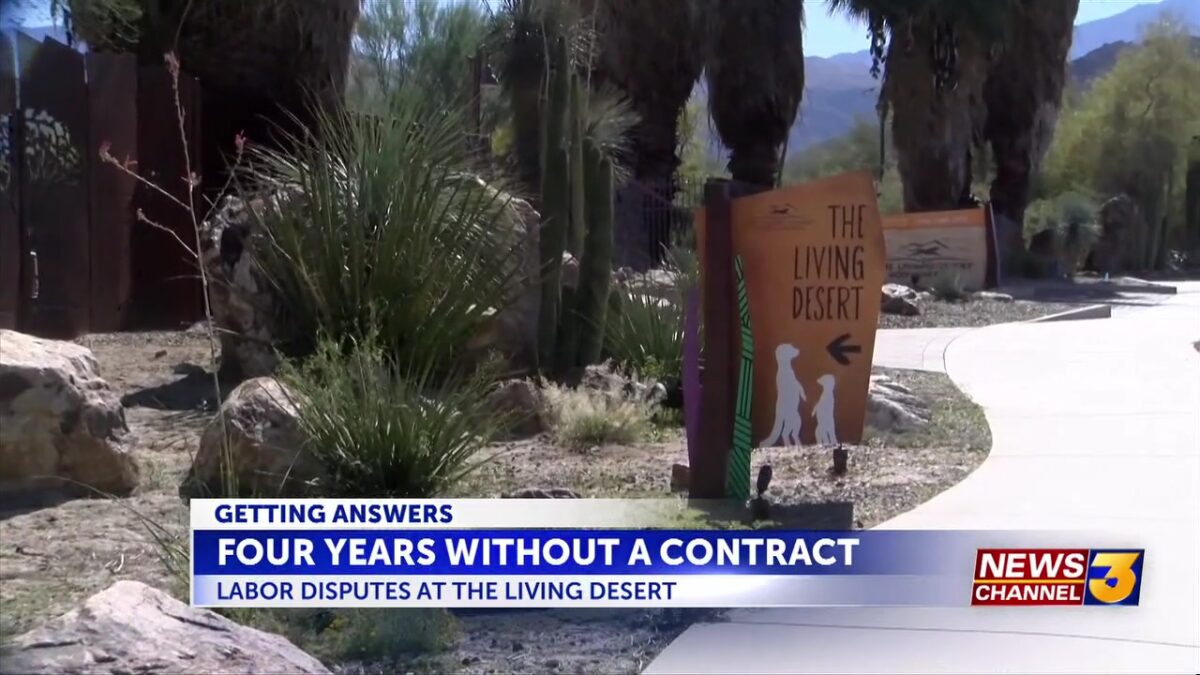
PALM DESERT, Calif. (KESQ) – Nearly four years after voting to unionize, animal care workers at The Living Desert Zoo and Gardens remain without their first union contract, as disagreements over wages, contract length and the ongoing negotiation process continue.
The dispute led to a one-day strike on Saturday, October 31, when 19 animal care keepers walked off the job.
Now, two employees are speaking with News Channel 3 about the challenges they say workers are facing and why they believe an agreement is long overdue.
Madison Hampton and Devon Campbell, members of The Living Desert’s animal care union, say they love their jobs and the animals they care for, but are frustrated by the length of negotiations and the cost of living in the Coachella Valley.
“You know, I commute an hour every day just to come work here because I can’t live out here,” Hampton told News Channel 3.
Despite the financial challenges, Hampton said her passion for animal care keeps her coming back.
“I love the zoo with my whole heart,” Hampton said. “I want to keep working here. I also just want them to care about me as much as I care about them.”
Workers and management disagree over wages
Animal care keepers unionized in January 2023 and have been negotiating their first collective bargaining agreement ever since.
One of the central disagreements involves wages.
In a statement provided to News Channel 3, The Living Desert said management presented a complete contract offer in June that accepted the union’s proposed wage scale.
According to the zoo, it voluntarily implemented that wage scale on July 1.
Under the wage scale provided by management:
Entry-level animal care keepers start at $19.23 per hour.
After six months, their hourly wage automatically increases to $20.46.
Lead keepers start at $26.47 per hour.
However, Campbell said the union’s earlier wage proposal no longer reflects current economic conditions.
Campbell explained that the proposed wages were established before the zoo’s new fiscal year began in July, when employees say cost-of-living adjustments have traditionally occurred.
“What our proposal represented was the wage before that actually happened,” Campbell said. “And now it’s not a good representation of the market where we’re at.”
Campbell said the length of negotiations has made reaching a fair agreement increasingly difficult, as workers continue navigating the cost of living.
Both employees also described concerns about employee turnover, saying some keepers have left the facility for other opportunities.
Hampton said she has experienced limited wage growth during her time at the zoo.
The Living Desert, meanwhile, pointed to opportunities for advancement within the organization.
Management said 12 keepers have been promoted over the past three years, including some into management positions.
The zoo also said it recently provided its annual discretionary retirement match to participating employees, including animal care keepers.
One-year versus three-year contract
Beyond wages, the two sides remain divided over how long their first collective bargaining agreement should last.
The Living Desert is proposing a one-year contract, while the union is seeking a three-year agreement.
Management cited financial uncertainty as the reason for its proposal.
The zoo, a nonprofit organization, said its funding is not guaranteed and that unfavorable weather patterns, including potential El Niño conditions, could affect its operations.
According to management, a shorter agreement would provide flexibility to respond to changing economic conditions.
But employees say a one-year contract would leave them facing another round of negotiations soon after concluding their first agreement.
“A one year contract means we have to be back at the table in six months. We’re tired,” Hampton said.
Campbell said the union wants a longer agreement that would provide stability for both employees and management.
Another disagreement involves union dues.
The Living Desert confirmed it has declined the union’s request to automatically deduct dues from employees’ paychecks, saying collecting dues is the union’s responsibility.
Union employees told News Channel 3 they believe payroll deductions would be a straightforward administrative process and questioned why management rejected the request.
Both sides open to federal mediation
Despite the ongoing disagreements, both the union and The Living Desert have expressed openness to federal mediation.
The union previously said it requested mediation in July and has raised concerns about the lack of progress.
In its statement, The Living Desert said it did not oppose that request.
Management said it is prepared to meet when the union informs the zoo that a mediator has been appointed and is available.
“We have received no communication to move the mediation process forward,” The Living Desert said.
Hampton, however, said employees believe they have already taken steps toward mediation.
“I know something they said was that they’re waiting to hear from us on mediation, but we reached out with mediation and we haven’t heard back from them,” Hampton said.
No agreement has been announced, and the timing of any future mediation session remains unclear.
The union has also previously said it filed three unfair labor practice charges with the National Labor Relations Board, alleging issues involving the negotiation process and employee treatment.
Those allegations have not been established as findings of wrongdoing.
The Living Desert addresses animal care and staffing concerns
Following Saturday’s strike, News Channel 3 requested additional information from The Living Desert about animal care, staffing and whether the ongoing labor dispute has affected daily operations.
In a new statement, Public Relations Manager Alexandra Bonnet said there have been two one-day labor disruptions at the zoo, including the October 31 strike.
She maintained that animal care continued uninterrupted during both events.
“There have been two one-day labor disruptions to date, including October 31, 2026. In both cases, our high-level of animal care standards at The Living Desert has remained consistent and uninterrupted, and it will continue to be,” Bonnet said.
The zoo said it has experienced personnel available throughout the organization, including senior leadership, who can provide animal care when needed.
Management also pointed to contingency plans designed to maintain operations during staffing disruptions.
The statement did not provide specific animal care staffing numbers or directly address whether current vacancies exist.
Both Hampton and Campbell emphasized during their interviews that animal welfare remains a priority for employees.
The workers said Saturday’s strike was intended to demonstrate the importance of their responsibilities and encourage management to return to negotiations.
Campbell said she hopes the action demonstrated how much keepers contribute to the facility’s daily operations.
The employees also said additional labor action remains a possibility, depending on how the zoo responds and whether negotiations move forward.
Questions about animal deaths and veterinary records
News Channel 3 also asked The Living Desert to provide the number of animal deaths recorded in 2023, 2024, 2025 and so far in 2026.
The request included veterinary records, mortality reports and documentation identifying the reported causes of those deaths.
News Channel 3 also asked whether any deaths had been attributed to staffing, medical care or operational concerns.
In response, The Living Desert emphasized that animals enter its care through several channels, including births at the zoo and transfers from other accredited facilities participating in breeding and conservation programs.
“As with people and pets, old age happens and unforeseen health conditions arise. Some outcomes are beyond what even the most dedicated care can change,” the zoo said.
However, The Living Desert did not provide annual animal death totals, veterinary records or specific causes of death in its response.
The statement also did not directly answer whether any deaths had been linked to staffing or operational concerns.
News Channel 3 has not independently established a connection between the ongoing labor dispute and any animal deaths.
Zoo explains ongoing construction and funding
News Channel 3 also asked management about construction projects underway at The Living Desert, including their funding sources, timelines and potential impacts on animal care.
The zoo identified Lion Ridge and The Connie and Bob Lurie Palm Pavilion as its most anticipated development project.
According to The Living Desert, the project is funded by donors whose contributions were specifically designated for that development.
Management expects the project to be completed in late 2028.
The zoo said construction has not affected animal care responsibilities or daily operations.
The Living Desert also identified several smaller projects intended to benefit animal welfare and make daily care easier.
Those include renovations to the coati and meerkat habitats.
The zoo said it is also raising money through its guest-supported Cans for Camels campaign to renovate the camel habitat.
Management did not provide estimated construction costs for the projects in its response.
The information about donor-designated construction funding comes as the zoo cites financial uncertainty as one reason for seeking a shorter union contract.
The statement did not indicate that funding designated for construction is available for employee compensation.
Animal welfare oversight and inspections
The Living Desert also outlined the organizations and procedures it says are responsible for monitoring animal welfare at the zoo.
Management pointed to its accreditation through the Association of Zoos and Aquariums, or AZA, which evaluates accredited facilities every five years.
According to the zoo, that accreditation process examines a range of operations, including animal care and financial stability.
The Living Desert also said it is subject to oversight by the U.S. Department of Agriculture, U.S. Fish and Wildlife Service and California Department of Fish and Wildlife, depending on the species and conservation programs involved.
Management said inspection and review schedules vary.
The zoo also described internal and AZA-related reporting procedures for animal welfare concerns.
“In both cases, every concern is investigated, evaluated, and changes are implemented, as needed,” The Living Desert said.
The zoo maintains that it has no outstanding animal welfare concerns.
News Channel 3 asked whether inspections or reviews had identified any animal welfare issues during the past three years. The zoo did not provide a list of inspection findings or reports in its response.
Workers say they want to stay at The Living Desert
Despite the ongoing dispute, both employees repeatedly emphasized their appreciation for The Living Desert and its conservation mission.
Campbell said many animal care workers move from across the country to pursue careers in the specialized field.
She described the work as rewarding but financially challenging, particularly for employees trying to establish long-term careers in the Coachella Valley.
Hampton said she wants the zoo to recognize that employees can be passionate about their work while still needing financial stability.
“You can have a passion career and be happy with what you do but still afford to live,” Hampton said.
Both employees encouraged the community to continue supporting The Living Desert, saying their goal is not to harm the zoo but to help create a workplace where experienced animal care professionals can remain for years to come.
For now, the two sides remain without an agreement on a first union contract.
News Channel 3 will continue following the negotiations, requesting additional records and seeking answers from both sides as this developing story continues.
Click here to follow the original article.


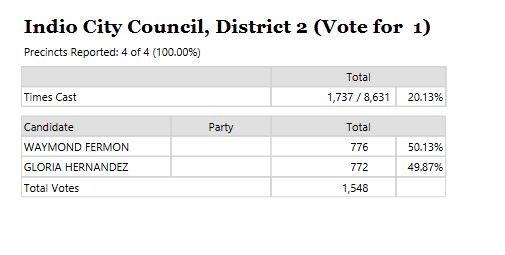 Results released at 5:00 pm on Wednesday, Nov. 4