I-Team: Palm Springs Police Chief Andy Mills reflects on 49-year career as he prepares to retire

Peter Daut

PALM SPRINGS, Calif. (KESQ) – After nearly half a century in law enforcement, Palm Springs Police Chief Andy Mills is preparing to hang up his badge.

Mills will officially retire Saturday, bringing to a close a 49-year career in policing, including nearly five years leading the Palm Springs Police Department.

Check Out: Kyle Stjerne selected as next Palm Springs Police Chief

During his time as chief, Mills guided the department through several high-profile crises, pushed for changes within its culture, and became a familiar presence at community events across Palm Springs.

News Channel 3’s Peter Daut sat down with Mills for an in-depth conversation about his career, the challenges that defined his time in Palm Springs and why he believes now is the right time to step away.

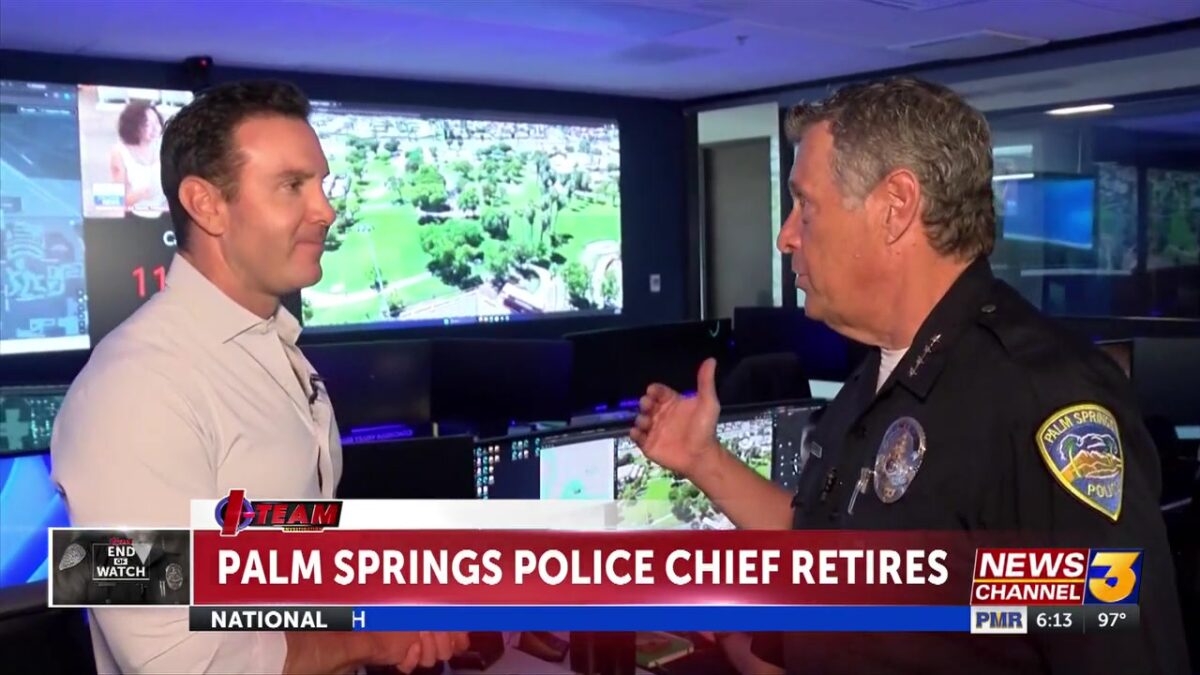
One of the final projects Mills has watched take shape is the department’s new Real Time Intelligence Center, where law enforcement agencies from across the Coachella Valley can gather and analyze real-time information from drones, license plate readers, 911 calls and other sources.

For Mills, the center offers a glimpse of where policing is headed, even as his own career comes to an end.

“It just makes us so much more effective and safer,” Mills said while touring the center with Daut.

But Mills won’t be there to lead what comes next.

Asked whether he will miss Palm Springs, Mills didn’t hesitate.

“Oh yeah,” he said. “I’m going to miss the people here. I’m going to miss working in this community. I’m going to miss all the events that we go to. I’m going to miss the nightlife, the restaurants.”

Then he laughed.

“I’ll probably lose weight after I leave.”

‘It was just time’

Mills said his decision to retire wasn’t prompted by a single event. After nearly five decades in law enforcement, he simply felt the time had come — both for himself and for the department.

“After 49 years of policing, I figured that’s long enough,” Mills said. “But more importantly, legacy is about inspiring those to take the next step. And the people inside the department are ready to go.”

When Mills arrived in Palm Springs in 2021, he said he inherited a department with a culture that needed to change.

“One of the biggest complaints I heard was, ‘Your officers are doing nothing. They’ll come to our house, they won’t make contact with us, they’ll say there’s nothing we can do about that, they’re not taking reports,’” Mills recalled. “And I think it was true.”

Changing that culture became one of his central missions as chief.

Mills said those complaints eventually subsided, in large part because people within the department recognized that change was necessary.

“It’s been years since I’ve heard those complaints,” Mills said. “Mostly because people inside the organization agreed and said, ‘It’s time for us to change the culture of this organization.’”

“And now the mission continues,” he added. “I just won’t be here for it.”

Leading Palm Springs through moments of crisis

Mills’ tenure was also defined by moments that tested both the police department and the community it serves.

In May 2025, a bomb exploded outside a fertility clinic in Palm Springs, killing the suspected bomber, injuring others and shattering windows for blocks.

Mills said his role that day wasn’t simply to help lead the law enforcement response. He also believed he had a responsibility to reassure a shaken community.

“That was certainly a stressful day from the standpoint that you’re trying to make sure this community is protected, that we recover correctly,” Mills said. “People want hope.”

“If I can stand up and talk all day about what a terrible attack this was, that’s not what people want to hear,” he continued. “They want to know they’re going to be safe.”

Months earlier, the department faced a very different kind of crisis when a Palm Springs police officer lost control of his motorcycle during the city’s Festival of Lights Parade, crashing into the crowd and injuring spectators.

Mills acknowledged the incident damaged the department’s reputation.

“It was embarrassing,” he said. “That was something that could have been prevented, but we learned some lessons from that.”

Mills said the department’s response afterward was critical to rebuilding trust.

“Going to the community afterward and saying that we’re sorry, that that was a terrible event that could have been prevented, and that we’re going to move forward and make sure we’re doing a thorough and complete investigation and report back to the community — which we did — I think that made a huge difference,” he said.

Balancing technology and privacy

Public trust has also been at the center of debate surrounding Palm Springs’ use of Flock cameras, which capture vehicle and license plate information.

Mills is a strong supporter of the technology, but he said its use must come with strict safeguards.

“We’re not tracking people all over town,” Mills said. “We’re tracking a point in time at a location, and yes, vehicles go through that. And we only look at those vehicles when there’s a crime that takes place.”

For Mills, the larger question isn’t simply what the technology is capable of doing, but how the city can ensure it isn’t abused.

“The issue becomes, how do you govern it?” Mills said.

He said the city is moving toward establishing a community oversight board whose members would review how the technology is being used.

Mills also said he has been researching a potential law that would impose consequences on anyone who misuses the data, including members of law enforcement.

“I’m also in the process of doing research and asking council for a law that says if anybody misuses the data, misuses the cameras, including our own people, that they’re guilty of a misdemeanor,” he said.

Mills credits his wife with helping Palm Springs embrace him

For all the technology, policies and crises that defined Mills’ tenure, he believes something much simpler helped him connect with the Palm Springs community: his wife, Cathy.

Asked whether Cathy was his “secret sauce,” Mills laughed and agreed.

“I can’t count how many events we went to where I think I’m going to be the popular guy — I’ve got the uniform on — and they’re like, ‘Excuse me,’ and get to Cathy,” Mills said. “But I love that.”

Mills said he and Cathy developed a connection with Palm Springs that extended well beyond his position as police chief.

Asked why he believed the community embraced him so strongly, Mills again pointed to his wife.

“I’m not 100 percent sure, but I have a sneaking suspicion some of it’s Cathy,” he said.

Mills also believes residents came to recognize that the couple genuinely considered themselves part of the community.

“When they could see we were serious about protecting this community and being a part of this community, I think that really helped gel and codify the relationship,” he said.

‘When I’m done, I’m done’

Mills and his wife are now preparing to leave Palm Springs and move to Sacramento to be closer to his mother.

And once he hangs up the badge, Mills said he doesn’t intend to become a backseat police chief.

“I don’t want to be in a position where people come to me saying, ‘Do you know what the police department did? Do you know what the new chief did?’” Mills said. “I’m not going to second-guess. When I’m done, I’m done. I’m out of the mix.”

Asked whether that means he wants a clean break, Mills replied simply: “I want a clean break, so that’s why it seems right.”

But it won’t be a complete break from Palm Springs.

“Of course,” Mills said when asked whether he would return to visit. “We love this place. We love the people here, so there’ll be times we come back for special events or to see friends and family.”

As for the person who takes over the department, Mills has one overriding hope: that the work continues.

“Continue the mission and improve the mission,” Mills said. “There’s no doubt in my mind that the people currently in place inside the organization not only take the mission that we already started, but make it better.”

Mills said he is confident in the department’s future and in whoever is selected to lead it.

“I’m very confident that whatever the city manager chooses to do with the next chief, that it will be spectacular,” Mills said. “And they will continue to support this community and love this community, and the community will love them right back.”

Daut pointed out that whoever succeeds Mills will have big shoes to fill.

Mills had one final correction.

“Size 12s,” he joked.

Click here to follow the original article.
Assemblymember Greg Wallis’ western Joshua Tree bill passes legislature, heads to Governor’s desk

Tommy Gallegos

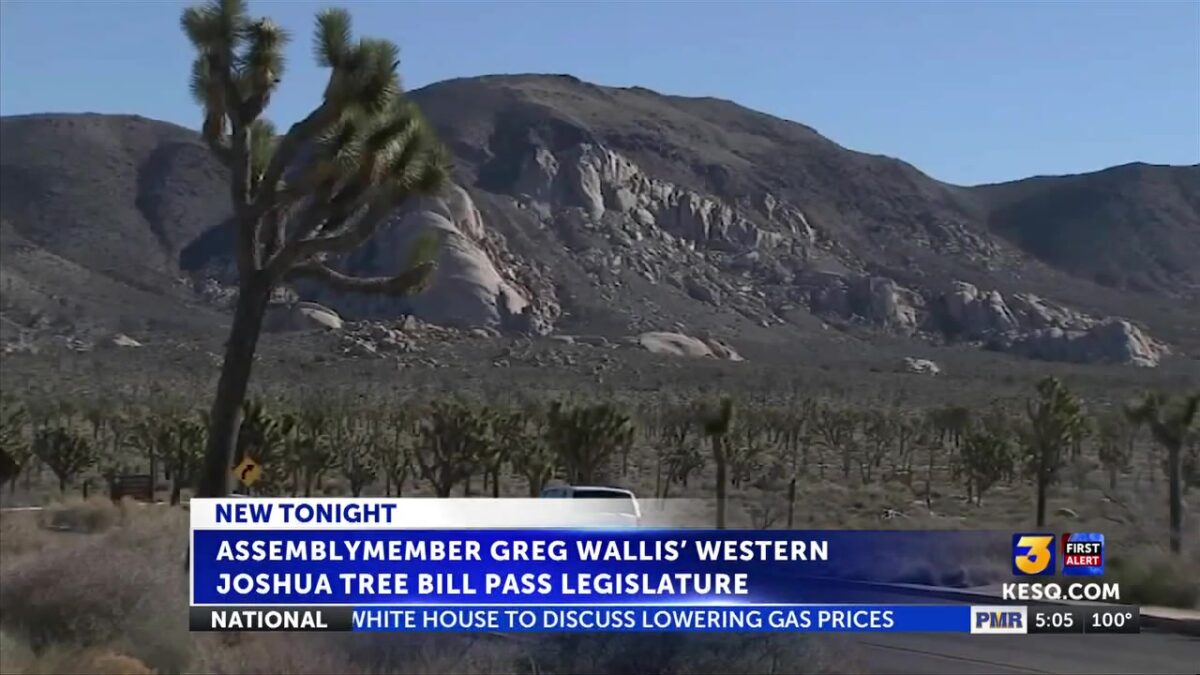
PALM DESERT, CA (KESQ)- Assemblymember Greg Wallis announcing his Western Joshua Tree bill is headed to the governor’s desk.

The bill, AB 1663, is intended to make the permit process easier for residents to remove or trim the trees located on their properties, while keeping protections in place for the species.

It also gives the California Department of Fish and Wildlife more flexibility to work with Native American tribes regarding cultural uses of Western Joshua Trees.

All while keeping the existing conservation protections in place for the trees.

“This bill changed along the way, but the goal never did: make this law work better on the ground for the people and communities who live alongside western Joshua trees every day,” said Assemblymember Wallis. “The final bill delivers practical improvements while keeping conservation protections in place, and I’m grateful that colleagues on both sides of the aisle came together to move these fixes forward.”

The bill earned unanimous bipartisan support in both houses of the Legislature.

Click here to follow the original article.
Rare cat births highlight conservation work at The Living Desert

Tommy Gallegos

PALM DESERT, CA (KESQ) – The recent births of a black-footed cat and a sand cat at The Living Desert Zoo and Gardens are more than exciting additions to the zoo—they represent important milestones in the conservation of two elusive desert species.

Successful reproduction of both species in human care remains uncommon, making each birth an opportunity for animal care teams and researchers to learn more about reproductive biology, behavior and kitten development.

Much of this work takes place at The Living Desert’s Desert Carnivore Conservation Center (DC3), a specialized facility established in 2016 for the breeding, research and conservation of small desert carnivores.

Animal care teams create complex habitats and choice-based environments that encourage natural behaviors such as exploration and hunting. Daily monitoring, veterinary care and detailed tracking of development help staff identify the conditions and breeding strategies that can improve reproductive success.

“These births are incredibly meaningful,” said Allen Monroe, President-CEO of The Living Desert. “Supporting the survival of a species takes extraordinary care, collaboration, and commitment.”

The Living Desert works with the Association of Zoos and Aquariums (AZA) through Species Survival Plan programs and participates in the Black-Footed Cat Consortium. The zoo is one of just 14 institutions worldwide that hold and manage black-footed cats and one of 22 that manage sand cats.

The black-footed cat is classified as Vulnerable by the International Union for Conservation of Nature (IUCN), with fewer than 10,000 mature individuals estimated to remain in southern Africa.

Despite being one of the world’s smallest wild cats, the black-footed cat is also an exceptionally successful hunter, with an estimated hunting success rate of around 60%.

For The Living Desert, every successful birth contributes to a larger conservation effort. By combining specialized animal care, scientific research and international collaboration, the zoo is helping build knowledge that can support these species for generations to come.

“These animals play an important role not only in their ecosystems, but also as ambassadors for conservation,” said RoxAnna Breitigan, COO of The Living Desert. “Everything we do behind the scenes—from research to breeding—supports our mission to preserve biodiversity and prevent extinction.”

The tiny kittens may be the most visible result, but the real story is the conservation work happening behind the scenes.

Click here to follow the original article.
Palm Springs Tramway to temporarily close starting Sept. 8 for annual maintenance

City News Service

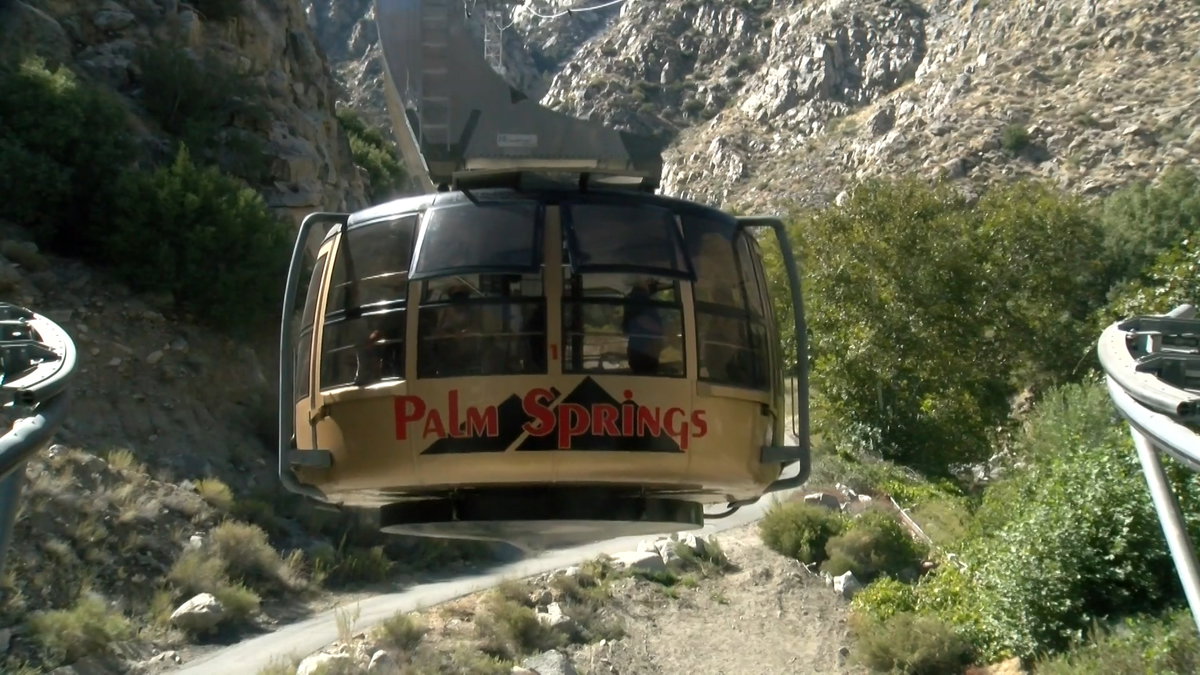
PALM SPRINGS (CNS) – The Palm Springs Aerial Tramway will temporarily close for annual preventive maintenance work starting Tuesday.

“During this year’s shutdown, we will be repainting tramcar cabin interiors and rebuilding the carriage on cabin two, which supports the cabin as it rides on the track ropes,” vice president of Tramway systems Chris Bartsch said in a statement. “Annual state-permit testing will be conducted, and our Switzerland-based technicians will be performing annual service to the controls system.”

The facility will be closed from Sept. 8 through Oct. 4, with a tentative reopening date of Oct. 5, officials said.

The last day to ride the tram before its closure will be Monday.

“Each year, the tramway’s annual preventative maintenance closure gives our maintenance team the dedicated time needed to complete important projects that cannot be performed during regular business hours. This work helps ensure the continued safety, reliability and enjoyment of the tramway and all our guests,” the Tramway’s general manager Nancy Nichols said.

Click here to follow the original article.
Nonprofit awards over $1M to install shade structures, trees across CV Link

City News Service

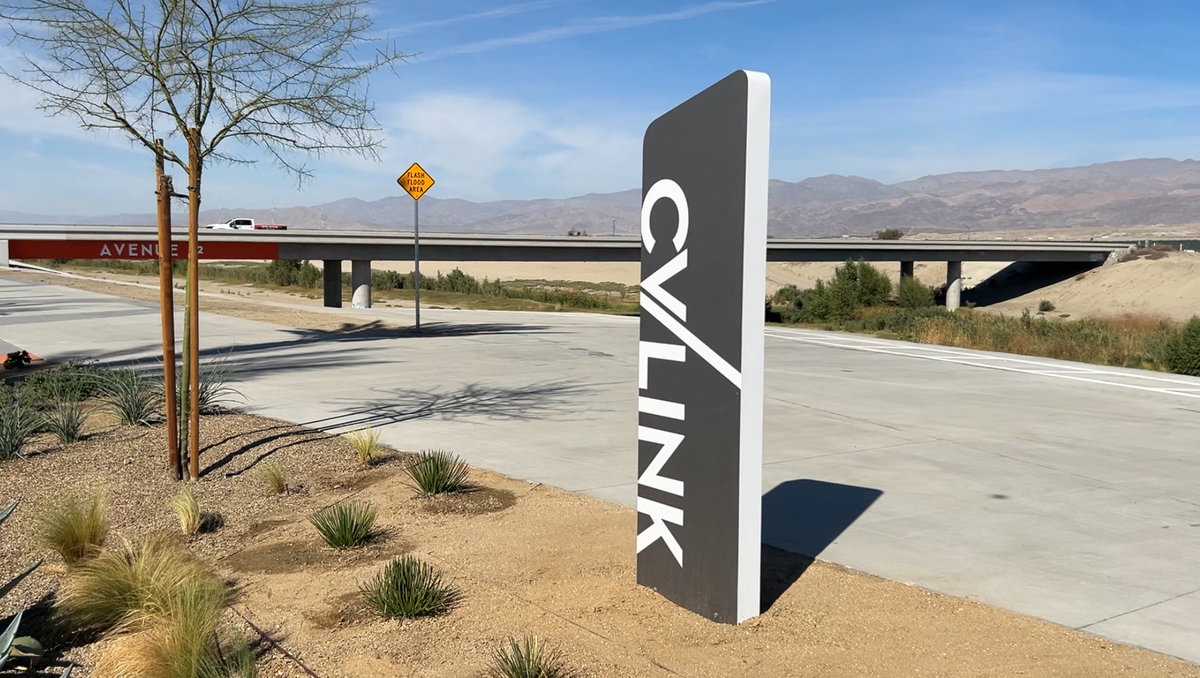
PALM DESERT (CNS) – The Coachella Valley Mountains Conservancy has awarded more than $1 million in grant funding to install shade structures and native shade trees along rest stops in the Coachella Valley Link, officials said today.

The money will go to the Coachella Valley Association of Governments to add shade structures and more than 20 trees at rest stops in Palm Springs, Palm Desert and Coachella. The project comes as a direct response from feedback following the opening of the CV Link in 2025.

The CV Link Shade Structure and Shade Trees project is a strong example of the kind of investment Proposition 4 was designed to support,” CVMC President Elizabeth King said in a statement. Warm temperatures are a familiar aspect of daily life in the Coachella Valley, and outdoor recreation is an essential public amenity for residents and visitors alike,” CVMC Chair Deborah McGarrey added.

“Expanding shaded areas throughout the valley remains an ongoing priority, and we value our partnership with CVAG in advancing improvements to this corridor.” The organization awarded $1,248,586 to the CVAG through Proposition 4, the Safe Drinking Water, Wildfire Prevention, Drought Preparedness and Clean Air Bond of 2024.

Officials expect the project to be completed by 2028.

Click here to follow the original article.
College of the Desert celebrates 60 years of training nurses as Coachella Valley faces healthcare staffing needs

Peter Daut

PALM DESERT, CA (KESQ) – As the Coachella Valley continues to grow, so does the demand for qualified healthcare professionals.

This week, College of the Desert is celebrating the next generation of local nurses while marking a major milestone for one of its longstanding healthcare programs.

The college will hold a pinning ceremony Friday to celebrate graduates and recognize the 60th anniversary of its Vocational Nursing Program, which has spent six decades preparing students for careers in healthcare and helping meet the needs of the local community.

The celebration comes as healthcare systems across the region continue to face challenges recruiting and retaining nurses.

Local hospitals and health systems have hundreds of registered nurse positions to fill, with staffing pressures driven by several factors, including an aging workforce, retirements, employee burnout and the high cost of living in the Coachella Valley.

College of the Desert says its nursing programs are helping create a pipeline of healthcare professionals who can go on to work in communities across the region.

“We’re seeing the labor market data continues to reflect there is an ongoing need for nursing, and COD continues to be an affordable program hoping to help that pipeline for healthcare in the Coachella Valley,” said Michelle French, acting director of Nursing and Allied Health at College of the Desert.

This year, College of the Desert graduated a record 91 registered nurses, more than doubling the size of previous graduating classes.

The increase comes as demand for nurses remains strong throughout the region.

For students looking to enter the healthcare field, COD’s nursing programs provide an opportunity to receive training close to home while preparing for careers in a field with continued demand.

Friday’s pinning ceremony will recognize the latest group of nursing graduates while also celebrating 60 years of the college’s Vocational Nursing Program.

College of the Desert says the program’s long history reflects its ongoing role in helping address the Coachella Valley’s healthcare workforce needs.

Click here to follow the original article.
Supervisors extend contract with Palm Springs treatment facility

City News Service

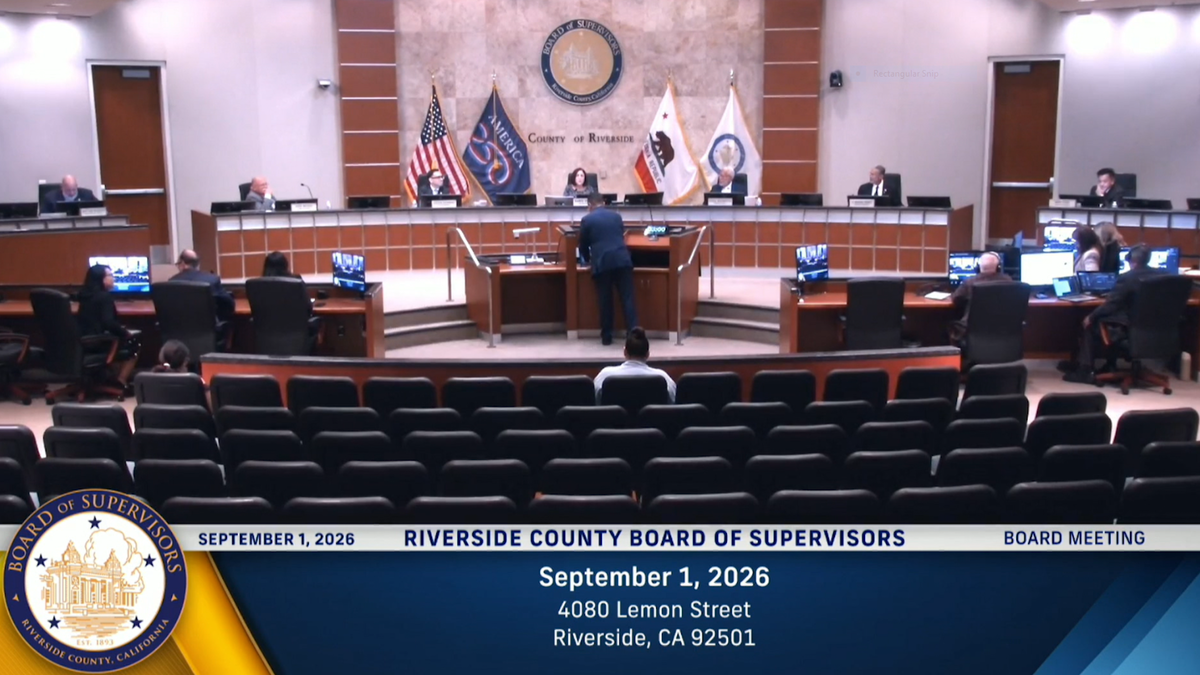
RIVERSIDE (CNS) – The Board of Supervisors today approved the extension of a contract, valued at a little over $1 million, with a Palm Springs addiction treatment and homeless assistance facility that has partnered with the Riverside University Health System for the last few years.

In a 5-0 vote without comment, the board signed off on continuation of the agreement with MFI Recovery Center, a non-profit mental health and substance use treatment provider, until June 30, 2027.

MFI has operated The Path at 19531 McLane St. under an agreement with RUHS-Behavioral Health since 2021.

Officials said MFI will continue providing 24-hour services for people who are homeless and have serious mental health disorders, along with simultaneous substance abuse problems, according to documents posted to the board’s agenda.

“The facility … features both residential and non-residential treatment components that provide peer-to-peer engagement and support services in non-intrusive low demand environments,” according to RUHS. “The 24-hour residency offers no limit on length of stay, semi-private accommodations andcommon use of kitchen facilities, dining rooms and bathrooms that can serve up to 25 consumers, while the non-residential component consists of a drop-in center for those who are chronically homeless.”

The drop-in visitors can procure food and clothing, as well as complete bathroom needs and do laundry.

The board additionally authorized compensation increases of up to 10%, or $105,680, over the duration of the contract, potentially raising the total to $1.16 million.

The county intends to open bidding for potential new treatment center contracts in the current fiscal year. The one-year holdover agreement with MFI will allow time to complete arrangements for a new round of competitive bidding, officials said.

Click here to follow the original article.
CHP plans Labor Day DUI crackdown in southern California, across state

City News Service

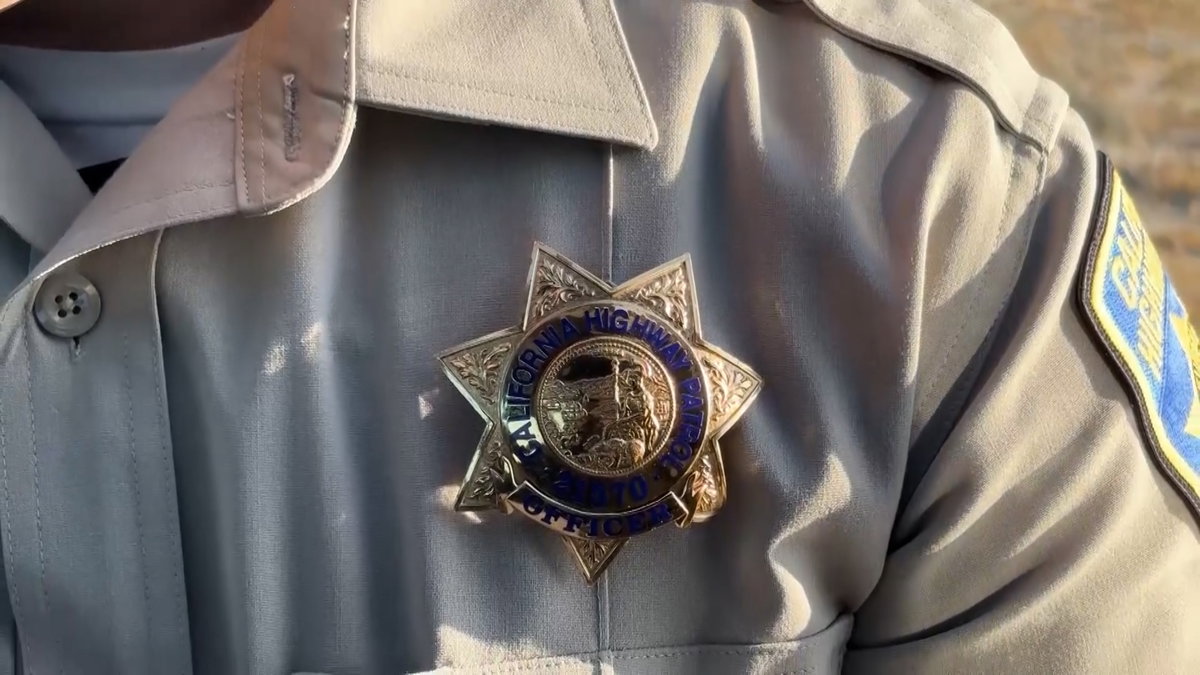
RIVERSIDE (CNS) – California Highway Patrol officers in Southern California and across the state will increase enforcement over the Labor Day weekend, focusing on impaired drivers during a 78-hour holiday enforcement period, the agency announced today.

The CHP’s Labor Day holiday enforcement period will begin at 6:01 p.m. Friday and continue through 11:59 p.m. Monday, with officers statewide focusing on removing impaired drivers from the road and educating motorists about the dangers of driving under the influence.

The enforcement period will coincide with the National Highway Traffic Safety Administration’s “Drive Sober or Get Pulled Over” campaign, which began Aug. 19 and will continue through Monday.

“There is no excuse for driving impaired. If you choose to drink or use a substance that affects your ability to drive, make a plan and stay out of the driver’s seat,” CHP Commissioner Sean Duryee said.

“Your decision could be the difference between everyone getting home safely and a tragedy that canchange lives forever.” During the 2025 Labor Day enforcement period, CHP officers made morethan 1,200 impaired-driving arrests, according to the agency.

Nearly 500 DUI-related crashes occurred statewide during the same 78-hour reporting period, resulting in more than 270 injuries and eight deaths, according to preliminary data from the CHP’s Statewide Integrated Traffic Records System.

The CHP warned that impaired driving is not limited to alcohol. Cannabis, prescription medications, illegal drugs and some over-the-counter medications can impair a person’s ability to safely operate a vehicle.

Motorists planning to drink were urged to designate a sober driver, use public transportation or a rideshare service, call a taxi or stay at their location for the night.

The CHP also urged motorists to always wear seat belts and advised anyone who sees a suspected impaired driver on the road to call 911.

Click here to follow the original article.

Riverside County supervisors approve $18.2 million increase to sheriff’s body camera contract

Garrett Hottle

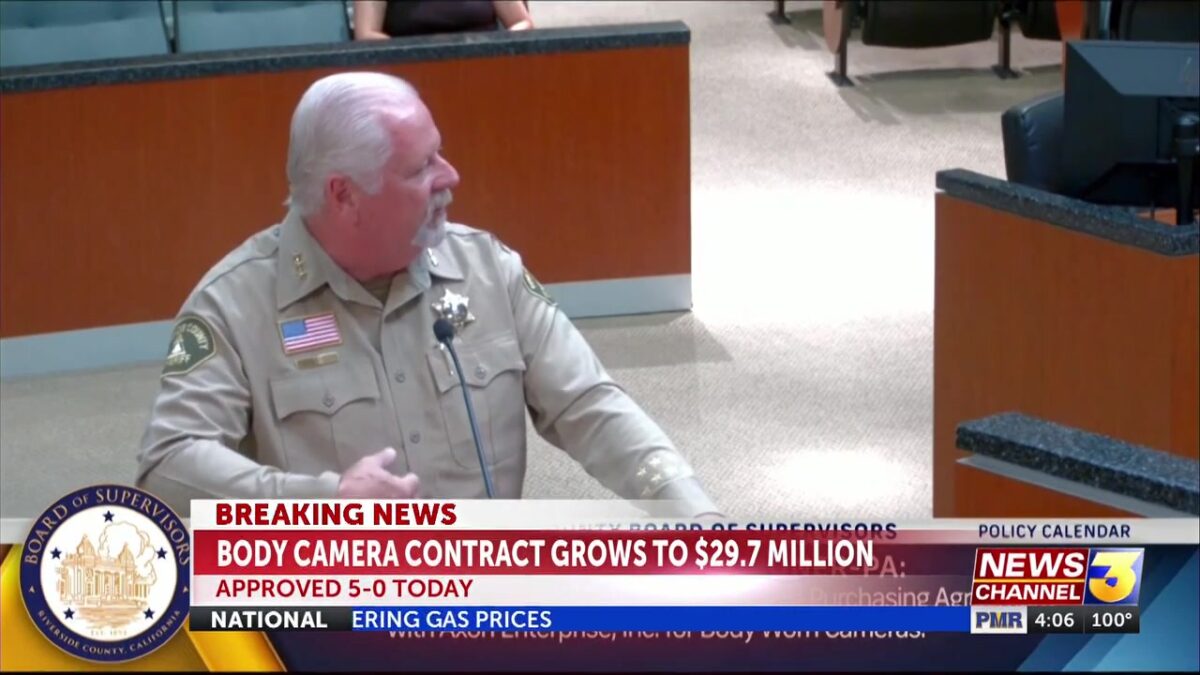
RIVERSIDE, Calif. (KESQ) The Riverside County Board of Supervisors voted 5-0 Tuesday to add more than $18.2 million to the sheriff’s office contract with Axon Enterprise Inc. for body-worn cameras, nearly tripling the total value of the agreement.

The amendment increases the contract from $11,520,821 to $29,725,728 and exercises all options under the agreement through Aug. 31, 2031, according to the board’s agenda. The item allows up to an additional $2,972,572 in compensation and is funded entirely through the sheriff’s budget.

Undersheriff Don Sharp told supervisors before the vote the cameras serve both deputies and the public.

“It actually is a transparency and accountability record that the public seems to be very appreciative of,” Sharp said.

Sharp also told the board the contract includes translation technology the department is testing but has not yet deployed. He said the feature would give a deputy “the opportunity to have a translation through the device” when speaking with someone in another language.

The item passed as part of the board’s regular meeting agenda.

Click here to follow the original article.

What is being done to make Coachella Valley roads safer for pedestrians?

Raymond Kalra

CATHEDRAL CITY, Calif. (KESQ) – As pedestrian deaths continue to raise concerns across the Coachella Valley, local cities are looking at more than just driver behavior when considering how to make roads safer.

Speed limits, street lighting, crosswalk placement and the design of intersections can all influence whether a driver has enough time to see and react to someone walking across the road.

Recent data shows the issue stretches across the valley. Palm Springs recorded 20 pedestrian deaths between 2021 and 2026, while Cathedral City recorded seven between 2022 and 2026. Other valley cities have also reported multiple pedestrian fatalities in recent years.

For people who regularly walk around the valley, those numbers reflect a concern they can feel on the road.

Rhondda Kerrpirbazari said she walks often but does not always feel confident that approaching drivers are paying attention.

“I do feel sometimes drivers aren’t really cognizant,” Kerrpirbazari said. “I walk a lot, so I’m very cognizant of drivers and where they are and pray that they stop or see us.”

She said darkness can make that concern even greater.

Kerrpirbazari pointed to limited street lighting in some areas of the valley and said people often walk later in the day during the hotter months, when temperatures begin to cool.

She also said she frequently notices distracted drivers and people looking at their phones while she walks.

Cathedral City targets intersections with crash history

Cathedral City is one of several valley cities working on infrastructure changes aimed at reducing pedestrian crashes.

City Engineer Armando Garcia Baldizzone said pedestrian safety has been a focus for the city for years. Since 2016, he said Cathedral City has secured roughly $9 million through state and federal programs for pedestrian safety improvements.

Those projects include high-visibility crosswalks, updated curb ramps, flashing beacons and upgrades to traffic signals.

“We are improving the intersections, like putting high visibility crosswalks, updating the curb ramps, installing flashing beacons,” Baldizzone said.

The city does not choose those locations at random.

Baldizzone said Cathedral City uses its local road safety plan to evaluate intersections, including crash history and other technical factors, before deciding where improvements could have the greatest impact. The city then seeks state or federal funding for qualifying projects.

Some of those improvements are already planned for areas residents may notice.

Baldizzone said the city plans a pedestrian crossing near Landau Elementary School, a new traffic signal at Cathedral Canyon Drive and Canyon Shores, and another major pedestrian crossing near Cathedral Canyon Drive and Ortega Road.

Lower speeds without slowing traffic

Cathedral City has also lowered speed limits on some roads as part of its effort to reduce crashes.

Baldizzone said the city has seen crashes decrease following those changes and said the lower limits have not significantly affected traffic flow.

“What we notice is that the accidents have been reduced,” Baldizzone said. “The reduction of the speed limit didn’t affect the traffic at all.”

Lowering the number on a speed-limit sign, however, represents only one tool cities can use.

Transportation safety research has found that lower speed limits can become more effective when cities combine them with infrastructure changes and enforcement strategies. Road width, crossing distance, lighting and the placement of crosswalks can all influence how quickly drivers travel and how easily they see pedestrians.

New lighting coming to Cathedral City intersections

Lighting has become another major part of Cathedral City’s current work.

Baldizzone said the city is upgrading all 49 of its signalized intersections as part of one project.

The work includes upgrades to traffic signal equipment as well as new LED safety lighting designed to improve visibility around intersections.

“The new LED lights are going to be installed,” Baldizzone said. “So there’s going to be more lighting at the intersection for safety.”

The city expects to complete that project by October.

Nighttime visibility is particularly important in pedestrian safety. Nationally, a large majority of pedestrian deaths happen after dark. In the Coachella Valley, long stretches of roadway can also have relatively limited lighting compared with more densely developed areas.

For Cathedral City, Baldizzone said the work will continue beyond the projects currently under construction.

Engineers plan to continue reviewing crash data and individual intersections to determine where future improvements should go.

The goal, he said, is to create safer routes regardless of whether someone is driving, riding a bicycle or walking.

For pedestrians like Kerrpirbazari, the changes come down to something even simpler: making sure the person behind the wheel sees the person crossing the road before it is too late.

Click here to follow the original article.