Man charged with selling fentanyl pills from Georgia farmers market, authorities say

By Christopher Harris

Click here for updates on this story

    ATLANTA (WUPA) — A man accused of selling fentanyl-laced pills from a farmers market produce stand in metro Atlanta appeared in federal court Tuesday, according to the U.S. Attorney’s Office for the Northern District of Georgia.

Federal prosecutors say Luis Sanchez-Acevedo, 41, an undocumented Mexican national living in the U.S., is charged with possession with intent to distribute fentanyl after investigators linked him to thousands of deadly counterfeit pills sold in Forest Park, Georgia.

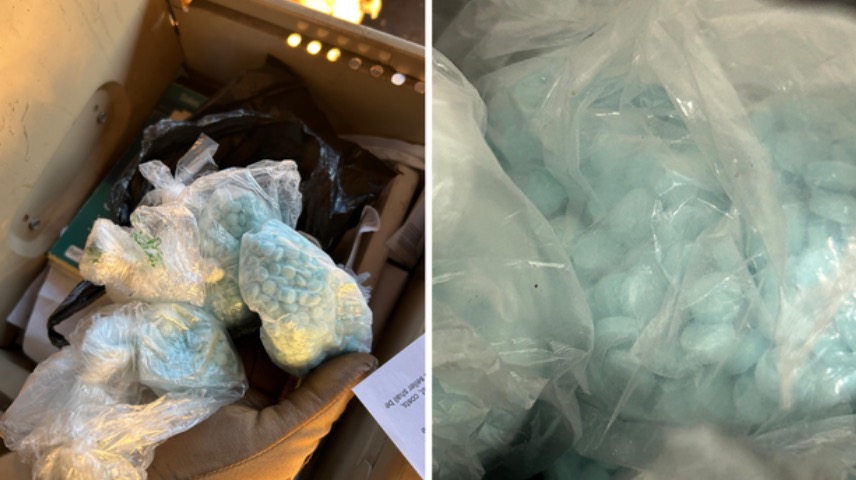
According to court documents, agents with the Drug Enforcement Administration learned Sanchez-Acevedo was allegedly selling fake “M-30” pills that contained fentanyl and xylazine, a powerful animal tranquilizer also known on the street as “tranq.”

Authorities say Sanchez-Acevedo sold about 3,000 pills in September and October 2025 from or near his produce stand at a Forest Park farmers market. Laboratory testing later confirmed the pills contained both fentanyl and xylazine, a combination that significantly increases the risk of fatal overdoses.

“Sanchez-Acevedo allegedly distributed deadly ‘tranq’ pills containing fentanyl and xylazine at a farmers market where he sold fruits and vegetables,” U.S. Attorney Theodore S. Hertzberg said in a statement. “Our community is a safer place now that this illegal alien and his lethal pills are off the streets.”

DEA agents arrested Sanchez-Acevedo on Jan. 13 at his produce stand. During a search, agents recovered about 1,000 additional counterfeit pills, prosecutors said.

“This defendant is accused of distributing fentanyl, a drug responsible for countless overdose poisonings across our country,” said Jae W. Chung, special agent in charge of the DEA’s Atlanta Division. He said the arrest supports the agency’s national effort to remove fentanyl from communities.

Federal authorities say Sanchez-Acevedo is from Tehuacán, Mexico, and does not have legal status in the United States.

He appeared before a U.S. magistrate judge on a criminal complaint charging him with possession with intent to distribute fentanyl. The case is being investigated by the DEA with assistance from the Clayton County Police Department.

Officials said the investigation is part of Operation Take Back America, a nationwide Department of Justice effort aimed at dismantling drug trafficking organizations, combating illegal immigration, and reducing violent crime.

Please note: This story was provided to CNN Wire by an affiliate and does not contain original CNN reporting. This content carries a strict local market embargo. If you share the same market as the contributor of this article, you may not use it on any platform.

New team of formerly incarcerated and unhoused responders helps homeless community

By Olivia Young

Click here for updates on this story

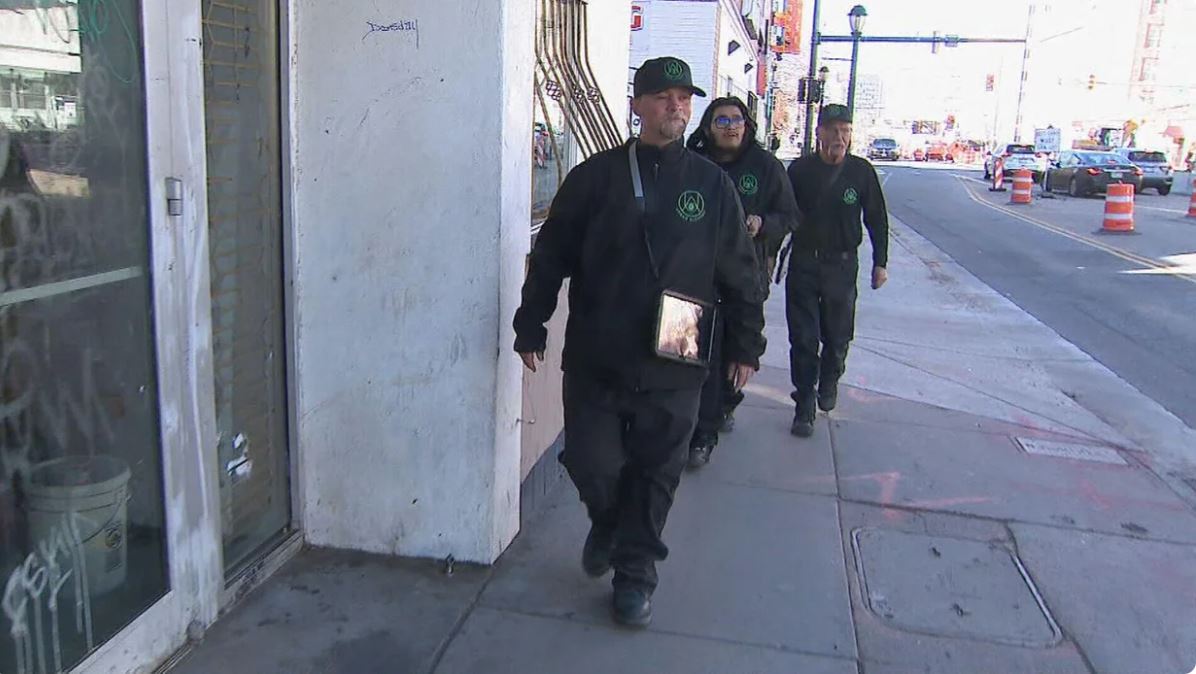
    DENVER (KCNC) — There’s a new group on the streets of Denver working to help the homeless community.

City Council approved a $3 million contract with San Francisco-based nonprofit Urban Alchemy for community ambassador services and a $30 million contract to operate the Aspen shelter. Urban Alchemy says its community ambassador team model is already in operation in Los Angeles, San Francisco and Birmingham.

These responders are specially equipped to help the homeless community because they’ve been in their shoes. They help the community find help and resources available to them.

“I was homeless on the streets here in downtown Denver and made a few mistakes and ended up going to Colorado Correctional Facility in 2019,” said Mike Johnson, Compassionate Ambassadors Doing Respectful Engagements (CARE) team director and Urban Alchemy practitioner.

After three years incarcerated, Johnson was determined to turn his life around.

“My biggest fear is that I was just going to be known as an ex-con, and nobody would give me a second chance,” Johnson said.

When Denver contracted with Urban Alchemy for community ambassador services, Johnson was drawn to the San Francisco-based nonprofit, which employs returning citizens to transform urban communities.

“I knew I had to be a part of that organization,” Johnson said.

Johnson now runs Urban Alchemy’s CARE program, which launched in Denver on Jan. 1. The team has 10 full-time employees, all Denver locals with lived experience.

“Whether it’s previously incarcerated or being out on the streets ourselves, it’s just a unique group of individuals with great talents and a heart to serve our community,” Johnson said.

The CARE team responds to 311 calls for people in crisis and connects them with services.

“We have a lot of different referrals that we can do to All-In Mile High sites for transitional living. And we have sober living, detoxes, mental health services from different areas in the city that we can connect somebody to, whatever service we’re looking for,” Johnson said. “So we can come out, respond to that, to free our police and fire up for bigger and better calls.”

In just the first two weeks in Denver, the CARE team has placed nine people in transitional housing, three in detox, and a single mom and her two kids in a family shelter.

The team is on duty seven days a week from 10 a.m. to 6 p.m. When they’re not responding to calls for service, the team cleans up priority areas in town.

“You’re going to see us cleaning and picking up and cleaning up needles,” Johnson said. “So anywhere we go, we want to make it prettier and beautify it, and make it better than it was when we got there.”

They also proactively make relationships with the homeless community.

“The connection that we already have when we approach our friends experiencing homelessness, with the lived experience and the connection that they have, almost gives us an immediate in,” Johnson said.

It’s a second chance for those on both sides of the interaction.

“To see them light up, to see them come in and apply for positions and go through interviews and go through trainings and just get that sense of belonging, it’s priceless to see,” Johnson said.

Please note: This story was provided to CNN Wire by an affiliate and does not contain original CNN reporting. This content carries a strict local market embargo. If you share the same market as the contributor of this article, you may not use it on any platform.
Baby sea lion rescued by police after wandering into traffic

By Cecilio Padilla

Click here for updates on this story

    MOUNTAIN VIEW, California (KPIX) — A wayward sea lion pup is now in the care of the Marine Mammal Center after it wandered into Mountain View last week.

Mountain View police say, back on Jan. 5, dispatchers got a call about a sea lion that had somehow made its way to Garcia Avenue.

Security guards in the area had managed to secure the pup. A police officer then helped guide the pup out of traffic and then got the animal into the back of her patrol vehicle.

The animal was then taken into the care of the Marine Mammal Center in Sausalito, a group that rehabilitates sea life. He has been named Babymac by the center.

Veterinarians at the Marine Mammal Center say Babymac was malnourished, weak, and too young to be without his mother. He was placed in the center’s intensive care quarantine unit, but his condition has already improved enough so that he transferred out.

Officials with the Marine Mammal Center say Babymac still has some way to go before he’s strong enough to possibly be released back into the wild.

Please note: This story was provided to CNN Wire by an affiliate and does not contain original CNN reporting. This content carries a strict local market embargo. If you share the same market as the contributor of this article, you may not use it on any platform.
Claude, beloved albino alligator, to be memorialized with street name in San Francisco

By Richard Ramos

Click here for updates on this story

    SAN FRANCISCO (KPIX) — San Francisco is honoring a beloved icon.

The city’s Recreation and Park Commission has approved the commemorative naming of “Claude the Alligator Way” in Golden Gate Park, memorializing the albino alligator who became a fixture at the California Academy of Sciences and a favorite among visitors for nearly two decades.

Claude’s death was announced by the museum in early December. A necropsy later found that the alligator died after battling liver cancer. The museum said treatment options were limited.

The new name will apply to Music Concourse Drive between JFK Promenade and Martin Luther King Jr. Drive, directly adjacent to the Academy of Sciences, where Claude welcomed millions of guests during his 17 years at the museum.

The commemorative street name will be officially unveiled during Claude Forever, a free outdoor celebration of life scheduled for Sunday from 11 a.m. to 1 p.m. at the Golden Gate Bandshell.

The commission’s vote follows a resolution approved by the San Francisco Board of Supervisors earlier this month to honor Claude’s legacy in Golden Gate Park.

“Claude was a pillar of our City who perfectly exemplified San Francisco values — curiosity, discovery, and an embrace of those who don’t always fit in,” said Supervisor Myrna Melgar, who sponsored the resolution that led to the commemorative street name. “His memory will live on not only through the commemoration of a street in his name, but through the millions of people he inspired.”

Born in 1995 at an alligator farm in Louisiana, Claude arrived at the California Academy of Sciences in 2008. Known for his rare pale coloring and “understated reptilian charm,” the city commission said he became an ambassador for wildlife education and conservation, introducing more than 22 million visitors to the natural world.

“Golden Gate Park has always been a place of learning, wonder, and connection with nature,” said Sarah Madland, interim general manager of the San Francisco Recreation and Park Department. “Claude quietly became part of that experience for generations.”

Claude’s reach extended well beyond San Francisco. The city said that fans from around the world sent letters, artwork, and tributes during his lifetime and after his death.

Cal Academy Executive Director Scott Sampson said the memorial reflects Claude’s lasting impact on the community.

“Claude meant so much to the San Francisco community. We are deeply grateful to be able to celebrate his life and legacy in such a wonderful public space,” Sampson said.

Please note: This story was provided to CNN Wire by an affiliate and does not contain original CNN reporting. This content carries a strict local market embargo. If you share the same market as the contributor of this article, you may not use it on any platform.
Small town pushes back against proposed placement of sexually violent predator

By Conor McGill

Click here for updates on this story

    ALTA, California (KOVR) — Growing concern and frustration are spreading through a small town in Northern California’s Placer County after residents learned a sexually violent predator could soon be placed in their neighborhood.

The California Department of State Hospitals has identified a home in Alta as a potential placement for William Stephenson, a man with a long criminal history of sexual violence. Neighbors say the possibility has left them fearful for their families and determined to make their opposition known.

Alta resident Isaac Harris says the location raises serious safety concerns.

“I think there’s 11 children on this road and eight women all within a quarter mile of this house, so to me this makes no sense,” Harris said.

Alta, home to just over 740 people, is made up largely of families and retirees.

Growing concern and frustration are spreading through a small town in Northern California’s Placer County after residents learned a sexually violent predator could soon be placed in their neighborhood.

The California Department of State Hospitals has identified a home in Alta as a potential placement for William Stephenson, a man with a long criminal history of sexual violence. Neighbors say the possibility has left them fearful for their families and determined to make their opposition known.

Alta resident Isaac Harris says the location raises serious safety concerns.

“I think there’s 11 children on this road and eight women all within a quarter mile of this house, so to me this makes no sense,” Harris said.

Alta, home to just over 740 people, is made up largely of families and retirees.

Court records show Stephenson was convicted in 1990 of two sexual assaults at Tahoe Beach. Those same records state Stephenson later estimated he committed roughly 20 sexual offenses before those convictions.

Stephenson was sentenced to 31 years in prison but served approximately half that time. Rather than being released, he was deemed a sexually violent predator and civilly committed to a state hospital for treatment.

Since 2014, when Stephenson was first conditionally released, the Department of State Hospitals has reversed its position on his release multiple times.

Placer County District Attorney Morgan Gire says those changes are troubling.

“Mr. Stephenson disclosed he had fantasized about a prior victim, which shows to us it still raises serious concern that he has desires and impulses to victimize again,” Gire said.

In a statement, the Department of State Hospitals said Liberty Healthcare evaluates potential housing sites based on court orders, along with the patient’s needs and risk factors.

Records show the department placed a financial hold on the Alta home in August 2024 for $4,500 a month, a total exceeding more than $70,000.

“That’s taxpayer dollars,” Gire said. “It’s incredibly expensive. It’s more than most people’s rent or what they could afford. It’s somewhat offensive to taxpayers that the Department of State Hospitals is spending taxpayer dollars for someone who shouldn’t be out in the community at all.”

A court hearing scheduled for February 13 will determine whether the home is officially deemed suitable for Stephenson’s placement.

Until then, residents say they will continue speaking out.

“We don’t want anyone up here like that,” said Alta resident Bill Howatson. “That’s ridiculous. Our daughters are not going to let our grandkids come up here, and we’re basically not going to be able to see our grandkids because of this.”

“Bottom line, you are risking our lives, our grandkids’ lives, our neighbors’ kids’ lives,” Bell added. “It’s not right.”

A community town hall meeting to discuss the proposed placement is scheduled for next Tuesday at 5:30 p.m. at the Alta Community Center.

Please note: This story was provided to CNN Wire by an affiliate and does not contain original CNN reporting. This content carries a strict local market embargo. If you share the same market as the contributor of this article, you may not use it on any platform.

Police unable to stop man from throwing bags of dog poop at LGBTQ center

By Lesley Marin, Matthew Rodriguez

Click here for updates on this story

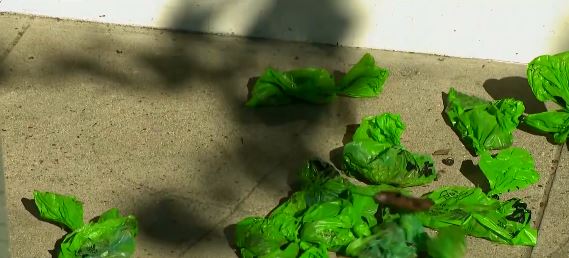
    BELL, California (KCAL, KCBS) — An LGBTQ youth center in Bell has been dealing with a man who has been throwing bags of dog poop at their building for months, but police said they can’t do anything about it.

Since June, Mi SELA LGBTQ+ has been climbing ladders to clean dozens of poop bags off their awning. After a few months, Supervisor Janice Hahn gave the center a $2,500 grant to install new security cameras.

The upgrades allowed the center to identify the man and alerted the Bell Police Department.

However, Bell Police Department Chief Damien Velasco said they have worked with city leaders and the Los Angeles County District Attorney’s Office, all of whom came to the same conclusion.

“It’s a littering offense, which means if a police officer was present and witnessed the littering, they could write a citation,” Velasco said.

Supervisor Hahn’s Office called on officers to investigate the situation as a hate crime.

“We cannot allow incidents like this to be normalized. It is hateful, it is disgusting, and it must stop,” said Matthew Johnson, a spokesperson for Hahn’s Office.

Former federal prosecutor Naema Rahmani said it’s unlikely this would be classified as a hate crime, unless detectives can find a motive.

“Typically, you see some sort of crime of violence, or physical destruction or damage to property,” Rahmani said. “Because you don’t have that, you can’t get to the next level, which is the motivation of the crime, which is an enhancement.”

Mi SELA staff said they have tried to speak with the man and simply want an apology, but will take civil legal action against him if the bags continue to appear on their awning.

“Let’s heal whatever needs to be healed and let’s work together,” executive director Eddie Martinez said.

Please note: This story was provided to CNN Wire by an affiliate and does not contain original CNN reporting. This content carries a strict local market embargo. If you share the same market as the contributor of this article, you may not use it on any platform.
San Jose approves $8 million settlement in case of college athlete shot by police

By KGO News Staff

Click here for updates on this story

    SAN JOSE, California (KGO) — The San Jose City Council approved an $8 million settlement on Tuesday in the case of a football player shot by police.

In 2022, K’Aun Green wrestled a gun away from a man in a restaurant during a fight.

When police arrived, an officer shot Green four times.

That officer was also later found to be a part of a racist texting scandal.

Green’s lawyer posted a statement on Facebook that read, in part: “He had faith that the truth would come out. We had to fight to get the truth out”.

Green now plays football at a university in Arkansas.

Please note: This story was provided to CNN Wire by an affiliate and does not contain original CNN reporting. This content carries a strict local market embargo. If you share the same market as the contributor of this article, you may not use it on any platform.

Is it time to tear down the aging SF Zoo? A campaign to replace it with an ecological park has begun

By Gloria Rodriguez

Click here for updates on this story

    SAN FRANCISCO, California (KGO) — Long-time activist Justin Barker, who has for decades advocated for the transformation of zoos, believes the 100-acre San Francisco Zoo & Gardens could turn into what he’s calling EcoPark SF.

For years, the San Francisco Zoo has faced backlash over its crumbling facilities, which are deemed unsafe for its animals, staff, and visitors.

Leveraging past successes in advocating for zoo animal liberation, Barker, with his clear vision and passion, now focuses on San Francisco’s zoo.

What he wants is to transition the zoo “to a place that focuses on conservation and education and really a modern place for families to come and enjoy, to learn without harming animals,” he said.

The project, which is just a conceptual map at this point, would cost about $350 million, according to Barker’s estimates. He added that City Hall would need to get behind it. He said they’d need generous donors, too.

Despite founding SF Zoo Watch and architecting the EcoPark SF proposal, Barker lacks direct zoo management experience.

The zoo responded, dismissing his plan as unrealistic.

Cassandra Costello, co-CEO of the San Francisco Zoo, sent a statement to ABC7 News:

“We genuinely welcome feedback and ideas about the future of the Zoo, and we’re always open to thoughtful public input. That said, the first time we saw this proposal was this week in a newspaper opinion piece, and we do not consider this idea realistic. Anyone can come up with a fanciful plan and pretty pictures, but these images do not reflect the complexity or responsibility involved in caring for animals, conservation of species, and operating a major public institution.

SF Zoo has begun initial work on a Master Plan in partnership with animal experts, the city, and other stakeholders. We’ll be providing our community with more information on the zoo’s future as it is available.”

Data shows the zoo has been struggling recently, with a $6.3 million operating deficit in fiscal 2025.

In 2024, former Mayor London Breed signed an agreement with Chinese wildlife officials to bring pandas to the zoo. The zoo said it doesn’t have an update on the pandas. But that idea has been controversial, as is the proposed ecopark.

“I probably will say I do lean more toward keeping the zoo as it is already,” said San Francisco resident Salote Fainga. “The kids enjoy it. It’s for the kids.”

“I invest every year in getting a membership,” said San Francisco resident Eila Saarni. “They offer a variety of options for seniors and stuff like that, too. I give them as Christmas presents. It’s a really fun place to be. And I think the zoo without animals turned into an ecopark is ridiculous.”

Barker doesn’t think so.

“San Francisco is all about innovation and pushing big, bold ideas forward, and that’s exactly what the EcoPark is,” Barker said, adding that the zoo needs a big fix.

Barker said he paid a few thousand dollars of his own for the renderings of the proposed project and has donated his time and effort to the project.

A zoo spokesperson said that, like nearly every cultural institution, the zoo experienced attendance declines during the COVID-19 pandemic but that a recent monthly report showed a 53% increase in attendance in December compared to the previous December, which is very encouraging.

Please note: This story was provided to CNN Wire by an affiliate and does not contain original CNN reporting. This content carries a strict local market embargo. If you share the same market as the contributor of this article, you may not use it on any platform.

Good Samaritans help save stray cat shot with crossbow

By Lauren Martinez

Click here for updates on this story

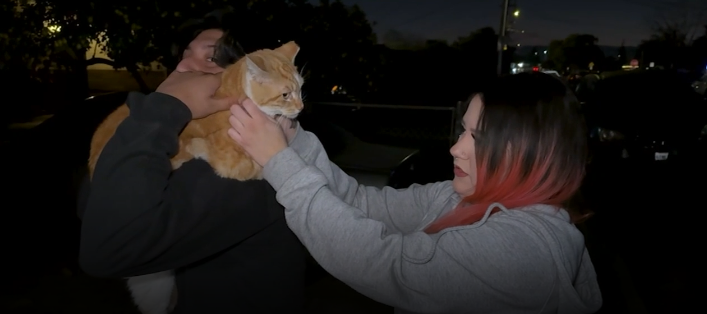
    SAN JOSE, California (KGO) — A friendly neighborhood cat is recovering after being shot by a crossbow in San Jose.

His nickname is “Huerro.” A woman in San Jose found him on Friday, and ABC7 News spoke with her daughter, Ivory Flores.

“Why would someone do that? I mean, these are poor little animals that can’t defend themselves,” Flores said.

Ivory’s mom posted on Nextdoor that she found Huerro on Friday night but didn’t have a car to take him to an emergency vet.

Sunnyvale resident Allison Fluty saw the post and stepped in to help. Around midnight, she took Huerro to a veterinary hospital. Staff there removed a 6-inch crossbow bolt that went through the base of his tail. Fluty fronted the bill of $1,600.

“I figured, like worst-case scenario, I have six months to pay it off without interest,” Fluty said.

Fluty created a GoFundMe to cover the cost, and to help other cats. She’s using extra funds to help trap, neuter and return stray cats, some of them are likely Huerro’s siblings. Wednesday, she said she trapped 13 cats in the East San Jose neighborhood.

“It’s just another reason why I want to get more of the cats fixed in his neighborhood cause like, I don’t want there to be more victims of that kind of targeted violence against animals,” Fluty said.

The Flores family said they found the same kind of crossbow bolt that hit Huerro in their backyard on Wednesday morning – it’s about the size of a dart.

“Sad that we have people like that in our neighborhood because you know, there’s a whole bunch of cats in our neighborhood, so the fact that someone is out there with these intentions is kind of scary,” Flores said.

The rescued kittens and cats will receive spay and neuter surgeries at the San Jose Animal Care Center and local clinics.

Huerro is being cared for by the Flores family and is expected to be fully recovered in two weeks.

Please note: This story was provided to CNN Wire by an affiliate and does not contain original CNN reporting. This content carries a strict local market embargo. If you share the same market as the contributor of this article, you may not use it on any platform.

The right side of this 6-year-old’s body is shrinking. Her family is raising money to find out why.

By Kaitlyn Hart

Click here for updates on this story

    IDAHO FALLS, Idaho (eastidahonews.com) — Doctors in multiple states are searching for answers for a local 6-year-old girl, as the right side of her body appears to be shrinking.

In September, Valerie Jensen began complaining about her legs.

“At first I was like, OK, it’s got to be just growing pains,” Katelynn Jensen, Valerie’s mother, says. “Then it changed from every couple of days to every single night. She was just crying all night, and it wasn’t just regular pain. She would be limping around.”

One day, Katelynn noticed something new, and even more concerning.

“She was getting ready for the shower, and I took off her socks, and I noticed that her toe was a different color,” Katelynn says. It was like this weird purple color, and she had bruises all over her legs from her knees down.”

Soon after, Valerie was taken to see her first doctor, which marked the beginning of the medical mystery. According to Katelynn, the first set of doctors that saw Valerie had very few answers but tested her for many different things, including blood disorders and leukemia, which both came back negative.

“Her foot was getting worse, and all of a sudden it started showing atrophy, which is like shrinking,” Katelynn says. “Her foot, right now, looks very skeleton-like. She has, like, no muscle on her foot anymore.”

Throughout the testing, the only thing Valerie tested positive for was an autoimmune disease. Doctors then recommended that Valerie be seen at Primary Children’s Hospital in Salt Lake City. There, Valerie saw an orthopedic surgeon and discovered that her right leg was about an inch shorter than her left.

“Then she started getting these weird spots on her,” Katelynn says. “They’re like these patchy brown, scaly spots.”

Doctors recommended that Valerie see a rheumatologist as soon as possible.

“It was about a year on the waitlist,” Katelynn says. “Valerie’s doctor ended up calling the hospital, and they ended up pushing her through, and we saw them like two weeks later instead of a year later. They decided it was urgent because her muscle mass in her leg was decreasing.”

In November, the rheumatologist tested Valerie for several conditions but was still unable to reach a conclusion. Since that appointment, the Jensen family has been traveling back and forth between Salt Lake City and Idaho Falls nearly every week.

“Throughout December we kept seeing them, and they noticed that her leg was getting worse,” Katelynn says. “Her pain was getting worse, and we ended up seeing a dermatologist, as well.”

During the dermatologist appointment, doctors discovered that not only is Valerie’s right leg shorter than her left leg, but the entire right side of her body is smaller than the left side.

“That was pretty scary. Her ears are smaller; her hands are smaller; her arms are smaller,” Katelynn says. “What they’re calling it is that she has some sort of hemiatrophy.”

Hemiatrophy is a condition that causes the underdevelopment or shrinkage of one side of the body, according to the National Institutes of Health.

Even though doctors thought they had pinpointed a diagnosis, it didn’t explain all of her symptoms.

“This is where it gets kind of complex, because she’s showing signs of multiple things — like the skin patches, she’s showing muscle wasting, her bones aren’t growing — just a ton of different things,” Katelynn says, “but it’s not pinpointing to one thing specifically.”

Valerie’s doctors have recently enrolled her in a research program at the University of Utah, which they hope will provide the family with some answers. The study, however, will not be complete for multiple years.

“They take a DNA sample of hers, and they comb through the DNA to see if there’s anything missing, like chromosomes; and they go through all the letters of her DNA to see if there’s too much of something or not enough of something,” Katelynn says. “Then they take that and they put it in this pool of other people who are showing the same symptoms to try and determine if there’s some other disease that they’re not looking at for her.”

In the meantime, Katelynn says she, her husband and their young son are continuing to support Valerie as best they can while also praying for answers.

“As she’s worsening, we also noticed that she’s been having a hard time writing and reading,” Katelynn says. “So now they are looking at her brain, specifically, to see what’s next. The hemiatrophy can be caused by brain function not working, so it could be that the left side of her brain is not growing, or has stopped doing what it was supposed to be doing.”

The Jensen family recently started a GoFundMe, as both Katelynn and her husband, Dalynn, have had to take unpaid time off from work to support their daughter.

“Normally, (Valerie) is very outgoing — a lot of playing outside, riding her bike, doing all that fun outdoorsy stuff. She loves shopping; you know, all the girl stuff,” Katelynn says. “Obviously, lately she hasn’t been able to do any of that, which has probably been the hardest thing, I would say, that we’ve had to do, is just watching her decline.”

Our attorneys tell us we need to put this disclaimer in stories involving fundraisers: EastIdahoNews.com does not assure that the money deposited to the account will be applied for the benefit of the persons named as beneficiaries.

Please note: This story was provided to CNN Wire by an affiliate and does not contain original CNN reporting. This content carries a strict local market embargo. If you share the same market as the contributor of this article, you may not use it on any platform.