Police K9 makes first arrest in alleged Taco Bell robbery

By KEZI

Click here for updates on this story

    COOS BAY, Oregon (KEZI) — A Coos Bay man has been arrested following an armed robbery at a local Taco Bell restaurant thanks to K9 officer Arco, according to the Coos Bay Police Department.

CBPD officials said the incident occurred at about 11 p.m. on Jan. 14 when a suspect, identified as 29-year-old James Love, allegedly robbed the Taco Bell drive-through on South 1st Street. Wearing a mask and brandishing what appeared to be a pistol, he stole the cash register and fled, police said.

CBPD officers responded swiftly and gathered video surveillance, which led them to identify Love as the suspect. On Jan. 19, officers located him near Elrod Avenue, but he fled on foot. An officer deployed K9 Arco, who successfully apprehended Love. He was taken into custody without further incident. Police said the incident marked Arco’s first capture, police officials said.

Love is now facing multiple charges, including second-degree robbery and second-degree theft, along with unrelated warrants from Coos County and Washington state. Coos County Jail records show Love is in custody as of Jan. 26.

Please note: This story was provided to CNN Wire by an affiliate and does not contain original CNN reporting. This content carries a strict local market embargo. If you share the same market as the contributor of this article, you may not use it on any platform.

New Iowa bill may change how child deaths are documented

By KWWL

Click here for updates on this story

    DES MOINES, Iowa (KWWL) — Changes could be coming to how medical examiners document child deaths under a new bill advancing at the statehouse. House File 20-97 focuses on how the state medical examiner records vaccine information when a child dies from unknown causes.

The bill would require medical examiners to document the date and other details about the last immunization given. Supporters believe this change will provide important information that could protect other children.

“The US continues to have higher SIDS rates compared to other industrialized nations so I just think it’s time we start gathering data and information,” Rep. Samantha Fett of Warren County said.

A representative from Blank Children’s Hospital expressed questions about the bill. They noted that the child death review process is already very extensive when there is an unexplained death, and the hospital remains undecided on whether to support the bill.

Critics fear the bill could lead to more vaccine hesitancy. “What is the harm? The harm is talking about this bill, giving it a hearing in the Iowa House of Representatives, let alone passing it, gives the signal to Iowans out there that vaccines are dangerous,” Dr. Austen Baeth of Polk County said.

A medical examiner from Wright County testified that there are approximately 30 child deaths each year due to unknown circumstances.

Please note: This story was provided to CNN Wire by an affiliate and does not contain original CNN reporting. This content carries a strict local market embargo. If you share the same market as the contributor of this article, you may not use it on any platform.
Dogs and cats needed for blood donations at Northern Colorado veterinary hospital


KCNC

By Dillon Thomas

Click here for updates on this story

    COLORADO (KCNC) — January is National Blood Donor Month, and as part of it, both UCHealth and Colorado State University are calling on people and their pets to donate. You read that correctly, pets are also being asked to donate their blood to those in need.

At the Garth England Blood Center in Fort Collins, thousands of people donate their blood to UCHealth’s blood bank every year. But recently, Stacey Cooper visited for the first time.

“I am here donating blood for the first time,” Cooper said. “It is much simpler than I thought it was going to be.”

But the simplicity of the donation was only easier, thanks to the companionship of her dog, which rested by her side during the donation.

“This is Cora. This is my golden retriever. She is 5 years old,” Cooper said. “She has been by my side since a little one.”

Cora is not only a calming presence for Cooper, but she is also a great example of a blood donor herself.

“She is also a blood donor for Colorado State University,” Cooper said.

Down the street from Garth England Blood Center, Cora is a regular at CSU’s veterinary teaching hospital.

CBS News Colorado was invited to join Cora for one of her blood donations.

There, Cora was given a quick medical checkup. She was provided treats and plenty of petting before lying down on a medical table.

She was surrounded by calming staff who helped her stay lying down as a small patch of hair was shaved from her neck. Then, the staff gently inserted a needle into one of her veins and began drawing blood.

“You would be surprised at how many dogs actually need blood,” Cooper said.

During the donation, the room was largely quiet. Staff were seen petting and calming Cora while she gently closed her eyes during the donation.

The donation went fairly quickly and Cora was thrilled to be given plenty of treats after she was wrapped with a bandage as a safety measure.

CSU is one of the top veterinary medical centers in the region and provides emergency medical services to many kinds of animals. However, cats and dogs are their primary clients.

“We are definitely in need of donors,” Cooper, who is also on staff, said.

Dogs and cats have multiple different types of blood, underscoring why it’s important for there to be a wide range of donors.

The university does have some standards that its animal donors must meet. That includes making sure most donors are middle-aged pets.

“I’m always surprised people don’t realize dogs and cats donate just like people donate,” said Amanda Cavanaugh, emergency and critical care vet for CSU.

CSU gives free food for take-home to pet families that donate.

“Most people don’t realize we have a full blood bank,” Cavanaugh said. “Having a blood bank is really important to us, as vets. It allows us to provide that level of care dogs and cats need.”

UCHealth is also seeking more human donors at its blood banks, which help provide critical supplies of blood to hospitals across Northern Colorado.

Much like UCHealth, CSU’s team says they are always seeking more donors to help those in need.

“We use blood products every single day,” Cavanaugh said.

Please note: This story was provided to CNN Wire by an affiliate and does not contain original CNN reporting. This content carries a strict local market embargo. If you share the same market as the contributor of this article, you may not use it on any platform.
Dogs and cats needed for blood donations at Northern Colorado veterinary hospital

By Dillon Thomas

Click here for updates on this story

    COLORADO (KCNC) — January is National Blood Donor Month, and as part of it, both UCHealth and Colorado State University are calling on people and their pets to donate. You read that correctly, pets are also being asked to donate their blood to those in need.

At the Garth England Blood Center in Fort Collins, thousands of people donate their blood to UCHealth’s blood bank every year. But recently, Stacey Cooper visited for the first time.

“I am here donating blood for the first time,” Cooper said. “It is much simpler than I thought it was going to be.”

But the simplicity of the donation was only easier, thanks to the companionship of her dog, which rested by her side during the donation.

“This is Cora. This is my golden retriever. She is 5 years old,” Cooper said. “She has been by my side since a little one.”

Cora is not only a calming presence for Cooper, but she is also a great example of a blood donor herself.

“She is also a blood donor for Colorado State University,” Cooper said.

Down the street from Garth England Blood Center, Cora is a regular at CSU’s veterinary teaching hospital.

CBS News Colorado was invited to join Cora for one of her blood donations.

There, Cora was given a quick medical checkup. She was provided treats and plenty of petting before lying down on a medical table.

She was surrounded by calming staff who helped her stay lying down as a small patch of hair was shaved from her neck. Then, the staff gently inserted a needle into one of her veins and began drawing blood.

“You would be surprised at how many dogs actually need blood,” Cooper said.

During the donation, the room was largely quiet. Staff were seen petting and calming Cora while she gently closed her eyes during the donation.

The donation went fairly quickly and Cora was thrilled to be given plenty of treats after she was wrapped with a bandage as a safety measure.

CSU is one of the top veterinary medical centers in the region and provides emergency medical services to many kinds of animals. However, cats and dogs are their primary clients.

“We are definitely in need of donors,” Cooper, who is also on staff, said.

Dogs and cats have multiple different types of blood, underscoring why it’s important for there to be a wide range of donors.

The university does have some standards that its animal donors must meet. That includes making sure most donors are middle-aged pets.

“I’m always surprised people don’t realize dogs and cats donate just like people donate,” said Amanda Cavanaugh, emergency and critical care vet for CSU.

CSU gives free food for take-home to pet families that donate.

“Most people don’t realize we have a full blood bank,” Cavanaugh said. “Having a blood bank is really important to us, as vets. It allows us to provide that level of care dogs and cats need.”

UCHealth is also seeking more human donors at its blood banks, which help provide critical supplies of blood to hospitals across Northern Colorado.

Much like UCHealth, CSU’s team says they are always seeking more donors to help those in need.

“We use blood products every single day,” Cavanaugh said.

Please note: This story was provided to CNN Wire by an affiliate and does not contain original CNN reporting. This content carries a strict local market embargo. If you share the same market as the contributor of this article, you may not use it on any platform.

Mail theft in Colorado continues years after USPS vowed to make changes


KCNC

By Karen Morfitt

Click here for updates on this story

    COLORADO (KCNC) — Despite efforts to deter them, thieves in Colorado are continuing to steal credit cards, checks, ballots and even prescription medication from mailboxes.

CBS Colorado has reported on the issue of mail theft several times over the past several years. More than a year ago, top officials within the U.S. Postal Inspection Service told CBS Colorado steps were being taken to address it, specifically upgrading locks across the Denver metro area.

“This is a problem right now, but it won’t be a forever problem,” Melissa Atkin told CBS Colorado investigative reporter Karen Morfitt in the fall of 2024.

The issue has persisted for some time after those assurances.

Investigators know where the thefts are happening and how they are happening, and they have the ability to stop it by changing locks. But USPS has said changing locks will be a long, expensive process.

“I don’t think we realized the magnitude of it initially,” said Karen Hagans.

Hagans has lived in Denver’s Lowry neighborhood for about 20 years. Recently, she said her mail began disappearing nearly every day.

“All of the boxes where they put packages were open. There was stuff thrown on the ground on the street, and you realized that if you didn’t go get your mail the minute it was delivered, you couldn’t trust that it was there,” Hagans said.

Frustrated by the pressure to beat thieves to her mail, Hagans rented a post office box, one of the only solutions offered by the USPS. But she said she then had trouble forwarding her mail and was mistakenly identified as having moved away.

“They called me and said, ‘We see that you moved. Do you want service at your new location?’ I said, ‘What do you mean I moved?’ Hagans said.

Her experience is not unique, nor is the Lowry neighborhood.

Federal court records show thieves with master keys have been targeting cluster mailboxes for years.

“It’s the same master key used throughout the Intermountain West,” said Mary Carr, executive director of the Lowry Community Master Association. “Some of Lowry’s mail was recovered in Wyoming and vice versa because the folks robbing the kiosks are moving up and down the I-25 corridor.”

Carr said the association is legally responsible for securing the mailboxes, but it has no control over the locks, which are USPS property.

“There’s no pattern to when they hit the boxes — at night, in the middle of the day — there’s no pattern to it,” Carr said. “We are at a loss.”

After making repeated phone calls, sending emails and visiting in person to local postal offices, Carr says their efforts to work with the U.S. Postal Inspection Service went nowhere. They then turned to lawmakers for help.

“There really isn’t anywhere to go except the Postal Inspection Service,” Carr said. “They committed to Congresswoman (Diana) DeGette’s office that they would be replacing the master key system with a scannable key.”

However, Carr said they have not received a timeline for those upgrades but were told areas with the highest number of thefts will be prioritized.

They have since outfitted every kiosk with a QR code, allowing residents to make immediate theft reports.

“The squeaky wheel gets the grease, so the more reports we have of mail theft, the more attention it will get,” Carr said.

While Lowry waits for locks to be upgraded, investigators say another crime happened: A mail carrier was robbed and a “piece of USPS property” was stolen. The USPS is offering a reward of up to $150,000 for information.

“I don’t think that’s really going to address the problem,” Hagans said. “If these keys are out there, maybe it’s one person or maybe it’s many. They need to think about the integrity of the system.”

In response to questions from CBS Colorado, a USPS spokesperson sent the following statement:

“The Postal Service has been implementing a series of nationwide security enhancements, including the deployment of high-security collection boxes and upgraded cluster box units. These upgrades are part of a broader, multiyear initiative to reduce opportunities for mail theft and limit criminals’ ability to misuse stolen arrow keys.

To protect the integrity of these security measures, USPS does not disclose specific locations, quantities, timelines or operational criteria related to where or when upgrades occur. This includes information about how many boxes have been upgraded, how locations are selected or any thresholds related to theft activity. These safeguards are in place to prevent criminals from identifying vulnerabilities or targeting specific neighborhoods.

USPS continues to explore and pilot enhanced access control technologies, including electronic key systems. These efforts are ongoing, and details about deployment locations or timelines are not publicly released for security reasons.

USPS maintains strict internal controls for the issuance, tracking and use of arrow keys. While we cannot discuss specific numbers of keys or internal accountability procedures, we can assure you that USPS has reinforced policies and training to support proper key handling and reduce opportunities for misuse or theft. Any incident involving a stolen or misplaced key is immediately reported to USPIS for investigation, as applicable by USPIS and/or the U.S. Postal Service Office of Inspector General.”

Please note: This story was provided to CNN Wire by an affiliate and does not contain original CNN reporting. This content carries a strict local market embargo. If you share the same market as the contributor of this article, you may not use it on any platform.

Mail theft in Colorado continues years after USPS vowed to make changes

By Karen Morfitt

Click here for updates on this story

    COLORADO (KCNC) — Despite efforts to deter them, thieves in Colorado are continuing to steal credit cards, checks, ballots and even prescription medication from mailboxes.

CBS Colorado has reported on the issue of mail theft several times over the past several years. More than a year ago, top officials within the U.S. Postal Inspection Service told CBS Colorado steps were being taken to address it, specifically upgrading locks across the Denver metro area.

“This is a problem right now, but it won’t be a forever problem,” Melissa Atkin told CBS Colorado investigative reporter Karen Morfitt in the fall of 2024.

The issue has persisted for some time after those assurances.

Investigators know where the thefts are happening and how they are happening, and they have the ability to stop it by changing locks. But USPS has said changing locks will be a long, expensive process.

“I don’t think we realized the magnitude of it initially,” said Karen Hagans.

Hagans has lived in Denver’s Lowry neighborhood for about 20 years. Recently, she said her mail began disappearing nearly every day.

“All of the boxes where they put packages were open. There was stuff thrown on the ground on the street, and you realized that if you didn’t go get your mail the minute it was delivered, you couldn’t trust that it was there,” Hagans said.

Frustrated by the pressure to beat thieves to her mail, Hagans rented a post office box, one of the only solutions offered by the USPS. But she said she then had trouble forwarding her mail and was mistakenly identified as having moved away.

“They called me and said, ‘We see that you moved. Do you want service at your new location?’ I said, ‘What do you mean I moved?’ Hagans said.

Her experience is not unique, nor is the Lowry neighborhood.

Federal court records show thieves with master keys have been targeting cluster mailboxes for years.

“It’s the same master key used throughout the Intermountain West,” said Mary Carr, executive director of the Lowry Community Master Association. “Some of Lowry’s mail was recovered in Wyoming and vice versa because the folks robbing the kiosks are moving up and down the I-25 corridor.”

Carr said the association is legally responsible for securing the mailboxes, but it has no control over the locks, which are USPS property.

“There’s no pattern to when they hit the boxes — at night, in the middle of the day — there’s no pattern to it,” Carr said. “We are at a loss.”

After making repeated phone calls, sending emails and visiting in person to local postal offices, Carr says their efforts to work with the U.S. Postal Inspection Service went nowhere. They then turned to lawmakers for help.

“There really isn’t anywhere to go except the Postal Inspection Service,” Carr said. “They committed to Congresswoman (Diana) DeGette’s office that they would be replacing the master key system with a scannable key.”

However, Carr said they have not received a timeline for those upgrades but were told areas with the highest number of thefts will be prioritized.

They have since outfitted every kiosk with a QR code, allowing residents to make immediate theft reports.

“The squeaky wheel gets the grease, so the more reports we have of mail theft, the more attention it will get,” Carr said.

While Lowry waits for locks to be upgraded, investigators say another crime happened: A mail carrier was robbed and a “piece of USPS property” was stolen. The USPS is offering a reward of up to $150,000 for information.

“I don’t think that’s really going to address the problem,” Hagans said. “If these keys are out there, maybe it’s one person or maybe it’s many. They need to think about the integrity of the system.”

In response to questions from CBS Colorado, a USPS spokesperson sent the following statement:

“The Postal Service has been implementing a series of nationwide security enhancements, including the deployment of high-security collection boxes and upgraded cluster box units. These upgrades are part of a broader, multiyear initiative to reduce opportunities for mail theft and limit criminals’ ability to misuse stolen arrow keys.

To protect the integrity of these security measures, USPS does not disclose specific locations, quantities, timelines or operational criteria related to where or when upgrades occur. This includes information about how many boxes have been upgraded, how locations are selected or any thresholds related to theft activity. These safeguards are in place to prevent criminals from identifying vulnerabilities or targeting specific neighborhoods.

USPS continues to explore and pilot enhanced access control technologies, including electronic key systems. These efforts are ongoing, and details about deployment locations or timelines are not publicly released for security reasons.

USPS maintains strict internal controls for the issuance, tracking and use of arrow keys. While we cannot discuss specific numbers of keys or internal accountability procedures, we can assure you that USPS has reinforced policies and training to support proper key handling and reduce opportunities for misuse or theft. Any incident involving a stolen or misplaced key is immediately reported to USPIS for investigation, as applicable by USPIS and/or the U.S. Postal Service Office of Inspector General.”

Please note: This story was provided to CNN Wire by an affiliate and does not contain original CNN reporting. This content carries a strict local market embargo. If you share the same market as the contributor of this article, you may not use it on any platform.

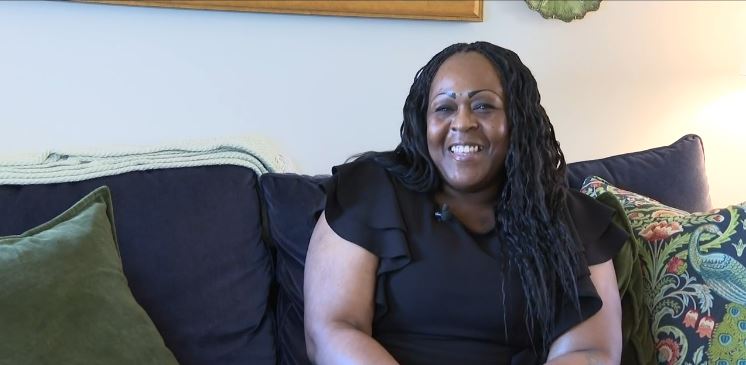
After 23 years, she’s free: Nicole Boynton’s path to hope under Georgia’s survivor justice act

By Kaitlyn Ross

Click here for updates on this story

    ATLANTA (WXIA) — For the first time in Georgia’s history, a woman serving a life sentence is free because of a new state law designed to protect survivors of abuse.

Nicole Boynton spent 23 years behind bars for a crime a judge now says was shaped by years of violence against her. Her release could open the door for hundreds of others and is drawing national attention.

The first thing Nicole did after leaving prison wasn’t for herself. “I got cards for them, the team and I went to Target, and we got cards to send to them, and that’s how we keep them uplifted,” she said. “It doesn’t have to be long, thinking about you, praying for you, we love you!”

Freedom sounds like traffic, feels like fresh air, and looks like cars passing by after 23 years in prison. “I was outside, and just looking around, watching cars drive by, and it was like, is this really real? It feels great,” Nicole said.

Boynton was just 18 years old when she stabbed her boyfriend during a fight inside their Cobb County home in 1999. He died, and under Georgia law at the time, judges had no choice in the sentence.

Erin Edwards, a senior associate at Alston & Bird who worked on Boynton’s case, said, “Nicole was convicted of felony murder, which carried an automatic life sentence. The judge was not allowed to consider any mitigating factors, automatic life sentence, no questions asked. Nicole has done it; she’s the first person to have had a sentence vacated and be resentenced under the SJA.”

The Survivor Justice Act, recently enacted in Georgia, applies to offenses where a history of abuse was a significant factor, potentially reducing prison sentences.

Court records and Boynton’s resentencing petition show she endured years of physical and sexual abuse, starting in childhood and continuing throughout her relationship. “When she told me she was vacating my sentence for time served, I just couldn’t do anything but cry and thank Jesus,” Nicole said.

Boynton described what freedom feels like now. “To be able to have fresh air and to be free, it’s amazing!!” she said. “It felt like my heart dropped, in a good way. It didn’t feel real at first because I have waited so long to be free.”

She reflected on her time in prison and how she stayed focused on the future. “I always saw myself out of there. I kept my mind clear. So I continued to write, I continued to try to be the person that I know that I can be,” Nicole said. “I didn’t stop. Trades, welding certificate, cosmetology, barbering, there is nothing I can’t do because I put forth the effort to do it.”

“There’s another door that’s going to open, this door closes, another one will open, this door closes, this one will open,” she said. “God is telling me, this isn’t even the end, this is the beginning.”

On Jan. 5, a Cobb County judge officially vacated Boynton’s life sentence and resentenced her to 23 years, making her the first person released under the Survivor Justice Act.

Doug Ammar, the Executive Director of the Georgia Justice Project, helped advocate for the law.

“It’s really powerful to work on a bill, get it passed, get it signed, and then have it go into effect, and someone walks out of prison all within 12 months, that’s pretty amazing.

“We work on bills for years! There are really folks on the outside on every level, knowing that people have been overconvicted or wrongly convicted. There’s a willingness from the system to do something they haven’t done before, and honestly, that the law didn’t allow them to do before,” he said.

Now 44, Boynton has a job lined up, earned multiple certifications while incarcerated, and says she wants to help other women still behind bars find hope.

“With this bill that came out, that opened up the door for a lot of other ladies that lost hope, their hope is back up now. If Nicole can do it, then I can do it, too,” she said.

Boynton’s lawyers say she is not under any state supervision. Advocates believe hundreds of other incarcerated Georgians could be eligible for resentencing under the Survivor Justice Act, and other states are now watching Georgia as a potential model.

To support Nicole in rebuilding her life, you can donate here: gofundme.com/f/help-nicole-rebuild-her-life-after-23-years

Please note: This story was provided to CNN Wire by an affiliate and does not contain original CNN reporting. This content carries a strict local market embargo. If you share the same market as the contributor of this article, you may not use it on any platform.

Viral video shows autonomous snow blower at work clearing driveway

By WABC Eyewitness News

Click here for updates on this story

    CHESTER, New Jersey (WABC) — As the snow piled up across New Jersey this weekend, one homeowner in Morris County decided to let a robot handle the cleanup while he stayed warm inside.

Now the video of his autonomous snow blower is going viral and racking up millions of views.

Tom Moloughney said skeptics weren’t hard to find — especially given the size of his driveway.

“I have a big driveway over 6,000 square feet, over 300 feet long up an incline,” Moloughney said. “So this is a challenging driveway. If it could do this driveway, it can do most driveways, I think.”

Instead of firing up a traditional snow blower this weekend, Moloughney, of Chester, New Jersey, put an autonomous one to the test.

But he says it didn’t come easy.

“It takes a while to set them up, I’ll tell you right now, this isn’t for people that just want to buy something, take it out of a box and use it,” he said. “I have probably 30 hours invested in assembling, programing it, walking it around my driveway. Because you have to settle the perimeters. You have to set the angle that the shoots are going to throw the snow. It’s actually a lot of setup, but there’s a big reward waiting for you at the end of that set up because it actually works.”

Once programmed, the machine works on its own, starting when the snow does.

“So you turn it on when it starts snowing and you just let it run continuously,” Moloughney said.

It ran through the night and returned to its charging dock as needed.

“I had it running all night, and when I woke up this morning, my driveway is done,” Moloughney said.

Moloughney says this is a glimpse of how technology is changing everyday chores.

“That’s how robotics and AI helps us live better lives,” he said. “Who wants to be outside clearing your driveway?”

And he believes this is just the beginning.

“This is first gen and like any tech, you know, it only gets bigger, better and less expensive as time goes on,” Moloughney said. “So I 100% can see these things eventually being used at municipalities much larger scale than what mine is.”

Please note: This story was provided to CNN Wire by an affiliate and does not contain original CNN reporting. This content carries a strict local market embargo. If you share the same market as the contributor of this article, you may not use it on any platform.

Community comes together to save trapped pregnant cow from collapsed barn

By Ryan Dickstein

Click here for updates on this story

    ELKTON, Maryland (WMAR) — An all-out community effort saved the day for one family-owned business in Elkton.

Just before 7am Monday Hannimal Farm put out a social media post stating their barn had collapsed, leaving a pregnant cow trapped inside.

With resources limited due to Sunday’s snow storm, Hannimal pleaded for help.

By 9am some reinforcements came to the rescue.

“Thank you to everyone that came out so quickly to help. Without your help, I don’t know what we would have done,” Hannimal said on Facebook. “Shout out to Patrick Campbell and the rest of the emergency services crew, Banks Lawn Service, and everyone else.”

While all animals got out alive, one cow was injured.

According to the farm’s latest Facebook post, the cow, Miss Mignon, is pregnant and a vet came out to induce labor, as she is due any day now. For her safety, they decided not to transport her to limit stress to her and the baby.

Hannimal Farm is now working to rebuild the barn roof. They are accepting donations, which can be made through their Venmo, @hannimalfarm, or Cash App, $hannimalfarm.

Please note: This story was provided to CNN Wire by an affiliate and does not contain original CNN reporting. This content carries a strict local market embargo. If you share the same market as the contributor of this article, you may not use it on any platform.

Have you seen her? NOAA needs help finding entangled whale

By Kimber Collins

Click here for updates on this story

    MAUI, Hawaii (KITV) — NOAA is asking Hawaii’s on-water community to keep a close eye out for an entangled humpback whale spotted off Lahaina, Maui.

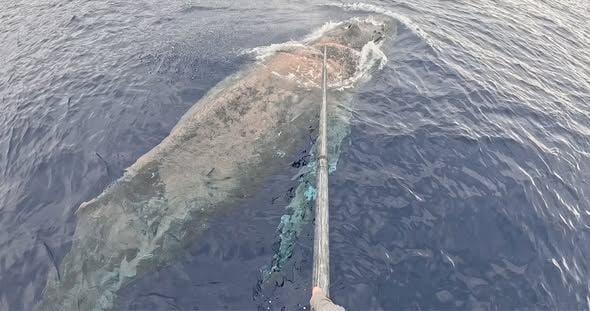
The roughly 40-foot female humpback was encountered by the Hawaiian Islands Humpback Whale National Marine Sanctuary monitoring team on Thursday, January 22. Officials say the whale appears to be in poor to moderate condition, showing signs of emaciation and heavy coverage of red-colored whale lice across much of her body.

Researchers believe the whale may still be entangled and are working to track her movements so trained responders can assess whether intervention is possible. NOAA says public reports are critical in helping teams locate the animal.

Anyone who spots the whale is asked to immediately call the statewide NOAA Marine Animal Emergency Hotline at 888-256-9840. Officials also ask the public to share photos or videos if possible, but to remain at least 100 yards away and not attempt to approach or assist the whale.

Humpback whales are protected under federal law, and approaching them too closely can be dangerous for both the animal and people on the water.

Please note: This story was provided to CNN Wire by an affiliate and does not contain original CNN reporting. This content carries a strict local market embargo. If you share the same market as the contributor of this article, you may not use it on any platform.