Faribault man accused of stealing Flock camera and attempting to break it


WCCO

By Nicholas Lentz, Ubah Ali

Click here for updates on this story

    MINNESOTA (WCCO) — A 42-year-old man is accused of stealing a law enforcement camera that reads license plates in Faribault, Minnesota, and trying to break it, according to a court document filed in Rice County.

According to the criminal complaint, the man from Faribault is charged with one count each of theft, interfering with emergency communications and fourth-degree damage to property.

An individual reported to police on July 27 that someone had stolen a Flock camera, the court document said. The company is contracted by the City of Faribault for automated license plate readers, which police use for investigations, missing persons and other tasks.

The complaint said officers checked the camera located near the intersection of Lyndale Avenue South and Highland Place in Faribault and saw it had been removed.

“The cables that had been attached to the camera appeared to have been cut and were hanging freely,” according to the court document.

Police learned the camera went offline during the morning of July 27, the complaint said. The individual who reported the theft told investigators the man charged had allegedly come to their shop on Seventh Street around midnight on July 26 and was telling them about Flock cameras. At one point, he said, “I think I might take one,” according to the court document.

During the afternoon of July 27, the man came to the individual’s shop on Central Avenue, opened a backpack and told them, “it’s one of those Flock cameras,” the complaint said. The individual said they wanted nothing to do with it.

The man later showed up to one of the individual’s stores, was looking for tools and trying to “tear apart” the camera, according to the court document.

The complaint said officers executed a warrant to search the man’s home. They told him they assumed he knew why they were there.

According to the complaint, the man told police he found a camera in the road “the other night,” that he didn’t know what it was and wasn’t going to keep it. The officers then asked the man to retrieve the camera, which they later saw had black tape over the lens.

While speaking with the man, the complaint said, the officers saw a backpack that “appeared consistent” with the backpack he was wearing in surveillance video of the shop that investigators had previously reviewed.

Both the Flock camera and backpack were seized as evidence, the court document said. The license plate reader had the same serial number as the camera missing from the area of Lyndale Avenue South and Highland Place.

If convicted, the man faces a maximum of over four years in prison and a fine of up to $14,000.

At the same time, law enforcement agencies in other Minnesota communities say they’re seeing an increase in vandals targeting the cameras.

In Winona, police say someone cut down poles and removed all eight Flock cameras, leaving the city’s entire system offline since Saturday. The estimated value of the stolen equipment is roughly $24,000. Investigators are working to learn who is responsible.

Edina officials say the city has experienced four separate incidents involving Flock cameras being damaged.

As of Monday, the Anoka County Sheriff’s Office has had one issue with vandalism of a camera, in the City of Nowthen.

Please note: This story was provided to CNN Wire by an affiliate and does not contain original CNN reporting. This content carries a strict local market embargo. If you share the same market as the contributor of this article, you may not use it on any platform.


Near death after North Texas animal cruelty case, Boone and other dogs are now thriving

By J.D. Miles

Click here for updates on this story

    TEXAS (KTVT) — An almost unbelievable update on a story we first told you about in May, when authorities in Hunt County seized a number of starving dogs from a rural property and charged the owner with animal cruelty.

Some of those dogs were believed to be near death when they were taken to an SPCA facility in Dallas. There were doubts and questions about whether they could be nursed back to health.

One dog was so malnourished that he had to be carried by Hunt County Sheriff’s deputies out of what investigators described as hellish conditions when the dog and six others were seized from farmland back in May.

“This is definitely one of the worst cases that we’ve seen in quite a few years,” said Rebecca Woodward, the SPCA Sr. Director of Shelter and Medical Operations.

The one they called Boone was said to be hours from dying when he and the others were rushed to the SPCA of Texas Dallas shelter, where a team of 150 staff and volunteers worked around the clock for weeks to save him.

“He could barely walk,” said Woodward. “Our team knew it was critical to come in and save him very quickly. And it was an hour-by-hour situation. He had to have really close monitoring from all teams to pull through, but we never stopped believing that he would make it.”

Today, Boone is thriving.

“As long as we were taking those little steps of improving his nutrition and improving his health day by day, we could see the spark come back in his eyes,” Woodward said.

Boone, Clyde and Cash are still at the SPCA shelter in Dallas with others currently in foster homes.

But all of them, ages 3 to 8, we are glad to report, are thriving.

“It took everyone at the SPCA to play a hand in this. And so we’ve been rooting for him from day one,” said Woodward. “And we just can’t wait to see him get a forever home.”

Boone and the other dogs seized in the raid are currently available for fostering and adoption. Whoever they end up with will have a family pet with a survival story unlike almost any other

In fact, the staff at the SPCA of Texas, Dallas, believes these dogs that have been through so much seem to show a greater appreciation of everything they get.

“They all just seem to be enjoying their life right now,” Woodward said. “And I would like to believe it’s because they got that second chance, but they could just be being dogs. I mean, they’re getting to play. They got to do enrichment. Our goal is for them to do this in a home, but to see them blossom in shelter, we’re doing something right.”

Please note: This story was provided to CNN Wire by an affiliate and does not contain original CNN reporting. This content carries a strict local market embargo. If you share the same market as the contributor of this article, you may not use it on any platform.
Near death after North Texas animal cruelty case, Boone and other dogs are now thriving

KTVT

By J.D. Miles

Click here for updates on this story

    TEXAS (KTVT) — An almost unbelievable update on a story we first told you about in May, when authorities in Hunt County seized a number of starving dogs from a rural property and charged the owner with animal cruelty.

Some of those dogs were believed to be near death when they were taken to an SPCA facility in Dallas. There were doubts and questions about whether they could be nursed back to health.

One dog was so malnourished that he had to be carried by Hunt County Sheriff’s deputies out of what investigators described as hellish conditions when the dog and six others were seized from farmland back in May.

“This is definitely one of the worst cases that we’ve seen in quite a few years,” said Rebecca Woodward, the SPCA Sr. Director of Shelter and Medical Operations.

The one they called Boone was said to be hours from dying when he and the others were rushed to the SPCA of Texas Dallas shelter, where a team of 150 staff and volunteers worked around the clock for weeks to save him.

“He could barely walk,” said Woodward. “Our team knew it was critical to come in and save him very quickly. And it was an hour-by-hour situation. He had to have really close monitoring from all teams to pull through, but we never stopped believing that he would make it.”

Today, Boone is thriving.

“As long as we were taking those little steps of improving his nutrition and improving his health day by day, we could see the spark come back in his eyes,” Woodward said.

Boone, Clyde and Cash are still at the SPCA shelter in Dallas with others currently in foster homes.

But all of them, ages 3 to 8, we are glad to report, are thriving.

“It took everyone at the SPCA to play a hand in this. And so we’ve been rooting for him from day one,” said Woodward. “And we just can’t wait to see him get a forever home.”

Boone and the other dogs seized in the raid are currently available for fostering and adoption. Whoever they end up with will have a family pet with a survival story unlike almost any other

In fact, the staff at the SPCA of Texas, Dallas, believes these dogs that have been through so much seem to show a greater appreciation of everything they get.

“They all just seem to be enjoying their life right now,” Woodward said. “And I would like to believe it’s because they got that second chance, but they could just be being dogs. I mean, they’re getting to play. They got to do enrichment. Our goal is for them to do this in a home, but to see them blossom in shelter, we’re doing something right.”

Please note: This story was provided to CNN Wire by an affiliate and does not contain original CNN reporting. This content carries a strict local market embargo. If you share the same market as the contributor of this article, you may not use it on any platform.
Texas THC ban impacts smoke shops, employees as legal battle continues

By Marissa Armas

Click here for updates on this story

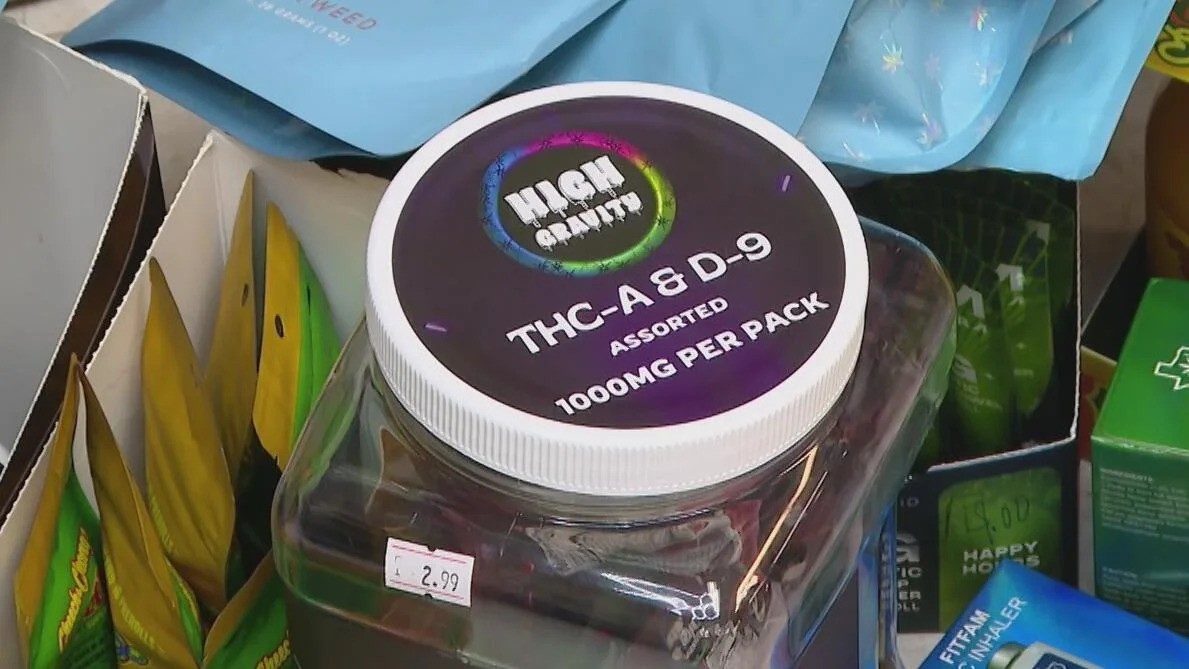
    TEXAS (KTVT) — The legal battle over hemp in Texas continues. A new federal lawsuit has been filed challenging the state’s ban on the sale of many hemp-derived THC products, and this ban is already having a major impact on smoke shops across North Texas.

At One Stop Smoke Shop in Dallas, turning customers away has become a new norm as a statewide ban on certain hemp-derived THC products became official on Friday.

Under the new law, retailers can no longer sell products containing delta-8, delta-10, and other intoxicating hemp compounds. Business owners who sell the products could see fines or jail time.

Nawar Al Hakari’s family owns One Stop Smoke Shop, along with Lone Star Vape and Smoke in Irving.

“A lot of people don’t know about it until it hits,” said Al Hakari. “In Irving, we had over 250 people walk in, but over half of them we had to send them away. We’re losing like $2,000 a day, then what we usually do, we usually make around $5,000.”

Al Hakari said his family moved to Texas from Alabama about a year ago, hoping laws would be a little more lax.

“We’re just disappointed. We thought Texas, you know, it’s too big of a state to ban it,” he said.

Now, a lawsuit has been filed to try and block the new law.

The Texas Hemp Business Council said it’s aware of the lawsuit and said its own legal challenge is still pending. In a statement, the organization added, “we anticipate additional litigation and will continue to monitor developments while advocating for Texas Hemp Businesses and Consumers.”

The Texas Department of State Health Services said it does not comment on pending litigation. Attorney General Ken Paxton’s office did not respond to our request for a comment.

As for Al Hakari, he said if there’s no relief soon, their businesses may soon go under.

“Honestly, if it keeps going like this, all I’m hoping for is that, you know, for them to un-ban it or something happens because without the weed, I mean the THCA, there’s really no point in even staying open,” he said. “It’s not as much profits as you need to pay workers, to pay everybody, ya know.”

Please note: This story was provided to CNN Wire by an affiliate and does not contain original CNN reporting. This content carries a strict local market embargo. If you share the same market as the contributor of this article, you may not use it on any platform.

California State Fair ends with scorching heat, plans September dates for next year

By Esteban Reynoso, Daniel Macht

Click here for updates on this story

    SACRAMENTO, California (KCRA) — The California State Fair wrapped up its 17-day run on Sunday night, with temperatures soaring above 100 degrees during the final weekend and plans announced to shift the event to September next year.

Overall, the fair welcomed more than 650,000 fairgoers this year, according to organizers.

Among other stats:

More than 1 million rides were taken by fairgoers at the carnival 600,000 balloons were popped at carnival games One Country Fair Cinnamon Roll was sold every 23 seconds. The production included 3,200 pounds of cream cheese frosting. Mac Daddy’s used nearly 1,200 pounds of cheese for their mac and cheese concoctions Sweets by J used 5,700 pounds of strawberries and 9,500 pounds of sugar for their tanghulu and agua frescas

As the heat eased on Sunday the evening, crowds returned to enjoy the fair’s attractions. Chrissy and Kyle Mattimoe, who attended every day of the fair, reflected on their experience.

“This year was extra. We usually do around 10, but we did a little more this year,” they said.

The couple, who purchased season passes, said they appreciated the occasional cloudy days that provided some relief from the heat.

“This year had a little more relief with some cloudy days,” they said.

Vendors noticed the impact of the heat on attendance. Victoria Candelaria, who runs a kettle corn stand, said fewer people ventured out during the day.

“I think it’s been the heat getting to everybody. During the day, not too many people want to come out,” Candelaria said.

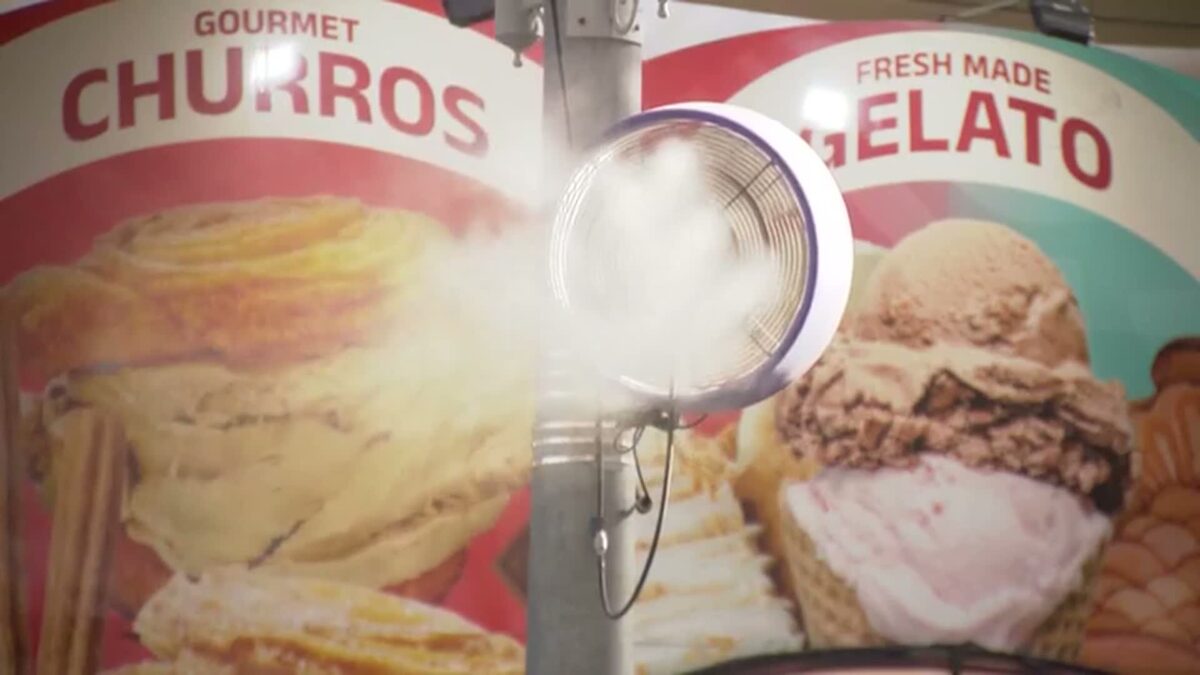
Fairgoers sought shade, misting stations, and air-conditioned buildings to escape the heat. Despite the challenges, Candelaria said concerts helped draw crowds, particularly Friday night’s Boyz II Men performance.

“Friday night was the Boyz II Men concert. A lot of people wanted to come see them,” she said.

Organizers announced that starting next year, the California State Fair will move to September to avoid the peak summer heat. Frequent fairgoer Terry Veiga shared their thoughts on the change.

“As long as it works during the summer break for children. As long as they can accommodate them being in school, I think it’s OK,” Veiga said.

Brian Goldberg, a first-time vendor at Big Rene’s Hat Shop, also supported the new schedule.

“Great weather this year, a little warm, but next year will be a little better, absolutely,” Goldberg said.

Organizers are optimistic about continuing the fair’s success with the new September dates, offering a more comfortable experience for attendees.

Please note: This story was provided to CNN Wire by an affiliate and does not contain original CNN reporting. This content carries a strict local market embargo. If you share the same market as the contributor of this article, you may not use it on any platform.

Data center water use projected to grow from 17 billion to 72 billion gallons by 2028

By Tara Molina

Click here for updates on this story

    CHICAGO (WBBM) — The Metropolitan Water Reclamation District of Greater Chicago says treated wastewater from its Calumet plant could be redirected to data centers — potentially reducing how much drinking water those facilities consume each day.

The Calumet Water Reclamation Plant processes an average of 350 million gallons of water daily, treating sewage, rainwater and wastewater before releasing it into the Little Calumet River. John Murray, who leads the Metropolitan Water Reclamation District of Greater Chicago, said that treated water could instead be put to industrial use.

“It would be possible here to use treated water reuse not only in data centers but also industrial settings,” Murray said.

The district serves Chicago and 48 nearby suburbs — roughly 1 million customers.

The push comes as data centers face growing scrutiny over their water consumption. As CBS News Chicago has reported, a single data center can use up to 5 million gallons of water in one day — the same amount as a medium-sized town — and that water does not return to the water system.

Most data centers in the area currently rely on municipal drinking water to cool their computers, servers and equipment. Rachel Havrelock of The Freshwater Lab explained why that water isn’t recovered.

“Oftentimes these cooling systems are what we call evaporative cooling — that means the water is lost to the system,” Havrelock said.

Nationally, data centers accounted for 17.4 billion gallons of water use in 2023, a figure projected to grow to 72.6 billion gallons by 2028.

Murray said shifting data centers to recycled water would reduce pressure on Lake Michigan.

“It would decrease the amount of water that would have to be used from Lake Michigan,” he said.

But the transition wouldn’t happen overnight. New infrastructure would be needed to move treated water from a plant like Calumet to industrial sites — and that infrastructure doesn’t come cheap.

“If there was a data center built nearby one of our plants, there would have to be a way to get the water to them, so there would have to be a pipeline. There would have to be pumps. The water would have to get to them, and it’s very costly to do that,” Murray said.

Murray said any such project would go through a public process, addressing the kind of concerns that have already shaped local pushback and new rules around data centers in the Chicago area.

“Anything we would do, any project we would consider like that — we would be working through an open, public, transparent process,” he said. “Any type of situation that arises where there could be a water reuse project pursued? We would be very open and very transparent and working with our neighbors to ensure that appropriate mitigation measures are put in place.”

Researchers and water protection advocates say that conversation needs to start soon, pointing to states like California as examples of places that have already addressed the issue. Murray framed the potential shift in straightforward terms.

“That would be a benefit to the environment,” he said.

Please note: This story was provided to CNN Wire by an affiliate and does not contain original CNN reporting. This content carries a strict local market embargo. If you share the same market as the contributor of this article, you may not use it on any platform.
Data center water use projected to grow from 17 billion to 72 billion gallons by 2028

WBBM

By Tara Molina

Click here for updates on this story

    CHICAGO (WBBM) — The Metropolitan Water Reclamation District of Greater Chicago says treated wastewater from its Calumet plant could be redirected to data centers — potentially reducing how much drinking water those facilities consume each day.

The Calumet Water Reclamation Plant processes an average of 350 million gallons of water daily, treating sewage, rainwater and wastewater before releasing it into the Little Calumet River. John Murray, who leads the Metropolitan Water Reclamation District of Greater Chicago, said that treated water could instead be put to industrial use.

“It would be possible here to use treated water reuse not only in data centers but also industrial settings,” Murray said.

The district serves Chicago and 48 nearby suburbs — roughly 1 million customers.

The push comes as data centers face growing scrutiny over their water consumption. As CBS News Chicago has reported, a single data center can use up to 5 million gallons of water in one day — the same amount as a medium-sized town — and that water does not return to the water system.

Most data centers in the area currently rely on municipal drinking water to cool their computers, servers and equipment. Rachel Havrelock of The Freshwater Lab explained why that water isn’t recovered.

“Oftentimes these cooling systems are what we call evaporative cooling — that means the water is lost to the system,” Havrelock said.

Nationally, data centers accounted for 17.4 billion gallons of water use in 2023, a figure projected to grow to 72.6 billion gallons by 2028.

Murray said shifting data centers to recycled water would reduce pressure on Lake Michigan.

“It would decrease the amount of water that would have to be used from Lake Michigan,” he said.

But the transition wouldn’t happen overnight. New infrastructure would be needed to move treated water from a plant like Calumet to industrial sites — and that infrastructure doesn’t come cheap.

“If there was a data center built nearby one of our plants, there would have to be a way to get the water to them, so there would have to be a pipeline. There would have to be pumps. The water would have to get to them, and it’s very costly to do that,” Murray said.

Murray said any such project would go through a public process, addressing the kind of concerns that have already shaped local pushback and new rules around data centers in the Chicago area.

“Anything we would do, any project we would consider like that — we would be working through an open, public, transparent process,” he said. “Any type of situation that arises where there could be a water reuse project pursued? We would be very open and very transparent and working with our neighbors to ensure that appropriate mitigation measures are put in place.”

Researchers and water protection advocates say that conversation needs to start soon, pointing to states like California as examples of places that have already addressed the issue. Murray framed the potential shift in straightforward terms.

“That would be a benefit to the environment,” he said.

Please note: This story was provided to CNN Wire by an affiliate and does not contain original CNN reporting. This content carries a strict local market embargo. If you share the same market as the contributor of this article, you may not use it on any platform.

All About Kids keeping youth active before heading back to school

By Sam Carter

Click here for updates on this story

    LOUISVILLE, Kentucky (WLKY) — With the start of school right around the corner for many, some might be thinking about some extracurricular activities for their child when school lets out.

If you have an active kid, All About Kids vice president Jason Button thinks you should give All About Kids a look.

“We are a multi-sport facility; we offer swim, gymnastics, cheer, ninja, dance, and basketball at our Oldham location,” Button said.

The facility is best known for its elite gymnastics instruction. Still, according to Button, even if your kid will never be an Olympian, they can learn valuable lessons at All About Kids.

“We have babies that swim, we have all these sports that help these kids grow up to be happy, healthy, confident adults,” Button said.

When JCPS has a break, All About Kids holds day camps.

Please note: This story was provided to CNN Wire by an affiliate and does not contain original CNN reporting. This content carries a strict local market embargo. If you share the same market as the contributor of this article, you may not use it on any platform.

Dumpsters filled with new books and other school supplies outside Fuentes Elementary School in Avondale

By Sara Machi

Click here for updates on this story

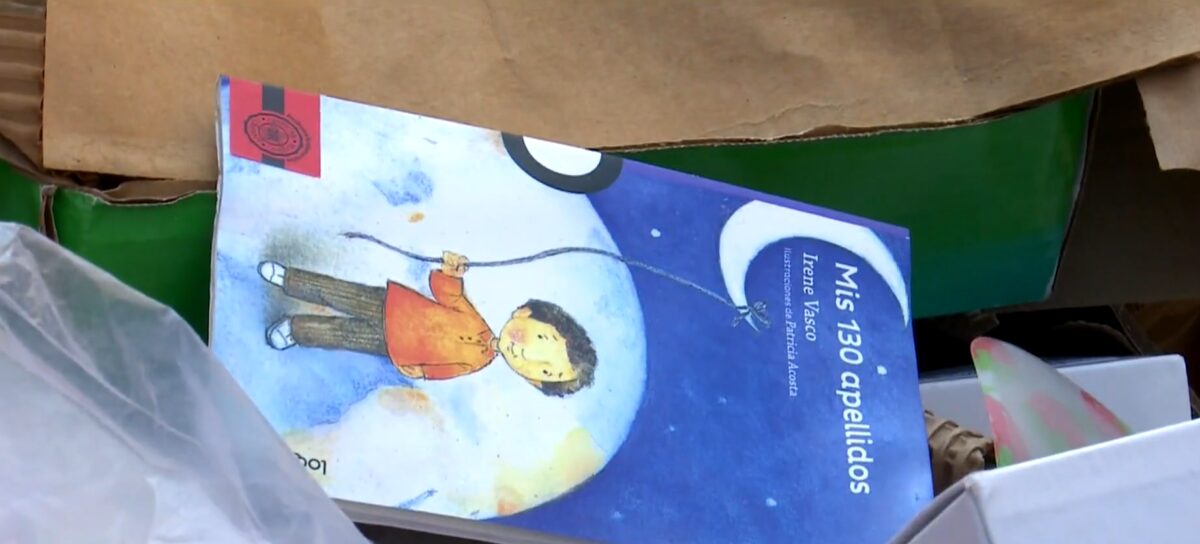
    CHICAGO (WBBM) — Thousands of dollars of new and unused school supplies – including books, beakers, and maps – were thrown in the trash outside an elementary school in Avondale ahead of the new school year.

Now neighbors want to know why this happened as others try to salvage what they can.

It might be that one man’s trash is another’s treasure, but some are questioning why these items are in the trash at all.

“What you don’t see is there’s really good stuff on the bottom too,” Ashley Di Bella said.

Hundreds of items – likely worth thousands of dollars – were salvaged from the dumpsters outside Carlos Fuentes Elementary School in Avondale, on the city’s Northwest Side; some still brand new in packaging.

“I called some of my other daycare colleagues and was, like, ‘Child, come on up out here. They got stuff for third graders, they got stuff for first graders, they got stuff for kindergarteners,'” Parish Banks said.

Banks drove 30 minutes to Fuentes Elementary to get supplies to open a new daycare in Greater Grand Crossing.

“Worth it. Look, I’m still digging,” Banks said.

People in Avondale were especially concerned that the items thrown in the dumpsters outside Fuentes Elementary could have been reused, because many are brand new, and come in multiples, including textbooks in sets by the dozen.

“My understanding, based on what I talked with them this morning, there still will be stuff thrown out. How much I’m not sure,” Di Bella said.

Fuentes Elementary is one of five former charter schools run by Acero that were set to be closed at the end of the 2025-26 school year, but instead are being taken over by the Chicago Public Schools.

A CPS spokesperson said the district “is dedicated to being a responsible steward of public resources and supporting our schools, families and neighborhood communities.”

“As Carlos Fuentes Elementary School prepares to become a District-managed school, District staff were charged this summer with clearing out legacy materials left behind by the former operator,” a CPS spokesperson said. “CPS expects all transition teams to prioritize donation and recycling whenever possible. It appears that some of the disposed items at this school included textbooks that do not meet approved learning standards for CPS classrooms. We will continue to evaluate the disposal process at Fuentes Elementary and other schools to ensure usable supplies are redirected to community partners, families, or local organizations moving forward.”

It’s unclear if the same process is playing out at the four other former Acero schools being taken over by CPS.

But by Monday morning, not all that had been thrown out could be salvaged, because of this weekend’s severe weather.

“Almost everything is ruined, because of the rain, which is very unfortunate. So many books,” Jana Signer said.

Signer and her sister came by Fuentes Elementary to save as much as possible from the dumpsters, a mission that hits close to home after they were raised by their mother, a teacher who often paid her own money for supplies.

“It’s really unfortunate. It blows my mind that they would throw away usable stuff when there are kids that don’t have that kind of stuff,” she said.

They’re now hauling away what they can, hoping the supplies end up with students and not in the landfill.

Headlines have appeared previously about Chicago schools discarding books en masse, albeit for a different reason and not involving any new books.

In 2022, some were alarmed when hundreds of books were seen in dumpsters at Lake View High School, 4015 N. Ashland Ave. — including a copy each of August Wilson’s “Fences,” Tennessee Williams’ “A Streetcar Named Desire,” and Arthur Miller’s “The Crucible.” On that occasion, the principal of Lake View High said the disposal of the books was an example of weeding, which he said ensures the school removes materials in poor condition or containing inaccurate or dated information.

In 2024, two dumpsters full of paperbacks and textbooks were seen piled up outside Carl Schurz High School, at 3601 N. Milwaukee Ave. in the Irving Park neighborhood.

Various biology and chemistry textbooks and lab notebooks, a copy of Mawi Asgedom’s “Of Beetles and Angels: A Boy’s Remarkable Journey from a Refugee Camp to Harvard,” and multiple copies of Peter Mayle’s 1991 national bestseller “A Year in Provence” were among the books visible in a massive dumpster.

At that time, CBS News Chicago reached out to the Chicago Public Schools, which again said the disposal of the books is part of “the regular weeding process.” The books were old, outdated, and no longer needed, and thus were thrown away, CPS said.

Please note: This story was provided to CNN Wire by an affiliate and does not contain original CNN reporting. This content carries a strict local market embargo. If you share the same market as the contributor of this article, you may not use it on any platform.

Dumpsters filled with new books and other school supplies outside Fuentes Elementary School in Avondale

WBBM

By Sara Machi

Click here for updates on this story

    CHICAGO (WBBM) — Thousands of dollars of new and unused school supplies – including books, beakers, and maps – were thrown in the trash outside an elementary school in Avondale ahead of the new school year.

Now neighbors want to know why this happened as others try to salvage what they can.

It might be that one man’s trash is another’s treasure, but some are questioning why these items are in the trash at all.

“What you don’t see is there’s really good stuff on the bottom too,” Ashley Di Bella said.

Hundreds of items – likely worth thousands of dollars – were salvaged from the dumpsters outside Carlos Fuentes Elementary School in Avondale, on the city’s Northwest Side; some still brand new in packaging.

“I called some of my other daycare colleagues and was, like, ‘Child, come on up out here. They got stuff for third graders, they got stuff for first graders, they got stuff for kindergarteners,'” Parish Banks said.

Banks drove 30 minutes to Fuentes Elementary to get supplies to open a new daycare in Greater Grand Crossing.

“Worth it. Look, I’m still digging,” Banks said.

People in Avondale were especially concerned that the items thrown in the dumpsters outside Fuentes Elementary could have been reused, because many are brand new, and come in multiples, including textbooks in sets by the dozen.

“My understanding, based on what I talked with them this morning, there still will be stuff thrown out. How much I’m not sure,” Di Bella said.

Fuentes Elementary is one of five former charter schools run by Acero that were set to be closed at the end of the 2025-26 school year, but instead are being taken over by the Chicago Public Schools.

A CPS spokesperson said the district “is dedicated to being a responsible steward of public resources and supporting our schools, families and neighborhood communities.”

“As Carlos Fuentes Elementary School prepares to become a District-managed school, District staff were charged this summer with clearing out legacy materials left behind by the former operator,” a CPS spokesperson said. “CPS expects all transition teams to prioritize donation and recycling whenever possible. It appears that some of the disposed items at this school included textbooks that do not meet approved learning standards for CPS classrooms. We will continue to evaluate the disposal process at Fuentes Elementary and other schools to ensure usable supplies are redirected to community partners, families, or local organizations moving forward.”

It’s unclear if the same process is playing out at the four other former Acero schools being taken over by CPS.

But by Monday morning, not all that had been thrown out could be salvaged, because of this weekend’s severe weather.

“Almost everything is ruined, because of the rain, which is very unfortunate. So many books,” Jana Signer said.

Signer and her sister came by Fuentes Elementary to save as much as possible from the dumpsters, a mission that hits close to home after they were raised by their mother, a teacher who often paid her own money for supplies.

“It’s really unfortunate. It blows my mind that they would throw away usable stuff when there are kids that don’t have that kind of stuff,” she said.

They’re now hauling away what they can, hoping the supplies end up with students and not in the landfill.

Headlines have appeared previously about Chicago schools discarding books en masse, albeit for a different reason and not involving any new books.

In 2022, some were alarmed when hundreds of books were seen in dumpsters at Lake View High School, 4015 N. Ashland Ave. — including a copy each of August Wilson’s “Fences,” Tennessee Williams’ “A Streetcar Named Desire,” and Arthur Miller’s “The Crucible.” On that occasion, the principal of Lake View High said the disposal of the books was an example of weeding, which he said ensures the school removes materials in poor condition or containing inaccurate or dated information.

In 2024, two dumpsters full of paperbacks and textbooks were seen piled up outside Carl Schurz High School, at 3601 N. Milwaukee Ave. in the Irving Park neighborhood.

Various biology and chemistry textbooks and lab notebooks, a copy of Mawi Asgedom’s “Of Beetles and Angels: A Boy’s Remarkable Journey from a Refugee Camp to Harvard,” and multiple copies of Peter Mayle’s 1991 national bestseller “A Year in Provence” were among the books visible in a massive dumpster.

At that time, CBS News Chicago reached out to the Chicago Public Schools, which again said the disposal of the books is part of “the regular weeding process.” The books were old, outdated, and no longer needed, and thus were thrown away, CPS said.

Please note: This story was provided to CNN Wire by an affiliate and does not contain original CNN reporting. This content carries a strict local market embargo. If you share the same market as the contributor of this article, you may not use it on any platform.