1st flights from violence-ravaged Puerto Vallarta land at SFO after cartel leader’s death

By Tim Johns

Click here for updates on this story

    SAN FRANCISCO (KGO) — There was relief at the arrivals hall of San Francisco International Airport as one of the first flights from Puerto Vallarta back to the Bay Area landed Monday night.

“A lot of people’s flights were canceled yesterday and folks that were canceled yesterday were hearing that they might not be able to get out until Thursday or even into the weekend,” said traveler Doug Leighton.

Many people ABC7 Eyewitness News spoke with say much of Puerto Vallarta is still reeling after violence erupted following the killing of a prominent Mexican drug cartel leader.

San Francisco resident Josef Pipoly said he was on vacation just outside Puerto Vallarta when he and his friends heard the news.

While eating at a restaurant, Pipoly says the manager suddenly rushed up to their table.

“Says ‘we can’t serve you. You have to leave. Leave right now.’ We said, ‘Why?’ ‘The cartel’s coming,'” said Pipoly.

Pipoly says he saw members of the cartel putting up road blocks around the city, as well as smoke and flames from burning cars.

An experience he says felt surreal and, at times, downright scary.

“For me, I’m a diabetic. And so I had enough insulin for a couple days, but I’m like if this lasts a couple more days,” said Pipoly.

The fallout has been quick.

Cruise lines are canceling stops in Puerto Vallarta. Travel experts say this is a sign that shows the damage happening to Mexico’s tourism economy.

“Already we’re seeing deals that we weren’t seeing before in part because demand has dropped,” said The Points Guy’s Clint Henderson. “So you can see an instant reaction in travel bookings looking ahead.”

Pipoly says he still has friends in the city waiting to come home.

But for all the fear tourists have, he says it’s also important to recognize the experience of people living there.

“What really became real was when I saw the fear in their eyes and on their faces,” he said. “It’s a subtle reminder that this is the life that they live.”

Please note: This story was provided to CNN Wire by an affiliate and does not contain original CNN reporting. This content carries a strict local market embargo. If you share the same market as the contributor of this article, you may not use it on any platform.

Violins find new life through community art project

By Kimberly Esquivias

Click here for updates on this story

    IDAHO FALLS (eastidahonews.com) — Twenty-five unplayable violins have been transformed into works of art as a part of the Painted Violin Project, a collaboration between the Idaho State Civic Symphony and the Pocatello Arts Center.

The project invited artists of all skill levels across the community to create something beautiful with whichever media the artists choose, ranging from acrylics, oils, gold foil, and mixed media. Each violin is joined by a card explaining the artist’s theme, inspiration and personal background.

The repurposed violins debuted Feb. 6, allowing the community to view and vote on their favorite project.

The violins’ designs vary. One resembles delicate blue and white fine China patterns. Another features a swan surrounded by autumn leaves. One of the instruments has a dragon whose fire extends to the tailpiece.

The artists range from high school students, teachers and Idaho State University students.

Elissa Novy, a representative from the Idaho State Civic Symphony, said the projects align closely to the mission of the organization.

“We offer music and music education to everyone in the community, from young guys to senior citizens,” Novy said. “This is an extension of our mission, to foster a lifelong love of the arts and of music in the community.”

The violins are open for bidding, with proceeds going directly to education outreach programs for music. Funds that are raised will support scholarships for the Idaho State Civic Symphony Youth Orchestra, a group that is composed of advanced student musicians as well as instructional efforts in the middle and high schools throughout the area.

Novy said the response from the participating artists has been overwhelmingly positive.

“Every artist I talked to when I picked up the violins said, ‘This was a lot of fun. I want to do this again. Let me know when you do this again,’” she said.

The Painted Violin Project also highlights collaboration within the local arts community. Paige Weber, representing the art center, said partnerships like this strengthen both organizations.

“I love that we are doing a partnership, because it gets us in front of new people and it makes us stronger for sure,” Weber said.

The violins will next travel to Gate City Coffee for the March 6 First Friday Art Walk. The final auction will be held in conjunction with the Pops Concert on March 20.

Special guest artist Bad Snacks will perform with the symphony during the concert.

“Art is enriching for people’s lives. Whether they’re a viewer or participant, it offers community.” Weber said.

Please note: This story was provided to CNN Wire by an affiliate and does not contain original CNN reporting. This content carries a strict local market embargo. If you share the same market as the contributor of this article, you may not use it on any platform.

Sheriff John Allen explains what happened when deputy died during traffic stop

By Vincent Rodriguez

Click here for updates on this story

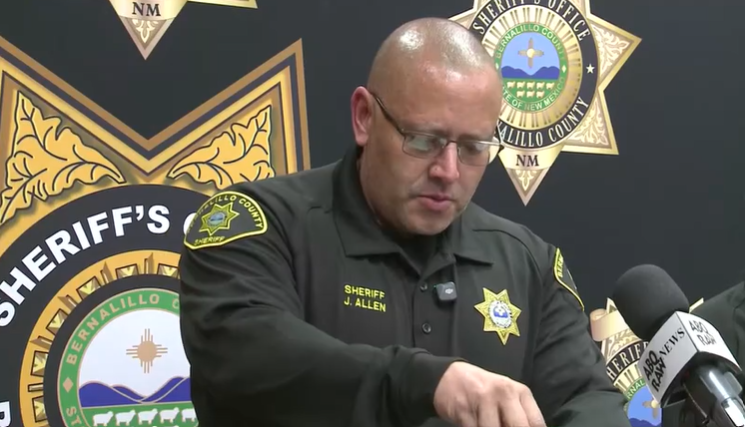
    ALBUQUERQUE, N.M. (KOAT) — Bernalillo County Sheriff John Allen held an emotional press conference early Tuesday morning following the death of a deputy during a traffic stop on Interstate 40 near Albuquerque.

Sheriff Allen identified the deputy as Sgt. Michael Schlattman.

Schlattman was conducting a traffic stop on I-40 when a semi-truck hit the rear of his patrol unit and pinned him underneath.

Sheriff Allen says Schlattman died at the scene.

Please note: This story was provided to CNN Wire by an affiliate and does not contain original CNN reporting. This content carries a strict local market embargo. If you share the same market as the contributor of this article, you may not use it on any platform.
Tracy father of young triplets abducted and found dead. He was not the intended target, sheriff says

By Nijzel Dotson; Jonathan Ayestas; Lee Anne Denyer

Click here for updates on this story

    NAPA COUNTY, Calif. (KCRA) — Days after a Tracy father of three was abducted and later found dead, the San Joaquin County sheriff on Monday revealed that the man was not the intended target in the kidnapping and homicide.

Sheriff Patrick Withrow said surveillance video shows Avtar Singh of Tracy being forced into a white SUV near the Gurdwara Gur Nanak Parkash temple along West Grant Line Road at 2:30 p.m. on Feb. 17. Withrow said it appeared that Singh did try to resist but was overpowered by the three abductors.

“This was not a random act,” Withrow said. “They were targeted after another individual for a specific reason and we’re hoping that reason comes to the light.”

Singh was reported missing Tuesday at 8:52 p.m. Temple leaders told KCRA 3 that Singh’s wife realized her husband was gone after finding their three small children alone when she returned from work.

“The kids were alone. God’s blessing. They were safe, but they were alone,” said Deep Singh, temple secretary and spokesperson.

Deputies from the Napa County Sheriff’s Office found a body Friday afternoon near Lake Berryessa, about a two-hour drive from Tracy. Officials later identified the body as Singh’s.

“This is a this is a tragedy, but an ongoing investigation,” Withrow said.

Withrow told KCRA 3’s Melanie Wingo that investigators could not release any information related to the abductors or a possible motive, but shared that Singh was not their intended target.

“Our detectives are working tirelessly to investigate this case and identify those responsible for this terrible act,” the sheriff’s office said in a news release.

Singh worked at the Sikh temple as a volunteer where he also lived on the grounds with his wife and three young triplets.

“He was very sincere and hard working,” said Deep Singh. “For 23 years, his main role was the head cook at our gurudwara, at the temple, but he was not only a cook, he was a multi-tasking person.”

Deep Singh shared the temple had recently celebrated the homecoming of the couple’s triplets after their premature birth and extended hospital stay.

“When they got here, it was a big gathering. It was a big celebration. He was happy, mom was happy, and the community was happy,” he said. “We’re not gonna be able to repair her loss.”

A cause of death had not yet been released as of Monday evening, but Withrow said the county’s medical examiner has completed an autopsy.

The case is being investigated as a homicide.

Please note: This story was provided to CNN Wire by an affiliate and does not contain original CNN reporting. This content carries a strict local market embargo. If you share the same market as the contributor of this article, you may not use it on any platform.
Survivors rescued buried skiers after the Tahoe-area deadly avalanche

By Andres Valle

Click here for updates on this story

    NEVADA COUNTY, Calif. (KCRA) — Three survivors of the deadly avalanche near Castle Peak used their avalanche safety gear to rescue fellow skiers buried in the snow, the Sierra Avalanche Center said in an update on Monday.

Nearly a week after the avalanche claimed the lives of nine backcountry skiers, new details have emerged about the moments following the disaster.

The Sierra Avalanche Center has been visiting the site daily to gather observations and learn more about what happened.

Wendy Antibus, the education manager for the center, shared that the slide hit 12 skiers, while three others used their avalanche safety gear, including shovels, to dig out three of their companions.

“There were three people who, at the time of the avalanche, helped rescue their companions and helped dig out their companions,” Antibus said.

Six members of the group of 15 survived, while nine died.

Antibus emphasized the importance of being trained and equipped for backcountry travel.

“That’s some new information, and that is like part of being trained to go out in avalanche terrain is having the equipment, the avalanche transceiver, shovel, and probe, and being trained to rescue your partners in case there is an avalanche that happens,” Antibus said.

The center released a new photo showing the site of the football-field-sized avalanche, where a bald spot is visible from where the tree line once stood.

Antibus warned that the danger of avalanches remains present for backcountry explorers.

“Whether you’re snowmobiling or you’re backcountry skiing, like no matter what you do, if you’re going into the winter backcountry mountains, like you should have that avalanche transceiver shovel, probe, and having a cellphone or satellite device is also like, great as a communication tool,” she said.

While the center plays a vital role in the investigation, it is also part of a grieving community.

Antibus said, “I don’t think that speculation and laying blame before we know any details is helpful to those people. I think just supporting our community through this process, because a lot of people have lost people that they care about.”

The center expects high avalanche danger on Tuesday due to rain in the forecast, which will add weight to the top layer of snow and make it less stable.

They encourage people to check daily updates on avalanche risk and backcountry conditions before heading out.

The Nevada County Sheriff’s Office is continuing its investigation into the tragic event.

Please note: This story was provided to CNN Wire by an affiliate and does not contain original CNN reporting. This content carries a strict local market embargo. If you share the same market as the contributor of this article, you may not use it on any platform.
Salinas woman stuck in Mexico amid cartel violence as travelers scramble to rebook flights

By Jacquelyn Quinones

Click here for updates on this story

    GUADALAJARA, Jal. (KSBW) — America Travel Agency in Salinas is receiving a high volume of calls from customers canceling trips to Mexico and those already in Mexico trying to return to the U.S. due to violence breaking out throughout the country.

Specifically, people cannot get to the airport or their destination because the roads are blocked, and they are faced with the danger that lies ahead.

The travel agency is working with airlines to ensure that people get what they need.

“I received a letter from the airlines saying that we can reschedule or refund them,” the agency said.

Maria De Jesus Munoz of Salinas was supposed to come home Monday, but is pushed back because of what’s going on. “Yesterday was really bad, we didn’t go out when we were on our way to Guadalajara, we had to return,” Munoz said.

Munoz says she hasn’t left her home since, and although things seem calmer, she isn’t taking any chances. She suggests others do the same.

“Right now, I don’t recommend for anyone to travel because this is going to extend for a period of time,” she said.

People are being advised to stay in a safe place and stay put for the time being as airlines work with those impacted.

Please note: This story was provided to CNN Wire by an affiliate and does not contain original CNN reporting. This content carries a strict local market embargo. If you share the same market as the contributor of this article, you may not use it on any platform.
‘I’m trying so hard to keep my family together’: Richland mom tackles hoarding cleanup alone

By Austin Reed

Click here for updates on this story

    RICHLAND (KAPP) — A young mother is asking for community compassion as she tackles the overwhelming task of cleaning up a Richland property that has drawn online attention and neighbor complaints.

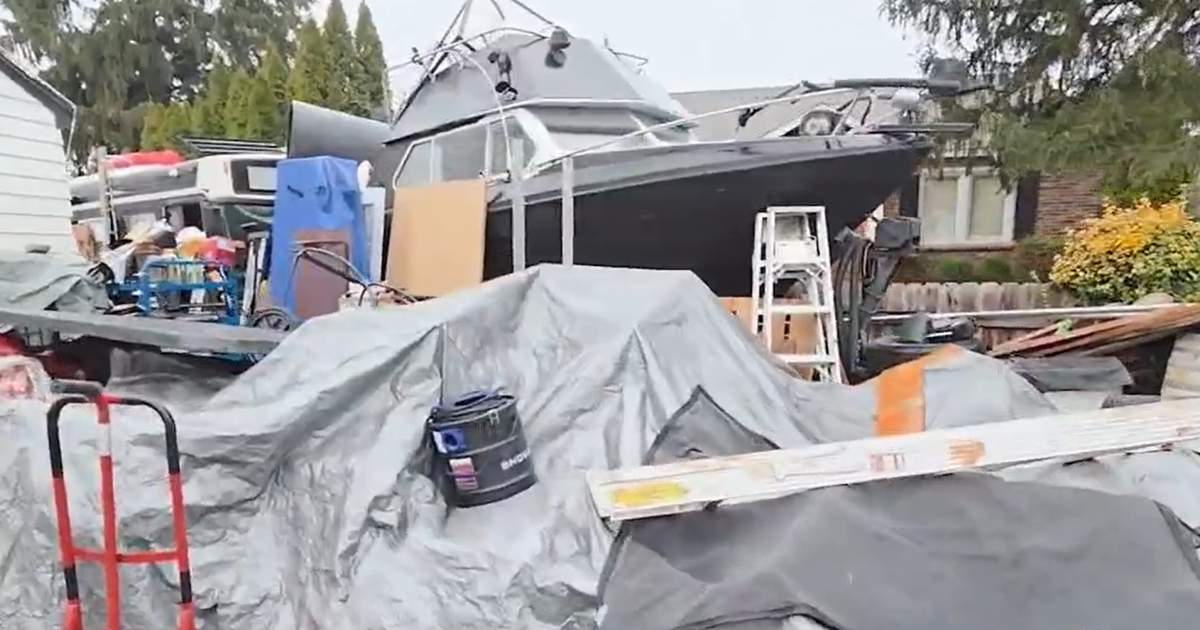
Mackenzie Hanson, 26, says she has been left to address what neighbors describe as a hoarding situation at a home on Hains Avenue after her fiancé was incarcerated. The single mother of two young children says the property’s condition stems from serious mental health struggles and substance abuse involving the homeowner.

“Yes he lives here, things happened and he is incarcerated and that’s why I am taking on what’s going on at the house,” Hanson said.

Photos of the property have circulated online, generating complaints from neighbors. Hanson says she understands their frustrations but hopes the community will show patience as she works to restore the property.

The cleanup effort faces significant financial challenges. With the home in foreclosure, Hanson says multiple dump runs at about $50 per load aren’t financially feasible right now.

“Our house is in foreclosure so I need to figure out what to do. I need to profit to set me and my kids up . I’m trying a yard sale, weather is iffy trying to get things done everyday and I’m posting as I can,” Hanson said.

Hanson has been coordinating with Richland’s code enforcement division and placing items at the curb with their knowledge to help reduce cleanup costs. She’s also selling larger items from the home to fund the cleanup efforts.

“I’m selling a party bus, a boat, fridges,” Hanson said.

To supplement these efforts, Hanson has started an online fundraiser and encourages anyone interested in purchasing items to contact her directly online.

The situation highlights the complex relationship between mental health issues and hoarding behaviors. Hanson encourages people to research and better understand the mental health aspects of hoarding situations.

“Mental health is a huge thing. I’d watch ‘Hoarders’ to get a better understanding or research on my phone. It’s so touchy and so rooted and deep in mental health,” Hanson said.

Despite the challenges, Hanson acknowledges her neighbors’ concerns while emphasizing her commitment to resolving the situation.

“Oh 100 percent I said in the post if anyone has wanted the house clean it’s me,” she said when asked if she understands where her neighbors are coming from.

For Hanson, the cleanup represents more than just addressing property issues — it’s about rebuilding her family’s stability during an incredibly difficult time.

“I would say yes I have tried so hard to keep my family together so that was the hardest thing to swallow,” she said when asked if this was the most challenging situation she’s faced.

The Richland property represents a second hoarding situation in the city that has gained public attention in recent weeks, highlighting ongoing challenges with similar cases in the community.

Hanson says she remains focused on restoring both the property and is grateful to those in the community that have come to help as she continues the cleanup process one load at a time.

Please note: This story was provided to CNN Wire by an affiliate and does not contain original CNN reporting. This content carries a strict local market embargo. If you share the same market as the contributor of this article, you may not use it on any platform.

Newly approved US medication offers hope for cats diagnosed with FIP

By Megan Matthews

Click here for updates on this story

    LOUISVILLE, Kentucky (WLKY) — For years, feline infectious peritonitis, more commonly known as FIP, has been a diagnosis that left cat owners with little to no hope.

Veterinarians say it’s a common disease that has been historically incurable until a new drug was legalized, giving them a fighting chance.

That drug is GS-441524, a medication that has shown a high success rate in treating FIP but, for years, was illegal in the U.S., putting veterinarians in an impossible position.

Taylor Marshall with Metro Veterinary Specialists said the lack of legal access pushed desperate families into risky territory.

“It was to the point that we were having to actually rely on people without, you know, the medical licensure to make these recommendations to give a glimpse of hope to people,” Marshall said. “Because we as veterinarians, like it was one of those hush-hush, you don’t talk about it, things, because our licenses were on the line.”

GS-441524 is used as an 84-day treatment and can be administered either by injection or in oral form. Marshall said the regimen can be demanding, especially when injections are required daily, but for many families, it was still the only chance.

“Obviously, injecting your kitty cat at least once a day wasn’t ideal,” Marshall said. “But that versus no hope, it’s, I mean, I would take that bet any day of the week.”

Veterinarians note there are two main types of FIP — dry and wet — each with a different set of symptoms, and the disease can also mutate into ocular and neurological challenges. Dry FIP symptoms can include fever, rapid weight loss, lethargy and vision issues, while wet FIP may present with a distended belly, lethargy and severe breathing difficulties.

With treatment now legally available, many pet owners say they are seeing positive changes in a matter of days after starting medication.

For Marshall, the shift has been dramatic compared to the early days of her career.

“I’m just so thrilled how much this landscape has changed,” Marshall said. “Because when I first came out of that school, it was, this is a death sentence. And unfortunately, I had to give some pretty terrible news to people, usually brilliant humans with brilliant animals.”

After completing treatment, cats are considered in remission, then monitored for another 84 days before they are cleared from FIP.

Please note: This story was provided to CNN Wire by an affiliate and does not contain original CNN reporting. This content carries a strict local market embargo. If you share the same market as the contributor of this article, you may not use it on any platform.

After cancer diagnoses, Massachusetts family seeks answers about landfill contaminated with PFAS

By Karen Anderson & Alexi Cohan

Click here for updates on this story

    TEWKSBURY, Massachusetts (WCVB) — A Tewksbury family is on a mission to find out if PFAS contamination from a former local landfill is what caused cancer and other illnesses in their community.

Ryan Connor was diagnosed with kidney cancer when he was just 22 years old, and his sister, Briana Garcia, was diagnosed with thyroid cancer and the autoimmune disease scleroderma in her thirties. Their mother died of cancer when they were just kids.

“My whole life growing up, people in our neighborhood got sick and passed away from rare blood cancers, rare diseases,” Connor said.

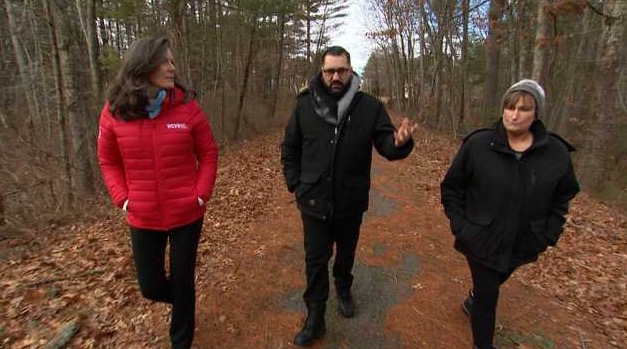
The siblings, who now live in New Hampshire, grew up on South Street in Tewksbury, just a short walk from Sutton Brook Disposal Area, a dump previously known as Rocco’s Landfill.

They played in the wetlands surrounding the dump, often fishing and catching frogs. Connor even camped out there.

“There were no fences. It was just an easy, accessible area,” Garcia said.

The dump was supposed to serve as a town landfill, but instead received unregulated commercial and industrial chemicals for decades, even after it was ordered to close, according to town records and reports from the U.S. Environmental Protection Agency.

Many residents voiced concern about the dump for years, old newspaper clippings show, but were often told there was nothing to worry about.

The site is located just a few hundred yards from municipal drinking wells that in 1989 tested positive for a number of harmful chemicals, such as chloroform, according to records from the Tewksbury Water Department.

Connor and Garcia, along with many of their neighbors, got their drinking water from those wells until they were taken offline in the early 1990s.

“The number one question is, were those wells affected?” Connor asked.

Right now, that answer is unclear. But Connor and Garcia are on a quest to find out, with hopes of getting medical monitoring for themselves and their neighbors.

“I just feel motivated to get information and the truth out for myself and for our community because they deserve to know exactly what the truth is,” Connor said.

The landfill was designated an EPA Superfund site in 2001, meaning the federal government flagged it as a risk to human health. As part of the Superfund process, the site is cleaned, reviewed every five years and monitored.

About a decade after the Superfund designation, a $30 million settlement was reached to clean up the site. Hundreds of chemical drums were excavated, polluted groundwater was treated and 14,000 tons of contaminated soil were removed.

Nearly 50 parties were found potentially responsible for the contamination, including the Rocco family, who owned the dump; the town of Tewksbury; and several large companies.

The Rocco family declined to comment when reached by 5 Investigates. They no longer own the land.

The most recent five-year review from the EPA, published in 2024, revealed high levels of PFAS, which stands for per- and polyfluoroalkyl substances, at the dump.

PFAS, also known as “forever chemicals,” are a family of synthetic substances made in the 1950s that do not break down easily in the environment or in the human body. PFAS chemicals are nonstick and resistant to water and heat.

PFAS are found in many everyday items, including nonstick pans, dental floss, fast food packaging, Gore-Tex outerwear and more.

They’ve been found to be harmful to human health, causing subtle changes like high blood pressure and cholesterol as well as leading to diseases like thyroid and kidney cancer, according to Dr. Laurel Schaider, a senior scientist at the Silent Spring Institute.

Schaider said 99% of people have PFAS in their blood.

She reviewed some details about the Sutton Brook site.

“Based on the information that I’ve seen so far, it does seem like there are many illnesses in this small area and it does raise concerns that there might be an environmental factor at play,” Schaider said.

But proving someone was sickened by PFAS isn’t easy.

“It’s challenging to try to make those linkages because we know that there are often long periods of time between when an exposure happens and when effects from those exposures become apparent,” Schaider said.

The municipal drinking wells in Tewksbury were never tested for PFAS because they were taken offline before PFAS testing began.

The EPA, in a statement to 5 Investigates, said, there is “no evidence that the Sutton Brook Superfund site has impacted drinking water historically or presently.”

The agency said that’s because their studies over decades have shown the contaminants from the site don’t flow in the direction of the wells.

But Connor and Garcia aren’t convinced. In the last year, they’ve filed public records requests, dug up old news stories and made a Facebook page to share their findings.

They surveyed their old neighbors, and nearly 100 people reported kidney cancer, thyroid cancer, leukemia, autoimmune disease, diabetes and more.

Garcia has helped with this effort while still battling her own health issues.

Scleroderma is a rare disease marked by the overproduction of collagen in the body. It restricts blood flow, causing Garcia to have limited use of her hands and difficulty eating and digesting food.

“I just want somebody to blame. You took my life away from me. You took my life away from me,” said Garcia.

Garcia and Connor have joined a multidistrict litigation connecting cancer to PFAS. That lawsuit is ongoing.

The pair have been in touch with the EPA and the Massachusetts Department of Public Health to share their findings and ask for more investigation.

DPH said it is currently reviewing site documents from the EPA, which will help determine whether further public health follow-up is appropriate.

DPH confirmed they spoke with Connor about his concerns. EPA monitoring wells remain at the site, which is now capped and fenced off.

Please note: This story was provided to CNN Wire by an affiliate and does not contain original CNN reporting. This content carries a strict local market embargo. If you share the same market as the contributor of this article, you may not use it on any platform.

Remembering the Safe Bus Company: How 21 Black jitney drivers are responsible for modern Winston-Salem transportation

By Erin Burnett

Click here for updates on this story

    WINSTON-SALEM, North Carolina (WXII) — When you see a bright green Winston-Salem Transit Authority Bus rolling down Trade Street, what do you see?

Alita Carter said you should see a symbol of generational resilience, the entrepreneurial spirit and what Black people can achieve with *and* without access to resources.

Alita Carter is the great-grand-niece of Harvey and Ralph Morgan. They were brothers and two of the 21 founders of the Safe Bus Company.

What is the Safe Bus Company?

In the 1920s, segregation reached every aspect of life for Black people in Winston-Salem. This included how African Americans got to work, school and around the city.

Winston-Salem’s trolley service — the Southern Public Utilities Company — did not run in majority-Black neighborhoods like Happy Hill.

Winston Salem Neighborhood before Safe Bus Company provided transportation to majority Black neighborhoods People, especially tobacco factory workers, had to rely on a network of vehicles called jitneys to get to work.

The network of 35 drivers was complicated, independently run, had scattered, unreliable pickup and drop-off times and was unsafe.

In 1926, 21 of these drivers, including Ralph and Harvey Morgan, came together to form a transportation company for Black residents. They named it The Safe Bus Company.

Growing up, Carter said her mother passed down the story of Safe Bus to her, showed her letters and encouraged her to do her own research.

“She just talked about their ingenuity,” she said, “to come together and decide, ‘Hey, let’s put our money together. Let’s stop all of this competition here with our jitneys, and let us formulate something that ensures that our people can get to work safely, warm and, you know, on time.'”

Where does the name come from? Winston-Salem historians explained the name of the company comes from the promise that those 21 jitney drivers made to city leaders upon its founding, to create a safer, more reliable transportation system for African American residents.

“We talk about generational wealth… However, there’s a thing I say, called generational resilience, and generational make a way out of no way,” Carter said, “and that is what I believe that this family represents.”

Effley Howell is a Triad historian and CEO of the Thankful Heritage Foundation.

“This was a way that people could get to school, could get to church, could get to sports locations… It was a way of life for the people in Winston-Salem,” he said.

Carter also said she was inspired by the number of women at the forefront of the company’s creation. She noted Safe Bus Company had two female presidents in the 1960s, Delphi Morgan and Mary Morgan.

“In the ’60s, having had two female presidents, you know, Delphi Morgan, succeeding Mary as president, that was, that was progressive. Before, you know, we had even seen those kind of things,” she said.

Her family’s tenacity and entrepreneurial spirit inspired her to create her own granola company, called Blaqola.

In 1972, the Winston-Salem Transit Authority purchased the assets of the Safe Bus Company, and it became a part of the city-run department.

Carter said this is not just a family tale that will be passed down by her lineage.

Carter said the story of the Safe Bus Company is the Triad’s story. It is America’s story. And she hopes people never forget that, especially the next time you ride a WSTA bus.

“The Safe Bus Company is Winston-Salem Transportation Authority. Hopefully, this will be one of those things that encourages them to dig a little deeper,” she said.

Please note: This story was provided to CNN Wire by an affiliate and does not contain original CNN reporting. This content carries a strict local market embargo. If you share the same market as the contributor of this article, you may not use it on any platform.