Mother of 12-year-old details school fight that left daughter dead

By KABC Staff

Click here for updates on this story

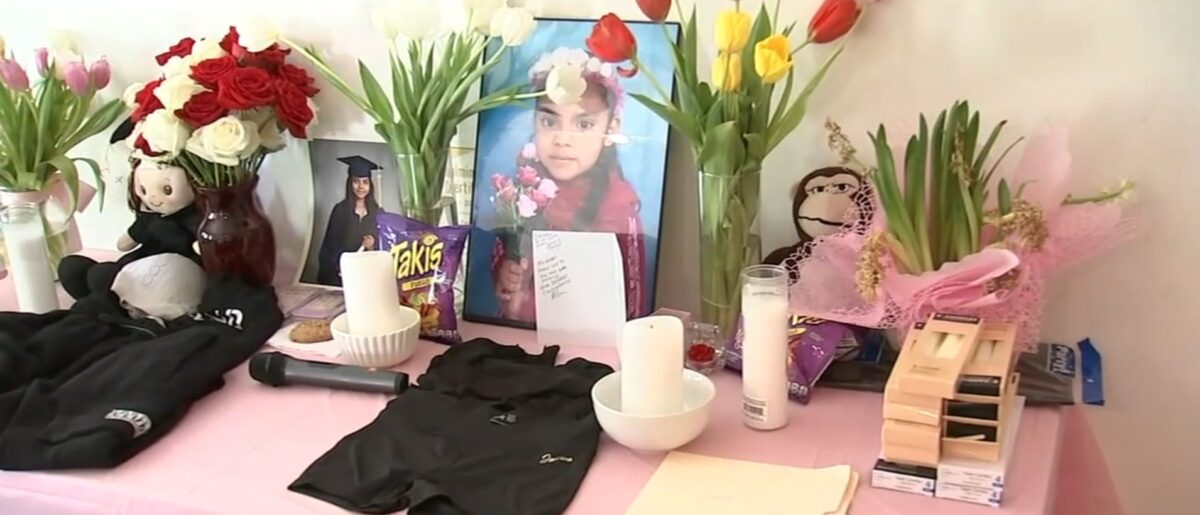
    LOS ANGELES (KABC) — The mother of a 12-year-old girl in Reseda who died after a school fight is speaking out, saying her daughter was simply trying to protect her older sister from a group of bullies.

Khimberly Zavaleta’s family says she was hit in the head with a water bottle, then later suffered a brain injury. She died at a hospital on Wednesday.

Elma Chuquipa, the girl’s mother, spoke with Eyewitness News over the weekend and said the day of the incident, Khimberly was standing up to a group of students who were allegedly bullying her older sister.

“At dismissal time, she was in the school hallway when a tall boy came up to her … he was pushing her, and my daughter told him, ‘What’s your problem with me? Let’s go to the principal’s office and talk about it’ -but he ignored her,” said Chuquipa.

The mother said that when Khimberly stepped in to defend her sister, someone allegedly threw a water bottle at her.

“My daughter goes and pulls her away, so they don’t hit her sister, and that’s when [Khimberly] gets hit in the head.”

The fight was captured on video, but the footage does not show a water bottle being thrown.

“They were hitting her sister — my eldest daughter,” Chuquipa said. “In the video, you can see them pulling [Khimberly]. At one point, they hit her hard on the head, which led her to where she is now – in a morgue.”

The 12-year-old was taken to the emergency room, where initially, everything seemed fine, according to Chuquipa.

Days later, the mother said Khimberly suffered some complications.

“We took her to the emergency room, where she arrived with no vitals,” Chuquipa said. “My daughter was there, they tore her clothes, they gave her CPR, I was very scared, I cried a lot-I had this hope that she would get up from where she was.”

Chuquipa said doctors performed X-rays on Khimberly and found there was a lot of blood in her head.

She was intubated and was later transferred to another hospital.

“The doctor said, ‘We’re going to have to perform surgery,'” recalled the mother. “We’re going to open this part of her skull so we can remove all the blood, clean her up, and so on-it’s a six-hour surgery, the doctor tells me. ‘Save my daughter,’ I told the doctor.”

Chuquipa said doctors discussed a fourth surgery, but that they told her “there’s a 1% chance that your daughter will live or stay in the operating room.”

“As a mother, I felt so bad,” Chuquipa said. “We got together with my family … when we got together with my family, we agreed to do the surgery, which was a 1% chance, and I said, ‘There is hope’ … when we met with the doctors, they decided not to operate because my daughter’s brain was already dead.”

“It was very painful for me to leave my daughter in the hospital with the hope of coming home,” the mother said. “She always told me, ‘I will never leave you.’ When I was there, I said to her, ‘You told me you would never leave me.'”

The Los Angeles Police Department said the Robbery-Homicide Division, Valley Bureau Section, is investigating the case as a homicide, but that they won’t be releasing any more information because it involves juveniles.

Chuquipa said Khimberly – who was described as a sweet girl who was learning how to cook and loved to sing – was loved by many at the school.

She even wanted to become a doctor.

Chuquipa is now hoping for better safety measures at schools.

“Let’s hope there will be more safety for children,” the mother said. “I’m afraid to send my oldest daughter to school. I’m very afraid that something will happen to her. I already lost one daughter, and I don’t want to lose her too.”

The Los Angeles Unified School District released the following statement regarding the incident:

“The Los Angeles Unified School District is deeply saddened by the death of a Reseda High School student. Our thoughts and condolences are with the student’s family, friends, and the entire school community.

Out of respect for the family and to protect confidentiality, we cannot share details. The District remains committed to providing support to students, staff, and families affected by this loss, including counseling services and additional resources on campus.

The District takes the safety and well-being of our students very seriously. We are currently cooperating with law enforcement in connection with this incident.”

On Friday, a group of students held a protest at Reseda High School in support of Khimberly.

“God is touching the heart of many people who are coming to ask for justice and to support me. I feel happy that at some point there will be justice,” said the 12-year-old’s mother, Elma Chuquipa.

Meantime, a GoFundMe page has been set up to help the family with funeral and medical expenses.

Please note: This story was provided to CNN Wire by an affiliate and does not contain original CNN reporting. This content carries a strict local market embargo. If you share the same market as the contributor of this article, you may not use it on any platform.
‘I’m stuck here’: Nurse sheltering in Israel after US and Israeli attack on Iran

By Mia Bearden

Click here for updates on this story

    MILWAUKEE (WDJT) — Amid U.S. strikes on Iran and retaliatory strikes from Iran across the region, people are taking cover – including a Milwaukee nurse who is currently in Israel. Heather Berken traveled to Israel for what was supposed to be a meaningful trip, spending time with friends and completing a half marathon near Tel Aviv.

“The first week that I was here I was fine, smooth sailing,” she said. “There was talk about things with Iran but nothing ever came to fruition.”

That changed Saturday morning, Feb. 28, when her phone sounded an alert.

“I downloaded an app on my phone, so you’ll get information, and it was like a pre-warning that something has started,” she said.

Soon after, another alert warned of incoming missiles, telling her to shelter in place. Berken and her friend headed straight for the bomb shelter inside her friend’s apartment.

“A lot are going to Tel Aviv area because it’s the most densely populated area,” she said.

Berken said she can hear Iranian missiles coming in and Israeli defense systems intercepting them overhead.

“These missiles are larger and can do more damage and so you can hear when the defensive missiles will hit,” she said. “You can hear the swoosh in the air. I could count down 10 seconds and then I could hear the explosion.”

Even when interceptions happen in the sky, she said there is still fallout.

“There’s been some shrapnel. It’s weird because you hear a loud boom and we’ve had a couple of those close to us,” she said.

She quickly learned how to brace for the blasts.

“We open the windows, so it helps equalize the pressure. These are all things I would never know living in Milwaukee, Wisconsin but I guess before you go in the shelter, we open the windows back up if there’s any type of reverberations,” she said.

Berken said she’s also witnessing the impact on families around her.

“Sometimes you see the parents and they’re running with little kids. For us, we’re just corralling two adults. There’s a lot of people corralling their pets and little kids,” she said.

As a nurse, Berken said she has seen calls for medical volunteers and may step in to help if needed.

She was supposed to fly home but is now stuck in Tel Aviv. She said her job has been understanding as she waits for a safe way back.

“This is a world military crisis that as long as they’re understanding that I’m stuck here for a little bit, I’m just going to ride it out,” she said.

Please note: This story was provided to CNN Wire by an affiliate and does not contain original CNN reporting. This content carries a strict local market embargo. If you share the same market as the contributor of this article, you may not use it on any platform.
Group holds dance parties on overpass to call for peace in politics

By Loureen Ayyoub

Click here for updates on this story

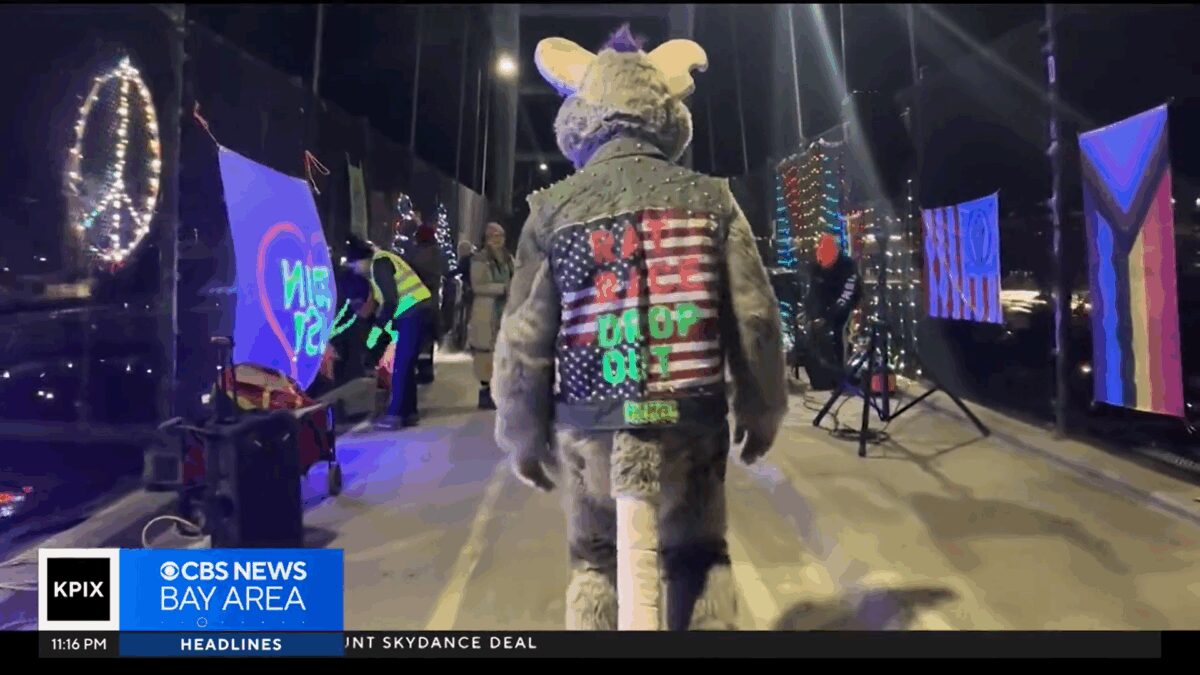
    BERKELEY, California (KPIX) — A group of Bay Area activists turns a busy Berkeley overpass into a weekly call for peace, and they’re calling it NICE.

The gathering, held on a pedestrian bridge above a freeway in Berkeley, brings together community members waving signs and dancing as passing drivers honk in support.

“Every honk is somebody saying, ‘Yes, we agree,'” said Jennifer Quinn, an activist who started the event. “We are here to protect our democracy and our community, and this is just a really fun way to do that.”

Quinn said NICE began as a costume joke on Halloween but has since grown into what she describes as a community movement.

“NICE stands for now it counts everyone. Now, everyone’s got to show up. Got to show up for community,” Quinn said. “And you can start here and make some friends.”

Participants say the weekly “overpass visibility dance party” promotes nonviolence and calls for immigration policy reform. Organizers describe the event as a peaceful response to what they perceive as growing hostility and division in national politics.

Sarah Donaldson, an activist attending the gathering, emphasized the importance of maintaining a peaceful approach.

“We got to be peaceful all the time. No violence,” Donaldson said.

Quinn said the lighthearted tone is intentional.

“It cuts through the intensity of some really intense politics,” she said. “So, I say that I’m holding space for more nice people. You don’t have to agree with everything in the protests, but we need to show up and be counted.”

For organizers, the weekly event is as much about community building as it is about activism — keeping the atmosphere upbeat while amplifying a broader message of unity.

Please note: This story was provided to CNN Wire by an affiliate and does not contain original CNN reporting. This content carries a strict local market embargo. If you share the same market as the contributor of this article, you may not use it on any platform.
Cal Baptist wrestlers raise over $1 million to try saving program after it was cut by school

By Zach Boetto, Dean Fioresi

Click here for updates on this story

    LOS ANGELES (KCAL, KCBS) — The Cal Baptist University men’s wrestling team has raised more than $1 million in an effort to reinstate its program after school officials announced it would be one of three major sporting programs getting cut by the school in the coming months.

In January, the university announced that wrestling, men’s golf and men’s swimming and diving would be discontinued due to the “evolving intercollegiate landscape,” which has CBU joining the Big West Conference starting in July.

“We have closely monitored the shifting landscape of intercollegiate athletics that has affected institutions across the nation,” said a statement from Micah Parker, CBU’s vice president of athletics. “While we had hoped to continue offering our full slate of athletic programs in this new environment, it has become clear that changes are required to realize the university’s goal of achieving greater competitive excellence that the new Division I era demands.”

The school cited student-athlete experience, changes to NCAA rules and investments required to fund athletic scholarships in their decision. They also said that a number of other factors played a role, including Title IX, which requires a school to provide equal opportunities to men’s and women’s sports teams, the House v. NCAA settlement and available resources and facilities for the programs.

Parker said that the decision was not made lightly, but wrestlers told CBS LA that they weren’t given a voice before finding out that the verdict was already finalized.

“They basically walked in and said, ‘Hey guys, it was an executive decision, and now we’re cutting your guys’ program. We’re sorry, we prayed about this,’ and just walked out,” said Adonis Bonar II.

They said that they were told everything would be concluded by the end of the season and that the team would no longer be a part of their athletic program, despite their protest.

“They weren’t being collaborative at all. They were really being, like, dictators in the sense of, ‘We’re cutting the program, you guys are washed up. It’s over, we’re wrapping it up at the end of the season. There’s nothing you can do about it. Bye,'” said Jesse Vasquez.

In the weeks since, they’ve started an online fundraising page to try raising enough money to keep the team alive, which they say would provide a valuable Division I collegiate opportunity for Southern California wrestling. Organizers said that donations under $1,000 would be used to help their reinstatement efforts, and if their goal is not met, the funds will be redirected to a local training center. They noted that donations over $1,000 would not be collected until after the program’s potential reinstatement.

Nolan Kistler, a CBU wrestling alum, said that the wrestlers were disappointed by how abruptly everything happened.

“One of the young men said, ‘We just want a voice. that’s what we’re asking for,'” Kistler said. “Unfortunately, they haven’t been given a voice.”

Video that has recently gone viral on social media shows what appears to be the school’s deputy athletic director telling the team that they wouldn’t be allowed to wear gear protesting the decision on their senior night.

“You’re gonna wear what we have issued and paid for,” the school administrator can be heard saying.

Despite the decision, the team says that they’ll fight until the very end.

“We step and walk in our faith and we decide to fight back,” Bonar said. “To be here, at a Christian university of head administrators that wanna flee from us, trying to be bold in what we believe in? We can’t really respect that enough to try and not put a voice out there and fight for what we believe in, and trying to keep this program alive.”

The team has been met with the support of their community, including from mixed martial arts legends like Urijah Faber, Chael Sonnen, Michael Bisping and Randy Couture, in recent weeks as their battle continues.

When the regular season ended last weekend, with a 29-12 victory over rivals in Cal State Bakersfield, both teams met at center mat to join in prayer. Days later, dozens of people flocked to the Riverside City Council meeting to ask city leaders to step in and help the program.

Riverside County District Attorney Mike Hestrin also shared a statement on the university’s decision on social media.

“District Attorney Mike Hestrin is urging us all to stand alongside parents, athletes, and local leaders advocating for the program’s reinstatement, emphasizing the positive role that wrestling plays in developing character and creating opportunities for young people,” Hestrin’s statement said. “Preserving this program means preserving pathways for mentorship and personal growth for current and future student-athletes.”

In a frequently asked questions page on their website, CBU officials said that “while financial implications were among the reasons for this change, other impacts have made it increasingly challenging for CBU to remain competitive under its current structure,” and that fundraising efforts would not be a viable way to reverse course. They also noted that the impacted teams would not be eligible to become club sports.

Please note: This story was provided to CNN Wire by an affiliate and does not contain original CNN reporting. This content carries a strict local market embargo. If you share the same market as the contributor of this article, you may not use it on any platform.
Big Bear bald eagle Jackie lays another egg after losing initial clutch

By Matthew Rodriguez

Click here for updates on this story

    BIG BEAR, California (KCAL, KCBS) — The Big Bear bald eagles have another clutch of eggs after losing their initial set earlier this season.

The fourth egg of the season comes just a few days after Southern California’s favorite bald eagle couple, Jackie and Shadow, laid their third egg. The couple lost their initial clutch in late January

After losing their first set, Friends of Big Bear Valley said it was possible for the couple to have another clutch before the end of the season.

“The ravens interceding early like this may help that actually,” Friends of Big Bear Valley wrote.

“Right now, Sandy wanted us to keep going and move forward and continue the things she worked so hard to start and do,” said Jenny Voisard, media manager for the nonprofit.

The Friends of Big Bear Valley is a nonprofit group that operates the area’s eagle cams. Wildlife activist Sandy Steers helped launch the organization’s livestream cameras, which provided a look into the daily life of the area’s bald eagles in 2015.

Steers died earlier this month. The organization vowed to keep its mission of protecting Big Bear’s wildlife and their habitat. y after ravens raided their nest.

Jackie’s latest egg came just before 6 p.m. on Friday night.

Please note: This story was provided to CNN Wire by an affiliate and does not contain original CNN reporting. This content carries a strict local market embargo. If you share the same market as the contributor of this article, you may not use it on any platform.

Family pushes for change after rare disease clinical trial abruptly ends

By Karen Morfitt

Click here for updates on this story

    COLORADO (KCNC) — This week marks Rare Disease Week, a time when families across the country are sharing their struggles with access to treatments and clinical trials, and their hopes for change, with lawmakers and federal health officials. A Colorado family is now adding its voice to the chorus after a clinical trial their son relied on suddenly ended.

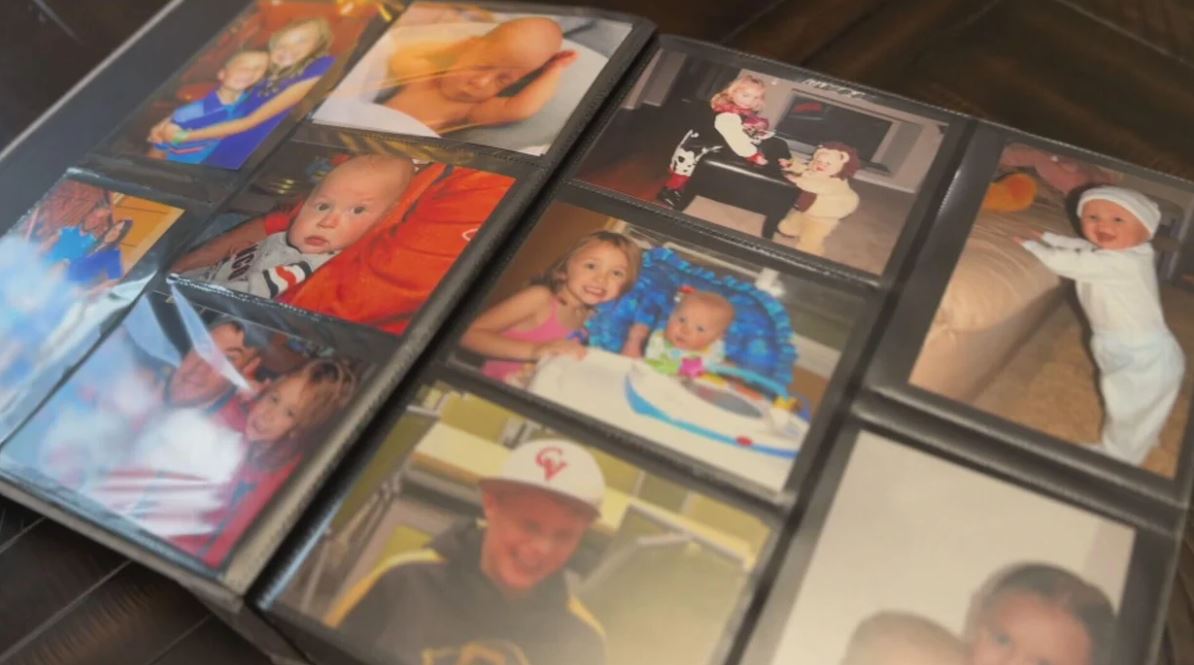
From newborn stretches to daring toddler days, a photo album tells the story of Caleb Burgess’ childhood, one filled with motion, milestones and memories.

“Always active,” his mother, Stephanie Burgess, said. “We didn’t know he had it. He was crazy, giving you a heart attack.”

Sports became a defining part of Caleb’s life. Family photos document Little League games, championship moments and trips to Coors Field.

“We went to the Rockies,” Caleb said, recalling a moment when then-manager Bud Black invited him into the dugout. “I was standing right there while all the players were coming in. They had all signed the bat.”

But the photos don’t tell the full story.

“The work I put in not only in practice, but behind the scenes. [It took] so much just for me to even be on the field,” Caleb said. “It hurt really bad.”

His parents say mobility issues and hearing loss appeared early on, but they were repeatedly dismissed as growing pains.

“It was terrifying,” Stephanie Burgess said. “I thought something was wrong, and no one believed me. It’s hard to put into words.”

The family spent years searching for answers. Stephanie Burgess said advocating for her son often meant pushing back against skepticism from medical professionals.

“If you go to the doctor and say you’ve been researching on the internet and reading medical journals, they’re like, ‘That’s nice, you’re not a doctor,'” she said. “If I didn’t, we might still not have a diagnosis.”

Caleb was eventually diagnosed with fibrodysplasia ossificans progressiva, or FOP, an extremely rare genetic disorder in which muscles, connective tissues and ligaments are gradually replaced by bone. There is no cure and no FDA‑approved treatment.

“It just seems made up,” Caleb’s dad, Scott Burgess, said. “Like this can’t be happening.”

For most patients, the diagnosis means limiting or completely avoiding physical activity. The Burgesses chose a different path.

“They said, ‘Be very careful. Don’t let him get hit with a baseball,'” Stephanie Burgess said. “But we decided early on we were going to let him be. He decided he was going to take that risk, and we were going to support him.”

That decision came with consequences. At 16, a baseball to the back triggered new bone growth and ended Caleb’s athletic career.

“I just wanted things to change,” Caleb said.

In 2023, change seemed to arrive when Caleb joined a clinical trial for an experimental drug targeting FOP.

“The first day he took it, he felt different,” Stephanie Burgess said. “His pain was less. Over time, little to no pain. The swelling was gone. He wasn’t having flare‑ups. It was like he got a whole new life.”

For nearly two years, the family saw steady improvement.

“It felt like a new kind of hope,” Caleb said. “A feeling of somewhat normal.”

That hope was shaken in December when the drug’s manufacturer announced it was ending the trial after failing to meet a required endpoint of reducing bone growth.

“The message said, ‘Speak with your physician for other options,'” Stephanie Burgess said. “For which there aren’t any.”

Now, the Burgess family is sharing its experience not just for Caleb, but for others living with rare diseases. They are urging regulators and policymakers to rethink how rare disease research and drug development are evaluated, particularly when trials end despite quality‑of‑life improvements.

“I don’t think this interview is going to change this particular drug outcome,” Stephanie Burgess said. “We’re not going to get the drug back. I think their hands were tied by the FDA. But if there’s a way for flexibility, to get medication we know is working, that would be the ultimate outcome.”

Despite the setback, the family believes Caleb’s story is far from over.

“It gave him an amazing two years,” Stephanie Burgess said, “and hope that something will work.”

“There’s hope,” Caleb added. “Something better is coming down the road.”

As part of Rare Disease Week, the FDA held a town hall addressing some of these concerns. The agency’s current director said decisions will come down to common sense, reaffirming a commitment to reducing regulatory hurdles while continuing to balance patient safety.

Please note: This story was provided to CNN Wire by an affiliate and does not contain original CNN reporting. This content carries a strict local market embargo. If you share the same market as the contributor of this article, you may not use it on any platform.

Hair-braiding pioneer reflects on arrest, victory and the legacy she’s still building

By Marissa Armas

Click here for updates on this story

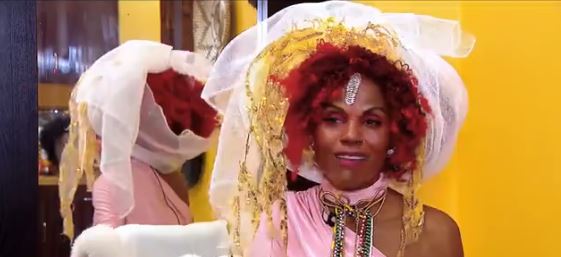
    DALLAS (KTVT) — When you walk into the Naturally Isis salon off Preston Road in North Dallas, you can feel the joy.

Owner and hairstylist Isis Brantley radiates that same energy.

“I feel the waves of the energy flowing right now. I feel the energy of creativity and magic happening right now,” Brantley said.

But when you ask Brantley about her legacy, it hits her at the heart. She spends much of her time teaching students in Dallas and across the country the art of natural hair braiding and the rich traditions behind it.

“I get to see it, I get to feel it, I get to see the babies smile,” she said. “We’ve compromised so much trying to look like someone else. We’ve lost our hair, we’ve lost our love, we’ve lost the understanding of what to do. That’s why I train and teach the arts, so you can know how to work with your child’s hair without using a comb.”

Getting here wasn’t easy. Brantley has spent decades fighting for the right to braid hair and for the deregulation of hair braiding. In 1997, she was arrested for braiding without a cosmetology license.

“I said, ‘OK, if that’s what you want me to do, is for me to go to jail for braiding… y’all want to embarrass me in front of my community? Seven cops coming in to arrest me? You want my kids to know that I’m a criminal because I braid hair? OK, let’s do that,'” Brantley told CBS News Texas.

While she was eventually grandfathered in, she was barred from teaching braiding to others. That moment sparked a yearslong battle with the state.

In 2013, Brantley took her fight to federal court, suing Texas over laws that restricted local businesses from teaching braiding unless they converted their locations into barber colleges. In 2015, she won. A federal judge ruled the laws unreasonable and unconstitutional – a decision that reshaped the industry and opened doors for hair braiders across the state.

“It does make me so proud,” Brantley said. “I’m so happy to see we finally are creating a respectful and open world for natural hair.”

Over the years, Brantley has worked with big names like Erykah Badu and Stevie Wonder, but she says her work with the community – and with her five children – matters most.

“I want kids to be able to take a mirror and look at the mirror and literally say, ‘I love myself,'” she said. “My next step is to teach economic freedom and to teach the love of oneself, and to have people understand that this is something that not only I should be doing, but the parents must do as well.”

As Brantley reflects on her arrest nearly 30 years ago, she says it taught her patience and the power of healing. She hopes to continue teaching the next generation, passing on the traditions that helped heal her.

“I hope they know that they’re beautiful. I hope they know that anything they desire to do, they can do it,” she said. “I hope they know that if they rebel against any aspect of natural hair, it’s OK, and I want those who embrace the beauty of natural hair to know that too is OK.”

In September, Brantley and the city of Dallas will host the 11th annual Braid Freedom Crown Fair Festival. More information on classes and upcoming events is available at naturallyisis.com.

Please note: This story was provided to CNN Wire by an affiliate and does not contain original CNN reporting. This content carries a strict local market embargo. If you share the same market as the contributor of this article, you may not use it on any platform.

Pickleball event at Mall of America raises money to fight child hunger

By Adam Duxter

Click here for updates on this story

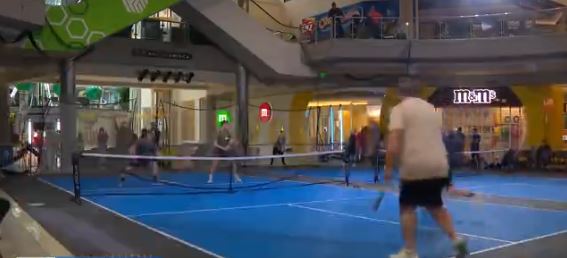
    BLOOMINGTON, Minnesota (WCCO) — The rotunda at the Mall of America in Bloomington, Minnesota, has hosted nearly every type of event over the years, but celebrated a first-of-its-kind event on Saturday.

For nearly 12 hours, competitive pickleball matches filled the rotunda — all to benefit Every Meal, a nonprofit working to fight child hunger by providing Weekend Food Bags to children in need.

Every Meal Founder and President Rob Williams says during Operation Metro Surge, the organization has been stretched thin.

“We’ve provided almost 40,000 bags of food since January for that specific mission of serving those people at home,” Williams said. “That’s in addition to the 13,000 kids every week we serve through our weekend meal program, that’s giving kids bags of food on Fridays to take home for the weekends.”

Williams said Saturday’s event served as a way to draw attention to their efforts.

“That’s what we’re about. Engaging the community to make sure kids in their community have the food they need to learn, grow, thrive and be a part of that community,” he said. “I’m seeing people stop and look, and they’re wondering – what’s this about? They’re able to see information about every meal, and learn about, well, they’re playing pickleball, but they’re doing it because they want to make sure kids have food in their bellies on the weekends.”

Please note: This story was provided to CNN Wire by an affiliate and does not contain original CNN reporting. This content carries a strict local market embargo. If you share the same market as the contributor of this article, you may not use it on any platform.

Defying all odds, doctor transforms adopted daughter’s health using functional medicine

By Suzanne Le Mignot

Click here for updates on this story

    CHICAGO (WBBM) — When a doctor was told there was no cure for his daughter’s condition, he was motivated to transform not only her health, but the lives of thousands of others.

Dr. Aaron Hartman is the author of the new book “UnCurable: From Hopeless Diagnosis to Defying All Odds.” His adopted daughter, Anna, was born to a meth-addicted mother. He said doctors told him Anna would never walk, talk, or live independently.

“Made me realize, I had to figure it out for my daughter on my own. It was up to me to do it,” Hartman said, “and that’s what put me on this whole different path of integrative and functional medicine.”

Hartman took that mission to the point where he moved his entire family to a farm.

“The idea was, how can we have this maximal environment where our kids have outdoor play, exposure, inquisitiveness, learning, real food? And so farm, homesteading seemed like the natural thing. Raised our own cows and chickens,” said Hartman. “But it was very, very instrumental in me learning how important the environment is, and what you eat is, with your health.”

Anna is now a thriving 19-year-old who walks with forearm crutches. Hartman said nutrition, therapies, and grit made for a turnaround for Anna.

“Just persistence, just keeping on doing new things,” Hartman said. “We did suit therapy, which is this way of making her walk and move, physically activating her three to four hours a day. Real food. Finding out I could use food like a drug. Healthy fats, real protein and finally just interaction. She’s had so many adults, so many people pulling for her, helping her, like the community around her, it’s amazing how powerful those three basic things were in her healing journey.”

Hartman had some advice for parents or caregivers who have been told there is nothing else to be done for their children.

“The message is never give up. Never give up hope. There are answers out there,” he said. “When someone says you’re uncurable, there’s nothing that can be done for you, all that means is what they can do for you. You’ve run to the end of what they can do. There are other options, other things that can be done.”

Hartman said “UnCurable” is not about rejecting medicine. It is about expanding it and looking at all aspects, including the root cause of a medical problem.

Dr. Hartman can be found on YouTube, Instagram, Facebook, X, and LinkedIn, and hosts the Made for Health podcast.

Please note: This story was provided to CNN Wire by an affiliate and does not contain original CNN reporting. This content carries a strict local market embargo. If you share the same market as the contributor of this article, you may not use it on any platform.

8-year-old strives to collect 300 boxes of cereal to feed local kids

By Meghan Schiller

Click here for updates on this story

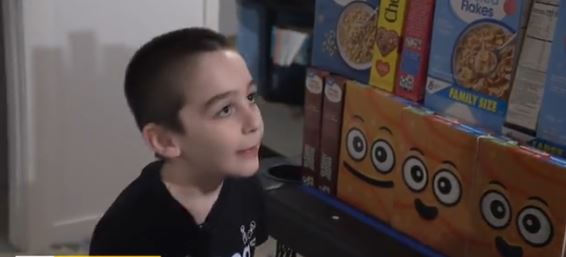
    PITTSBURGH (KDKA) — On most days, you’ll find 8-year-old Xander O’Brien in his basement, hockey stick in hand, practicing slap shots on his net. But off the ice, he’s working toward a very different goal: collecting 300 boxes of cereal to help feed kids in need.

Powered by marshmallows and a big heart, Xander O’Brien has strong opinions about breakfast.

“I like Lucky Charms,” he said.

Colorful cereal boxes fill his basement. Lucky Charms, Fruity Pebbles, Rice Krispies, Apple Jacks and so many others aren’t just breakfast favorites. They’re the centerpiece of Xander’s growing cereal drive benefiting a local nonprofit called The Bag Brigade.

Last year, he collected 125 boxes. This year, he’s aiming higher.

“We need 300,” he said.

Xander O’Brien’s mom, Sarah O’Brien, first discovered The Bag Brigade a few years ago. The volunteer-run program supports students who are food insecure in the Belle Vernon Area School District by packing bags of food for kids to eat on the weekends and also over the summer.

She began volunteering on Tuesday nights, packing bags filled with easy-to-prepare, shelf-stable meals. Eventually, Xander started tagging along. Then his little brother came as well.

“When he feels comfortable in an environment, he thrives,” said Sarah O’Brien. “He loves to go there. And he loves packing bags because, number one, you get to walk in a circle, so it’s like you’re trick-or-treating.”

But along the way, Sara O’Brien says something bigger happened.

“You want your children to learn when they’re younger that not everyone has what they have,” she said.

Kathy Kelly co-founded The Bag Brigade 10 years ago out of the Gospel Alliance Church. She tells KDKA’s Meghan Schiller what started small has grown dramatically.

“We started in one elementary school with 19 or 20 bags,” said Kelly. “That grew to all four schools and the high school.”

When COVID hit, the need skyrocketed.

“That first week, we packed 900 bags,” she said. “We realized we really needed to be doing this year-round.”

On Friday, volunteers pack food bags for 242 students during the school year. The goal is simple: provide food that kids can prepare themselves.

“Anything shelf-stable and something kids can fix themselves,” said Kelly.

Items like mac and cheese cups, peanut butter, soup, ramen, Slim Jims, pudding cups and applesauce are always needed —anything a child can open and eat.

The larger cereal boxes aren’t distributed in weekly bags. They serve a different and fun purpose. Every year, the schools host a massive cereal box domino drop.

Hundreds of boxes are lined up throughout the school hallways. When the first box tips, it sets off a chain reaction that sends cereal tumbling down the line, filling the building with cheers.

“It doesn’t do it justice on video,” said Sarah O’Brien. “Last year, he got to tip the first box at Rostraver Elementary. That’s like a big to-do – super celebrity.”

For Xander O’Brien, it was unforgettable.

“Last time we did dominoes, we pushed cereal all the way down. I was the one who pushed it,” he said.

The more boxes collected, the bigger the domino drop. And that means even more motivation to reach that 300-box goal.

Xander O’Brien is collecting cereal boxes through March 15. The family has created an online wish list where supporters can donate or order boxes that ship directly to the drive.

Please note: This story was provided to CNN Wire by an affiliate and does not contain original CNN reporting. This content carries a strict local market embargo. If you share the same market as the contributor of this article, you may not use it on any platform.