FBI Milwaukee issues warning on extremist network targeting kids called ‘764’

By Montse Ricossa

Click here for updates on this story

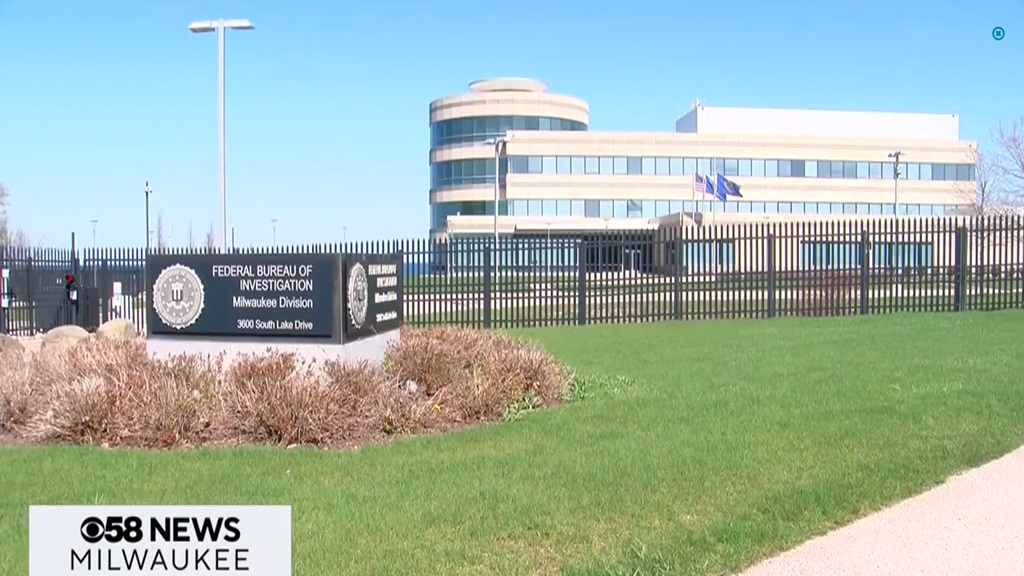
    MILWAUKEE (WDJT) — FBI Milwaukee is issuing a new warning to parents amidst a growing “extremist network” they say is targeting your kids. There are more than 450 cases under investigation nationally, with some in Wisconsin, though the exact number wasn’t released. Federal authorities have classified the activity as domestic terrorism. The network targeting minors, according to the FBI, is called “764.”

Members of these networks manipulate victims by building trust or a romantic relationship, according to the FBI. Only later, the network will manipulate the victims to produce graphic content, or engage in self-harm, animal cruelty, or other dangerous behavior.

“Anyone can become a victim in our communities,” shared FBI Milwaukee’s Special Agent in Charge (SAIC) Alan Karr.

Potential signs of victimization parents should look out for include:

Sudden behavior changes such as becoming withdrawn, moody, or irritable Changes in appearance, including neglect of appearance or hiding specific body parts Signs of animal cruelty Unexplained harm to younger siblings Threatening to commit suicide and openly talking about death, “not being wanted or needed,” or “not being around” Scars, often in patterns, including signs or names from online platforms Fresh cuts, scratches, bruises, bite marks, burns, or other wounds Reports of personally identifying information being posted online for victimization (commonly referred to as a “dox”) Sudden and unexplained gifts or packages arriving for the child to the home

Victims are typically teen girls while the perpetrators tend to be males in their late teens to early 20s, said SAIC Karr.

He went on to explain that many subjects are motivated by “Nihilistic Violent Extremism” also known as NVE. That means they “try to sew chaos and destruction in society.” Others though could be motivated by “sexual gratification, social status, a sense of belonging, or for a mix of other reasons.”

The first step in prevention, according to the FBI, is awareness. They urge parents to make sure they know who their kids are communicating with online and through which platforms.

“Increasing awareness for the community so people understand it’s an issue and we would like for it to be reported. it helps protect our communities and people.” — Special Agent in Charge Alan Karr

Victims should be sure to write down or take screenshots of any identifiable information from the perpetrator including usernames, email addresses, websites, and names of the platform used. It should then be reported to:

1-800-CALL-FBI (1-800-225-5324) or tips.fbi.gov FBI’s Internet Crime Complaint Center at ic3.gov

Please note: This story was provided to CNN Wire by an affiliate and does not contain original CNN reporting. This content carries a strict local market embargo. If you share the same market as the contributor of this article, you may not use it on any platform.


Flesh-eating bacteria concerns in Long Island waters are growing. Here’s why.

By Carolyn Gusoff

Click here for updates on this story

    LONG ISLAND, New York (WCBS) — Scientists say New York’s coastal waters are experiencing some of the most severe threats on record, and not just environmental.

There are now concerns about flesh-eating bacteria.

Harmful algae blooms and dead zones In the waters of the Western Shinnecock Bay, shellfishing is banned because of a toxic algae bloom, and across Long Island, the blooms are getting more intense.

“It’s scary because summer season is coming. Everyone wants to get in the water to fish and boat,” East Quogue resident Roy Gardner said.

Flashback: Early ‘Mahogany Tide’ algae bloom in Great South Bay has environmental experts greatly concerned

Scientists say the state’s coastal waters weathered some serious environmental and public health threats last year.

“A record number of spots with low oxygen,” said Christopher Gobler, a professor of coastal ecology and conservation at Stony Brook University.

“No Time to Waste” research

Gobler’s research, called “No Time to Waste,” is a call to action and also a warning not to swim with an open wound in waters where salt and fresh water meet. He says harmful algae blooms and dead zones are not just harming marine life, but also endangering pets and humans. Flesh-eating bacteria that used to be confined to southern states is now here.

“In 2023, it showed up in New York. There were three people who died on Long Island Sound. And in doing monitoring, we are finding it in most water bodies, [with the] highest levels in the heat of summer,” Gobler said.

Gobler says the culprit is our area’s warming waters and too much nitrogen, mostly from underground aging and leaking cesspools.

However, there is funding available to homeowners to upgrade them.

“It’s critically important, especially if you live close to the water. And the state and the counties are actually giving people money. They’re giving grant money — you don’t need to pay it back — to change out your old antiquated septic and cesspool,” said Adrienne Esposito of the Citizens Campaign for the Environment.

Not all the news is bad There are some bright spots in Gobler’s annual research. For instance, the western Long Island Sound saw its dead zone shrink by 90% in two decades, due to upgrades in sewage treatments plants.

“They reduced nitrogen by 60% and the dead zone has been shrinking. It’s really a great success story. When action is taken, conditions can improve,” Gobler said.

Oysters, clams and kelp put into the waterways also pull nitrogen out of the water.

Please note: This story was provided to CNN Wire by an affiliate and does not contain original CNN reporting. This content carries a strict local market embargo. If you share the same market as the contributor of this article, you may not use it on any platform.
Father charged with child neglect in Thanksgiving fire that killed 3 children

By Adam Rife

Click here for updates on this story

    KENOSHA, Wisconsin (WDJT) — Charges are now filed against the father of three children who lost their lives in a Kenosha apartment fire on Thanksgiving of last year.

Police say 39-year-old Joshua Kannin is charged with three counts of child neglect (consequence is death).

Rylee Levi, 10, Connor Liam, 9, and Alena Ellen, 7, died as a result of the fire that broke out near 43rd Ave. and 52nd St.

The children’s mother said the new details made her too emotional to speak on camera.

Additionally, investigators now believe they know how the fire started.

And there are a lot of factors, including the removal of smoke detectors, smoking in the house, and letting young children use the stove.

It led to a tragedy.

A search warrant revealed Joshua told investigators he woke up and saw “a little fire on the kitchen floor,” panicked and walked out the front door looking for help.

He reportedly said when he went back inside, the smoke was too thick and made worse by opening the door. Kannin was treated for smoke inhalation at an area hospital.

Plywood boards cannot hide the charred scars of the fire.

Gregory Rawls lives two doors down. He told us, “You just really don’t want to look at. I know there’s a lot of people don’t look at it because it’ll remind them of what happened.”

Rawls is reminded of it every day, but other neighbors couldn’t take it.

“Lady next door, that was their best friends. So they moved,” Rawls said. “They couldn’t even look at the building anymore. So they left.”

The Kenosha fire and police departments reviewed surveillance footage, witness statements, and fire investigation reports.

This week, authorities charged Joshua Kannin with three counts of child neglect.

Kannin told investigators he woke up, saw a small fire, yelled for the children to come downstairs, then he ran to get help. The children never made it out.

Their mother, Jourdan Feasby, did not live at the home.

She told police Kannin did not like to cook and described the eating situation as “fend for yourself in a sense.”

10-year-old Rylee told her that Kannin had taught him how to use the stove.

A complaint said Kannin’s apartment was a mess, with clutter everywhere, including a lot of items on the stove, like napkins.

Investigators believe the fire started when the 9 and 10-year-old boys went into the kitchen to make food while Kannin was asleep.

Investigators later found a rear stove burner appeared to be in the on position.

Additionally, Kannin admitted to law enforcement that he took down a smoke detector long before so he could smoke cigarettes in his kitchen, even though his lease said smoke detectors must be on the walls and functional at all times or he would be fined.

Rawls said, “Everybody is supposed to have smoke detectors in here. You’re not even really supposed to smoke inside these apartments. Most people come outside.”

Feasby said she told people about the missing smoke detectors multiple times, including Kannin’s mother and the property manager as early as the summer of 2024.

“There’s only so much I can do,” she said. “He [Kannin] doesn’t listen to me.”

The property manager told authorities they perform monthly checks of the smoke detectors in the apartment complex. But she said Kannin would never let them inside to check his alarms.

Despite the loss, there are small signs of life and growth outside.

Rawls pointed to new tulips growing under a boarded-up window. “I saw God’s work. Grew flowers. Flowers have never been there so that’s for the three babies that we lost.”

Detectives said there is no evidence suggesting the fire was set intentionally, according to the complaint.

We reached out to Joshua Kannin for an interview but did not hear back.

He has not been arrested but has been ordered to appear in Kenosha County court May 14th.

Please note: This story was provided to CNN Wire by an affiliate and does not contain original CNN reporting. This content carries a strict local market embargo. If you share the same market as the contributor of this article, you may not use it on any platform.
‘She was a trailblazer’: Friends, family discuss life and legacy of Wichita’s ‘Rosie the Riveter’

By Sydney Ferguson

Click here for updates on this story

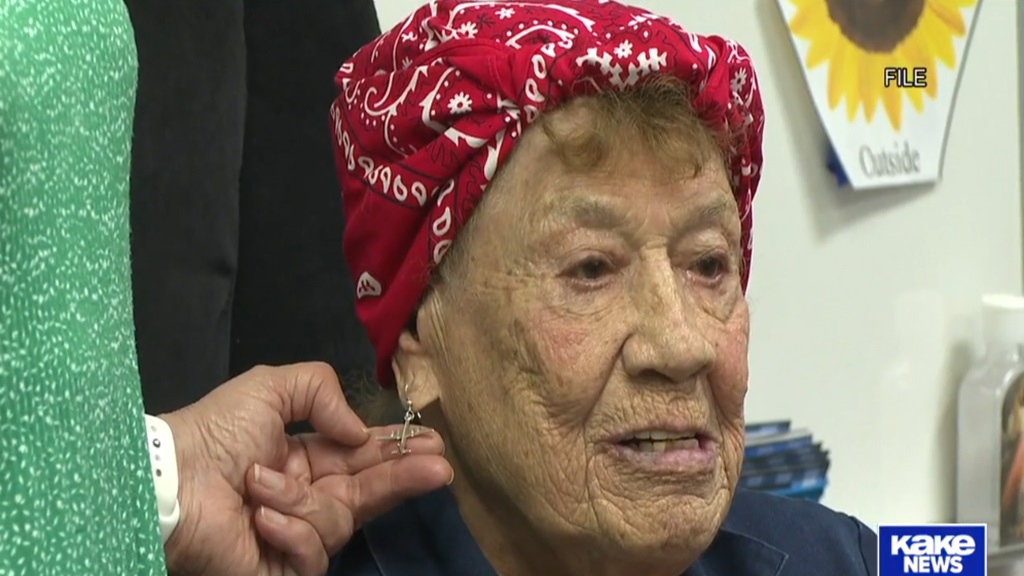
    WICHITA, Kansas (KAKE) — The Wichita community is mourning the loss of Connie Palacioz, a B-29 Superfortress and World War II-era “Rosie the Riveter” who died Sunday morning at 101-years-old. Now, her friends and family are also honoring her legacy — highlighting how her work paved the way for women in aviation.

Palacioz’s daughter, Tish Nielsen, describes her mother as a faith-filled woman who was strong, determined and loved life.

“She taught us as a family never to give up and to be strong,” said Nielsen.

Before becoming a legend, Palacioz was born in Peabody and grew up in Newton. Nielsen says her mother faced racism and other issues as a Mexican American, but she never let it hold her back.

At 17, she went to work for Boeing during World War II, joining thousands of other women who helped keep the country going.

“Being here is rough because she loved this place,” said a teary-eyed Nielsen, standing in front of B-29 DOC.

The plane is one of 1,644 B-29 Superfortresses produced in Wichita during the war and one that her mother worked on during her time at Boeing — a huge part of Palacioz’s still-developing legacy.

She worked at Boeing from 1943 to 1945, riveting and shining parts — never telling her family she was a “Rosie the Riveter” until it was time to become one again.

“When you would ask her, ‘Why didn’t you tell us you’re Rosie the Riveter,’ she said, ‘I was just doing my job,’ and that’s the way she was,” said Nielsen.

Nielsen says Palacioz’s humility was her strength, adding was just proud to serve her country. In the year 2000, she once again answered the call to help bring DOC back to life.

“I remember meeting her and thinking ‘this lady is something else,’ said Josh Wells, Executive Director of the B-29 DOC Project. “She’s passionate, and she is dedicated, and she just wanted to see her airplane put back together.”

Nielsen says her mother also came back, hoping to find her buckler, Gerry — an African American woman she worked with on the B-29s and struggled to find after the war. Nielsen says originally, Gerry was cleaning at Boeing, and her mother moved parts because no one was willing to work with her.

“Mom said, ‘That’s fine with me. I’m a minority. I’m Mexican. I’ll work with her,” said Nielsen. “My mom said she was the best. She knew her craft very well, and then they wanted to separate them, and they didn’t separate.”

Wells says that during the war, a workforce made up of between 80% and 90% women, like Connie and Gerry at Boeing, was producing 4.5 B-29s a day — not only aiding the war effort but paving the way for women in aviation.

Connie volunteered during the 16 years it took to restore DOC and later traveled with Wells and others around the country to share its history. Nielsen says her mother made it a point to talk about how the discrimination wasn’t right during these travels

“Having Connie out on tour with us was one of the greatest opportunities that I’ve had,” said Wells. “It wasn’t about her, it was about what she represented, and she knew that, and she was a trailblazer.”

Nielsen says the restoration work and getting to share the plane’s story meant the world to her mother, and for her as well, being her mother’s travel companion.

“I remember the first time she watched it, she cried and said, I can’t believe that it’s flying,” said Nielsen. “It’s been an unbelievable journey to ride with her on this, and I think it extended her life many years, I really do.”

Nielsen says Palacioz passed away peacefully and quickly at home Sunday, which is all she had hoped for her mother.

“It was the most beautiful homecoming ceremony I could ask for… and that makes me happy, and I know she’s with our Lord,” said Nielsen. “She was blessed with a long life to be able to share her story.”

Nielsen and Wells say now, it’s their job to continue sharing that story, making sure Connie and the work she did are never forgotten.

Please note: This story was provided to CNN Wire by an affiliate and does not contain original CNN reporting. This content carries a strict local market embargo. If you share the same market as the contributor of this article, you may not use it on any platform.

Netflix’s “Love on the Spectrum” star advocates for new Georgia law

By Kierah Highsmith

Click here for updates on this story

    ATLANTA, Georgia (WUPA) — A Georgia native known for his role on a popular Netflix series is now pushing for change at the State Capitol.

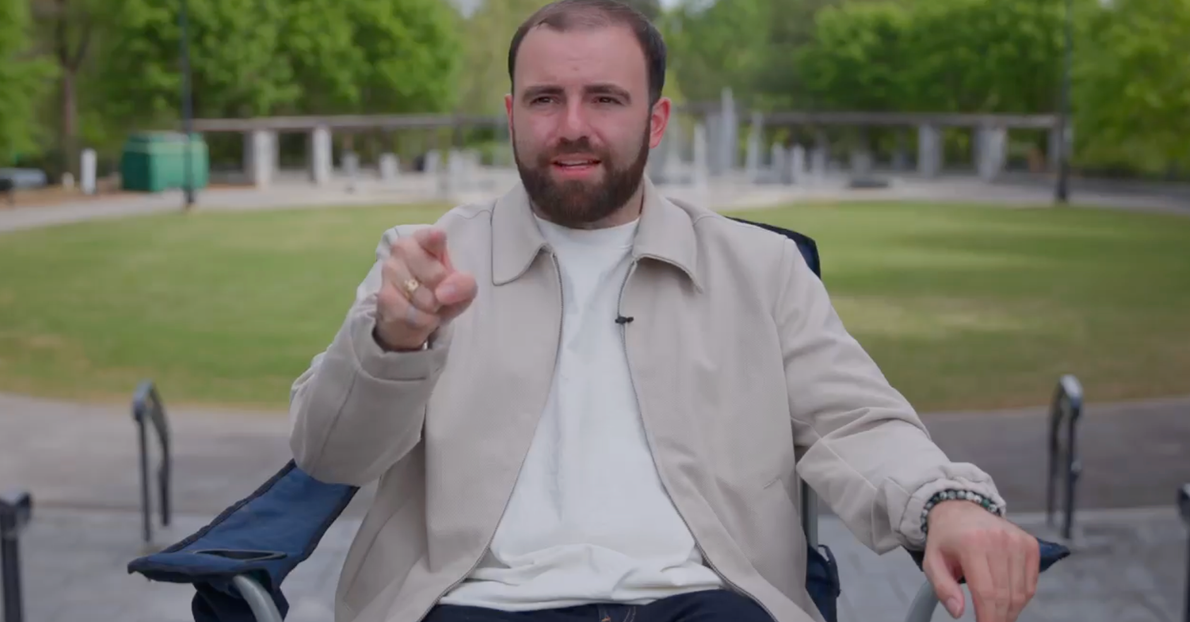
Connor Tomlinson, a fan favorite on the show “Love on the Spectrum,” has been advocating for Senate Bill 433, which aims to improve interactions between law enforcement and people with disabilities.

The bill, also known as “Rio’s Law,” passed the Georgia Senate unanimously in March and is now awaiting a decision from Gov. Brian Kemp. The governor has 40 days to sign or veto the measure. If no action is taken by May 13, it will automatically become law.

“It really gives me a great sense of accomplishment knowing that I’ve helped make Georgia a safer place,” Tomlinson said.

The 27-year-old said his advocacy work grew alongside his rising visibility on the Netflix series, where he appeared in seasons two through four.

“About three years ago, I never would have even dreamt of it,” he said.

Tomlinson’s mother, Lise Smith, who also appears on the show, said she has watched her son’s journey with pride.

“I think about all the nights I filled my pillowcase with tears, just worried sick over his trajectory in life,” Smith said. “When I see where he is today, I wish I could tell myself back then to relax. He’s going to overcome adversity.”

While Tomlinson found love on the show, that relationship ended in Season 4. He said his focus now is on inspiring others.

“What I’m really trying to do is inspire people and show the autistic, neurodiverse community that we can push past limitations,” he said.

Tomlinson will not return for Season 5 of “Love on the Spectrum,” which recently climbed to the top spot on Netflix following its latest release.

He said he hopes to “pass the torch” to others and is now focusing on building a career in voice acting and animation — while also keeping an open mind about finding love.

“I’m single and ready to mingle,” he said.

Please note: This story was provided to CNN Wire by an affiliate and does not contain original CNN reporting. This content carries a strict local market embargo. If you share the same market as the contributor of this article, you may not use it on any platform.

Man sentenced to 74 years in prison for killing pregnant girlfriend

By Lily O’Brien

Click here for updates on this story

    WICHITA, Kansas (KAKE) — A Wichita man is likely to spend the rest of his life behind bars after killing his pregnant girlfriend last year.

Naomi Oglesby’s family faced her killer — Matthew Criscenzo — in court as he learned his sentence: 74 years in prison.

“He got the ultimate control. He ended her life. He ended her ability to be a mother to her child. He very nearly ended her child’s life. There is nothing that is appropriate in this case, but the maximum,” argued prosecuting attorney Shannon Wilson.

A jury in February convicted Matthew Criscenzo of premeditated first-degree murder, felony murder, kidnapping and aggravated battery in connection with the death of 20-year-old Naomi Oglesby.

On Tuesday, Sedgwick County District Judge Jeff Goering denied a motion for downward departure and sentenced Criscenzo to 618 months to life for murder, 228 months for kidnapping, and 43 months for aggravated battery. If he’s ever granted parole on the murder conviction, he would then begin serving the 271 remaining months.

In two other cases, Judge Goering sentenced Criscenzo to 55 months for aggravated intimidation of a witness and aggravated assault. That sentence will run concurrently to the murder case.

“There’s no perfect way to say some things, but I never wanted Naomi to die, and I certainly never wanted my child. I certainly never wanted my child to be harmed,” said Criscenzo in court.

Oglesby’s family pleaded with the court to give Criscenzo the harshest punishment.

“Had the child not survived this, we wouldn’t be talking about a first-degree murder case — we would be talking about a capital murder case,” said Goering.

While doctors were able to deliver Oglesby’s baby — Zy’nia– at 37 weeks, her family says the baby girl has severe brain damage and struggles to breathe or eat.

“She can’t swallow. We are about to have her first birthday party. She will not get to enjoy her birthday cake. She will most likely never eat,” said her foster mother, Jessica.

She says Zy’nia has serious conditions, including cerebral palsy, requiring constant care and medical visits.

“He not only took my sister’s life at the young age of 20, but he also permanently altered Zy’nia’s life. Naomi’s daughter will never be able to have a normal childhood or adulthood if she miraculously makes it to adulthood. He took two full, long, happy lives away from women who still had their whole lives leading a domestic violence relationship is the most deadly one. He ended one life, but altered many more,” said Naomi’s sister, Ashley Stewart.

Defense attorneys argued for a reduced sentence.

“Matthew has a learning disorder, deficits in memory processing. He’s had some mental health services, outpatient treatment. He completed his juvenile probation. He’s been a crime victim. He’s been shot and shot at,” said his defense attorney. “He is here today with substance abuse issues, which he’s trying to fight. He has mental health issues, which have led to suicidal thoughts and ideations before and since he’s been in custody, or the tragedy of Naomi’s death will only become compounded by a life sentence.”

Goering denied the request.

“Naomi was wanting to leave. Mr. Criscenzo didn’t want her to leave,” said Goering. “Had he just let her leave the house, we wouldn’t be here dealing with this tragedy today.”

Please note: This story was provided to CNN Wire by an affiliate and does not contain original CNN reporting. This content carries a strict local market embargo. If you share the same market as the contributor of this article, you may not use it on any platform.
Bats master the dark with sound. WPI engineers hope their drones do the same in dangerous situations.

By Jacob Wycoff

Click here for updates on this story

    BOSTON, Massachusetts (WBZ) — Bats can fly through total darkness, dodge obstacles at high speed, and weave through caves without crashing. They do it through echolocation, where they send out bursts of sound and use the returning echoes to build a picture of the world around them.

Now a team at Worcester Polytechnic Institute (WPI), led by robotics professor Dr. Nitin Sanket, is building drones designed to do the same.

“(Bats) basically scream into the abyss and then they look and hear for these echoes,” Sanket said.

Instead of relying only on a camera, the WPI drones use ultrasound sensors to detect objects in front of it. The goal is to help drones operate in places where cameras often struggle, like darkness, smoke, snow, fog, or cluttered spaces.

That could be critical in emergencies.

In demonstrations at WPI, one of their drones was able to move through obstacle courses, detect barriers, and stop before collisions. Even after the lights were turned off and the room was filled with smoke and snow, the drone was still able to navigate.

The technology depends on a sensor that uses very little power.

“This sensor uses only 1.2 milliwatts of power,” said student researcher Colin Balfour.

That matters because every bit of power saved can mean longer flight times and lighter drones.

In some conditions, Balfour said, “even the most skilled pilots won’t be able to achieve the same thing.”

Researchers said the drones are also being built with affordability in mind.

“This whole drone, I think, is about $200 or $300 in consumer parts,” Balfour said.

That lower cost could make it easier to scale the technology in the future.

The long-term vision is ambitious – first responders carry a backpack full of drones and deploy them before rescuers enter dangerous areas.

“You press a button, and it’s a turnkey solution where the robots go and search an area,” Sanket said.

If the drones locate someone, they could also help guide rescuers.

“This is the exact path you take to go rescue them,” Sanket said.

For Dr. Sanket, the deeper lesson is that engineers do not always need to invent solutions from scratch.

“Nature has already figured it out,” he said. “It’s already given us a solution. If there is a blueprint we just need to reverse engineer it and figure out how to do it.”

Please note: This story was provided to CNN Wire by an affiliate and does not contain original CNN reporting. This content carries a strict local market embargo. If you share the same market as the contributor of this article, you may not use it on any platform.

3-year-old girl reunited with beloved stuffed animal lost at Boston Marathon

By Brandon Truitt

Click here for updates on this story

    BOSTON (WBZ) — A mother and her three-year-old daughter were among the thousands cheering for the Boston Marathon runners on Boylston Street on Monday, but a beloved stuffed animal was lost in the crowd.

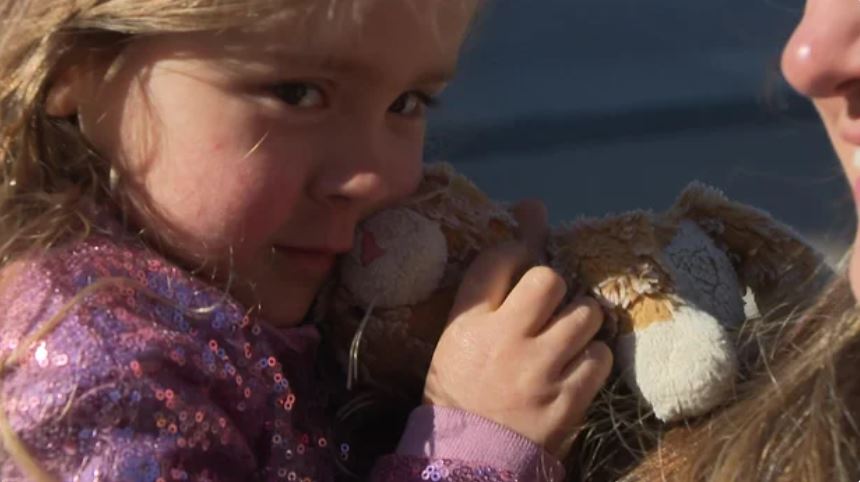
Katie Pedrick and her daughter Daisy looked around the area for hours, retracing their steps in the hope of finding the stuffed toy, but no luck. Pedrick, fearing the worst, turned to social media for help.

“My three-year-old lost her favorite stuffy at the Boston Marathon today,” Pedrick said in the post. “Her name is Sarah and we would really, really love her back.”

The video quickly gained thousands of views, but no one had seen any sign of the stuffed animal. Pedrick then called CBS News Boston, hoping someone knew someone who may be around the finish line late at night. CBS News Boston called Ali Foley, a volunteer with the Neighborhood Association of Back Bay. Foley quickly set out with her dog, combining sidewalks, trash containers, and even speaking with a Boston police officer.

But right as Foley was about to give up, something caught her eye, lying against a building.

“I looked down Exeter Street, which had just been cleaned,” Foley said. “I looked down to the left and I see a little bundle of fur on the sidewalk and I said, ‘That can’t be it.'”

Daisy was reunited with her beloved Sarah near the finish line on Tuesday.

“I didn’t think we would ever see her again and we are so happy to have her back. She is going to get an AirTag collar the second we get home, that’s for sure,” Pedrick said. “I think the Boston Marathon is so much about people coming together and community spirit. It really feels like an example of that.”

Please note: This story was provided to CNN Wire by an affiliate and does not contain original CNN reporting. This content carries a strict local market embargo. If you share the same market as the contributor of this article, you may not use it on any platform.

California State Prison inmates raise service dogs as part of rehabilitation program

By Max Darrow

Click here for updates on this story

    STOCKTON, California (KPIX) — The California Health Care Facility (CHCF), a state prison in Stockton, is among the numerous California Department of Corrections and Rehabilitation (CDCR) facilities that are leaning into the rehabilitative component of incarceration, so once people are out of prison, they stay out.

One of those efforts at CHCF is the BARK Program, where certain incarcerated individuals get a chance to raise future service dogs for people with disabilities, in partnership with the organization Canine Companions.

“Incarcerated persons who are interested in raising a service dog have to go through a huge vetting process that we have here,” said Jasmin Gin, Community Resources Manager. “Rehabilitation is a huge thing for CDCR. We want to make sure they’re super serious about giving back to the community. They do that by raising the service dogs that we have here.”

Canine Companions’ service dogs change the lives of people with disabilities on a daily basis. Organization leaders say this program takes it a step further, as it helps the inmates with rehabilitation.

“Every incarcerated person who’s been through this program has paroled, and none of them have come back,” Gin said. “The dog itself doesn’t care what the person does. They just have all this love for someone. Some of these guys have never had love their whole lives.”

Isaac Sinsun is an inmate at CHCF, who is 10 years into a 25-to-life sentence for murder. He won’t be eligible for parole for almost seven years.

“This is an opportunity for me to give back to the community that I took from,” he said. “I was out there terrorizing my community. I was taking. I was selfish. I was greedy. I couldn’t see past my own selfish needs. This opportunity allows me to give back to my community and be selfless for once.”

About 96% of incarcerated individuals will one day return to their communities, according to data from the Prison Policy Initiative.

Sinsun said there is nothing that can change the past. But this program allows him to contribute to society in a positive way, providing something good for humans he’ll likely never meet.

“We’ve made horrible mistakes. But we’re redeemable. There are people here in prison who are genuinely remorseful for what they did,” he said. “I lost myself. I really lost myself to my gang lifestyle, to my criminal thinking. When I started to be able to understand that I could actually, give back and be selfless, I found myself again. I found my humanity. I understood what compassion, empathy, responsibility, accountability, really meant.”

Sinsun and his fellow puppy raisers, there are nine in total, take a lot of pride in their job to get these dogs prepared to be service animals.

“We actually get to give back,” he said. “We get to give our time to help somebody else in need for the rest of their life.”

Canine Companions places the service dogs with people with disabilities free of charge, and they will follow up with them for life.

Please note: This story was provided to CNN Wire by an affiliate and does not contain original CNN reporting. This content carries a strict local market embargo. If you share the same market as the contributor of this article, you may not use it on any platform.

Pet owner looking for her lost dog targeted by scammers using AI

By Kara St. Cyr

Click here for updates on this story

    OAKLAND, California (KPIX) — Alisa Harrell hasn’t seen her 1-year-old French bulldog, Dash, in four months, and she is now warning that people should be wary of scammers who are trying to take advantage of people looking for their lost pets

“I was walking my garbage out to the curb, and he went to use the restroom. And then after he just dashed off. His name is Dash for a reason, so he dashed,” Harrell said.

Harrell searched far and wide with no luck. She turned to the Internet for help, posting pictures and details about Dash’s disappearance on several apps to no avail.

“I posted PawBoost, LOVE Pet, their apps, Harrell said. “I reported to the SPCAs in the Bay Area.”

After months of failed search efforts and unanswered posts, she finally got a lead: a text message from an anonymous person claiming they had Dash.

But there was a catch.

“They wanted money. I said, ‘I don’t have a problem giving you the $300.’ And they were like, ‘Well, can you send $150 via Zelle or Cash App or something?’ and I’m like, ‘No, I want my dog,'” Harrell said. “Then, they just kind of basically went ghost on me,” Harrell said.

Harrell told CBS News Bay Area she’d pay the money for her dog’s safe return if the texts were real. But small details weren’t right. People using Nextdoor agreed.

“People were responding, kind of trended on Nextdoor. And then this one girl said, ‘You know, that could be AI-generated,” Harrell said.

For starters, the picture they sent of Dash featured decor eerily similar to the original photo Harrell had posted months earlier. Not to mention there was a dead giveaway in the corner of the photo.

“If you look at the picture, yeah, right here,” Harrell said. “If you look in the picture, there’s the AI diamond right there.”

AI scams like this one are on the rise. The FBI’s 2025 Internet crime report showed 22 thousand reports — All AI-related. Ones like these are classified as confidence or romance scams because they prey on the emotions of others.

“We love our pets. We’ll do anything for them. You know, I would have given the $300 for my dog,” Harrel said. “So, you know, just saddens me that that’s where we are today with AI.”

While Harrell didn’t fall for this scam. She wants her story to be a lesson for others.

“I’m just glad that I wasn’t a victim of it,” Harell said.

Please note: This story was provided to CNN Wire by an affiliate and does not contain original CNN reporting. This content carries a strict local market embargo. If you share the same market as the contributor of this article, you may not use it on any platform.