Mother-daughter duo navigate loss while changing laws in Utah farming

By Arianne Brown, KSL

Click here for updates on this story

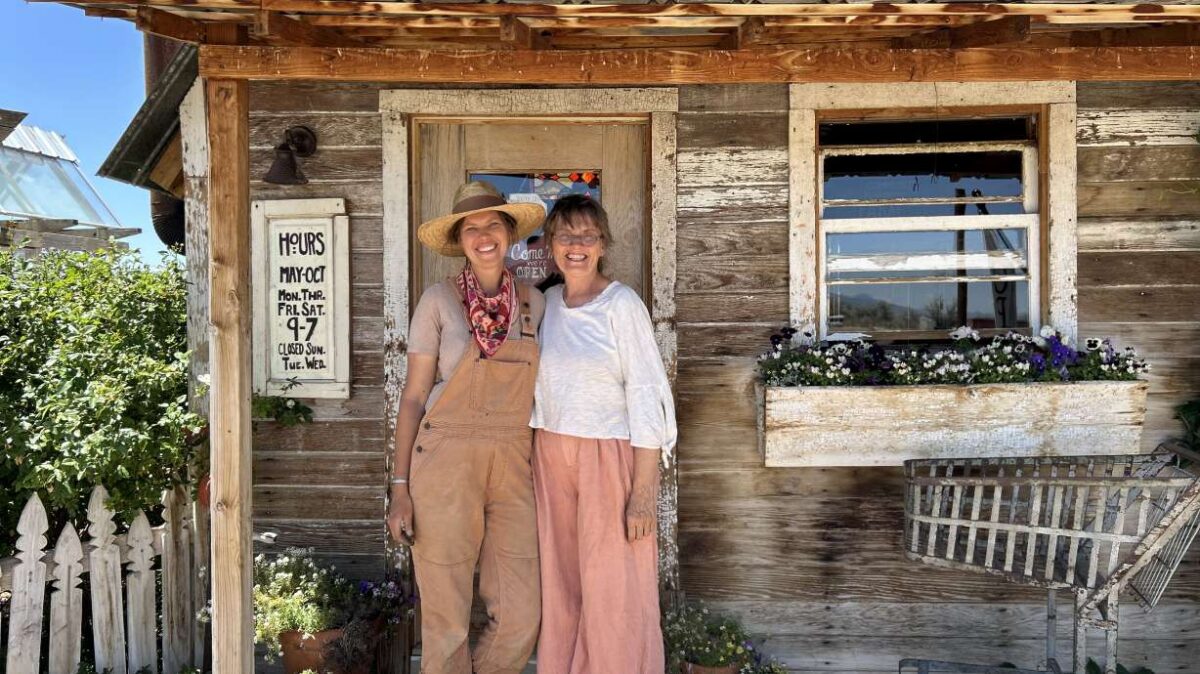
    CEDAR CITY, Utah (KSL) — Owning a farm wasn’t on Symbria Patterson’s radar when she moved her family from Los Angeles to Cedar City in 2005 — but her 10-year-old daughter, Sara Patterson, had very different plans.

“Sara is kind of unique, and we knew she needed to live on an open space,” Symbria Patterson said.

Sara Patterson, now 31, said the move to Cedar City to a 1-acre parcel of land might as well have been 100 acres.

“We could walk for what felt like miles without seeing a single house,” she said.

While big-city life was all Sara knew, her mom always managed to keep a garden at their home. They also had a family friend who operated a community-supported farm in Nevada, which young Sara loved to visit. And as she played in her yard in Cedar City, she dreamed of one day having her own farm.

“I really loved the community piece to their farm, and I thought what a beautiful way to be able to grow food for people with community-supported agriculture,” Sara said.

Community-supported agriculture is a business model in which locals pay upfront before the harvest, share some of the risk and enjoy the benefits of a local bounty.

Young Sara decided to take it upon herself to grow some veggies and sell them to locals. This, her mom said, was a fun hobby to watch, but it wasn’t something they were going to invest much time or money into. But when she announced she’d sold some shares, her parents knew it was more than just a hobby.

Soon, Sara had made enough money to bring home goats and chickens, and she named her business Red Acre Farm CSA. By the age of 15, a handful of shares turned into 40. She soon generated enough revenue to buy the acre next door. Her dad quit his job to work for her full-time, and it became a family business.

‘Could we get shut down, too?’ As her business grew, Sara kept in touch with her family friend in Nevada, who mentored her.

Then, the unthinkable happened.

“They had a farm-to-fork dinner, and they didn’t send the right documentation for transporting food to the health department in time,” Sara recalled. “They got shut down, and the food was destroyed with bleach. I was the one who ran and got the bleach, and I watched this beautiful food that had been grown and prepared by these farmers and these chefs get destroyed.

“It was a crazy experience that really changed my life,” she added. “I asked my mom what the laws were in Utah and if we could get shut down, too.”

As it turned out, they, too, were breaking laws.

“You don’t really think when you’re 14 years old, that selling vegetables or milk from your two goats is illegal,” Sara said. “It’s not that my parents were oblivious or not caring; we were naive to what we were doing.”

Changing laws amid tragedy Naivety was on her side, as was drive. Being young and eager to create a small community farm sent Sara and her mom to Capitol Hill in 2015. There, they championed a bill allowing farmers to legally fractionalize ownership of dairy animals, so consumers could legally access and drink raw milk for herd-sharing.

The bill was signed into law as HB104 in March 2015. That same day, tragedy happened.

“My husband had been holding down the place while we were on Capitol Hill, and there was some pretty heavy rain and snowstorms,” Symbria Patterson said. “It was the end of March, and we were using some in-town greenhouses, and he didn’t come back home.”

Lynn Patterson collapsed and died suddenly at the age of 58 from unknown causes.

“Within an hour of my dad passing away was when the governor signed our bill,” Sara Patterson said. “My whole life was kind of rocked. Losing my dad and my mom losing her husband —my dad ran the farm, so losing my father and my business partner kind of changed everything. At the time, we were just figuring out how to survive.”

The community they had built through farming rallied around them, and they began to rebuild. A year or so later, another tragedy struck.

“I woke up to a house engulfed in flames,” Symbria Patterson said. “We had to live off-site for a year and keep coming back. This farm was not designed to live off-site, but the community helped so much. I want to put a sign out in the front that says, ‘Vegetables didn’t build this house; it was insurance.’ The fire was the silver lining in the clouds.”

Mother and daughter Rebuilding after loss took more than building a new house or even growing a community; it took a mother and daughter working together to build a future for the greater good of small farms. To date, the two have helped pass over 20 bills that help small farm owners expand farm-to-table operations in Utah, while also advocating for farmers across the country.

“Some people think you’re going back in time with some of the things we’re doing, but the thing is, we’re losing our ag, and we’re losing our farmers,” Sara Patterson said. “We’re losing our water and our land, and we have to be innovative to be able to stay in the game. I want other people my age to be able to farm and be able to be first-generation farmers and to be able to stay in these multi-generational farms.”

The Key Takeaways for this article were generated with the assistance of large language models and reviewed by KSL’s editorial team. The article, itself, is solely human-written.

Please note: This story was provided to CNN Wire by an affiliate and does not contain original CNN reporting. This content carries a strict local market embargo. If you share the same market as the contributor of this article, you may not use it on any platform.
2 dead after BASE jumping incident

By Kennedy Camarena, KSL

Click here for updates on this story

    MOAB, Utah (KSL) — Two people died Sunday in a BASE jumping incident.

The Grand County Sheriff’s Office said the incident happened in a remote area of Mineral Bottom.

A 50-year-old man, who was not identified, died at the scene, according to the sheriff’s office. The second person who died, a man from Moab, was identified by the sheriff’s office as Andrew Lewis.

Lewis was an experienced tandem BASE jumper who documented his jumps under the name “Sketchy Andy Lewis” on various social media platforms. He owned BASE Jump Moab and had accomplished over 4,000 jumps, according to the Moab Swingers website.

“(Lewis) performed at the Super Bowl Halftime Show with Madonna, judged international slackline competitions and travels the globe as a performer and elite athlete,” the website said.

Lewis also co-founded Moab Swingers, a rope swinging company based in Moab, with co-founder and Lewis’ “lifelong friend,” Jimmy Peterson.

“At this time, we just like to release a statement saying that we are so sorry for the family and friends,” Peterson said in a statement. “It was a terrible accident, and I will be in touch at a later time.”

At news of his death, multiple people across the U.S. recounted what it was like to BASE jump with Lewis in the Moab area.

Ruth Bryson of Asheville, North Carolina, and her son took a trip to Moab during Mother’s Day weekend.

“I needed to do some healing from losing my mother in January, and I definitely went straight to Moab just to BASE jump,” Bryson told KSL. She said she was inspired to try after watching Lewis’ BASE jumps online. During the jump and prior, Lewis kept her calm and void of fear, Bryson said.

“We were laughing and cutting up all the way up the mountain,” she said.

Bryson said Lewis was compassionate and kind. She said she felt free and alive during the jump and mentioned that Lewis was the best at what he did. Bryson said she had a goal to BASE jump with him in the future. “He helped heal my heart, and I was hurting,” Bryson said.

William Cragg, of West Virginia, also BASE jumped with his 14-year-old son and Lewis about three weeks ago and said he found inspiration in Lewis’ TikTok BASE jumping videos.

“I started seeing these heart-wrenching stories of these people in Moab jumping off a cliff … Those stories resonated with me,” Cragg told KSL.

Ultimately, Cragg said Lewis inspired him to start an Accelerated Freefall program, as Lewis’ confidence rubbed off on him.

“Like any extraordinary thing worth doing in life, extreme sports are made up of extreme people,” he said. “All of these people share at least one common characteristic: needing to find an outlet. At the end of the day, we are all broken and just trying to put together enough pieces to survive another day. Although sports like BASE jumping have a high amount of fatalities, I promise you these sports have saved many, many more lives than they have ever taken.”

The sheriff’s office also expressed its condolences to the family and friends of the two victims.

“The Grand County Sheriff’s Office extends its deepest sympathies to the families, friends and all those affected by this tragic incident,” the sheriff’s office said.

Contributing: Shelby Lofton

The Key Takeaways for this article were generated with the assistance of large language models and reviewed by KSL’s editorial team. The article, itself, is solely human-written.

Please note: This story was provided to CNN Wire by an affiliate and does not contain original CNN reporting. This content carries a strict local market embargo. If you share the same market as the contributor of this article, you may not use it on any platform.
Business owner aids injured man after witnesses say he collapsed

By Natacha Casal

Click here for updates on this story

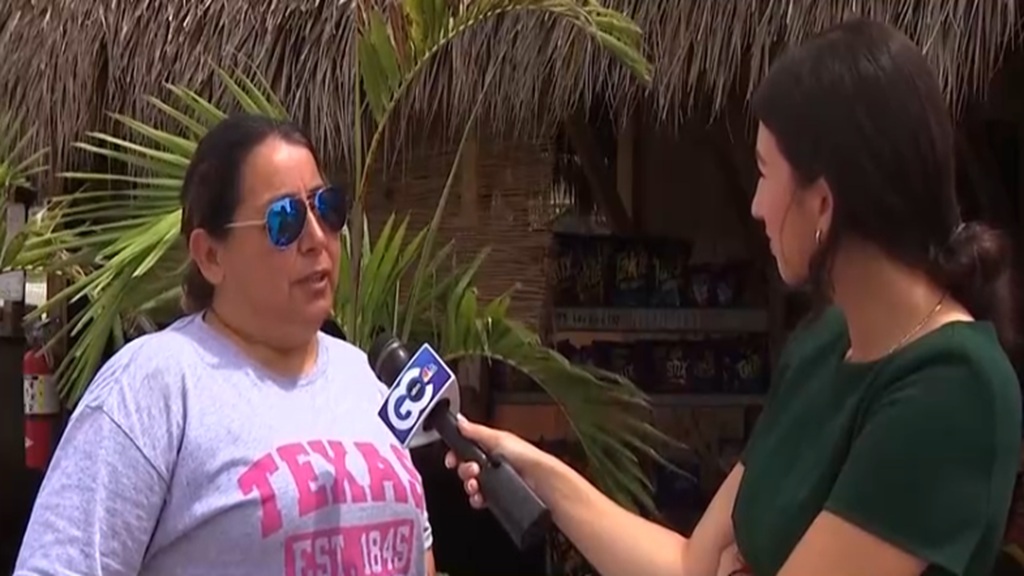
    IMMOKALEE, Florida (WBBH) — Erica Ramirez, owner of Los Eloteros in Immokalee, stopped to assist a man with serious injuries who collapsed near her business on Saturday evening.

“I just, you know, felt the need that I needed to stop and help someone, and and I did,” Ramirez said.

Ramirez’s Saturday began like any other, preparing elotes and serving customers. Around 5:30 p.m., she went to the store for supplies and noticed two women, who had just left her business, helping a man lying on the ground.

“He had a gash on top of his head. He had a gash on his eye. He had a–a gash right in his arm. I mean, he–he had some he had some really ugly wounds on him and he was losing some blood,” Ramirez said.

The incident occurred at a bus stop in front of Lali’s Bakery, where Ramirez said the man collapsed.

“He was conscious. He was able to tell me what happened to him. He was able to say that a car hit him,” Ramirez said.

Gulf Coast News reached out to nearby businesses for security footage of the incident but was unable to locate any video evidence.

“It’s sad, you know, because he was badly hurt. And I mean, I’m just glad that, I mean, we could at least help to get him some help,” Ramirez said.

Ramirez said she does not know exactly what led to the incident but hopes the man is recovering.

The Collier County Sheriff’s Office has been contacted to determine what happened.

Please note: This story was provided to CNN Wire by an affiliate and does not contain original CNN reporting. This content carries a strict local market embargo. If you share the same market as the contributor of this article, you may not use it on any platform.
“It was heartbreaking”: Homeowner faces long recovery after flash flooding

By Joyce Ogirri

Click here for updates on this story

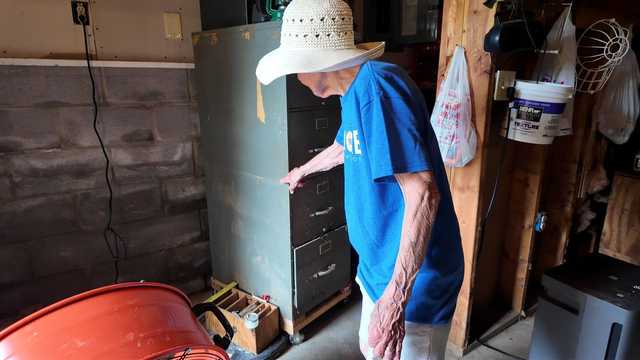
    LANESVILLE, Indiana (WLKY) — Nearly a week after devastating flash flooding swept through Lanesville, many residents are still dealing with the aftermath. For Ruth Price, the cleanup is far from over.

Price says floodwaters rushed toward her home last Tuesday after nearly eight inches of rain fell in just a few hours, overwhelming parts of the community.

“It come down that driveway just like a river. And this street out here. It was like a river. Water running down every place,” Price said.

She watched as water poured into her basement.

“It is scary to stand there and watch that water come in your yard and go into my basement,” Price said. “I went down there to shut the doors, and the water was so swift, it just pushed them open.”

Price says the floodwaters rose to the steps leading to her home but stopped short of entering the main living area.

“It get up on my second step, on my steps. That comes up to the house. But that was as far as it got,” she said.

As the water receded, the full extent of the damage became clear.

Price has lived in her home for more than 60 years and says she has never experienced flooding like this before. Mud, dirt and debris coated her basement walls, leaving behind a difficult cleanup.

“It had a lot of dirt, mud, mulch. It got up on the walls,” she said.

Now, fans run constantly as she works to dry out the basement and salvage what she can.

Because her home is not located in a designated floodplain, Price did not have flood insurance. She says the flooding destroyed her refrigerator, freezer, washer, dryer and other belongings.

“It was kind of, I don’t know, heartbreaking, I guess you could say, to see all that stuff that we have had over the years get destroyed with all of this flood water,” Price said.

As she continues to recover, Price hopes government assistance may help offset some of the costs. In the meantime, she remains focused on moving forward.

“We’ll all survive. And with God’s help, we’ll get through it all,” she said.

Please note: This story was provided to CNN Wire by an affiliate and does not contain original CNN reporting. This content carries a strict local market embargo. If you share the same market as the contributor of this article, you may not use it on any platform.
Severe storms devastate Omaha Art Fair, leaving artists with major losses

By Mary Regli

Click here for updates on this story

    OMAHA, Nebraska (KETV) — Dozens of artists at the Omaha Art Fair had their work swept away by severe storms that rolled through the area on Saturday morning.

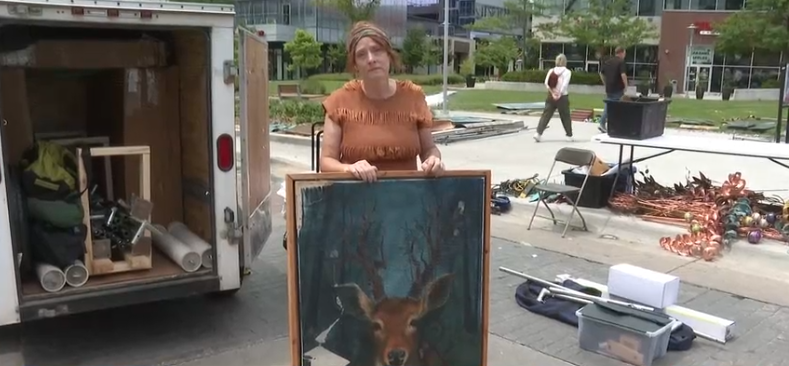
Vendors at the show were setting up for the show when the storms made their way into Omaha. Some like Denenna Hughes tell KETV NewsWatch 7 that she lost her entire business today.

“Every single piece of art is just completely destroyed. This isn’t salvageable. This is 100% loss here,” Hughes said.

Many said they didn’t expect the weather to bring as much damage as it did.

“We easily got 70 mph gusts down here where artists, we’re kind of used to this thing,” said Adam Weiss, President of the Omaha Art Fair. “But we can only batten down the hatches so far if we’re not expecting a huge storm like that.”

Artists like Shane Anderson did what he could to salvage his artwork.

“This is your livelihood. This is my baby, right?” Anderson said. “I’m sitting here thinking about, you know, I got to save my baby.”

Anderson lost thousands of dollars worth of work, but he considers himself one of the fortunate ones.

“A lot of artists will travel every weekend. You lose all of your work now, you can’t make money next week and the weekend after,” Anderson said. “So it’s not just this show you’re losing out on, but it’s every show after.”

Amidst the heartbreak, many vendors helped each other pick up the pieces from the damage left behind. Some even welcomed shoppers just hours after the storms devastated the art fair.

“A couple of people went to Walmart, and we got the new 10×10 tent, and they’re already set up, ready.” said Weiss.

For artists like Hughes, they’re starting once again with a blank canvas.

“I guess the good thing is I got to get in the studio and get painting more. Leave me alone. I need to paint,” Hughes said.

Please note: This story was provided to CNN Wire by an affiliate and does not contain original CNN reporting. This content carries a strict local market embargo. If you share the same market as the contributor of this article, you may not use it on any platform.

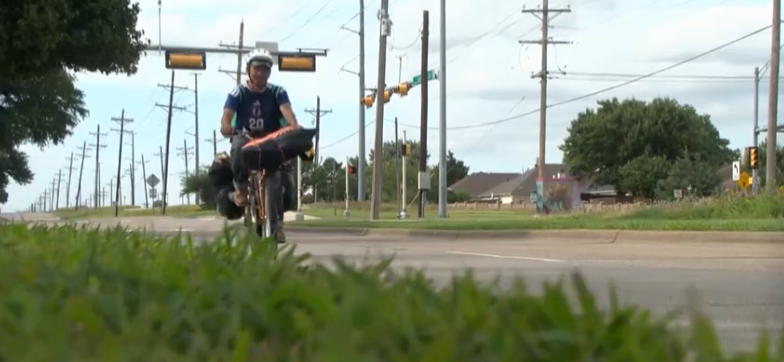
Western PA student bikes 1,200 miles to Texas for World Cup match

By Felicity Taylor

Click here for updates on this story

    PITTSBURGH (WTAE) — Yuto Sato, a Gannon University student from Japan, biked 1,200 miles from Pittsburgh’s South Side to Arlington, Texas, over the course of a month to watch his favorite soccer team compete in the World Cup.

“I have summer vacation now. I have the time, so I will try something big,” Sato said.

Sato, who just completed his first year at Gannon in Erie, is a passionate soccer fan. When he learned his favorite team was heading to Texas for the World Cup, he decided to turn the trip into an adventure.

On May 13, Sato bought a new bike at Unison Bike Lab in Pittsburgh’s South Side, loaded it with bags and a Japanese flag, and began his journey.

“I make like 50 or, 50 miles a day each day,” Sato said. “Tired sometimes, but yeah, it was fun.”

Traveling through the heartland of the United States, Sato visited several states for the first time. Each night, he used Facebook to connect with local community groups, through which he found new friends and places to stay.

“I joined the, local community group, and … then somebody and many people at least was, you know, they offered me you can call my home and. Yeah, just the, the the. Yeah. People. So nice,” Sato said.

Sato arrived at the stadium in Arlington just in time for Japan’s first match on Sunday.

“We play with Netherlands. Yeah. They are so strong. Yeah. So not. Yeah. Japan are strong, though, so I think good game. Yeah. It’s going to be good game. So I’m so excited,” Sato said.

After one month, 1,200 miles, and six flat tires, Sato is now resting and looking forward to the big game. Reflecting on his journey, he expressed pride in his accomplishment and gratitude for the connections he made along the way. He plans to head to Florida at the end of the summer with one of the friends he made during his trip, adding another state to his bucket list.

Please note: This story was provided to CNN Wire by an affiliate and does not contain original CNN reporting. This content carries a strict local market embargo. If you share the same market as the contributor of this article, you may not use it on any platform.

Pollard Stands Alone: One ‘No’ Vote, One Big Message on Houston’s $7.5 Billion Budget

By Francis Page Jr.

Click here for updates on this story

    June 15, 2026 (Houston Style Magazine) — In Houston, everything comes big—our highways, our skyline, our dreams, and, apparently, our budgets. Last week, Houston City Council approved Mayor John Whitmire’s historic $7.58 billion city budget by a 15–1 vote. The plan passed, but the conversation is far from over.

Standing alone in opposition was District J Council Member Edward Pollard, whose “no” vote was not a political whisper. It was a public declaration that City Hall, in his view, must show more discipline with taxpayer dollars.

“A budget is discipline,” Pollard said, arguing that Houston continues to spend more while residents still wait for better streets, reliable trash pickup, fewer water main breaks, and city services that match the taxes they pay. For Pollard, the issue is not whether Houston should invest in itself. The issue is whether Houstonians are seeing a fair return on that investment.

The new budget arrives as Houston faces serious financial pressure and a major deficit challenge. The spending plan includes a new $5 monthly trash and recycling fee expected to appear on residents’ utility bills, along with changes in how solid waste services are funded. Supporters say the fee is necessary to stabilize basic services without raising property taxes. Critics say it asks families to pay more while too many neighborhood problems remain unsolved.

Pollard placed himself firmly in the accountability camp.

“Our city is facing its largest budget deficits ever,” Pollard said, warning that Houston cannot rely on what he called “patchwork” solutions. He expressed concern that moving funds around may help balance numbers on paper, but still leave residents wondering when their streets, drainage, water systems, and trash services will improve.

For many Houstonians, this is not a spreadsheet debate. It is personal. It is the pothole on the morning commute. It is the missed trash pickup on a hot week. It is the water leak that reminds homeowners that infrastructure problems do not fix themselves.

Pollard, a Houston native, attorney, businessman, and product of Houston ISD schools, often speaks about government through the lens of household discipline and business judgment. Educated at Thurgood Marshall School of Law and Harvard Business School, he says public money should be handled with the same care families use when managing their own budgets.

“As a family man and businessman, my conscience can’t allow me to spend the people’s purse with any less discipline than I would my own,” Pollard said.

That message resonated with residents who applauded his stand. It also signaled why Pollard’s name continues to surface in conversations about Houston’s political future.

His vote also comes at a time when voters are increasingly focused on taxes, spending, crime, and public safety. Pollard points to District J as proof that targeted action can deliver measurable results. According to Pollard, crime is down more than 30 percent in his district, compared with a reported citywide decline of about 19 percent. He credits stronger coordination, increased patrols, and focused action in southwest Houston near Beltway 8 and U.S. 59, an area long troubled by prostitution, narcotics activity, and violence.

Pollard said barricades, locked alleyway access, and stepped-up police presence have helped disrupt criminal activity and protect families, businesses, seniors, veterans, and immigrant communities who call southwest Houston home.

This is where democracy earns its stripes. A healthy city does not require every elected official to vote the same way. It requires leaders willing to ask hard questions before the bill comes due. A lone “no” vote can sharpen public debate, demand accountability, and remind taxpayers that representation is not a rubber stamp.

Pollard’s vote did not stop the budget. But it did make Houstonians pause and ask a necessary question: What should residents expect in return for a $7.58 billion investment?

In Houston, where taxpayers know the difference between a promise and a pothole, that question is worth every penny.

Please note: This story was provided to CNN Wire by an affiliate and does not contain original CNN reporting. This content carries a strict local market embargo. If you share the same market as the contributor of this article, you may not use it on any platform.

Kierra Lee
KIELEESTYLE@GMAIL.COM
4096658446

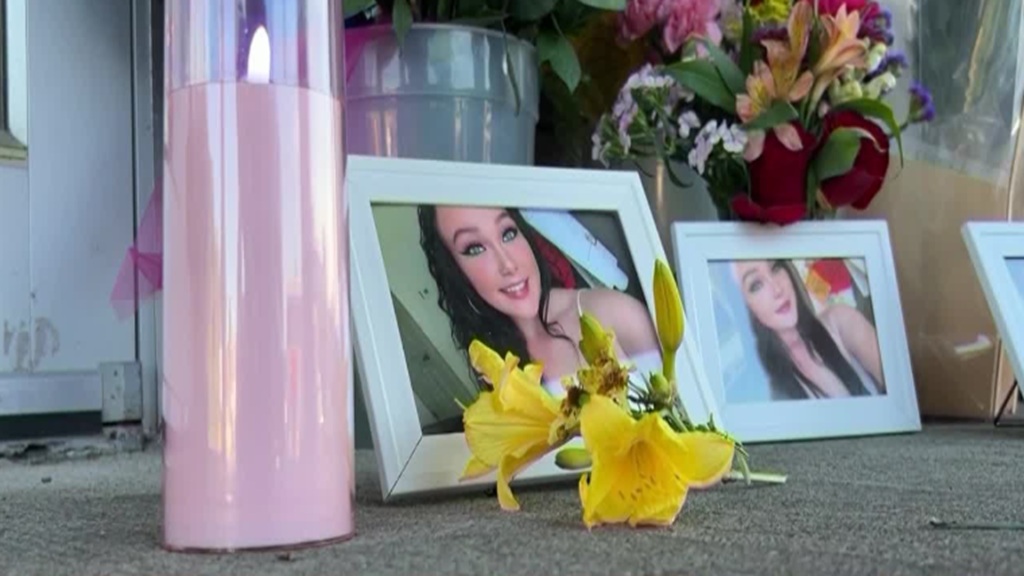
Community honors Ally Hill: Mother of 2, Skyline employee killed at work

By Giacomo Luca

Click here for updates on this story

    MOUNT HEALTHY, Ohio (WLWT) — A public viewing will be held on Monday to honor the life of Ally Hill, 27, a mother of two, who was slain while working at the Norwood Skyline earlier this month.

Visitation services will take place from 11 a.m. to 1 p.m. at the Paul R. Young Funeral Home on June 15, followed by a private burial service.

The 27-year-old server was working the lunch rush at the Skyline Chili on Montgomery Road when a man entered the restaurant and attacked her with a knife, according to Norwood police.

Friends of Ally Hill say she briefly dated the suspect in 2024. Rick Wright, 37, was arrested shortly after the attack and is being held behind bars on $1 million bond.

Hill was a 2016 graduate of Turpin High School and the Live Oaks Career Campus. She leaves behind two young children, her high school sweetheart and husband, her father, and her siblings. Hill is remembered as a devoted mother to her two young children and a person who cherished life.

Since the tragedy, thousands of people have stepped up to honor Hill’s life, contributing to fundraisers hosted by Skyline Chili and Norwood Delite Creamy Whip, as well as through GoFundMe campaigns.

The Skyline fundraiser alone has raised more than $150,000 to support Hill’s children.

“Tragedies like this, especially unnecessary tragedies, bring out the best in people, period,” said Steve Misleh, owner of Skyline Chili in Norwood.

“The kindness and the outpouring is immeasurable. It’s immeasurable. And from the bottom of our hearts, we thank everyone,” Misleh said.

The Norwood Skyline will close today so staff can attend the public viewing. A fundraiser has been set up to benefit Ally’s children.

Please note: This story was provided to CNN Wire by an affiliate and does not contain original CNN reporting. This content carries a strict local market embargo. If you share the same market as the contributor of this article, you may not use it on any platform.

Firefighters help rescue 15 campers from rising floodwaters

By Addison Kliewer

Click here for updates on this story

    PEGGS, Oklahoma (KOCO) — First responders rescued 15 people camping in Cherokee County as floodwaters began to rise early Sunday morning.

Firefighters from multiple agencies responded to Littlefield’s campground at Spring Creek, which is near Peggs, after law enforcement reported that 15 people were stranded in the floodwaters while camping just before 11 a.m. The flooding happened after overnight storms hit the area.

Rescue boats were deployed, and first responders were able to reach the campsite about a quarter of a mile from the nearest accessible county road, according to firefighters. Campers were safely rescued from their camp with no injuries.

First responders from Tahlequah, Peggs, the Grand River Dam Authority, Illinois River and Locust Grove all assisted with the rescue.

Please note: This story was provided to CNN Wire by an affiliate and does not contain original CNN reporting. This content carries a strict local market embargo. If you share the same market as the contributor of this article, you may not use it on any platform.

Turn a Wall on Its Side, and It Becomes a Table

By Francis Page Jr.

Click here for updates on this story

    June 15, 2026 (Houston Style Magazine) — A friend said something to me once that I have never forgotten.

His name is Alec Baldwin. He told me, “I’m an old school American. That means I believe you’re an American the day you decide to come here and join us.”

I love that line. It is simple. It is generous. It is true.

That is the country I was raised to believe in. A country with room. A country that makes space at the table.

We seem to have forgotten that lately. We talk about walls. We talk about who to keep out. We talk about whole groups of people as if they were a problem to be solved.

But fear is a poor teacher. It tells us to lock the door. It tells us the stranger wants what is ours. It tells us there is not enough to go around.

Fear is almost always wrong.

A great American answered that same fear long ago. His name was Frederick Douglass. He was born into slavery. He freed himself. And in 1869, he stood up in Boston to speak for people who looked nothing like him.

The target back then was Chinese immigrants. Many Americans wanted them shut out. Douglass said no. He called for a “composite nation” — one people, made from many.

The immigrants would keep coming, he said, the way waves keep coming to the shore. And we would be stronger if we met them as friends. Stronger. Not weaker. That was his word.

Douglass was right. He is still right.

Now think about our most famous symbol of welcome. The Statue of Liberty. She stands in New York Harbor with her torch held high.

Most of us were never taught where she came from: the end of slavery. The men who dreamed her up had fought to end it. In an early design, she held broken chains in her hand. Look closely today, and you will still find a broken chain and shackle at her feet. Most visitors never see them.

She is, at her heart, a statue about people set free. And a statue about welcome. The two ideas were always one.

Which brings me to a film I cannot stop thinking about.

It is called “The Welcome Table.” The filmmaker Josh Fox made it, and it premieres June 23 on HBO. For years he followed families driven from their homes by floods and fires and drought. People the world keeps trying to wall out.

Fox had one simple idea. “A wall, on its side, can be a table,” he says. The thing we build to keep people out can become the thing that invites them in. Same wood. Same length. We only have to lay it down flat.

So he built one. A table a thousand feet long. He gathered families from around the world to sit at it together on a levee in New Orleans. They ate. They sang. They told their stories. They began to heal.

Fox reminds us we have done this before. New Yorkers once feared Italian immigrants. Newspapers drew them as criminals. Today you cannot imagine New York without pizza. Every wave we feared, we later thanked.

Now Fox is taking the table on the road. He is building a movement of house parties across the country. Neighbors gather in living rooms, watch the film, and talk — about who their own families once were, and who they might welcome next.

“Welcoming is a virtue,” Fox says. We have let it slip. He wants us to pick it back up.

That is the choice in front of us. We can keep building walls. Or we can lay them down and set the table.

I know which America I want to live in.

I want the America Alec Baldwin described. The one you join the day you decide to come.

I want the America Frederick Douglass fought for. The composite nation, stronger for its mix.

I want the America the Statue of Liberty was built to be. A free people, making room for the next.

An old saying goes: when you have more than you need, build a longer table, not a higher wall.

So, let’s build the longer table.

Ben Jealous is a professor of practice at the University of Pennsylvania and former president and CEO of the NAACP.

Please note: This story was provided to CNN Wire by an affiliate and does not contain original CNN reporting. This content carries a strict local market embargo. If you share the same market as the contributor of this article, you may not use it on any platform.

Kierra Lee
KIELEESTYLE@GMAIL.COM
4096658446