Hackers steal loyalty rewards points that can be worth thousands for travelers


By Kurtis Ming

Click here for updates on this story

    SACRAMENTO, California (KCRA) — Hackers are increasingly targeting loyalty rewards points, leaving travelers struggling to recover stolen miles and rewards.

Linda Roth, a seasoned traveler, discovered nearly 200,000 of her American Airlines AAdvantage miles had been stolen from her account over a weekend.

“I was just crushed,” Roth said. “It’s a violation. It’s a theft. And I did shed a few tears. I did cry.”

The stolen miles were used by a hacker to buy gift cards. Roth says she faced challenges reaching American’s fraud department which is closed on weekends. She called back on a Monday.

“I was on hold for over an hour, and when I finally got to the fraud department, ‘there was nothing we can do. And our policy is that we cannot reinstate your miles,'” Roth said.

Clint Henderson, a representative from The Points Guy, shared a similar experience.

Two years ago, scammers drained his American Airlines account, using his miles to book rental cars in New York City.

“I was like, that definitely wasn’t me, and sure enough, my account had pretty much been drained,” Henderson said.

Henderson revealed that American Airlines valued his stolen 449,500 miles at $13,260.

“These things do have value,” he said.

Experts say hackers often scan the dark web for breached usernames and passwords, then use them to access accounts and siphon loyalty points. Roth noted that thieves exploit the fact that fraud departments are closed on weekends.

“They’ll steal your stuff on the weekend when there’s no way to report it,” she said.

Henderson criticized the limited hours of American’s fraud department.

“I don’t think in this day and age you can have your fraud department only open business hours Monday through Friday. I think that doesn’t work anymore,” he said.

American Airlines responded to KCRA 3, stating, “When we identify or are made aware of unauthorized activity in an AAdvantage account, we act quickly to secure the account and work directly with the customer to resolve the issue and help prevent similar incidents.” The airline recommends using strong, unique passwords and enabling multifactor authentication for email accounts.

Both Roth and Henderson admitted they had been using old passwords created before multifactor authentication was available.

American Airlines required them to file police reports, which they described as a hassle. However, after completing the process, the airline restored their stolen miles.

Roth, who plans to use her restored miles for a trip to Australia, said, “I’m a big traveler, Kurtis. I’ve been to all seven continents, but I haven’t been to Australia yet, so that was definitely on my list, and I know American flies there.”

American Airlines confirmed its fraud department operates Monday through Friday but emphasized that customer service agents are available 24/7 to lock accounts if fraud is reported.

Travelers are encouraged to log in to their loyalty accounts, update passwords, and enable multifactor authentication to protect their rewards points from hackers.

Please note: This story was provided to CNN Wire by an affiliate and does not contain original CNN reporting. This content carries a strict local market embargo. If you share the same market as the contributor of this article, you may not use it on any platform.
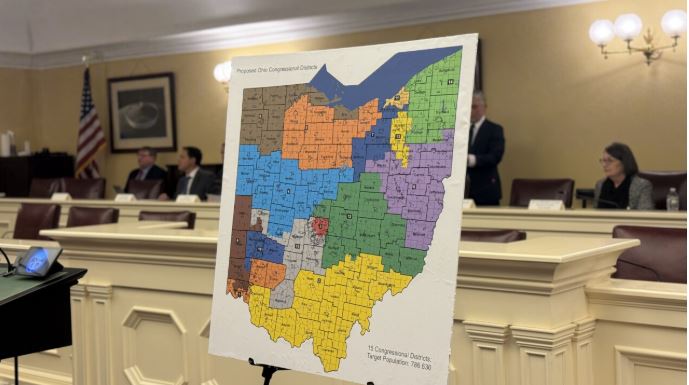

States are rushing to redistrict following a Supreme Court voting rights decision. Here’s why Ohio won’t be.

By Morgan Trau

Click here for updates on this story

    COLUMBUS, Ohio (WEWS) — After the U.S. Supreme Court struck down parts of the Voting Rights Act as unconstitutional, some states are trying to draw new district lines ahead of the election. Ohio, which completed a bipartisan process in 2025, will likely not be joining the latest mapmaking effort.

Since the Voting Rights Act (VRA) went into effect decades ago, minority communities have had the assurance that there is recourse if they are discriminated against when trying to cast their ballot, but the Supreme Court’s latest 6-3 decision could take away representation.

Future elections could look different, at least that’s what voting rights advocate Jen Miller worries about.

“We could see large communities that are sliced and diced in ways that they really don’t have fair representation,” Jen Miller with the League of Women Voters of Ohio said.

The justices issued a decision in Louisiana v. Callais, overturning a Louisiana congressional map, saying its two majority-Black districts were unconstitutional.

“When large swaths of voters are not heard, our democracy will not be as effective,” Miller said.

This dramatically alters the interpretation of Section 2 of the VRA, which has allowed for some racial data to be used when drawing congressional and legislative district maps.

“The court has made it really, really hard for districts to be drawn in a way that gives black people or other minorities a realistic chance to elect candidates of their choice,” said Jonathan Entin, a Retired nonpartisan Case Western Reserve University constitutional law professor.

Entin explains that this could allow a legal challenge to a previously enacted map if racial data were used in creating the district.

“We’ll see some effort by Republicans to redraw at least some of the congressional districts in a way that makes it more likely that Republicans can control, can win those,” Entin added.

Ohio GOP leader Tony Schroeder cheered the ruling, saying it was a long time coming. Using race to draw districts is actually what is discriminatory to minority populations, he said.

“This actually harms black voters who may not have anything in common other than their race,” Tony Schroeder, Ohio Republican Party Secretary, said.

He approved of Ohio’s 2025 mapmaking process, when the state’s redistricting commission unanimously passed a 12-3 GOP-leaning map.

The new map is being called a “compromise” by both GOP and Democratic leaders on the commission, angering both progressives and far-right advocates we spoke to.

Republicans were worried about a referendum, and Democrats say that any other map would have been significantly worse for them.

“Will this ruling impact how the Ohio GOP redistricts moving forward?” I asked Schroeder.

“Well, I mean, I think there’s some possibility that there will be litigation associated with it,” he responded, adding that he doesn’t think anything will happen in the short term to change Ohio’s maps. “The larger impact we’re going to see as a result of this case is in 2030, when every state’s going to look at its redistricting in the light of that census.”

Ohio is supposed to have certain safeguards against gerrymandering, but some voters, like Bria Bennett, said that politicians have continued to break that law, which a bipartisan Ohio Supreme Court has previously agreed with.

“This partisan gerrymandered, 12 Republican, three Democratic, map explicitly targets black and brown communities,” Bennett said during the commission process.

Unlike other states, Ohio has a schedule of if and when it is allowed to redraw maps mid-decade. The congressional map decided in 2025 will be used for the next six years, according to the state constitution.

Legal experts say that it could now be up for interpretation.

Miller doesn’t trust any politician to do the right thing when it comes to redistricting, regardless of whether it’s in a blue or red state. She said politicians need to be out of the process as a whole, but that effort failed, in part due to what she calls deceptive ballot language, in 2024.

Still, both Schroeder and Miller think that 2030 is the target for more redistricting in the Buckeye State.

Due to the unanimous decision that came from the redistricting commission, plus House Speaker Matt Huffman’s dismissal of the Trump administration’s begs for more seats, points to Ohio staying out of the mapmaking spotlight — at least for the next few years.

Please note: This story was provided to CNN Wire by an affiliate and does not contain original CNN reporting. This content carries a strict local market embargo. If you share the same market as the contributor of this article, you may not use it on any platform.
‘He thought he would be decapitated’: Injured Baltimore truck driver’s family speaks to plane crash

By Khiree Stewart

Click here for updates on this story

    BALTIMORE, Maryland (WBAL) — An injured Baltimore bakery truck driver’s family is speaking out after Sunday’s crash involving a United Airlines plane in New Jersey.

Warren Boardley Jr., 39, was injured after a plane struck the truck he was driving on the New Jersey Turnpike during the aircraft’s approach to Newark Liberty International Airport.

Boardley’s father and the family’s attorney, J. Wyndal Gordon, spoke at a news conference late Tuesday afternoon about the trauma that the driver now faces.

“He described fear, total fear that he wouldn’t walk away from it, that he would be decapitated. That’s what he thought,” William Boardley Sr. said. “He said he seen a flash and it made him duck and put up his hands, and in doing so, that’s how I believe he struck his head.”

They called the incident serious and demanded a thorough investigation amid a fact-finding process currently underway.

Gordon said the plane was approaching the airport when its landing gear tire and the underside of the plane struck the H&S Bakery truck and a light pole. They said Boardley Jr. suffered blunt force trauma.

Boardley Sr. said the truck’s dashcam video that shows the collision brought him to tears.

“I never seen nothing like it,” William Boardley Sr. said. “For someone to survive it, I never seen it. I was thrown aback.”

Gordon said he sent letters to United Airlines and 10 other entities to demand answers as to what could have led to the incident.

Baltimore-based H&S Bakery said it’s conducting an investigation into the circumstances of the incident. The National Transportation Safety Board is also investigating.

Gordon wants a thorough investigation, he said.

“We expect there is some negligence there. Plans don’t normally drop out of the sky, they don’t just ordinarily and normally hit 18 wheelers traveling on the New Jersey Turnpike,” Gordon said. “Was it pilot error? Was it mechanical malfunction? Was it weather? Was it something that happened inside of the cabin of the aircraft? Was it air traffic control? We don’t know, and that’s what we need to know.

United Airlines told WBAL-TV 11 News that the company welcomes dialogue with Boardley Jr. and his counsel.

Please note: This story was provided to CNN Wire by an affiliate and does not contain original CNN reporting. This content carries a strict local market embargo. If you share the same market as the contributor of this article, you may not use it on any platform.

Couple says apartment complex denied their disability accommodation needs, then billed them

By Jay Shakur

Click here for updates on this story

    FAIRFIELD, Ohio (WCPO) — Marina Sandoval and her wife, Grace Umbaugh, say they faced weeks of silence, a denial, and now a bill for nearly $2,000 after asking their apartment complex for a reasonable accommodation related to a disability.

The couple, who lived at The Villages of Wildwood in Fairfield, said they began the process on March 28 after Umbaugh’s health made it unsafe to continue living in a second-floor unit.

“My wife’s disability has kind of progressed over the last few months, making it difficult for her to move around,” Sandoval said. “We had multiple stairs to get up to our unit.”

Umbaugh has Small Fiber Neuropathy, a condition involving nerve damage that causes painful sensations. She is also hypermobile, meaning her joints are looser than normal and prone to partial dislocations.

“Stairs are one of the hardest things for hypermobile people,” Umbaugh said.

Sandoval said they asked The Villages of Wildwood management to either transfer them to a first-floor apartment or release them from their lease without penalty if changes couldn’t be made — both of which may be considered reasonable accommodations under the federal Fair Housing Act.

On April 6, she said, they were asked to provide medical documentation, which they did. The couple claims they received no further response for more than two weeks.

On April 23, Sandoval said their request was denied.

“They didn’t really give a reasonable reason as to why,” Sandoval said. “They kind of said we had outstanding obligations.”

By then, the couple said they had no choice but to move quickly into a smaller first-floor unit at another complex.

“Now I can actually leave the house and get some fresh air without worrying about stairs or being in pain when I get home,” Umbaugh said.

Caitlyn Byers, a senior supervising attorney with the Legal Aid Society of Greater Cincinnati, said the Fair Housing Act requires landlords to consider reasonable accommodations — changes to rules, policies or practices that allow a person with a disability to equally use and enjoy their housing.

Examples can include allowing a guide dog despite a no-pet policy, offering a transfer to a more accessible unit, or permitting a tenant to break a lease without penalty.

“It doesn’t matter if the disability is something that moves in with you or something you acquire later,” Byers said. “A landlord can deny a reasonable accommodation if it’s an undue burden — meaning it’s going to be too burdensome for the landlord — but that is a fact-specific inquiry. It depends on the size of the landlord and the resources available to that landlord.”

Byers said a related concept, reasonable modifications, which involve physical changes to a property — such as ramps, grab bars, or altering entryways for accessibility — an be required as well, though the tenant may be responsible for the cost.

The law also calls for what Byers described as an “interactive process” — communication between landlord and tenant to explore solutions.

“Maybe the combination the tenant requested doesn’t specifically work, but maybe they can discuss alternatives,” Byers said.

Sandoval said The Villages of Wildwood is billing them nearly $2,000 and threatening to keep their security deposit. She argues that’s a violation of federal law given the medical circumstances.

“It feels like they’re trying to make me have to keep paying or give them the money they want rather than negotiate anything with me,” Sandoval said. “We did not move because we couldn’t afford it. We didn’t move because we didn’t like it. We moved to a first-floor apartment so that she could live her life the way that she deserves to.”

The couple said they have filed a complaint with the U.S. Department of Housing and Urban Development, but the process is slow.

“The statute does allow the landlord to ask for evidence that the person has a disability,” Byers said. “But the tenant is not required to spill their entire medical history in order to get simple accommodations they need — especially if the disability is obvious.”

Sandoval and Umbaugh said they want accountability — not just for themselves, but for others in similar positions.

“Don’t back down,” Umbaugh said. “You deserve to live in the same conditions and have the same opportunities as everyone else.”

We reached out to the property owners, GoldOller Real Estate Investments LLC, for comment. They haven’t responded yet.

Please note: This story was provided to CNN Wire by an affiliate and does not contain original CNN reporting. This content carries a strict local market embargo. If you share the same market as the contributor of this article, you may not use it on any platform.
Chaos erupts in courtroom during knife threat suspect’s arraignment

By Anahita Jafary

Click here for updates on this story

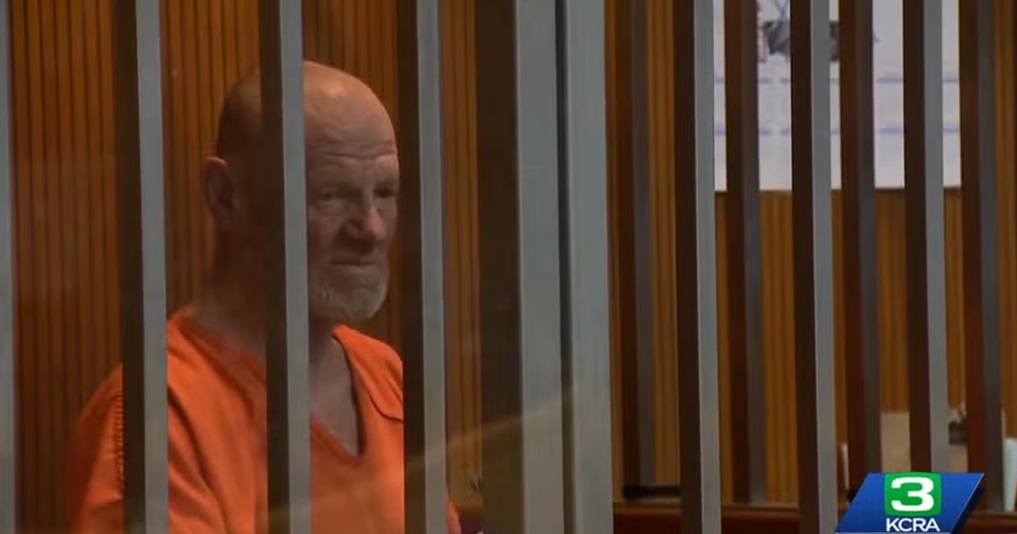
    SACRAMENTO, California (KCRA) — Brian Mattson, a 56-year-old man arrested twice over the weekend after being seen on video making stabbing motions with a knife in front of homes in Arden Park, caused chaos during his court appearance Monday as he shouted and cursed in the courtroom.

There was a major delay in court today. KCRA waited nearly two hours until Brian Mattson was brought out. From there chaos erupted as Mattson began shouting and cursing. Mattson asked what the violation was for and to have “some paperwork.”

Mattson was first seen Thursday night on Ring camera footage on La Sierra Drive in Arden Park, repeatedly making stabbing motions with a knife in front of homes. Deputies said no one was hurt, but neighbors expressed concern for their safety.

“I hope that it’s a reflection of what someone could do in public. We saw what it could be done and obviously that’s a threat to us, into into the general public and, you know, whoever you may be and so, it’s unfortunate,” said Michael Deauville, a neighbor in Arden Park.

Deputies arrested Mattson Saturday morning but said they could only book him on a criminal trespassing charge. The Sacramento County Sheriff’s Office requested probation officials place a probation violation hold on Mattson, who is on felony probation, but the request was initially denied. Mattson was released within hours.

“I really wanted to just be down here to one, learn a little bit how the system works. So instead of just, you know, being upset on our couches when when he got released so fast, be educated in a little more and I think it starts with, you know, being here,” Deauville said.

Hours later, deputies responded to another trespassing call involving Mattson near Fair Oaks Boulevard and San Lucas Way, less than half a mile from the location of the first arrest. This time, a probation violation hold was approved, and Mattson was taken back into custody.

In court Monday, the judge revoked Mattson’s probation. Neighbors are now considering ways to protect themselves moving forward.

“There’s groups that, you know, neighborhood watch being one of them is an example. Maybe we do something like that. Maybe it’s just, you know, bringing the community together and, you know, finding other ways without a formal doctrine of what that is as well,” Deauville said.

Mattson’s next court date is scheduled for Tuesday, May 12.

Please note: This story was provided to CNN Wire by an affiliate and does not contain original CNN reporting. This content carries a strict local market embargo. If you share the same market as the contributor of this article, you may not use it on any platform.

‘I won’t know unless I try’: Family farm experiments with agrivoltaics for crop production

By JuYeon Kim

Click here for updates on this story

    KEARNEY, Missouri (KSHB) — The owner of Prairie Birthday Farm in Kearney, Missouri, is experimenting with agrivoltaics. She is using the help of solar panels to test growing some of her crops that have struggled with extreme heat in recent years.

“I’m losing plants that I used to grow just fine. Can’t grow them anymore — it’s too hot for them now,” Linda Hezel said. “I couldn’t keep them watered enough.”

The solar panels provide shade for what is growing underneath, guard the soil from heavy, intermittent rain, and also protect her from working long hours under the sun. But spaced ten inches apart, it does let beneficial rain in while still keeping necessary moisture.

The 9.7-kilowatt solar arrays are Hezel and her husband’s latest research project. They wrote a grant application in 2019 to help build it, which was then constructed by Good Energy Solutions in Lawrence, Kansas.

“We were willing to invest in it for our own energy production as well as a demonstration project to share with other people,” Hezel said. “This is totally experimental. I’m still playing with what’s possible — examining, observing.”

The couple bought and started Prairie Birthday Farm in 1993 with the mission to restore the land and its native species. Nurse by trade, Hezel saw that the land was hurting after years of row cropping and soil erosion.

“I believe it’s the most fundamental nursing practice, because none of us can be well without nutrient-dense, contaminated food. That’s how we survive,” Hezel said.

Year-round, they produce sustainably grown fruits, vegetables, herbs and more, which they share with the community and sell to local chefs.

“This is really about land stewardship and ecosystem repair,” Hezel said. “Step by step, we’ve restored what can possibly be.”

To learn about possible limitations of agrivoltaics, KSHB 41 talked to Rusty Lee, an Ag engineer with MU Extension.

“We’ve got county-by-county specific zoning ordinances, perhaps to work with. Each developer has a different company’s mission and set of rules that they have to abide by for safety, etc. So it can be quite varied, the constraints that an agriculture producer may find,” Lee said.

He says the initial expense and lack of space for heavy machinery to do its work can also be barriers. Despite room to grow, Lee believes it can be an effective tool for small-scale farmers like Hezel and Moore.

“I may decide it was the wrong decision. But I won’t know unless I try,” Hezel said.

Please note: This story was provided to CNN Wire by an affiliate and does not contain original CNN reporting. This content carries a strict local market embargo. If you share the same market as the contributor of this article, you may not use it on any platform.

Convicted child predator disappears after judge allows release before sentencing

By Kurtis Ming

Click here for updates on this story

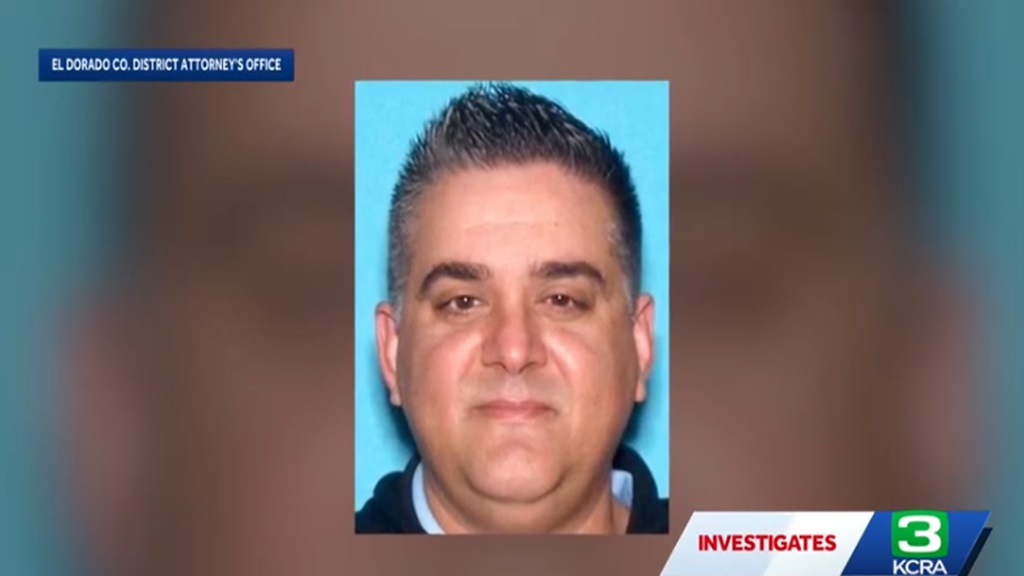
    SOUTH LAKE TAHOE, California (KCRA) — Carl Cacconie, convicted of six counts of lewd and lascivious acts on a child in El Dorado County, disappeared after being allowed to remain free on bail before sentencing—sparking outrage and fear among the victim’s family. The El Dorado County District Attorney says he is a fugitive.

“He’s a monster, and he took away my innocence,” said the victim, whom we are not identifying.

She is now an adult and says she was eleven when the abuse occurred. She recalls fearing no one would believe her.

“He was an adult. People would believe an adult before me,” she said.

GUILTY VERDICTS Cacconie was found guilty on July 17, 2025, following a trial at the El Dorado County courthouse in South Lake Tahoe. The victim described the moment she learned of the verdict.

“It was a sense of relief. All of the tears—it was all worth it in the end. Even though it was one of the hardest things I’ve had to go through, it felt like a huge weight lifted off my shoulders,” she said.

JUDGE ALLOWS CACCONIE TO LEAVE COURT Despite the conviction, Cacconie was not immediately taken into custody. El Dorado County Judge Michael McLaughlin allowed him to leave the courthouse and return for sentencing on August 25, 2025, where he faced up to 18 years in prison. Cacconie never showed up.

“Where is he? He just disappeared,” the victim said.

Cacconie now has a bench warrant out for his arrest.

NO SHOW AT SENTENCING The victim and her mother, Alana Ramirez, expressed fear and anger over the situation.

“It angers me because we were so close to him going to jail,” Ramirez said.

Ramirez shared her concerns about Cacconie being free.

“He might come after my daughter,” Ramirez said.

“I think about it every day, even when I go to sleep at night. It’s something I fear every day. It’s not a good feeling,” she added.

Ramirez blamed the judge for allowing Cacconie to remain free.

“I don’t understand why you would let him go after he was found guilty. I don’t have an answer, and I wish he—or someone—would give us one. Nobody has explained how this was possible,” Ramirez said.

El Dorado County District Attorney Vern Pierson said his office pushed Judge McLaughlin to take Cacconie into custody immediately after the guilty verdicts, but said the judge allowed him to walk out of the courthouse.

“This is someone a jury unanimously convicted of multiple acts against a child. Under those circumstances, there’s simply no question he should have been remanded into custody,” Pierson said.

Cacconie had posted a $1 million bond, which he could forfeit by failing to appear at sentencing. Pierson agreed when asked whether that amount may have effectively become the “price of freedom.”

QUESTIONING THE JUDGE’S DECISION Judge McLaughlin declined to comment. The court cited the California Code of Judicial Ethics, which prohibits judges from discussing pending cases.

So, KCRA 3 Investigates also reached out to retired Superior Court judges to assess whether the decision could be justified.

Retired Sacramento County Judge Maryanne Gilliard was critical of the decision.

“It was clear this man was a danger to society. He should have been immediately remanded,” Gilliard said.

We consulted a second retired judge who said, “Letting someone out who has been convicted of such serious felonies, even with $1 million bail—is exercising very poor judgment.”

FAILED ANKLE MONITOR An El Dorado County Probation Department report obtained by KCRA 3 Investigates, said Cacconie was also wearing a GPS ankle monitor at the time of his disappearance. According to a Probation Department report submitted to the court, “On August 17, 2025, the device lost its connection and location.” It was last tracked to an address in San Francisco’s Sunset District.

The report also states that no one from the Probation Department contacted Cacconie for two days. On August 19, 2025, the report notes, “the defendant reported he was charging the anklet.” The Probation Department said it was unable to reach him again and never recovered the ankle monitor. Their last contact with him was six days before he failed to show up to his own sentencing in South Lake Tahoe.

IS CACCONIE ALIVE? Cacconie’s family reported the 51-year-old missing to San Francisco police on August 25, 2025, the day of sentencing, claiming he left a suicide note. Pierson said he is confident Cacconie is alive and warned that anyone helping him evade authorities could face charges.

Cacconie’s defense attorney Chris Walsh told KCRA 3 he believes Cacconie is dead. He suggests his client’s history of never missing a court appearance may have played a role in the judge allowing him to leave court on the day of the verdicts.

“I feel like the justice system let us down, and it hurts,” Ramirez said.

The family of the victim says that without the discovery of Cacconie’s body, they believe he is alive. They hope sharing their story will lead to someone reporting his whereabouts. They are also calling for changes to the law requiring judges to immediately detain individuals convicted of child sex crimes.

“You know, once they’re found guilty, they should be put away,” the victim said.

Please note: This story was provided to CNN Wire by an affiliate and does not contain original CNN reporting. This content carries a strict local market embargo. If you share the same market as the contributor of this article, you may not use it on any platform.
A senior’s AAPI Heritage story: Bullied growing up, now graduating with honors and an associate’s

By Stephanie Molina

Click here for updates on this story

    ROBSTOWN, Texas (KRIS) — A Robstown senior who was once told she would not be able to graduate with her associate’s degree is now finishing in the top 5% of her class during Asian American and Pacific Islander Heritage Month.

Eunsil Eom is a senior at Robstown Early College High School. She is half Korean and Filipino. Eom immigrated with her family from Korea at 7 years old, and her father’s job at the Kingsville Naval Air Station brought her to Robstown during her junior year. She says she has jumped from high school to high school.

“When I was at my previous high schools, they had told me that I wouldn’t be able to graduate with my associates because I had taken my TSI at the end of sophomore year,” Eom said. “I would barely be starting my college classes in my junior year, and that’s a little late for most people.”

For Eom, school has always been her priority. She stayed on top of her studies even before she learned English.

“Once I learned English, I started excelling in my academics because academics are a really big part of me,” Eom said. “I uphold myself to a really big standard,” Eom said.”

Adjusting to a new culture was not easy at first. Eom says she was bullied for the food she brought to school.

“When I would bring like food, like pack lunches for myself, like my mom would pack lunches for me, and I would bring to school, and it wouldn’t be like the normal American lunch,” Eom said. “I would get bullied for that. They would say like oh that stinks or that’s weird. Why are you eating that? What is that? So I was always embarrassed by being Asian.”

Robstown, however, has been a different experience. Eom said the community’s welcoming nature made it easier to fit in.

“Since Robstown is like a very close-knit community and they’re all like all welcoming, I think the fact that I was Asian, it fascinated the people, so if anything, it was easier for me to get along with them because they were so welcoming,” Eom said.

Her dedication stayed strong through those challenges. Eom is now graduating in the top 5% of her senior class and pushes back against stereotypes about Asian students.

“I’m not smart because I’m Asian,” Eom said. “I’m smart because I dedicate myself to my studies and my academics and what I’m passionate about.”

After graduating high school, Eom plans to join the Navy, taking inspiration from her father, and will put her associate’s degree to use.

“Since you’re getting your associate’s degree, that means you have college hours, that means you can put that into the Navy and get ranked up, so instead of going as an E1, I’ll be going as an E3,” Eom said.

Eom says having a month dedicated to Asian American and Pacific Islander heritage makes her proud to be who she is.

Please note: This story was provided to CNN Wire by an affiliate and does not contain original CNN reporting. This content carries a strict local market embargo. If you share the same market as the contributor of this article, you may not use it on any platform.

Parents release book about couple killed in Haiti

By Naomi Keitt

Click here for updates on this story

    TULSA, Oklahoma (KJRH) — Two years after a Haitian gang killed a missionary couple from Oklahoma, their parents are detailing their lives and sacrifice.

Not a day goes by that David and Alicia Lloyd don’t think about their son, Davy, and his wife, Natalie.

Married in 2022, the young couple began serving in Haiti’s mission field shortly after.

“I always told Davy, do not come back to Haiti unless you really feel like that’s what you’re supposed to do,” said Alicia Lloyd. “Don’t come back because you feel sorry for us and you want to give us a break. Don’t come back because you feel sorry for the people. Come back because you know that that’s what God wants you to do with your life.”

Growing closer to the people there, it was a calling for Davy and Natalie. They lived lives of service and then made the ultimate sacrifice.

2 News Oklahoma reported in May of 2024 when the couple was ambushed by a gang and then shot and killed. Davy and Natalie died along with their longtime friend Judes.

The Lloyds grappled with their deaths.

“Never thought that death could enter the picture because we’re like, ‘oh, God will take care of us,’” said David Lloyd. “He’s called us, and you know he has many times over the years. So that’s kind of have to been a reset for us to readjust our thinking that that is part of counting the cost, that when you do surrender your life to the will of God, that there could be death involved or sickness or pain, and so now we realize that’s all part of it.”

The years brought many realizations and revealed details of their last days they didn’t know before. They learned Davy spent his final moments spreading his faith to the gang members who took his life.

David said his son never wavered.

“He loved Jesus,” said David Lloyd. “He was excited about heaven, and he realized how awful hell would be, and he just continued to preach that to his dying breath.”

“I realize life is very short, but eternity is a long time, so I’m settled that with my son’s death, knowing that we get to spend eternity together, so yes, we’re going to miss out with maybe you know 30, 40 years here, but eternity is a long time, so it’ll be all right.”

The book, Strong to the End, is set to be an example, a challenge, and an encouragement for the world.

“He inspired so many people just to have a close relationship with the Lord that we want this book to continue on that legacy of inspiring people to have a closer walk with the Lord,” said David Lloyd.

The proceeds from the book will help build the Davy and Natalie’s Academic Center at the Ozark Bible Institute, where the couple went to college.

Please note: This story was provided to CNN Wire by an affiliate and does not contain original CNN reporting. This content carries a strict local market embargo. If you share the same market as the contributor of this article, you may not use it on any platform.

Meta suggests total shutdown in New Mexico

By Peyton Spellacy

Click here for updates on this story

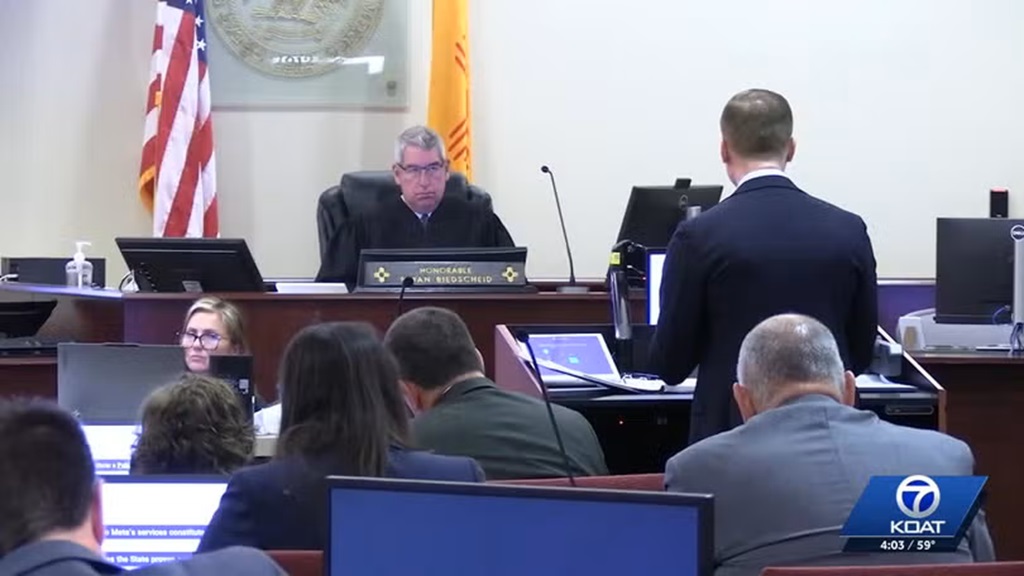
    SANTA FE, New Mexico (KOAT) — The trial between the State of New Mexico and Meta moved into its second phase this week as the court begins to determine what operational changes the tech giant must implement. Following a March decision where a jury ordered Meta to pay a $375 million financial penalty, the current bench trial leaves the final decision on future regulations to the judge.

Meta, the parent company of Facebook, Instagram, and WhatsApp, has suggested it may stop operating within New Mexico if the judge approves a seven-page list of demands submitted by the state. The company characterized the state’s demands as over the top, arguing the restrictions would require them to develop a completely new version of their platforms that would be exclusive to New Mexico users. Court filings indicate Meta has mentioned this potential exit 38 times.

“If granted in full, would genuinely make it untenable to continue offering menace products in this state,” said Alex Parkinson, a Meta attorney. “I am telling you that as an officer of the court who understands my client’s position, this is not a PR stunt. It is not a threat. It is the reality of the seven-page relief plan.”

New Mexico Attorney General Raul Torrez addressed the claim, stating that any decision to leave the state rests with the company. “They can make a different choice,” Torrez said. “The choice, instead of leaving the state of New Mexico, is to listen to the state of New Mexico, to listen to our citizens, to listen to the jury and respect what they have said about the law.”

Academic experts from the University of New Mexico and New Mexico State University expressed skepticism regarding the likelihood of a complete shutdown.

Dr. Jagdish Khubchandani, an NMSU professor of public health, said, “There’s nothing to freak about or can be concerned about for, especially, businesses and others who use monetization apps.”

Gabe Gomez, Managing Director of Marketing and Communications at UNM, noted that the cost of compliance and engineering changes makes a total exit less realistic. He questioned the strategy of reducing the company’s reach.

“You’re shrinking your audience, right?” Gomez said, “I don’t think it’s necessarily an idle threat.”

Experts noted that Meta has utilized similar tactics globally when facing government pressure in the European Union and Brazil. “That’s always been their practice,” Khubchandani said. “They threaten shutdowns and such, which they have done worldwide, fighting with governments.” He noted that while Meta often takes an initial stand against compliance, they have eventually compromised in other regions. “Was it easy for the EU, Australia, and UK to get these things done? No, Meta always took a stand that we are not complying. And then eventually they compromised,” Khubchandani said.

Torrez pointed to international examples where social media regulations are already in effect.

“Australia has banned social media for anyone under the age of 16. What does that mean? It means they’re already working on age verification. They’re just not doing it in America,” Torrez said.

Khubchandani questioned why these global changes are not being applied locally, saying, “They are making changes in different parts of the world, almost more than two dozen countries. So my question is, why cannot they make these changes here in the United States?”

Meta maintains that the New Mexico requirements are uniquely burdensome. “The state is asking you to develop, from scratch, a completely new regulatory regime that far exceeds anything in Europe, in Australia, anywhere. And frankly, and we don’t say this lightly,” Parkinson said.

If Meta were to cease operations in New Mexico, experts suggest the impact would be felt through technical friction rather than a total loss of access. “If anything actually changed, it wouldn’t feel like a blackout, but more like friction, right?” Gomez said. “So you’d still get in, there’s VPN, there’s mobile networks, there’s platform workarounds.”

However, Gomez warned that such a move would lead to login disruptions, degraded features, and inconsistent advertising. “Then, eventually, the local information would thin out. With that, a lot of trust, erosion, and all kinds of other things,” he said.

The potential disruption could have significant consequences for the local economy. “Think about how many businesses are using these services and how much trouble they would have to face, even with a short outage,” Khubchandani said.

Gomez noted the vulnerability of local businesses that rely heavily on the platforms for growth.

“They’ve built their growth on rented land, if you will, and now the landlord’s making noise, right?” Gomez said.

Please note: This story was provided to CNN Wire by an affiliate and does not contain original CNN reporting. This content carries a strict local market embargo. If you share the same market as the contributor of this article, you may not use it on any platform.