Aurora’s $1.9 billion infrastructure dilemma: Bridging the gap between rapid growth & public safety


KCNC

By Kelly Werthmann

Click here for updates on this story

    COLORADO (KCNC) — If you’ve driven down E-470 past the Aurora Highlands lately, you’ve likely seen a building that has already lived two lives: first as a highway maintenance facility and currently as a visitor center. Soon, this structure in the eastern part of the Denver metro area will take on its most critical purpose yet: Aurora’s 18th fire station.

It’s a project Aurora Fire Rescue Chief Alec Oughton calls a “perfect location” to heal a stretched-thin emergency system.

“We’re very, very excited about this project and what it will mean for our organization, and for the community we take care of,” he said. “This is a great opportunity to give this building its third life.”

As Colorado’s third-largest city grows to more than 414,000 residents, the expansion is moving faster than the infrastructure can keep up, leaving newer neighborhoods miles away from the nearest help. In the Aurora Highlands, response times currently lag between 12 and 18 minutes — that’s an eternity in a business where every second counts.

“(Station 18) is going to shave 7 to 10 minutes off our response times to some areas of Aurora Highlands,” said Oughton. “It will have a very significant impact on this area of the city, and really not just in the Highlands itself but a couple miles north or south … it’s going to have a significant impact on how quickly we can get in there as the first responding unit.”

Oughton said, through a partnership with the community’s developer, repurposing the existing building — located near E-470 and Aurora Highlands Parkway — made the future for station project more attainable for the city.

“Fire stations are not inexpensive,” he said. “Trying to balance a budget while trying to balance emergency response infrastructure is a lot and takes a lot of collaboration.”

This “cobbling together” of resources, as Deputy City Manager Laura Perry described it, is a necessity in a city facing a nearly $2 billion list of city infrastructure needs.

“In total, our projects total $1.9 billion. Obviously, the city cannot afford to do that within the means we have available,” Perry said. “So, we really want to understand what matters most to folks.”

The challenge is a dual-front battle of “keeping up and catching up.” While new communities need protection, older parts of the city are aging out.

“We have five fire stations that are over 50 years old,” Perry said.

Recently, AFR Station 9 had to be demolished and rebuilt after its foundation began to crumble. The strain is also visible within the Aurora Police Department, where aging buildings that were never intended to be police stations need updating. In a citywide community survey last year, Perry said thousands of residents gave feedback about their wants for improved public safety.

“About 50% of the responses told us that folks want to see investment in stronger response times, fire stations, police … and that’s coming forward for further conversations through a variety of meetings we have planned over the next couple of weeks,” she said.

Those meetings, part of the city’s Build Up Aurora campaign, aim to discuss long-term solutions for projects ranging from public safety to transportation, parks, libraries, as well as accessibility. The city is seeking community input, Perry explained, to ensure it prioritizes what residents want most.

“That is a continual challenge in meeting the demands and needs of a growing city,” Perry added. “There are tools in the toolbox the city hasn’t used to fund capital projects, which are bonds as one example. We really want to understand through (Build Up Aurora) what the community needs and values. So, at meetings coming up, attendees will be asked to rank their top 5.”

For Aurora Fire, that feedback helps guide projects like the in-progress Station 18 — expected to be operational late this fall — and the future Station 19, which city council approved and allocated funds to be built on the southeast side in 2027. Chief Oughton said those two new stations will make a life-saving difference for the community, but the department will need at least three more in the next decade, he believes, to keep pace with Aurora’s growth.

“I think we’re making that progress,” he said.

Please note: This story was provided to CNN Wire by an affiliate and does not contain original CNN reporting. This content carries a strict local market embargo. If you share the same market as the contributor of this article, you may not use it on any platform.


Town hall in Kapolei warns of fentanyl disguised as food, impacts on the community

By Jeremiah Estrada

Click here for updates on this story

    KAPOLEI, Hawaii (KITV) — Dozens of people took part in a town hall in East Kapolei on Tuesday night to raise awareness on fentanyl in the islands and how the drug is making its way here.

State Representative Diamond Garcia held the meeting at the Honouliuli Middle School cafeteria on Tuesday, Feb. 24. Law enforcement and state leaders shared the impact the deadly drug is having on the local population.

According to the Honolulu Police Department (HPD), Maui County had the highest percentage of fentanyl-related deaths with 40% of all drug-related overdoses linked to the drug in 2024.

HPD also shared that the drugs come into the country disguised as food and canned goods.

Hawaii County Mayor Kimo Alameda also attended the town hall because he has seen the impact of fentanyl first hand.

“Here’s how addiction works: you go from ‘I like it’ to ‘I want it’ to ‘I need it,’ Alameda explained. “And when you’re in the stage of ‘I need it,’ you’re stuck. Your brain is hijacked and addiction is real.”

Mayor Alameda said education and spreading awareness is the best way to prevent addiction in the future.

Please note: This story was provided to CNN Wire by an affiliate and does not contain original CNN reporting. This content carries a strict local market embargo. If you share the same market as the contributor of this article, you may not use it on any platform.
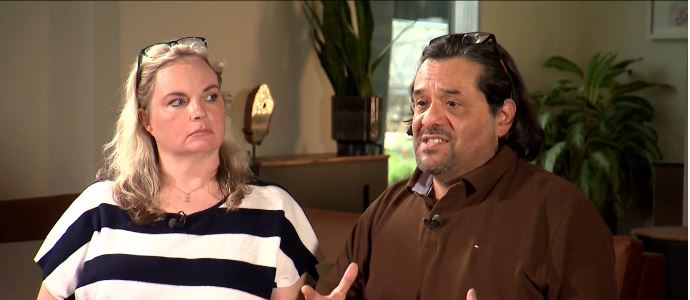
A plate of purpose, food designer Krystal Mack uses art to explore Black history and drive change

By Kara Burnett

Click here for updates on this story

    BALTIMORE (WMAR) — Food is much more than a collection of ingredients on a plate.

For nationally acclaimed Baltimore food designer Krystal Mack, it’s a medium for storytelling, healing, and social change.

“In makes me proud to be a Baltimorean. It makes me proud to be a Black woman,” Mack said.

In the historic neighborhood of Wilson Park, Mack is transforming her 5,000-square-foot backyard into a community food garden.

“We will have crops from the Black American South, from the African diaspora,” she said.

Wilson Park was founded in 1917 by Harry Wilson, one of Maryland’s first Black bankers, who built and sold homes to Black families at a time when housing discrimination was widespread.

The neighborhood was designed as a place of refuge and prosperity. But today, the community faces new challenges.

Though rich in history, Wilson Park is now considered a food desert. More than 30 percent of households do not have access to a vehicle, and the nearest supermarket is more than a quarter mile away.

Mack hopes the garden will help restore both access and opportunity.

“We’ve practiced sustainability for a very long time as Black people,” she said.

Mack describes herself as a food designer, blending food and art to spark dialogue.

“Starting conversations that we wouldn’t generally have in a restaurant space, exploring food histories,” she said.

Her home library holds nearly 400 cookbooks, including publications featuring her own work. But her projects extend far beyond the kitchen.

Her design studio partnered with the Walters Art Museum to honor the legacy of Sybby Grant, an enslaved cook who once lived in what is now the basement of the museum’s historic mansion.

“I don’t think a lot of people think about slavery in Baltimore City, but it existed,” Mack said. “I thought it was really important for this woman’s voice to be heard and acknowledged.”

Grant documented the recipes she created but was never allowed to dine in the mansion’s dining room. Mack’s installation created space for reflection and conversation about that history.

At the Baltimore Museum of Art, her piece “Table of White Supremacy” explored how people of color are often underrepresented or overlooked in spaces of power.

“Not so much designing a product, but more so designing interactions,” she explained.

Through her art, she also reclaims ingredients tied to painful histories, transforming them into tools of connection and creativity.

During an indigo dyeing demonstration, she feeds the fermentation vat sweet potatoes, dates, bananas, and beets, keeping the indigo alive.

Indigo was once a major cash crop during the transatlantic slave trade, processed under brutal and toxic conditions by enslaved workers.

“I wanted to find a way to work with food that could be restorative to me,” Mack said.

Mack’s work is not only about exploring history, it’s also about healing.

One of her most personal projects, “How to Take Care,” is a guide filled with recipes and stories from contributors around the world.

“It was rooted in my experience of growing up in an abusive household as a child,” she said.

Proceeds from the project supported organizations like the House of Ruth, which assists survivors of domestic and intimate partner violence.

“I wasn’t expecting it to have such a large reach and impact,” Mack said.

Despite national recognition, including becoming the first artist in U.S. Artist Fellowship history to be honored for using food as an artistic medium, Mack says the journey hasn’t been easy.

“I didn’t go to art school or culinary school. I didn’t go to college,” she said.

As one of the few Black women working in food design in the region, she says her work is sometimes undervalued.

“When they’re devaluing the work that I’m doing, it’s almost like they’re devaluing the work of their grandmothers or their ancestors or their mothers. And that’s kind of heartbreaking.”

Still, she continues.

“It’s been difficult to build that path,” Mack said. “But what gives me hope and pride and joy is knowing that in building that path, there are other folks behind me who’ll have an easier way to go.”

As she prepares to build a studio space and expand her community programming, Mack says her mission remains rooted in Baltimore, using food to connect past, present, and future.

Please note: This story was provided to CNN Wire by an affiliate and does not contain original CNN reporting. This content carries a strict local market embargo. If you share the same market as the contributor of this article, you may not use it on any platform.
Woman with rare disease becomes researcher to help others navigate their own diagnosis

By Ja Nai Wright

Click here for updates on this story

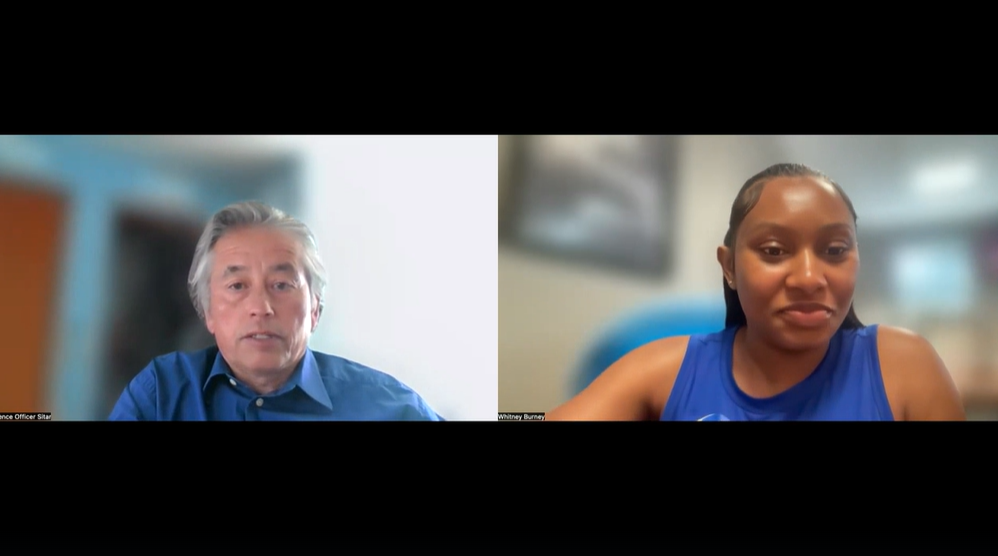
    BALTIMORE (WMAR) — Lexi Marta was diagnosed with neuromyelitis optica spectrum disorder in college. Now she’s using her own experience to help others with rare diseases.

Marta’s diagnosis — a condition similar to multiple sclerosis that affects the nervous system — came just before her senior year of college. Rather than letting it derail her future, she used it to shape one.

After completing her bachelor’s degree, Marta pursued a master’s in nutrition from Johns Hopkins Bloomberg School of Public Health, supported in part by the RAREis Scholarship from the EveryLife Foundation for Rare Diseases. A scholarship supported by Amgen.

“My diagnosis is neuromyelitis optica spectrum disorder. It’s very similar to MS so it causes symptoms with your nervous system,” Marta said.

Following graduation, Marta became a clinical research coordinator, where she ran a drug trial and worked directly with patients facing their own rare disease journeys.

“I got to see patients every single day, and I got to listen to their stories and help them through their diseases, and because I was also going through the same thing or similar, it was really easy to have a conversation with them,” Marta said.

But her progress was interrupted when her condition began to worsen.

“It was a really beautiful time in my life and unfortunately, though, that was cut short because of the way that my disease progressed. It cost a lot of other health issues and I did end up in the hospital for a month in a coma with COVID-19 and pneumonia and sepsis and all of that really fun good stuff. And it forced me to take a step back from research for a bit to focus on my health,” Marta said.

Despite the setback, Marta says she has no intention of stopping.

“My goal ultimately is to go back and get my PhD and then bring my nutrition knowledge into the world of chronic illness and address misinformation within that,” Marta said.

Her story is exactly the kind the EveryLife Foundation for Rare Diseases had in mind when it created its scholarship program. Stephanie Riordan, who works with the foundation, says financial and systemic barriers often follow rare disease patients well into adulthood.

“Because people with rare diseases have so many barriers, especially financial barriers to care and access in treatment, that by the time it comes to college and careers, sometimes those barriers impact the career path, so this is really an opportunity to alleviate those barriers,” Riordan said.

Riordan says the scholarship holds personal meaning for her as well.

“I actually got diagnosed with my own rare disease when I was in college and it was right before my senior year and so the scholarship has a really special place in my heart because of my own diagnostic odyssey,” Riordan said.

The EveryLife Foundation is opening applications on March 17 for the upcoming fall semester. Anyone over 17 who has a rare disease and needs support is encouraged to apply.

This story was reported on-air by a journalist and has been converted to this platform with the assistance of AI. WMAR verifies all reporting on all platforms for fairness and accuracy.

Please note: This story was provided to CNN Wire by an affiliate and does not contain original CNN reporting. This content carries a strict local market embargo. If you share the same market as the contributor of this article, you may not use it on any platform.

Family launches fundraiser after former Russ’ Kitchen chef steals over $3,000

By Drew Amman

Click here for updates on this story

    GEORGETOWN, Kentucky (WLEX) — Levi Bourget, the father of 12-year-old Russ Bourget who inspired Russ’ Kitchen — is speaking out after the community restaurant’s former chef pleaded guilty to criminal attempt theft by deception.

Investigators say Jacob Southworth spent more than $3,300 gambling at Red Mile Gaming using the Amen House’s credit card instead of purchasing food for the non-profit.

Russ Bourget passed away in a UTV accident in July 2024. He was known for his generosity and his commitment to giving back.

“He was a typical kid, loved sports, he was silly, creative,” Levi Bourget said.

One of Russ’ passions was the Amen House, a Georgetown non-profit. His adopted father says giving back was always on his mind.

“He always had a goal list of each summer donating items to the Amen House or to other charities,” Levi Bourget said.

The Amen House opened Russ’ Kitchen in November in his honor. Southworth led the effort to get the restaurant ready, but he is accused of using an Amen House credit card to gamble at the Red Mile.

Levi Bourget says he hopes Southworth will get the help he needs.

“He had some demons that unfortunately cost the Amen House and himself,” Levi Bourget said.

Bourget says he wants Southworth to have a path forward.

“That maybe he would get a second chance — not necessarily with Russ’ Kitchen or anything — but that someone out there would give him a second chance,” Bourget said.

The Bourgets are now leading a T-shirt fundraiser to benefit the Amen House and pay off the debt left by Southworth. Amen House Executive Director Michele Carlisle says she expects a strong response from the community.

“This place in its entirety, not just Russ’ Kitchen but the full Amen House, runs on the generosity of the community,” Carlisle said.

The Amen House opened Russ’ Kitchen in November in his honor. Southworth led the effort to get the restaurant ready, but he is accused of using an Amen House credit card to gamble at the Red Mile.

Levi Bourget says he hopes Southworth will get the help he needs.

“He had some demons that unfortunately cost the Amen House and himself,” Levi Bourget said.

Bourget says he wants Southworth to have a path forward.

“That maybe he would get a second chance — not necessarily with Russ’ Kitchen or anything — but that someone out there would give him a second chance,” Bourget said.

The Bourgets are now leading a T-shirt fundraiser to benefit the Amen House and pay off the debt left by Southworth. Amen House Executive Director Michele Carlisle says she expects a strong response from the community.

“This place in its entirety, not just Russ’ Kitchen but the full Amen House, runs on the generosity of the community,” Carlisle said.

Please note: This story was provided to CNN Wire by an affiliate and does not contain original CNN reporting. This content carries a strict local market embargo. If you share the same market as the contributor of this article, you may not use it on any platform.

Kentucky’s Ethan the dog inspires Hollywood film

By Megan Mannering

Click here for updates on this story

    BARDSTOWN, Kentucky (WLEX) — A dog who stole Kentucky’s heart will soon capture the world’s, as his story becomes a movie filmed in Bardstown.

“It’s been an unexpected journey, for sure,” said Jeff Callaway, dog owner turned animal welfare advocate.

Callaway was referring to the remarkable journey of his dog, Ethan.

In 2021, Ethan’s previous owner abandoned him, leaving him severely neglected and weighing only a third of his healthy weight.

Ethan was placed in the care of the Kentucky Humane Society, and his story captured hearts statewide — none more so than Callaway’s, who adopted him.

“This little dog, in the worst shape you could be in, needing all the love and support he could get, is now the one giving that support back to others,” Callaway said.

Over the past five years, Ethan’s miraculous recovery has inspired real change, including the passage of Ethan’s Law, an anti-cruelty bill in Kentucky.

The story caught the attention of a Hollywood filmmaker, and plans are now underway for the movie Ethan Almighty — Ethan’s Law.

Actors Trevor Donovan, Sean Patrick Flanery and Selma Blair have signed on to the project.

“When they first reached out and said, ‘Have you ever thought about this being a movie?’ I said, ‘No, I never thought that,’ but it wouldn’t surprise me because his story is about perseverance, inspiration and giving people hope,” Callaway said.

Filming will begin soon in Kentucky. Callaway told LEX 18 the screenplay brought him to tears, even though it’s only based on Ethan’s story.

“I know it’s not a documentary, but the parts that are true to life I want to be as true to life as they possibly can,” he said. “There will be people who have followed Ethan for all these years who will recognize things as they pop up in the movie.”

Callaway hopes the film builds awareness of animal cruelty and showcases the tireless work of good people — and good pups — striving to make the world better.

“It’ll be a story that, if you’re from Kentucky, you’ll be very proud of,” he said. “You can take your kids to it. It’s gonna be a very cool thing.”

Please note: This story was provided to CNN Wire by an affiliate and does not contain original CNN reporting. This content carries a strict local market embargo. If you share the same market as the contributor of this article, you may not use it on any platform.

KY Couple’s Puerto Vallarta wedding nearly destroyed by cartel violence

By Ajay Patel

Click here for updates on this story

    PUERTO VALLARTA, Mexico (WLEX) — Whitney Goldsberry and Jeoffrey Teage had planned their destination wedding in Puerto Vallarta for a year and a half. Then everything changed when the Jalisco New Generation Cartel set the city on fire.

This comes after the death of their leader, “El Mencho,” at the hands of the Mexican military.

The couple was staying in Puerto Vallarta when the violence broke out just hours before they were supposed to walk down the aisle.

“Out of all the anxieties a bride has for her wedding, it never crossed my mind to worry about the cartel bombing our wedding. That was not a part of it,” Goldsberry said.

Vehicles were set ablaze, gas stations were burned, and the smell of smoke filled the air around their hotel.

“It smelled like burning rubber for sure. They were asking people to evacuate their cars and buses. They were setting them on fire. They were burning gas stations,” Travis Young, a friend of the couple, said.

With the city in turmoil, the couple made the difficult decision to reschedule their wedding.

“We don’t want people trying to enjoy our love and this beautiful ceremony when they’re feeling scared,” Goldsberry said.

But the couple refused to give up entirely. With help from Teage’s band, the Blind Corn Liquor Pickers, and other friends, the wedding was rescheduled for the following day.

“It’s very unfortunate because we seriously do empathize with like the town, like. I mean, this city is burning around us and we’re like, can we actually make our wedding happen,” Teage said.

The band’s tight-knit spirit helped make it possible.

“We always have this joke as a band. It’s like, blind corn unite, everybody get back together, get away from what you’re doing,” Teage said.

The couple also had to improvise in other ways. They found their wedding photographer at a resort bar.

“We happened to find him by taking shots with him and, and hired him for the wedding,” Goldsberry said.

Goldsberry even clipped flowers from trees to make her bouquet.

The wedding did not go according to plan — but for those who were there, it became something far more meaningful. Travis Young, a friend of the couple and member of the Blind Corn Liquor Pickers, reflected on what the night meant.

“The world feels chaotic right now. And we felt that very directly this weekend. And the only answer that we could come up with, is the only answer that I think anybody could ever come up with at these times, and that’s to combat it with love,” Young said. “And that’s what we had… a couple at the core of that who love each other very deeply and are inspiring to all of us,”

For Teage, the experience was something he will never forget.

“We made what was a disaster, the most beautiful thing I’ve ever been involved with,” Teage said.

Please note: This story was provided to CNN Wire by an affiliate and does not contain original CNN reporting. This content carries a strict local market embargo. If you share the same market as the contributor of this article, you may not use it on any platform.

Teacher’s rare diagnosis leads to new purpose

By Alex Barber

Click here for updates on this story

    LEXINGTON, Kentucky (WLEX) — Amanda Durand was born and raised in Lexington and has spent years teaching at Morton Middle School — but on November 11, 2023, her life changed in an instant.

Durand turned on the TV to watch a University of Kentucky game and fell asleep. When she woke up, she couldn’t speak.

“Right then I knew this isn’t normal,” Durand said.

She managed to get first responders to her home. As they struggled to determine what was wrong, Durand mustered the energy to type out a message on her phone.

“I somehow manage to type out on my phone. Stroke because I thought I was having one,” Durand said.

First responders rushed her to Baptist Health Lexington, where doctors determined she was not having a stroke. After several tests, they diagnosed her with acute disseminated encephalomyelitis — or ADEM — an inflammation of the brain.

According to the Cleveland Clinic, ADEM is rare, affecting only one in 250,000 people in the United States.

“My head right here was swelling so much that it was pushing my brain off its stem,” Durand said.

She needed surgery immediately. Doctors removed a piece of her skull to relieve the pressure. For the next eight weeks, she had to be extremely cautious until doctors could put her skull back in place.

Durand was out of teaching for several months, but she was determined to return.

“When I came back those kids were fantastic,” Durand said.

She continues to teach middle schoolers and is now involved with Encephalitis International, a nonprofit that gives her a platform to share her story and raise awareness about the condition.

“I let it be part of who I am and not define who I am,” Durand said.

Since her brain surgery, Durand has recovered and returned to the life she loves — though she still faces several challenges.

“Memory loss, my processing if someone says something I have to have them repeat what they’re saying several times. Fatigue is my biggest issue,” Durand said.

Durand often looks back at photos from her time in the hospital. Each year on Nov. 11, she takes the day off from work.

“November 11 I take the day off from work. It’s like a day for me to live again,” Durand said.

What was once a source of pain has become a reminder of how far she has come.

Please note: This story was provided to CNN Wire by an affiliate and does not contain original CNN reporting. This content carries a strict local market embargo. If you share the same market as the contributor of this article, you may not use it on any platform.

NY’s only Black-owned bowling center sits in Buffalo, creating youth opportunities through programs

By Pheben Kassahun

Click here for updates on this story

    BUFFALO, New York (WKBW) — Built in 1957, Kerns Avenue Bowling Center has seen generations roll through its lanes. 18 years ago, it became part of Black history in New York State when Daniel Adams stepped in to save it from shutting down.

For decades, the bowling center has been more than just a place to knock down pins. It has hosted everything from “Beat the Champ” to private parties to Caribbean nights, becoming the hub for community connection.

However, the future was almost not guaranteed.

“The previous owner was getting ready to shut it down and it was going to become a warehouse,” Adams said.

Instead of losing another neighborhood gathering spot, Adams took a risk and bought the bowling center 18 years ago, committing to something he said was bigger than business.

“We’re in a neighborhood that really had nothing and I thought that the community needed some place to go, a place to gather sports, etc. I thought that I’d give it a chance,” Adams said.

He told me that chance came with its challenges. Running a bowling center is not like running your typical business.

“It just offers drinks, dancing and so on and so forth. I thought the versatility of bowling, which is something that families can do, it has a much broader reach to the public,” Adams said.

Despite the grind, staying the course has been absolutely worth it.

“I’m proud that I’m still here,” Adams said.

Now, Kerns Avenue Bowling Center is entering a new chapter with new leadership and a deeper mission. Daniel’s daughter Kimberly Adams is stepping in as general manager, bringing purpose shaped by a personal loss.

“The thought behind the kids’ bowling league is my baby nephew, 3 years old, was fatally shot and killed June 21st, 2024 and his nickname is Luckie and so we would like to have a foundation in honor of him and included in that foundation will be a bowling league for children,” Kimberly Adams said.

For Daniel Adams, creating opportunities for kids, especially Black kids, is important to him.

“My wife and I have gone to several banquets with the Bowling Proprietors Association and no Black kids involved whatsoever,” Adams said. “It’s really something to see kids, their enthusiasm and the joy when they get their trophies and scholarships and so on and so forth. I think that all the kids in the city need to be able to experience that also.”

While Kerns is the only Black-owned bowling center in the state, Adams said inclusion is the goal.

“To keep driving it is more important than it about being a Black business. My appeal is to everybody but being the only Black-owned in the state has its own merits, I would think,” Adams said.

To keep Kerns rolling forward, they plan to renew a focus on youth and keep the tournaments and leagues coming.

“So we just will continue to just be innovative and creative,” Kimberly Adams said.

For Daniel, the future looks brighter, especially since he’s got his daughter as his new business partner.

“Looking forward to more growth with my daughter and we can work together,” Adams said.

Please note: This story was provided to CNN Wire by an affiliate and does not contain original CNN reporting. This content carries a strict local market embargo. If you share the same market as the contributor of this article, you may not use it on any platform.

Louisiana couple accused of defrauding Medicaid, SNAP benefits program

By KTBS staff

Click here for updates on this story

    BATON ROUGE, Louisiana (KTBS) — A couple from Benton has been arrested on allegations they defrauded the Medicaid and SNAP benefits program of more than $126,000, according to Attorney General Liz Murrill’s office.

The Louisiana Bureau of Investigation received a criminal referral from Louisiana Department of Health regarding allegations that Krystle Garcia, 38, of Benton, a Medicaid recipient, had underreported her income for purposes to receive Medicaid and SNAP benefits.

During this investigation, LBI agents learned that in the period between October 2017 until June, Garcia underreported her household income, failed to disclose her marital status, and submitted false addresses to LDH. Garcia also allegedly intentionally misrepresented the availability of health insurance through her husband’s employer.

LBI’s investigation revealed that Garcia lived with her employed husband in Bossier Parish and provided LDH with information indicating she received no income and resided only with her minor children. Agents allege Garcia’s husband, Cody Simmons, 39, had participated in the scheme. Evidence disclosed that Simmons had private insurance coverage for himself but did not enroll Garcia or their children in his employer’s optional health insurance program. The investigation also yielded photographs of Simmons at Bossier Parish grocery stores utilizing Garcia’s SNAP benefits card to purchase large amounts of goods.

As a result of this scheme, the couple defrauded the Medicaid and SNAP benefits programs of more than $126,000, according to the AG.

“If you defraud the system, we will find you and prosecute you,” said Murrill in a statement.

The couple was arrested Wednesday and booked at the East Baton Rouge Parish Prison pursuant to arrest warrants issued by the 19th Judicial District Court on charges pertaining to: Government benefits fraud Unauthorized use of supplemental nutrition assistance program (SNAP) benefits Their bond information is unknown. The AG’s investigation is ongoing.

Please note: This story was provided to CNN Wire by an affiliate and does not contain original CNN reporting. This content carries a strict local market embargo. If you share the same market as the contributor of this article, you may not use it on any platform.