Beloved Big Bear bald eagles Jackie and Shadow lay another egg after nest was invaded last month

By KABC Staff

Click here for updates on this story

    BIG BEAR, Calif. (KABC) — Big Bear’s beloved bald eagle couple, Jackie and Shadow, have laid their third egg of the season after tragedy struck the nest last month.

It’s the first egg of Jackie’s second clutch after she previously laid two eggs in January.

Around 2:30 p.m. on Tuesday, video from the live nest camera shows Jackie standing up to reveal a freshly-laid egg. She then fluffs the nest around the egg a bit before sitting back on top of it.

Last month, Jackie and Shadow’s nest was invaded by ravens while the bald eagles were away, breaching the two eggs Jackie had previously laid.

According to the non-profit, Friends of Big Bear Valley, which owns and operates the camera, Shadow left the nest around noon, and Jackie did not come in, leaving it unattended for several hours. At that point, the non-profit noticed that one of the eggs looked like it had broken.

“We will never know why, but we are sure they had their reasons as they have been incubating the eggs faithfully,” the non-profit said in a post on social media last month. “It is possible Jackie and Shadow sensed something was wrong with the egg. They could have also been protecting their territory as many other bald eagles have been seen in the valley recently.”

It was later that afternoon when ravens came to the nest and breached both eggs, the non-profit said. Jackie later returned and continued to incubate one of the breached eggs.

Ever since the eggs were breached, fans of the beloved bald eagles had been waiting patiently to see if Jackie would lay a second clutch of eggs. Nesting season runs through April, so it’s possible Jackie could lay additional eggs.

The pair has raised several eaglets in the past, including Sunny and Gizmo last year.

Please note: This story was provided to CNN Wire by an affiliate and does not contain original CNN reporting. This content carries a strict local market embargo. If you share the same market as the contributor of this article, you may not use it on any platform.


Wrongfully convicted Indiana man set free after 27 years behind bars

By Annie Kate

Click here for updates on this story

    ELKHART, Indiana (WBND-LD) — After spending 27 years behind bars, a wrongfully convicted Elkhart man, Reginald “Reggie” Dillard, is finally free.

The 57-year-old is going back to his Elkhart home due to a judge’s order.

Dillard was arrested in 1999 for the 1998 shooting of Christopher Thomas in Elkhart, convicted in January of 2000, and sentenced to 65 years in prison, according to court documents.

“[Monday] morning, Reggie was exonerated and walked out of prison for the first time since back in 1999,” said Kevin Murphy, Notre Dame Exoneration Justice Clinic staff attorney. “So, it’s been 27 years since he’s been wrongfully incarcerated. And yesterday, he was able to walk out, his head held high and reunite with his family members.”

The Notre Dame Exoneration Justice Clinic took on Dillard’s case and filed for post-conviction relief in 2022.

On behalf of Dillard, they argued he was targeted by a rogue and racist group of Elkhart police officers dubbed “The Wolverines.” One former Elkhart detective is also accused of fabricating witness statements. They argued the police and prosecutor’s office withheld exculpatory evidence, including a police report, taken the day after Dillard’s conviction, that contained compelling information about alternate suspects.

“Rather than disclosing that as they should have immediately to Reggie’s attorneys, they just buried it,” Murphy said, “and that document sat in the Elkhart Police Department files for years and years.”

That last argument led the special prosecutor assigned to the case to agree that the state violated Dillard’s rights. Special Judge Christopher Spataro said that was enough to entitle Dillard to a new trial and granted the joint motion to vacate his conviction.

After Dillard was granted post-conviction relief, the State filed to dismiss the charges against Dillard, so prosecutors will not seek a new trial in this case, and he is officially exonerated, Murphy said.

“What we’ve seen in Elkhart is a pattern of the same sort of misconduct leading to wrongful convictions again and again,” Murphy said.

A second man, Eddie Frederick, was also convicted alongside Dillard in Thomas’s murder. Murphy told ABC57 that Frederick died in prison, an innocent man, several years ago.

Please note: This story was provided to CNN Wire by an affiliate and does not contain original CNN reporting. This content carries a strict local market embargo. If you share the same market as the contributor of this article, you may not use it on any platform.
Police officer inspires students with crochet skills

By Matteo Iadonisi

Click here for updates on this story

    PHILADELPHIA (WPVI) — As she nears the end of her career in public safety, Officer Rebecca Key-Gaskins is trying something new: teaching school children a pastime that was passed down from her mother.

Key-Gaskins remembers her mom teaching her how to crochet as a kid. However, it wasn’t until later in life that she picked it up as a therapeutic hobby at the end of a busy work day.

Last Halloween, Key-Gaskins invited one of her colorfully-crocheted dolls to tag along in the passenger seat of her patrol vehicle.

After seeing the reaction from kids, she was inspired to teach children how to crochet themselves.

Temple University Police had already established the ‘Cops in the Classroom’ program, inviting officers to read aloud to children in North Philadelphia schools.

Thus, Key-Gaskins paid a visit to St. Malachy Catholic School to teach them the very basics of crochet.

Although she plans to retire this year, Key-Gaskins hopes to continue teaching students long into the future.

Please note: This story was provided to CNN Wire by an affiliate and does not contain original CNN reporting. This content carries a strict local market embargo. If you share the same market as the contributor of this article, you may not use it on any platform.
‘Am I Recyclable?’: Local College Seniors Develop App to Help

By Nolan Hyman

Click here for updates on this story

    CLINTON, New York (WKTV) — When it comes to certain items, you might not know if they should be recycled or tossed in the trash.

Three Hamilton College students designed an app that can help.

For their senior project, Computer Science students Mia Wrisley, Ricaldo Lewis and Angel Apollos designed the app, AmIRecyclable-OHSWA.

It was made in partnership with the Oneida-Herkimer Solid Waste Authority.

The app works by scanning an item and it tells you if it’s recyclable or not.

You can also browse a photo gallery of recyclable and non-recyclable items.

For example, the app will tell you that a plastic bag cannot be placed in the recycling bin.

It also features a kids version, where they can test their recycling knowledge.

To create the app, the three students worked with Visiting Assistant Professor of Computer Science Wenbo Wang and Hamilton College environmental studies lecturer Alma Lowry.

“Our goal is not just to focus on coding, we want to solve real-world problems,” said Wang.

Lowry met OHSWA recycling coordinator Eileen Brinck over the summer at the Clinton farmers market; from there, the idea fell into the laps of Apollos, Lewis and Wrisley.

After making a series of prototypes, they launched the app in December.

“Just because of how accessible it can make the recycling information, so if somebody is really into recycling, they want to do the best they can. They can just put it right on their smartphone and then they have that information right there at their fingertips,” said Brinck.

She said recycling information on an item aren’t always the same as local guidelines. This can make it harder for the recycling center.

“Whenever someone wish-cycles, it makes it so that the entire batch of recycling actually costs money to the recycling center,” said Wrisley. “So, the importance of people understanding what is truly recyclable in the community because it varies by what region you’re in.”

To download the app, you can find it on the app store for iPhone or the Google Play store for Android.

Please note: This story was provided to CNN Wire by an affiliate and does not contain original CNN reporting. This content carries a strict local market embargo. If you share the same market as the contributor of this article, you may not use it on any platform.
These golden retrievers have their own monthly meetup

By Austin Pollack

Click here for updates on this story

    NASHVILLE (WTVF) — Every month, a group of golden retrievers and their owners gather in Nashville’s 12 South neighborhood for a stroll — and the event is drawing a crowd.

The 12 South Golden Hour is a monthly meetup organized by Laura Shoopman, who moved to the neighborhood in April 2025 and quickly noticed something about her surroundings.

“I moved to 12 South in April of 2025 and I had Bella for a little while and really just thought there’s a golden retriever on every corner,” Shoopman said. “We would go out for walks and see three to five on a 30 minute walk. It felt like there was a golden retriever on every corner.”

The group gathers for a neighborhood walk, ending at Sevier Park, and picks up new participants, and plenty of attention, along the way.

“We were walking by like how are so many?” one attendee said. “More and more goldens!”

Shoopman said the event is about more than just dogs.

“So I really wanted to bring the community together. I feel like every time I bring Bella out, people want to pet on her, love on her, and then you see multiple together and that’s always really cute,” Shoopman said.

She said her inspiration for building community came from her mother, who started a neighborhood food drive using a little red wagon — an effort that eventually grew to fill an entire tractor trailer.

Attendee Holly Horncastle brought her golden retriever, Lola, to the meetup.

“And as a breed, like one of the reasons I got Lola is to do some therapy work,” Horncastle said. “And she turned out to be a really great tempered dog for therapy.”

“They’re such unconditional lovers,” Horncastle added,

The next 12 South Golden Hour meet-up is scheduled for March 14 in front of Bongo Java on Belmont Boulevard.

This story was reported on-air by a journalist and has been converted to this platform with the assistance of AI. WTVF verifies all reporting on all platforms for fairness and accuracy.

Please note: This story was provided to CNN Wire by an affiliate and does not contain original CNN reporting. This content carries a strict local market embargo. If you share the same market as the contributor of this article, you may not use it on any platform.
Tennessee bill could make women eligible for murder charges or the death penalty in abortion cases

By Chris Davis

Click here for updates on this story

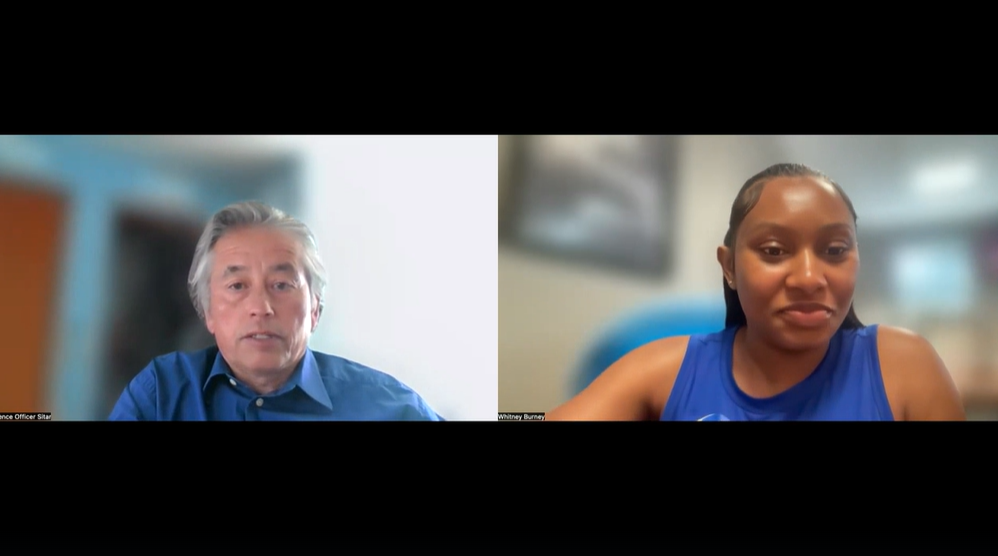
    NASHVILLE (WTVF) — A Tennessee lawmaker has filed legislation that would treat abortion as criminal homicide, potentially exposing women who obtain abortions to felony charges — and in extreme cases, the death penalty.

Tennessee already has an abortion ban on the books, but current penalties apply only to physicians who perform the procedure.

State Rep. Jody Barrett (R-Dickson) wants to go further, filing legislation that would make mothers open to felony assault or homicide charges if they obtained an abortion. Barrett says the bill is about equal protection under the law.

“Murder should be murder, whether it’s a person in being or a person in utero,” Barrett said.

I asked Barrett directly about the criticism that the bill unfairly targets mothers.

“I think that’s a talking point saying that you’re targeting mothers. We’re not targeting mothers. We’re targeting unborn children and trying to protect them and give them the protection under the law for you and me,” Barrett said.

The legislation has drawn sharp criticism from Democrats, who warn that the way the bill is written could make some women eligible for the death penalty. “We have Republican lawmakers in this building pushing to put women to death for simply having an abortion,” State Sen. Charlane Oliver (D-Nashville) said.

The word “death penalty” does not appear anywhere in the amendment’s text, but the legislation does say abortion is subject “to the same presumptions, defenses, justifications, laws of parties, immunities and clemencies as would apply to the assault of a person who had been born alive.”

When I asked Barrett about it, he acknowledged the death penalty could apply but downplayed the possibility, calling it highly unlikely.

“A simple examination of the death penalty in Tennessee would show that that’s just not realistic. Now, do I have to admit that the death penalty is a possibility? Sure. But since the death penalty was reinstated in Tennessee in 1977, there’s been less than 200 people sentenced to death, and only 16 have actually been executed — none of them women,” Barrett said.

The bill does include exceptions, among them cases where the mother’s life is in jeopardy and cases involving spontaneous miscarriages.

It’s important to note that Barrett’s amendment hasn’t been formally filed and added to caption bill HB 570. You won’t find it on the state’s online legislative database. Barrett provided NewsChannel 5 with an advance copy of the drafted amendment language. It could be added to the bill as early as next Tuesday in the House Population Subcommittee. State Sen. Mark Pody (R-Lebanon) is listed as the amendment sponsor in the Tennessee Senate.

Democratic lawmakers say the stakes are too high to dismiss.

“We should be very scared. That is a very, very scary step the state is about to take,” State Rep. Aftyn Behn (D-Nashville) said.

“This is what this body is responsible for doing to women and family,” State Rep. Gloria Johnson (D-Knoxville) said.

Barrett maintains the bill reflects a core value. “There’s value in every life,” Barrett said.

Please note: This story was provided to CNN Wire by an affiliate and does not contain original CNN reporting. This content carries a strict local market embargo. If you share the same market as the contributor of this article, you may not use it on any platform.

10 Inland Empire donkeys killed in mysterious attacks since December

By Joy Benedict, Dean Fioresi

Click here for updates on this story

    LOS ANGELES (KCAL, KCBS) — At least 10 donkeys have been killed since December in a series of mysterious attacks in Riverside County, leaving wildlife activists desperate for answers.

The burros, a contentious topic for some residents living near the sprawling pastures where they roam, are a mainstay in the region. Over the last few months, however, they’ve become prey to an unknown attacker.

The latest attack, which happened over the weekend, was on Cannoli. She was found with a large bite mark on her rear and saved thanks to the work of Dr. Juan Castellanos and the team at SoCal Equine Hospital. While she’s expected to make a recovery, wildlife activists in the area say she was one of six donkeys attacked in the last week. The first happened in late December, and two took place in January.

“It wasn’t a full-on bite … it’s most likely a side bite,” Castellanos said.

The latest attack is part of a troubling trend for the creatures, which Castellanos says don’t have the typical survival instincts of other wild animals.

“They don’t know how to survive mountain lions or typical wild dogs; they’re getting caught off guard,” Castellanos said.

As for the attacker, Castellanos notes that they aren’t displaying the usual behavior of predators, which usually attack vital organs for quick kills.

“These behaviors we’re seeing are not typical of wild animals,” he said. “They know abdomen, neck are the easiest kills.”

He said that the recent incidents bear more similarities to dog fights, since they’ve either been attacked from behind or bitten on the head.

“They’re very similar to dog fights,” Castellanos said. “I have seen dog attacks before from fights. They usually go for the same area, butt or head. They were trained for that … They completely avoid the belly and go for the bare skull and snout, that’s not your typical predatory behavior.”

He’s worried that the signs point towards a dog trained to target the donkeys.

“Thats the biggest worry. Someone is out there with a vendetta against the donkeys and release these dogs just to hurt them,” he said.

Though beloved by many in the area, the burros have been targeted in other troubling incidents in recent years. Last summer, at least six donkeys were injured when they were shot by arrows. No arrests have yet been made in those attacks, either.

As a result, Donkeyland, the sanctuary that rescues donkeys in the area, is offering a $10,000 reward for information on the recent attacks, which they believe are not the result of a natural predator-prey relationship.

Please note: This story was provided to CNN Wire by an affiliate and does not contain original CNN reporting. This content carries a strict local market embargo. If you share the same market as the contributor of this article, you may not use it on any platform.

Kansas City priest thankful for new heart drug that ‘changed his life’

By Taylor Hemness

Click here for updates on this story

    KANSAS CITY, Missouri (KSHB) — As you likely know, February is American Heart Month.

So, hopefully, you’re paying a little closer attention to how your ticker is ticking.

One local priest is especially thankful he’s able to continue his calling this month, thanks to a new drug that was recently approved by the Food and Drug Administration.

I met with him and one of his parishioners … who just happens to be his cardiologist.

If not for his very vocal job, Father Greg Haskamp, of Visitation Parish in Kansas City, Missouri, may not have ever gone to the doctor — even as he noticed himself slowing down.

“I used to walk to my office; it was just a couple of blocks from my home,” Haskamp told me. “I couldn’t get halfway there without having to stop and catch my breath.”

Haskamp described himself as a person who would “just live with it” and would typically decline medication.

But that wasn’t really an option because his job was getting harder to do.

“I had learned to sing with a shallower breath,” Haskamp said. “I think I had forgotten how to take a deep breath.”

He spoke to Dr. Michael Nassif, a cardiologist at Saint Luke’s Mid America Heart Institute, who watches Father Greg do his job every Sunday morning.

I spoke to Nassif, too, who showed me some of the imaging and scans of Haskamp’s heart.

“Here’s the main pumping chamber, the left ventricle; this is kind of the most important chamber, the one that’s pumping blood to the body,” Nassif pointed out. “This muscle should be less than one centimeter thickness, that’s what we consider normal, and this was probably closer to 1.7, 1.8.”

Haskamp had hypertrophic cardiomyopathy (HCM), a condition that impacts thousands of people.

The most common symptoms are shortness of breath, dizziness and, in the most serious cases, people passing out when they exert themselves.

“For years, our best therapies were either slowing the heart down. The other one was invasive surgery,” Nassif said.

But not now.

Nassif got Haskamp into an experimental trial for a drug called Aficamten.

“The way your heart cells connect to each other is like hands on a rope,” Nassif explained. “And your heart cells squeeze each other, and these drugs, in a very targeted fashion, take some of these hands off the rope.”

They weren’t even sure if Haskamp got the drug or a placebo, but there were signs.

“I’d tell my research coordinator, ‘The homilies are definitely getting longer at church,’” Nassif said with a laugh. “Father Greg carries that big Bible, I think it’s 20–30 pounds; he definitely looks more spry.”

Spry and thankful.

“When Jesus heals somebody today, to think Jesus is healing, or God is healing, through the great advances in medicine, the progress of science,” Haskamp said.

I asked him if his homilies are now, in fact, longer.

“Maybe,” he told me. “Every once in a while, I’ll throw a short one in.”

Nassif says there are likely many people who have HCM and never seek treatment, just believing they’re getting older or need to exercise more.

If you’re experiencing shortness of breath, talk to your doctor.

Aficamten was just approved by the FDA. Father Greg will likely take this pill for the rest of his life, but he told me he’s OK with that.

If you’re already on multiple medications for your heart, Nassif says this new drug might be able to replace many of them.

Please note: This story was provided to CNN Wire by an affiliate and does not contain original CNN reporting. This content carries a strict local market embargo. If you share the same market as the contributor of this article, you may not use it on any platform.

Nurse honored for supporting postpartum moms

By Erin Miller

Click here for updates on this story

    NORFOLK, Virginia (WTKR) — A surprise at work turned into a heartfelt celebration for a nurse practitioner who has made it her mission to support new mothers.

Jessica Schafer, a family nurse practitioner and lactation consultant at Sentara Leigh Hospital, thought she was getting new photographs taken at work. Instead, she was surprised with a News 3 Everyday Hero Award.

“This is really, really wild,” Schafer said with tears in her eyes. “Thank you for acknowledging the things that I do and that our hospital does and that my team does. I really appreciate it.”

I first met Schafer in January while reporting on a program she launched to help postpartum moms navigate mental health challenges.

“The next day [after our story aired], a grandma called about her daughter who had just had a baby and said, ‘Hey, I need to talk to Jessica Schafer. I saw her on the news and my daughter’s really struggling.’ So, we got her daughter some help and it’s been great. And even if it was just one person, it was like, oh my God, this is so amazing,” Schafer said.

For Schafer, the mission is deeply personal.

“I feel like mothers are the actual heroes,” she said. “They deserve so much support, and they deserve to be listened to. I’m so thankful every day that I was put in a position to be able to support these mamas and know that they’re not alone.”

One of the ways she provides that support is through “mom groups” at the hospital — and colleagues say her impact has been transformative.

“We had a mom group before her that had one or two patients that came and then COVID hit and nobody came because we had to shut it down. When we restarted it and when Jess took over, it exploded and I know it’s [because of] the way she relates to people,” said Lori Poul, a registered nurse at Sentara Leigh.

Poul describes Schafer as relentless in advocating for her patients.

“Jess is a bulldog when it comes to that,” she said. “She will fight for you and fight with you and challenge you. I can’t say enough about Jess.”

Ashley Kelly-Barnes, manager of patient care services, said Schafer’s dedication extends beyond her patients — she has felt it personally.

“I really think from a minority community with Black moms, it is really hard to sometimes breastfeed,” Kelly-Barnes said. “We have one of the lowest breastfeeding rates, and she really empowered me to say, ‘You can do this.’ I wasn’t as successful with my firstborn, but when I partnered with Jess [for my son], it was a game changer.”

Ashley Blue, a clinical nurse manager at the hospital, echoed that praise.

“She is that person who will go to the end of the earth for you,” Blue said. “And she does it for each and every person. She pours into my nurses. She helps to educate them and transfers that over to her patients each and every day.”

In recognition of her work, Southern Bank also presented Schafer with $425 to support her efforts and bring more awareness to resources available for new mothers.

“This is very validating and I’m so thankful for it,” Schafer said. “But this just makes it to where people can become aware of all the support that we’re offering for these mamas.”

As Schafer continues answering the call to serve families in Norfolk, her colleagues say her compassion and advocacy are changing lives — one mother at a time.

Please note: This story was provided to CNN Wire by an affiliate and does not contain original CNN reporting. This content carries a strict local market embargo. If you share the same market as the contributor of this article, you may not use it on any platform.

Aurora’s $1.9 billion infrastructure dilemma: Bridging the gap between rapid growth & public safety

By Kelly Werthmann

Click here for updates on this story

    COLORADO (KCNC) — If you’ve driven down E-470 past the Aurora Highlands lately, you’ve likely seen a building that has already lived two lives: first as a highway maintenance facility and currently as a visitor center. Soon, this structure in the eastern part of the Denver metro area will take on its most critical purpose yet: Aurora’s 18th fire station.

It’s a project Aurora Fire Rescue Chief Alec Oughton calls a “perfect location” to heal a stretched-thin emergency system.

“We’re very, very excited about this project and what it will mean for our organization, and for the community we take care of,” he said. “This is a great opportunity to give this building its third life.”

As Colorado’s third-largest city grows to more than 414,000 residents, the expansion is moving faster than the infrastructure can keep up, leaving newer neighborhoods miles away from the nearest help. In the Aurora Highlands, response times currently lag between 12 and 18 minutes — that’s an eternity in a business where every second counts.

“(Station 18) is going to shave 7 to 10 minutes off our response times to some areas of Aurora Highlands,” said Oughton. “It will have a very significant impact on this area of the city, and really not just in the Highlands itself but a couple miles north or south … it’s going to have a significant impact on how quickly we can get in there as the first responding unit.”

Oughton said, through a partnership with the community’s developer, repurposing the existing building — located near E-470 and Aurora Highlands Parkway — made the future for station project more attainable for the city.

“Fire stations are not inexpensive,” he said. “Trying to balance a budget while trying to balance emergency response infrastructure is a lot and takes a lot of collaboration.”

This “cobbling together” of resources, as Deputy City Manager Laura Perry described it, is a necessity in a city facing a nearly $2 billion list of city infrastructure needs.

“In total, our projects total $1.9 billion. Obviously, the city cannot afford to do that within the means we have available,” Perry said. “So, we really want to understand what matters most to folks.”

The challenge is a dual-front battle of “keeping up and catching up.” While new communities need protection, older parts of the city are aging out.

“We have five fire stations that are over 50 years old,” Perry said.

Recently, AFR Station 9 had to be demolished and rebuilt after its foundation began to crumble. The strain is also visible within the Aurora Police Department, where aging buildings that were never intended to be police stations need updating. In a citywide community survey last year, Perry said thousands of residents gave feedback about their wants for improved public safety.

“About 50% of the responses told us that folks want to see investment in stronger response times, fire stations, police … and that’s coming forward for further conversations through a variety of meetings we have planned over the next couple of weeks,” she said.

Those meetings, part of the city’s Build Up Aurora campaign, aim to discuss long-term solutions for projects ranging from public safety to transportation, parks, libraries, as well as accessibility. The city is seeking community input, Perry explained, to ensure it prioritizes what residents want most.

“That is a continual challenge in meeting the demands and needs of a growing city,” Perry added. “There are tools in the toolbox the city hasn’t used to fund capital projects, which are bonds as one example. We really want to understand through (Build Up Aurora) what the community needs and values. So, at meetings coming up, attendees will be asked to rank their top 5.”

For Aurora Fire, that feedback helps guide projects like the in-progress Station 18 — expected to be operational late this fall — and the future Station 19, which city council approved and allocated funds to be built on the southeast side in 2027. Chief Oughton said those two new stations will make a life-saving difference for the community, but the department will need at least three more in the next decade, he believes, to keep pace with Aurora’s growth.

“I think we’re making that progress,” he said.

Please note: This story was provided to CNN Wire by an affiliate and does not contain original CNN reporting. This content carries a strict local market embargo. If you share the same market as the contributor of this article, you may not use it on any platform.