Georgia sheriff offers $1,000 reward after Flock Safety camera vandalized amid growing surveillance debate

By Zachary Bynum, Daniel Wilkerson

Click here for updates on this story

    LUMPKIN COUNTY, Georgia (WUPA) — A Georgia sheriff is now offering a $1,000 reward after he said someone damaged a Flock Safety camera in a park.

“So, I hope you’re happy with this. It was to keep our kids safe. That’s what this is about and you went and done this,” said Sheriff Jarrard of Lumpkin County.

Sheriff Jarrard said the cameras were placed in the park to catch sex offenders.

“Well, this is proof we had to look for this and find it in the woods. It’s not watching you,” said Sheriff Jarrard.

Wednesday, protesters took to a sidewalk near a Flock Safety convention in Atlanta.

“Flock is a surveillance system which has taken over Atlanta, and we’re protesting because we want to protect people’s right to privacy,” said Kamau Franklin, founder of Community Movement Builders.

Flock Safety cameras are automated license plate readers. They also include vehicle-tracking systems used by police, neighborhoods, and businesses across the United States. They capture vehicle plates, make, model, and color, as well as unique features like bumper stickers, storing the searchable data in a shared cloud network.

Franklin said he does not believe there is a safe way to use Flock Safety cameras.

“I say the police are always going to come up with excuses for why they want to conduct mass surveillance on people. I think all the information, all the data shows that 99.5% of the people who Flock is surveilling have not committed any crime whatsoever,” said Franklin.

Recent reports of law enforcement officers misusing license plate reader systems have added another layer to the growing debate.

“It’s not the technology. The denominator is us, when mistakes are made with facial recognition or license plate readers. It’s not the technology; it’s us. It provides the output. It doesn’t know the answer or the action,” said Dr. Thaddeus Johnson, a professor in Georgia State University’s criminal justice department.

Flock Safety cameras have become a controversial issue in Georgia communities as dozens of police officers have been fired and, in some cases, arrested over the past several months for allegedly abusing license plate reader technology for non-law enforcement purposes.

CBS News Atlanta has reported on multiple officers facing punishment following internal audits of Flock’s database that flagged improper searches. Officers have been accused of using the technology to track people in their families and personal lives rather than for legitimate law enforcement purposes.

Amid the Trump administration’s mass deportation efforts, scrutiny of the surveillance technology has also expanded to questions about whether federal immigration authorities can ultimately access information collected by local law enforcement.

The University of Washington Center for Human Rights found through an analysis of Flock Safety cameras in Washington state that automated license plate reader data collected by local law enforcement agencies was frequently accessed by federal agencies involved in immigration enforcement.

Atlanta groups push back with “Flock Off!” That issue resurfaced Tuesday in Atlanta, where activists, elected officials and community organizers gathered outside City Hall as part of a series of actions targeting Flock Safety and companies that use its technology.

Groups represented included Indivisible ATL, DeFrost Home Depot, Community Movement Builders and other local organizers. Speakers focused on the expansion of surveillance cameras across metro Atlanta, recent cases involving officers accused of misusing Flock data and concerns about immigration enforcement.

Al Solove, chair of Indivisible ATL and a member of the DeFrost Home Depot leadership team, said the coalition is specifically pressing Home Depot to end its relationship with Flock Safety.

“By contracting with Flock Safety, the Home Depot helps ICE and harms our immigrant community,” Solove told the crowd.

Home Depot says it uses license plate readers in parking lots to detect and prevent theft and protect customers and employees. According to remarks delivered at the rally, the company has also said it does not grant federal law enforcement access to its license plate readers or the data they collect.

Activists argue the concern is less about a direct relationship between Home Depot and ICE and more about the broader network into which Flock data can flow.

Flock no longer contracts directly with ICE, according to information presented at the rally. Still, many local law enforcement agencies using Flock work with federal immigration authorities, including through federal 287(g) agreements. Protest organizers said that creates a pathway through which locally collected surveillance information could potentially be accessed for immigration enforcement.

Solove cited reporting that found that a police department in Illinois conducted Flock database searches using terms related to immigration and ICE.

“This is horrifying,” Solove later told reporters when asked about the recent string of police officers disciplined over improper Flock searches. “And it invites the question: How many more people are out there who haven’t been caught?”

More than 10 officers in metro Atlanta have been fired this summer in cases involving alleged misuse of the technology, Solove said, pointing to the incidents as evidence of what activists describe as a broader problem with access to the network.

Organizers question Atlanta’s growing surveillance network Other speakers focused on the sheer scale of surveillance technology across Atlanta and DeKalb County.

Dawn Rush, an organizer with North Decatur Action, cited figures showing the number of cameras connected to Atlanta’s surveillance network growing from roughly 3,300 in 2021 to more than 28,000.

Rush also pointed to millions of searches conducted across the network and argued that the rapid expansion has created opportunities for abuse, without providing sufficient evidence that the technology has meaningfully reduced serious crime.

Activists presented the figures and conclusions at Tuesday’s event and were not independently verified by CBS News Atlanta as part of the rally coverage.

Kamau Franklin argued that increased surveillance should not be equated with public safety.

“Surveillance is not safety,” Franklin said. “Over-policing is not safety. Mass incarceration is not safety.”

Franklin said his group plans additional demonstrations and meetings surrounding Flock’s corporate events in Atlanta this week.

“We think it’s necessary to send a message that the general public again is not for the mass surveillance that we’ve spoken about,” Franklin told reporters.

Mathewos Samson, a community organizer and Democratic candidate for Georgia House District 58, also criticized Atlanta’s reliance on surveillance technology and pointed to a proposed City Council ordinance that would require greater disclosure about the surveillance technology the city purchases, how it is accessed and who can use it.

Samson described the proposal as a limited first step toward greater oversight.

“In the long term, we have to get Flock out of Atlanta,” Samson said. “We should seek to abolish the surveillance state that does nothing but invade our privacy.”

Family separated by deportation joins surveillance debate For Gail Macklin-Saul, the debate over surveillance is also personal.

Macklin-Saul told the crowd her husband, Omri, was deported to Senegal, leaving the couple separated by more than 5,000 miles. She emphasized that Flock cameras did not cause his deportation, but said the experience made her think differently about how much information government systems can collect about ordinary people.

“I’m not saying Flock cameras caused Omri’s deportation. It didn’t,” Macklin-Saul said. “But Omri’s story gives me a personal reason to care about the larger conversation surrounding surveillance.”

She said questions about who can access information, how long it is retained, and with whom it can be shared should be answered before communities further expand surveillance systems.

“Behind that camera is information about real people,” she said. “Their cars, where they go, how they move, and potentially where they’ve been.”

Macklin-Saul said she supports legitimate law enforcement needs but believes they should be balanced against transparency, privacy and civil rights.

“Public safety matters,” she said. “But so does human dignity. So does accountability.”

Flock announces new safeguards after reports of abuse The protests come as Flock Safety is already facing mounting scrutiny over the misuse of its technology.

Following a Washington Post report identifying 46 cases in which police officers were accused of improperly using access to Flock’s license plate camera network — including allegations that officers used it to stalk women — Flock CEO Garrett Langley apologized during an interview with CBS News.

The company has since announced several changes, including reducing its standard footage retention period from 30 days to 7 days. Footage needed for an official investigation can still be retained through what Flock calls “Evidence Mode.”

At Wednesday’s rally, protesters said those changes do not resolve their underlying concerns about mass surveillance.

Solove argued that even with shorter retention periods and internal auditing requirements, the underlying system still collects information on large numbers of people who are not suspected of crimes.

“There really is no safe mass surveillance network,” he said.

For organizers who gathered, the demand goes beyond reforming how the technology is used. Their message to Flock was much simpler: “Flock off.”

CBS News Atlanta reached out to Flock Safety and requested an interview to address the privacy concerns and questions about the misuse of its technology.

We had not heard back as of the publishing of this article.

Please note: This story was provided to CNN Wire by an affiliate and does not contain original CNN reporting. This content carries a strict local market embargo. If you share the same market as the contributor of this article, you may not use it on any platform.


South Florida father gets green card after decades of fighting, waiting

By Tania Francois

Click here for updates on this story

    MIAMI, Florida (WFOR) — After more than 25 years of uncertainty, a Haitian family’s fight for permanent legal status in the United States has reached a turning point.

CBS News Miami has followed the Ponthieux family’s journey from Little Haiti to the halls of Congress as they advocated for Temporary Protected Status recipients and fought to keep their own family together.

Staff Sgt. Christopher Ponthieux serves in the U.S. Army overseas. He and his sister, Ronyde Christina Ponthieux, were born in the United States, while their parents were born in Haiti.

“My father and my mother have been in the States well over 25 years,” Christopher said. “They’ve done things the right way the whole way through, and I think that’s reflective within my own upbringing and what I’ve done myself.”

When Christopher turned 21, he filed Green Card applications for each of his parents. That was nearly five years ago. “I assumed that it would be an easy process,” he said.

His mother’s application was approved late last year, but his father, Rony Ponthieux, remained in legal limbo. The uncertainty grew after Rony lost his TPS protections and was forced to stop working as a nurse, a career he has held for more than 20 years a few weeks ago when the Supreme Court’s decision to end TPS took effect.

“My dad was still at risk, and so it became, ‘What can we do? Is there anything we can do? Are there any legal protections?'” Ronyde Christina said, trying to think of anything to help.

Over the two-decade-long fight the family refused to remain silent. Rony took his fight to Congress and also joined Family Action Network Movement (FANM) press conferences and other efforts supporting Haitian immigrants.

“I am here to fight for all TPS recipients,” Ronyde Christina said during one of those events.

Just days after Christopher spoke with CBS News Miami about his fear that his father could be detained by immigration authorities, the family received the news it had been waiting years to hear – Rony’s Green Card had been approved.

Although his own immigration status is now secure, Rony said he intends to continue speaking for other immigrants facing the same uncertainty. He also hopes to begin the process of becoming a citizen.

“I don’t want those people to suffer from what I suffered because they’ve been here for a long time. They’re working,” he said.

His daughter said many immigrants are afraid to advocate publicly because they fear drawing attention to themselves and risking detention. “I think that it’s a bit hard to advocate for yourself when you’re afraid that they might take you,” Ronyde Christina said. “I want people to know that the fight is not over.”

With his Green Card in hand, Rony has reapplied for his former nursing position and hopes to return to work soon.

The family’s experience has also influenced Ronyde Christina’s future. The Florida International University senior said the fight inspired her to become an immigration attorney.

She plans to begin law school next year.

Please note: This story was provided to CNN Wire by an affiliate and does not contain original CNN reporting. This content carries a strict local market embargo. If you share the same market as the contributor of this article, you may not use it on any platform.
Houston Style Magazine Is Proud to Support the Houston Business Journal’s 2026 Women Who Mean Business Awards

By Francis Page Jr.

Click here for updates on this story

    August 19, 2026 (Houston Style Magazine) — Houston has never been short on women who know how to turn vision into velocity. This fall, many of those leaders will share one room when the Houston Business Journal presents its 2026 Women Who Mean Business Awards, and Houston Style Magazine is proud to support a celebration that recognizes achievement while reminding the next generation what leadership can look like.

The luncheon takes place Thursday, October 15, from 10:30 a.m. to 2 p.m. at Hilton Americas-Houston, 1600 Lamar Street in Downtown Houston. HBJ has named 76 honorees spanning nine industry categories — Energy, Finance, Healthcare, Hospitality/Restaurants/Retailing, Law, Nonprofit, Professional Services, Real Estate and Construction, and Other — plus its Women to Watch category for leaders with 10 years or less in their industries.

That breadth matters. This class reflects Houston’s wide-ranging leadership landscape: executives, entrepreneurs, educators, attorneys, healthcare leaders, civic professionals, builders, innovators and emerging voices. Among the honorees are Nell Reed of Chevron, Erica Giwa of Legacy Community Health, Hannah McNair of the Houston Texans, Frances Villagran-Glover of Houston City College Southeast, Tammi Wallace of the Greater Houston LGBTQ+ Chamber of Commerce and Anjelika Stephens of Bartlett Cocke General Contractors. Different lanes, one common denominator: impact.

This year’s theme, “Petals & Power,” is an especially fitting Houston combination — elegance with horsepower. HBJ describes the celebration as one recognizing grace, resilience and leadership while honoring women who inspire change and leave lasting marks on Houston’s business community.

The awards also carry growing historical significance. HBJ launched its inaugural Women Who Mean Business awards in 2016. A decade later, the program remains a prominent platform for recognizing women whose accomplishments stretch beyond boardrooms into community service and civic leadership.

One of this year’s defining moments will be the presentation of the 2026 Lifetime Achievement Award to Houston City College Chancellor Margaret Ford Fisher, Ed.D. Ford Fisher joined HCC in 1985 and became the institution’s ninth chancellor in 2024. Houston City College says she leads a seven-college organization serving nearly 100,000 students annually across 22 Greater Houston locations. Her career includes two decades as president of HCC Northeast College and leadership of HCC Online College, where she helped establish more than 60 fully online degrees and 70 hybrid programs.

Her recognition gives the event an added layer of meaning: leadership is not simply about reaching the top; it is about widening the staircase for others.

The 2026 honorees will also appear in a special section of HBJ’s October 16 weekly edition. For attendees, however, October 15 is about being present — applauding achievement, building relationships and perhaps meeting the next collaborator, mentor, client or community partner over lunch.

Houston Style Magazine encourages businesses, organizations and professionals to gather their teams and reserve seats while tickets and table packages remain available. HBJ’s current event page includes individual event registration and several table-package opportunities.

Because when Houston celebrates women who build companies, strengthen institutions and move communities forward, everyone gets a clearer view of the city’s future.

photo

REGISTER / PURCHASE TICKETS: 2026 Women Who Mean Business Awards MEET THE 2026 HONOREES: HBJ’s Women Who Mean Business Honoree Announcement LIFETIME ACHIEVEMENT — DR. MARGARET FORD FISHER: Houston City College — Lifetime Achievement Award

Please note: This story was provided to CNN Wire by an affiliate and does not contain original CNN reporting. This content carries a strict local market embargo. If you share the same market as the contributor of this article, you may not use it on any platform.

Kierra Lee
KIELEESTYLE@GMAIL.COM
4096658446

Texas Southern University Names Corey Lowery Men’s Basketball Head Coach

By Francis Page Jr.

Click here for updates on this story

    August 19, 2026 (Houston Style Magazine) — HOUSTON — August 19, 2026 — Texas Southern University basketball has never been shy about big expectations. At a program where championships, postseason pressure and March Madness have become part of the vocabulary, the Tigers have now handed the whistle to a coach whose résumé suggests he knows exactly what winning sounds like.

Texas Southern University announced Corey Lowery as its new head men’s basketball coach, bringing to Houston a veteran leader with 27 years of coaching experience, 13 seasons as a collegiate head coach and a 266-73 collegiate head-coaching record.

The appointment opens a new chapter for one of the nation’s most recognizable HBCU basketball programs — and it comes as Texas Southern approaches its centennial celebration in 2027.

“Coach Lowery has won at every level and every stop of his career,” TSU President J.W. Crawford III said in announcing the hire. “Beyond constructing winning rosters and producing on the court, he is a maker of men off the court.”

That last part may prove every bit as important as the win column.

Lowery arrives from Seton Hall University, where he spent four seasons as an assistant under Shaheen Holloway. During his tenure, the Pirates’ staff produced 42 victories in its first two seasons — a Seton Hall record for a new staff — before capturing the 2024 NIT National Championship.

But Lowery’s résumé stretches well beyond the Big East.

At Lincoln University, one of America’s historic HBCUs, Lowery transformed expectations. In his first full season, Lincoln finished second in the CIAA Northern Division after being projected 10th in the preseason. The turnaround earned Lowery CIAA Coach of the Year, while Zahrion Blue was named CIAA Player of the Year. Lowery was also selected to coach in the inaugural HBCU All-Star Game.

Before Lincoln came an impressive junior-college run. At Essex County College, his Wolverines captured six consecutive regular-season conference championships, five straight region championships and made five consecutive NJCAA Division II Tournament appearances. His 2014 squad reached the national championship game, while Essex advanced to the Final Four in 2014 and 2016. At Middlesex County College, Lowery also produced three straight conference championships and a 2008 Elite Eight appearance.

In other words, Coach Lowery apparently does not collect frequent-flyer miles without collecting a few trophies along the way.

Now he inherits a Texas Southern program where the standard is already sky-high.

The Tigers own 14 SWAC regular-season championships, 11 SWAC Tournament titles, 11 NCAA Tournament appearances and the 1977 NAIA National Championship. In 2023, TSU became the first No. 8 seed to win the SWAC Tournament, completing a remarkable postseason run by defeating the tournament’s No. 1, No. 2 and No. 5 seeds.

That championship DNA is precisely what Lowery says attracted him to Houston.

“It is an absolute honor and privilege to be named the Head Men’s Basketball coach at Texas Southern University,” Lowery said. “Texas Southern is rooted in a proud tradition of winning championships… I will work tirelessly to serve and uphold the standard of excellence that already exists at Texas Southern University.”

And that standard extends beyond basketball.

For generations, Texas Southern University has represented Houston, HBCU excellence and opportunity, producing leaders while carrying the maroon and gray onto national stages. For Lowery, this is more than another coaching assignment. It is an opportunity to guide young men, build champions and take command of a program accustomed to hearing its name called when March arrives.

The next century of Texas Southern basketball is approaching. Coach Corey Lowery now has the ball.

photo

More information on TSU Sports, go to: tsusports.com

Please note: This story was provided to CNN Wire by an affiliate and does not contain original CNN reporting. This content carries a strict local market embargo. If you share the same market as the contributor of this article, you may not use it on any platform.

Kierra Lee
KIELEESTYLE@GMAIL.COM
4096658446

2 wild deer in Wisconsin test positive for epizootic hemorrhagic disease

By Indiana Schilz

Click here for updates on this story

    WASHINGTON COUNTY, Wisconsin (WDJT) — Two wild deer in Washington County have tested positive for the virus that causes epizootic hemorrhagic disease, according to the Wisconsin Department of Natural Resources.

The DNR announced Tuesday that the deer were found near the village of Richfield and the city of West Bend.

Samples were collected for testing after landowners and other members of the public reported a cluster of dead deer in the area. Many of the reports involved deer that appeared healthy before being found dead in or near water.

“Although it may be concerning to see many deer dead in a localized area, these outbreaks rarely have significant long-term population impacts on the overall deer herd,” DNR deer herd health specialist Erin Larson said. “The short duration of these outbreaks and the robustness of our deer populations allow areas experiencing an EHD outbreak to recover quickly.”

EHD is spread by midges, which are small flies also known as biting gnats or no-see-ums.

According to the DNR, the virus does not infect humans, including through handling infected deer, eating venison from an infected deer or being bitten by an infected midge.

Signs of EHD in deer can include excessive salivation, foaming around the nose and mouth, weakness or unusual approachability around humans.

The DNR said infected deer may also be found in or near water because the disease can cause fever, prompting the animals to enter water to cool down or drink.

Anyone who sees a deer showing signs of EHD or finds a dead deer in or near water is encouraged to report the sighting to the DNR.

Please note: This story was provided to CNN Wire by an affiliate and does not contain original CNN reporting. This content carries a strict local market embargo. If you share the same market as the contributor of this article, you may not use it on any platform.

Bear that injured resident in North Carolina will be put down: officials

By Marisa Sardonia, RubyAnnas

Click here for updates on this story

    BUNCOMBE COUNTY, North Carolina (WLOS) — A person was injured in a bear encounter in northern Buncombe County and taken to the hospital Tuesday evening, officials confirmed.

The Buncombe County resident received non-life-threatening injuries in the incident, the North Carolina Wildlife Resources Commission confirmed. The resident was treated at the hospital and released.

Wildlife officials said the incident occurred around 8:30 p.m. when an adult female black bear entered the resident’s home through an unlocked door. The bear’s three cubs were seen playing on the front porch at this time, according to N.C. Wildlife. The resident was injured while trying to allow the bear to escape from the home, officials said.

According to an early-morning social media post by the Reems Creek Fire Department, crews arrived on the scene at approximately 9 p.m. Tuesday in an area where the department said it provides fire protection services through a contract with the Asheville Fire Department. Buncombe County Emergency Services also responded, the fire department said in the post.

“Crews arrived on scene and used the apparatus siren in an attempt to scare away any bears in the area. No bears were seen by firefighters upon arrival, and crews were able to safely access the residence,” the post said.

The fire department said that Buncombe County EMS evaluated the occupant of the home and transported the individual to the hospital for further evaluation. The fire department didn’t provide an update on the person’s condition.

The fire department said N.C. Wildlife was notified and responded to the scene to assist. The Wildlife Resources Commission said in an Aug. 19 statement that it was actively investigating the incident.

“Based on information provided to responders, it appeared that a bear may have opened the exterior door and entered the residence. The occupant reportedly encountered the bear as it exited, with the bear possibly swatting at the occupant on its way out. The exact circumstances of the encounter were not directly witnessed by responding firefighters,” the fire department said in the post.

The North Carolina Wildlife Resources Commission provided an update, saying the adult female bear “poses a threat to human safety.” The commission said officials are trying to catch and “humanely dispatch” the bear. There are also efforts to move the cubs away from human-related food areas. The commission adds that, according to research and NCWRC orphaned cub guidelines, the cubs can be self-sufficient at their age.

Please note: This story was provided to CNN Wire by an affiliate and does not contain original CNN reporting. This content carries a strict local market embargo. If you share the same market as the contributor of this article, you may not use it on any platform.

State prison inmate dies in attack in Sacramento County, officials say

By Jeremiah Martinez

Click here for updates on this story

    FOLSOM, Calif. (KCRA) — Investigators are looking into the second homicide in a week at California State Prison, Sacramento in Folsom.

The California Department of Corrections and Rehabilitation (CDCR) said state prison staff in Folsom saw an inmate, Julio Caesar Madrigal, 36, striking another inmate, Danny Aguilar, 47 around 9:30 a.m. on Tuesday.

After staff ordered all inmates in the area to get down, officials said Madrigal failed to comply and staff fired two less-lethal rounds at him to stop the attack.

Staff then began life-saving measures on Aguilar, as they transferred him to the prison’s triage and treatment area. Officers then called 911 and a physician later pronounced Aguilar dead.

Prison staff were not injured.

Officials said Madrigal was restrained in restricted housing, where he remains pending an investigation by prison’s Investigative Services Unit and Sacramento County District Attorney’s Office.

An improvised weapon was found at the scene, CDCR said.

Aguilar was received from Los Angeles County on Oct. 26, 2006 and was sentenced to life without the possibility of parole, CDCR said.

Madrigal was received from Tulare County on June 9, 2022, after being sentenced to life with the possibility of parole for first-degree murder.

The deadly attack is the second homicide investigation at the prison in the past week. On Aug. 11, Walter Badelle was found unconscious by staff in his prison cell.

Badelle was later pronounced dead by outside ambulance staff.

His cellmate, Jonathan Blackwell, was placed in handcuffs and placed in restricted housing.

Please note: This story was provided to CNN Wire by an affiliate and does not contain original CNN reporting. This content carries a strict local market embargo. If you share the same market as the contributor of this article, you may not use it on any platform.

Louisiana Health Department reports brain-eating amoeba infection in Claiborne Parish resident

By Erin Lowrey

Click here for updates on this story

    CLAIBORNE PARISH, La. (WDSU) — A Louisiana resident has contracted a brain-eating amoeba.

According to the Louisiana Department of Health, the resident contracted a Naegleria fowleri infection, also known as a brain-eating amoeba, likely while swimming in Lake Claiborne in Claiborne Parish.

Naegleria fowleri is commonly found in warm freshwater lakes, rivers, canals, and ponds throughout the United States.

It can cause a brain infection after water containing the amoeba rushes up the nose and enters the brain, according to health officials.

The infection is extremely rare, but nearly always fatal.

Naegleria fowleri cannot infect people if swallowed and is not spread from person to person. The amoeba is not found in salt water or in properly maintained and chlorinated pools.

According to LDH, symptoms of Naegleria fowleri infection typically start with severe headache, fever, nausea, and vomiting, and progress to stiff neck, seizures, and coma that can lead to death.

Symptoms usually begin about five days after infection but can start within one to 12 days.

LDH provided the following safety tips for swimming in fresh water across the state:

Use caution when engaging in water-related activities in warm freshwater during periods of extended extreme heat. Naegleria fowleri usually occurs when temperatures increase for prolonged periods, resulting in higher water temperatures and lower water levels. Swimmers can reduce their risk by keeping their heads out of the water and using nose clips or plugging their noses when going underwater. Avoid submersing your head in hot springs and other untreated fresh thermal water. Avoid digging in or stirring up the sediment while taking part in water-related activities in shallow, warm freshwater areas. Naegleria fowleri infections are rare, with only 180 known cases of PAM in the U.S. (between zero and eight cases annually) from 1937 through 2025. Louisiana had three Naegleria fowleri cases during that time period.

Please note: This story was provided to CNN Wire by an affiliate and does not contain original CNN reporting. This content carries a strict local market embargo. If you share the same market as the contributor of this article, you may not use it on any platform.

Missing Oklahoma dog found safe more than 1,000 miles away. But how he got there remains a mystery

By Olivia Hickey

Click here for updates on this story

    Oklahoma (KOCO) — If you were to ask Melissa Burris about her 10-month-old Australian Shepherd, Rio, she would tell you he is an escape artist.

“He knows how to open a screen door, and any weakness at the bottom of the fence, he will find his way underneath,” Burris said.

But July 30 was the start of his longest disappearing act yet.

“He had taken off. His sister stayed behind, and I checked his usual spots. He likes to take himself shopping at the Dollar General on the corner and at the gas station across the street from it, and the gas station attendant said that he thought one of his customers may have taken him, even though he let him know that he knew the owner, and she’d be right here to get him,” Burris said.

When she got there, Rio was already gone. For weeks, she worried.

“I was afraid that he had been hurt,” Burris said.

But Rio reappeared more than 1,000 miles away on the East Coast.

“Aug. 11, he was scanned in Greensboro, North Carolina,” she said.

To get from Sand Springs to Greensboro, you would have to drive for about 16 hours or walk for nearly two weeks. So, how did he get there?

“We have no idea. Our best guess is that it was a long-haul truck or maybe a student going off to college,” Burris said.

How he got there doesn’t matter to Burris. What matters is that Rio was found safe, even if he was a little shaken up.

“I was just so happy. I was so happy and so grateful and thankful that he was safe and healthy and well,” Burris said.

Burris said getting him home was no mystery.

“We got to see all the mountains. We just drove through the Blue Ridge and the Smokies, and I think there were five different mountain ranges on our route,” she said.

Rio didn’t say much on the ride home.

“You got anything you want to say, big guy? I think that means he’s happy to be home,” Burris said.

She said if you can take anything away from this tale, it is to make sure your pet is microchipped.

Please note: This story was provided to CNN Wire by an affiliate and does not contain original CNN reporting. This content carries a strict local market embargo. If you share the same market as the contributor of this article, you may not use it on any platform.

California man stung by stingray and the weather may be to blame

By Makayla Richardson

Click here for updates on this story

    GROVER BEACH, California (KSBY) — Warmer weather could be bringing more stingrays up to the Central Coast.

Mark Perry visits the beach near the West Grand Avenue entrance in Grover Beach every day. As part of his routine, he takes a dip in the ocean.

“While I was out there about chest deep water, I jumped over a wave,” Perry said. “Then I landed on the ground and it felt something bit me.”

After getting out of the water on Saturday and finding help from a lifeguard, Perry was told he wasn’t bitten, but stung by a stingray. He said it felt like a mix between a bee sting and a rattlesnake bite.

“The bee sting [was the] the initial pain, and then you kind of get this coursing pain that goes through your body, and it comes up sporadically,” he said.

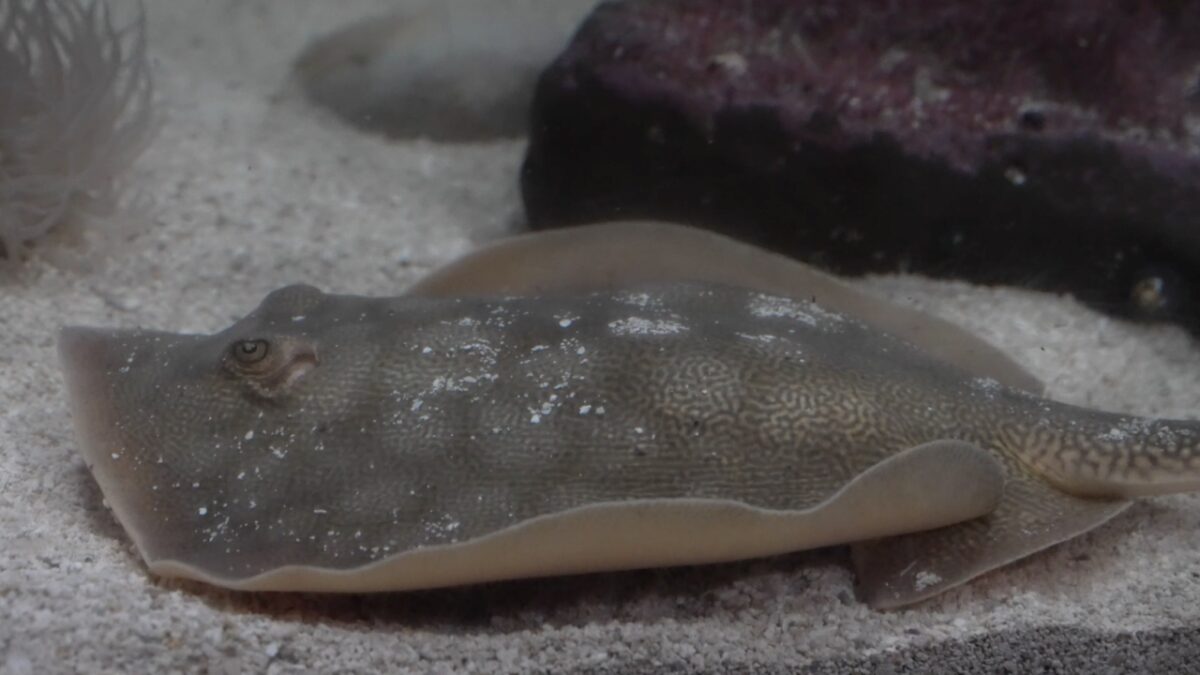
Kathryn Wilkins at the Central Coast Aquarium said the sting comes from barbs on the stingray’s tails, which contain a toxin.

“Normally, when you hear about a stingray like sting and that pain, it is a toxin,” Wilkins said. “It’s not lethal to humans, at least not the round ray.”

The round ray is a local species of stingray that’s pretty common on the Central Coast year-round.

Wilkins said if you are stung, you should seek medical attention.

“The most commonly accepted practice is that if you do get stung, you should soak whatever part of your body got stung in hot water,” she said. “Not scalding, but hot. It does help to break down that toxin and lead to faster pain relief.”

CSU Long Beach says one of the best ways to stay safe in the water is to do the “stingray shuffle,” where you slide your feet along the sand instead of raising your feet when you walk.

If you are heading into the water, try to spend the least amount of time possible touching the sea floor, check where stingrays are common, or find footwear that offers stingray protection.

Ashley Tjepkema also works at the Central Coast Aquarium, and said she hasn’t seen an abundance of stingrays on the Central Coast yet, but it’s not out of the question.

“The warming waters from El Niño can shift their ranges northward,” Tjepkema said. “Whereas we typically more see them in Southern California and Baja, we might start to see them coming up a little bit more along our coastline to kind of escape from some of that heat.”

Perry said in the future, he’s going to stick with the shuffle and invest in protective booties.

“I’m not going to stop going in the ocean just because I got stung by a stingray once,” Perry said. “I’m going to try to take precautions after that.”

Please note: This story was provided to CNN Wire by an affiliate and does not contain original CNN reporting. This content carries a strict local market embargo. If you share the same market as the contributor of this article, you may not use it on any platform.