Ernesto Juarez, ‘Mr. Dome Valley Raceway,’ passes away

Connor Emery

YUMA COUNTY, Ariz. (KYMA) – A well-beloved man in the Yuma community tragically passed away in a car crash.

Ernesto Juarez, better known as “Mr. Dome Valley Raceway,” was the former owner and founder of Dome Valley Raceway in Wellton.

Juarez built the Dome Valley Raceway in 1996. Since then, it has carried a legacy, with multiple sand drag racing events.

“To me, my father was everything. He was my everything we did everything together. He was my best friend,” Esteban Juarez, Juarez’s youngest son, said.

Juarez’s main goal was to bring the Yuma community together with an unfamiliar sport. He would go out of his way to put other racers and everyone else first.

“Even when we had this race track and started very young, he would host events for families that were struggling for churches that needed sponsorships and donate all the proceeds to those individuals and that never left him into the day. He’s always been putting everybody first before himself and that’s one of my greatest memories of my father,” Art Juarez, Juarez’s oldest son said.

Juarez was a healthy man who had big plans ahead of him. Unfortunately, he died in a Phoenix car crash.

Esteban says he was able to spend the day with his dad doing the one thing he loved.

“We were just joking, having a good time. And we went back home for this race car that we’re building,” Esteban said emotionally.

Even though Ernesto is gone, his name will be carried on in the sport of sand drag racing. 

“His story is going to always live, live on forever and his legacy is going to live on forever. And he’s left a dent in the sand drags racing and he’s one of the forefathers of this beautiful sport of sand drags,” Art said.

“All we can do now is hold our heads high and move forward and honor him the best we can our last name will always be his,” Esteban said.

Funeral services and a celebration of life will be held this weekend.

Click here to follow the original article.

University of Arizona bridges gap with new Yuma Soil Health Lab

Manoah Tuiasosopo

YUMA, Ariz. (KYMA) – A new University of Arizona soil health laboratory in Yuma is bringing agricultural research closer to the farmers and growers who rely on it, while helping address some of the region’s most pressing soil and water challenges.

The Desert Agriculture Soil Health Initiative (DASHI) launched in 2023 under the direction of University of Arizona Associate Professor Dr. Joey Blankinship.

The initiative recently established a physical soil health lab at the University of Arizona Yuma Agricultural Center.

For years, much of the university’s agricultural research infrastructure was concentrated in Tucson, about three and a half hours from Yuma.

Researchers say that distance made it more difficult to capture differences in soil conditions across the region and monitor how those conditions change over time.

Blankinship says growers in the Desert Southwest are looking for more information about their soil and practical ways to manage it in a water-limited environment.

“Growers in the Desert Southwest are craving more knowledge about soil health and how to manage soil health,” Blankinship said. “They want to know about the status of current conditions, their baseline conditions…and the most effective practices for managing under these water-limited conditions.”

Addressing soil challenges in the desert

The lab is focused on both immediate and long-term threats to soil health.

One of the biggest short-term concerns is salinity. During the summer, growers may use additional water to leach salts below the root zone.

Researchers are studying how those practices affect soil conditions and plant health.

Long-term concerns include low levels of soil organic matter. In the region’s hot, irrigated soils, organic material can break down quickly, making it difficult to build and maintain healthy soil.

Researchers are testing several strategies, including commercial chemical amendments, gypsum, rotational spring and summer crops and deep-rooting systems.

These approaches are designed to help stabilize organic matter and remove excess salts from the soil.

Blankinship compares the work to routine medical checkups.

“Just like when you go to the doctor and they measure your blood pressure or your weight,” Blankinship said. “These are routine measurements that are really standard for measuring soil health in these regions.”

Bringing research closer to growers

The Yuma Soil Health Lab operates through partnerships with growers and other regional stakeholders rather than as a traditional fee-for-service laboratory.

That model allows researchers to work directly with the agricultural community and respond to changing conditions, including tighter water allocations and fluctuating fertilizer costs.

Research technician Josett Clark is helping lead that local outreach.

Clark joined the Yuma Soil Health Lab after graduating in May with a degree in Agricultural Systems Management from the University of Arizona Yuma.

She conducts fieldwork throughout the region, including in Yuma and the Wellton-Mohawk area.

Her work includes measuring soil pH, sodium levels and plant-available nutrients.

“Dr. Joey Blankinship has a lot of partnerships with the growers and stakeholders here in Yuma,” Clark said. “So, it is my job to communicate more closely with them and then go out to their fields and sample.”

As the lab continues expanding its research capabilities and building partnerships, DASHI hopes to provide growers with faster, more localized information about the condition of their soil.

The goal is to give farmers practical tools to manage salinity, alkalinity and other soil constraints while maintaining productivity in one of the nation’s most productive, and water-limited, agricultural regions.

Click here to follow the original article.

Dangerous desert heat pushes Imperial County emergency rooms to the brink

Lynette Niebla

EL CENTRO, Calif. (KYMA) – Brutal triple-digit temperatures in Imperial County are driving a severe public health crisis, pushing local emergency rooms to their limits.

New data released by local health tracking systems reveals that since March, extreme environmental heat exposure has triggered 210 cumulative heat-related illness cases, leading to 206 emergency department visits, 28 full hospital admissions, and at least four probable fatalities.

Medical teams at El Centro Regional Medical Center (ECRMC) and Pioneers Memorial Hospital (PMH) report that the crisis is hitting one specific demographic hardest: working-age men laboring out in the elements.

According to public health surveillance, men account for a staggering 76% of all reported heat illness cases. While patients range in age from four to 97-years-old (with a median age of 48), young and middle-aged adults between the ages of 18 and 49 represent nearly half of all cases at 47.14%.

Frontline medical workers say this spike directly correlates with the region’s prominent outdoor workforces.

“The people that are out in our fields working, those people are extremely high risk because they’re doing physical labor and they’re out in the heat with the sun shining down on them, and construction workers,” said Dr. Kari Kajitani, an Emergency Room Physician in El Centro. “We see it actually quite frequently, I would say almost every day…just because it’s 115 degrees outside and people don’t really understand the severity of heat-related illnesses.”

Dr. Kajitani noted that out-of-town visitors often fail to appreciate the dramatic danger of the local climate, failing to recognize “that there’s a big difference between 80 degrees and 120 degrees.”

Beyond outdoor laborers, hospital staff are also treating vulnerable populations who lack adequate resources, including the infirm, patients with dementia who wander outdoors, and residents without functional home cooling units.

When a patient arrives at the emergency room with severe heat sickness, medical teams must act instantly to prevent permanent organ damage or death.

“The first thing we want to do is start cooling them down,” Dr. Kajitani explained. “So we’ll try fans, or sometimes we get ice and water, and basically put towels on them and then try to pour the water on them to try to get that temperature down.”

Once external cooling is underway, teams administer chilled intravenous (IV) fluids and run blood work to determine how far the illness has progressed. Internal body temperature serves as a critical indicator for survival.

“I would say anything over 101 [degrees], and then obviously if you get as high as 104 and beyond, then obviously that’s critical, and those patients tend not to do well,” Dr. Kajitani said. “But if we can get them around like 101, we can reverse those people.”

As triple-digit heat persists, healthcare professionals are issuing strict guidance to outdoor employers and workers regarding hydration chemistry. Drinking plain water is not enough during heavy physical exertion.

Medical experts recommend that anyone working under the desert sun consume one liter of fluid per hour, broken down into roughly eight ounces of fluid every 15 to 20 minutes.

Critically, this fluid must contain electrolyte replacements, which can be purchased as simple tablets or powders at local pharmacies and retailers.

Kathy Canizales, RN and Nurse Director of the Emergency Department, emphasized that heat illness sneaks up on victims rapidly.

“Sometimes we don’t realize what our bodies are doing at the time, and then it just happens really quick,” Canizales said. She urged residents to closely monitor both ambient temperatures and shifting humidity levels, which can severely blunt the body’s ability to cool itself through sweat. “Just make sure everybody knows to drink water, stay hydrated, and come see us if they need us.”

Medical professionals are calling on field supervisors and construction foremen to enforce strict safety protocols:

Mandatory Shifts: When ambient temperatures climb to 120 degrees and above, workers should transition to 20-to-30-minute work rotations followed by mandatory cooling breaks.

Symptom Recognition: If a worker complains of a headache, nausea, weakness, or muscle cramps, they must be removed from the sun immediately and placed in a cool, air-conditioned room.

Emergency Response: If a person exhibits a high body temperature, red or dry skin, confusion, or a loss of consciousness, call 911 immediately. Early intervention means the difference between life and death.

To watch the livestream of this story, see attached video.

Click here to follow the original article.

ICFD gets much needed funding

Jessamyn Dodd

IMPERIAL COUNTY, Calif. (KYMA) – The Board of Supervisors approved additional funding for the Imperial County Fire Department (ICFD) during Tuesday’s regularly scheduled meeting.

Several members of the public and the firefighters union spoke during public comments, urging the board to take action and vote on more funding for the department.

The firefighters will now have additional funding they need for more staff and equipment to the tune of over $1.2 million total for overtime.

Before the vote, the firefighters pled their case.

“How are we still talking and doing the same process over and over again?” asked Timothy Morales, a firefighter with ICFD. The department had been fighting for more staff and funding for several years.

“It’s like bad business. It’s like we haven’t learned from the mechanic that tells us our car’s fixed, but we keep on going back to the same mechanic because it keeps breaking down,” he said.

Following the meeting, members of the department shared they were grateful they now have funding to fill 14 vacant positions.

“So all of us are really excited. We’re happy,” said Daniel Martinez, President of the Imperial County Firefighter’s Association.

“We need the workforce to grow and get back to our normal level, which is gonna give us the relief and the rest that we need. So I know a lot of them are happy about that,” Martinez said.

He added, “I was informed by one of the supervisors that our hiring process is gonna be expedited. It’s normally a five-month process, but since we’re so low in numbers, it’s gonna be expedited.”

The board also approved funding for PPE, clothing, and necessities for the firefighters, who say relief is in sight.

“It’s gonna take us a couple of months to get to that point where we know for sure that we’re gonna be going home after every shift. Right now, it’s important for us to keep each other motivated and just know that we do have a a light at the end of the tunnel,” Martinez explained.

The supervisors reiterated their support for the firefighters who put their lives on the line every day.

Supervisor John Hawk said, “I would just say that I think that all of us as supervisors stand with the fire department.”

“The seven-and-a-half years that I humbly served on this board, I’ve supported the department 100%,” Supervisor Jesus Escobar said.

Ryan Kelley spoke, stating, “I would like to see us give full attention that we need to to the fire department.”

Click here to follow the original article.
Officials identify citrus disease symptoms and in Imperial County

Jessamyn Dodd

CALEXICO, Calif. (KYMA) – Imperial County officials confirmed the first local case of huanglongbing (HLB), a destructive bacterial citrus disease, following a state-verified sample in late July.

Assistant Agricultural Commissioner Rachel Garewal and Deputy Nelson Perez explain that the disease causes asymmetrical yellowing of leaves and poor fruit development.

“It’s going to be an asymmetrical yellowing or an asymmetrical modeling of across the leaves,” Garewal said. “Later symptoms are going to be kind of just general yellowing, like all of the new shoots are going to come out yellow. You’re going to get thickened veins, irregularly shaped fruit. The fruit will be kind of asymmetrical.”

Perez said that they are surveying a two-mile buffer zone near the Mexican border to monitor for infected trees.

“We survey two miles from the border with Mexico, two miles into the U.S., and we check all the sites that have citrus hosts,” he said.

“I would say that we’re somewhat surrounded by the disease and by insects too. I would say Mexico has had it in the past. Some of the other counties around us have HLB and HCP. San Diego and LA, Orange, Riverside, all those counties around us have it,” Perez said.

To prevent further spread, authorities are implementing a 250-meter survey radius around the infected site while urging residents to manage the Asian citrus psyllid insect.

The state CDFA will be coming around and doing treatments in the Calexico area soon. But if a homeowner wanted to do their own  insecticidal treatments, they could do so as long as they were doing so safely with products that they purchased legally.

Click here to follow the original article.

Migrant deaths rise in Arizona desert despite fewer border crossings

Adrik Vargas

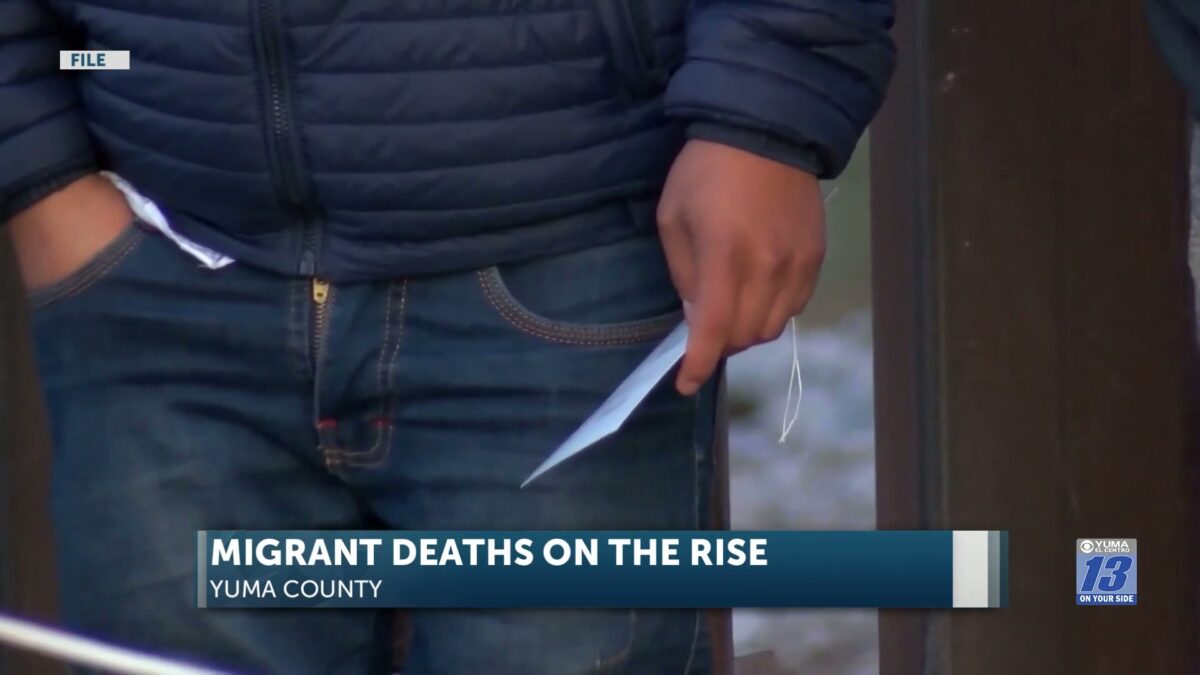
YUMA, Ariz. (KYMA) – Fewer migrants are crossing the U.S.-Mexico border, but migrant deaths in the Arizona desert are increasing.

According to data tracked by Humane Borders, 73 migrants have died in Arizona so far this year, including 19 in July.

Humane Borders Executive Director Octavio Fontes says increased border enforcement has pushed some migrants into more remote areas, where extreme heat and other desert conditions can become deadly.

Fontes says monsoon season can also create additional dangers, including flooding and changing desert washes that can cause people to become lost.

Humane Borders’ map shows 4,505 migrant deaths recorded in Arizona since 2000. Fontes says the actual number could be higher because some people who die in the desert are never found.

The organization expects the number of deaths this year could reach about 120.

Fontes says he hopes policymakers look beyond the statistics and consider the human lives behind the numbers.

Click here to follow the original article.
Local Red Cross supports wildfire relief

Lauren Duffel

YUMA, Ariz. (KYMA) – More than two and a half million acres have now burned in the Cascades region of Oregon, and one local woman was there helping with disaster operations.

Jillian Attaway, the Community Disaster Program Specialist for the Yuma-La Paz County American Red Cross, spent two weeks in Bend, Oregon.

During her deployment, she worked with the Burns Paiute Tribe, the Confederated Tribes of Warm Springs, and the Umatilla Tribe. She helped provide a safe place for local tribes affected by the fires.

“Each day, I worked with emergency managers from each tribal entity, making sure they had everything they needed to be supported by the Red Cross and also to be able to open shelters if needed independently. We did a lot of supply drops to make sure people with pets had support, as well as people with intellectual disabilities,” Attaway said.

The American Red Cross says it opened 25 shelters, provided over 1,400 overnight stays and served over 14,000 meals and snacks in 16 different cities impacted by the western wildfires.

Attaway says the most rewarding part of her deployment was building strong relationships with local staff and volunteers.

“We knew that we were leaving the region, the local staff, and volunteers really healthy relationships that we had worked really hard on the two weeks that we were there making sure they had the appropriate contacts, they knew who to call if there was another wildfire, and making sure they had what they needed to continue on,” Attaway said.

From Yuma to Oregon, Attaway says the mission was the same, helping communities stay safe, supported, and ready in the face of disaster.

Click here to follow the original article.

Teen arrested for allegedly stealing a vehicle

Dillon Fuhrman

YUMA COUNTY, Ariz. (KYMA) – The Yuma Police Department (YPD) said a teen has been arrested after he allegedly stole a vehicle.

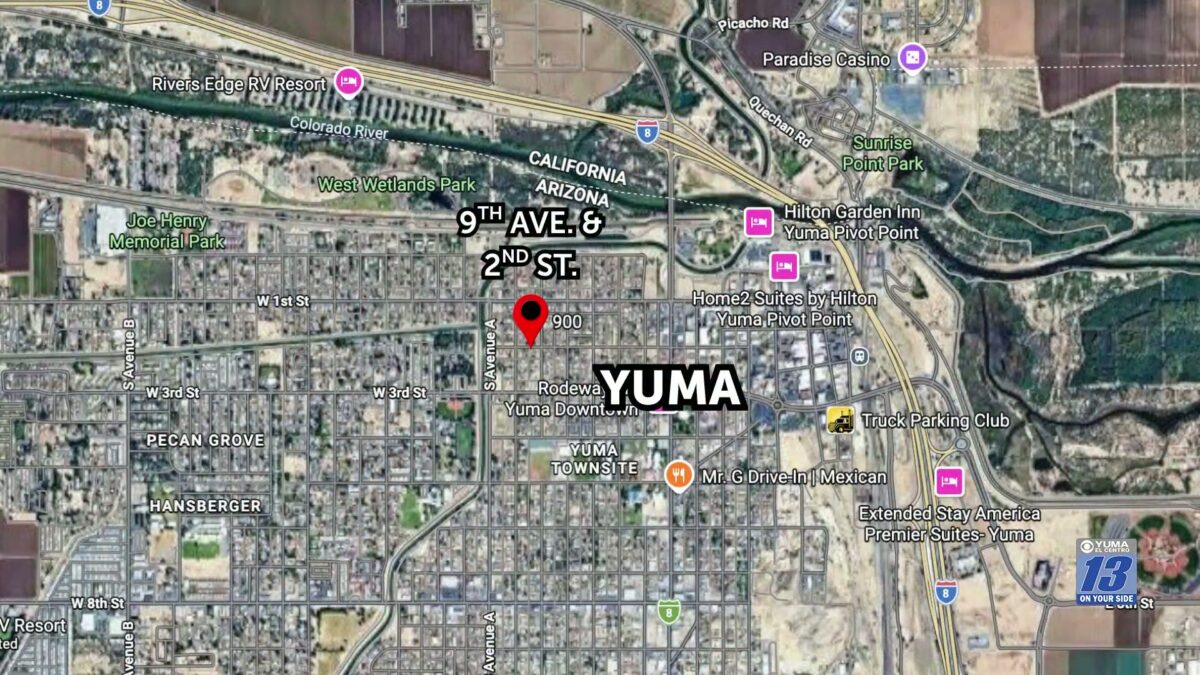
YPD received reports a vehicle stolen “sometime during the night,” which happened in the area of W. Second Street and S. Ninth Avenue, at around 7:20 a.m. Tuesday.

At around 10 a.m. that day, YPD said the Quechan Police Department (QPD) found the stolen vehicle and followed it to an apartment complex in Somerton.

The vehicle, according to YPD, then crashed into a palm tree near the apartment complex, located in the area of Somerton Avenue, with the suspect, identified as a 16-year-old boy, seen running to the complex.

This prompted QPD to set up a perimeter and “an active search for the suspect ensued,” YPD said.

Before noon that day, the suspect was taken into custody, and YPD said a firearm, cash and other crime-related evidence was found after a search warrant was served.

The teen was booked into the Yuma County Juvenile Justice Center for several felony offenses, and YPD said the teen “is being actively investigated for additional felony cases” that happened within the City of Yuma.

Courtesy: Yuma Police Department

YPD would like to thank QPD, the Somerton and San Luis Police Departments, the Yuma County Sheriff’s Office and U.S. Border Patrol Yuma Sector for their help.

If anyone has information regarding the case, call YPD at 928-783-4421, or 78-CRIME at 928-782-7463 to remain anonymous.

Stolen vehicle 26-64164Download

Click here to follow the original article.
Yuma man accused of sexually abusing a child pleads not guilty

Skylar Heisey

YUMA, Ariz. (KYMA) – There is an update in the case against a Yuma man accused of sexually abusing a child.

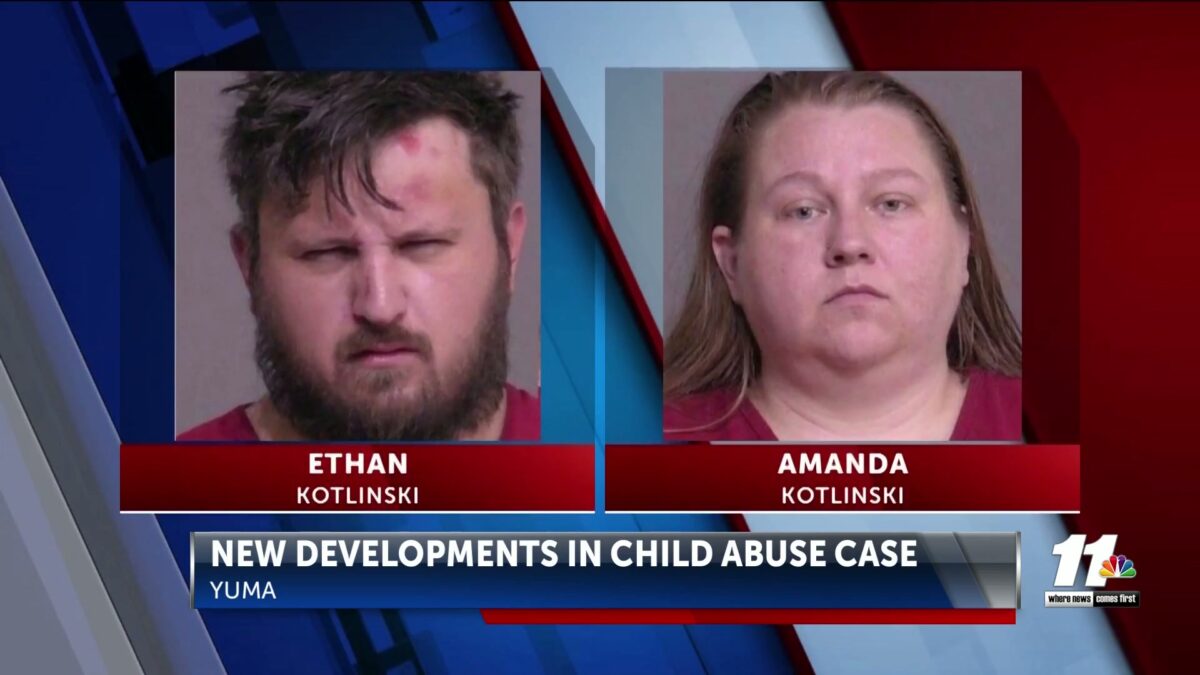
Ethan Kotlinski, 29, has pleaded not guilty to the charges, and his attorneys are now raising an insanity defense.

Kotlinski is scheduled to appear in court on September 16 to discuss what his doctors have determined about his mental state.

Kotlinski and his wife, Amanda, were arrested in March in connection to allegations involving a 13-year-old child.

Amanda, 31, is also facing charges in the case.

Click here to follow the original article.
El Centro hosts virtual forum to detail proposed Measure T sales tax increase

Lynette Niebla

EL CENTRO, Calif. (KYMA) – The City of El Centro hosted a virtual community town hall to provide transparency and answer resident questions regarding Measure T, a proposed half-cent sales tax increase headed to the November 3, 2026, general election ballot. 

If approved by voters, the measure would increase El Centro’s total transactions and use tax rate from 8.25% to 8.75%, generating an estimated $8.4 million annually in locally controlled revenue for the city’s General Fund. 

City officials explained that the cost of providing daily municipal services continues to climb due to inflation.

“The cost of providing basic municipal services continues to increase,” said Mario Renteria, Public Information Officer for the City of El Centro. “Simultaneously, the city’s primary ongoing funding source, sales tax, is projected to level out and dip slightly. While the city holds emergency reserve funds, those savings are not intended to pay for daily operational costs.”

El Centro currently holds $38.7 million in reserve funds, but leadership reiterated that these savings are strictly set aside for emergencies, natural disasters, or major economic downturns—not daily staffing or maintenance.

By law, 100% of the funds generated by Measure T must stay in El Centro. The state and county governments are legally prohibited from redirecting or taking any portion of the revenue.

If passed, the $8.4 million generated annually could fund general city services, including:

Public Safety: Preserving rapid 911 emergency medical responses, preventing crime, and keeping fire stations fully staffed.

Infrastructure: Repairing local streets, fixing potholes, and funding vital infrastructure maintenance.

Community Spaces: Keeping public areas and neighborhood parks clean and safe.

Local Economy: Retaining and attracting local businesses while addressing homelessness.

A major point of discussion during the meeting was the impact on consumer wallets. Officials emphasized that everyday necessities are entirely exempt from the proposed tax, meaning groceries, rent, and prescription medications will not be taxed.

Instead, the tax will apply primarily to retail goods, general consumer purchases, dining out, and auto sales.

The city’s daily population swells to nearly 75,000 residents and shoppers, putting an ongoing demand on local streets and emergency response teams.

“Because El Centro is a commercial hub of the region, visitors and out-of-town shoppers who shop and dine here will contribute to maintaining the local services and roads they use,” Renteria said.

This model is intended to capture revenue from non-residents who utilize city infrastructure, thereby taking some of the financial strain off local taxpayers.

To address voter questions regarding transparency and proper public spending, Measure T includes strict fiscal accountability mandates built directly into the ballot language.

If adopted, the city is legally required to undergo mandatory annual independent financial audits and issue public spending disclosures to ensure full transparency.

The city has launched an online Measure T Budget Calculator on its informational webpage. The tool allows residents to enter a single purchase amount or their estimated monthly taxable spending to see the exact difference between the current 8.25% rate and the proposed 8.75% rate. For example, on a restaurant bill of $20, Measure T would add exactly 10 cents.

For more information regarding the ballot language, a list of frequently asked questions, or to access the budget calculator, visit the official City of El Centro Measure T Page.

Click here to follow the original article.