EPISD eyes up to $450 million bond election, outlines $1 billion in long-term needs

El Paso Matters

by Claudia Lorena Silva

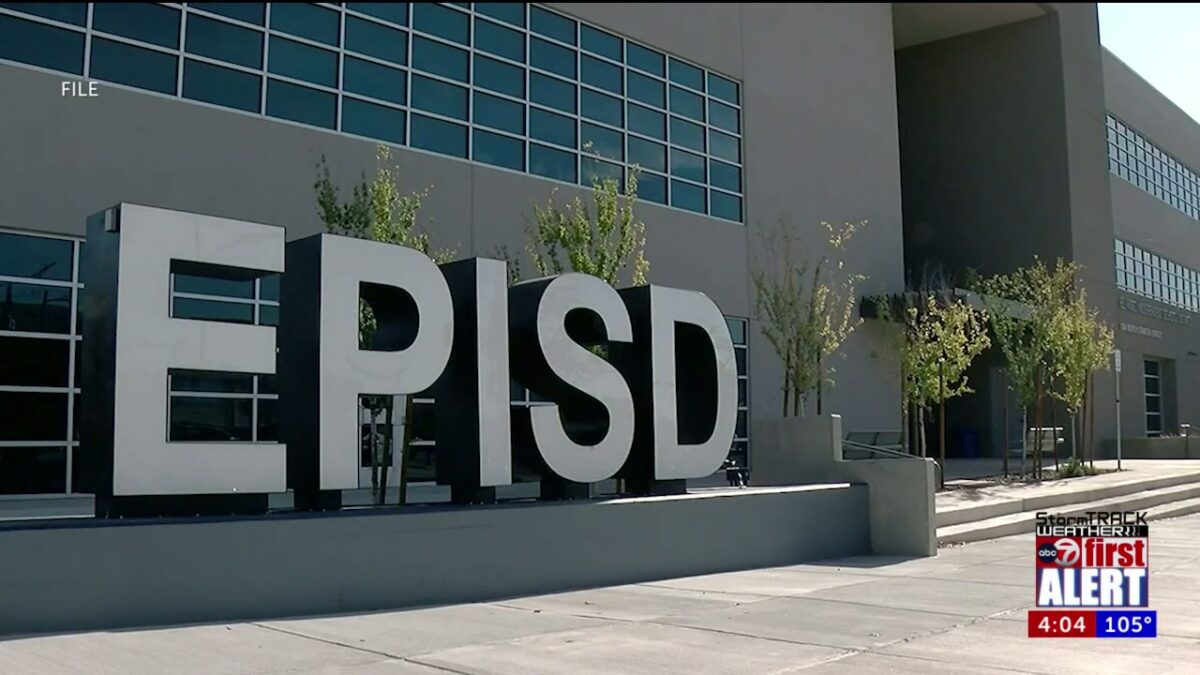
The El Paso Independent School District is considering taking a series of bond proposals to voters in November to begin improving its aging school facilities, making safety upgrades and addressing classroom needs.

Deputy Superintendent David Bates on Tuesday presented a long-range master plan, outlining the cost of addressing all the district’s needs and desired improvements, totaling over $1 billion. Though Bates did not make an official recommendation for the bond, he broke down three potential proposals totaling $445.8 million.

The presentation comes a week after the EPISD board voted to lay off 55 employees under financial exigency to slash expenses and address a deficit that was expected to nearly deplete the district’s savings. A third-party audit, conducted by educational consultant firm MoakCasey, found the district’s financial crisis was caused in part by poor budget tracking practices that had persisted for several years.

“I think it’s a once-in-a-generation opportunity to change what our schools look and feel like for the next generation of El Paso’s kids,” bond committee Chair Georgina Williams told El Paso Matters ahead of the meeting. “If a bond does go forward, and if these trustees put it to the ballot, it’s going to be El Paso that decides, and El Paso has always shown up for its own, and that’s what we may be potentially asking them to do again.”

Bates presented three potential propositions: Proposition A would ask for $409.6 million to upgrade cooling systems, address deferred maintenance, install solar at four elementary schools, improve playgrounds and add green space, among other upgrades. Proposition B would ask for $10.6 million to purchase technological devices for students and teachers, and Proposition C would call for about $25.6 million to renovate athletic stadiums.

District officials plan to give official bond recommendations in early August. The EPISD board is expected to vote Aug. 11 on whether to call for an election.

Bates said the recommended bond would likely range between $430 million and $450 million and claimed a bond would not likely increase the district’s tax rate.

“Our financial adviser is running the actual numbers of what a zero tax increase would get us,” Bates told El Paso Matters.

Though Bates said a bond would not increase the tax rate – the amount charged per $100 of property valuation – homeowners’ tax bills may still increase due in large part to rising home valuations.

Bates said he will have more details in the coming weeks on how a bond would impact homeowners’ tax bills, and plans to create a tax calculator for residents to get an idea of how it would affect them.
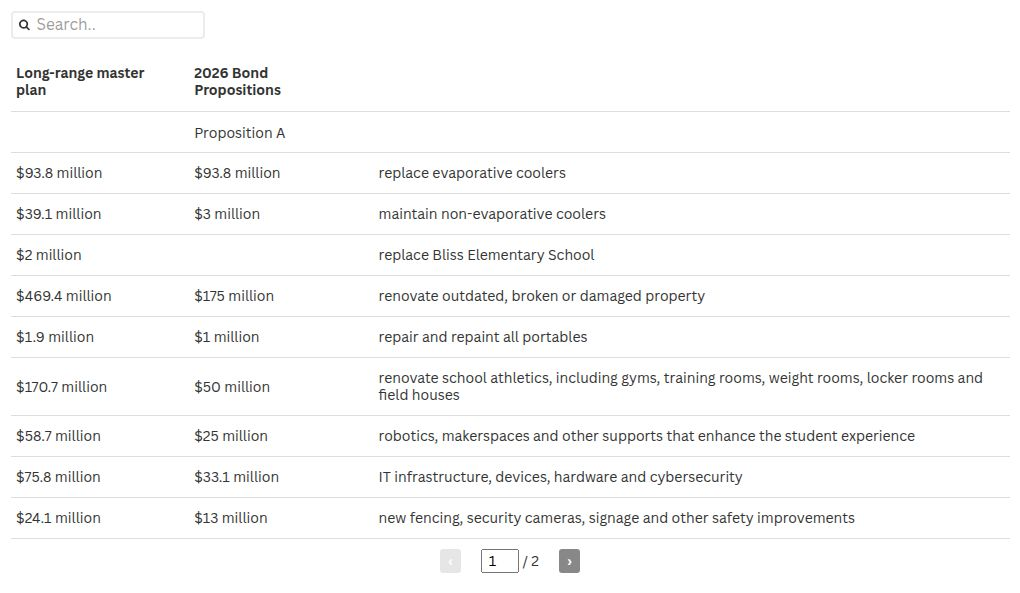
EPISD voters last approved a bond in 2016 worth $668 million to renovate schools and rightsize the district. Under the bond, the district closed and consolidated several elementary and middle schools and replaced them with pre-k through eighth-grade campuses. The bond was plagued with payment and construction delays.

District officials earlier this month said the district still had bond money to rebuild Bliss Elementary that had not been spent since it was approved a decade ago.

Bates said his experience working with bigger districts will ensure similar delays don’t happen again.

“Go back and look at the $5.5 billion that I managed in Dallas, and you won’t find the problem. I think I’ll be able to take care of $400 million here,” Bates said.

Committee recommendations

The recommendations for the bond and the master plan were made with guidance from the EPISD Citizens Bond Steering Committee, made up of parents, union leaders and residents from within the district’s boundaries.

The steering committee comprises six subcommittees with different focuses, including technology, safety and security, finance, student experience, athletics and capital renewal.

The district’s priorities within the next two years include converting all evaporative coolers into refrigerated air conditioning, safety and security improvements, structural repairs and replacing outdated equipment, including fire alarms.

Within the next three to five years, the district plans to repair or replace windows, doors, ceilings, sidewalks, masonry and exterior lighting, as well as paint school interiors. In six to 10 years, the district plans to replace lighting with energy-efficient LED fixtures, replace electrical panelboards and transformers and replace elevators.

Under the master plan, the district also plans to install fire suppression systems where they currently don’t exist and install solar panels in 13 of its schools.

The district estimated installing solar panels in four schools would cost about $1.4 million, but could be reduced to about $800,800 with federal incentives. It would cost about $21.8 million to install solar panels in all 69 of its campuses, which could be reduced to $13 million with federal incentives.

The district plans to rebuild Bliss Elementary School, located on Fort Bliss, primarily using funds provided by the U.S. Department of Defense.

EPISD officials are also considering demolishing six closed campuses to turn the land into green spaces and using some of them, including Beall Elementary School which was shuttered in 2019, to expand its pre-kindergarten program.

While committee members disagreed on some aspects of how the bond should be spent, Amanecer People’s Project Director Ana Fuentes said most believed air conditioning improvements were a non-negotiable inclusion.

The “Escuelas Frescas” campaign, launched by Amanecer People’s Project, has a list of 22 El Paso ISD school that they say still run on evaporative air, July 20, 2024. (Corrie Boudreaux/El Paso Matters)

Amanecer, a local environmental nonprofit, launched the Escuelas Frescas campaign in 2024 to push EPISD to upgrade outdated cooling systems in dozens of middle and elementary schools.

“Even folks who sometimes we would think wouldn’t be aligned, we all agree on the need to address this HVAC problem immediately, so that’s also why I feel more hopeful about how things will go in November,” Fuentes told El Paso Matters.

EPISD parent and bond committee member, Diana Ramirez, said they want the district to use the Community Resource Index — which gives campuses a rating based on the number of resources in the neighborhood, such as parks, libraries, healthcare clinics and transportation access — to prioritize the higher-need schools first.

The schools at the bottom quartile of the index, with the least resources nearby, are primarily located in South Central El Paso. This includes Guillen Middle School, Hawkins and Douglass elementary schools, Bowie High School, the San Jacinto Adult Learning Center and the Telles Academy alternative school.

Before the presentation, some committee members, including Fuentes, praised the district’s transparency throughout the steering process.

“The process was much different than other interactions with the district that we’ve had, much more transparency,” Fuentes said.

Most of the information presented Tuesday can be found on the district’s website, along with information on previous steering committee meetings and details on the conditions and needs at each individual campus.

Others, including Familia Unidas Por la Educacion organizer Hilda Villegas, were skeptical of the accuracy of the information used to design the long-range master plan. Familia Unidas is a grassroots educational advocacy organization focused on the Chamizal neighborhood in South Central El Paso.

One of Villegas’ main concerns is that the district’s most recent assessments of campus conditions were conducted under the previous Superintendent Diana Sayavedra, who spearheaded a plan to close schools to address declining enrollment. Under the plan, known as Destination District Redesign, EPISD planned to improve the school that remained open through a bond.
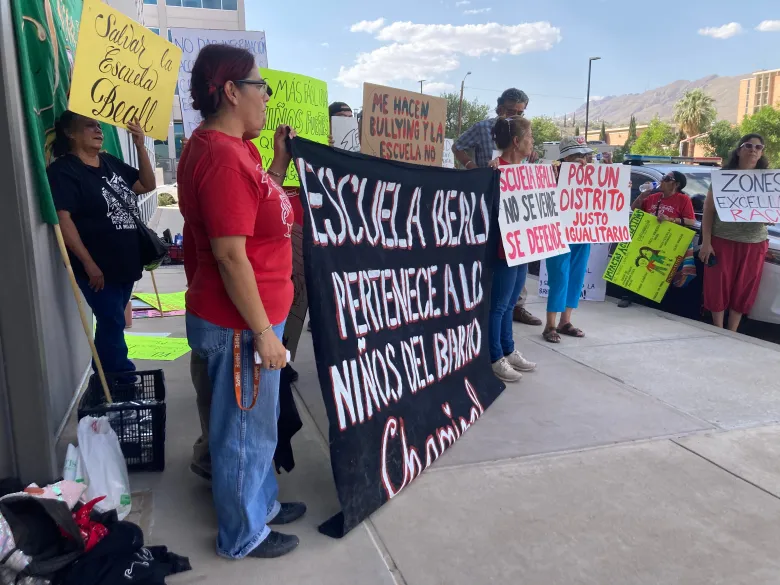
Familias Unidas del Chamizal por la Educación, a grassroots parental advocacy group based in Central El Paso, stand outside the EPISD administrative building in June 2025 to denounce an equity audit it says fails to adequately show inequities in South and Central district schools. (Claudia Lorena Silva / El Paso Matters)

The assessment found the district has three campuses that are in critical condition and 27 in poor condition.

She also worries the plan won’t be sufficient to address the needs of schools in some of the city’s most disadvantaged neighborhoods.

“We’re in the worst condition ever, and right now their whole idea that they need to pass the bond for deferred maintenance is good for us. But there is no plan to address the historic neglect in the barrio, and to rebuild the Bowie feeder pattern due to the neglect,” Villegas said.

Click here to follow the original article.

EPISD to consider up to $450 million in bond proposals, audit finds lack of transparency leading to deficit

Lauren Bly

EL PASO, Texas (KVIA) — Tuesday, El Paso Independent School District Deputy Superintendent David Bates presented a long-range master plan identifying more than $1 billion in potential capital improvement projects to support students in the district.

The report does not represent a proposed bond amount, and any future bond proposal would require review and approval by the Board of Trustees before being considered by voters.  

Bates did break down three potential proposals totaling $445.8 million:

Proposition A: $409.6 million; upgrade cooling systems, address deferred maintenance, install solar at four elementary schools, add green space and more upgrades.

Proposition B: $10.6 million; purchase technological devices for students and teachers.

Proposition C: $25.6 million to renovate athletic stadiums.

In Tuesday night’s meeting, the board learned audit of El Paso Independent School District’s finances found that spending continued despite declining enrollment, leading to a $53 million deficit.

The audit also found that planned savings of more than $10 million did not materialize, and $11 million in spending was not approved by the board.

Mayra Martinez, EPISD’s chief internal auditor, said tha the district’s former CFO and her team were aware of the financial situation but did not communicate this to the board, leading to a lack of transparency and limited corrective action. T

he audit gave 18 recommendations, including stronger financial controls, improved reporting, and increased board oversight.

Click here to follow the original article.

Las Cruces, El Paso dioceses to host prayer pilgrimage on Mt. Cristo Rey

Gabrielle Lopez

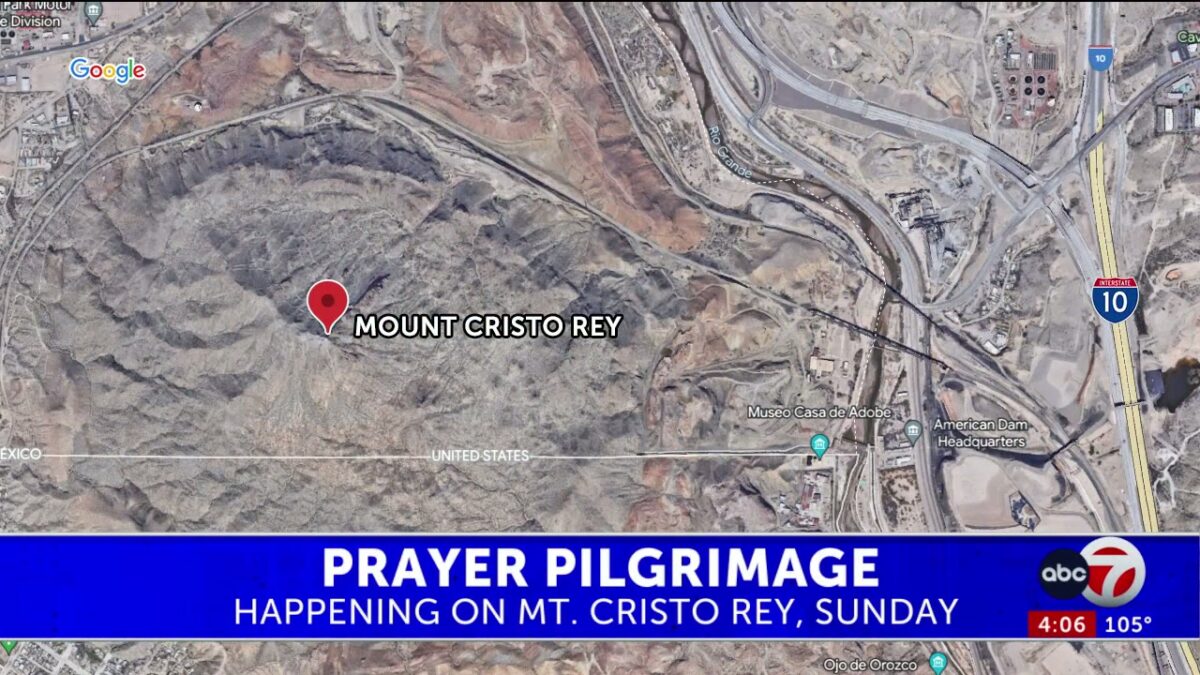
LAS CRUCES, N.M. (KVIA) — Sunday, the Roman Catholic Dioceses of Las Cruces and El Paso will host a pilgrimage on Mount Cristo Rey, according to a news release. The Diocese of Las Cruces said the pilgrimage comes as the U.S. government seeks to expand border wall construction and security south of Mt. Cristo Rey.

As ABC-7 previously reported, the government wants to use eminent domain to take the land for it. Eminent domain is a government power that can take private property for public use.

The Diocese of Las Cruces said during the pilgrimage, participants will “pray for the church and religious freedom throughout the world.”

“This pilgrimage is not against the government, against a policy or anything else,” said Las Cruces Bishop Peter Baldacchino. “It is for the Church; it is for unity and it is for religious freedom.”

The diocese said it told federal authorities and policymakers to “pursue humane and collaborative approaches to border security that uphold the rule of law and the constitutional protections guaranteed to religious institutions and property owners.”

The pilgrimage starts at 4:30 p.m. on June 28, the diocese said. It will start at the parking lot oat 1 Cristo Rey Rd. and will go up the mountain. Bishop Baldacchino will say mass at the pilgrimage.

Click here to follow the original article.

El Paso residents set up water stations to beat the heat

Nina Gallegos

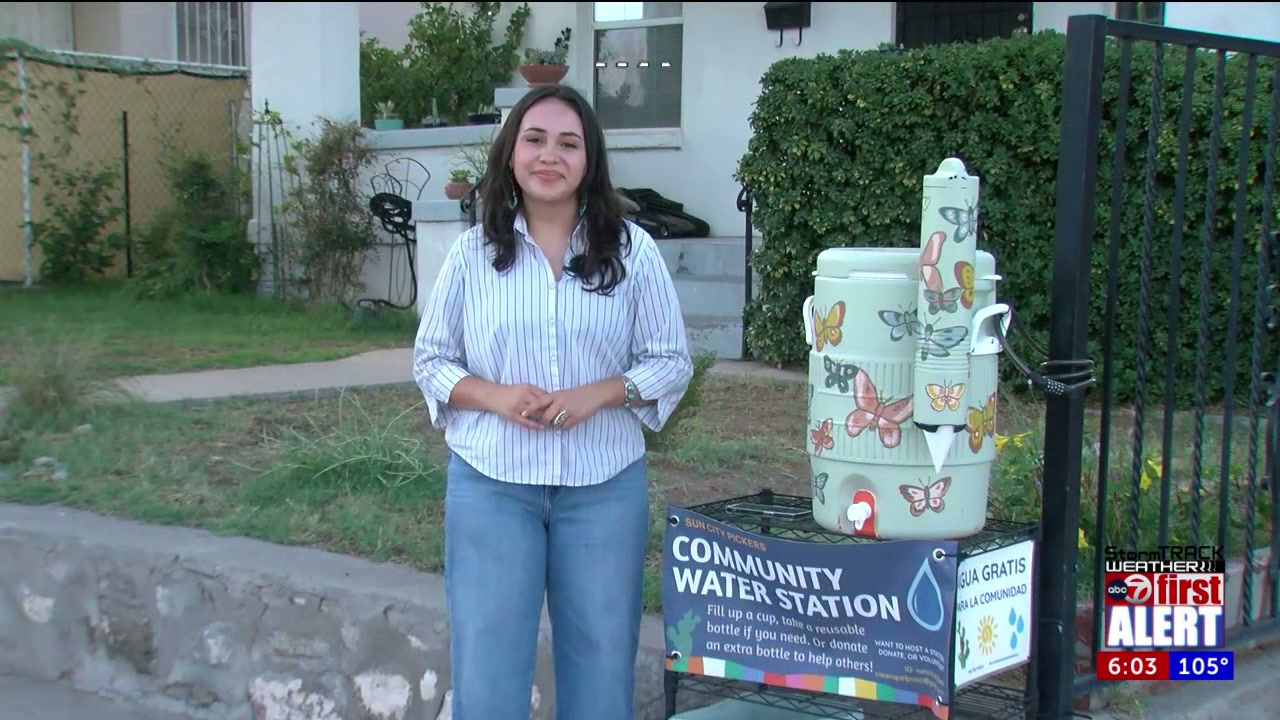
EL PASO, Texas (KVIA) — El Paso locals are putting up community water stations around the city to keep residents cool amid the summer heat. The initiative was started by Sun City Pickers, who just put up its first Downtown water station Tuesday. 

Sun City Pickers is a volunteer-run nonprofit that hosts weekly litter pickups to beautify El Paso and increase sustainability in the community.

You can identify the group’s water stations by seeing a water dispenser with paper cups attached. Some of the dispensers have paintings.

Instagram-এ এই পোস্টটি দেখুন

Community Water Stations (@communitywaterstations) -এর দ্বারা একটি পোস্ট শেয়ার করা হয়েছে

Its Downtown water station is on the corner of Missouri Avenue and Kansas Street outside of Amigo Bail Bonds.

Water station host Jud Burgess explained the importance of the program, noting that people in the area tend to overheat.

“In places like Paso where you have a lack of water and a lack of rain and high temperatures like in mid-100s, you know, people tend to overheat here,” Burgess said. “So this is a great way of just getting people, you know, getting their thirst quenched, but at the same time keeping them healthy and, you know, hydrated.”

Wednesday, El Paso could reach a high of 109 degrees. Staying hydrated can reduce the risk of heat-related illness.

The nonprofit covers the entire cost of setting up these stations.

Local business owner Maria Serrano initially declined when Sun City Pickers first approached her about setting up a community water station outside her business. Serrano recalled a past negative experience where a customer asked for water and then stole a doll from her store.

“Since then I would never give out water,” Serrano said.

Her hesitation was overcome when a volunteer from the nonprofit offered to set up the water station outside her business and pay it.

“I would’ve never thought of it,” Serrano commented.

Serrano now sees a positive impact from the station.

A local artist also views the water stations as a way to beautify the city. She hopes that appreciating the aesthetic of the stations will encourage people to see more beauty in nature around them.

Sun City Pickers is continuing to seek additional locations for water stations, considering both businesses and residential areas.

Click here to follow the original article.

Wrongful death lawsuit filed after Las Cruces officers allegedly abandon veteran’s suicide call

Gabrielle Lopez

LAS CRUCES, N.M. (KVIA) — Tuesday, a Las Cruces law firm filed a wrongful death and civil rights lawsuit against the city, two Las Cruces Police officers and the Mesilla Valley Regional Dispatch Authority (MVRDA). The lawsuit comes after the 2025 death of a 28-year-old Army veteran.

Singleton Schreiber LLP said weeks after returning home to Las Cruces in April 2025, Jacob Garcia called 911 to report he was suicidal and armed and asked the dispatcher to “get someone there now.”

Two Las Cruces Police Department officers, Hector Lopez and David Udero, went to Garcia’s apartment with fire and medical units. The law firm said Garcia’s call was a high priority suicidal-subject emergency.

According to the complaint, the officers didn’t go up to Garcia’s apartment, knock on his door or try to find him. The officers allegedly stayed in their vehicles and told dispatch to cancel fire and ambulance units, the law firm said.

Additionally, the lawsuit alleged the officers turned off their body cameras and left without confirming they found Garcia.

The complaint also alleged MVRDA didn’t question the officers’ order and failed to re-dispatch or escalate the call after receiving a second report about Garcia’s suicidal intent 45 minutes later.

Garica was still alive and communicated with his brother after officers left, according to the complaint. Text messages show he talked to his brother until 2:03 p.m. after the scene cleared, the law firm said.

Garcia died from a gunshot wound, the law firm said. The complaint alleged emergency responders could have found him if they weren’t ordered to leave. Fire, an air and ground ambulance showed up after Garcia’s brother found him and called 911, the law firm said.

The lawsuit claimed negligence, wrongful death and violations of the New Mexico Civil Rights Act according to the law firm. It alleged the officers’ actions as a “state-created danger.”

The lawsuit asks for damages under the state’s Wrongful Death Act, Civil Rights Act and Tort Claim Act on behalf of Garcia’s estate and family.

Singleton Schreiber LLP filed the lawsuit alongside co-counsel Theodore R. Markowski of Markowski Ruvalcaba Law Firm, LLC, in the Doña Ana County Third Judicial District Court. 

Click here to follow the original article.

Woman wished pug would ‘just pass away already,’ charged for animal cruelty: EPCSO

Gabrielle Lopez

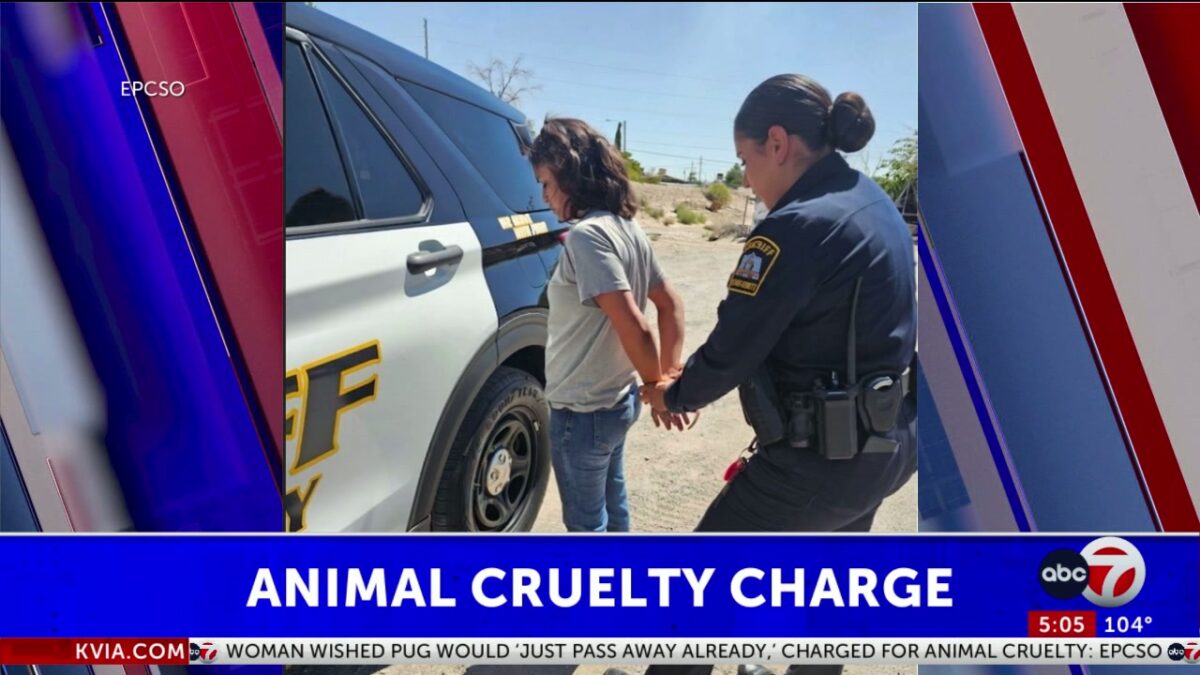
FABENS, Texas (KVIA) — A 26-year-old woman faces an animal cruelty charge after El Paso County Animal Welfare officers found an underweight pug, the El Paso County Sheriff’s Office said Tuesday.

June 17, Animal Welfare went to a home on the 100 block of NW 2nd Street in Fabens. PAWsitive Rescue reported a dog in poor condition, EPCSO said, calling for a welfare check.

EPCSO said officers found a 6-year-old underweight pug named Toby.

Courtesy: EPCSO

Deputies with the sheriff’s office identified Toby’s owner as Kimberly America Frescas. She told investigators Toby had been sick for more than two weeks and didn’t give him proper veterinary care, EPCSO said.

She said she wished Toby would “just pass away already,” according to the sheriff’s office.

Animal Welfare officers took Toby from the home and sent him to get medical treatment, the sheriff’s office said. His veterinary records said he weight half the average weight of an adult male pug.

Monday, detectives got a warrant for Frescas on an animal cruelty charge, EPCSO said. They arrested and booked her into the El Paso County Detention Facility on a $4,000 bond.

Click here to follow the original article.

Comedian plans volleyball game over El Paso-Juarez Border wall

Nina Gallegos

EL PASO, Texas (KVIA) – A viral comedian is bringing El Paso and Juárez together with a volleyball game across the border wall.

The game happened at 9:30 a.m. Tuesday. There was a small group on the U.S. side and an even smaller group on the Mexico side.

Skweezy Jibs posted about the event on his Instagram the week before. He invited players from both sides of the border wall.

Thought small amount of people showed up, Jibs took the opportunity to socialize with local Borderland residents.

View this post on Instagram

A post shared by @frontera_lense

Jibs stopped in El Paso as a part of a tour for his new movie ‘Skweezy Jibs Makes A Movie,’  which aired in El Paso Monday. In a trailer, Jibs described the movie as a mockumentary following Jibs attempting to produce a film. He described it as “John Wick plus Magic Mike plus Transformers plus Fast and the Furious.”

ABC-7 has reached out to Jibs and some of the volleyball players to hear about their experience.

Click here to follow the original article.

Las Cruces International Airport to discontinue Advanced Air flights to Albuquerque

Gabrielle Lopez

LAS CRUCES, N.M. (KVIA) — The City of Las Cruces announced on Tuesday that the city’s international airport won’t have Advanced Air’s route to Albuqurque International Sunport starting June 30. The city said the route discontinuation comes after the city and state Rural Air Service Enhancement (RASE) grant funding stretched out.

On average, six people are on each flight from Las Cruces to Albuquerque, the City of Las Cruces said. Advanced Air’s planes include small jets for private and semi-private flights, according to its website.

Advanced Air got $5 million in state subsidiaries and $600,000 in Las Cruces taxpayer funds since the route started in January 2023, the city said.

Funding the route costs Las Cruces $130,000 a month, the city said. With the city facing “significant budget pressures,” it said it’s difficult to fund an expensive route that serves a small population.

For the rest of June, Advanced Air flights from Las Cruces to Albuquerque will downsize to two round trips per week, the city said. The city is applying for a new RASE grant before the June 30 deadline and other options tor estore service.

After service resumes, the city said it wants to explore service from Las Cruces to Phoenix at a sustainable cost.

Click here to follow the original article.

City Council votes to begin negotiating Community Benefits Agreement for Meta data center

Carpio Griego

UPDATE (4:45 p.m.) — El Paso City Council unanimously voted to negotiate a CBA with meta for the data center planned for Northeast El Paso.

EL PASO, Texas (KVIA) — Item 35 on El Paso City Council’s Tuesday agenda is to begin negotiations with Meta Platforms Inc. for a Community Benefits Agreement (CBA) through the city manager and attorney. The CBA will look at regarding hiring practices, environmental protections, Meta’s spending agreements and other elements.

According to City Representative Cynthia Boyar Trejo, the agreement should include “El Paso First” hiring commitments on 300 operational jobs tied to the data center in Northeast El Paso.

The agreement would direct the city manager to have community roundtables through a moderator with representatives of El Paso Water, El Paso Electric, El Paso Chamber, Greater El Paso Association of REALTORS, environmental advocate, a resident representative and Meta. The roundtables would assist in developing the final CBA, Rep. Trejo said.

Staff would then return to City Council within 45 days with a draft agreement, he added.

Regarding water, part of the CBA would include upgrading, repairing, purifying and recycling infrastructure. It also calls for a timeline to create a pipeline connecting the data center’s cooling towers to El Paso’s groundwater, Rep. Trejo said. He said this would help leave more water for residents in the local aquifer.

For 214 homes located a mile from the data center, the CBA would help fund sewer infrastructure.

In terms of the environment, part of the CBA negotiations included in Item 35 is to create an ‘Emissions Reduction Fund’ to build solar powered battery infrastructure to reduce emissions.

Another part of the CBA is more funding to imporve El Paso’s solar and battery grid to reduce the amount of ‘brownouts’.

There would also be a ‘Ratepayer Protection Fund’ for Meta to invest in and distributed by the City of El Paso to help El Paso Electric customers with any bill increases as a result of the data centers operation.

This item also includes plans for an advanced training center in partnership with school districts, Workforce Solutions and El Paso Community College to train students and workers for high-demand careers. Rep. Trejo said the careers include fiber optic technicians, utility professionals, engineers and server technicians.

If approved, item 35 gives the City Manager and City Attorney 45 days to create a draft and present it to City Council.

Click here to follow the original article.

Faith vs. Border Fence

Angela Kocherga

Editor’s Note: This article is co-published published by Puente News Collaborative, a bilingual nonprofit newsroom that covers stories from Mexico and the U.S.-Mexico border and KTEP public radio .

By Angela Kocherga 

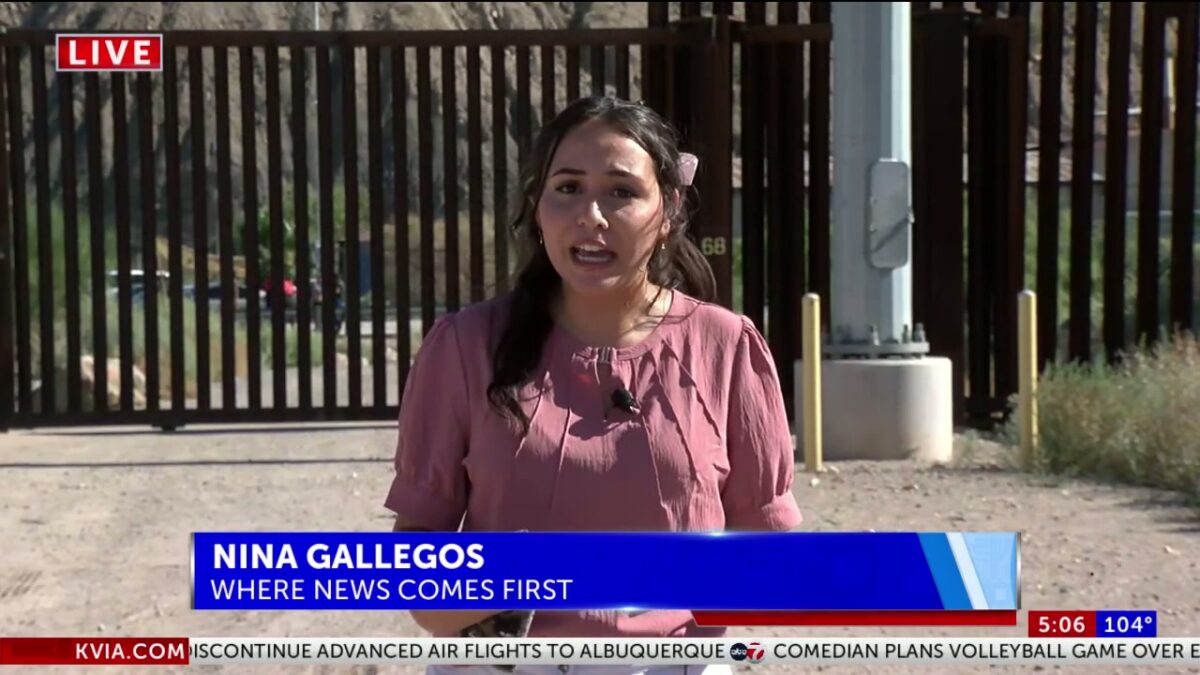
SUNLAND PARK, N.M. — The gleaming white sculpture of Jesus Christ at the top of windswept Mount Cristo Rey towers over this tiny border town, yet it looms large in the region, seen from miles away in Texas, New Mexico and the Mexican state of Chihuahua.

The federal government, in an eminent domain lawsuit, and in its effort to “wall off” the entire United States from Mexico, is now determined to seize about 14 acres of land at the foot of the mountain facing its southern neighbor. A hearing on the Trump administration’s motion to take “immediate possession” of the land, owned by the Catholic Diocese of Las Cruces, New Mexico, is scheduled for July 23rd in federal court. 

Long a symbol of faith and unity along this stretch of rugged borderland, Mount Cristo Rey is now at the center of a bitter legal battle over religious freedom and border security. The diocese calls the land a “holy site.” 

For generations countless thousands of pilgrims have hiked up to the 29-foot limestone figure of Jesus with outstretched arms, anchoring a site considered holy by the diocese, which owns the property. 

They’ve trekked to pray, tidy up the area, or simply take in the stunning view of the United States southern border and Mexico’s northern frontier. The faithful aren’t happy.

“STEALING THE LAND”

“I give thanks for all my blessings,” said Ramon Garcia, 73, who along with thousands makes the pilgrimage every Good Friday. He said there is no need for a wall, and admonished the Trump administration for “just stealing the land, land that belongs to us.”

The fight over building barriers in sensitive locations is happening all along the border in areas that include wildlife corridors and national park land in Texas, habitat for endangered cross border species like Jaguars and ancient tribal sites in Arizona and now in New Mexico. 

The diocese turned down the Trump administration’s effort to pay $183,071.00 to take property. In its suit filed in May, the diocese said the government is violating the First Amendment’s Free Exercise Clause and the Religious Freedom Restoration Act.

“The United States government’s effort to condemn diocesan land to build a border wall is an affront to religious liberty,” said attorney William Powell, senior counsel with the Institute for Constitutional Advocacy and Protection at Georgetown Law School in Washington, D.C. Powell described the government’s actions as “heavy-handed tactics.”

ILLEGAL CROSSINGS DECLINE DRAMATICALLY

In response, a Department of Homeland Security spokesperson said, “Access to the shrine will not be affected, as all attendees enter from the U.S. side.” 

According to the DHS statement, “The only individuals who could POSSIBLY be impacted by the border wall are illegal aliens attempting to illegally enter our country.” The agency maintains that the mountain is a well-worn smuggling route. 

In the lawsuit, the federal government said it needs the property “to construct, install, operate, and maintain roads, fencing, vehicle barriers, security lighting, cameras, sensors, and related structures designed to help secure the United States/Mexico border within the state of New Mexico.”

These days, Mount Cristo Rey is heavily guarded by the U.S. Border Patrol agents on horseback, helicopters, and by drones overhead. Ground sensors and cameras permeate the desert landscape.

Illegal crossings are down by more than 90 percent since the peak in 2023, according to the U.S. Customs and Border Protection.

This stretch of borderland has long been a backdrop for high-profile border wall projects since Trump supporters erected a half-mile steel barrier on private property in Sunland Park in 2019.

“We Build the Wall” organizers raised about $25 million in a crowdfunding campaign. The founder and two other organizers were later convicted or pleaded guilty to defrauding donors and pocketing hundreds of thousands of dollars after promising 100 percent of the money would go to build a wall on the border in New Mexico and Texas. Steve Bannon was also charged in connection with the scheme. Trump later pardoned him.

DOING IT BACKWARDS

The iconic limestone statue, completed in 1940, was the idea of a local parish priest and the work of famed sculptor Urbici Soler. Each year, at least 40,000 faithful and tourists make the more than 2-mile, sinuous hike to the Christ sculpture. During the Good Friday pilgrimage, some people take it further, finishing the trail barefoot or on their knees. Others carry home-made wooden crosses. 

“It’s a religious icon. It’s also a cultural icon. And it’s an artistic icon,” said Ruben Escandon with the Mount Cristo Rey Restoration Committee, a volunteer group that relies on donations to maintain the monument.

The hike is an Easter tradition for Lulu Alvarado’s family. Recently, as she approached the top of Mount Cristo Rey, she looked down disapprovingly at construction crews clearing land for the border wall with noisy heavy equipment.

“It really shows the divide between people,” she said.

April Fincher’s family moved to this area in 2023. She brings a different viewpoint. During her first hike up the mountain, walking with her 14-year-old daughter, she offered one quick observation: “Can you still get all the way up? OK, then build the wall.”

The court battle could take months, said legal experts familiar with the lawsuit. Construction started in January, signaled by controlled explosions to open land for the wall’s foundation, startling locals. 

Escandon said he understands the need for border enforcement but questions the way the federal government is carrying out the project.

“I think they’re doing it backwards and starting the construction, and now they’re covering their behinds and saying now we need to take the property.”

Angela Kocherga is news director and reports for KTEP public media.

Click here to follow the original article.