Las Cruces teen sentenced to 9 years for shooting, paralyzing victim during drug deal

Gabrielle Lopez

LAS CRUCES, N.M. (KVIA) — A Las Cruces teenager received a nine-year federal prison sentence for shooting and paralyzing an 18-year-old victim during a robbery, the U.S. Attorney’s Office District of New Mexico said Wednesday.

A news release said in February 2022, Matthew James Aguilar and two other people planned to meet the victim to buy marijuana. Aguilar was 16 years old at the time.

During the transaction, Aguilar and the others decided to rob instead of pay the victim. As the victim tried to drive away, Aguilar shot a gun into the passenger side of the victim’s vehicle, officials said.

One of the bullets hit the victim in the back — collapsing his lung and permanently paralyzing him, officials said.

Officials said the victim has quadriplegia, which is paralysis affecting all four limbs of the body and the torso.

After the shooting, Aguilar denied involvement when law enforcement interviewed him, the news release said. Investigators later found social media messages where Aguilar admitted he shot the victim while trying to rob him. He also said he admitted to it during jail calls.

Aguilar was first charged as a juvenile but later agreed to be prosecuted and sentenced as an adult, according to the news release. He pleaded guilty to interference with commerce by threats and violence.

After his prison release, he’ll be subject to three years of supervised release.

Click here to follow the original article.

Las Cruces museum system introduces Grief Cafes for emotional support

Nina Gallegos

LAS CRUCES, N.M. (KVIA) — The Las Cruces museum system is launching Grief Cafes, which are free community gatherings designed to provide a safe space for individuals to share their emotional experiences.

The gatherings are intended to help participants connect with others and reduce feelings of isolation. The museum system is expanding the program in observance of National Grief Awareness Day in August, according to organizers.

The Grief Cafes are not therapy or counseling sessions, but rather an open environment where people can discuss loss. This includes not only death-related grief but also significant life changes, such as moving, starting a new job or other major transitions that can evoke feelings of grief.

Galen Skibyak, a visitor experience curator for the Las Cruces museum system, described the program as “a space where anybody can kind of come and share their emotional experiences, share their stories, share their feelings with others.”

Skibyak said the cafes are “just kind of a space that’s safe for everybody to kind of come and share whatever they need to.”

The museum system previously offered similar Death Cafes two years ago for Dia de los Muertos. The events were popular and Skibyak says attendees asked for more similar events.

Emilia Linley, museum manager for visitor experience for the Las Cruces museum system, explained the purpose of the cafes.

“We want to make not only the museums a safe space for people, but just kind of Las Cruces, a generally safe and welcoming space for anybody who needs to express their emotions and to help people find other people that are feeling the same way and really make connections with each other,” Linley said.

Linley said the Grief Cafes will be held in a similar format.

“Our grief cafes are going to be held similarly. We will not necessarily have a death doula on site every evening,” Linley said. “But it will just be an open space where people can talk about grief in an environment without judgment, without any form of consulting or counseling or anything of that nature.”

The Grief Cafes begin in July and are scheduled for the third Tuesday of every month. In observance of National Grief Awareness Day, three additional Grief Cafe sessions will be held in August, according to organizers.

“That’s the most important thing about these grief cafes, is for people to leave knowing that they’re not alone,” she said.

Linley distinguished the cafes from professional counseling.

“Counseling is a place where you’re going to be given tools and things to work on in order to help ameliorate the grief in a way that is constructive. But it is not a space where you’re going to receive counseling.”

Linley also offered advice for supporting loved ones experiencing grief.

“Most people don’t want to hear you have to be better by a certain time frame. There is no time limit on grief,” Linley said. “Grief will come and go. It will ebb and flow.”

She suggested treating grieving loved ones like “houseplants,” making sure they get “some water and some sunshine, but otherwise just allowing that space.”

In addition to the Grief Cafes, a Grief and Safety Fair is scheduled at the Railroad Museum on Aug. 29 from 10 a.m. to 1 p.m.

More information about events and programs is available on the Las Cruces museum system’s Facebook and Instagram pages under “LC museums.”

Click here to follow the original article.

Las Cruces cooling centers open through July 11

Gabrielle Lopez

LAS CRUCES, N.M. (KVIA) — The Las Cruces area can expect near triple-digit temperatures this weekend, and the city opened cooling stations to help those who need a break from the heat.

Through July 11, these locations will have free air conditioning:

Thomas Branigan Memorial Library, 200 E. Picacho Ave.

9 a.m. to 8 p.m. Monday through Thursday

9 a.m. to 6 p.m. Friday and Saturday

Closed Sunday

Mesilla Valley Intermodal Transit Terminal, 300 W. Lohman Ave.

6:30 a.m. to 10:30 p.m. Monday through Friday

8:30 a.m. to 4:30 p.m. Saturday

Closed Sunday

Meerscheidt Recreation Center, 1600 E. Hadley Ave.

10 a.m. to 9 p.m. Monday through Friday

10 a.m. to 6 p.m. on Saturday

Closed Sunday

The building is under construction but will have designated cooling areas.

Some Las Cruces senior centers will serve as cooling spaces. These buildings are open on weekdays from 10 a.m. to 5 p.m. They’re closed Saturday and Sunday.

Frank O’Brien Papen Community Center, 304 W. Bell Ave.

Henry R. Benavidez Community Center, 1045 McClure Rd.

Munson Center, 975 S. Mesquite St.

Click here to follow the original article.

Border Patrol El Paso Sector alerts rideshare drivers about smuggling dangers

Heriberto Perez Lara

EL PASO, Texas (KVIA) — U.S. Border Patrol El Paso Sector is warning rideshare drivers about the significant legal and physical dangers associated with human smuggling risks.

Border Patrol said transnational criminal organizations are manipulating legitimate mobile applications to facilitate their smuggling operations, posing threats to drivers who unknowingly participate.

Criminal smugglers use these apps and frequently arrange pickups via third-party accounts, according to a Border Patrol press release.

Officials said these pickups occur in secluded desert locations, remote highway shoulders near the border wall, or commercial staging lots; the tactic allows smugglers to insulate themselves from law enforcement.

Border Patrol also urges rideshare drivers to identify several indicators of smuggling activity, which include:

Passengers wearing heavily soiled clothing or groups attempting to exceed vehicle occupant limits.

Other signs are third-party bookings where the account holder is not present, or passengers who appear visually stressed and unaware of their current location.

Drivers who accept these suspicious fares face immediate detention and investigation at highway checkpoints.

Under federal law, individuals found to be participating in these networks may face felony charges for alien smuggling and harboring.

“Cartel criminal smugglers recklessly endanger the lives of rideshare drivers and passengers alike, treating legitimate drivers as disposable tools for their smuggling operations,” said El Paso Sector Chief Patrol Agent Jesse D. Munoz. “When these trips are intercepted, drivers face immediate detention and asset forfeiture while federal agents investigate their level of involvement in the smuggling network.”

U.S. Border Patrol also advised drivers who encounter suspicious pickup requests to prioritize their safety. Drivers should immediately cancel the ride and relocate to a secure area.

They are also encouraged to use in-app security functions to document their routes and report concerns to the platform.

Suspicious activity or suspected human smuggling should be reported immediately to official law enforcement hotlines.

For emergencies, individuals should dial 911. Citizens and drivers can report suspicious activity anonymously to the U.S. Border Patrol by calling 1-800-635-2509.

Click here to follow the original article.

‘Help me get my beer’: 21-year-old man charged for deadly hit-and-run on Loop 375

Paul Schulz

UPDATE (July 9, 2026) — A social media post reportedly helped police identify 21-year-old Abraham Sosa Castro as a suspect in a deadly hit-and-run crash on the Loop 275 near Pellicano, according to arrest documents.

Documents said Castro’s car flipped onto its roof after crashing into Manuel Oliva Contreras June 19 just before midnight. Contreras later died to his injuries.

Pictures of the crash showed a beer can wedged between Castro’s windshield and dashboard on the driver’s side, according to documents.

Before Castro allegedly left the crash by foot, witnesses took photos of him, police said. The photos circulated online, particularly through the Instagram page FitFam El Paso.


Photos posted on FitFam after the crash(Courtesy: @therealfitfamelpaso)

One witness told police Castro allegedly appeared drunk in how he smelled, documents said. The witness took pictures of Castro and said he wore a green Mexico jersey with jeans. After posting the picture, the witness received information about Castro, including a picture of his car and Facebook profile with his full name.

Another witness told police Castro allegedly said, “Help me get my beer” and tried to get a cooler out of his car, documents said.

Someone called 911 to report their friend gave Castro a ride without knowing about the hit-and-run, documents said. The reporter recognized Castro on FitFam’s post because he wore the same clothes — a green Mexico soccer jersey and jeans — before leaving the friend’s house, police said.

Police met with the an unnamed “Involved Other” who reportedly drove Castro away from the crash site for questioning. Documents said the involved other was with her friend at a Circle K gas station when Castro allegedly told them he didn’t know where he was and needed a ride.

The involved other decided to give Castro a ride home. She and Castro were dropped off by the involved other’s friend at an apartment complex where she had her car parked, documents said.

From there, Castro allegedly asked her to take him to a nightclub in Lower Valley El Paso to find his friends, documents said. Castro couldn’t find his friends at the club.

The involved other told Castro she needed to go home and said she would drive Castro to his home in Fabens the next morning, documents said.

At the involved other’s home, her friend she was with earlier sent her the FitFam post about the crash with pictures reportedly showing Castro, documents said.

The involved other confronted Castro about the crash, and he allegedly left her home and ran across the street to ask her neighbor for a ride, police said. When he didn’t get a ride, he allegedly left toward the desert area, documents said.

The involved other said Castro told her his full name, police said.

Later, police obtained surveillance video from the Circle K Castro reportedly met the involved other and her friend at. Documents said video showed Castro get into an SUV and leave the gas station.

Police also found an old booking photo of Castro as the registered owner of his car. Documents said the photo matched the description witnesses gave police about how Castro looked.

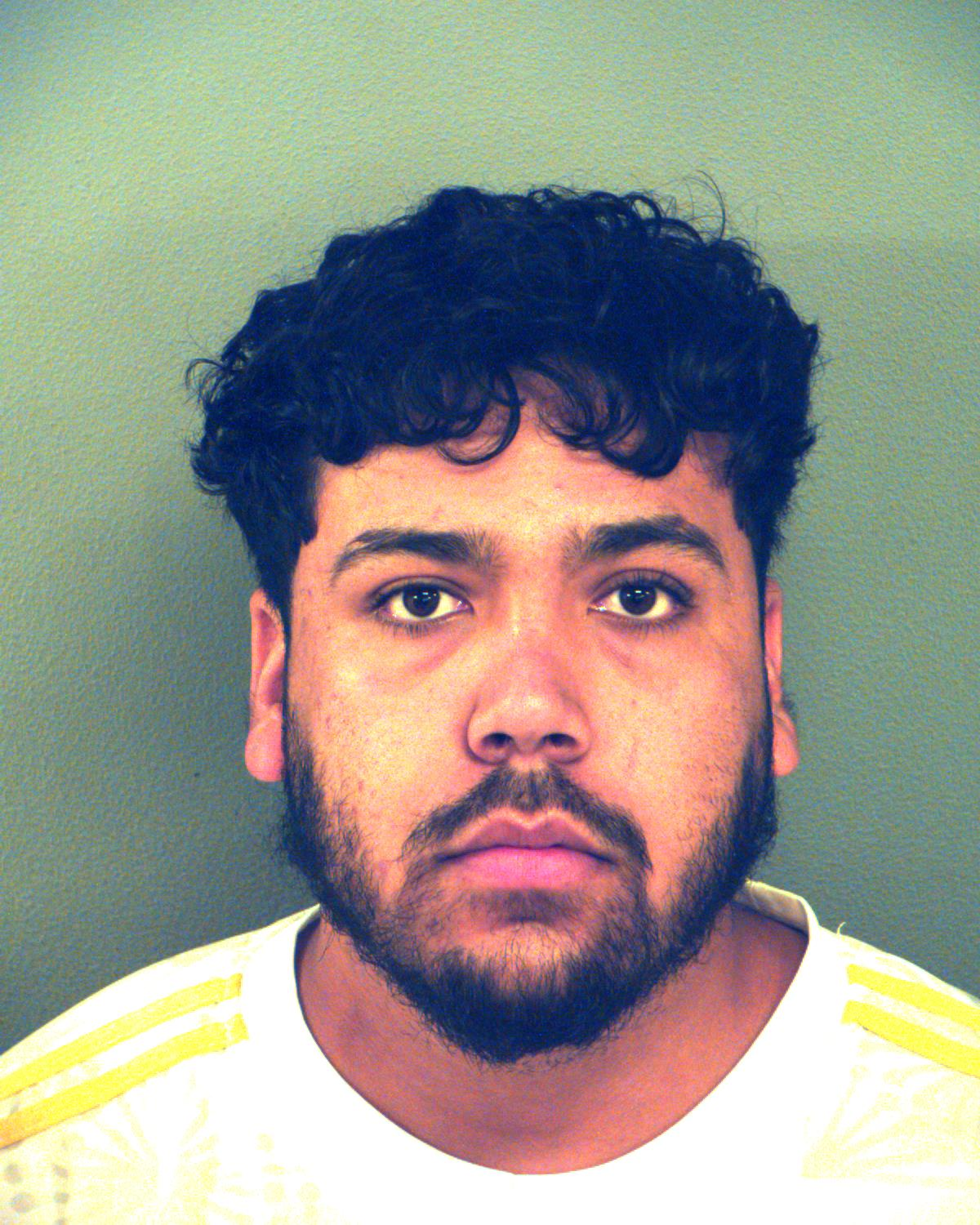
UPDATE (July 8, 2026) — Tuesday, El Paso Police Department arrested and charged 21-year-old Abraham Sosa Castro for a crash that killed 76-year-old Manuel Oliva Contreras.

Police said Castro allegedly drove at a “high rate of speed” and read-ended Contreras on Loop 375 South. Castro reportedly left the crash site by foot, according to a police report.

Police booked him into the El Paso County Detention Facility on a $500,000 bond.
(Courtesy: EPPD)

EL PASO, Texas (KVIA) – A 76-year-old El Paso man died following a hit-and-run crash on Loop 375 South near Pellicano, according to the El Paso Police Department.

Police said officers responded to the crash at about 11:30 p.m. on Thursday, June 18 on Loop 375 South near Pellicano and found two vehicles at the scene.

Investigators said the driver of one vehicle fled before officers arrived.

The other vehicle involved was a 2019 Nissan Sentra driven by Manuel Oliva Contreras of East El Paso. Contreras was transported to a local hospital after the crash. Police initially believed his injuries were not life-threatening, but later learned he died from those injuries.

The investigation was turned over to the Special Traffic Investigations unit.

According to preliminary findings, a dark colored vehicle was traveling southbound on Loop 375 at a high rate of speed when it rear-ended the Nissan Sentra, which was also traveling southbound. Investigators said the driver of the dark colored vehicle then fled the scene on foot.

Police have not identified the driver of the fleeing vehicle.

Investigators are asking anyone with information about the crash or the driver involved to contact police at 915-832-4400. Anonymous tips can also be submitted through Crime Stoppers of El Paso at 915-566-8477.

The crash marks the city’s 22nd traffic fatality of 2026. At the same point last year, El Paso had recorded 29 traffic fatalities.

Click here to follow the original article.

Son of alleged Las Cruces bounty hunter charged in federal child exploitation case

Gabrielle Lopez

LAS CRUCES, N.M. (KVIA) — A Las Cruces man faces federal child exploitation charges after investigators found a phone with evidence, according to the Justice Department. Investigators found the phone while they were investigating an alleged bounty hunter for human trafficking.

The DOJ said federal agents used a search warrant at a Las Cruces home to investigate Robert Jay Hernandez in May.

Robert Jay Hernandez faces federal charges after the DOJ said he allegedly bonded people out of jail and exploited them with forced labor, sexual acts and other services by threatening them. He reportedly worked for a bail bond company in Las Cruces.

The FBI took away several electronics, including a cellphone belonging to his 37-year-old son, Matthew Esai Hernandez.

Investigators found evidence that Matthew Hernandez engaged in sexually-explicit interactions with people who presented themselves as minors and had child sexual abuse material (CSAM).

Hernandez allegedly used messaging apps like Telegram and Kik Messenger to get CSAM, according to the DOJ. In several conversations, he allegedly knew the minor’s age and still requested pictures and sexual messages, according to a news release.

He faces a charge for attempted coercion and enticement of minors and receipt and possession of child pornography, according to the DOJ. His trial hasn’t been scheduled yet.

If convicted, Hernandez faces a minimum punishment of 25 years and up to life in prison.

Click here to follow the original article.
El Paso deputies issue 265 citations during ‘Operation Slow Down’ on Transmountain Road

Gabrielle Lopez

EL PASO, Texas (KVIA) — The El Paso County Sheriff’s Office on Wednesday announced it executed “Operation Slow Down” to reduce dangerous driving on Transmountain Road.

EPCSO said the operation lasted six days and involved highly-visible law enforcement presence.

Within six days, deputies did 292 traffic stops. On average, deputies did 48 traffic stops and gave 44 citations a day, according to the sheriff’s office.

At the end of the operation, the sheriff’s office issued 265 citations and warnings:

204 speeding citations

27 citations for no insurance

16 driver’s license violation citations

12 registration violation citations

2 citations for failing to exit a lane for an emergency vehicle

1 citation for an unrestrained child

2 possession of THC/marijuana reports

2 traffic warrant referrals to Justice of the Peace Precinct 7

77 written warnings

“Our goal is not to issue citations, it’s to save lives,” Sheriff Oscar Ugarte said in a statement. “When drivers see deputies out enforcing traffic laws, they’re reminded to slow down and make safer choices behind the wheel.”

Additionally, EPCSO didn’t report any crashes in the area during the six-day period.

ABC-7 spoke to Emmanuel Soria, the Chief Deputy with the El Paso County Sheriff’s Office. Soria said the main goal of the operation is to target speeders. The office received complaints about reckless drivers on Transmountain and wanted to target them.

“The whole concept is presence,” said Soria. “It’s unfortunate that we have to have six patrol cars lined up on Transmountain in order for people to see that.”

Soria says they will hear complaints from residents about speeders and reckless drivers on state and county roads and try to have a presence there.

“Our conclusion based on this operation is that it’s evident when patrol cars are visibile, peole will tend to abide by the speed limit,” said Soria. “But we don’t want it just to happen only because we’re there. We would like the community to help us patrol themselves.”

ABC-7 will have a full story on Operation Slow Down tonight on ABC-7 at 10.

Click here to follow the original article.
El Paso Water reassures public on Meta data center’s water usage

Nina Gallegos

EL PASO, Texas (KVIA) – Monday, El Paso Water addressed ongoing community concerns regarding the water demand of Meta’s new data center under construction in Northeast El Paso.

During a City Council work session, officials from El Paso Water said the facility’s water usage is projected to be lower than many residents believe, ensuring existing customers will not be negatively impacted.

The data center, being built near the state line, prompted worries among some El Pasoans about the strain it could place on the region’s water supply.

El Paso Water shared details on its long-term water planning, which focuses on population, supply and demand.

El Paso Water gets its supply from four primary sources: the Hueco Bolson, the Mesilla Bolson, the Rio Grande and reclaimed water.

John Balliew, president and CEO of El Paso Water, explained when the city developed its master plan in 2006, large data centers were not anticipated. The plan projected daily water use of 2.3 million gallons for residential development and 3.7 million gallons for high-density residential and commercial development.

Balliew noted the Meta data center’s maximum allowable water use of 2.5 million gallons per day falls within these original projections. Balliew clarified Meta would only reach its maximum water use if temperatures in El Paso hit 117 degrees, a temperature the city has never recorded.

He estimated the project’s expected daily water use to be closer to 480,000 gallons — a figure he said is comparable to other large commercial water users like golf courses, large hospitals, industrial laundries, housing authorities and the Marathon Refinery.

“If this were a residential development or even if it was a golf course, nobody would be complaining about it even though it was the same amount of water. So in terms of the of of taxing the overall water supply for the future generations of El Paso, tiny tiny impact on that,” Balliew said in the meeting.

However, El Paso City Council Member Josh Acevedo expressed concerns in a statement:

“While El Paso Water maintains they have sufficient water resources to accommodate the Meta data center, I continue to be concerned. Current demand may not account for major changes in the climate as we continue to face drought conditions.

My issue is not with El Paso Water, but rather with Meta as they have the ability to change the size and scope of their project with almost zero oversight by the city.

The agreement between the City and Meta also fails to address environmental concerns that I share with the public around the inefficient gas power plants for the demand induced by the hyper scale data center, including negative impacts to our air quality and noise pollution. The project has already surpassed its original scope, and the agreement with El Paso Water only serves to benefit them further.”

Meta plans to use a water-efficient, closed-loop, liquid-cooled system that recirculates the same water and will use zero water for a majority of the year, according to background information provided by Meta.

This design aims to minimize water use in their data centers. Meta has a goal to be water positive by 2030, meaning the company intends to restore more water than it consumes.

In El Paso, Meta plans to restore water consumed by the data center to local watersheds by supporting local projects that boost water supply, enhance water quality, provide safe drinking water and help restore local habitats.

These projects include deploying irrigation technologies for agriculture in the immediate area and supporting initiatives to bring safe, clean, affordable running water to underserved Colonias.

Meta said it worked closely with El Paso Water to plan for and meet its water and wastewater needs. Agreements with El Paso Water govern Meta’s operations and ensure the company pays the full costs associated with serving its data center, to avoid negatively impacting other customers or the local water supply.

Meta plans to disclose the water withdrawal for the El Paso facility annually once it becomes operational.

Click here to follow the original article.

Vitalant calls for type O blood donations amidst shortage

Gabrielle Lopez

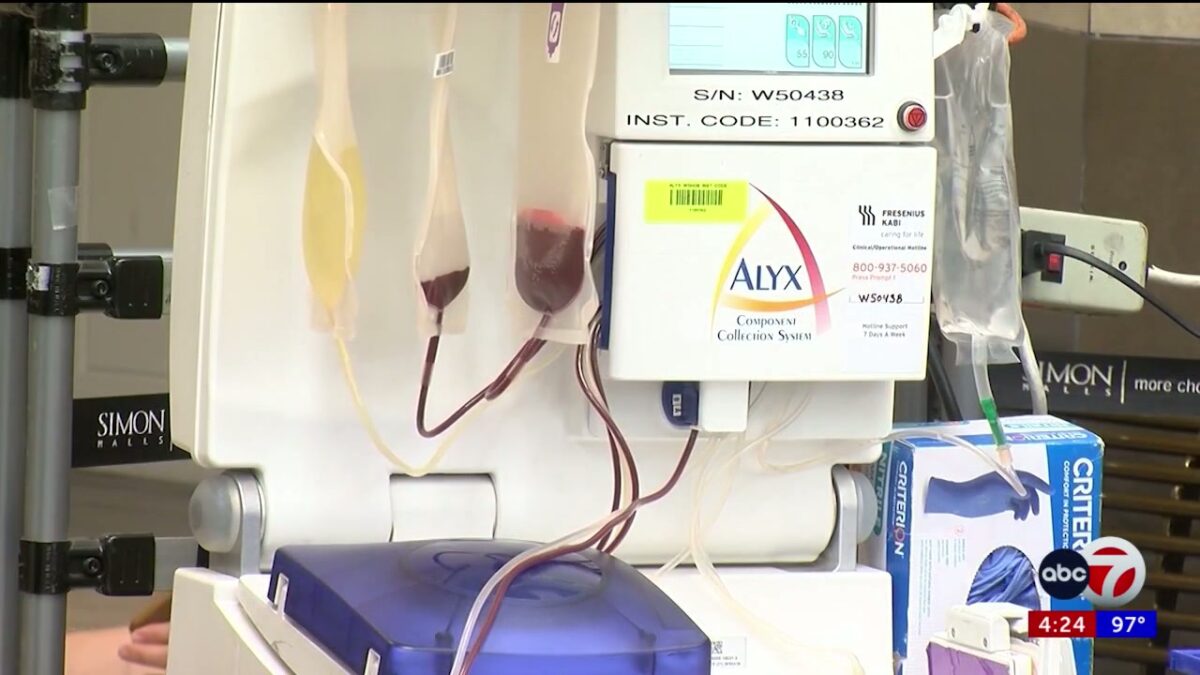
EL PASO, Texas (KVIA) — A two-year low of type O blood prompted Vitalant to ask the community to donate the most-needed blood type.

The nonprofit is asking all blood donors, especially those with type O, to make an appointment. It said since May, type O blood supply decreased.

According to Vitalant, someone in the U.S. needs a blood transfusion every two seconds, and type O is the most-transfused type.

Type O-negative blood can help anyone, Vitalant said. O-positive can help anyone with a positive blood type.

“When there is a shortage, doctors may have to decide who can receive it immediately and who can wait. That is why maintaining an adequate supply of all blood types is essential to ensure every patient gets the blood they need, especially when seconds count,” James Dugger, Vitalant’s vice president of the Texas area, said.

Around the Fourth of July holiday, Vitalant said it sees less donors. 

“More travel, you know, more auto accidents because of more people on the roads. So just things like that in that takes away from the already needed blood for people who have surgeries and illnesses that require blood transfusions,” Vitalant’s Carla Alexander said.

Vitalant said donors who give blood by July 11 can get a special T-shirt while supplies last.

You can make a Vitalant appointment here.

Click here to follow the original article.
Juarez firefighters control overnight tire storage fire

Gabrielle Lopez

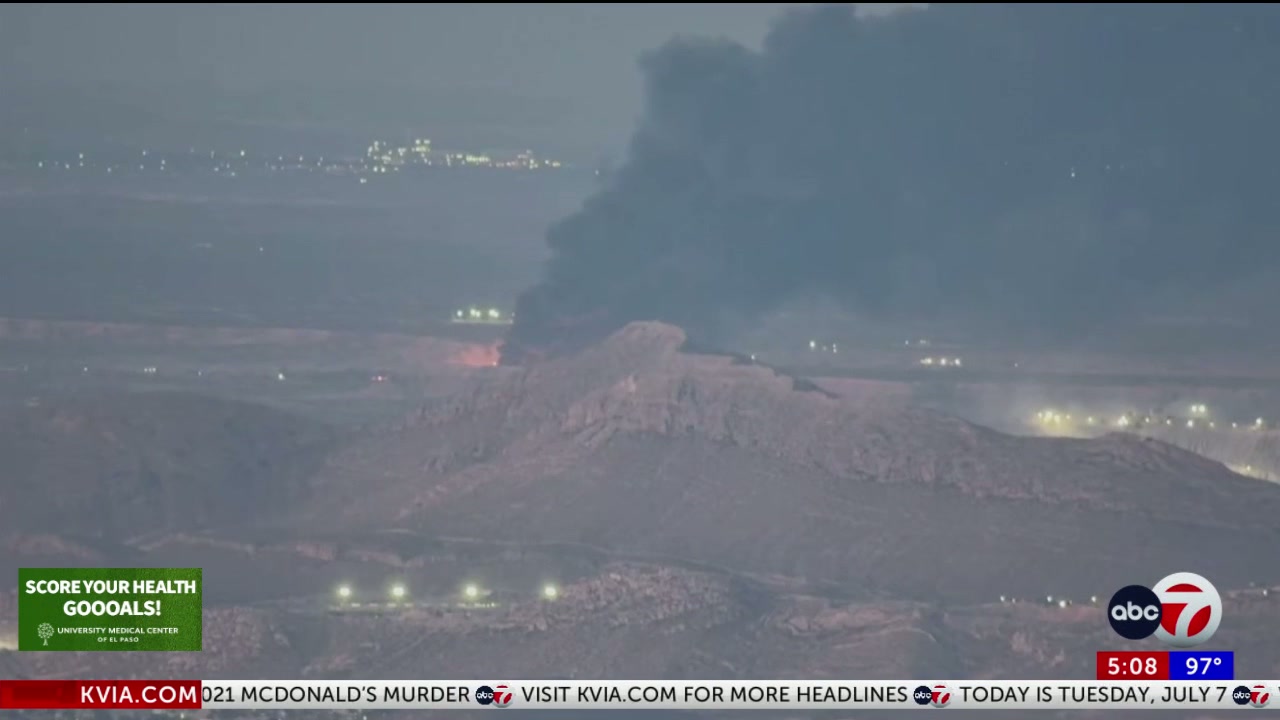
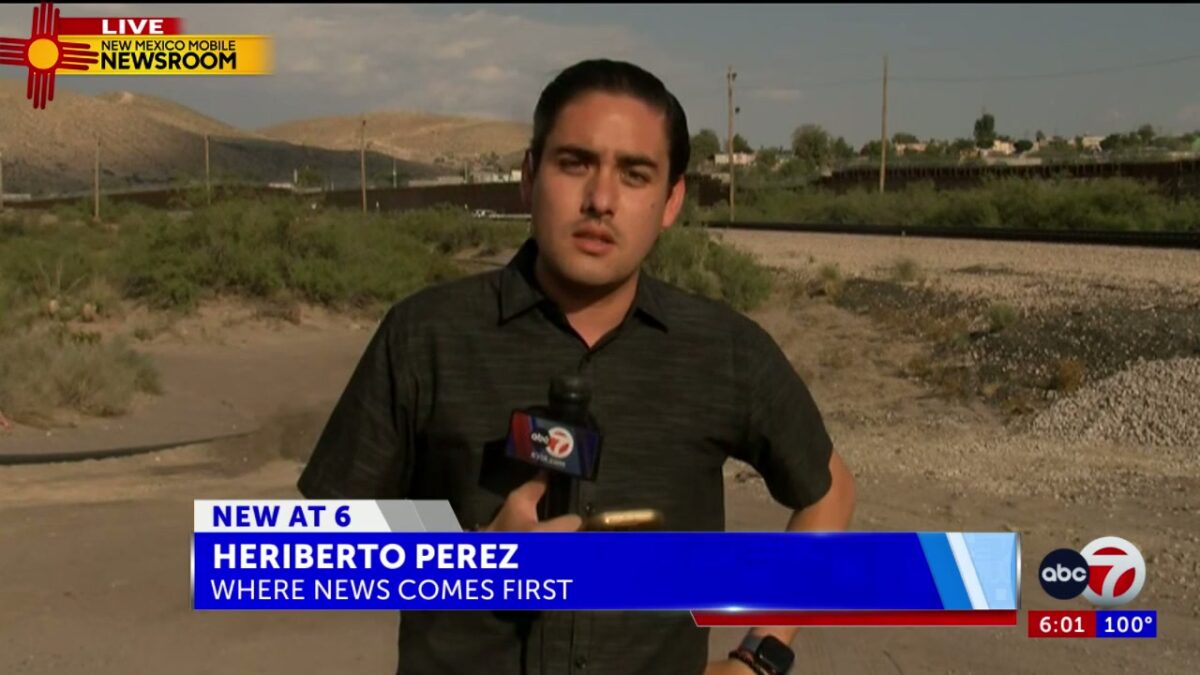
EL PASO, Texas (KVIA) — Tuesday, Juarez firefighters reported and contained an overnight fire at a tire storage facility across the border.

An official report said the fire was reported at 11:53 p.m. Monday. Six fire engines and a tanker helped with the response by cooling the area with water jets. Crews also sued heavy machinery to smother the flames.

Officials said the fire went under control, but wasn’t fully extinguished, by around 4 a.m. Tuesday.

Between 250,000-300,000 used tires were damaged — out of an estimated 3.5 million stored at the site, according to officials.

Authorities continued to extinguish the fire throughout Tuesday and will stay on site until any risk of the fire reigniting is gone.

Click here to follow the original article.