‘It is truly about trust:’ EPISD votes unanimously to postpone bond election to May 2027


Max Zepeda

EL PASO, Texas (KVIA) — The El Paso Independent School District Board of Trustees voted unanimously Tuesday to postpone voting on $480 million of bond propositions for infrastructure improvements to its campuses, to the May 2027 special election.

According to the EPISD’s Citizens’ Bond Steering Committee, who is overseeing the bonds, they argued Tuesday that the public has simply “lost trust” in EPISD, noting the district’s financial exigency in June as a primary reason for doubt.

However, there is still great faith among the committee, that trust will be regained from the public and the much needed funding will be provided to schools district-wide.

“We cannot honestly go to a November election knowing that it would cost $200 to $300,000 of our taxpayer dollars to put that on the bond, knowing that the data shows that the voter sentiment isn’t there,” said Georgina Williams, the committe’s chair following Tuesday’s meeting.

According to EPISD, these propositions would be focused on bringing updated cooling systems and other improvements.

The district said officials plan to present three bond options to the board. They range from about $208 million to around $481 million. Documents show that each presentation has four propositions.

According to an EPISD presentation, the first option totals $208,937,257. This option is the cheapest, with the money going toward transportation, safety, replacing cooling and others.

Option two totals $445,804,136. The majority of this option would go to deferred maintenance and replacing cooling, documents said.

The third option totals $480,804,136. This is the only option with a tax rate increase, which is 0.01, documents said. It includes money for cooling, portable classrooms, transportation, playground and other amenities.

If approved, the proposals could start the process for the district to further address its needs and improvements.

Tuesday’s meeting comes less than a week after the board appointed two temporary trustees for Districts 6 and 7: Matthew Reza and Brian Kelly. The two districts represent much of Northwest El Paso and the Upper Valley.

The special election is scheduled for May 1, 2027.

Click here to follow the original article.

Soldiers, SWAT teams to compete in military training competition at Fort Bliss

Gabrielle Lopez

EL PASO, Texas (KVIA) — Soldiers and local law enforcement will compete in a military competition in Fort Bliss Aug. 22-24. The Pershing Best Observer Coach Trainer Competition brings observer controller trainers from the entire U.S. Army to show off their skills in military trainings.

Command Sergeant Major Deondre Long said this is the first time the Pershing Cup will take place on Fort Bliss.

He said participants can expect physical and mental challenges testing them in different areas of military trainings. Some include tasks with drones and navigation, Long said.

“At the end of this competition, I hope they’ll be better soldiers returning back to their formations,” Long said. “They build morale, they build a comradery.”

Command Sergeant Major Christopher Abrahamson said 46 soldiers and two participants from local SWAT teams will compete.

Long said the goal is to bring the Pershing Cup back to Fort Bliss. This will be the third annual competition.

While soldiers and law enforcement compete, visitors can cheer them on, buy from food trucks and enjoy a DJ performance.

Visit El Paso said the event will start Aug. 22 from 8:30-10:30 a.m. at 11685 Sergeant Major Blvd. with free admission.

Fort Bliss officials said competitors will earn their scores Aug. 22, which will contribute to their final rankings in the overall competition. The competition will continue for two more days and end with a mystery-length ruck march.

Click here to follow the original article.

ICE will no longer use Socorro warehouses, scraps detention center plans

Heriberto Perez Lara

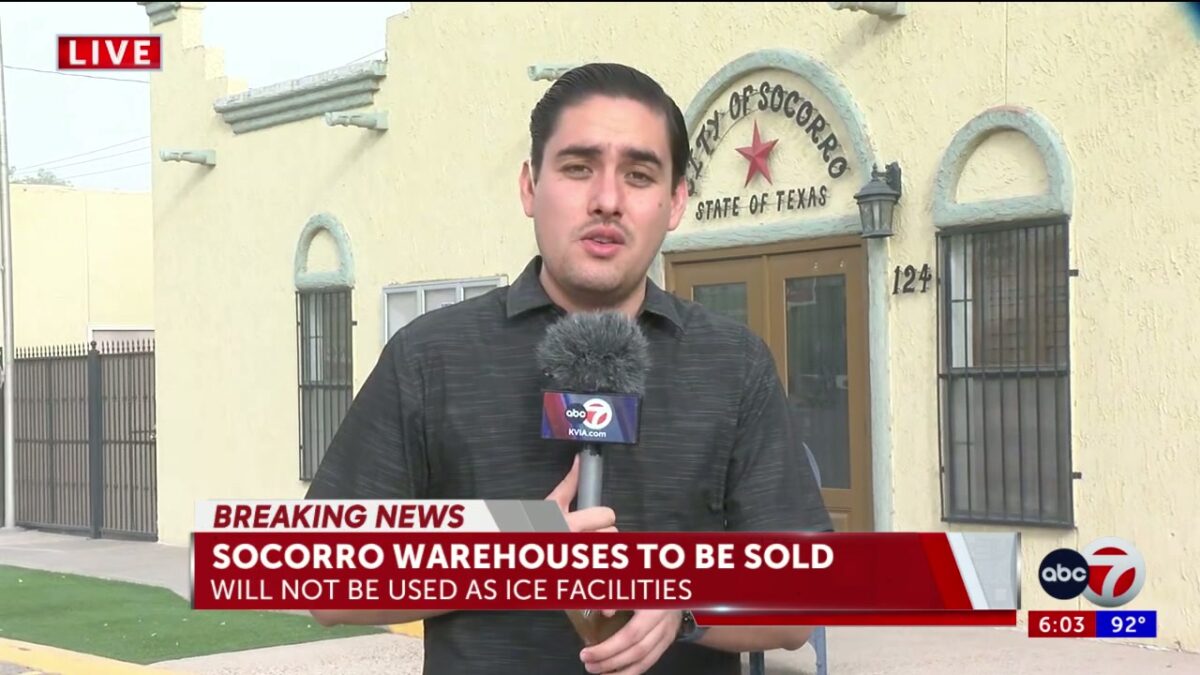
EL PASO, Texas (KVIA) — Tuesday, U.S. Congresswoman Veronica Escobar announced some Socorro, Texas, warehouses bought by Immigration and Customs Enforcement (ICE) will instead go to the U.S. General Services Administration.

“I’m pleased to announce that the Department of Homeland Security has transferred the Socorro warehouses to the General Services Administration (GSA). This means the warehouses will be put up for sale and they will no longer be used by the federal government for detention purposes,” Rep. Escobar said in a press release.

In March, an ICE spokesperson told ABC-7 the agency bought property in Socorro to build “well-structured detention facilities” to hold up to 8,500 detainees.

By June, the Department of Homeland Security changed its plans to use the property as an ICE campus with offices, conference rooms and a privately-owned detention facility, Rep. Escobar said.

A DHS spokesperson sent ABC-7 the following statement on the warehouse announcement:

“From day one, DHS has remained singularly focused on removing the worst of the worst criminal illegal aliens from the United States and is always evaluating the best methods to do so. These heinous criminals, once arrested, should be removed at lightning speed, not housed on American soil at the taxpayer’s expense. DHS is moving swiftly to utilize EXISTING detention space with our state and county partners.”

ABC-7 also reached out to the U.S. General Services Administration (GSA) for comment; an agency spokesperson said that they are working to provide us with a response.

The Mayor of Socorro, Rudy Cruz Jr., also issued the following statement:

Click here to follow the original article.

NMSU research team aims to improve green chile immunity to root rot

Carpio Griego

LAS CRUCES, N.M. (KVIA) — New Mexico State University Associate Professor Stephanie Walker earned a $759,000 grant for research to develop a new strain of green chile that’s resistant to a damaging disease.

The goal of the project is to create a strain of green chile that is resistant to Phytophthora capsici, a disease Walker says can lead to root rot.

One of Walker’s collaborators at NMSU, Denise Coon, told ABC-7 the disease is soil born and moves with water to any part of the chile. It can kill the entire crop, which has been an issue in the Southwest for more than a century.

Walker and her team at NMSU found what issues to focus on by directly to industry growers and the team knows what traits they want in this new green chile.

Specifically maintaining the shape and heat level after crossing with the bell peppers but also not sacrificing the flavor for innovation either.

“New Mexico green chile is renowned for its amazing unique flavor, so we don’t want to lose that during this process,” Walker said.

Mechanization deals with labor issues, Walker said that aspect is to address labor issues like getting enough people to pick enough of the crop before the window for peak ripeness closes which Walker says is something that has been an issue since the 90’s.

“Many years ago when the chili taskforce was first formed in 1998 labor issues became a key concern of the industry in New Mexico when they saw the writing on the wall,” Walker said. “It was harder to get people out of the field to pick what needs to be picked in a relatively short window to get that green chili before it starts turning red.”

The team is partnering with Cornell University vegetable breeder Michael Mazourek. His team has done similar work with a strain of bell peppers which presented the idea to Walker to cross breed the two plants.

Even though as Walker said, the tighter linkage of genes in chili peppers can make developing that same resistance harder.

“So we thought, hey, why don’t we combine forces,” Walker said. “Let’s get your protocol for developing Phytophthora resistant chilies with our mechanical harvest breeding and come up with something that we have both that we cannot provide to the industry.”

The project plan involves cross-breeding the bell peppers with the green chiles. The Cornell team will handle most of the lab testing while the NMSU team handles most of the field testing.

Walker told ABC-7 the first cross breeding will not lead to much diversity, which is something she says doesn’t start showing up until the second or third generation of cross breeding before moving onto the field testing where all the samples will be protected from outside pollinators like bees where the team will pick the plants that have what they’re looking for.

Mechanization is something Walker believes is something the world of agriculture in first world countries like the U.S. will have to embrace due to the changing world.

“I absolutely think here in the United States and other developed nations we have to mechanize,” Walker said. “There’s absolutely no way that we’re going to be able to continue to get the labor force that we need to harvest delicate fruits and vegetables in this country going forward.”

This aspect will also be subject to field testing, the NMSU team looking to use their equipment to simulate the mechanical harvest looking to be able to do two harvests without dropping, damaging, or running over any of the product with Walker saying it is not one size fits all when it comes to machines in the field.

“I know many people think that if you get the right machine you can pick anything, it absolutely isn’t so,” Walker said. “You really need to match the picking mechanism with the plant architecture. So we specifically worked on green chili varieties that have the architecture that feeds into the machine very efficiently.”

Walker’s grant came from the national Institute of Food and Agriculture, with the partnership between the schools also meaning graduate students will cross train at the two universities.

Those at NMSU will go to Cornell to study the lab progress and those at Cornell will come to NMSU to study the progress being made in the field trials.

Click here to follow the original article.

New initiative will save more water than Project Jupiter data center uses: Oracle

Gabrielle Lopez

SANTA TERESA, N.M. (KVIA) — Tuesday, Oracle announced a new partnership to conserve more water than what the Project Jupiter data center uses in New Mexico. The new initiative is expected to save 21 million gallons of water a year, Oracle said.

With the company Arable, Oracle said it expects to save more than 20 times the amount of water needed to run cooling and power systems at Project Jupiter near Santa Teresa. The work will take place in the Rio Grande-Bravo watershed, which is the same watershed that serves the data center.

Arable, an agricultural technology company that aims to help farmers use water more efficiently, Oracle said.

“Our approach to water in New Mexico is simple: use water as efficiently as possible in our operations, then invest in practical, local projects that improve local water infrastructure, conservation, and availability for the community,” said Scott Twaddle, senior vice president, Oracle Cloud Infrastructure.

The program will use sensors in the field to track data specific to growers’ irrigation systems and crops, Oracle said. Sensors track crop water needs and weather conditions.

Oracle said the sensors help farmers calculate water use based on current conditions instead of fixed schedules.

Arable will train growers use the new data tracking, Oracle said.

“This program will help growers reduce unnecessary irrigation, maintain productive farms, and preserve more water for New Mexico’s communities and the environment,” said Jim Ethington, Arable’s CEO.

Arable’s new partnership with Oracle is the latest investment in connection to Project Jupiter water use. There has also been a $50 million commitment to improve local water and wastewater systems in Doña Ana County, Oracle said.

In June, Oracle announced an update to the data center’s energy plan with fuel cell technology. The data center originally had plans to sue gas turbines and diesel generators. Oracle said fuel cells make electricity without combustion, which lowers emissions and water use.

Oracle said Project Jupiter is expected to bring $4.7 billion in economic benefits, create 7,000 construction jobs and 1,500 ongoing jobs.

Click here to follow the original article.

El Paso Electric infrastructure damaged

Olivia Vara

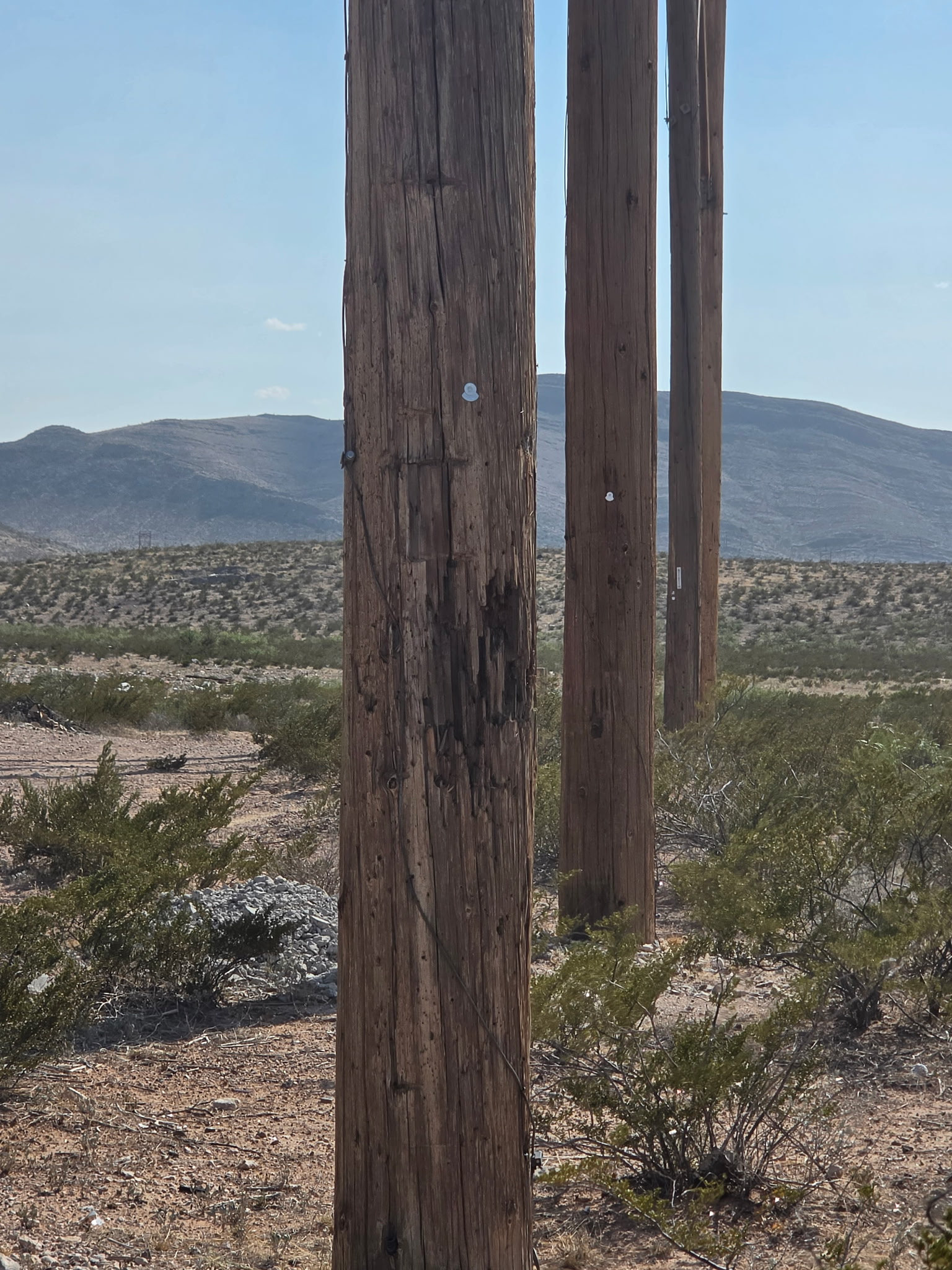
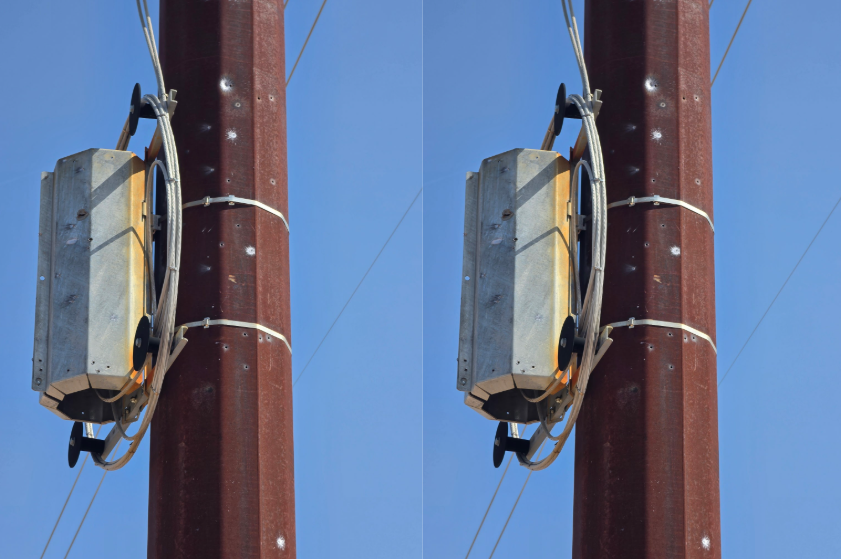
EL PASO, Texas (KVIA) — El Paso Electric crews reported damage to transmission structures and fiber optic communications lines, according to EPE Communication Technician Eddie Trevizo.

Trevizo described the incidents as vandalism of infrastructure the community relies on daily.

Pictures of damaged El Paso Electric equipment.

He said the targeted systems are essential public safety systems that keep power flowing to homes, hospitals and businesses.

Trevizo also said the men and women who build, maintain and repair the equipment respond at all hours and in all conditions. Some even worked overnight to repair the damage.

“Whatever our views on energy policy or local projects, violence and destruction are never acceptable responses,” he wrote.

He called on the community to condemn vandalism of critical infrastructure and keep the public conversation focused on facts, safety and respect.

El Paso Electric said, “While this event did not affect electric service to customers, damage to utility infrastructure can create significant safety risks and has the potential to impact the reliability of essential services.”

Courtesy: Eddie Trevizo

Courtesy: Eddie Trevizo

Click here to follow the original article.
New utility trucks arrive to keep El Paso County cleaner amid illegal dumping, flooding

Gabrielle Lopez

EL PASO, Texas (KVIA) — El Paso County revealed new rural utility trucks Tuesday. U.S. Congresswoman Veronica Escobar’s Fiscal Year 2024 Community Project Funding helped bring three trucks to keep the county’s roads clean and quicken flood response, the county said.

Rep. Escobar submitted the project as one of her funding requests for FY2024 Community Project Funding. The county later received $550,000 to go into utility equipment.

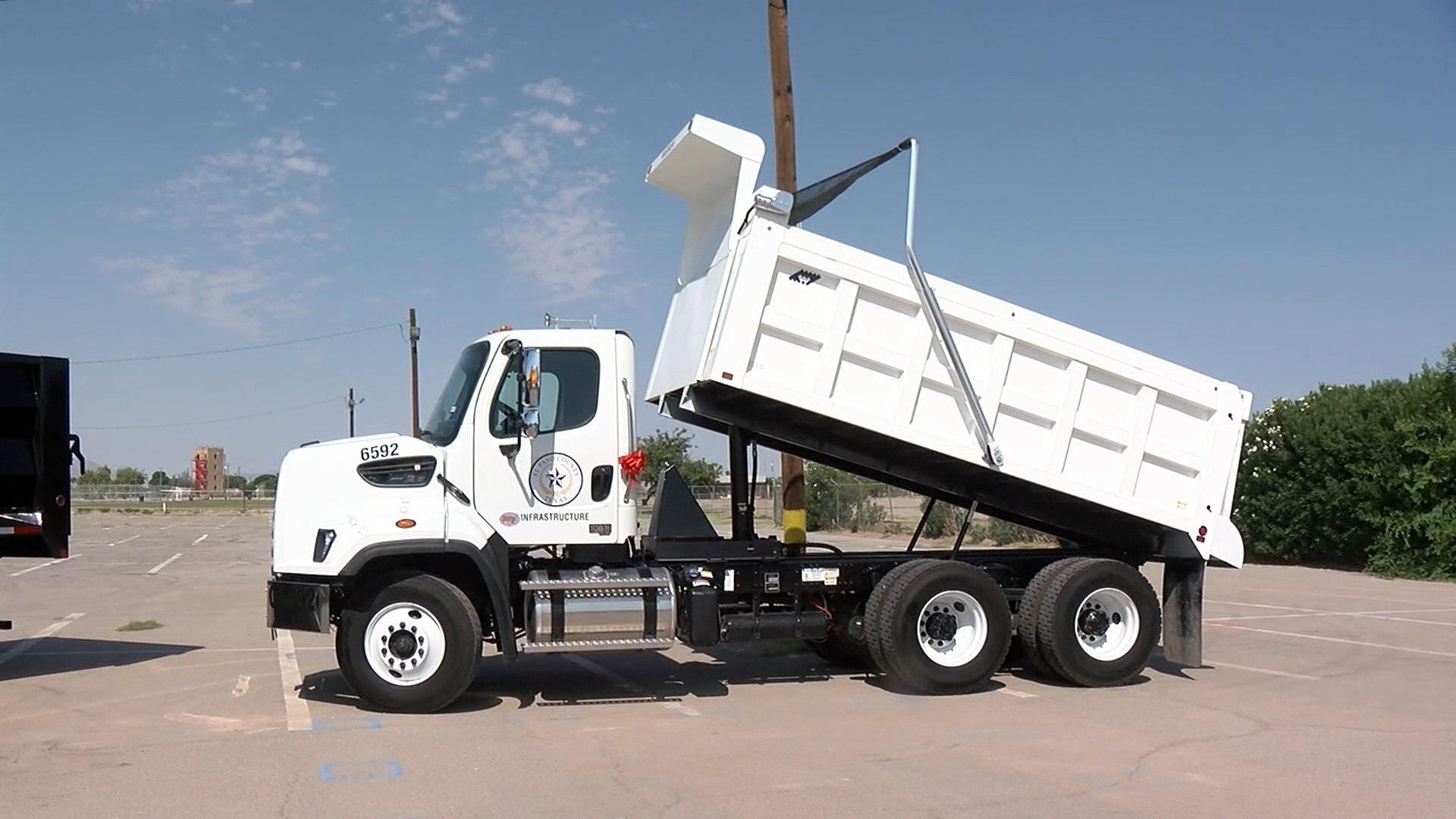
The county said it acquired two dump trucks and one bulk waste loader grappler truck with the federal funding.

At a ribbon cutting, officials demonstrated how the new grappler truck can scoop up commonly dumped items like tires.

One of the new El Paso County dump trucks.

The trucks are expected to help mitigate hazards and threats to water ways and the water supply. Additionally, the equipment will help prevent solid waste accumulation that could lead to vermin and insect infestations, according to the county.

The trucks can also help with flood response and providing equipment for other projects in the county.

“When flooding occurs it brings down a lot of the trash and rocks and these vehicles are gonna help us with clean up,” County Commissioner Sergio Coronado said.

“Illegal dumping has long been a really persistent chronic issue,” Rep. Escobar said. “One of the things that was really needed in order to successfully execute all of those cleanups were these large dump trucks.”

County Commissioner Coronado said the Westway, Vinton, Anthony, Canutillo, Lower Valley and Far East El Paso areas suffered from illegal dumping. Rep. Escobar said places with deserted areas especially see it.

Click here to follow the original article.

Teen sentenced to 2 years in juvenile detention center for killing 13-year-old in Las Cruces

Nina Gallegos

UPDATE (4:59 p.m.): The defendant has been sentenced to the maximum of two years in a Children, Youth and Families Department (CYFD) facility.

“The respondent took the life of another 13-year-old because of his actions,” said District Attorney Fernando Macias. “That more than justifies a two-year commitment.”

During Tuesday’s sentencing, Macias showed a picture taken the day of the shooting, which showed the defendant holding the gun later used to shoot Carnero. Other pictures showed the defendant holding weapons.

Carnero’s family members addressed the court.

“I stand here today not just as a mother whose heart has been shattered, but as a terrified citizen of Las Cruces,” said Carnero’s mother, Janel. “My son Chris was the embodiment of pure love. I hope everyone loves like Chris.”

Under the conditions of commitment, the defendant will have any non-familial communications monitored.

The teen defendant will not be identified due to his age.

EL PASO, Texas (KVIA) -– The teen who killed 13-year-old Chris Carnero will learn his punishment Tuesday. The defendant faces up to two years in a juvenile detention center.

On July 28, the defendant entered a no-plea contest of involuntary manslaughter and negligent use of a firearm by a person under the age of 19, according to Doña Ana County District Attorney Fernando Macìas.

Las Cruces police said the defendant, who hasn’t been publicly identified due to his age, shot Carnero March 30. He was later airlifted to an El Paso hospital.

The sentencing will begin at 3 p.m. Tuesday with Judge Robert Lara.

This a developing story.

Click here to follow the original article.

El Paso ISD school board to vote on up to $480 million bond election

El Paso Matters

by Claudia Lorena Silva

The El Paso Independent School District Board of Trustees will decide Tuesday whether to call for nearly half a billion dollars’ worth of bond propositions during the Nov. 3 election to bring updated cooling systems and other improvements to its campuses.

District officials are expected to present three bond options to the board, ranging from nearly $209 million to about $481 million, each with four propositions, according to documents posted to the district’s website.

If approved, the proposals would be among the first steps needed for EPISD to begin work on a $1 billion long-range master plan that would address the district’s needs and desired improvements. The plan was developed by the district’s Citizens Bond Steering Committee, made of parents, local residents and school employees, among others.

The decision whether to call for the district’s first bond proposal in a decade comes less than a week after the board appointed Matthew Reza and Brian Kelley to represent Districts 6 and 7, respectively. The seats were left vacant after Daniel Call and Valerie Ganelon Beals resigned in June after the board declared financial exigency, which allowed the district to lay off dozens of employees to cut costs.

El Paso ISD officials didn’t return requests for comment on Tuesday’s meeting.

EPISD has over 46,000 students across over 70 campuses that on average are over 49 years old.

If the board calls for the bond election, early voting would run Oct. 19-30, with Election Day being Nov. 3. The last day to register to vote is Oct. 5.

What is being proposed?

Option 1 asks voters for $208.9 million under four propositions:

Proposition A: $159.2 million to upgrade air conditioning, make safety and transportation improvements and to renovate vacant properties

Proposition B:  $10.6 million for new technology for students

Proposition C: $25.6 million for athletic stadium renovations

Proposition D: $13.5 million to refinance the district’s debt

Option 2 totals $445.8 million and includes everything from Option 1, plus additional improvements that increase Proposition A to $396 million.

Option 3 would cost $480.8 million and include everything from the previous options, plus additional deferred maintenance costs.

The presentation did not specify which campuses would get improvements under the propositions, but the district has made converting all evaporative coolers into refrigerated air conditioning within the next two years one of its top priorities.

What options does the board have?

The board can vote to adopt a resolution calling for an election, vote not to – or do nothing.

The board has until Aug. 17 to call for a bond election to be placed on the Nov. 3 ballot. 

Otherwise, the district will need to wait until May to hold a bond election. The deadline to call for a bond election in the May uniform election is in February. 

How would a bond impact taxes?

District officials have not publicly stated the impact the different scenarios would have on tax bills on the average-priced home in the district, only discussing tax rates – the amount charged per $100 property valuation.

If voters approve the first two options, EPISD plans to maintain a tax rate of $1.08 per $100 valuation, which would likely still lead homeowners to see increases in the district’s portion of their tax bill as home valuations rise.

The third option would raise EPISD’s tax rate by one cent to $1.09 per $100 valuation, further increasing those tax bills.

Homeowners age 65 and older have their school taxes frozen and won’t see an increase in their tax bill regardless if the bond passes.

EPISD published a tax impact estimator on its website to help homeowners determine how the bond may affect their tax bill, but does not specify the tax rate or which propositions were included in the calculations. The district didn’t respond to questions about the estimator.

Click here to follow the original article.

Borderland Innovator Launches NeuroStack AIOS

Nichole Gomez

El Paso, TX (KVIA-TV)-Orlando Sapien grew up in El Paso and works as an IT professional and photographer. He created NeuroStack AIOS, an AI ‘second brain’ app developed right here in the Borderland. Sapien says this homegrown tech helps people handle the daily overload of things to remember. It’s easy to show off: just speak to your phone, and it quickly turns your thoughts into neat, organized notes. The app is currently in beta with a local group of founding testers.

For more information, visit neurostackaios.com

Click here to follow the original article.