Taxes from Missouri sports gambling not bringing in money that was hoped for, lawmaker says


Mitchell Kaminski

COLUMBIA, Mo. (KMIZ) 

A Columbia lawmaker is warning that Missouri’s schools could face an increasingly difficult financial future, arguing that new revenue from legalized sports betting is not providing the boost to education voters were promised.

The state’s Department of Elementary and Secondary Education says the sports wagering money is being used to fund existing appropriations.

Under House Bill 2, $6.805 million from the Sports Wagering for Education Fund was appropriated for the foundation formula, which distributes money to school districts. Another $1.2 million was designated for career-readiness assessments and $400,000 for an online parent portal.

DESE spokesman Lucas Bond told ABC 17 News in an email that the sports wagering money going toward the foundation formula is part of the regular distribution to schools. Because the foundation formula appropriation is the same for fiscal years 2026 and 2027, the sports betting money does not represent a net increase in foundation formula funding.

In other words, sports betting revenue can replace other state revenue that would otherwise fund education without increasing the total amount of money schools receive.

“I knew that we were not going to have this windfall of money going to education,” state Rep. Kathy Steinhoff (D-Boone County) told ABC 17 News. “But I was disappointed that I maybe was not fully aware of how little would come to the Missouri revenue stream in general. It was just poorly written in a way that really favored the gambling companies.”

When Missouri voters approved the sports betting amendment in November 2024, supporters — including the Winning for Missouri Education campaign backed by millions of dollars from DraftKings and FanDuel — promoted education as a major beneficiary of legalized sports betting.

The Missouri Gaming Commission initially projected the state would collect more than $6 million for education during the first year, with annual revenue expected to reach about $20 million in the following four years.

But sports wagering generated less revenue than projected during its first year. 

Steinhoff, who serves on the Missouri House Budget Committee, said the shortfall had consequences for schools because lawmakers had already built anticipated sports betting revenue into the state budget.

“The last budget year, schools did not get their full appropriation because of that sports betting. So even though we had put in the budget for schools to get X amount, they got less than that because the sports betting money did not come in,” Steinhoff said.

So far in fiscal year 2027, $3.213 million has been transferred into the Missouri Education Fund. The Missouri Gaming Commission says while there is not another transfer expected in August, they are expecting monthly transfers moving forward. 

According to Steinhoff, the issue stems in part from how the amendment was written.

The amendment requires sports betting operators to send 10% of their monthly gross gaming revenue to the state for education. However, sportsbooks can deduct certain expenses before that tax is calculated, including player winnings, promotional wagers and federal taxes.

In June alone, sportsbooks deducted $244.5 million for those expenses.

Steinhoff said lawmakers had tried for years to pass sports betting legislation but were unsuccessful before the industry-backed amendment went before voters.

“If you were to talk to people that are in those circles, what they would say is that the lobbyists for those companies were very strongly engaged in Missouri. They were investing in campaigns. They were trying to educate legislators. They had legislators sponsoring bills. But every year their legislation failed,” Steinhoff said. “It kind of makes sense. I think what they said was, ‘Well, we’re going to quit paying these legislators. How about we hold on to this money and write our own our own bill, so to speak, and make it an initiative, petition and use our money in advertising.’”

State Rep. John Martin (R-Boone County) who also serves on the House Budget Committee, told ABC 17 News he opposed the amendment when it appeared on the ballot, not because of the revenue it could generate, but because of concerns about the potential impact of gambling addiction on Missourians.

“We’ve seen it’s been destructive to young people. We’ve got young people in Columbia that have been banned by the NBA because of sports betting and things like that,” Martin said in reference to Jontay Porter, after a league investigation found that he was passing along information to sports bettors, limitng his participation in games for prop bets and betting on NBA games.  “I’m not supportive of it. I think there’s better ways for the state to raise money. But at the same time the voters put it in so here we are with it.” 

Martin’s concerns come as research has shown that the boom of sports betting has carried consequences. According to a researcher at UCLA, legalized online sports betting saw a 28% increase in consumer bankruptcies and an 8% increase in debt collections compared to states that did not legalize it. The study also found average credit scores fell by 0.3%, and the drop was higher in states permitting mobile betting. 

Young men appear to be disproportionately affected. A 2024 study from Fairleigh Dickinson found about 10% of young men in the United States exhibit behaviors associated with problem gambling, compared with roughly 3% of the general population.

The language of Amendment 2 has also left lawmakers with limited control over how the revenue is used. Steinhoff said that because the measure was passed through an initiative petition, lawmakers have less flexibility to change how the system works.

“If the legislators had been able to pass that and they tried, I mean, for several years prior to the people voting on it, there was a lot of movement at the Capitol for legislators to come together and pass that We would have had a little bit more control over how the money came in,” Steinhoff said.

School districts also cannot see how much of the state funding they receive comes specifically from sports betting revenue.

According to Columbia Public Schools Chief Financial Officer Heather McArthur, districts do not receive a breakdown showing whether a particular dollar came from sports betting, the lottery or general revenue.

“Gaming revenue earmarked for education is generally included in the Classroom Trust Fund line on district payment statements,” McArthur told ABC 17 News in a statement. 

McArthur added the state is currently distributing that money according to its original budget appropriation, though DESE could make additional distributions or withholdings later in the fiscal year as revenue projections become clearer.

Steinhoff said the structure creates a risk for schools if sports betting revenue again falls short.

“It’s an easy thing to advertise, lottery and sports betting and then the money goes to the schools and yeah, that’s true. The money goes to schools, but it’s not additional money to the schools,” Steinhoff said. “So now we’re spending money that wouldn’t have gone to the schools from our general taxes on other things. When that money now doesn’t come in, we’re actually shortchanging the schools and in some twisted way, sports betting and the lottery can actually hurt the schools if they don’t perform at the level that we anticipate.”

The uncertainty comes as Missouri faces broader questions about how much money will be available for education in the coming years.

Federal COVID-19 relief funding that helped schools during the pandemic has expired, while Gov. Mike Kehoe has called for changes to the state’s foundation formula. A task force is working on proposed changes to the foundation formula, with recommendations expected in December. 

“We’re in a tight budgetary time,” Martin said. “That will be one of the big challenges there, predicting what we’re going to need to cut, maybe $1.3-or-so-billion from the budget to get us back on track over the next couple of years. So potentially looking at about 700 million budget reduction.”

Steinhoff believes the financial pressure to become increasingly visible in school districts.

“It’s going to be a really dark period I think for Missouri all around. The places where we will see it probably hit the most is where our budgets the largest, and that’s in health care and education. The last two years, the governor’s recommendation was to keep the foundation formula money flat,” Steinhoff said. “This year, we underfunded the foundation formula by about $200 million. So I don’t foresee him thinking he wants to spend any more money. He also put together a task force to rewrite the foundation formula. One of the ultimatums was to keep spending flat. I don’t know how many businesses are out there that they can expect to keep spending flat and have good outcomes. That’s certainly not true in education.”

According to Martin, Missouri’s revenue has increased by about 40%, while state spending has grown by roughly 50%.

“We definitely got to rein back in spending,” Martin said. “Between us and the Senate we got a lot of work to do to figure out where those trimings are going to happen.”

Martin added school districts in his statehouse district are already preparing for the possibility of tighter budgets as they wait to see how the foundation formula is changed.

“They realize their budgets, they’re having to really tighten their belts. So obviously there’s concerns,” Martin said. “I’ve gotten concerns from our school districts about, what the future holds, obviously, knowing that the foundation [formula] the new ones coming out, just kind of see where that lands and then how that affects each individual school.”

Steinhoff said she has also heard concerns from school districts, with the effects of flat foundation formula funding already being felt, particularly in rural Missouri.

“Toward the end of the session is when it started to hit the school districts. I know a lot of lawmakers were hearing from their school districts, especially our ones in our rural areas that are barely hanging on and then could not even receive the money that they were counting on,” Steinhoff said. “We are going to probably see some school closures in the coming years.”

For Steinhoff, the debate over sports betting revenue is ultimately part of a much larger question about how Missouri will fund public education as other sources of temporary funding disappear.

“I don’t see how this ends. I mean, it’s increasing class sizes. It’s reducing the number of teachers. It’s limiting the resources that are available to students,” Steinhoff said. “I think almost every school that I know of is struggling financially. They’re not really delivering on the level that they’re capable of doing, and funds are restricting them. So it’s a really scary place for us to be.”

Click here to follow the original article.
Clark Lane at Hanover Boulevard to close Monday for roundabout construction

Ryan Shiner

COLUMBIA, Mo. (KMIZ)

The Missouri Department of Transportation sent a follow-up press release on Thursday to remind residents that a portion of Clark Lane in Columbia will close next week for roundabout construction.

Clark Lane will close at Hanover Boulevard on Monday morning, with construction lasting around 60 days, the release says.  

During the closure, the business entrance west of the intersection will be closed, but the entrance on Hanover Boulevard will be open, the release says.

The closure comes after the St. Charles Road bridge reopened to traffic.

Click here to follow the original article.
Residents push back on Columbia transmission line project at meeting

Melissa Houston

COLUMBIA, Mo. (KMIZ)

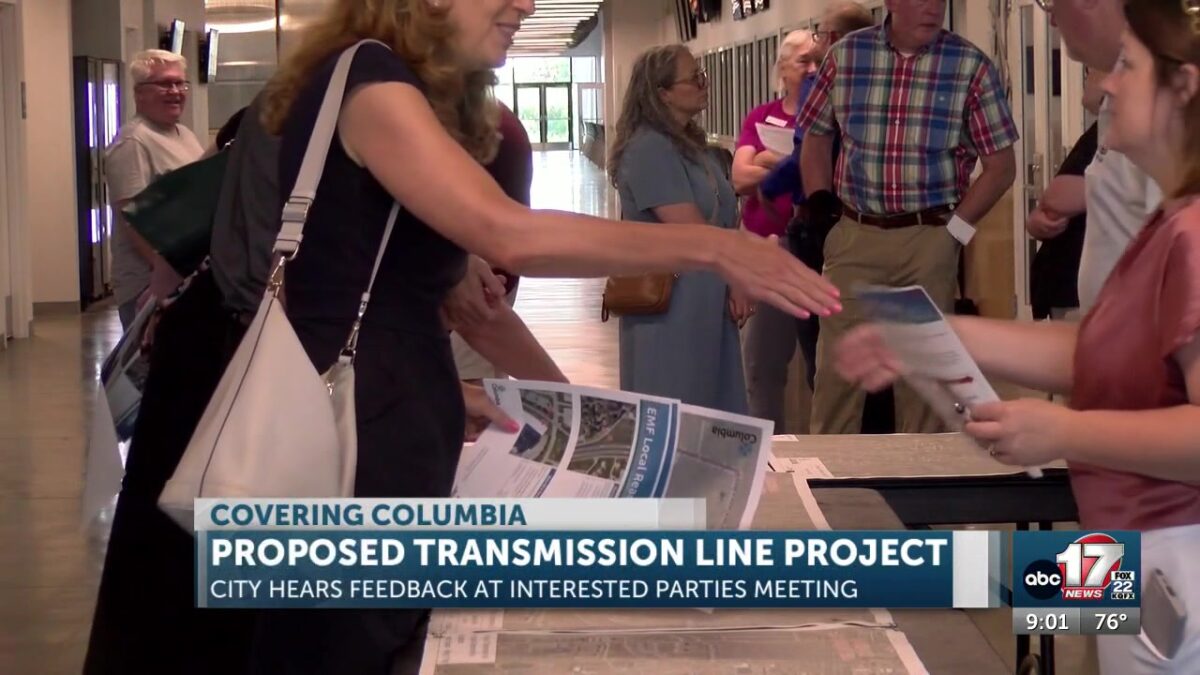
City of Columbia had its monthly ‘Let’s Talk Local’ this Thursday, and it was an interested parties meeting where residents pushed back against the idea of the proposed transmission lines project.

Roughly 25 people were at the meeting, City Councilwomen Betsy Peters (Ward 6) and Christina Hartmann (Ward 5) attended the meeting at the Columbia Sports Fieldhouse at 4251 Philips Farm Road.

“There is certainly a lot of citizen questions and things we need to take into consideration as we move this project forward,” Peters said.

During the meeting, one resident was commenting on a previous study done by the Integrated Electric Resource and Master Plan Task Force Resources, where a statistic of the study said the transmission plans were not necessary.

This resident declined an interview but did say during the meeting that “Columbia does not need the installation of a new transmission line.”

The city’s engineering staff told ABC 17 News that due to the delay of the project from 2015, when it was originally proposed, many studies have been conducted and more information has been gathered about these transmission lines as the delay continues.

“This is not a one-time, done-and-done study; it’s people monitoring the grid 24/7, 365 days a year. These things are ongoing,” said Gwen Corches, who is the city’s assistant director of electric utilities. “Even the information we have today in this fast-paced industry, it will change in a few years again, and we’ll continue to communicate that.”

Public comments focused on safety and contingency plans for the project. Corches said that his team works through many contingency plans to find the best possible outcome, and said experts believes the proposed transmission lines are that.

“We are looking at all possible options to guarantee and anticipate any future events and try to prevent any potential negative situations from happening,” Corches said. “We want to make sure that we are providing the best possible grid for our residents here in the city of Columbia.”

Comments for Boone Electric users was brought up because although they would not pay for the transmission lines electric but the lines would be placed in their backyard, according to one Boone Electric user.

This resdient expressed concerns of the citys lack of outreach to Boone electric users. Corches said after hearing about these concerns his team plans to reach out to those residents and invite them to participate in meetings.

“This is a city-wide project, and anyone is welcome to come to any of our meetings,” Corches said. “[Staff] will look at ways to contact them in the best manner so they feel included and can join the meetings like anybody else.”

The lines will run through Scott Boulevard south to Vawter School Road, then east along the Vawter School-Nifong-Grindstone corridor.

If the project follows through, it is estimated to cost $35 million and take roughly eight-to-10 years to complete, the city stated in previous reporting.

This meeting is one of many that the city plans to host to get public input on the transmission lines. The second interested parties meeting will be held in early October according to the city.

Click here to follow the original article.

Water main break in Jefferson City leads to street closure

Ryan Shiner

COLUMBIA, Mo. (KMIZ)

A water main break on Thursday afternoon led to Jefferson City Public Works to close a road between East Capitol Avenue and East High Street.

The break was reported in the 200 block of Ash Street in Jefferson City, Public Works announced in press release.

The road will be closed and the water main is expected to be repaired the same day.

Signage will be posted in the area and drivers are asked to use alternate routes, the release says.

Click here to follow the original article.

Pettis County sues DNR over construction permits for landfill

Ryan Shiner

COLUMBIA, Mo. (KMIZ)

The Pettis County Commission filed a lawsuit on Thursday in Cole County against the Department of Natural Resources over a multi-year issue involving a construction permit for a landfill.

The county is accusing the DNR and Presidio of two counts of noncompliance and a single count of prematurely issuing a construction permit.

The petition says the issue has been going on since 2022 and that county ordinances only permit Pettis County to have one landfill, which it already does.

A court date has not been scheduled in the case.

The petition also references a multi-year lawsuit between Mid-Mo Waste and Pettis County, where a partial judgement was reached against the county. A hearing in the case is scheduled for 9 a.m. Friday, Sept. 18.

26AC-CC00476Download

Click here to follow the original article.
Sen. Eric Schmitt answers questions on college sports bill, Missouri politics at State Fair

Matthew Sanders

SEDALIA, Mo. (KMIZ)

Sen. Eric Schmitt was one of many politicians on hand Thursday morning for the Governor’s Ham Breakfast at the Missouri State Fair.

Schmitt took questions from ABC 17 News on multiple topics before the event.

Click here to follow the original article.
Camden County sheriff says hundreds of pounds of drugs seized in connection with Gathering of the Juggalos

Matthew Sanders

COLUMBIA, Mo. (KMIZ)

EDITOR’S NOTE: The spelling of Pradhan’s name has been corrected.

The Camden County Sheriff’s Office said Thursday that deputies have seized hundreds of pounds of drugs from people associated with the Gathering of the Juggalos festival at Macks Creek.

The busts were made in partnership with the Mid-Missouri Drug Task Force, the sheriff’s office said in a news release.

The release, signed by Sheriff Chris Edgar, says the festival has brought an influx of out-of-state visitors bringing “illegal drugs to our community.” Edgar wrote that authorities were working to make the event as “painless” for locals as possible.

The gathering, the 26th festival of its kind headed by musical act Insane Clown Posse, began Wednesday.

One of the arrests listed in the sheriff’s release is Kevin M. Jones, 45, of Easton, Pennsylvania, who is known at the festival as “Bluntman.” He was allegedly busted with 128 pounds of marijuana and 2.5 pounds of mushrooms. Jones was charged with first-degree drug trafficking and felony drug distribution, and remained jailed Thursday without bond.

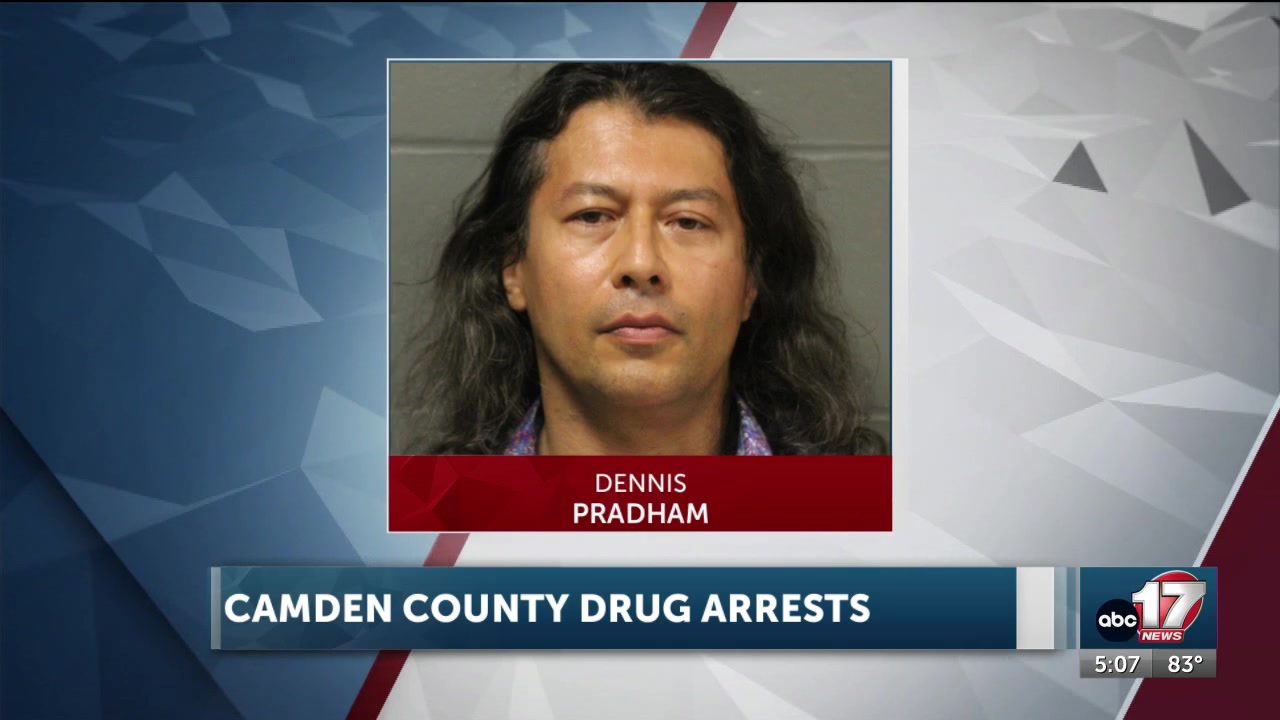
Dennis A. Pradhan, 49, of Silver Springs, Maryland, was arrested and charged with first-degree trafficking and three counts of drug distribution after deputies found 93 pounds of marijuana, 124 pounds of mushrooms, 135.5 grams of ketamine, 33 grams of a ketamine/fentanyl mixture, and 66.5 grams of MDMA, according to the release.

The sheriff says Robyn W. Weiford, 34, and Jesse A. Williams, 38, both of Bear, Delaware, were charged with drug distribution and released on $50,000 bond after deputies found 40 pounds of THC edibles.

The event at Mother Nature’s Riverfront Retreat takes place through Saturday.

Click here to follow the original article.
Missouri school districts to get ‘first look’ at new A-F grading system this fall

Ellyse Edwards

COLUMBIA, Mo. (KMIZ)

Data from the 2024-25 school year will be used to give school districts a “first look” at a new A-F grading system for districts this fall.

The Missouri State Board of Education reviewed an updated proposal Tuesday that would assign A-F grades to public schools and school districts. The board also learned that the initial grades won’t include literacy scores, but those will be included in the full report card districts will receive in fall 2027.

The Missouri Department of Elementary and Secondary Education presented the framework as part of an executive order signed by Gov. Mike Kehoe. Kehoe signed the order in January, directing the department and State Board of Education to develop a simpler way for families to understand school performance.

The board did not vote on the proposal Tuesday. The department’s presentation says the framework is scheduled to return to the board as an action item in September.

The latest proposal includes a revised formula for high schools. Academic achievement and student growth would each account for 29% of a high school’s grade. The state’s Success-Ready Graduate measure and four-year graduation rate would each account for 21%.

The framework submitted to the governor in June had divided those categories differently, assigning 28% each to academic achievement and growth and 22% each to the Success-Ready Graduate measure and graduation rate.

For elementary and middle schools, academic achievement would account for 38% of the grade, value-added growth for 33%, and growth toward proficiency for 29%.

Growth toward proficiency would measure whether a student who is not proficient is on track to reach grade-level proficiency within three years.

Under the proposed scale, schools and districts scoring 89% or higher would receive an A. Scores between 76-88% would receive a B, while scores between 63-75% would receive a C. Scores between 50-62% would receive a D, and scores below 50% would receive an F.

The latest presentation also outlines a revised rollout schedule. The department anticipates releasing a “first look” in fall 2026 using data from the 2024-25 school year. That version would not include the proposed literacy measure.

A draft using data from the 2025-26 school year is anticipated sometime in 2027, although the presentation does not give a specific date. The department expects grade cards using all elements of the framework to be released in fall 2027 using data from the 2026-27 school year.

The executive order calls for schools and districts to receive their grade cards by Sept. 15 each year and publish them by Sept. 30. It also requires schools to test at least 95% of their students on state assessments. A school that does not meet that threshold would have its rating lowered by one letter grade.

The department said funding, staffing and collaboration among state agencies and school districts will be necessary to produce the grade cards and support school improvement efforts.

The Missouri State Teachers Association opposes the proposed system. Matthew Michelson, the association’s education policy director, said educators are concerned the grades could place more pressure on schools to focus on state testing.

“We are going to have an issue where teachers are teaching to the test, because the test is the only thing that matters,” Michelson said. “And the single test is going to determine whether or not students are going to be in an A school or an F school. And then all of the things, the stigma, the accountability, the buy in from the community that go along with that.”

The Missouri School Boards’ Association supports accountability and transparency but is concerned families could view a letter grade without considering other information about a school.

“I think it’s important to recognize that one letter cannot tell the full story of a school or the education an individual child is receiving,” Executive Director Melissa Randol said. “So it is just one piece of information alongside a lot of other pieces of data and a lot, you know, the experiences and opportunities that are provided by school to our students and to our families and communities.”

If your existing story does not already explain the system, add this below the interview reaction:

The proposed system would give each public school, public charter school and district an overall grade based on a 100-point scale. A score of 89% or higher would receive an A, while a score below 50% would receive an F.

Elementary and middle school grades would be based on academic achievement, student growth and whether students are on track to reach grade-level proficiency. High-school grades would also consider the state’s Success-Ready Graduate measure and four-year graduation rate.

A school that tests fewer than 95% of its students on required state assessments would have its rating lowered by one letter grade.

The department’s presentation also identifies several decisions that still need to be made, including whether every school should receive a grade, whether already-proficient students should be included in the growth-to-proficiency measure and whether the formula should account for demographic characteristics.

Click here to follow the original article.
Pulaski County discontinues the use of Flock Cameras

Demetra Alarcon

COLUMBIA, Mo. (KMIZ)

The Pulaski County Sheriff’s Office has announced that it will discontinue the use of Flock automated license plate reader cameras.

In a statement on Facebook, posted by the sheriff’s office Thursday morning, Sheriff Stacy Ball said that he took an oath to support and defend the Constitution, and that his responsibility is to protect the community.

“My responsibility is not only to protect you and your families from crime, but also to protect and respect your constitutional rights and individual liberties,” said Ball.

Ball goes on to say that there have been genuine concerns about privacy, misuse and what the technology could mean for the future. He says that he has heard the concerns.

“Sometimes leadership means listening to the people you serve,” Ball wrote.

Ball told ABC 17 that he did not want to take a change on violating anyone constitutional rights.

“I don’t want to take a chance of violating anyone’s constitutional rights for the purpose of capturing a picture of their vehicle,” said Ball.

Ball said that this does not mean the sheriff’s office is going backwards, and that they will be coming for criminals with or without Flock.

“Our deputies and detectives were doing damn good police work long before Flock ever showed up, and they’ll be doing damn good police work after it’s gone,” said Ball.

Flock has come under nationwide criticism after multiple reports of police abusing the system. Opponents also express more general worries about civil rights and the cameras’ ability to do more than just read license plates.

An advocacy group has formed in Columbia to oppose the police department’s use of the cameras.

Ball said that the sheriff’s office will continue protecting Pulaski County while finding the right tools.

“Aggressively when it comes to criminals, professionally when it comes to our duties, and constitutionally when it comes to your rights,” said Ball.

Ball ends the statement by saying that although people may not always agree, he will listen and make the decisions he believes are right for the citizens of Pulaski County.

“Your voice matters. Your rights matter. Your trust matters,” said Ball.

Ball followed the original post with a second one showing an email chain with a Flock representative canceling the county’s contract.

The Pulaski County Sheriff’s Office held a Community Forum on Thursday, where this announcement was first made

ABC 17 spoke with Ball, he said that after all of the complaints, issues, and concerns from citizens, he wants the citizens to trust him.

“I want to do what’s best for Pulaski County, because that’s what I’m concerned with. And that was my decision to discontinue a flock, ” said Ball.

Although there is no set date when the cameras will be down, Ball said there was a talk about getting them covered up.

“I had a gentleman that volunteered to make some covers for me if it’s going to take a long time. That I will put up versus having somebody put a trash bag,” said Ball.

Click here to follow the original article.

MoDOT evaluating rural highways for potential 75 mph speed limits

Euphenie Andre

JEFFERSON CITY, Mo. (KMIZ)

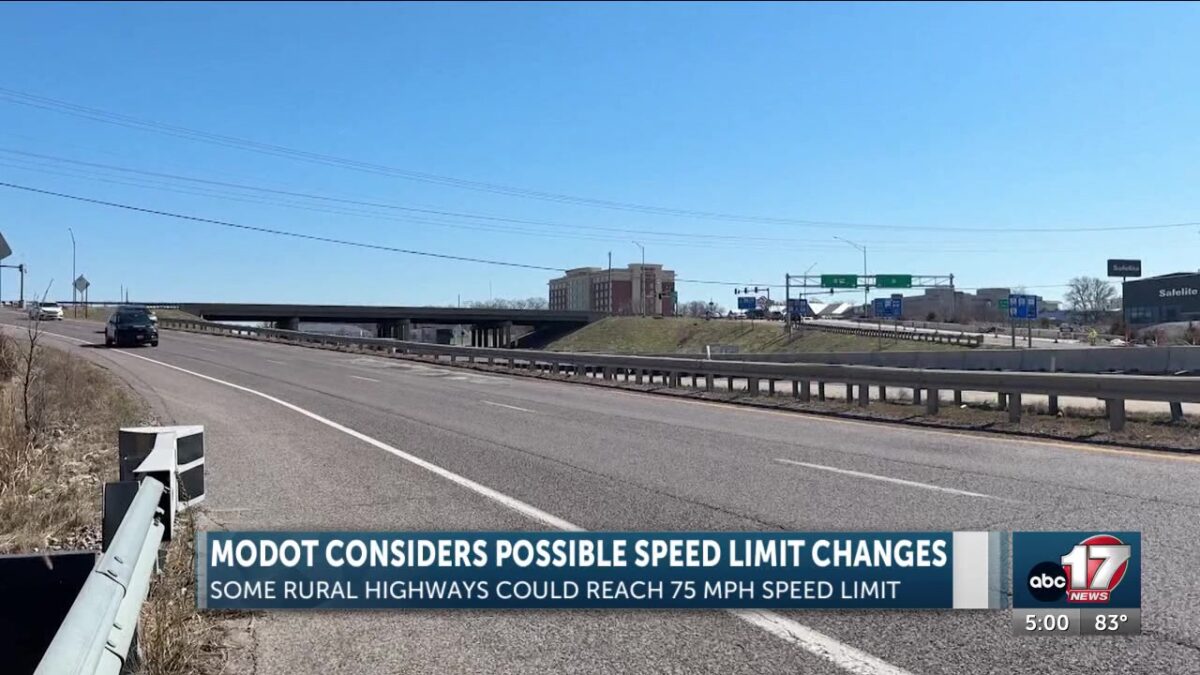
A new Missouri law allowing higher speed limits on certain rural highways is set to take effect Aug. 28, but drivers will not see immediate changes.

Gov. Mike Kehoe signed Senate Bill 1408 in July, giving the Missouri Department of Transportation the authority to raise speed limits from 70 to 75 mph on eligible rural highways and interstate freeways.

The Missouri Department of Transportation is evaluating eligible highways to determine where speed limits could potentially increase to 75 mph. MoDOT said no speed limit changes will take effect until that review is complete.

MoDOT Director Ed Hassinger said effective date does not mean drivers can automatically start driving 75 mph.

“Don’t think on August 28th that automatically I can drive faster than the posted speed limit. The sign that’s up is the speed limit until it changes,” Hassinger said.

MoDOT is evaluating individual highways to determine where a higher speed limit could be implemented safely.

“There definitely are places where it does not make sense to do so,” Hassinger said.

According to the National Highway Traffic Safety Administration, 11,288 people were killed in speeding-related crashes in 2024.

The agency said traffic congestion can be one factor that contributes to speeding and other aggressive driving behaviors. When drivers become frustrated or impatient in heavy traffic, they may be more likely to speed, frequently change lanes or become angry with other drivers they believe are slowing them down.

In a news release, MoDOT Director Ed Hassinger said the department is working to balance traffic efficiency with safety.

“There’s a balance to be struck here between efficient traffic movement and safety, so we’re taking careful consideration of any potential location, what the roadway is like there and how people use it,” Hassinger said.

Under the new law, MoDOT will continue to determine speed limits and must consider whether a higher limit would be reasonably safe for each roadway.

The department said its evaluation will include several factors, including:

Current traffic volumes

Truck traffic volumes

Crash history

Terrain

Road design and existing safety features

Speed limits in neighboring states near the Missouri border

Hassinger said the department wants to carefully evaluate each location before making any changes.

“We basically made people aware that this could have negative impacts,” Hassinger said. “That’s why we’re being really careful.”

Interstate 70 will not see its speed limit increase while construction continues through MoDOT’s Improve I-70 Program. The department said it will reevaluate the corridor once the rebuild and expansion project is complete.

“We’re not going to do anything on I-70,” Hassinger said. “We’ve got most of that under a work zone speed limit anyway, and we’re actually having trouble getting people to drive the workzone speed limits,”

Hassinger said MoDOT hopes to complete its review of eligible locations by the end of the year and provide an update on which highways could see higher speed limits.

Until then, MoDOT is reminding drivers to continue following posted speed limits, particularly in work zones across the state.

Click here to follow the original article.