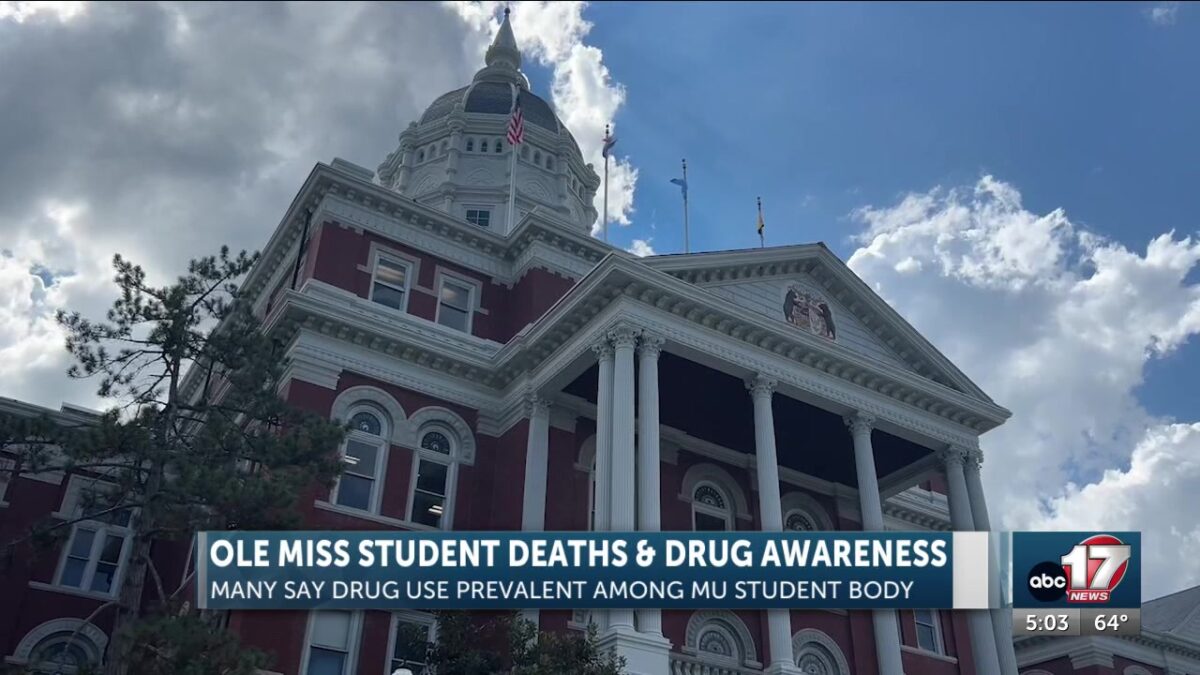
MU students highlight drug use among student body following Ole Miss death investigation

Marie Moyer

COLUMBIA, Mo. (KMIZ)

University of Missouri students report drug use is “prevalent” among the student body as conversations surrounding college drug use grow following a death investigation at the University of Mississippi.

Two students at Ole Miss were found dead in their off-campus homes Monday. They were identified as 20-year-old Robert Strang from Atlanta and 18-year-old Aidan Hamilton from Colorado. Authorities reported that the unregulated drug kratom was found nearby, with student groups circulating warnings about a new fentanyl-like synthetic opioid called cychlorphine.

The University of Missouri Interfraternity Council later notified students about the risks of drug use in a Facebook post in support of the University of Mississippi Interfraternity Council.

“The Mizzou Interfraternity Council Stands with the Ole Miss Interfraternity Council, the University of Mississippi community, and everyone affected by the events that occurred in Oxford this weekend,” the Facebook post said. “We have a responsibility to look out for one another and to take seriously the risks that can come with unknown or counterfeit substances.”

Authorities in Mississippi are yet to say whether kratom and cychlorphine had a role in the deaths.

ABC 17 News spoke with around a dozen University of Missouri students, with around half reporting they have seen a culture of drug use at the school. One student even shared that a friend who began using while at the University of Missouri later died of a cocaine overdose after college.

“The main one is cocaine, and it’s is very prevalent within like off-campus, like when you’re out at a bar in the bathroom or something like that and people are either offering it to you or asking you for it,” the student said.

“Kratom is very popular I would say, around downtown with students,” another student said. “It used to be like 18+ and they don’t even check for that, so if you just walk into the store and look like somewhat young adult, they’ll just give it to you.”

Both students added that they have seen several smoke shops and convenience stores downtown continue to sell kratom and 7-OH despite recent state government crackdowns.

Cychlorphine has gained notoriety for being more than 10 times stronger than fentanyl and has been increasingly seen in domestic Midwest drug markets. It also has no smell or taste and does not appear on fentanyl test strips.

“There’s an increased risk of overdose from people that may be using those drugs,” Boone County Public Health and Human Services Public Health Information Specialist Austin Krohn said. “Important to note, Narcan still works, but it may require additional doses and maybe up to more than two that usually come in the packages.”

According to the City of Columbia, Narcan, which stops opioid overdoses, can be found 24/7 in distribution boxes across the city, including at the Columbia Fire stations, the local health department and the Activity & Recreation Center.

University of Missouri sophomores Neer Patel and Grady Wright are working to bring awareness to drug education and safety through the Atlas Health Equity Group. The group hopes to lead state initiatives on naloxone access and public health education, including handing out free boxes of naloxone on campus.

“I think as of yesterday, we gave out 3,500 units and then today we’re planning on giving out another 1000 units,” Wright said. “We want to keep 500 in storage so we can hand that out to the bigger Greek life around campus.”

The naloxone is supplied by the University of Missouri St. Louis Addiction Science Team.

“I think it’s a misconception of naloxone that people think if they have it, they’re considered drug users, but naloxone is not for yourself, because if you’re overdosing, then you’re not going to be able to use naloxone, it’s just in case something ever does happen,” Patel said.

Both students add that their work comes from their own experiences of seeing overdoses while living in Columbia and Kansas City.

“Last year I saw someone overdose outside of the student center, which was kind of crazy because it takes so long for EMT to respond even when they’re so close, so that kind of prompted me to kind of get on it more for sure,” Wright said.

According to the University, naloxone can be found at the Wellness Resource Center inside the Student Center.

Students ABC 17 News spoke to added that naloxone can be found in some dorm halls.

“You talk to one of the members there, they can get you in contact with one of the people there that is able to do big group orders of Narcan as well as single ones,” one student said.

“The Mizzou IFC encourages every member of our community to educate themselves about overdose prevention, know where to access Narcan, and take action when a fellow student or brother may be in danger,” the University of Missouri IFC said in its Facebook post.

Krohn adds that 911 should be on the line during an emergency scenario before naloxone is given and to follow instructions throughout the treatment.

Click here to follow the original article.
Boone County 911 completes switch from Brightspeed to AT&T

Ellyse Edwards

COLUMBIA, Mo. (KMIZ)

Boone County’s 911 center switched its phone service provider from Brightspeed to AT&T on Wednesday, a week after a Brightspeed outage disrupted 911 service across Mid-Missouri.

Christie Davis with Boone County Joint Communications confirmed the switch Thursday. Boone County Joint Communications’ 911 service went offline Sept. 16 for several hours because of a Brightspeed disruption. During the outage, people who needed emergency assistance were directed to call 311.

The Boone County Office of Emergency Management said the disruption affected 911 centers across Missouri but was concentrated in Mid-Missouri. Boone County announced shortly before 5 p.m. that service had been restored.

Jefferson City and Cole County were also affected by the outage. Jefferson City police said 911 calls continued to come in but had to be rerouted. Service was restored after about four hours.

Jefferson City Police Lt. Curtis Finke said there was no disruption or delay in emergency services during the outage.

The outage happened as Jefferson City works toward modernizing its 911 infrastructure.

In March, the Jefferson City Council tabled a proposal to replace the police department’s older copper-based call-delivery system with a next-generation emergency services internet protocol network, also known as ESInet.

City documents said the newer system would support voice calls, texts and other emergency data while improving call routing. The proposal also included renewing the city’s five-year contract with Intrado for 911 call-handling services and upgrading the system’s hardware.

The project was estimated to cost $458,351 over five years.

Davis said Boone County’s transition took close to two years. The county entered into its contract about one year ago, and implementation took approximately nine months.

The transition was originally scheduled for July but was delayed while the county waited for additional equipment. Davis said previous outages were one factor in the decision, but the change also prepares the county for future Next Generation 911 features.

Under the new system, 911 calls are delivered through AT&T’s secure emergency services internet protocol network instead of the older CAMA trunks and copper lines. Brightspeed remains involved by providing the last-mile fiber connection. Boone County also added a wireless FirstNet connection as another backup if the fiber service fails.

Davis said Boone County’s previous system had one point of failure along the route from Jefferson City. The new system provides additional paths for incoming calls and allows the center to reroute calls to its administrative lines more quickly.

During the Sept. 16 outage, Davis said calls that did not reach the 911 center still appeared in RapidSOS, a mapping system used by dispatchers. That allowed telecommunicators to see where calls originated and return them using phone lines that were still working.

Davis said Boone County could not determine exactly how many emergency calls were affected because the calls were routed through administrative lines, which prevented the center from collecting its usual statistics.

Jefferson City Police Capt. Chad Stieferman said the city is still receiving 911 calls through Brightspeed’s analog CAMA trunks. The city has signed a contract with AT&T for a Next Generation 911 core and anticipates placing the system into service in April.

During last week’s outage, Jefferson City’s 911 calls rolled over to administrative lines. Stieferman said everyone was still able to reach the center, but dispatchers received emergency and nonemergency calls on the same lines and had to determine which calls needed immediate attention.

Stieferman said the AT&T system will use multiple data paths and redundant data centers instead of relying on the single point of failure in the current system. He said the newer infrastructure cannot guarantee that an outage will never happen, but it should reduce the risk of one failure disrupting call delivery.

Jefferson City is also completing a separate hardware refresh for its call-answering equipment. Stieferman said that project includes new servers and workstations through a five-year agreement with Intrado.

Click here to follow the original article.
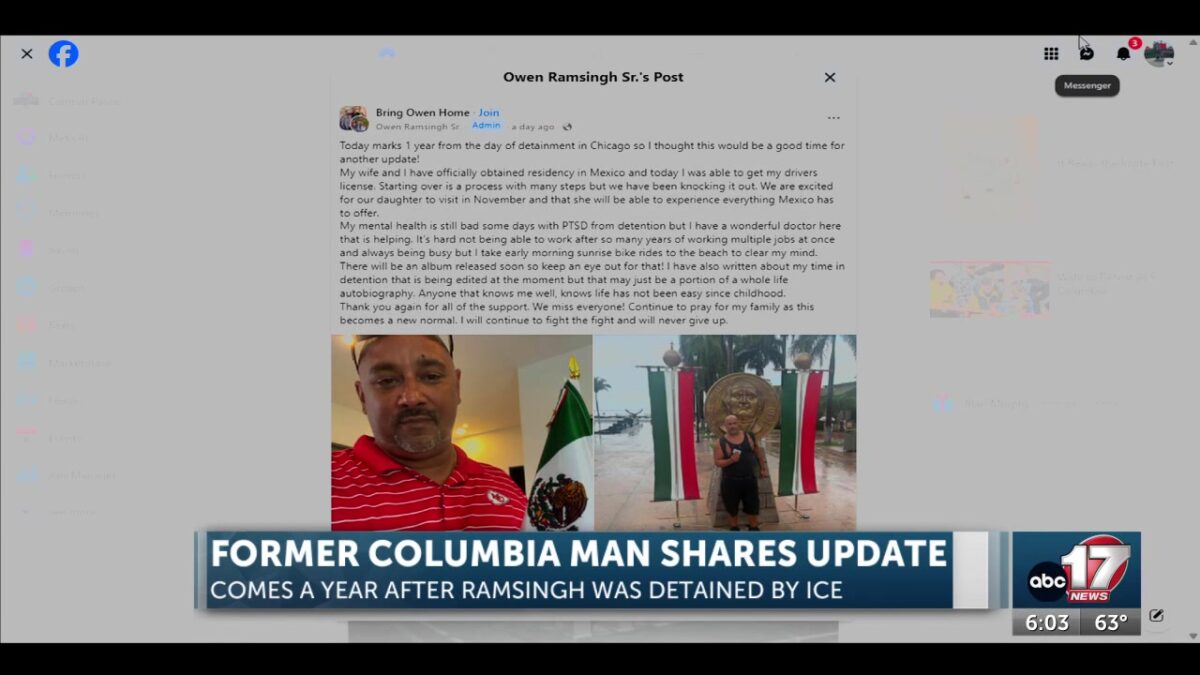
Former Columbia man shares update one year after being detained by ICE

Gabrielle Teiner

COLUMBIA, Mo. (KMIZ)

A former Columbia man detained by ICE in Chicago after a trip to Europe last year shared a glimpse this week of his new life one year later.

Blue Note and Rose Music Hall’s former head of security, Owen Ramsingh, was detained at O’Hare Airport in Chicago in September 2025 after returning from visiting family in the Netherlands.

Ramsingh posted on Facebook Wednesday, saying that he and his wife have obtained residency in Mexico and that he got his driver’s license. Their daughter is expected to visit in November.

He wrote that his mental health is still bad some days due to PTSD from his time in detention.

“I have a wonderful doctor here that is helping,” Ramsingh wrote. “It’s hard not being able to work after so many years of working multiple jobs at once and always being busy but I take early morning sunrise bike rides to the beach to clear my mind.”

He was detained because of a drug conviction in 1998, when he was 17 years old, according to court records obtained by ABC 17 News. Ramsingh was transferred at least once and spent his detention time at a facility in El Paso, Texas.

A New Mexico immigration judge ordered Ramsingh to be deported for life last December. Ramsingh lived in the Netherlands as a child and was deported back to the Netherlands in February.

Before his deportation, Ramsingh had lived in the U.S. since he was a child. He was issued a green card as a child of a U.S. citizen in 1986.

Ramsingh wrote that an album release is coming, sharing his experience from his time being detained.

“Anyone that knows me well, knows life has not been easy since childhood. Thank you again for all of the support. We miss everyone! Continue to pray for my family as this becomes a new normal. I will continue to fight the fight and will never give up,” Ramsingh wrote.

Click here to follow the original article.
CPS health science high school to open as soon as next school year

Jazsmin Halliburton

COLUMBIA, Mo. (KMIZ)

The Columbia Board of Education held a work session Thursday morning to discuss lottery school updates and the potential addition of a “health science high school.”

According to the meeting agenda, lottery schools are specialized schools that admit students through a random drawing. CPS lottery schools feature specialized instruction areas such as STEM, STEAM, multi-grade learning, health care, art and agriculture.

Ridgeway Elementary was the first CPS lottery school, introduced in 2012. CPS has since added Benton, Locust, Jefferson and Two Mile Prairie.

In Thursday’s Lottery School Update, the board discussed the health science high school that would collaborate with MU Health. Starting in ninth grade, students would work with MU Health, take classes in clinic settings, and focus on learning about health care experiences. Learning opportunities would also include an introduction to health care pathways, simulation labs, and hands-on learning, including internships in their junior and senior years.

The school could open as soon as the 2027-2028 school year.

CPS board member Dr. Helen Porter told ABC 17 News that there are classes at the Career Center, especially for Certified Nursing Assistants, but they are always full. we kind of recognized that we had an opportunity here to get more students in those classes. “[Students] were obviously wanting them,” said Porter. “There’s a waitlist to get in. And so what a great opportunity for us to a help our students find that very profitable career.”

Porter also said that MU Health can benefit from the partnership by recruiting students, giving them an employment opportunity.

“This isn’t necessarily for kids who want to be doctors or nurses,” Porter said. “Of course, we value those careers, but these are for very technical, skilled, and certified members who want to be phlebotomist or, pharmacy techs, or CNAs. And so it’s that level of employment that health care is really struggling to fill right now. And I think all hospitals are.”

The health science high school is in phase two of planning, using surveys and focus groups with eighth-grade students and parents. When surveys with parents, students and staff are complete, applications to the lottery school will be open.

The school’s location has not yet been announced.

West Middle School was announced as the next CPS lottery school to become a fine arts academy starting the 2027-2028 school year.

“They are really set up well to be a strong fine arts middle school,” Porter told ABC 17 News. “They’ll still have all of the regular curriculum, just like we have at Jefferson [Middle School]. But that opportunity for students and families to really embark in a fine arts journey or career is going to be there.”

CPS hopes to have applications for West Middle School available by the end of October.

Click here to follow the original article.
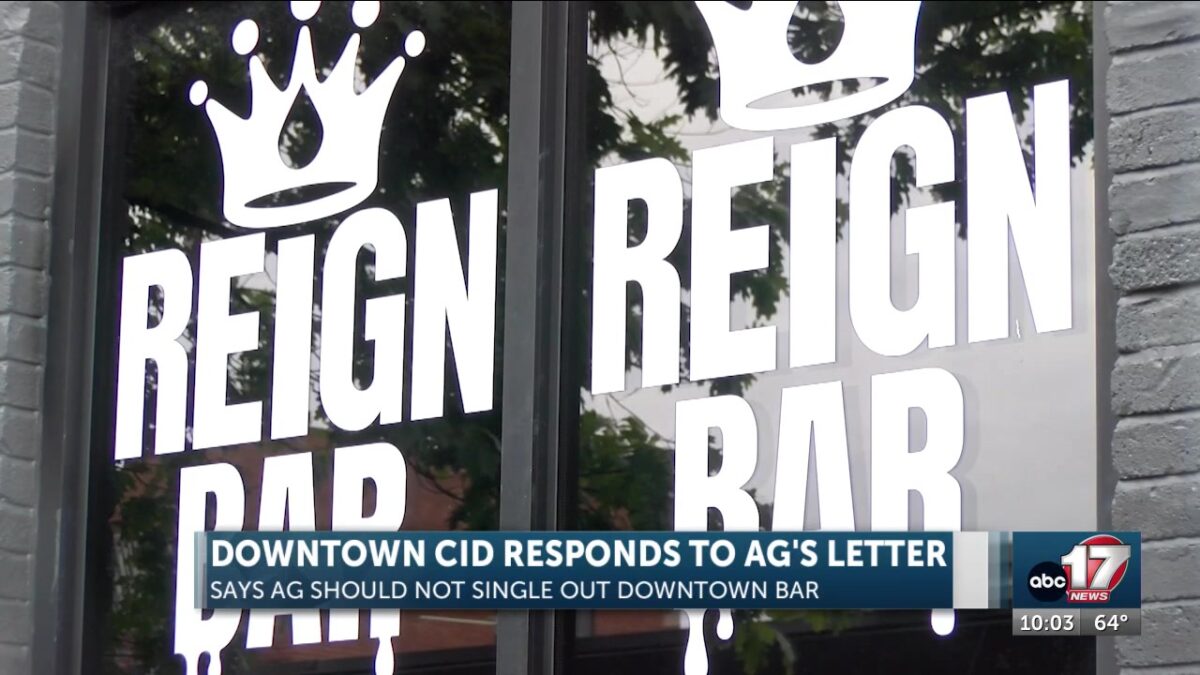
Columbia Downtown CID says officials should not single out bar amid crime concerns

Melissa Houston

COLUMBIA, Mo. (KMIZ)

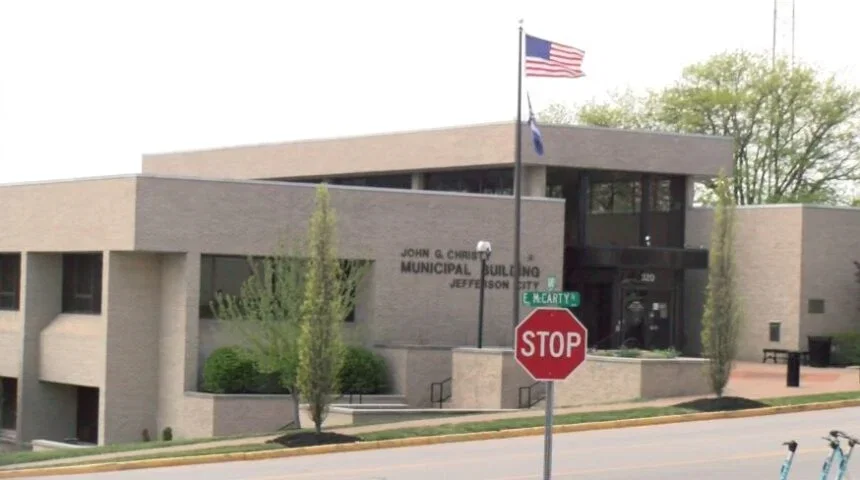
Columbia’s Downtown Community Improvement District issued a statement Wednesday criticizing officials who have labeled a downtown bar a “public nuisance.”

The statement was issued in response to a letter from Attorney General Catherine Hanaway sent to Reign Bar between Walnut and Ninth Street, addressing the “nuisance conditions.”

Downtown CID Director Nickie Davis said in a statement that the District takes “public safety seriously,” but does not support placing the blame on one bar.

“The District does not support singling out or assigning responsibility to an individual business without clear evidence demonstrating that the business itself is responsible for the activity in question,” Davis said in the email.

Davis said Reign Bar has continued to be in communication with The District, law enforcement, and community members about the safety concerns for Ninth and Walnut Street.

Greg Wolff, a part-owner of the Reign Bar building for the past 10 years, said he has seen violence in downtown Columbia long before Reign Bar opened their doors.

“I could say with some factual data that, yeah, this did not just start with Reign Bar; this has been going on for- I’m just going to throw out a ballpark of at least three years,” said Wolff.

Wolff said he spoke with Reign Bar owners before he signed with them and emphasizes running their establishment in a safe manner to the community, and so far he has not seen them stray from that.

“We felt like ,this , the things they were saying they were going to do with their security and their business plan, we felt comfortable with, and we haven’t seen much deviation from what they told us they were going to do,” said Wolff. “We have not had anybody call it missing from the police departments, our community leaders saying, ‘ What the heck’s going on here? ‘We need to deal with this.'”

The safety concerns tend to happen outside of businesses in public spaces like the sidewalks or streets, according to Davis. And Davis wrote that business owners have limited authority to control the actions that happen outside of their businesses.

Downtown businesses are responsible for operating their businesses in a safe manner, according to Davis. And she wrote that individuals who participate in violent behavior downtown should be held accountable for their actions.

“Violence anywhere in Downtown Columbia is unacceptable,” wrote Davis. “At the same time, we must be careful not to confuse proximity for causation when determining responsibility.”

Wolff said he is grateful that state leaders are taking notice to the issues of Downtown Safety, but the blame is misdirected.

“I’ll be really excited to have a safer downtown where we don’t have this type of stuff happening at all. I just think the fingers being pointed in the wrong direction, as far as the root cause,” said Wolf.

The District will continue to support Reign Bar and continue to look at “verified information” that leads to contributions to the public safety concerns of downtown.

Davis invited Hanaway, Gov. Mike Kehoe, and other state leaders to come to downtown Columbia to meet with business owners, community members, and law enforcement to discuss public safety concerns.

A press release attributed to Councilwomen Valerie Carroll (Ward 1), Jacque Sample (Ward 3) and Sharon Jones (Ward 4) asks the AG’s office to meet with city officials.

“We believe this work should include sharing information on local investigations and resources. To that end, we are asking the Attorney General’s Office to meet with City leaders to coordinate efforts regarding public safety in the Walnut/9th Street area,” the joint press release says.

Columbia Mayor Barbara Buffaloe posted a statement on social media saying she agreed with her colleagues in City Council and the District. She stated that she is concerned about the demands from Attorney General Hanaway regarding Reign Bar without notifying or collaborating with the City first.

University of Missouri President Mun Choi warned students at the start of the semester to stay away from the part of downtown where Reign is located, citing a street brawl that resulted in seven arrests and other incidents.

Click here to follow the original article.

Jefferson City gets $10 million from DNR for wastewater collection system improvements

Ryan Shiner

COLUMBIA, Mo. (KMIZ)

Jefferson City will get $10 million in financial assistance from the Missouri Department of Natural Resources for upgrades to its wastewater collection system, a Wednesday press release from the DNR says.

The release says the city expects the funding to cover the entire project.

“The completed project is expected to reduce sanitary sewer overflows by increasing capacity to handle peak flow events,” the release says. “The improvements will extend the wastewater system’s life and efficiency so it can continue serving the city well into the future.”

Funding comes from a $10 million loan through the DNR’s Clean Water State Revolving Fund. The DNR expects it to save the city $4.2 million in low-interest over 20 years.

The project is expected to be completed by August 2027.

Click here to follow the original article.
Lane, sidewalk on Cherry Street to close Thursday

Ryan Shiner

COLUMBIA, Mo. (KMIZ)

A portion of the westbound lane of Cherry Street in downtown Columbia will be closed on Thursday, the city announced in a Wednesday press release.

The street and north sidewalk between Eight and Ninth streets will close at 7 a.m. as a crane will be used to “to lift a rooftop air conditioning unit onto 29 S. Ninth St.,” the release says.

Work is expected to be completed by 1 p.m.

Detour and no-parking signs will be posted.

Click here to follow the original article.
Columbia police name man detained during standoff

Madison Stuerman

COLUMBIA, Mo. (KMIZ)

Columbia police officers arrested a man after a standoff on Wednesday in the northeast part of the city.

ABC 17 News saw several police officers on the scene with some of them pointing guns at the home on Hidden Creek Court, a cul-de-sac off of Rice Road and Hanover Boulevard.

Columbia Police Department spokesperson Colin Imhoff confirmed officers were serving a search warrant in the area. Another spokesman said officers were looking for a man with assault charges.

CPD spokesman Brian McNeill told ABC 17 News at the scene that the man who was detained was the suspect.

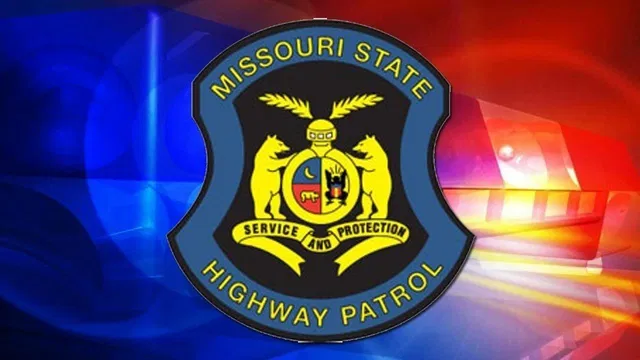
Police later wrote that the suspect’s name is Christopher Dow, 34, of Columbia. He was arrested on suspicion of third-degree domestic assault, resisting arrest and first-degree making a terroristic threat. He is being held at the Boone County Jail. Charges have not yet appeared on Casenet.

CPD wrote that when officers arrived, Dow threatened to “explode the residence.”

Resident Angie Martinez said in the 20 years she has lived in the neighborhood, she has never seen anything like Wednesday’s police response. Martinez added that she saw police visit the street three times from Saturday to Sunday, which she said is not typical.

Officers were heard yelling for a person to come out of the home. A K-9 was brought to the scene shortly after 2 p.m.

The road was blocked off by police.

Police had escorted students off a school bus at some point in the afternoon. Another school bus drove by at 4 p.m. and officers told the driver to drop off students at the next bus stop.

A SWAT team vehicle was brought in front of the home at 3:33 p.m.

Officers drove an armored vehicle forward and multiple dogs appeared after the vehicle pulled back out. Police used a flash bang at 4:51 p.m.

A man was detained by police shortly before 5 p.m. The armored vehicle was still parked in front of the home after the man was detained.

Court filings show that Dow was also charged in May with misdemeanor illegally possessing drug paraphernalia. A hearing in that case was scheduled for Wednesday afternoon.

This is a developing story.

Click here to follow the original article.
Woman seriously injured in Maries County crash

Camryn Payne

COLUMBIA, Mo. (KMIZ)

A 25-year-old St. Robert woman was seriously hurt after a crash in Maries County just before 10:34 a.m. Tuesday.

According to a Missouri State Highway Patrol crash report, the woman was driving a 2010 Chevrolet Equinox on Highway 133 north of County Road 630, south of Brinktown, when the SUV traveled off the left side of the road and overturned.

The woman was not wearing a seat belt at the time of the crash and was taken to Phelps Health with serious injuries.

The SUV was totaled.

Click here to follow the original article.

Missouri Supreme Court hears arguments over school library content

Marie Moyer

COLUMBIA, Mo. (KMIZ)

The Missouri Association of Librarians asked the Missouri Supreme Court on Wednesday to uphold a lower court’s ruling that deems a law on sexually explicit materials in schools unconstitutional.

The law in question is Senate Bill 775. The bill went into effect in August 2022 and addressed sexual assault and school materials.

Section 573.550 of the Missouri Revised Statutes states that if any person affiliated with a school in any official capacity distributes “explicit sexual material” to a student, they can face punishment.

This includes up to a year in prison and/or a $2,000 fine.

The Jackson County Circuit Court banned the enforcement of the law, claiming it violated Missouri’s due process and freedom of speech clauses. Many states follow a set obscenity rule through the California case, Miller v. California, which set the standard that explicit material can be present as long as the work as a whole is not sexual or obscene in nature.

The Missouri Constitution specifically states that “any pictorial, three-dimensional, or visual depiction, including any photography, film, video, picture, or computer-generated image,” showing sexual acts.

The library association argued the definition is too broad, vaguely expanding the current standard most states share for sexually explicit material. As a result, librarians in the state have been pulling questionable books out of fear of punishment, potentially affecting the ability of instructors to provide information on sexual education and banning young adult books that imply sexual themes but don’t show explicit content.

“This statute has created a chilling effect on school library collection development, resulting in fewer representative books within our collections, due to fear of prosecution,” former library association President Melissa Corey said during initial court proceedings.

The library group says the law mainly focuses on secondary education literature, and has swept up a graphic novel of a “Game of Thrones” book and a children’s Bible.

According to court documents, other books that were considered in violation of SB 775 included “The Giver,” and graphic novel versions of “The Handmaid’s Tale” and “Slaughterhouse-Five.” Park Hill School District in Kansas City also permanently removed children’s picture book “The Big Bath House” which detailed a Japanese family going to a culturally traditional bathhouse.

“Librarians flagged a staggering 219 titles available to students for review by district administrators,” according to court documents.

“These books are only in high school libraries,” Gillain Wilcox with the ACLU of Missouri said. “High school students are mature enough to read them, school librarians know what books should be there, and these laws do target the LGBTQ+ community.”

“If an illustrated memoir detailing a professional athlete’s discovery of her sexuality contains even one prohibited depiction, a private-school basketball coach cannot loan her personal copy to a student on her team who is worried about coming out. If a graphic adaptation of an award-winning novel contains even one prohibited depiction, a special education teacher in a religious school cannot provide it to a student who struggles with traditional reading,” the librarians stated in their argument.

The state is asking the Missouri Supreme Court to reverse the decision, arguing that the law is not overly broad, and that the law regulates schools’ speech, not overall free speech.

“The state is free to adopt other definitions of obscenity as long as the definitions stay within the bounds set by the constitutional standard,” Deputy Solicitor General Graham Miller said.

The Missouri Supreme Court questioned Miller, asking the purpose of the law if there are already rules banning explicit material being shown to minors. The state said that SB 775 is different since it is limited to activity that takes place in schools.

“When Missouri parents send their children to school, they have a legitimate expectation that school officials will deliver age-appropriate instruction. And they legitimately expect that school officials have a ‘duty to supervise the students under their custody and control,'” the state wrote in its argument.

A ruling will be released at a later date.

Click here to follow the original article.