Kehoe emphasizes public safety, elimination of income taxes, lower spending during State of the State
Matthew Sanders
JEFFERSON CITY, Mo. (KMIZ)
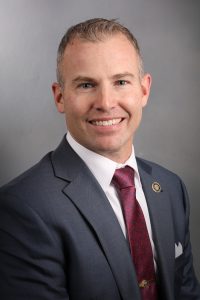
Gov. Mike Kehoe pushed ahead with his proposal to eliminate Missouri’s income tax during his annual State of the State Address on Tuesday before a joint session of the General Assembly.
Kehoe has talked about income tax elimination since he ran for the office. Now he’s looking to implement those ideas.
“If we are serious about building a foundation for growth, to compete rather than be complacent, then we must begin the work now to phase-out and eliminate Missouri’s individual income tax,” Kehoe said in prepared remarks. “We can do both. We can maintain a balanced budget that supports essential services and pursue a bold tax policy that improves Missouri’s competitiveness.”
Kehoe’s plan to eliminate income tax would be done by expanding the sales tax base to include services.
This would include things such as, monthly subscriptions, e-books. online advertising and AI platforms, according to Kehoe.
“When these types of modern services are taxed, it will create new revenue for local governments.These increases will need to be offset by reducing local taxes, like property taxes, a high priority for Missourians and many of us in this room,” Kehoe said.
The current state income tax is between 2-4.7% making up more than half of state revenue, providing about two thirds of the state’s general revenue fund.
Missouri would join nine states that have eliminated income tax, including neighboring Tennessee.
Kehoe stressed the importance of the proposal Tuesday, noting that while the state’s population is growing, economic growth has been average. While the Show-Me State is strong in recruiting jobs and investment, eliminating the income tax would make Missouri more competitive with states that do not have one.
“Our plan includes safeguards to ensure fiscal responsibility and protect against economic downturns, by requiring triggered reductions to the income tax rate. Eliminating the income tax is not about runaway sales taxes. And I will never support extending sales taxes on agriculture, healthcare, or real estate. Period,” Kehoe said.
2026 State of the State AddressDownload
Democratic lawmakers have pushed back on this plan, calling it “the most devastating tax increase in Missouri”, saying it will affect low and middle-income families.
“Eliminating that revenue source requires a massive increase in both rate and scope of the state’s sales tax,” House Minority Leader Ashley Aune said. “To avoid bankrupting state government, the result would be a net tax increase for the vast majority of Missourians. If you want the state to tax services that are currently constitutionally protected from taxation, you’ll love tax hike Mike’s plan.”
Aune claims Kehoe’s plan would be an “unwarranted” tax cut for the rich and would lead to less money to invest in children through public education, along with law enforcement, infrastructure and health care.
“Mike wants to dig his hands deeper into most people’s pockets, but provide them fewer services in return,” Aune said.
Democratic lawmakers are already planning to counter Kehoe’s proposal with another plan.
Aune said either option will hurt Missourians. State Rep. Mark Boyko (D-Kirkwood) said he intends to file an alternative plan next week that he claims would save residents more money. Boyko couldn’t give details of the plan.
Kehoe also stressed the need for responsible state budgeting after the state auditor warned the General Assembly of a quickly dropping reserve fund. Kehoe said his budget reduces $600 million from general revenue spending.
Kehoe’s 2025 State of the State address included priorities such as public safety, economic development, agriculture, education and government efficiency. For 2026, his focus will be continuing to prioritize those areas, according to a press release from the Governor’s office.
Kehoe also signed executive orders on school accountability and to create a government efficiency initiative called Missouri GREAT.
Kehoe’s plan to eliminate the state income tax will need to be voter-approved and is expected to be on the ballot this year.
One of Kehoe’s top priorities ahead of his address is public safety, which has been a hot topic since a Homecoming weekend shooting in September that led to the death of Stephen’s College student Aiyanna Williams.
In December, University of Missouri System President Mun Choi met with Kehoe and Missouri’s public safety team to discuss efforts to combat crime in Columbia. However, that meeting only included university representatives, not city officials.
Earlier this month, Kehoe met with Columbia Mayor Barbara Buffaloe, City Manager De’Carlon Seewood, and Police Chief Jill Schlude to discuss public safety.
The city official’s meeting with Kehoe came after a violent start to the year in Columbia.
On Jan 3, a 17-year-old was arrested after police claimed he fired shots inside Dick’s Sporting Goods in the Shoppes at Stadium area, then stole a car and fled on Interstate 70. The following night, a shooting at an apartment complex on Clark Lane left 21-year-old Brianna Hawkins, of Fulton, dead and two others injured.
Buffaloe told ABC 17 News that while the meeting was pre-planned before those incidents took place, both of them came up in their conversation with Kehoe.
City Manager De’Carlon Seewod described the meeting as “short” but productive. No other meetings with Kehoe have been scheduled.
To address crime among youth, Kehoe said Tuesday he plans to have legislation for juveniles to be charged as an adult for certain violent crimes.
“We must allow prosecutors to request a hearing before a judge for certain violent crimes committed by juveniles and give judges the ability to determine whether those cases should be held in adult court,” Kehoe said.
Kehoe added that the juvenile justice system was designed to rehabilitate young people, but he said it is not meant to be a revolving door for repeat offenders.
He said this would allow more accountability for young violent offenders.
“Right now, when a judge sentences an offender, no one in the courtroom—not victims, not law enforcement, not even the court—can say what that sentence truly means. That lack of transparency undermines confidence in the system,” Kehoe said.