Butte County farmers face possible water shutoffs amid curtailment enforcement

Par Kermani

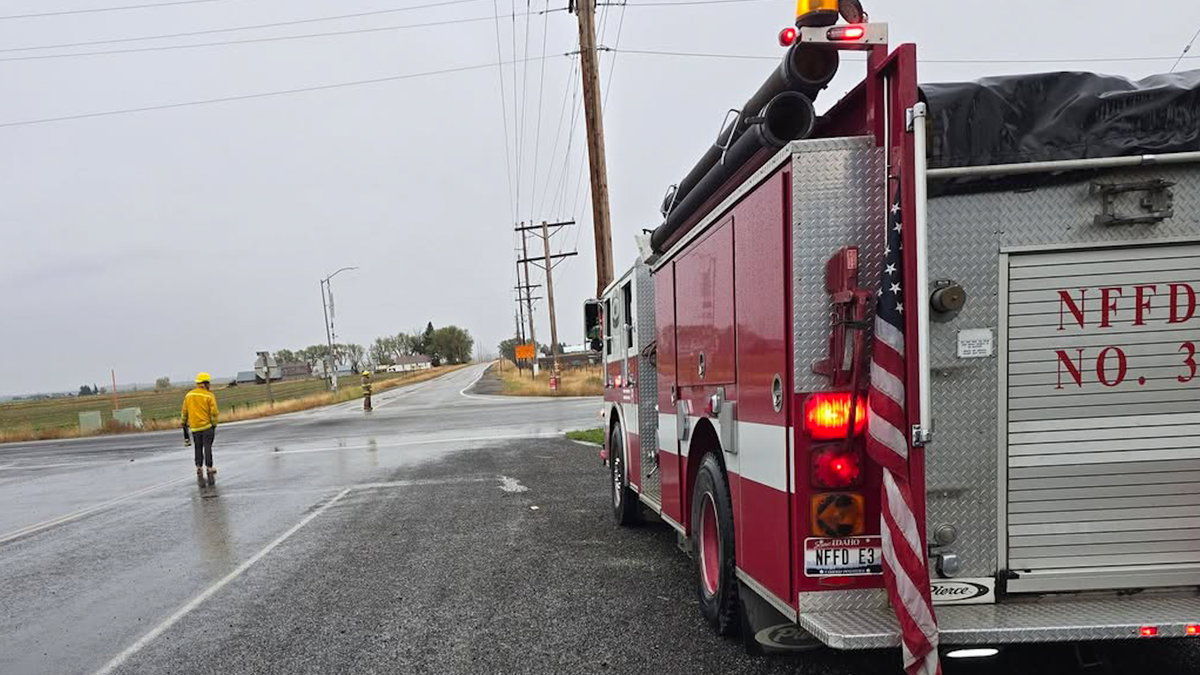
BUTTE COUNTY, Idaho (KIFI) — Some Idaho farmers could be at risk of losing water, as the state begins enforcing curtailments this spring.

Under Idaho’s “prior appropriation” doctrine, water rights operate on a strict priority system: “first in time, first in right.” Senior rights holders (those with the oldest claims) receive their full allocation first, while junior users run the risk of being shut off entirely during dry years.

This year, low snowpack and early demand are putting that system to the test, forcing the Idaho Department of Water Resources (IDWR) to issue curtailment orders earlier than expected.

The current curtailment orders center on the Big Lost and Little Lost River basins. Following the passage of Senate Bill 1341 in 2024, water users in these areas were required to join a mitigation plan to avoid shutdowns. They were given about 16 months to comply, with that deadline taking effect in November of 2025.

State officials say enforcement is already underway. According to a recent IDWR press release, agents will begin checking groundwater users in the field this spring to ensure compliance. Those who are not part of an approved mitigation plan could have their wells curtailed or “red-tagged.”

According to Water Rights Attorney Thomas J. Budge, the transition has been anything but smooth.

“This year, the Big Lost and Little Lost basins have been brought in by the Department of Water Resources,” Budge explained. “Their water rights are now subject to curtailment unless they participate in a mitigation plan. Earlier this year, those districts asked to join the existing 2024 plan.”

The 2024 mitigation plan is designed to let groundwater users keep pumping, but only if they reduce their water use or replace it through storage and recharge.

But to join the plan, all parties have to agree, and that’s where the process has stalled.

Currently, Budge says the Surface Water Coalition—representing senior water users—has refused to sign the addendum that would allow the Big and Little Lost basins to join. Without that signature, the IDWR cannot lift the curtailment orders.

“Because of that, the Department of Water Resources still has curtailment orders in effect in the Big Lost and the Little Lost basins,” Budge said. “Those farmers are just very concerned. It was a really hot, dry March, and their crops need water, and they’re under curtailment.”

Budge who is representing groundwater users filed a motion asking the state to approve the addendum.

According to Budge “After I filed that Friday, the department promptly issued a notice requiring the parties to come to a status conference on Wednesday of this week. And the purpose of that status conference is to ask why the Surface Water Coalition has refused to sign the addendum.” he said “And, our hope is that the director, approves the addendum and lifts the curtailment so that the farmers and the big lost and the little lost basins can, irrigate their crops.

State officials say time is critical. A status conference is scheduled this week, as irrigation season has already begun in some of the affected basins and curtailment remains an “imminent outcome” if no resolution is reached.

The Idaho Department of Water Resources is expected to make a decision later this week. 

Click here to follow the original article.

Idaho Secretary of State: Sample Ballots now available for Idaho’s May 19 Primary

News Release

IDAHO — Ahead of the Idaho primary election on Tuesday, May 19, personalized sample ballots are now available for all registered voters at VoteIdaho.gov.

Sample ballots list all candidate races and measures that will appear on a voter’s specific ballot, so voters can make informed decisions before casting their ballot. In Idaho’s primary election, a voter’s party affiliation determines which ballot they are eligible to receive.

“With the May primary election approaching, I encourage Idaho voters to review their sample ballot and take advantage of the resources available at VoteIdaho.gov,” said Secretary of State Phil McGrane. “Taking a few minutes now to make a plan can help ensure a smooth and confident voting experience on May 19.”

Voters can access a personalized sample ballot in three easy steps:

Click “Find Your Sample Ballot”

Enter your voter information

View, save, or print your sample ballot

Notable Upcoming Dates

Monday, April 27-May 15: Early Voting (Early voting schedule & availability varies by county. Check with your county clerk for details.)

Friday, May 8 at 5:00 p.m.: Deadline to request an absentee ballot and to preregister to vote

Note: Eligible voters may register on Election Day

Tuesday, May 19: Election Day & deadline for absentee ballots to be received by county clerks. Polls are open from 8:00 a.m. to 8:00 p.m.

Learn more about the upcoming election and access information on voting in Idaho at VoteIdaho.gov.

Click here to follow the original article.

Idaho State University to launch Bachelor’s Degree in Artificial Intelligence Sciences this Fall

News Release

POCATELLO, Idaho — Idaho State University will soon be offering a degree in one of the world’s most in-demand fields.  

Recently, ISU received the go-ahead to begin enrolling students in a bachelor’s degree program in artificial intelligence sciences starting this fall. Shared between the Departments of Mathematics & Statistics and Computer Science, the new degree will help address the growing demand for AI professionals. Employment in the field is projected to grow by 34 percent by 2034, according to the U.S. Bureau of Labor Statistics.

Emanuele Zappala, assistant professor of mathematics at Idaho State University, and a student pose for a photo. (ISU)

“This program reflects the strong collaboration between the mathematics & statistics and computer science departments,” said Emanuele Zappala, assistant professor in the mathematics and statistics department. “It is designed to give students both the theoretical background and the applied skills necessary to contribute meaningfully to the rapidly growing field of artificial intelligence.”

Students majoring in artificial intelligence sciences can choose from one of two concentrations: mathematics and statistics or computer science. The mathematics and statistics concentration focuses on the mathematical foundations of the field. Meanwhile, the computer science concentration homes in on the cutting-edge technologies powering artificial intelligence.

“Although many may associate AI with computer science, many AI models consist purely of mathematics, the field that computer science came from, and statistics. So, there are many angles from which to approach AI,” Paul Bodily, associate professor of computer science, said. “Though AI is decades old, public interest has peaked in recent years due to the advent of Large Language Models like ChatGPT, Gemini, Claude, etc. The foundational models for these systems have been around for decades, but breakthroughs in the specific design and scale of these models have led to the watershed moment we’re seeing now.”

“The real opportunity is in where this program can go,” said Leslie Kerby, associate professor of computer science. “AI is inherently interdisciplinary, and at ISU, we’re especially excited about future tracks that connect AI with our strengths in areas like health sciences, business, and engineering. That could include pathways in healthcare AI, AI engineering, or domain-specific applications—giving students the ability to apply these tools in high-impact, real-world fields.”

In addition to in-person classes, up to 80 percent of the required coursework for the artificial intelligence sciences degree will also be offered online. 

For more information on ISU’s Departments of Mathematics & Statistics and Computer Science, visit isu.edu/math and isu.edu/cs, respectively. 

Prospective students can book a campus tour at isu.edu/visit

Click here to follow the original article.

Pocatello launches two major road safety projects this April

News Team

POCATELLO, Idaho (KIFI) — This April, two significant safety upgrades are coming to Pocatello as construction begins on two major roadway projects.

Funded by a federal grant from the Local Highway Safety Improvement Program (LHSIP), these projects aim to curb fatal and serious injury crashes on local roadways by improving visibility and reducing how much pedestrians interact with traffic. To secure the grant, the City of Pocatello has committed a 7.34% local match in the FY2026 budget.

The first project focuses on North Main Street and North Arthur Avenue in Historic Downtown Pocatello. The project aims to improve the walkability and increase safety for both pedestrians and drivers. Key enhancements include:

Sidewalk Bulb-outs: Extensions that narrow the roadway to slow traffic and shorten the distance pedestrians spend in the street.

ADA Upgrades: New curb ramps will be installed to meet current Americans with Disabilities Act standards, ensuring accessibility for all residents.

The second project addresses safety improvements at the intersection of Flandro Drive and East Quinn Road. The redesign is intended to reduce congestion and minimize dangerous situations or close calls —specifically during dangerous left-turns. Key improvements include:

Raised Concrete Median: To better direct traffic and prevent erratic movements.

Upgraded Signage: Clearer navigation for drivers approaching the intersection.

New Sidewalk Sections: Closing gaps in the pedestrian network with ADA-compliant ramps.

Local drivers should prepare for temporary lane closures at both locations starting this month. City officials recommend that “drivers allow for additional travel time due to potential traffic delays and consider alternative routes when feasible.”

Both projects are anticipated to be finished by late August.

Click here to follow the original article.

Down to the Wire: What you need to know before filing a Tax Extension

Kaelyn Blessinger

IDAHO FALLS, Idaho (KIFI) — With the tax deadline looming just two days away, the pressure is on! If you’re staring at a mountain of paperwork with no end in sight, you may want to file an extension—but financial experts warn there is a catch you can’t afford to ignore.

However, local accountants and tax attorneys stress that while an extension gives you more time to file, it does not give you more time to pay.

“It is not an extension to pay. So everyone who files a 4868 should submit the form electronically or by paper, but include the total estimated tax that’s due,” Charles Brooks, the district coordinator for AARP Tax Aide, stated.

The extension is meant to give taxpayers additional time to file their tax returns. If you plan to file a tax extension (Form 4868), you will still need to estimate and pay any owed taxes by IRS by the April 15 deadline to avoid getting hit with expensive penalties.

“There are 2 penalties for filing late,” Brooks said. “There’s the late filing penalty. There’s also a late payment of tax. So it’s about 5% a year interest before. But it’s also 5% per month for late filing.”

If you file the extension, you could risk accumulating interest and late-payment penalties if you do not pay your taxes on time. But it will not increase your audit risk.

Extending your taxes is a great tool for getting your paperwork together, but not if you’re looking for a discount.

The tax extension is free to file and gives the taxpayer until October 15 to file paperwork. For more information, click HERE.

Click here to follow the original article.

‘It’s been tough’: Farmers concerned about low snowpack

KIVI Staff

Originally Published: 13 APR 26 15:10 ET

By Isaiah Sharp

Click here for updates on this story

    MERIDIAN, Idaho (KIVI) — Idaho saw one of its warmest winters this past season, leaving the state in a snow drought. Low elevation ranges are seeing some of the lowest snowpack ever recorded, and it’s already having impacts.

According to the Department of Water Resources (DWR), Idaho’s snowpack could be the worst the state has ever seen.

“Idaho is looking at the lowest snowpack on record for April 1st,” said David Hoekema, a hydrologist with DWR. “The snowpack is our largest reservoir, and so for the first two months of the irrigation season, irrigators typically rely on the melt out of that reservoir to meet irrigation demand.”

Idaho did see average rainfall over the winter season, which helps. Idaho’s reservoir systems are looking good to carry some of the weight, but the snowpack is still a necessity, and farmers are the first to feel it.

“Water used to be considered an infinite resource, and it was everywhere, but as everybody sees now, everybody is affected by drought and lack of water,” said Richard Durrant, a Meridian farmer.

The drought now forces those in the agriculture industry to consider timing, crop rotation, and next year’s strategy, especially if we see back-to-back years similar to this one.

“It can be detrimental. We are leaving out a couple hundred acres that we are not planting this year,” Meridian farmer Neil Durrant said, “If we get the same type of winter in spring going into next year, we could be leaving out half the acreage we farm.”

Please note: This story was provided to CNN Wire by an affiliate and does not contain original CNN reporting. This content carries a strict local market embargo. If you share the same market as the contributor of this article, you may not use it on any platform.

The-CNN-Wire™ & © 2026 Cable News Network, Inc., a Warner Bros. Discovery Company. All rights reserved.

Click here to follow the original article.

Governor Brad Little announces Idaho’s partnership with Turning Point USA

KIVI Staff

By: Ellie Sullivan , Allie Triepke

Originally Posted 11:00 AM, Apr 10, 2026

BOISE, Idaho — Thursday, Governor Brad Little signed a proclamation partnering the state with conservative organization Turning Point USA to bring Club America to high schools across the country.

On Wednesday, April 8, Governor Little, along with Idaho Superintendent of Public Instruction Debbie Critchfield, spoke at the statehouse about the partnership.

“Turning Point, your presence here, is part of that process of keeping the republic,” Governor Little said.

“Organizations such as Turning Point USA… continue to provide avenues for young people to participate in the free exchange of ideas which promotes intellectual development, community engagement, and patriotism,” Governor Little said.

Governor Little read a proclamation from the governor’s office, announcing the partnership.

“I, Brad Little, Gov. of the State of Idaho, hereby reaffirm Idaho’s commitment to upholding the principles of the First Amendment within all public institutions… and encourage any student who is interested in leading or joining Club America or Turning Point USA chapter to do so.”

A governor’s proclamation is considered an announcement or declaration, not a binding law.

According to Governor Little’s website, a proclamation does not indicate the Governor’s support of any given issue or project.

BABE VOTE, an advocacy group, has spoken out against the governor’s proclamation.

In a press release from the group, they say that “Under the guise of ‘free speech’ and ‘civic engagement,’ the state is actively partnering with an outside group to bring a specific, partisan political ideology into our classrooms. This is a direct contradiction to the ‘keep politics out of schools’ mantra we hear so often from the same leaders.”

They are also calling on students to organize, intending to have BABE VOTE in every Idaho high school, to “ensure young people are registered to vote and engaged in a non-partisan, inclusive civic process.”

For some students, the move raises concerns about politics in the classroom.

“I think that’s a huge issue when you’re pushing conservative ideologies in a high school. The state has said in the past they want to keep high schools non-political and keep politics out of the classroom,” said Nathan Zimmerman, a Boise State University political science student who attended Renaissance High School in Meridian.

Others see the effort as a positive step for student expression.

“It’s not necessarily a Republican or Democrat thing—it’s a pro-America [thing]. If you love our country and want to ensure that it continues on and that we’re able to enjoy the freedoms that we have, you can advocate for that at your high school,” said Cade Syvock, another Boise State political science student and Middleton High School alumni.

Click here to follow the original article.

TikTok “psychic” appeals $10M judgment over false University of Idaho murder claims

Seth Ratliff

BOISE, Idaho (KIFI) — The self-proclaimed “psychic crime-solver” ordered to pay $10 million for falsely linking a University of Idaho professor to the 2022 Moscow student murders is challenging the jury’s verdict in a higher court.

Ashley Guillard, 41, filed a formal notice of appeal with the 9th U.S. Circuit Court of Appeals on April 6.

At the height of the investigation into the deaths of Kaylee Goncalves, Madison Mogen, Ethan Chapin, and Xana Kernodle, Guillard gained notoriety on TikTok. Using tarot card readings, she falsely claimed U of I history professor Rebecca Scofield orchestrated the killings to cover up an inappropriate relationship with one of the students. Those claims drew millions of views.

Guillard refused to retract her statements and doubled down, even after the 2022 arrest of Bryan Kohberger. Kohberger pleaded guilty in July 2025 and is currently serving life without parole.

In 2024, Chief U.S. Magistrate Judge Raymond Patricco ruled that those videos were defamatory but left the question of damages to a jury, according to KIVI. In February, a jury awarded Scofield $3.5 million in damages for the false statements about an inappropriate relationship with a student and $6.5 million for the allegations related to the murders of four University of Idaho students.

Guillard, who acted as her own attorney during the trial, continues to maintain her innocence. In her latest federal filing, she claims the entire trial was “fraudulent”. Her appeal accuses Scofield of fabricating evidence and perjury.

“Professor Rebecca Scofield lied about having damages, presented false evidence in Court to the judge and jury, filed fabricated medical records falsely portraying as damages related to this case and presented witnesses who also lied under oath to fabricate damages,” states the filing. “For these reasons, the entire case is fraudulent and a violation of Guillard’s constitutional right to a fair trial in federal and state proceedings guaranteed by the Due Process Clauses of the Fifth and Fourteenth Amendments.”

The Ninth Circuit marked the notice of appeal as received on Thursday and is expected to review the filing in the coming months.

gov.uscourts.idd.51326.153.0Download

Click here to follow the original article.

Group of Utahns breaks world record for most fast-food visits in 24 hours — on foot

Fox13

Originally Published: 13 APR 26 08:54 ET

By Averie Klonowski

Click here for updates on this story

    SANDY, Utah (KSTU) — If you were out and about in the Sandy area on Saturday, you might have seen a group of eight people in yellow, jogging with a purpose. But they weren’t training for a typical marathon; they were on an adventure to etch their names in the Guinness World Records.

“So today we’re going to be running up and down Salt Lake County,” said Jacob Sargent, one of the participants.

The group, which all met through their shared passion for running, is tackling the entire challenge on foot.

Sargent built a map so people could follow their adventure.

“We’re at mile 15 right now, and we’re projected to do around I think 40-50 miles by the end of it,” explained Henry Giles, another member of the team.

While the mileage is impressive, their success isn’t measured by time, but by the number of receipts they can collect. They are chasing a world record for a very specific, and very filling, achievement.

“We are accomplishing the world record for the most amount of fast-food return visits in 24 hours,” Giles said.

The current record stands at 150 restaurants. This ambitious group aimed to surpass that by hitting nearly 200 locations in Salt Lake County.

“The current record is 150, so I think 178 puts us in a safe spot,” Sargent noted.

To achieve this, they’ve had to be strategic, ordering small, easy-to-consume items at each stop. “A lot of cookies, a lot of chips, a lot of side dishes,” Giles said.

At one stop, the choice was particularly unique. “I ate a pickle,” said Giles.

Their minimalist orders have led to some confused looks from restaurant employees.

“A group of eight people and we just ordered a single apple sauce,” Giles recalled. “They’re mostly like: ‘just one?’ And we’re like, yeah, well, we explain we’re going to 150 restaurants, so we’re going to be full.”

FOX 13 News met up with them in Sandy, a city they found with a high density of fast-food chains, perfect for their record-breaking route.

“Just went to Beto’s, I ate an entire tub of guacamole, and that was interesting,” Giles shared.

For this group, the challenge is more than just a quirky record. It’s about creating an adventure in their own backyards.

“Wanted to do an adventure that was close to home,” Sargent said.

Giles echoed that sentiment, adding that it’s a way to “prove that you can do something anywhere, anytime.”

The group later told FOX 13 News that by the time they finished around 10:00 p.m., they had visited a final total of 176 restaurants.

Please note: This story was provided to CNN Wire by an affiliate and does not contain original CNN reporting. This content carries a strict local market embargo. If you share the same market as the contributor of this article, you may not use it on any platform.

The-CNN-Wire™ & © 2026 Cable News Network, Inc., a Warner Bros. Discovery Company. All rights reserved.

Click here to follow the original article.

Little signs contentious education bills targeting teachers’ unions, student social transitions

Ryan Suppe

By: Ryan Suppe

Originally posted on IdahoEdNews.org on April 10, 2026

BOISE, Idaho — Brad Little on Friday signed into law several of this legislative session’s most contentious education bills, including new restrictions on teachers’ unions along with budget cuts to virtual education.

He also signed a far-reaching civics bill and new rules requiring public school employees to out transgender students to their parents.

But not without some angst and bitterness around a couple of the bills.

The Republican governor issued a “transmittal letter” on House Bill 516, legislation barring public schools from expending taxpayer resources accommodating teachers’ unions. The new restrictions prohibit schools from allowing unions to deduct dues from teachers’ paychecks and giving teachers paid time off for a wide range of union activities.

Little wrote that the bill contains language he hopes the Legislature “works to address moving forward.” Definitions are “overly broad and ambiguous,” he wrote, and they’ll “lead to increased scrutiny of a teacher’s actions purely based on their affiliation with their local association.” The bill could also have a “chilling effect” on collaboration between schools and unions when it comes to professional development and charitable work in communities.

“These are real and valuable activities that exist to improve the competency of our educators and, in turn, student outcomes,” Little wrote, before touting investments in teacher pay during his two terms as governor.

Idaho Education Association President Layne McInelly said Friday that Little had “every reason” to veto the bill, but he “ignored his better angels” and signed it. Little revealed that he signed the bill on a Friday evening — “a time designed to avoid the spotlight.”

“Gov. Little claims the mantle of a public education supporter, but he just signed a bill that could cement his legacy as anything but,” McInelly said in an emailed statement. “In the eyes of public education’s most ardent and dedicated advocates for students and public schools — IEA’s members — he has certainly forfeited that claim.”

Gov. Brad Little speaks to reporters on Thursday, Jan. 8, 2026, at the Idaho Press Club’s Legislative Preview at the Lincoln Auditorium in Boise. (Sean Dolan/EdNews)

Virtual education cuts

Also Friday, Little signed several bills making cuts to virtual education.

House Bill 940 overhauled state funding for the Idaho Digital Learning Alliance (IDLA) and took about $13.4 million from the state’s learning platform — more than half of its annual budget.

The legislation eliminated IDLA’s elementary programs along with driver’s education, and it enacted new restrictions on “custom sections,” when a virtual course’s entire enrollment comes from one school district.

Senate Bill 1438 effectively capped IDLA’s enrollment next fiscal year by prohibiting the platform from drawing on a public school stabilization fund if enrollment exceeds its budget.

Senate Bill 1444 cut $3 million from virtual public schools, including the Idaho Home Learning Academy (IHLA). The state’s largest online school was the subject of a state audit that found IHLA was giving millions in taxpayer funds to parents, some of whom spent it on questionable purchases.

While he signed it, Little also issued a transmittal letter on SB 1444, questioning the “mere $3 million cut” after he recommended $21 million at the beginning of the session.

“The Legislature did not meaningfully address such disturbing findings about taxpayer funds for public education being routinely spent on paddleboards, streaming services, water park passes and other inappropriate items and services,” he wrote.

But Little noted that a policy bill, House Bill 624, which he also signed, established “guardrails around how funds of this nature may be spent.”

‘Social transition’ reporting

Little also signed a bill requiring that public school officials notify parents within 72 hours if their child requests help with “social transitioning.”

This includes when a student asks to go by a different pronoun or use a bathroom or participate on a sports team that doesn’t align with their birth sex.

Schools and health care providers that fail to comply could face fines up to $100,000.

House Bill 822 was sponsored by Rep. Bruce Skaug, R-Nampa.

Planned Parenthood Alliance Advocates of Idaho slammed Little and the Legislature in a news release Friday for “enacting yet another harmful attack on transgender young people.” The new law will lead to “gender policing based on stereotypes, causing discrimination and a culture of fear,” the release said. 

“Governor Little and Idaho legislators should be ashamed of themselves,” Mistie DelliCarpini-Tolman, Idaho state director at the PPAA, said in the release. “They spent the entire legislative session attacking the LGBTQ+ community rather than focusing on what Idahoans actually need.”

Civics

Little on Friday also signed Senate Bill 1336, which codified a slew of new requirements for civics instruction in public schools.

The new requirements include a lengthy list of historical documents that students must understand to virtues that students must exemplify by the time they graduate.

It was co-authored by state superintendent Debbie Critchfield’s office and the Idaho Freedom Foundation and co-sponsored by Senate President Pro Tem Kelly Anthon, R-Rupert, and Rep. Barbara Ehardt, R-Idaho Falls.

Click here to follow the original article.