Semi-truck crash snarls I-84 traffic near Heyburn

Seth Ratliff

MINIDOKA COUNTY, Idaho (KIFI) — A late morning semi-truck crash in Heyburn snarled I-84 traffic near Heyburn on Tuesday.

According to the Idaho State Police, the crash took place at 11:59 a.m. near mile marker 211. A 33-year-old man was driving eastbound in a 1995 Freightliner when he hit a concrete barrier blocking the eastbound lane of travel.

Fortunately, police say the driver was wearing a seatbelt and was not injured. Construction crews made an emergency lane on the right shoulder to move traffic through the area.

As of 5 p.m., ISP says the lanes are still blocked.

ISP were assisted at the scene by the Idaho Department of Transportation, the Minidoka County Sheriff’s Office, and the Heyburn Fire Department. The cause of the crash remains under investigation.

Click here to follow the original article.

The right to an Abortion could be on the ballot’s this November

Kaelyn Blessinger

BOISE, Idaho (KIFI) – The Reproductive Freedom & Privacy Act is 1,000 signatures away from being added to the ballots this November.

The initiative, spearheaded by the coalition Idahoans United for Women & Families, seeks to restore reproductive healthcare access by introducing specific protections into the state constitution.

What the Act Proposes

If passed, the initiative would create a legal right in Idaho for individuals to make their own reproductive health decisions, including abortion, without excessive government interference.

According to Idahoans United for Women & Families, the right to abortion access means one could obtain an abortion before fetal viability (the stage when a fetus could survive outside the womb). There would also be some post-viability exceptions to protect the life or health of the pregnant person.

Privacy protections would keep information about these decisions on reproductive care between patients and their healthcare providers.

“They can plan their lives, their health, their future, their finances. Without government at the table. And that is a quite essential Idaho value,” Melanie Folwell, the executive director of Idahoans United for Women and Families, stated, “When it comes to the hard decisions, those belong to you, not the government. You call the shots in your family, not the government.”

“Idaho is a Pro-Life State”: The Opposition

The initiative faces stiff resistance from conservative advocacy groups who argue the measure againts Idaho’s values as a traditionally “pro-life” state. Critics argue the Act would dismantle existing Idaho laws that strictly limit abortion.

“The radical ballot initiative would turn back all of the pro-life victories that Idaho has achieved in recent years that provide so many protections for babies and for mothers,” Blaine Conzatti, president of Idaho Family Policy Center, stated. “Idaho is a pro-life state.”

The Final Push

With the deadline looming, Idahoans United will host signing blitz events across the state tomorrow, April 15. The events will target key districts where additional signatures are needed.

If the final 1000 signatures come through, ultimately, the fate of the Act rests with the voters. A copy of the language of the initiative has been included below.

RFPADownload

Click here to follow the original article.

IDWR and Gov. Little issue emergency drought declaration for all 44 Idaho counties

Seth Ratliff

BOISE, Idaho (KIFI) — Following the second-warmest winter in Idaho’s recorded history, Idaho Department of Water Resources (IDWR) Director Mathew Weaver has issued an emergency drought declaration for all 44 counties. Governor Brad Little approved the order on Monday, April 13, effective immediately.

Courtesy: IDWR

The declaration comes on the heels of an almost “non-existent” winter. According to IDWR, as of April 1, nearly 100 measurement sites across the Snake River Basin reported record-low Snow Water Equivalent (SWE) values. The state also had a record-low snowpack, peaking at only 68% of normal snowpack in March, 25% of which has already melted.

Courtesy: IDWR

RELATED: Long-term drought concerns after latest snowpack update

Under Idaho law, water rights are very rigid, dictating exactly where and how water can be used. This emergency declaration “unlocks” those rules, authorizing IDWR to consider applications for temporary changes in existing water rights for the remainder of the year.

This allows farmers to:

Shift the point of diversion (where water is pulled from).

Change the place of use (moving water to higher-priority crops).

Modify the purpose of use.

IDWR says the declaration provides a “powerful tool for agricultural water users to cope with drought.”

Beyond added emergency flexibility, the declaration may also help Idaho farmers qualify for emergency federal drought assistance. The Governor’s signature acts as a formal “proof of disaster,” a prerequisite for farmers to qualify.

Water users interested in filing for a temporary change must follow IDWR guidelines. For more information, click HERE.

20260413-OrderDeclaringDroughtEmergency-StatewideDeclarationDownload

Click here to follow the original article.
Idaho lawmakers clash over success of the 2026 legislative session

KIVI Staff

By: Don Nelson

Originally Posted: 5:39 PM, Apr 13, 2026

BOISE, Idaho — The 2026 legislative session has come to an end, with Idaho lawmakers returning to their homes across the state.

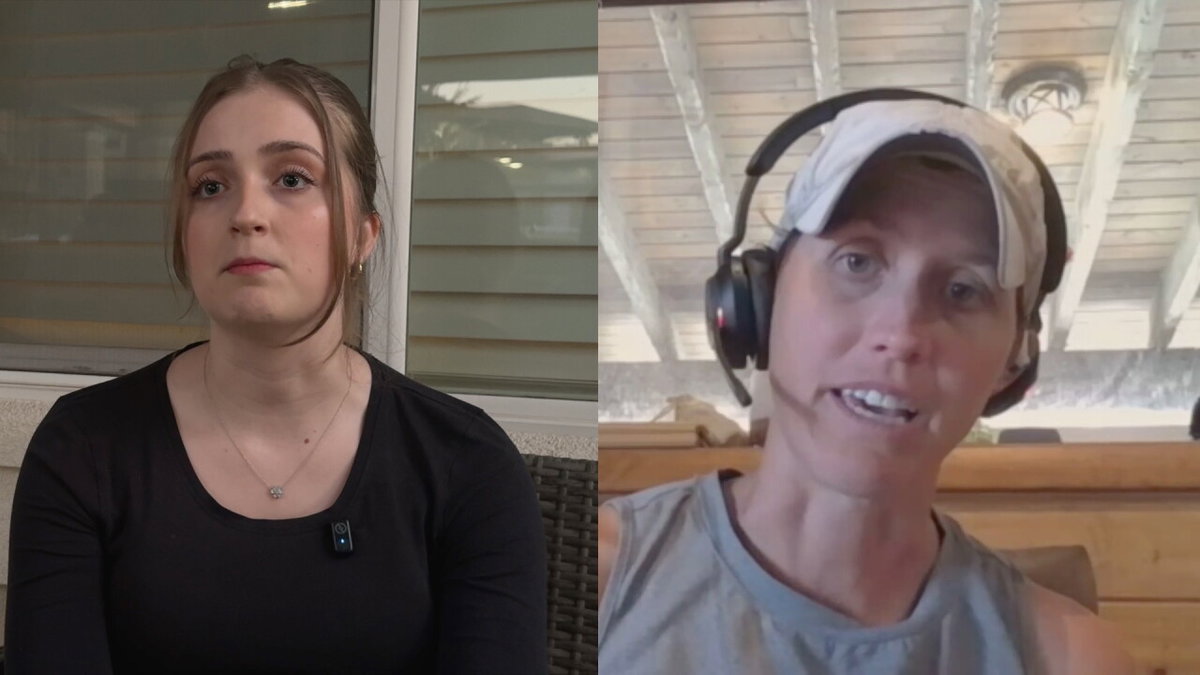
Senior Reporter Don Nelson spoke with Republican Idaho House Speaker Mike Moyle and Democrat Senate Minority Leader Melissa Wintrow to hear their assessments of lawmakers’ efforts over the last couple of months.

Their assessments paint very different pictures.

Nelson asked Moyle and Wintrow to describe the work of the 2026 session in one sentence. Moyle answered, “Yeah, most of it got done, the overwhelmingly majority of it.”

However, Wintrow disagreed, saying that she would give the session a grade of “F plus”.

Much of the legislature’s focus in 2026 centered on budget cuts to state agencies and their impacts.

The House Speaker said this year’s session helped to establish tax relief for Idahoans and budget efficiency.

RELATED | Idaho enacts major spending cuts as governor signs $193M budget reduction bill

“The budgets are basically as flat as they can be,” Moyle said, “We did take care of prisons and all the places that we were short of money, so no it worked out good.”

Wintrow was not impressed with the Speaker’s assessment and responded, “The Speaker talked about how we filled holes, well, the Legislature created the holes, and I don’t think they’re plugged very well, they’re leaking already.”

Senator Wintrow points to the 11 million dollars cut from Fish and Game’s budget.

Wintrow criticizes the decision, calling it “ludicrous”, particularly after Governor Brad Little signed a bill establishing hunting as the official state sport.

RELATED | Idaho becomes the first US state to make hunting its official state sport, thanks to a 9-year-old girl

“Might be the official sport, but we’re not going to let the sportsmen have their money so they can actually go out, and hunt and fish,” Wintrow said.

Speaker Moyle said tough decisions had to be made.

“We trimmed back for those things where there was money that needed to be trimmed back to keep things in line,” Moyle said.

Wintrow was quick to point out that her constituents are tired of the Republican majority trying to legislate morality.

“They’re fed up, you know, shaking their fists at the bathroom and toilet seat, they want real results.”

RELATED | ‘It shouldn’t be a crime’: Transgender Idahoan speaks out after ‘Bathroom Bill’ becomes law

Idaho News 6 will continue to follow the new laws and their impacts on local neighborhoods.

This story was initially reported by a journalist and has been, in part, converted to this platform with the assistance of AI. Our editorial team verifies all reporting on all platforms for fairness and accuracy.

Click here to follow the original article.

Idaho Supreme Court Chief Justice G. Richard Bevan to retire in October

Seth Ratliff

BOISE, Idaho (KIFI) — The head of Idaho’s highest court has announced his retirement, signaling the end of a legal career that spanned four decades and reshaped the state’s judicial landscape.

Chief Justice G. Richard Bevan will officially step down on October 30, capping off nearly 23 years within the judicial branch. In a letter to Governor Brad Little, Bevan described his service as “one of the great honors” of his professional life.

A Twin Falls native and Brigham Young University graduate, Bevan spent 16 years in private practice before serving as the Twin Falls County prosecutor. He transitioned to the bench in 2003, following an appointment as a district judge. While in this role, he presided over two treatment courts and served for eight years as the administrative district judge, overseeing the operations of courts across south-central Idaho.

Bevan was appointed to the Idaho Supreme Court in 2017 and was elevated to Chief Justice by his peers four years later.

Leading Through Transformation

According to the Idaho Judicial Branch, Bevan’s tenure has been marked by continued improvements in court technology, prioritizing judicial security in response to rising modern threats, and navigating the court system through the COVID-19 pandemic.

“Chief Justice Bevan will leave a legacy defined by his deep, abiding commitment to the rule of law and his innate sense of fairness,” said Justice Robyn Brody, vice chief of the Court. “He has dedicated his career to serving our community with integrity, ensuring that every person is treated with respect and dignity in the courtroom.”

What Happens Next?

Under state law, Governor Little will appoint a justice to succeed Chief Justice Bevan from a list of applicants provided by the Idaho Judicial Council. The new justice will serve the remainder of Bevan’s term, which ends in January 2031.

While the appointee will hold the seat for several years, the position will eventually be put to a nonpartisan public vote during the May 2030 election cycle. The justices of the Supreme Court will choose the next chief justice from among themselves as provided for by Idaho’s Constitution.

Click here to follow the original article.

City of Pocatello to start Portneuf River Bridge construction mid-April

News Release

The following is a news release from the City of Pocatello:

POCATELLO, Idaho — The City of Pocatello will begin construction on the Portneuf River Bridge on West Benton Street mid-April.

The City of Pocatello was awarded funding through the Leading Idaho Local Bridge (LILB) Grant, administered by the Local Highway Technical Assistance Council, to replace the Portneuf River Bridge on West Benton Street.

This project will replace the existing steel girder bridge with a new single-span concrete girder structure designed to improve safety and increase long-term reliability. The new bridge will be supported by a deep foundation system using driven piles.

In addition to the bridge replacement, work will include reconstruction of roadway and pedestrian approaches, as well as the relocation of select utilities. All construction will be completed in accordance with the 2023 Idaho Standard Specifications for Highway Construction.

The LILB Grant fully funds the project, requiring no local match from the City of Pocatello.

The LILB Program is funded by the Idaho Legislature through Senate Bill 1359 and supports the repair or replacement of bridges greater than 20 feet in length that are in poor condition or have load restrictions, in accordance with Federal Highway Administration guidance.

Please be advised that a temporary road closure will be necessary to facilitate the completion of the bridge replacement. We encourage all travelers to exercise caution and consider utilizing alternate routes in the area.

Construction is anticipated to be finished by the end of September, weather and other unforeseen conditions permitting.

Click here to follow the original article.
Week of the Young Child celebrations throughout Eastern Idaho supporting young learners

Danielle Mullenix

Idaho Falls, ID (KIFI) — Communities across the Gem State are celebrating the annual Week of the Young Child, a nationwide initiative focused on early childhood education, family engagement, and supporting young learners.

In Eastern Idaho, at least 13 cities are recognizing the week with official proclamations, highlighting a growing effort among local leaders and educators to prioritize early learning and child development. The Idaho Association for the Education of Young Children, in partnership with educational organizations throughout Eastern Idaho, is providing weeklong festivities that any child can participate in at no cost.

Local events bringing learning to life!

Families in Eastern Idaho have several opportunities this week to join in on the celebration.

At the Rigby City Library, a full schedule of activities is underway. Families can attend the Scavenger hunt this afternoon, storytimes for babies and toddlers, participate in hands-on learning experiences, and wrap up the week with a family game and LEGO day. Participants may also have a chance to win family passes to the East Idaho Aquarium.

Rigby City Library’s calendar of events for the Week of the Young Child

Meanwhile, in Idaho Falls, the Idaho Falls Public Library is hosting a special guest that many children will recognize—Blippi! The popular children’s character will lead a storytime session on Wednesday morning at 10:30, combining entertainment with early learning. Families who attend can also enter for a chance to win tickets to the live “Be Like Blippi” tour happening later this month at the Mountain America Center.

Blippi’s appearance is happening at the Idaho Falls Public Library on 4/15

In addition to the above events, 13 cities across Eastern Idaho will issue mayoral proclamations recognizing April 12-18 as the Week of the Young Child.

Cities Across Eastern Idaho Recognizing the National Week of the Young Child:

Ammon

Chubbuck

Driggs

Malad

McCammon

Pocatello

Preston

Rigby

Salmon

Shoshone

Soda Springs

St. Anthony

Teton

A statewide effort to support young learners

Beyond local events, the Week of the Young Child is part of a broader statewide effort led by the Idaho Association for the Education of Young Children to raise awareness about the needs of children from birth through age 8.

The organization works to promote high-quality early childhood experiences, emphasizing that early education plays a critical role in long-term success.

Each day of the week highlights a different way children learn and grow:

Music Monday encourages movement and early literacy through song

Tasty Tuesday connects cooking with math and science skills

Work Together Wednesday focuses on teamwork and problem-solving

Artsy Thursday promotes creativity through hands-on art

Family Friday celebrates the role of families as a child’s first teachers

This week also shines a light on challenges many families face. As part of the celebration, Idaho AEYC is hosting initiatives, such as a diaper drive benefiting the Idaho Diaper Bank.

According to organizers, nearly half of Idaho’s babies live in families experiencing financial hardship, and diapers—costing up to $100 per month per child—are not covered by assistance programs like WIC or SNAP.

Advocates say efforts like the diaper drive help meet immediate needs while also raising awareness about gaps in resources for families with young children.

Organizers say the goal of the Week of the Young Child goes beyond fun events—it’s about ensuring families have access to tools and support systems that help children succeed.

From early literacy programs to childcare resources and community partnerships, the week serves as a reminder that investing in young children strengthens communities statewide.

Families can find a full list of participating cities, events, and free resources on the Idaho AEYC website.

Click here to follow the original article.
Teachers upset by new law banning taxpayer-funded support for teachers’ unions

David Pace

IDAHO FALLS, Idaho (KIFI) – Local teachers are responding to a new law signed by Governor Brad Little that restricts the activities of teachers’ unions in Idaho.

“The big thing that this bill tries to do is to punish teachers’ unions for having what they call teachers’ union activities on school grounds. I don’t really know what it is that members of the Legislature think that we’re up to in the schools,” said Jake Snarr, a Taylorview Middle School teacher and member of the Idaho Falls Education Association. “I can tell you a lot of what we do is we hang a bulletin boards and talk about our upcoming events.”

The law prohibits taxpayer funding to support teachers’ unions. It does not allow school districts to provide paid time-off for union activities or permit unions to deduct dues from paychecks, according to Idaho Ed News.

Teachers fear they will no longer be able to use schools for teacher association meetings without being charged to rent the facility.

In arguments before the Idaho Senate on April 1, House Bill 516 amendment’s sponsor, State Senator Brian Lenney, (R)-Nampa, said, “This doesn’t prevent teachers from joining a union, from participating in union activities. It doesn’t prevent collective bargaining or anything like that. It answers one thing. It answers whether Idaho taxpayers should be asked to fund a private, Washington D.C.-based political organization [the National Education Association],” he said. “If this bill passes, what we’re basically saying is that you can’t give away taxpayers resources to do the teachers’ unions work for them.”

He argued that $4.4 million in Idaho teachers’ union dues were being automatically deducted through taxpayer-funded payroll systems.

The original bill had died in committee in the Idaho Senate, so Lenney “radiator capped” the bill by emptying the contents of another education bill, and inserting the language of this bill inside it, in accordance with Senate rules on the floor. It was then heard by the Idaho Senate.

State Senator Dave Lent, (R)-Idaho Falls, moved that the bill be sent to the Senate Education Committee for a public hearing, but that motion died on the floor.

The bill passed Idaho’s Senate 20-14 and cleared the House on the final day of the session in a 43-24 vote.

In an interview Monday, Snarr argued that teachers and the associations that represent them feel demoralized and unheard. He said some teachers will look outside of Idaho to continue their careers.

“We help teachers advocate for themselves if they don’t feel their evaluations were fair. We help teachers file grievances based on our collective bargaining agreement with the school district. It’s not like we’re in the schools, you know, promoting woke ideology or anything like that,” he said. “We’re just trying to make sure that teachers get a fair shake and our school district is a good place to work.”

Gov. Brad Little signed the bill Friday, with an accompanying letter stating he “strongly supported teachers’ ability to advocate for their profession.”

“However, while local and state teachers’ associations do important work, they remain private organizations that currently receive taxpayer-funded support not extended to other private entities. House Bill 516a addresses that imbalance,” Little’s letter stated. 

However, he called on the Legislature to address “some of the new definitions in the bill [that] are overly broad and ambiguous and will lead to increased scrutiny of a teacher’s actions purely based on their affiliation with their local association.”

He also warned the bill “may have a chilling effect on school districts’ ability to collaborate with their local association on professional development and charitable work in the community.”

Snarr said the Idaho Falls Education Association offers a “Children’s Fund” – a no-questions asked resource where teachers can submit requests for books, glasses, bedding, clothes, coats, help with heating bills and other supplies for students in need.

“If we can’t collaborate with the district on that, it’s hard to identify the needs of our students,” he said.

Click here to follow the original article.

Honduran national sentenced to Decades in prison for lewd conduct with a child

Seth Ratliff

IDAHO FALLS, Idaho (KIFI) — A 53-year-old Honduran man could spend close to three decades in prison after pleading guilty to sexually assaulting a seven-year-old Idaho Falls girl.

Jose Everado Vidal Leonor, a Honduran national, was sentenced to 26 years in prison with no eligibility for parole for 8 years for Lewd Conduct with a Child Under 16.

The charges stem from an incident in June 2025. According to court documents, the victim’s family had left her home alone with Leonor. The assault was interrupted by two witnesses who returned to the home. The first witness reportedly opened a bedroom door and caught Leonor in the act, while a second witness told police they saw Leonor naked on top of the child.

Leonore was originally charged with one count of rape involving a victim under 16 and a perpetrator over 18.

On October 6, Leonor entered an Alford plea, pleading guilty in light of the evidence while still maintaining his innocence. In exchange, the original rape charge was reduced to lewd conduct.

Bonneville County Prosecutor Randy Neal confirmed that Leonor is currently subject to a federal immigration detainer, meaning upon his eventual release from state custody, he will be transferred to federal authorities for potential deportation proceedings.

Click here to follow the original article.
Butte County farmers face possible water shutoffs amid curtailment enforcement

Par Kermani

BUTTE COUNTY, Idaho (KIFI) — Some Idaho farmers could be at risk of losing water, as the state begins enforcing curtailments this spring.

Under Idaho’s “prior appropriation” doctrine, water rights operate on a strict priority system: “first in time, first in right.” Senior rights holders (those with the oldest claims) receive their full allocation first, while junior users run the risk of being shut off entirely during dry years.

This year, low snowpack and early demand are putting that system to the test, forcing the Idaho Department of Water Resources (IDWR) to issue curtailment orders earlier than expected.

The current curtailment orders center on the Big Lost and Little Lost River basins. Following the passage of Senate Bill 1341 in 2024, water users in these areas were required to join a mitigation plan to avoid shutdowns. They were given about 16 months to comply, with that deadline taking effect in November of 2025.

State officials say enforcement is already underway. According to a recent IDWR press release, agents will begin checking groundwater users in the field this spring to ensure compliance. Those who are not part of an approved mitigation plan could have their wells curtailed or “red-tagged.”

According to Water Rights Attorney Thomas J. Budge, the transition has been anything but smooth.

“This year, the Big Lost and Little Lost basins have been brought in by the Department of Water Resources,” Budge explained. “Their water rights are now subject to curtailment unless they participate in a mitigation plan. Earlier this year, those districts asked to join the existing 2024 plan.”

The 2024 mitigation plan is designed to let groundwater users keep pumping, but only if they reduce their water use or replace it through storage and recharge.

But to join the plan, all parties have to agree, and that’s where the process has stalled.

Currently, Budge says the Surface Water Coalition—representing senior water users—has refused to sign the addendum that would allow the Big and Little Lost basins to join. Without that signature, the IDWR cannot lift the curtailment orders.

“Because of that, the Department of Water Resources still has curtailment orders in effect in the Big Lost and the Little Lost basins,” Budge said. “Those farmers are just very concerned. It was a really hot, dry March, and their crops need water, and they’re under curtailment.”

Budge who is representing groundwater users filed a motion asking the state to approve the addendum.

According to Budge “After I filed that Friday, the department promptly issued a notice requiring the parties to come to a status conference on Wednesday of this week. And the purpose of that status conference is to ask why the Surface Water Coalition has refused to sign the addendum.” he said “And, our hope is that the director, approves the addendum and lifts the curtailment so that the farmers and the big lost and the little lost basins can, irrigate their crops.

State officials say time is critical. A status conference is scheduled this week, as irrigation season has already begun in some of the affected basins and curtailment remains an “imminent outcome” if no resolution is reached.

The Idaho Department of Water Resources is expected to make a decision later this week. 

Click here to follow the original article.