Once a Falcon, Always a Falcon: CEI launches official Alumni Network

Seth Ratliff

IDAHO FALLS, Idaho (KIFI) — Graduates of the College of Eastern Idaho now have a dedicated place to reunite with the ‘Falcon Family.’ Tuesday, CEI officially launched a new Alumni Network, a new space designed to reconnect graduates with their alma mater.

The network is already gaining momentum, with almost 100 members joining within the first few days, according to the release by CEI. Operated by the CEI Foundation, the network is free to join and serves as a hub for professional networking and student mentorship.

New members will receive an exclusive CEI Alumni sticker by mail and a recurring semesterly newsletter that highlights campus developments and the success stories of CEI students and graduates. In addition to these perks, CEI says members will also receive invitations to special alumni events and opportunities to share their experiences with current students.

“The Alumni Network welcomes anyone who has earned a certificate or degree from College of Eastern Idaho, Eastern Idaho Technical College, or Eastern Idaho Vocational Technical School,” said the college in a news release. “This includes individuals who have completed a diploma, certificate, associate degree, bachelor’s degree, or another for-credit program.”

For more information, or to join the network online, click HERE.

Click here to follow the original article.

Gov. Little Expresses Concern Over Deepening Legislative Cuts

Kevin Richert

Originally posted on IdahoEdNews.org on February 17, 2026

by Kevin Richert and Ryan Suppe:

Gov. Brad Little speaks to Statehouse reporters at a Tuesday morning question-and-answer session. (Kevin Richert/Idaho EdNews)

Gov. Brad Little said he’s concerned about the proposed budget cuts coursing through the Statehouse — but also said he has limited options at his disposal.

“They’re the legislative branch,” Little told reporters Tuesday morning. “They get to set the budget.”

Budget-related questions dominated Tuesday’s Idaho Press Club-sponsored event, much as the budget debate continues to overshadow all other topics at in the 2026 legislative session. Little has imposed 3% cuts across most of state government, except for K-12, for this budget year and next year. Legislative leaders are pressing for deeper spending reductions, setting up a showdown between a GOP-dominated Legislature and the Republican governor.

Little said he is worried about several proposed education-related spending cuts — and unsure of what to expect next:Lawmakers want to transfer $20 million from Idaho Launch, Little’s signature postsecondary financial aid program. Little has supported a $10 million Launch transfer, for this year’s budget, but not a proposed $10 million transfer for next year. “I’m concerned about anything that’s going to happen to Launch.”

Lawmakers also want to make deeper cuts to higher education — and with K-12, Medicaid, prisons and Idaho State Police exempt from the Legislature’s cuts, two- and four-year schools would shoulder a disproportionate share of the impact. Little said higher ed was one reason why he kept his cuts to 3% — after studying cuts of up to 6%. “(We) rejected (that) out of hand.”

The Legislature’s Joint Finance-Appropriations Committee on Friday approved $5.5 billion in “maintenance” budgets for next year — which include Little’s 3% cuts and an additional 2% reduction. JFAC leaders have said the committee could increase (or decrease) agency budgets through “enhancement” spending bills, but Little isn’t sure how the committee will reopen and revise spending plans that have already passed the Legislature. “I’m not confident that I know exactly how they’re going to handle that.”

Any budget bills would ultimately go to Little’s desk for his final say. While Little said he will keep all of his options open, he sounded in no way eager to begin vetoing budget bills. Vetoes could add roughly two weeks to a legislative session, since it could take that long for JFAC to agree on a new spending plan, and for legislative staff to rewrite the bill itself. And any delays would come as legislative incumbents — and, presumably, Little himself — are hoping to shift their focus to the May 19 GOP primary.

Little also said the pushback over spending, and legislators’ desire to put an imprint on the budget, came as no surprise.

“I knew it was going to be a bit of a rodeo,” he said.

Little spoke Tuesday about two other education topics.

Career-technical education. Little also said he’s worried cuts to career-technical education could undo work that state education leaders put into expanding capacity in recent years. 

In 2023, state superintendent Debbie Critchfield secured $45 million for rural CTE programs. Last year, Little obtained $10 million to build CTE capacity at community colleges. And the Legislature has been “all in on CTE” the last five years, Little said. 

Last week, Little’s budget chief, Lori Wolff, highlighted the impact of cuts in a memo to JFAC. A 5% cut would defund 164 CTE programs in K-12 schools, Wolff wrote. And budget reductions for community colleges would be closer to 7% because of the CTE cuts.

Again, however, Little pointed to legislators’ collective role in the budgeting process. 

“My job is to submit … a stable, balanced budget that is fundamentally good into the future and then react to their questions to agencies,” Little said.

Immigration. Little also weighed in on a bill introduced last week that would direct state education agencies to collect data on the number of undocumented immigrants in Idaho public schools. 

The House Education Committee introduced House Bill 656 Wednesday. Rep. Steve Tanner, R-Nampa, is the sponsor. It’s among a suite of immigration-related proposals backed by a group of about a dozen GOP lawmakers. 

The governor appeared skeptical of burdening public school trustees with collecting immigration data, noting that he spoke with school board members Monday. Idaho School Boards Association members are in Boise this week for the advocacy group’s annual “Day on the Hill” event. 

“They’ve got a lot of things to do,” he said of trustees. “Until I see how (the bill is) drafted, I just have to see what the consequences of it are.” 

HB 656 would direct the State Board of Education to collect “aggregate” data on the immigration status of students in public schools, colleges and universities. No “personally identifiable information” would be collected, according to the bill. 

Opponents argued last week that it would target a “vulnerable” population. On Feb. 6, agents with Immigration and Customs Enforcement (ICE) arrested a father while he was dropping off his child at a Boise daycare, the Idaho Statesman reported

Asked about immigration enforcement’s effect on children, Little responded that the state’s pact to collaborate with federal immigration authorities is focused on “dangerous criminals.” 

“We’re in total agreement there,” he said.

Ban on LGBTQ+ instruction clears House

The House overwhelmingly supported a bill banning public school classroom instruction on sexual orientation and gender identity. 

Rep. Dale Hawkins said his bill would remove a provision that was mistakenly left in a law enacted last year. The law now allows instruction that’s “age appropriate or developmentally appropriate for students in accordance with state standards.” 

House Bill 516 would remove the age-appropriate allowance, effectively banning all instruction on sexual orientation and gender identity. “What we are here today to do is to remove this line that has brought confusion because it didn’t belong in the bill in the first place,” said Hawkins, R-Fernwood. 

The House approved the proposal nearly along party lines. Rep. Jack Nelsen, R-Jerome, joined nine House Democrats in opposition. 

Rep. Chris Mathias, a Boise Democrat, argued that the bill would remove an “enumerated right” of parents to opt in to instruction that’s age-appropriate. Last year, the Legislature passed a law creating a parental opt-in for sex education — including instruction on sexual orientation and gender identity. 

But HB 516 would disallow this parental consent, including for lessons on Little v. Hecox, the U.S. Supreme Court case weighing whether Idaho can bar transgender girls from competing in female sports, Mathias said.  

“It’s reasonable to conclude that this bill, if we pass it, is going to be an unforced error of epic proportions,” he said. 

The bill now heads to the Senate. 

Also Tuesday, the House passed a bill requiring the Professional Standards Commission — the state’s educator ethics panel — to report to law enforcement allegations of criminal behavior by teachers and administrators.  

Three Boise Democrats opposed House Bill 635  — House Minority Leader Ilana Rubel, Assistant Minority Leader Steve Berch and Minority Caucus Chair Monica Church. 

The bill also goes to the Senate.

New bill would ‘streamline’ school facility permitting

A new bill would nix the requirement that public school districts get state or local regulator approval of a building project before advertising contract bids.

The bill “streamlines” the permitting process for school facilities, according to its statement of purpose. The legislation is sponsored by Rep. Brent Crane, R-Nampa, and Sen. Ben Toews, R-Coeur d’Alene.

It would also require that permitting authorities complete an initial plan review of public school buildings within 30 days.

Special education funding proposal clears its final hurdle

Over some objections, the Senate passed a nonbinding memorial urging the federal government to increase special education spending.

The memorial urges the feds to cover 40% of special education spending — making good on the commitment Congress made with its 1975 Individuals with Disabilities Education Act.

The feds cover about 12% of Idaho’s special education budget.

The brief debate focused on federal debt — and the state’s reliance on Uncle Sam.

“Federal money is actually real money we all have to pay,” said Sen. Brian Lenney, R-Nampa, debating against the memorial.

The memorial’s sponsor, Sen. Van Burtenshaw, R-Terreton, said the obligation for special education, and supporting 41,200 Idaho students, has simply fallen to the state and local property taxpayers.

The memorial passed on a voice vote — after another opponent, Sen. Christy Zito, R-Hammett, made an unsuccessful push for a recorded vote.

The House has already passed the memorial, which does not have to go to the governor. Tuesday’s Senate vote represented the final action on this measure.

Click here to follow the original article.

Idaho records exposed officer misconduct. Then the state decided to conceal them.

InvestigateWest

By Whitney Bryen / InvestigateWest and Sam Stecklow / Invisible Institute 

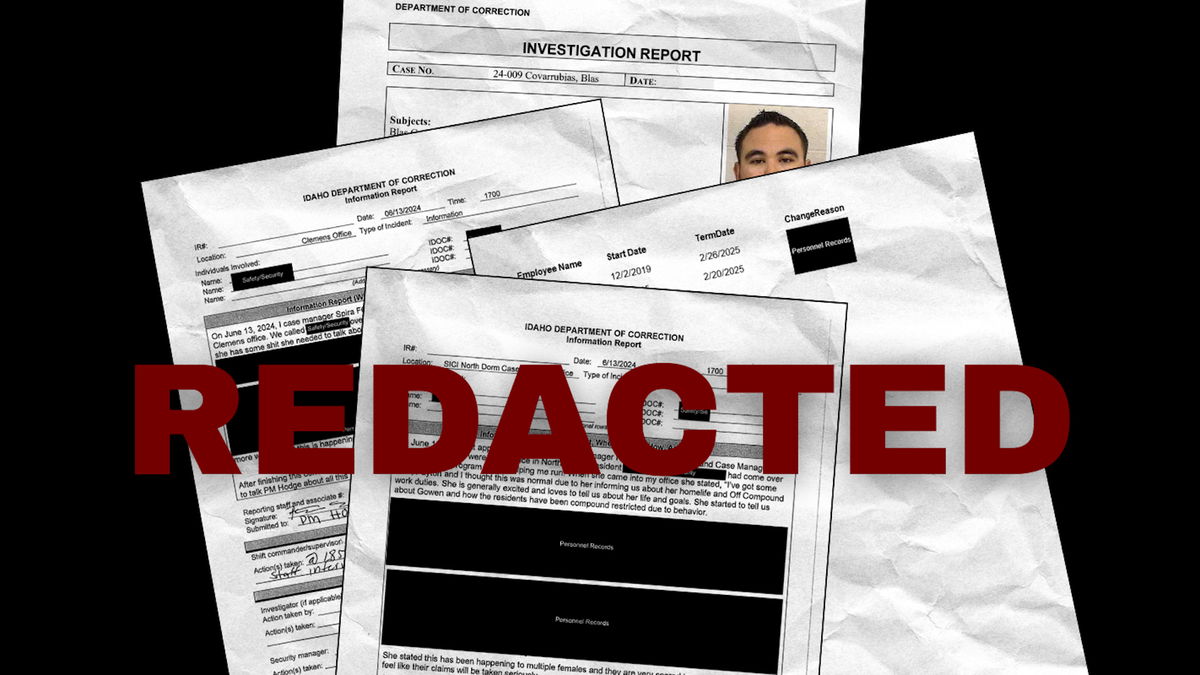
BOISE, Idaho (Investigate West) — Idaho’s prison system and the state agency that certifies law enforcement will now conceal information about officers’ employment histories, making it more difficult to scrutinize job candidates and ensure accountability for officers accused of misconduct.

The increased secrecy by the Idaho Department of Correction and the Peace Officer Standards and Training Council comes less than four months after InvestigateWest used the information to expose alleged sexual misconduct by dozens of Idaho prison guards — many of whom were allowed to resign and faced no other consequences. 

Responding to journalists’ findings in October, Gov. Brad Little called for a review of the prison system’s handling of public records requests, saying in a statement that “transparency and the public’s confidence in state government are top priorities.” 

Yet behind the scenes, Little’s office advised state police to withhold information from InvestigateWest reporters about officer misconduct investigations, internal Department of Correction and Idaho State Police emails show. And state officials say the reporting caused them to reconsider the public’s access to officer employment information. Now, the Department of Correction and Peace Officer Standards and Training say they will no longer release information about whether an officer retired, resigned or was fired to the public. 

The governor’s office supports the change, citing a new interpretation of an unchanged state law.

Emily Callihan, the governor’s communications director, defended his position in a message stating that the Department of Correction “was correct in not providing the requested info/records moving forward … to be compliant with the law.”

Attorneys from Idaho and elsewhere, criminal justice researchers and public records experts are condemning the changes, saying they could endanger the public. Law enforcement employment data has been used in Idaho and other states to ensure agencies that certify officers are properly investigating misconduct and to track “wandering cops” — officers who commit misconduct at one police or correction agency, but are able to obtain employment with another that may be unaware of the indiscretion. Department of Corrections spokespeople in two neighboring states said they rely on public information to vet candidates for hire.

The Idaho Association of Criminal Defense Lawyers said in a statement it is “deeply concerned” about the changes, noting prosecutors have an obligation to disclose information calling into question an officer’s credibility if they’re involved in a criminal case. The group says the rollbacks “weaken accountability, not only to the public at large but to people accused of crimes, for whom an officer’s employment history may be directly relevant to credibility, bias, or misconduct. A justice system that shields such information risks undermining fairness and the rule of law itself.”

Under Idaho’s Public Records Act, the classification, salary, status, workplace and employment history of government workers are public information. “The Legislature acknowledges that there is some loss of privacy when one accepts a position supported by public money,” the Idaho attorney general’s 2025 public records manual states. Personal information including an employee’s race, birthdate, home address, telephone number, grievances and performance evaluations are exempt from disclosure under the law. 

Gov. Brad Little’s called for greater transparency in response to findings of rampant sexual abuse by women’s prison workers. Behind the scenes, his office worked to limit what information was shared with reporters about officer misconduct. (Provided)

Statements from the governor’s office, Idaho Department of Correction and the Idaho Division of Human Resources assert that the reason a public worker is no longer employed is exempt from public disclosure, and the release of this information, which informed the work of journalists and researchers for years prior, was a mistake. 

The state law, however, does not explicitly declare that information as exempt. Nor does it require its release, making it unclear whether the policy changes comply with the letter of the law. 

Idaho civil rights attorney Deborah Ferguson said it’s clear that the changes violate the spirit of the law. 

“The whole point of transparency is so that there is some accountability, and this is the government that’s supposed to be acting on our behalf,” Ferguson said. “And if they’re under the cover of darkness and no one can review what these actions are from our public agencies, it really convolutes the purpose of the Public Records Act and the transparency in government.”

Few states have rolled back access to officer employment data

Idaho’s reduction in public access mirrors recent shifts made by officials in states like Alaska, Colorado, Louisiana, Montana and Virginia — states that previously released police employment history data and now refuse to. But it deviates from the majority of states, which have made officer employment information more accessible, including Idaho’s neighbors Oregon, Utah, Washington and Wyoming.

In Idaho, this data is held by Peace Officer Standards and Training, or POST, a division of the state police responsible for certifying law enforcement and correctional officers. It’s overseen by a 14-member board of law enforcement and other government officials appointed by the governor.

Now, with Idaho agencies refusing to disclose whether an Idaho officer was terminated, potential employers are left relying on the honor system. 

Prisons in neighboring Oregon and Washington gather data on job candidates through criminal background checks that aren’t publicly accessible. But they also rely on public information to verify whether certified officers are in good standing and why they left their previous job, according to department of corrections spokespeople in both states. 

Chris Wright, communications director at Washington State Department of Corrections, said in an email that “there is no way for us to know exactly why a candidate left a previous position besides checking with references or getting that info from the candidate.”

Access to this kind of data elsewhere has allowed researchers in Texas to advocate for stronger state oversight of wandering cops; law professors studying Florida’s data to demonstrate just how much more likely it is for a cop who’s been fired to be disciplined again; and reporters in states from Georgia to California to expose the systems that allow these officers to continually find new employment in law enforcement.

In Idaho, the issue was highlighted by the 2015 fatal shooting of rancher Jack Yantis by Adams County sheriff’s deputies Brian Wood and Cody Roland. Coverage of the incident by the Idaho Statesman noted gaps in the state’s police hiring system, which did not require thorough background checks — leading to Wood and Roland being hired despite both having disciplinary histories, including one being fired. Other Idaho officers had been allowed to resign while under investigation to avoid being fired and maintain clean employment records, the newspaper noted. There is still no provision that requires police chiefs or sheriffs to notify POST of behavior that could warrant decertification. POST is the only agency that tracks officers statewide. 

Eight years later, Invisible Institute, a nonprofit public accountability journalism organization in Chicago, sought data from Idaho POST for its National Police Index: a searchable database of certified police and correctional officers by state and where they’ve worked. Idaho’s data was first published on the National Police Index in January 2025.

Invisible Institute shared its database with InvestigateWest reporters, who in 2025 requested an updated list of correctional officers’ employment histories, then combined it with Idaho Department of Correction data showing officers who left the department, and their terms of departure, since 2015. 

Journalists used that data, along with witness and victim interviews, investigative files and other public documents, to identify 37 prison workers who were accused of sexually abusing incarcerated women. At least 18 of those workers resigned after the alleged misconduct or after it was reported, leaving victims without justice. In October, InvestigateWest published a series of reports outlining those findings. 

The reporting, however, caused Gov. Little’s office to take a closer look at what information about officer misconduct is being released to reporters. Weeks before those reports were published, the governor’s office convened a meeting on Sept. 26 with Idaho State Police Director Bill Gardiner and Department of Correction Director Bree Derrick to “discuss InvestigateWest inquiries.” Afterward, both the agencies ran their planned responses to journalists’ through the governor’s communications director, Callihan. All state agencies are required to get approval from the governor’s office before responding to questions from legislators or the media — a policy that Callihan said pre-dates Little’s administration, according to a recent Idaho Capital Sun report

Idaho State Police planned to clarify details of its investigations of prison guards, emails show. But on Oct. 2, InvestigateWest’s deadline, Callihan told both agencies their prepared responses were “not to be provided to (InvestigateWest).”

In recent months, POST has withheld data related to officer employment history that it previously had released. Invisible Institute and InvestigateWest both requested updated data from POST but were told the record they wanted doesn’t exist. 

When Invisible Institute filed its request in October 2025, the agency’s responses included less information than previous reports. POST provided three different files, one after the next, but when reporters searched the records using the names of officers found in news reports, they discovered data was still missing. Wood and Roland, both of whom still maintain their officer certifications and appear on POST’s online lookup tool, were not in the records. Reporters notified the agency again, expecting to receive another batch of data. 

That’s when POST says it turned off the platform that allowed them to retrieve the data. 

“We have discovered that the platform previously used to capture the … information you requested was flawed,” Kelsey Woodward, an administrative assistant for POST, told Invisible Institute. “For this reason, the platform has now been dismantled and will no longer be used moving forward.”

POST now says that all the information it will make public about officers is contained within its certification lookup tool, which does not include any information about employing agencies of officers, or the reason why officers left their agencies — two crucial pieces of information previously released by the agency.

“POST data is incredibly valuable to study police misconduct and the law enforcement labor market, two critical policy areas with major national data gaps,” Ben Grunwald, a Duke University law and criminology professor who has conducted multiple in-depth studies using POST employment data from state agencies across the country, wrote in an email. “I’ve engaged closely with roughly twenty-five POSTs to obtain data. Most have worked dutifully to comply with my requests and some have even expended significant resources to correct errors I’ve identified. But there are also a substantial minority of POSTS — most often those that have devoted few resources to data collection and management — who aren’t interested in public transparency and data sharing, or are openly hostile to it.”

Recent reports by InvestigateWest exposed years of sexual abuse by women’s prison guards across Idaho and the prison system’s failure to stop it. (Whitney Bryen/InvestigateWest)

The Department of Correction also now won’t share information that was previously shared with journalists. When InvestigateWest requested information in January 2026 about whether two Idaho prison guards accused of sexually abusing multiple women were fired, resigned or retired, the Department of Correction refused to disclose the answer. 

“It’s concerning that in response to investigative reporting that exposed abuse and problematic practices at (the Idaho Department of Correction), the department locked down records that had previously been public — the very records that helped expose the problems in the first place,” said Melissa Davlin, president of the Idaho Press Club. “We encourage all involved agencies to reconsider this approach and commit to transparency, for the sake of Idahoans who demand accountability from their government.”

A new interpretation of the Public Records Act 

Department of Correction Public Information Officer Ryan Mortensen wrote in an email that its new interpretation of the Public Records Act resulted from “the Governor’s request for recommendations to improve our public records request processes.” The reason an employee no longer works for the agency is a personnel record that is exempt from disclosure under the state law, Mortensen said. The previous release of information was a result of “internal issues,” he said, and that the department is “addressing those issues through additional training and updated procedures to ensure compliance” with state law.

Ferguson, who represented the Idaho Press Club in a 2019 case that forced Ada County to release previously withheld public documents, disagrees. 

“Whether they were terminated or resigned is very much a part of the employment history,” Ferguson said. “What else would employment history be?”

The law says that agencies do not have to produce a document that doesn’t exist. Woodward, the administrative assistant for POST, said that since POST no longer has a document capturing the data, it “has no further responsive documents to provide.” 

David Cuillier, co-director of the University of Florida’s Brechner Center for the Advancement of the First Amendment, called that argument “bogus.” Just because the agency says it has dismantled the tool that lets it search the database doesn’t mean it doesn’t have the data, he said.

POST is “not following the law because you asked for a copy of a record that they have in their possession … and they’re not giving you a copy of it.”

Josh Parker, deputy policy director for New York University’s Policing Project, called POST’s decision “borderline outrageous. I can’t think of any reason for not making that information publicly available other than a desire to hide that information from lawmakers and the public.” 

He added that it also “really hampers lawmakers and community members from ensuring that Idaho POST is satisfying its responsibility to conduct investigations of officers who engage in misconduct and decertify officers who engage in serious misconduct.”

Jorge Camacho, a former prosecutor in Manhattan who now studies regulation of police at Yale Law School’s Justice Collaboratory, called for law enforcement officials in Idaho to consider individuals most impacted by officer misconduct. 

“Sunshine really is the best medicine when it comes to these types of issues,” he said. “Especially within policing, where you have so many vulnerable people who are bearing the brunt of the harms that result from the lack of transparency.”


InvestigateWest (investigatewest.org) is an independent news nonprofit dedicated to investigative journalism in the Pacific Northwest. Reporter Whitney Bryen covers injustice and vulnerable populations, including mental health care, homelessness and incarceration. Reach her at 208-918-2458, whitney@investigatewest.org and on X @WhitneyBryen.

Invisible Institute (invisible.institute) is a nonprofit public accountability journalism organization based in Chicago. Sam Stecklow is an investigative journalist and FOIA fellow with Invisible Institute, and a co-lead of the National Police Index project. Reach him at sam@invisibleinstitute.com and on Bluesky at @samstecklow@bsky.social.

Click here to follow the original article.

ISP investigates Thursday’s multi-vehicle crash north of McCammon

Seth Ratliff

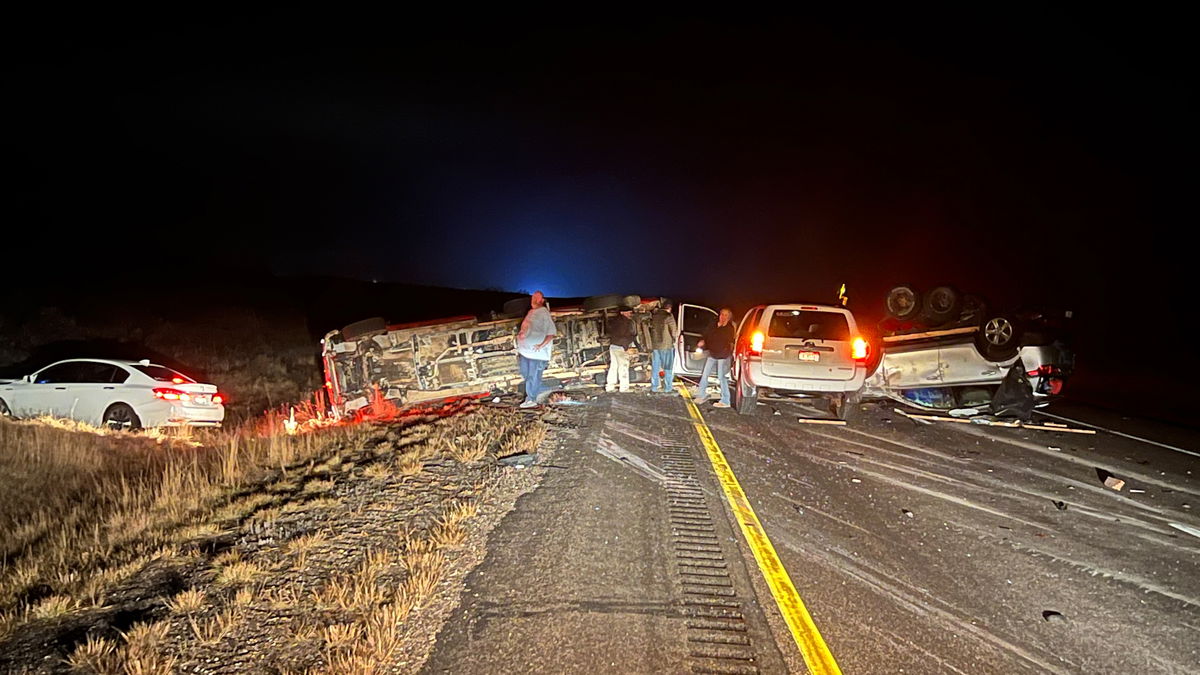
MCCCAMMON, Idaho (KIFI) — Idaho State Police are investigating a chain-reaction collision that snarled traffic on southbound I-15 last Thursday.

The crash occurred at approximately 5:20 AM on February 12, 2026, near milepost 50, just north of the McCammon exit. According to an update from ISP investigators, the sequence of events began when a 2017 Honda Accord, driven by a 46-year-old Pocatello man, rear-ended a 1992 Toyota pickup, which was towing a flatbed trailer loaded with vehicles.

The impact was severe enough to cause the pickup and the trailer to roll over. The truck and its trailer came to a rest across both southbound lanes.

Moments after the initial rollover, a 2008 Toyota 4Runner driven by a 53-year-old woman from Inkom struck the overturned pickup.

The southbound lanes remained completely blocked for roughly three hours while crews worked to clear the wreckage and the vehicles from the flatbed trailer.

The current condition of the Toyota pickup driver, a 46-year-old Guatemalan man, has not yet been released by officials. The status of the other two drivers was not immediately available in the update, though no fatalities were reported at the scene.

The crash is under investigation by the Idaho State Police.

Click here to follow the original article.

IDFG seeking the public’s help after three mule deer left to waste in Southwest Idaho

Seth Ratliff

SOUTHERN IDAHO (KIFI) — Conservation Officers with Idaho Fish and Game are investigating three separate incidents of mule deer being shot and left to waste in southwest Idaho. The department is now seeking the public’s help in gathering information related to the incidents.

Arrowrock Reservoir | Out-of-Season Buck

Sometime between Jan. 30th and the 31st, an out-of-season mule deer buck was shot and left to waste at Arrowrock Reservoir, near the Irish Creek campsite.

The buck, which was shot in the head, was discovered just off Cottonwood Canyon Creek Road, on the hillside to the south.

Grandview / Owyhee County | Nighttime Shooting

In a separate incident occurring around December 26, a mule deer buck was killed in a remote alfalfa field near Grandview. Investigators believe the shooting likely occurred at night. The perpetrator made no effort to retrieve the deer, leaving the entire animal to waste in the field.

Robie Creek Road | Archery Waste

A third investigation is underway regarding a buck shot with archery equipment on Robie Creek Road around November 10. Based upon their initial investigation and the evidence at the scene, officers have reason to believe that this was not a case of wounding loss. IDFG says the shooter likely knew the deer expired and failed to retrieve the animal, leaving the meat to waste.

If you have information about any of these incidents, please call the Southwest Regional Office at 208-465-8465, the Citizens Against Poaching (CAP) hotline at 1-800-632-5999, or report online. Callers may remain anonymous, and IDFG says rewards may be available for information leading to a citation.

For more information, click HERE.

Click here to follow the original article.

Anthrax cases in Idaho livestock raises concerns, risk to public remains low

Par Kermani

BLACKFOOT, Idaho (KIFI) — A recent anthrax outbreak in southern Idaho livestock has triggered concern among residents, but a local veterinarian says the risk to the general public is low if handled correctly by responsible owners.

The recent cases involve livestock in the Cassia County area near Burley. Dr. Tony Parsons, a veterinarian at Blackfoot Animal Clinic who has worked with cattle and small animals in eastern Idaho for nearly two decades, said anthrax has long existed in Idaho, particularly in soil and dust.

“It’s in the environment. It’s in the dust, it’s in the dirt. It can live for decades in the soil,” said Parsons. “It’s not as if this anthrax suddenly appeared in 2026.”

The last time anthrax was a common term used among the general public was in 2001. Many people associate anthrax with the 2001 attacks, when powdered spores were mailed in letters. Parsons emphasized that the current situation is different.

“This is not the anthrax of 2001 that was shipped in letters to people,” Parsons said. “This isn’t as contagious.”

Anthrax primarily affects herbivores, including cattle, sheep, goats, horses, pigs, llamas, alpacas, and farmed elk. The bacteria live in the soil as hardy spores and can infect animals that graze close to the ground or ingest contaminated dirt.

“In dry conditions, the bacteria form into a capsule,” Parsons said. “When the water makes it down to the capsule, that kind of causes the bacteria to come back to life.”

This winter has been unusually warm in eastern Idaho, and the ground has not frozen as deeply or as long as in typical years. According to Parsons, this could be the reason why there have been anthrax-related deaths in cattle.

“With this warm weather, it’s probably just made it a little bit easier for it to come out of the ground,” Parsons said.

If producers find an animal that has died suspiciously, Parsons said they should stay away from the carcass and immediately contact their veterinarian or the state veterinarian.

“If somebody finds an animal they feel like has died suspiciously … you should stay away from the animal,” he said. “By moving the animal and things like that, you could get contaminated. You could get the disease.”

He said proper handling made a crucial difference in the most recent outbreak, noting that the livestock owner recognized something was wrong and called a veterinarian. As a result, no people were exposed.

Parsons said people who work directly with livestock — such as ranchers, farm workers, and veterinarians — face the highest risk of exposure and should use protective equipment like masks, gloves, and coveralls when dealing with suspect animals.

“There is a good vaccine for it,” he said. Exposed herds are being vaccinated, and veterinarians can also administer penicillin to animals that appear ill.

According to Parsons said the most important step is awareness — especially among livestock owners.

He urged producers to recognize the signs of suspicious deaths, avoid handling carcasses and contact veterinary professionals immediately.

“We just need to be aware that it’s there and know what to look for,” he said.

Click here to follow the original article.

From Idaho peaks to ocean deeps, local photos head undersea

Ariel Jensen

REXBURG, Idaho (KIFI) — Area photographers are looking forward to some of their photographs being displayed in the USS Idaho.

The commissioning of the new Navy submarine is scheduled for April. Event planners asked Idahoans to send them their best photos representing Idaho to be a part of history. Over two-thousand photos were sent in. Out of those, about 40 were chosen to be displayed in the USS Idaho submarine.

One of the winning photographs is of Mesa Falls, taken by local photographer Jordan Jensen of Rexburg.

“I’m from Idaho. I love the state,” said Jensen. “It’s exciting to know that there’s a nuclear submarine out there, that it’s the USS Idaho. And it’s even more exciting knowing that I, as a native of Idaho, have a picture that I took representing our state that’s floating around in the ocean for the next 30-plus years,” he continued.

Big congratulations to Jordan Jensen for representing East Idaho. 

Click here to follow the original article.

Idaho Falls Rescue Mission Hits Record Capacity Despite Warm Winter

Par Kermani

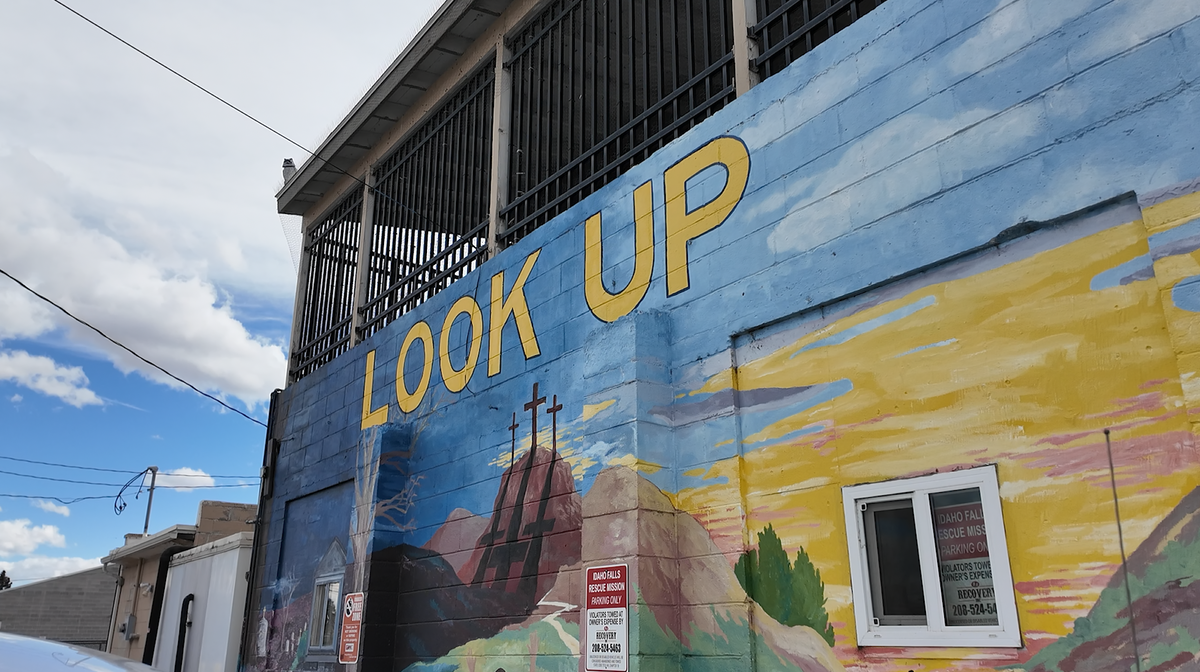
IDAHO FALLS, Idaho (KIFI) — Record-breaking demand is pushing the Idaho Falls Rescue Mission to its limits this winter, with officials reporting that all three of its shelters are currently operating at maximum capacity.

Despite warm temperatures, the mission has seen a surge in those seeking both shelter and food.

“As we have vacancies, they are filled immediately,” said Tony Anderson, program coordinator at the mission. “We are at capacity on all three of our shelters right now”.

The organization is currently housing 25 men at its men’s shelter. However, the most dramatic increase has been observed in the mission’s meal program. The evening meal, which averaged 80 to 100 people at this time last year, is now serving between 130 and 150 people per night. Last week, the mission hit an all-time peak of 200 people for a single dinner service.

Staff members attribute the rising numbers to a combination of population growth and economic hardship. Anderson pointed to the skyrocketing cost of living in Idaho Falls as a primary driver of the crisis.

“You used to be able to rent a room for a couple hundred dollars a month, and that’s not possible anymore,” Anderson said. “A lot of our population in general is just one misstep away from being homeless. One car accident takes you out of work for two weeks, and now you’re behind on your rent”.

To support these operations, the mission will host its annual “A Walk in the Cold” on March 14.

Director of Development Chris Aspinall said, “So you can do both running or walking, whichever you want to do. But the idea is that you’re going to spend some time out in the cold weather, and this year may not be real representative of how it normally is. But the idea is that you’re going to spend some time out in the cold weather, experiencing what our guests are experiencing every day.”

The 5K run and fun walk serves as both a fundraiser and an awareness event. Organizers expect more than 500 participants this year.

Registration is available at https://www.walkinthecold.com/

Click here to follow the original article.

“Following the law while enforcing it” Local candidates tackle immigration issues

Ariel Jensen

IDAHO FALLS, Idaho (KIFI) — The Bonneville County Democratic Party says U.S. Immigration and Customs Enforcement could be a problem in East Idaho.

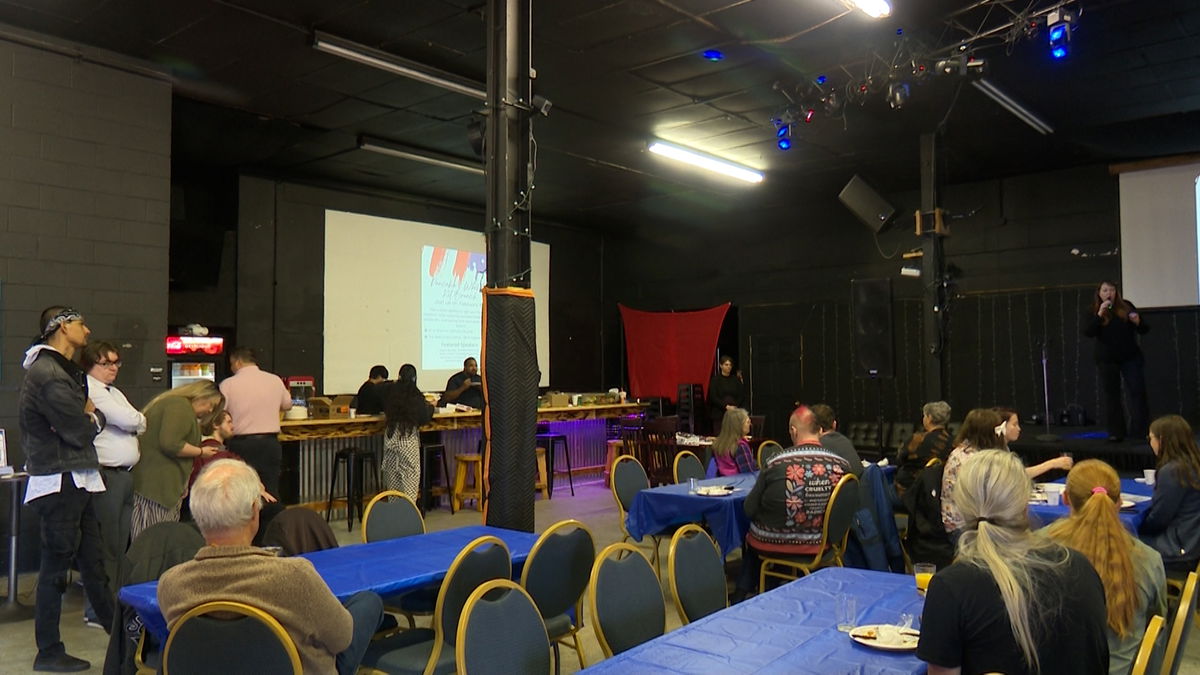
The Bonneville County Democratic Party hosted a brunch serving pancakes to establish a warm environment for a heated topic, I.C.E.

Dozens came together to eat pancakes, build whistle kits, and listen to speeches.

“We’re seeing across the country, law enforcement, setting aside normal policing norms, have unidentified officers wearing masks, taking people off the streets, lots of violence, and we want to make sure that our laws are enforced, but that we follow the law while enforcing the law,” said David Roth Democratic candidate for United States Senate for the state of Idaho.

This lunch also served as a platform for some candidates running for local and state positions. They addressed their concerns about I.C.E

“We believe that the presence of ice is unacceptable and unnecessary in our community. We welcome all members of our community, and we feel that they should be, safe and comfortable in this, in this, city,” said Chance Marshall, candidate for state legislator in Idaho Falls, district 33 seat A.

“Think that it’s about making sure that people feel safe in their communities. I think that what we’ve seen with ice proves that this is far from any kind of legitimate immigration control effort. This is purely terrorizing people for the sake of spreading fear,” Maxine Durand, Candidate for Governor of Idaho. 

Roth says the point of the event was to bring people together and build some community.

“I just think it’s really important for all of us as community members to decide what type of community we want. Idaho Falls has always been a welcoming and open community, and I think we want to keep it that way,” said Roth.

If you would like more information, visit here.

Click here to follow the original article.

TRAVEL UPDATE: Area highways reopen after icy roads force closures

Curtis Jackson

UPDATE:

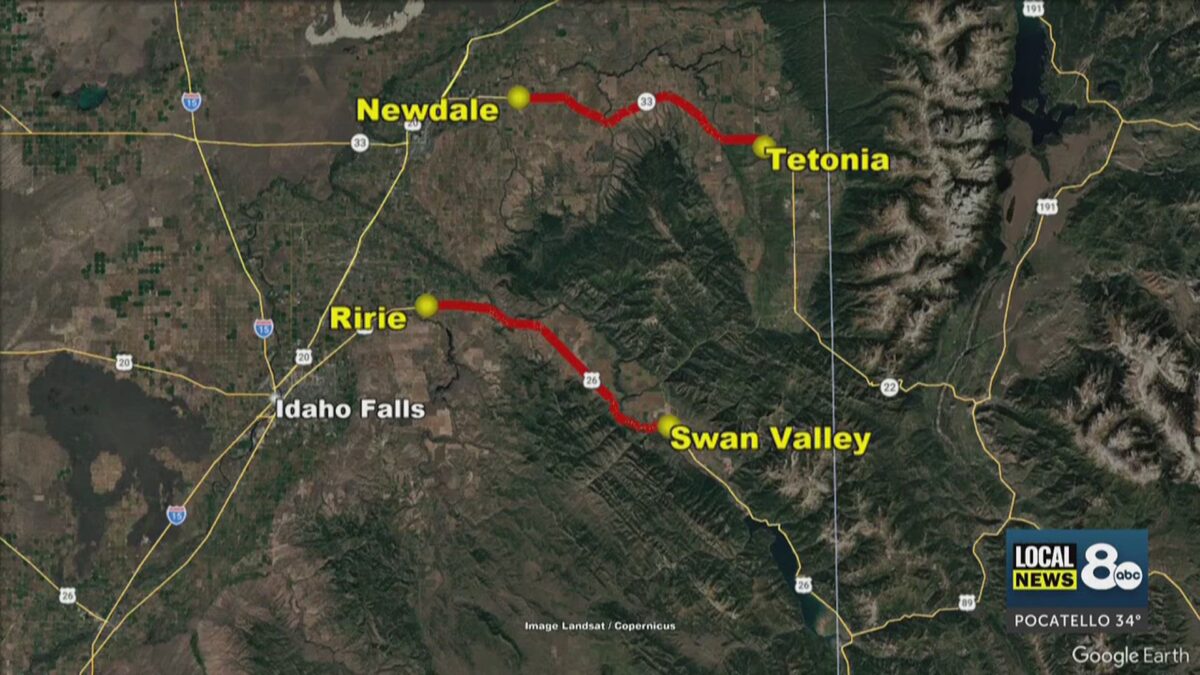
EASTERN IDAHO (KIFI) — As of 11 AM, Tuesday, both roads have been reopened on US-26 between Ririe and Swan Valley and SH-33 between Newdale and Tetonia.

ORIGINAL:

EASTERN IDAHO (KIFI) — A winter storm that brought high winds and snow is causing icy roads and power outages across the region on Tuesday morning.

US 26 between Ririe and Swan Valley is closed.

US 33 between Newdale and Tetonia is closed. They also report several slide-offs along the road.

Blowing snow can be seen on the ITD camera located on US 26 at Antelope Flats on Tuesday morning.

Rocky Mountain Power is reporting several small localized power outages from Firth to St. Anthony. You can check their power outage map here.

Idaho Power is also experiencing small power outages affecting a few homes. To check their latest outage map click here.

Click here to follow the original article.