BLACKFOOT, Idaho (KIFI) — Elementary students across the Blackfoot School District are heading into the next part of the school year better prepared to learn, thanks to community support during the Eastern Idaho State Fair.
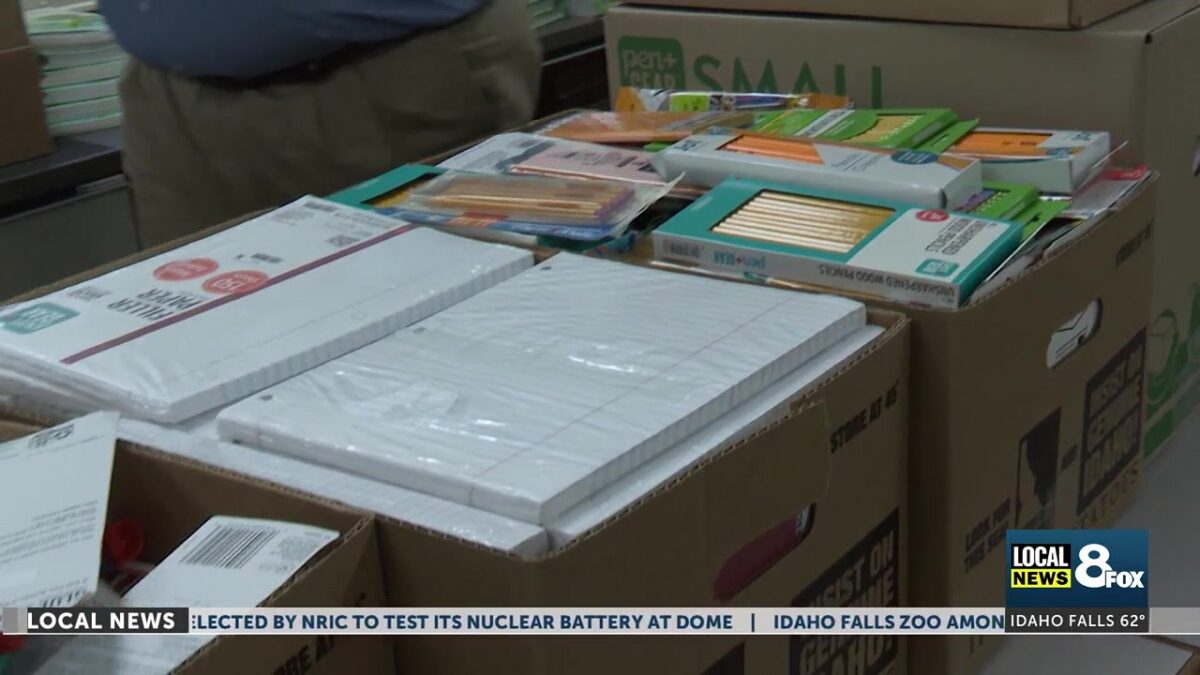
On Wednesday, representatives from Local News 8 delivered a truck loaded with more than 20 boxes of essential classroom supplies directly to the district. Collected from local fairgoers during the annual Eastern Idaho State Fair, the donated items will directly assist more than 1,700 elementary students district-wide.
Local News 8 has spearheaded the annual school supply drive at the fair every year since 2016 to ensure local children have the tools necessary for academic success regardless of financial background.
Blackfoot School District Superintendent Brian Kress expressed appreciation for the community support and noted how the items will assist local families. “The Eastern Idaho State Fair is wonderful chaos, we’d like to call it, here in Blackfoot,” Kress said.
“So it’s wonderful to see this great return on investment to us in the school district and see people contributing to the furthering education of our children and our community. We will put this to great use. We have several families that can use this. And rather than having to go out and buy things themselves, they’ll now be blessed to have this wonderful donation to them and their students.”
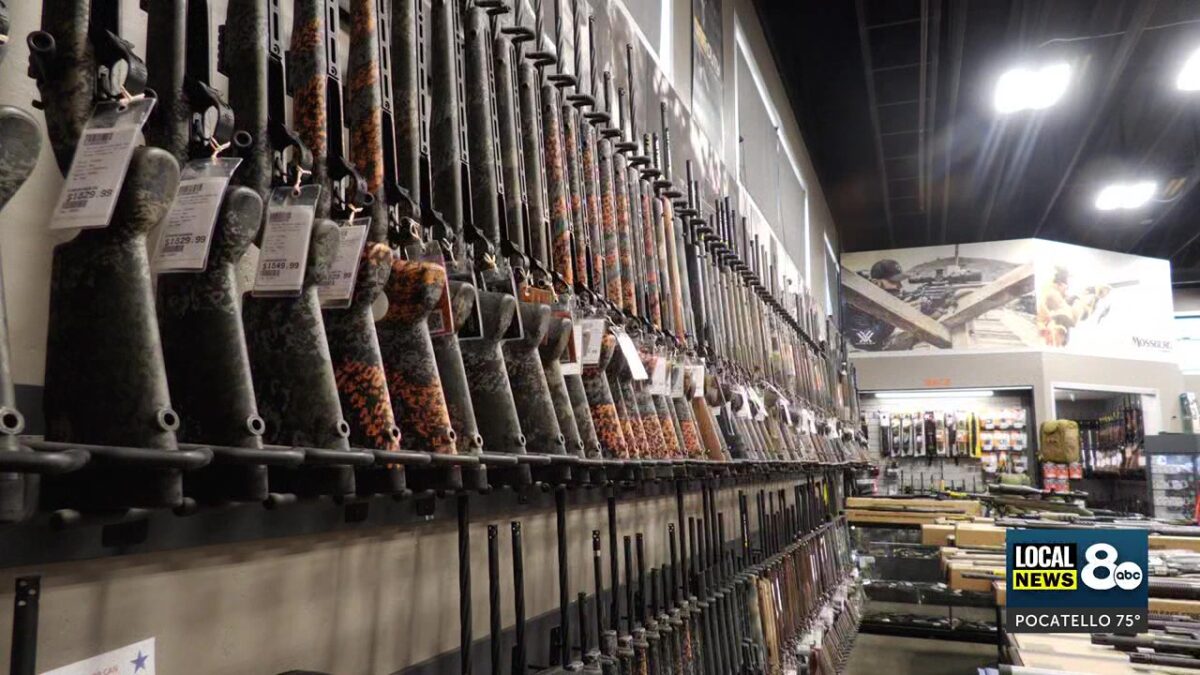
IDAHO FALLS, Idaho (KIFI) – It’s time to decide which gun best represents Idaho in the upcoming election. Although, the vote itself is non-binding, it will advise the state legislature on the voter’s preferences.
There are six guns to choose from:
Winchester Model 1894 (.30-30)
Winchester Model 1873 (.44-40)
1873 Colt Single Action Army Revolver (.45 Colt)
M1 Garand rifle
Colt M1911 .45 automatic Colt pistol (.45 ACP)
Remington Model 700 bolt-action rifle (.30-06)
Each one has their own unique ways to relate to Idaho. Here is a brief history of each, if you are interested to learn why these firearms were selected, you can find the background here.
The Winchester Model 1894 is generally used to hunt deer and other medium-sized game. This firearm is closely associated with hunting, ranching, and rural life, which many Idahoans identify with.
The Winchester Model 1873 is “The gun that won the West” and the most associated with Western expansion. Winchester guns says it was used by, “Cowboys, Native Americans, Ranchers, Farmers, Pioneers, Law Enforcement Agents, and Outlaws.”
The Colt Single Action Army Revolver, also know as “The Peacemaker”. Arizona has already selected this one as their state gun and it is a well known gun for frontier culture.
The M1 Garand represents military service, patriotism, and was the standard U.S. service rifle during World War II.
The Colt M1911 is one of the longest-serving military sidearms in U.S. history and it is already Utah’s official state firearm.
To round out the docket, the Remington Model 700 is an extremely popular hunting rifle. Although it lacks some of the history of the other competitors, it is a common gun for Idaho hunters.
Whichever gun wins will reflect something distinctly Idaho.
POCATELLO, Idaho (KIFI) – While many businesses and non-profits have felt the squeeze of higher prices, the Pocatello Animal Shelter has been pushed to increase their adoption rates to offset care costs. Officials at the shelter say the general inflation has contributed to higher costs across the board, and patrons can help keep the shelter operating by adhering to the new rates.
“Prices are increasing just to help us with the general inflation that we’re all feeling,” said Sarah Moore, Animal Services Supervisor. “Prices for food, even just water to help clean and give all of the dogs potable water has been increasing so it’ll help us balance out the costs a bit more.”
The adoption fees go right back into the shelter, without fully covering veterinary care costs. The prices at the Pocatello shelter haven’t increased in 2019, and now, Moore says they’re just trying to “keep up.”
Previously, dogs were at a flat rate of $130, but the shelter has moved to charge based on age of the dog. Cat prices are jumping from $35 to $50. Below is the list of updated adoption fees.
Updated Adoption Fees:
Puppies (6 months and younger): $200
Adult dogs (7 months to 6 years): $150
Senior dogs (7 years and older): $75
Kittens (6 months and younger): $100
Cats (7 months and older): $50
“This is still one of the cheapest options you can find compared to other shelters, rescues and especially pet stores or breeders,” Moore said.
Currently, the Pocatello Animal Shelter has several larger breeds of dogs that have been sitting for over three months. Moore said the bigger dogs are harder to get adopted, but three months is more than five times the average stay of a dog in the shelter.
“If you’re looking to adopt a new best friend, we’d really like you to look at some of these bigger dogs who have been sitting here for a while and getting overlooked,” Moore said.
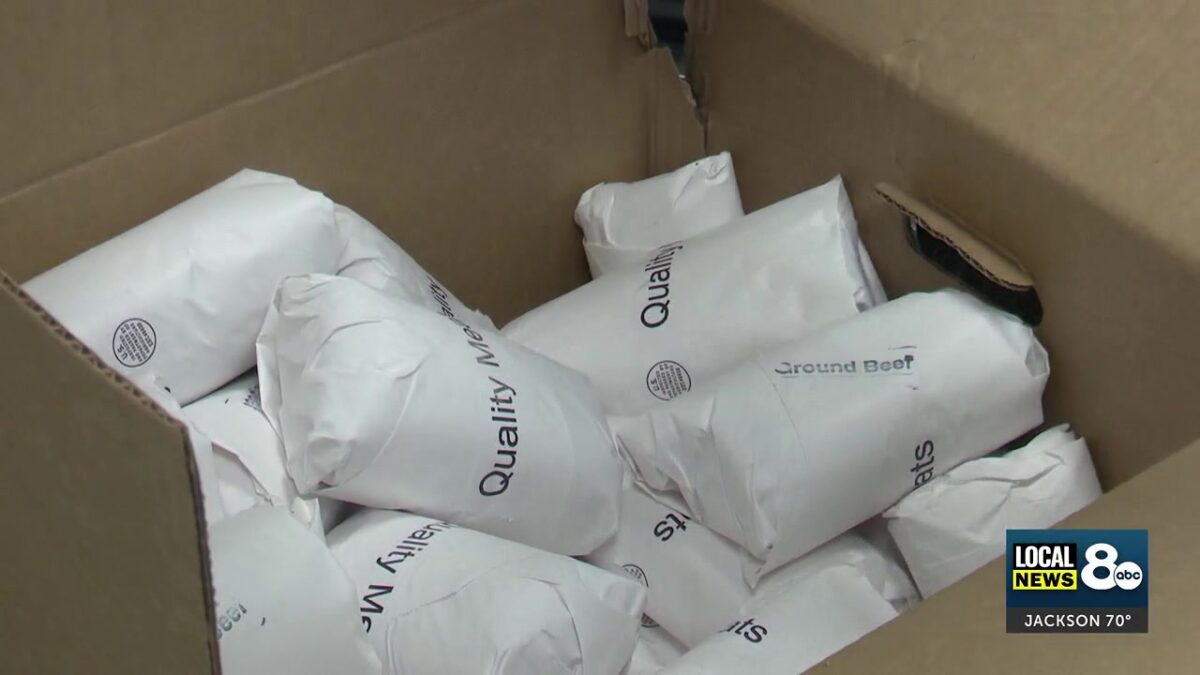
POCATELLO, Idaho (KIFI) – Students on campus at ISU have pounds, 900lbs to be specific, of ground beef to get from Benny’s Pantry thanks to a generous donation from Direct Communications through the Power County Livestock Sale Committee. Today’s cow-sized donation doubles last year’s haul of ground beef, giving more students access to high-quality protein.
Early in the morning on September 30, volunteers with Benny’s Pantry and representatives from the 4H and FFA Programs at the Power County Fair transported 900lbs of packaged ground beef through the Student Union Building to the student food bank. This marks the second year Benny’s Pantry has received a sizeable drop of beef.
“We wanted to be able to give back to the students so they can have the food they need, because they’re the future generation,” said Timothy May, President of Direct Communications. May partnered with the livestock officials from Power County to make the donation to ISU’s student pantry. To them, it means investing in the future generation of employees and entrepreneurs.
Volunteers with Benny’s Pantry, ISU President Robert Wagner and representatives from Direct Communications and Power County Livestock Sale Committee, Sept. 30
“If they’re not able to get enough food to do well in their classes and to survive and things like that,” May stated. “Then they’re not going to be able to succeed in life in general.”
Benny’s Pantry is always grateful for donations, even more so when they include fresh, unfrozen produce and meats.
“This donation is just such a beautiful, beautiful gift.”
– Lisa Crawford, Director of Benny’s Pantry
Lisa Crawford, Director of Benny’s Pantry, said students are extremely grateful when they walk in and see high quality protein available.
“This is going to help feed so many students,” Crawford said. “They’re going to be able to take it home and make a healthy and full meal with it. One of my favorite parts of working in the pantry is seeing the true appreciation when students come in and find something that they’re going to enjoy and that’s nutricious.”
Crawford said last years’ beef donation went flying off the shelves, and she hopes by increasing the amount of beef, more students can be fed. Unlike other food pantries that make food boxes for patrons, Benny’s Pantry allows students to grab a basket like in a grocery store and choose items they really want.
“We could not make any of this happen without our volunteers, we rely heavily on them,” Crawford explained. “We also take unopened, not-expired food donations right in the pantry.”
The story of the hefty 900lbs of beef starts long before it filled the shelves of Benny’s Pantry. The animals that provided the meat were raised by 4H and FFA Member kids in Power County.
“At the Spring weigh-in, they essentially start their project to raise this animal, feed it, train it and ultimately it teaches the child responsibility,” said Travis Mills, Chairman of the Power County 4H FFA Livestock/Fat Stock Sale Committee. “Not only in work ethic, but also financially because they’ve got the costs to purchase, feed and take care of that animal.”
Once the animals are show ready, the kids compete their livestock in multiple categories. Following the competition, people can purchase the animals.
“As the Fat Stock Sale Committee, we’ve added a new layer to this where we allow people to purchase these animals and do a double good and donate it to a food bank of their choice,” Mills said. “Direct Communications has always been one of our very top sponsors and they always encourage us to think out of the box and do something new.”
Mills said that by donating to Benny’s Pantry, they are simultaneously supporting the 4H FFA kids as well as collegiate students in need at ISU. He added the quality of the meat donated to the pantry is far better than what you can find for reasonable prices in the grocery stores.
“There are absolutely no byproducts,” he said. “This meat is, as we say, right off the bone. As natural as you can get, processed right here in Idaho.”
Mills said their piece of the donation process wouldn’t be possible without the volunteers as well. No one is employed to administer the programs involved, and Mills said the work goes from the spring to the fall to ensure livestock quality every year.
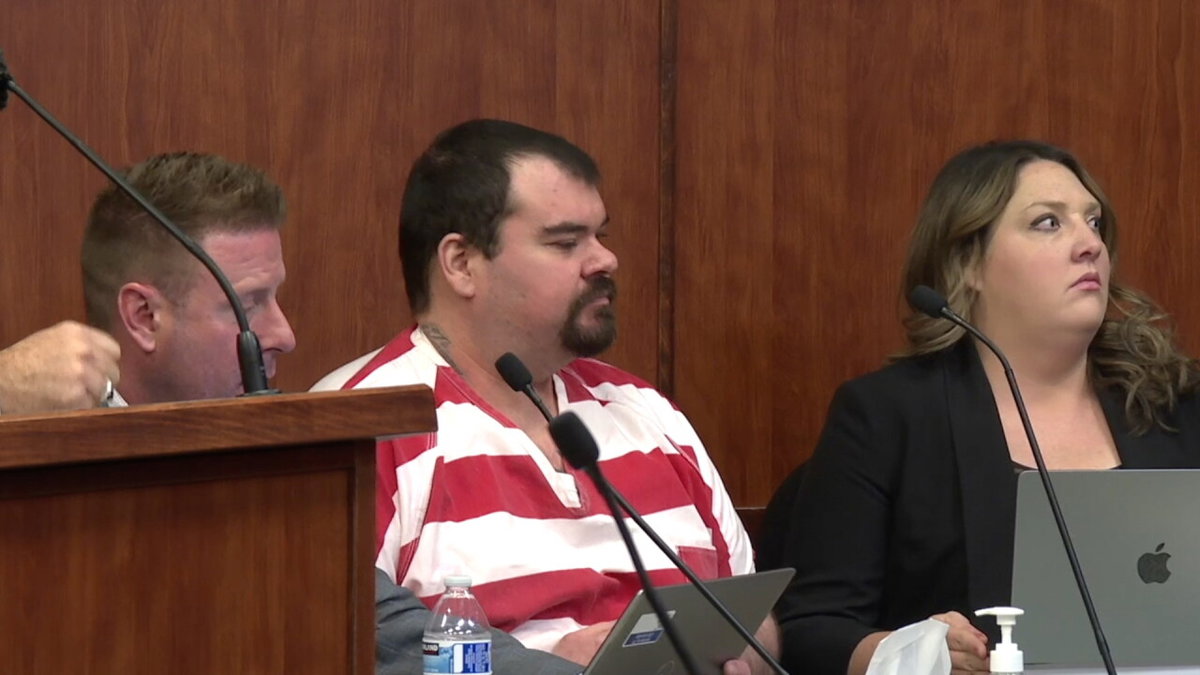
CANYON COUNTY, Idaho (KIVI) — The man charged with murder and kidnapping in the disappearance of 5-year-old Michael Vaughan asked a judge Tuesday to dismiss the charges, arguing prosecutors have not presented enough evidence to establish that a murder or kidnapping occurred.
Prosecutors disagreed, arguing the evidence presented against Stacey Wondra is sufficient for the case to move forward.
Michael was 5 years old when he disappeared from his Fruitland neighborhood in July 2021. More than five years later, his remains have never been found.
That absence of physical evidence was central to Wondra’s defense Tuesday.
“It’s important to note that Michael — not only has Michael never been found — no skin, no bones, no teeth, no blood, no DNA. Nothing of Michael has ever been found,” Wondra’s attorney told the judge. “Judge, we don’t even know if he’s actually dead.”
The defense also challenged other evidence presented during Wondra’s preliminary hearing. His attorneys argued that alerts from cadaver dogs at the Wondra property do not prove a body was buried there, noting that Michael’s remains were not found during an extensive search of the property.
Wondra’s attorneys also questioned the significance of a tricycle found near the home. During Tuesday’s hearing, the judge asked about evidence connecting the tricycle to Michael. The defense said no evidence presented at the preliminary hearing established who owned it or that Michael had been on it.
The defense also disputed prosecutors’ characterization of Wondra’s conversations with investigators as a confession. His attorney acknowledged some of Wondra’s statements could be viewed as incriminating but argued Wondra never admitted to participating in anything that happened to Michael.
At one point, the judge pushed back as the defense argued Wondra did not have a legal duty to report what he said he witnessed. The judge pointed to language in Idaho law applying the reporting requirement to “all persons.”
Prosecutors argued the case against Wondra goes beyond an alleged failure to report what happened.
“Would we have preferred to have found Michael? Absolutely. In fact, we are still looking,” the prosecutor said. “But we have to take the cards we’re dealt. And so the case is built on what you can prove, what you can show.”
The state said Wondra told investigators that Michael was brought into the house and that he later saw Michael duct-taped before being placed into a duffel bag. Prosecutors said Wondra then got into a vehicle with the group as Michael was taken away.
Prosecutors argue Wondra aided and abetted the kidnapping. Among their arguments, the state said Wondra helped maintain the vehicle while Michael was allegedly being transported and later participated in what prosecutors described as a cover story intended to conceal the group’s movements.
After the hearing, Michael’s mother, Brandi Vaughan, said listening to the defense repeatedly discuss the absence of her son’s remains was difficult.
“It was upsetting. I shed quite a few tears, especially when the defense lawyer kept describing the fact that there was no body, no skin — all of the things of a human,” Vaughan said. “That was hard to listen to.”
Investigators previously named three other people as allegedly involved in the case: Sarah Wondra, Brandon Shurtliff and Adrien Lucienne. Stacey Wondra is the only person currently charged in Michael’s death.
Sarah Wondra was previously charged with failing to report Michael’s death, but that charge was later dismissed.
RIGBY, Idaho (KIFI) – An 18-year-old from Rigby is getting a taste of the national spotlight after taking the stage on NBC’s The Voice. For Owen Uffens, stepping onto The Voice stage wasn’t just another performance: It was a moment he had dreamed about long before he ever knew it could become a reality.
Owen Uffens, currently a freshman at BYU-Idaho, grew up watching the singing competition with his family in his Rigby living room —and says being on the show was once something he could only imagine.
During an interview with Local News 8, Uffens recalled dreaming about performing on The Voice long before he ever stepped onto the stage.
“When I was little, I would dream of myself on stage all the time,” Uffens said. “I distinctly remember I woke up; I was in the middle of the stage… it was The Voice.”
The dream became a reality when Uffens stepped onto the Blind Auditions stage in front of one of America’s most-watched primetime shows. Connected to the show’s producers through local SOS group leader and The Voice alum Ali Wilde, Uffens began initial rounds of auditions earlier this year. It wasn’t until later this spring that Uffens got the call that he’d miss his high school graduation for a chance to sing on one of TV’s biggest stages.
During his Blind Audition, Uffens chose to perform Harry Nilsson’s 1969 acoustic hit “Everybody’s Talkin’” — a song he says he chose because he had recently fallen in love with it and wanted to step outside his comfort zone.
That step beyond his comfort zone quickly led him to two of The Voice’s most iconic coaches: Adam Levine and Kelly Clarkson. Both music industry megastars were hooked on the young Rigby singer’s smooth vocals, and turned their chairs before Uffens even made it to the song’s first chorus.
Uffens ultimately chose Levine as his competition coach.
For Uffens, seeing Levine turn his chair first was especially meaningful and full-circle for the Rigby native who recalls the pop singer being a constant North Star on the competition show.
“I don’t remember a whole lot [during my performance],” Uffens said, describing how nervous he was. “But then… when I did see him… instant relief. One of my favorite people ever is recognizing my talents.”
But while the national spotlight may be new, Uffens says he’s still figuring out exactly what kind of artist he wants to become.
He isn’t limiting himself to one genre. Instead, he wants to explore different sounds and prove he can grow into a versatile artist.
“I’m a really nervous performer,” Uffens vulnerably said. “I’m not a very flamboyant performer… something I hope to work on during the competition.”
Despite those nerves, Uffens says his experience on The Voice has been more welcoming than he expected — and it’s given him deep friendships and memories he expects to carry with him long after the competition.
Back home, his Eastern Idaho community has been following along, too.
Uffens says he’s received messages from businesses and people throughout Rigby congratulating him and telling him, “Way to represent.”
“It’s awesome to be kind of like a hometown hero,” he said. “There’s been a lot of community response I’m so thankful for.”
That support has even reached local schools and libraries. Uffens says librarians at The Rigby Library have created an “Owen Uffens” section — something he calls truly heartwarming.
Ultimately, for Uffens, as someone who grew up dreaming about performing and The Voice Stage, it’s a full-circle moment.
And while Uffens is a freshman studying marketing at BYU-Idaho, his music-making and career-building are just getting started. He says learning how to market himself could eventually help him turn his music into a business.
As for what comes next on The Voice, Uffens can’t quite give away what happens in the Battles.
But he can say he’s nervous—and even more excited.
And whatever happens next, he says he doesn’t want to put a ceiling on his dreams.
Uffens imagines a future that could involve traveling the country, making music on the road, and having the creative freedom to build a career on his own terms.
His advice to other young people in Rigby and across eastern Idaho is rooted in the same kind of dreaming that once put him on The Voice stage in the first place.
“If you have a dream, dude… that’s what keeps me going,” Uffens reflected. “Life’s really boring if you just don’t have aspirations or crazy big dreams.”
His overall message of encouragement?
Dream bigger.
“The bigger the dream, the bigger the possibility that something could happen,” he said. “Don’t keep those aspirations and dreams small.”
For 18-year-old Uffens, one of those once-impossible dreams has already become reality.
And now, eastern Idaho is watching to see where that dream takes him next.
You can catch Uffens’ journey on the 30th season of The Voice every Monday night at 6 PM MST on NBC or streaming on Peacock.
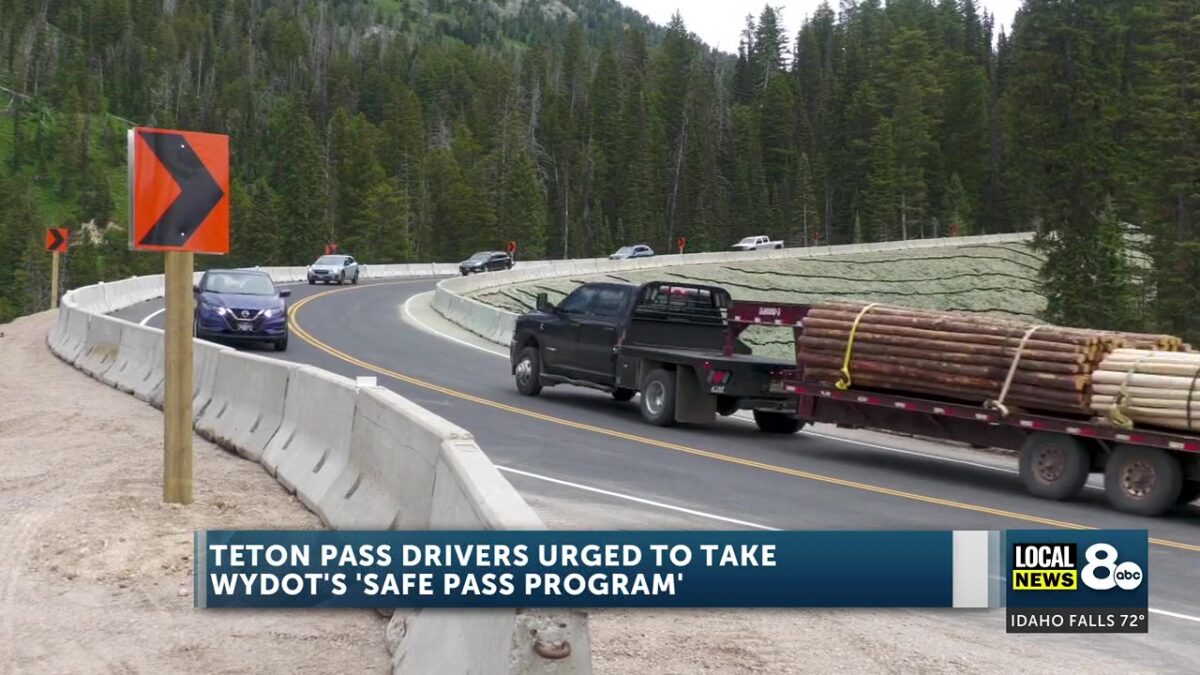
JACKSON, Wyo. (KIFI)— After months of calls for improved safety on Teton Pass, the Wyoming Department of Transportation is enforcing a new program aimed at helping drivers better prepare for mountain driving.
The Safe Pass Program takes effect Oct. 1 and requires certain drivers to complete an online self-certification course before traveling on Teton Pass.
The program applies to vehicles towing trailers, recreational vehicles and vehicles with a gross vehicle weight rating or gross vehicle weight combination of more than 10,000 pounds, but anyone who drives the pass can do the program. The course is designed to educate drivers about the risks of mountain driving and how to safely navigate the pass.
“This safety program was something we felt like we could implement fairly quickly to address some of the safety concerns, especially with lost breaks on Teton Pass,” Stephanie Harsha, District 3 Public Relations Specialist for WYDOT said.
The new program comes after multiple crashes resulting in deaths and injuries on Teton Pass this summer.
“The Safe Pass Program is a great beginning,” Jared Smith, a member of safety advocacy group ‘Make Teton Pass Safer’ said.
Make Teton Pass Safer and government agencies worked closely to develop this program.
“We’re WYDOT, so we want boots on the ground. We want projects in the works, and that takes time. And that takes money. But we really shifted in a new direction,” Harsha said.
Jackson Hole Fire and EMS crews who respond to crashes on the pass say they have seen more incidents, which makes this new program essential in enforcing safety on the road.
Brian Coe, Deputy Chief of Operations says that increase also needs to be considered alongside the number of people using the road each day.
“We are responding to more incidents on the pass, but I just think that that is more correlated to how many people per day use the pass,” Coe said.
Safety advocates say education is an important first step, but they also want additional enforcement and resources along the corridor.
“We’re hopeful that the Highway Patrol will get increased funding. So that’s a longer term measure that we’re going to be working on with the legislature. Similar with Teton County Sheriff’s deputies being able to be dedicated to the pass corridor, that’s going to require funding from our decision makers. And so we want to continue to work on that aspect as well,” Smith said.
Penalties for failing to complete the program and then driving on the pass are listed in the program’s frequently asked questions.
SALT LAKE CITY (KSTU) — Rep. Trevor Lee announced his resignation from the Utah State House of Representatives on Monday, hours after being charged by the Utah Attorney General’s Office on multiple counts, including fraud and forgery.
“Due to personal circumstances that require my attention, I no longer feel I can give my constituents the time, attention, and service they deserve,” said Lee in a statement.
Lee faces one count each of Communications Fraud, Mortgage Fraud, Forgery, and Possession of Forgery, which are connected to his alleged attempt to illegally obtain a loan, with the investigation into the Layton representative’s activities beginning in April.
An oft-controversial political figure, Lee served as the District 16 representative for over three years, but lost in this year’s GOP state primary election and was set to leave office early next year.
At the start of the investigation, the lead investigator was given two videos and screenshots of conversations “relating to a prior check-fraud incident,” the documents state.
One of the videos allegedly showed Lee requesting a $93,000 cash advance from Trent Spafford, the CEO of Enevive, a local water treatment company, and promising to make the executive “whole” by getting the company a government contact at Hill Air Force Base.
Spafford told investigators that Lee needed the advance to finance a new home.
Documents obtained from the lending company featured an agreement and offer letter from Enevive with a monthly salary of $168,000 a year. The CEO told investigators that the document was “fraudulent and that his signature was forged.”
In an interview with FOX 13 News, Stafford shared his thoughts on Lee and their interactions.
“My experience of Trevor Lee is that he is all about Trevor Lee, and not about the people, that it was all about him,” he said.
Another document was an offer letter from Blue Logic claiming Lee was a full-time employee at $190,000 per year. However, a company official said that while the offer had been made to Lee, he never accepted and was a contract employee, not full-time.
The Blue Logic executive said the letter was “prepared to help Lee as a friend and was not accurate.”
In an interview with investigators at his Utah State Capitol address, Lee admitted forging Spafford’s signature after first denying the accusation.
“Angry, misrepresented, lied to, that’s how I feel about it,” Spafford told FOX 13 News. “When I found out he had forged my signature and he had misrepresented so that he could gain for whatever reason, especially after he has taken.”
Lee also admitted that the Blue Logic salary was not accurate.
The Davis County Republican Party said it will hold a special election to fill Lee’s district for the remainder of the term.
Please note: This story was provided to CNN Wire by an affiliate and does not contain original CNN reporting. This content carries a strict local market embargo. If you share the same market as the contributor of this article, you may not use it on any platform.
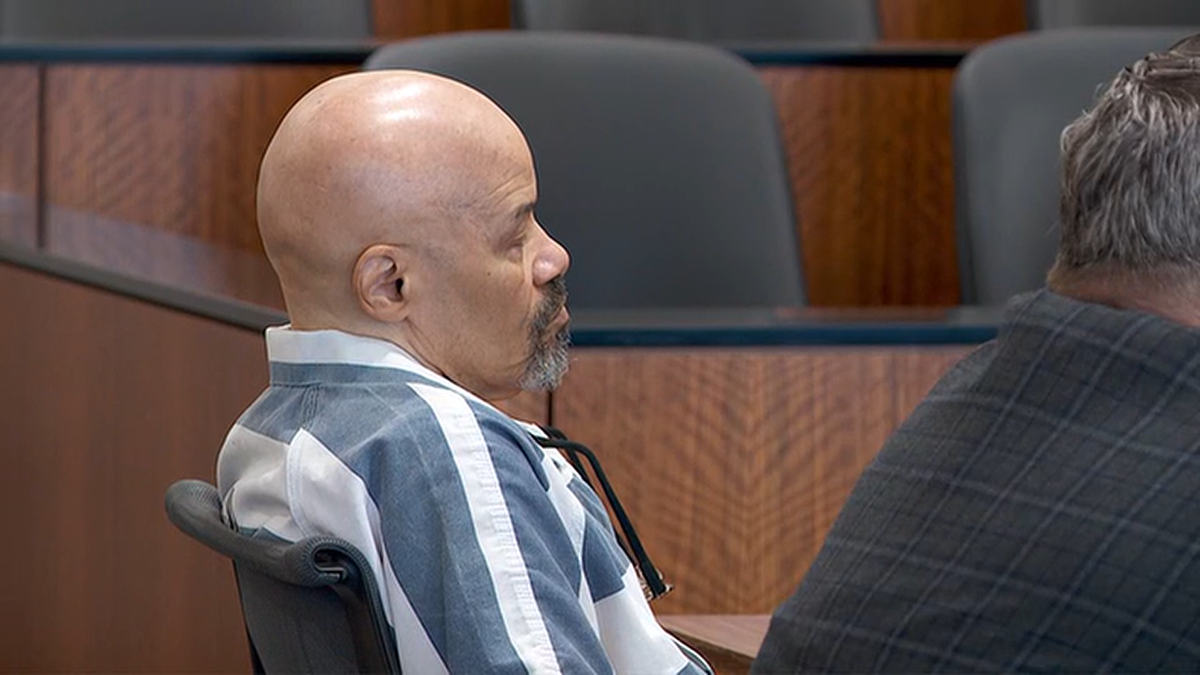
PROVO, Utah (KSTU) — Former death row inmate Douglas Stewart Carter was released from jail on Monday after a judge granted him bail as Utah County prosecutors weigh a retrial in light of newly discovered DNA evidence that does not place Carter at the scene of the murder he has been accused of committing.
Carter left jail at 7:45 p.m. with a smile while partially covering his face before getting into an awaiting vehicle. After some of his belongings were packed up, the vehicle drove off as he continued to smile in the front seat.
On Monday, Carter sat quietly in court as his lawyer and a prosecutor discussed conditions of bail, should he be released.
“There were DNA results that did not include the defendant, so at this point the state is reassessing the remaining evidence in the case,” said deputy Utah County Attorney Erwin Petilos. “With that in mind, the state believed a reassessment of the bail was necessary and fair.”
Carter, was ordered to wear a GPS monitor and will leave jail and stay at a location near his son’s home.
Neal Hamilton, Carter’s defense attorney, told the Associated Press that his client will need therapy to deal with his extended incarceration.
“It’s not just as simple as, ‘Let’s let him go,'” Hamilton said. “He’s being released with 41 years of state-induced trauma and the effect it will have on him is very real.”
Last week, the Utah County Attorney’s Office abruptly announced it had withdrawn its intent to seek the death penalty for Carter in his retrial in the 1985 murder of Eva Olesen. It was based on the DNA evidence.
“Eva’s blood is on the blade and on the handle there’s two profiles. One of the profiles is Eva. So we are confident the killer stabbed her, cut himself, and left his blood behind,” Hamilton told reporters outside court before the ruling. “That’s not Doug. None of it Doug. We all know Doug didn’t do this. It’s what he’s been telling everyone for 40 years.”
Carter had been on death row for more than 40 years when his aggravated murder conviction was overturned over accusations that Provo police mishandled the case and bribed and threatened witnesses. Carter’s lawyers have also argued that his own confession to the murder was coerced. The Utah Supreme Court ordered a new trial, and Utah County prosecutors were gearing up to try Carter again.
During Monday’s hearing, Hamilton agreed that should Carter be released, he would have no contact with the Olesen family.
But the Olesen family does not want him released. They submitted numerous statements to 4th District Court Judge Derek Pullan asking for Carter to remain in custody.
“The current findings do not exonerate Carter,” Theresa Olesen, Eva’s daughter-in-law, told the judge.
She argued a jury heard the evidence and rendered its verdict.
“I understand where we are here, and it’s disheartening. Because while in 2026 DNA is very critical and we have videos and all these things and, by golly, we were hoping for concrete match. But that doesn’t mean he wasn’t there,” she said. “But I’m not an expert on that. What I am is an expert on my feelings, and it’s very hard to hear things being said, especially by people who weren’t there and don’t know what they’re talking about.”
She expressed concerns about TikTok videos posted by a relative of Carter’s about the case, which Judge Pullan said could be alleged to be indirect contact. Hamilton said those videos would stop if Carter is released.
Utah County prosecutors have until November to decide whether to continue to pursue a new trial against Carter. Hamilton said outside of court he wanted the case thrown out.
“We want it yesterday. Because until that happens, Doug is still being held captive by this. This is still hanging over his head; it’s guiding and directing his life,” he said.
If the prosecution dismisses the case, Hamilton said he would pursue a factual innocence petition, which allows a wrongfully convicted person to receive some financial compensation from the state.
Please note: This story was provided to CNN Wire by an affiliate and does not contain original CNN reporting. This content carries a strict local market embargo. If you share the same market as the contributor of this article, you may not use it on any platform.
The following is a news release from the Idaho National Lab:
IDAHO FALLS, Idaho – The U.S. Department of Energy’s National Reactor Innovation Center selected Deployable Energy to test the company’s nuclear battery technology inside the Demonstration of Microreactor Experiments, or DOME, testbed at the Idaho National Laboratory in 2027.
Houston-based Deployable Energy plans to complete a full-power test of its Nuclear Unity Battery, a light-water moderated, helium-cooled transportable microreactor designed to generate 1 MWe. The test builds on the company’s earlier work achieving zero-power criticality through Nuclear Energy Launch Pad and will provide an opportunity to evaluate system performance, integration, controls, safety and operational procedures at increased scale.
“The Department of Energy is committed to getting more nuclear power onto the grid,” said acting deputy assistant secretary for Nuclear Reactors Chimi Zacot. “Testing at facilities like DOME is how we move these technologies closer to deployment — and closer to our goal of delivering affordable, reliable, and secure electricity for hardworking Americans.”
Deployable Energy was competitively selected from the most recent round of applications, submitted in July 2026. Their testing campaign is self-funded. The company’s experiment timeline is based on criteria including technology readiness, fuel availability and regulatory approval plans. The company must meet specific milestones throughout the process to maintain its allotted time in DOME and ensure efficient use of the test bed.
“We have a strong pipeline of companies interested in the DOME — and that’s exactly the kind of momentum we want to see,” said Brad Tomer, NRIC director. “It shows that developers recognize the value of the resources and data this testing capability provides as they push toward commercialization.”
Opened in April of 2026, DOME is the world’s first microreactor test bed designed to safely house and test fueled reactor experiments producing up to 20 megawatts of thermal energy. Tests completed in DOME will help innovators move their reactor designs from theoretical concepts to commercial products. Deployable Energy will be the second-ever company to test its technology in DOME following the first-ever test completed by Radiant.


 Volunteers with Benny’s Pantry, ISU President Robert Wagner and representatives from Direct Communications and Power County Livestock Sale Committee, Sept. 30