Kitchen fire sparks $20K in damages; Firefighters issue safety warning

Seth Ratliff

IDAHO FALLS, Idaho (KIFI) — A local family is safe this morning after a kitchen fire broke out in their duplex on Wednesday night, Feb. 18. While the blaze caused significant smoke damage, the quick response of the Idaho Falls Fire Department prevented the flames from spreading to the rest of the home.

In the wake of the fire, IFFD is reminding residents to use caution when cooking, keep flammable materials away from heat sources, and ensure working smoke alarms are installed on every level of the home.

The Fire

Just before 8 PM, IFFD crews were called to a structure fire on Reynard Lane. Upon arrival at the two-story duplex, firefighters found the family had already safely evacuated.

The fire originated in a gas oven and began to climb up the wall behind the appliance. Intermountain Gas arrived on the scene to shut off the gas service while firefighters moved quickly to contain the blaze, successfully stopping the spread before it spread beyond a small area around the stove.

While the fire itself was confined to the kitchen area, the smoke, which spread throughout the home, caused an estimated $20,000 in damage to the main floor.

IFFD says there were no injuries to occupants or firefighters.

Click here to follow the original article.

State budget writers invoke recession concerns amid cuts, sparking disagreements

Sean Dolan

Originally posted on IdahoEdNews.org on February 19, 2026

By: Sean Dolan

BOISE, Idaho — A Republican lawmaker is criticizing Idaho’s top budget writers after they claimed on television that 26 states are in a recession — a figure they could not immediately source as legislators debate spending cuts and whether to tap the state’s rainy day fund.

The co-chairs of the Joint Finance-Appropriations Committee made their stance clear in a roundtable discussion last week on Idaho Reports, but one data point they shared didn’t sit well with a representative from Shelley.

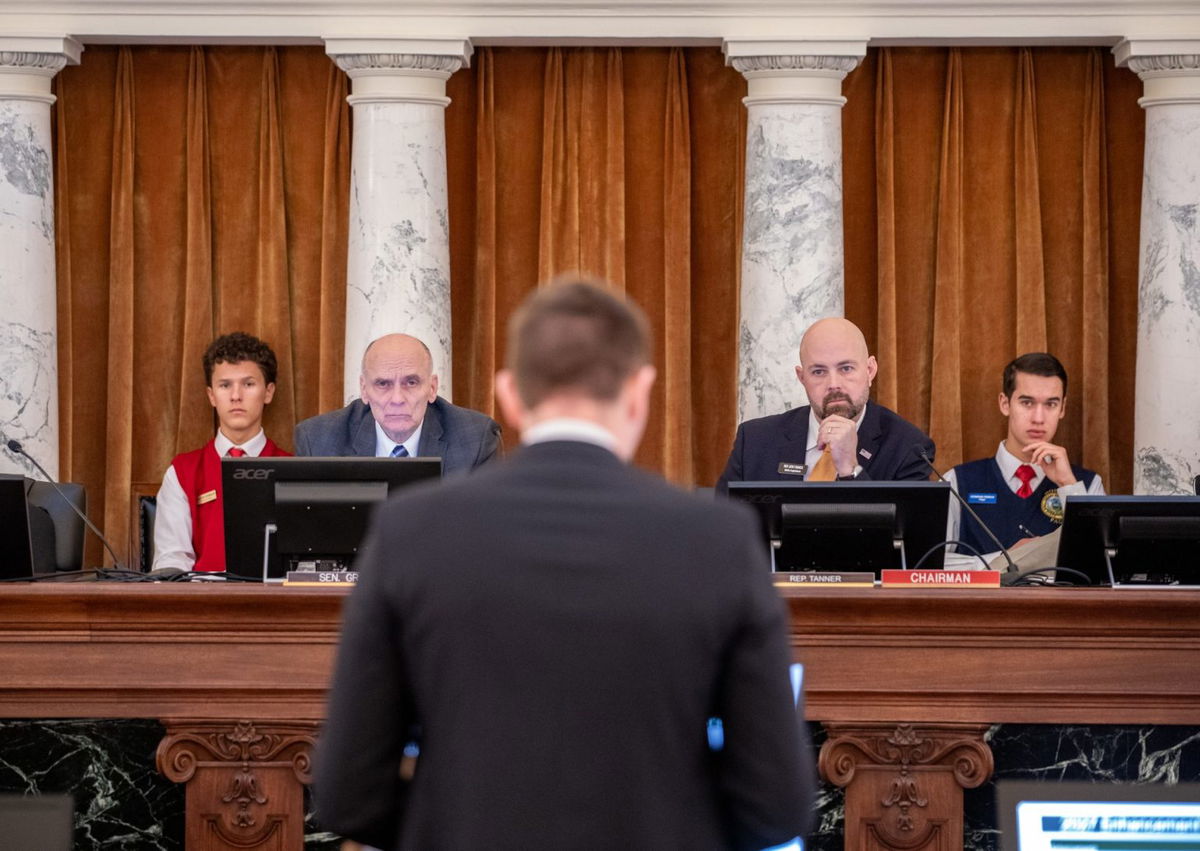
Co-chairs Sen. Scott Grow and Rep. Josh Tanner, both R-Eagle, said the Idaho economy is strong and growing. But other states are in recessions and Idaho is not immune. They say they want to cut the budget now in order to align ongoing expenses with ongoing revenues, and stay away from using budget stabilization funds that are set aside for a rainy day. They want to save that fund for when, or if, Idaho faces a recession.

“We are not in a recession,” Grow said on Idaho Reports. “Idaho is one of the top economies in the nation. There’s 26 states that are in a recession. We will have a recession, we just don’t know when. So we’re reluctant to use money that’s set aside for reserves for the rainy day when it’s not raining.”

Tanner said in the segment that there are a lot of uncertainties and he wants to put cuts in place now to improve the budget picture.

“I think going after a stabilization fund when you’re actually not in a recession is probably the most irresponsible thing you can actually do because we are going to go into recession at some point in time,” Tanner said. “Idaho is not immune from a recession.”

Sen. Scott Grow, left, and Rep. Josh Tanner, both R-Eagle, listen to testimony at a JFAC meeting on Wednesday, Jan. 21, 2026. (Sean Dolan/EdNews)

Rep. Ben Fuhriman, R-Shelley, told EdNews he was appalled when he heard Grow say 26 states are in a recession. He issued a press release earlier this week disputing the co-chairs’ claims. 

In a Tuesday interview, Fuhriman said the two co-chairs are trying to push a narrative in order to justify deep cuts that are unnecessary and non-surgical. Fuhriman is in favor of using the rainy day fund to stabilize the state budget. 

“I truly believe it’s irresponsible for the two leaders of the budget committee to go on television and tell the state and the world that half — over half — of the country is in recession without any kind of justification at all,” Fuhriman said. “It’s fear mongering, and it’s just irresponsible.”

EdNews called Grow and Tanner in a joint interview Tuesday to ask for a source for the claim that 26 states are in a recession.

“The site that I went to said 26 states were considered in a recession,” Tanner said.

Tanner said he saw the figure on a national website but couldn’t immediately provide a link.

“I’d have to go back to try to find which ones that — there were multiple that when I originally was looking as we were starting the session and going through this,” Tanner said.

The “current ones” are saying 22 states are in a recession, he said.

“So it changed from 26 to 22 since the start of the session,” Grow added.

Rep. Ben Fuhriman, R-Shelley, on Monday, Jan. 12, 2026, at the Statehouse. (Sean Dolan/EdNews)

EdNews found late-2025 reports citing Moody’s economist Mark Zandi, who posted that 22-23 states were “in or at high risk of recession,” based on his assessment of state-level data. 

Fuhriman, a financial planner, said he searched for a source for Grow’s claim that 26 states are in a recession.

Fuhriman thinks the co-chairs might have misunderstood a recent report from the Federal Reserve Bank of Philadelphia. The bank releases a monthly “state coincident index,” which uses an algorithm to reveal a state’s economic growth. If the number increases, the state’s economy is growing. The most recent report, released Jan. 30, shows the index increased in 41 states over the past three months and decreased in nine states. It also shows an overall increase for the U.S. economy.

Tanner told EdNews that he did not use that report for his claim that 26 states are in a recession.

“There aren’t 26 states that are in a recession,” Fuhriman said. “In fact, there aren’t any states that are in recession right now.”

The National Bureau of Economic Research, which officially determines U.S. recessions, has not declared one since the short COVID-era downturn in 2020. According to its website, expansions are periods between a trough and a peak and recessions are periods between a peak and a trough.

Fuhriman is concerned that Grow and Tanner are speaking as though a recession in Idaho is inevitable, while also saying the state shouldn’t use stabilization funds because Idaho is not in a recession. Budget cuts could create a self-fulfilling prophecy, he said.

In addition to broad cuts to statewide agencies, the Legislature is considering:

$20 million in cuts to the Idaho Launch grant program

$10 million in cuts to the Idaho Digital Learning Alliance

$23 million in proposed cuts to virtual schools, such as Idaho Home Learning Academy

Cuts to higher education and to career and technical education programs. 

“If you keep these cuts up … you’re going to cause a recession,” Fuhriman said.

When EdNews relayed that message to Grow, he laughed.

“Well, I hope that our economy is certainly stronger than having to depend on the state of Idaho spending to prop up the economy,” Grow said. “No, when the economy is still growing and we’re doing well, we don’t want to use one-time money to fill an ongoing problem.”

Using stabilization funds could risk the state’s AAA credit rating, Tanner said, adding the proposed budget cuts are “very small dollar amounts.”

“A lot of people that are in both the House and the Senate that are not on JFAC,” he said. “They don’t understand all of what’s going on. They just hear things and they will blame it on the Legislature.”

Fuhriman thinks the Legislature should do it “the Idaho way” and go line by line to cut out waste, then fill the gaps with emergency funds.

“We’re in a cluster of emergencies,” Fuhriman said. “The transmission broke, the roof is leaking, the fridge broke, and we have to fix all those things at once. And that’s exactly why you have an emergency fund.”

Click here to follow the original article.

Snowdrifts close University Boulevard in Rexburg

Curtis Jackson

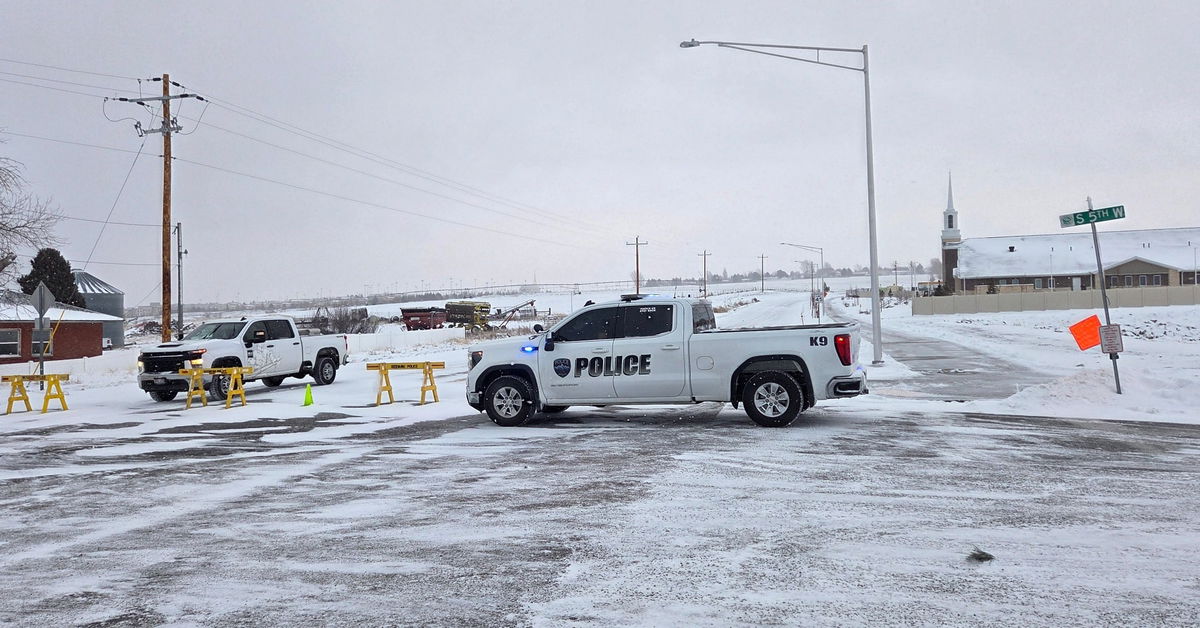
REXBURG, Idaho (KIFI) – Rexburg Police have closed University Boulevard between 5th West and 7th South due to drifting snow.

They posted in a social media post that plows are working to get the road open and officers are detouring traffic.

It’s unknown when the road will reopen.

Click here to follow the original article.
State Trooper Warns Against the Dangers of Distracted Driving

Par Kermani

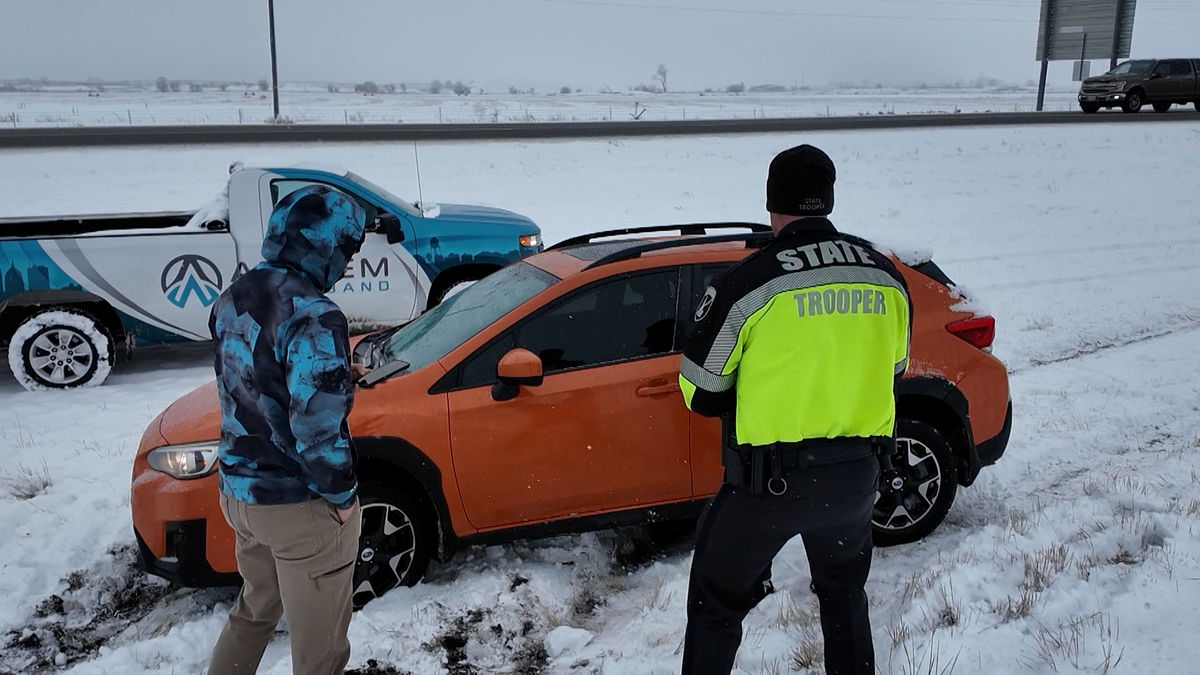
Idaho Falls, Idaho (KIFI) — For a state trooper, the difference between a routine traffic stop and a life-altering tragedy is often a matter of “inches and seconds”.

As roadway fatalities and accidents continue to plague highways, law enforcement officials are speaking out about the primary culprit behind many of these incidents: distracted and inattentive driving.

“I think everything applies back to that — distracted, inattentive,” Sgt. Blake Higley said during a recent patrol. “Most of the accidents I’m seeing are where someone is just trying to get somewhere and not being respectful or courteous”.

Since the enactment of hands-free driving laws in 2020, troopers report seeing a “wild amount” of texting and driving. The temptation to respond to a message or glance at a phone for just a few seconds creates a dangerous environment for every family on the road.

“You’ve got to think about the people you’re interacting with,” Higley explained. “Every car is someone’s family. I treat everyone the way I’d want my family treated.”

The patrol’s focus extends beyond just speed violations. Troopers are trained to look for unsafe lane changes, expired registrations, and the common habit of “autopilot” driving, where a driver loses focus on their surroundings. These momentary lapses in judgment can lead to tragedy.

Law enforcement officials hope that by sharing the reality of the roadway, they can encourage drivers to slow down and stay conscious every time they get behind the wheel.

“Sometimes it’s a matter of inches or seconds between a minor accident and someone not coming home,” Higley warned

The goal for the state patrol remains simple: ensuring that every driver reaches their final destination safely.

Click here to follow the original article.
KIFI 65 Years: Weather tech and forecasting in the early days of broadcasting

Michael Coats

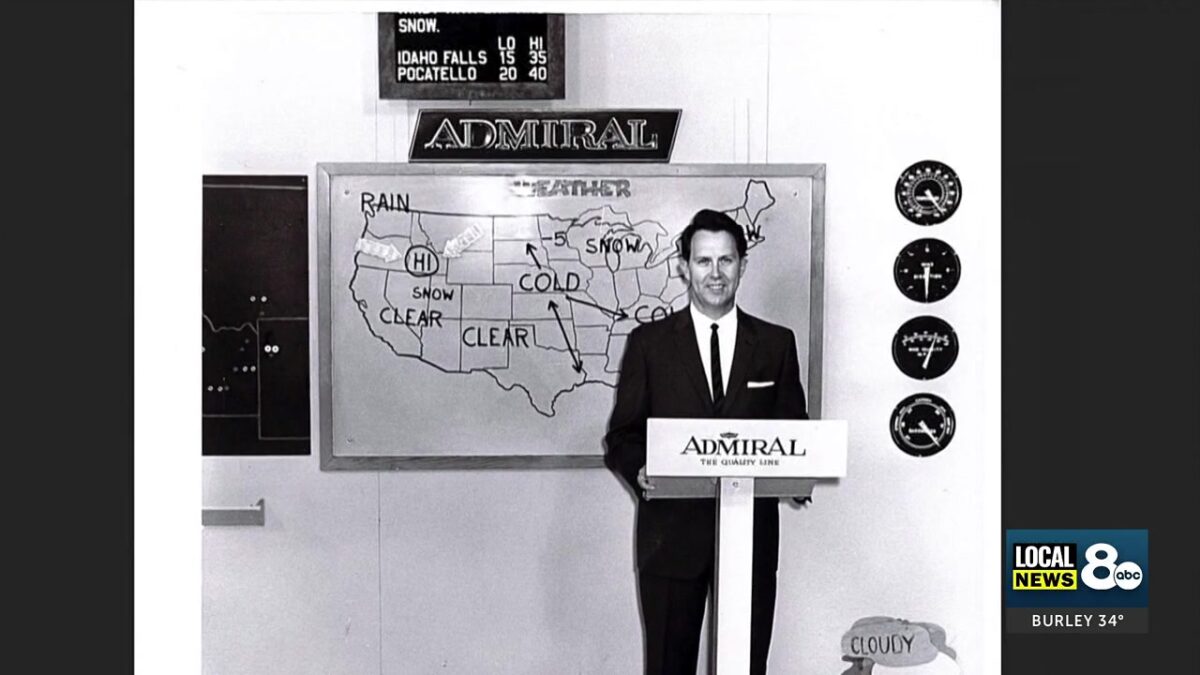
IDAHO FALLS, Idaho (KIFI) — Since the very start of KIFI’s 65 years of broadcasting, weather reports and forecasts have been a fixture of our live broadcasts.

From a simple map, podium, and pointer, the first weather reports on KIFI were fairly basic. More of a weather report than a forecast.

Bert Metcalfe (Circa 1966-1967)

Bill James (Circa 1960s)

John Haeberle (Circa 1966)

Former weathercaster and news anchor Steve Cannon says, “I would drive to the airport and get the upper air configuration and the radar chart. Draw it out on the board. When it came time, we had three studio cameras, as we do now, and the charts would be there and I say, the radar shows us… and the camera would go there. Then pan over to the upper air chart. Then back to me at the weather desk.”

Steve Cannon worked in eastern Idaho television for over 40 years, retiring from KIDK and KIFI in 2019

Long before computer graphics, on-air weather presenters needed some perfect penmanship

“I had five colors, black, green, blue, red, and something else…We had a big map, covered with plexiglass.” Cannon said. “I would take these vis-a-vis water soluble markers and draw everything. Then at the end of the weathercast, I had a bottle of Windex and paper towels. Spray it down, wipe it all down, go have my supper, come back and start all over.”

Today, we take computers and weather data for granted. A meteorologist can import layers of live and forecasted data instantly.

Cannon says when remembering the first weather computers, “It will do what? Oh yeah, it will chart this and that, it will do everything. I learned that first one, then the second generation came in, then the third generation, and then everyone added to each other. The animation you could use and the color pallets you could use, that was just amazing.”

Weather technology moves so fast these days, for example, since 2006 and since that time we have updated or completely changed weather computer systems at KIFI 9 times.

Click here to follow the original article.
Inside Peek Into the New Water Tower

Megan Lavin

Image courtesy of the City of Idaho Falls.

IDAHO FALLS, Idaho (KIFI) — The Idaho Falls skyline looks a lot different now that the old water tower is officially gone.

But what does the new water tower actually do for the Idaho Falls community? Anchor Megan Lavin gives us an exclusive inside look.

Locals React

For many, the previous water tower was more than just a structure. There was a strong emotional attachment to the longtime landmark.

When the city announced it was coming down, the news sparked strong reactions across the community.

A quick search of “water tower” in any of the Life in Idaho Falls Facebook pages shows just how much conversation it generated.

Many people don’t care for the look or design of the new water tower compared to the old one. Others say they’re not exactly sure what it does — other than change the view. We interviewed several Idaho Falls residents. Here’s what they had to say:

“I don’t even know.”

“Have no idea.”

“I think it’s pretty sad.”

Thirsty for Knowledge

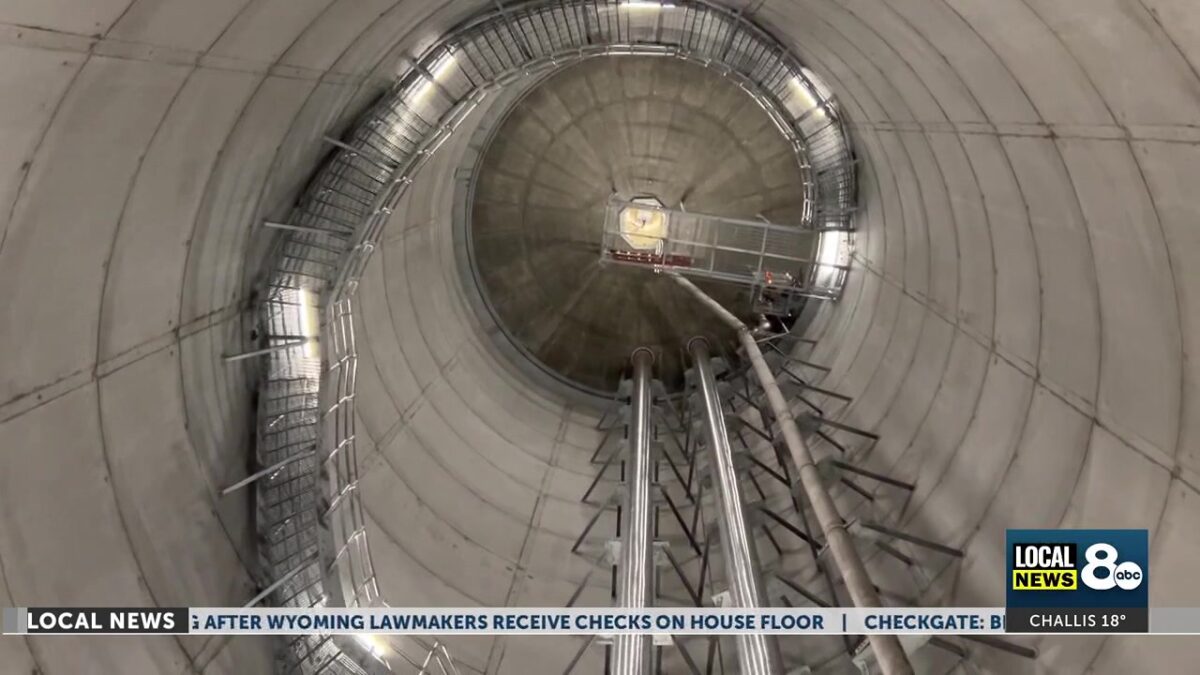
We climbed all 160 steps of the spiraling interior staircase to get directly underneath where the water sits.

We even looked out the window painters use to access the exterior of the tower.

The octagonal hatch is how workers access the final portion at the top — an area we were not permitted to enter. Standing beneath 8.3 million pounds of water is a staggering feeling.

The new water tower holds 1 million gallons of water — twice the capacity of the old tower, that’s approximately 333 Wes Deist Aquatic Centers.

How It Works

Water Superintendent David Richards says the new structure is a major upgrade for the city.

“This is leaps and bounds ahead as far as technology goes,” Richards said.

Despite the improved technology, the concept is fairly simple.

“So we have two separate pipes — one that brings water into the tower and one that brings water out,” Richards explained.

“Elevation and gravity supply water pressure into our system. And that water pressure helps protect our system.”

That pressure plays an important role.

“It helps keep contaminants out of the water system because if there’s a break or a leak, the water flows out of the pipes rather than allowing anything to flow back in,” Richards said. “It also stores water for emergency needs such as firefighting. And in the event of a catastrophic emergency, we have water stored and aren’t reliant on power to pump it.”

Richards said the project was a long time coming and necessary for several reasons — not just the lead paint on the old tower.

“2008 was when we first found out the old tower was an issue,” Richards said. “The foundation needed to be replaced. The piping inside the tower needed to be replaced. When we started adding up the costs associated with those repairs — and considering that when it was built, earthquake loading wasn’t part of the design — one thing led to another. Its useful life had been met. It needed to be replaced.”

Richards said the interior staircase is also a major improvement. In the past, workers had to climb the outside of the tower in the elements when maintenance was needed — including changing a light bulb about twice a year.

With population growth in mind, Richards said the tower will meet demand.

“This, combined with our other well sites, will provide water to meet all of our needs,” he said.

Why Downtown?

Some have questioned why the new tower was built downtown near the old site instead of farther away in the foothills.

“We opted to build it here near the river because the aquifer isn’t very deep,” Richards explained. “The existing well used for the old tower is still in service. It’s located near Idaho Falls Power’s administration building just across the street. Instead of pumping to the old tower, it now pumps to this new tower. That’s why we wanted to build it as close as possible to the existing well site.”

Is the Water Safe to Drink?

“This water has a multitude of uses,” Richards said. “First and foremost, culinary uses indoors — cooking, showering, and all the typical household needs.”

Other Benefits

“Gravity is always available,” Richards said. “We have generators at our other well sites to supply water if the power goes out, but it takes time for those generators to start up. This tower is integral in keeping water pressure available until those generators are running.”

The new tower is also designed to withstand earthquakes.

“All of our structures are designed for earthquake loading,” Richards said. “If an earthquake were to happen in the area, this structure will support itself and will not come down. The walls are close to about a foot thick.”

City officials say the earthquake-resistant design, expanded water storage, and updated technology should help support the community’s water needs for decades to come.

The project cost approximately $9 million. Richards said the city began gradually raising water rates in 2015 to help cover the cost.

They anticipate the new tower should last approximately 100 years.

Click here to follow the original article.

Idaho Falls Catholics commemorate Ash Wednesday

David Pace

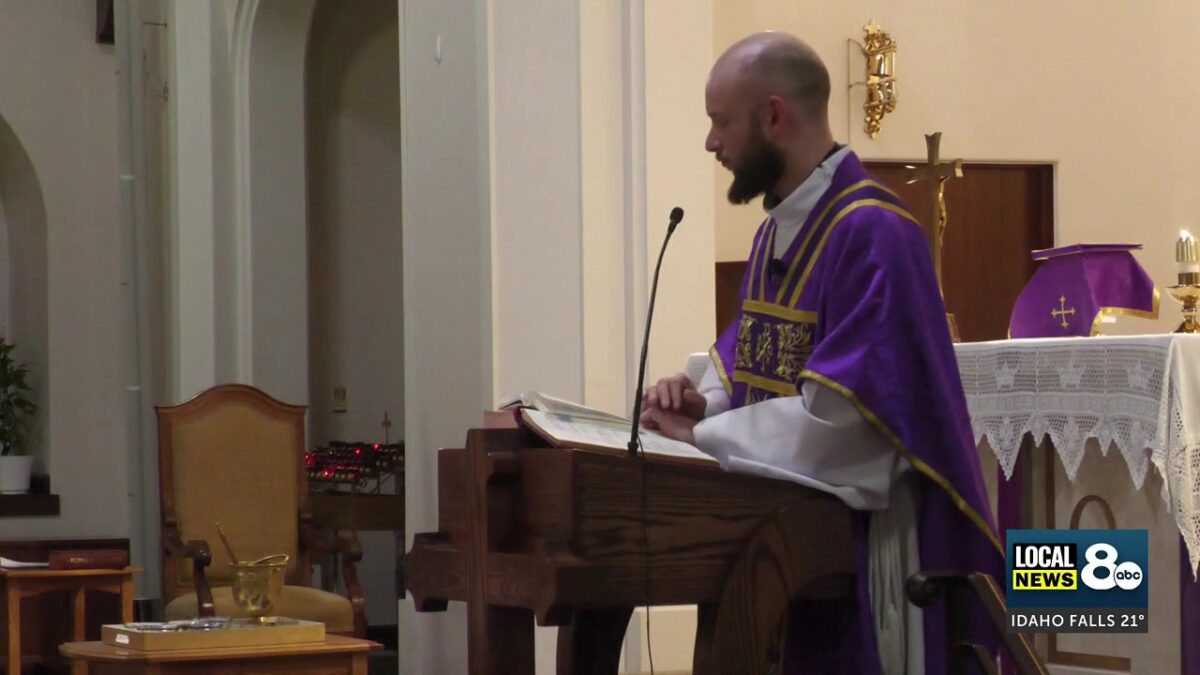
IDAHO FALLS, Idaho (KIFI) – Hundreds of Catholics gathered today at Holy Rosary and Christ the King churches in a spirit of penance to celebrate Ash Wednesday.

“Ash Wednesday is really the the kickoff to Lent,” said Valerie Finnigan, an Idaho Falls Catholic. “… We’re all to come together in sackcloth and ashes.” 

Catholic priests placed a cross of ashes on the forehead of each worshipper at Mass on Wednesday.

The ashes symbolize a spirit of repentance and contrition as Catholics prepare to voluntarily give up bad habits or practices during the 40-day period of Lent.

“Each of us does much good in life, but we must not not hide our sin behind the good we try to do,” said Father Aleksander Dembowski, of the Pope Saint John Paul II Catholic Parish.

Lent symbolizes the 40 days Jesus Christ fasted in the wilderness, as recounted in the New Testament.

“Lent is a time that we fast and pray and wait for God’s coming until we celebrate God’s coming to us,” said Inga Landers, a Catholic girl from Idaho Falls. “What Lent means to me is it basically means that we’re in a time that we love God even more, because He’s going to die on the cross for us and take away our sins and save the world from all eternity evil.”

Catholics frequently abstain from meat, except fish, on Fridays during the period leading up to Good Friday, on April 3.

They will also celebrate the Stations of the Cross, commemorating specific moments in Jesus Christ’s life between his condemnation, crucifixion, and burial.

Click here to follow the original article.
F-16s may soon replace A-10s at Gowen Field — environmental impact analysis underway

KIVI Staff

Originally Published: 6:26 PM, Feb 17, 2026

By: Brady Caskey, KIVI

BOISE, Idaho — The A-10 Thunderbolt II, affectionately known as the ‘Warthog’, has been flying out of Gowen Field for three decades.

“It’s the longest serving aircraft we’ve had here at Gowen Field,” said Lt. Col. Chris Borders with the Idaho National Guard.

Soon, this beloved aircraft that Idahoans have seen soaring over the Treasure Valley for 30 years may be replaced with something new — the F-16.

“The Air Force has been looking to retire the A-10 for a very long time,” Borders said.

Last week, the Air Force announced it is preparing an environmental impact statement as it considers swapping Gowen Field’s 21 A-10s for 21 F-16s.

Borders said the study will also examine impacts in nearby neighborhoods.

“It’ll look at things like the impact on human and natural resources, as well as the impacts on the surrounding community,” he said.

The Air Force is encouraging public input by March 15 to help shape its initial analysis.

RELATED | Air Force drafts Environmental Impact Statement to host F-16 jets at Gowen Field

“Most common concern is the noise factor,” Borders said.

Currently the jets typically take off on training missions twice a day.

“Really what it works out to be is about 10 minutes of audible jet noise every day,” he said.

When the planes depart, they head directly to a training area far outside of town to reduce noise for residents.

RELATED | Iconic A-10 Warthog makes final flight to new home at Warhawk Air Museum

“We tailor that noise to mitigate the impacts on the public with every aircraft that we receive and Boise has been a very livable city the entire 80 years we’ve been doing this and it’s not gonna change just because of the type of aircraft we operate,” Borders said.

The proposal to switch to F-16s will take some time. A draft of the environmental impact findings is expected this fall for public review. The final statement is expected next spring.

If approved, F-16s could arrive at Gowen Field in late 2027.

“We are still A-10 experts. We are still in the A-10 business and we’re going to be until we are assigned the new aircraft — if that should be the case,” Borders said.

Those wanting to weigh in on the proposal visit www.GowenFieldF16EIS.com

This story was initially reported by a journalist and has been, in part, converted to this platform with the assistance of AI. Our editorial team verifies all reporting on all platforms for fairness and accuracy.

Click here to follow the original article.
Checkgate: Bribery investigation looming after Wyoming lawmakers receive checks on House Floor

Seth Ratliff

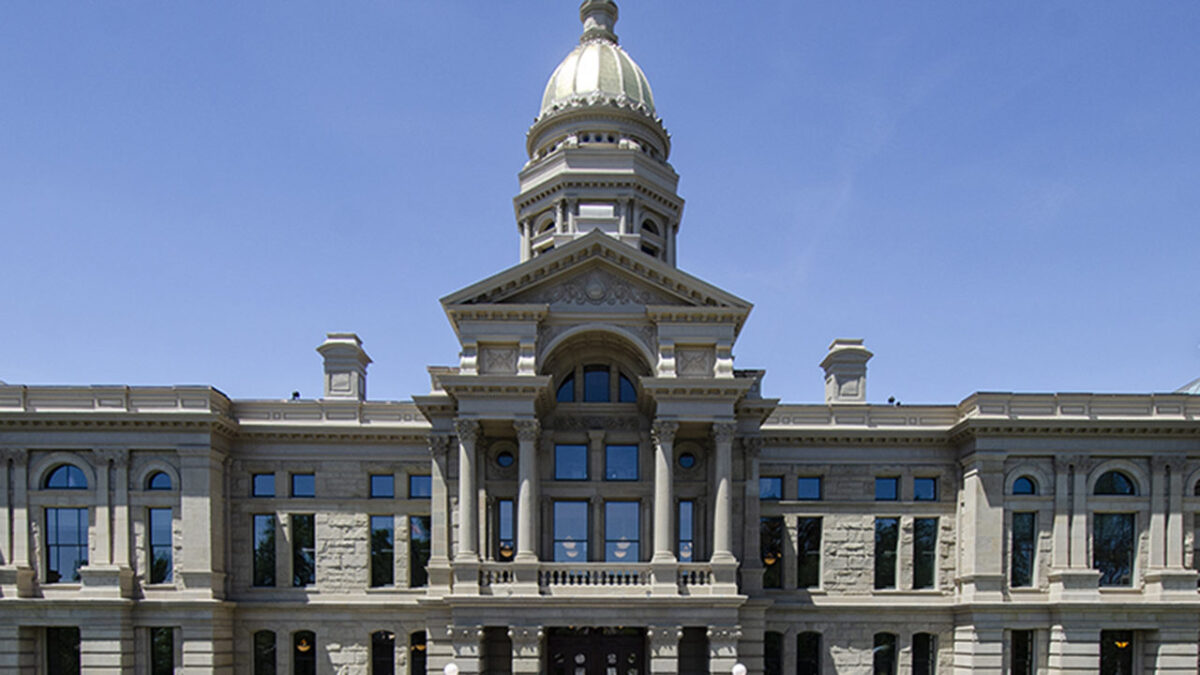
JACKSON, Wyo. (KIFI) — A firestorm of controversy is erupting in the “Cowboy State” after a Teton County Republican leader was caught distributing campaign checks directly on the Wyoming House floor. The incident has sparked a criminal investigation and a rare moment of bipartisan condemnation in the state legislature.

The controversy began on February 9, on the first day of session in the 2026 Wyoming Legislature. Following the day’s legislative session, Rebecca Bextel, a conservative activist and state committee woman for the Teton County GOP, was spotted handing checks to three lawmakers.

Rep. Karlee Provenza (D-Laramie) captured the incident on camera, later describing it to the Cowboy State Daily as a “terrible misuse” of the chamber and “dishonorable.”

“Nothing to Hide”

Bextel has remained defiant, taking to Facebook to clarify her actions. She maintains that the checks were written two weeks prior and were not distributed while the House or Senate were actively in session.

“There’s nothing wrong with delivering lawful campaign checks from Teton County donors when I am in Cheyenne,” Bextel wrote.

Timing and “Optics”

The controversy has drawn significant attention and speculation to recent legislative action. On February 11, the three Republican Representatives who were documented as receiving the checks, Joe Webb (Lyman), Darin McCann (Rock Springs), and Marlene Brady (Green River), all voted to introduce House Bill 141.

The bill, which Bextel has publicly championed, would bar communities like Jackson from implementing policies or imposing “a monetary fee, nonmonetary condition or other concession” in order to offset or incentivize the development of new affordable housing, or to prevent the loss of existing affordable units.

During the bill’s introduction, Rep. Mike Yin (D-Jackson) warned colleagues to vote “no” based on the undesirable “optics” of the situation.

While Yin clarified he wasn’t making a direct accusation of bribery, Rep. Rachel Rodriguez-Williams (R-Cody) fired back, calling his comments “defamatory” and an “allegation of quid pro quo.”

In response, Bextel quickly took to social media, calling Rep. Yin a “sore loser.”

“In an attempt to stop the unconstitutional mitigation fees bill from passing, he essentially tried to accuse me of bribery from the House floor,” wrote Bextel.

As of February 18th, HB141 has been placed on House General File, indicating it is awaiting further action by the entire membership of the House.

Formal Investigations and Legal Stakes

The fallout of the Checkgate controversy has been swift. On February 12, all 59 present House representatives unanimously voted to convene a special seven-member committee to investigate the incident.

Under Wyoming’s “Misuse of Office” statute (Section 9-13-105b), officials are strictly prohibited from using public facilities, equipment, or “time” for political or campaign activities. If the distribution of checks on the House floor is found to violate this rule, it is classified as a misdemeanor punishable by a fine of up to $1,000 and potential removal from office.

By February 13th, all 31 Wyoming State Senators had formally condemned Bextel’s actions.

Even Bextel’s own party has distanced itself. Kat Rueckert, Teton County GOP Chair, stated the party had “no prior knowledge” of the checks. “Bextel acted on her own accord,” Rueckert said.

The legislative probe is currently on hold, however, as the Laramie County Sheriff’s Office has launched a criminal investigation into possible bribery.

Under Wyoming’s bribery statutes (Section 6-5-102), if investigators find that any lawmaker accepted a “pecuniary benefit” upon the understanding that their vote or legislative discretion would be influenced—specifically regarding HB 141—they could face a felony conviction. This carries a penalty of up to 10 years in prison, a $5,000 fine, or both.

In a recent update, Bextel welcomed the scrutiny, expressing hope that the hearings will lead to “clear rules for various types of engagements with representatives and activities on the floor.”

Click here to follow the original article.

Teen dating violence cases surge in Canyon County as advocates sound alarm

KIVI Staff

Originally Published: 18 FEB 26 14:13 ET

By Leslie Solis

Click here for updates on this story

    CALDWELL, Idaho (KIVI) — Teen dating violence is not just a statistic; it is happening in Canyon County, and local advocates say the numbers are rising.

At Advocates Against Family Violence, Outreach Coordinator Tiffany Ruiz says the scope of the problem is alarming.

“We served last year, 250 teens that were survivors of sexual assault, and that is an extremely high number,” Ruiz said.

February is recognized as Teen Dating Violence Awareness Month, but Ruiz said the nonprofit’s work extends far beyond a single month.

She has worked at the agency for 20 years, with the last 15 years focused on teens in various capacities, including supporting survivors navigating court cases and at-risk youth in need of case management.

Ruiz said teen dating violence is often minimized by adults, allowing unhealthy behaviors to become normalized across generations.

“Their parent experienced it, their grandparent experienced it, and so they aren’t noticing those red flag behaviors,” she said. “They’re seeing it as normal behavior or expected behavior.”

According to the Centers for Disease Control and Prevention statistics, one in twelve high school students will experience physical abuse before eighteen, and one in ten will experience sexual abuse.

In Canyon County alone, Ruiz said the nonprofit served 9,047 youth last year through school presentations, juvenile detention programs and other outreach efforts.

“Specifically, through our program last year, we served 9,047 youth,” she said.

The number of teens needing direct services is already trending upward this year.

“We have already served just in January alone, 105 youth, and we’ve provided 276 youth services,” Ruiz said. “And we’ve served 24 that are survivors of sexual assault.”

Ruiz said the increase reflects a continuing trend.

“If we keep heading this way, we will surpass the number that we saw last year,” Ruiz said.

Abuse does not always present as physical harm. Ruiz said technology is increasingly being used as a tool of control.

“We have a lot of teens that don’t identify repetitive text messaging or always needing to have your location on and checking your location by a significant other is not a normal, healthy behavior,” she said.

Beyond prevention education, the organization also responds when assaults are reported. Advocates Against Family Violence is part of the local Sexual Assault Response Team and works alongside law enforcement agencies in Canyon County.

When an assault is reported, advocates are called to the hospital to meet survivors — teens and adults — often within hours. Ruiz said their role begins at that moment and continues as long as the survivor wants support.

The nonprofit recently launched what it calls Roar Again Kits, comfort bags given to survivors at the hospital through grant funding.

The kits include new clothing in various sizes, including undergarments, sweats, sweatshirts, slippers and shoes. Because clothing worn during an assault is typically collected as evidence, survivors are often left with hospital scrubs. The kits allow them to leave in regular clothing.

Each bag also contains a blanket, sensory items to ease anxiety, a handwritten note and a small stuffed lion named Roarie. Separate kits are prepared for youth and adults.

“It’s kind of being looked at as teen drama or not that big of a deal because they are just teens, but the reality is, is that if that’s the way that we’re responding to it, they’re then going to think it’s not a big deal and think that it’s normal, and it’s not,” she said.

She said one of the most important steps adults can take is to listen when teens speak up.

“When I talked, they didn’t listen, so maybe they’ll listen to how I act,” Ruiz recalled teens telling her.

Advocates Against Family Violence will continue year-round outreach in Canyon County schools and community programs to reduce the number of teens who experience dating violence.

This story was reported on-air by a journalist and has been converted to this platform with the assistance of AI. ­­­KIVI verifies all reporting on all platforms for fairness and accuracy.

Please note: This story was provided to CNN Wire by an affiliate and does not contain original CNN reporting. This content carries a strict local market embargo. If you share the same market as the contributor of this article, you may not use it on any platform.

The-CNN-Wire™ & © 2026 Cable News Network, Inc., a Warner Bros. Discovery Company. All rights reserved.

Click here to follow the original article.