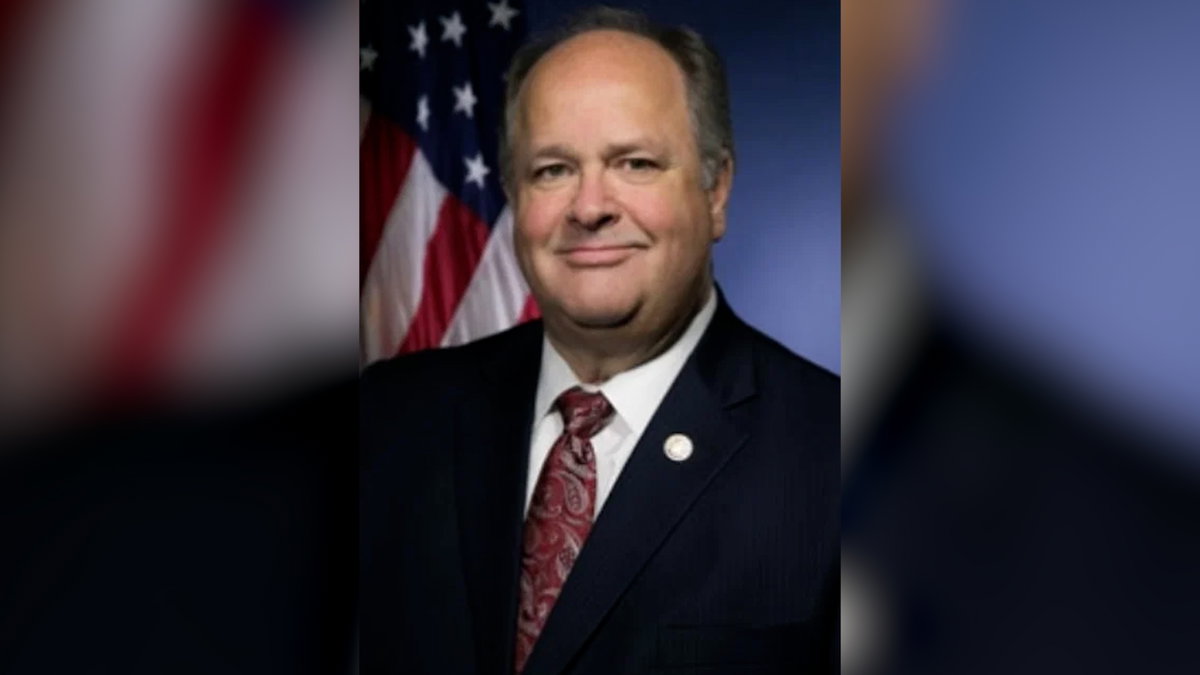
Judicial misconduct complaint against Ninth Circuit judge moved to Fourth Circuit

Par Kermani

IDAHO FALLS, Idaho (KIFI) — Chief Justice John Roberts has transferred a judicial misconduct complaint involving Ninth Circuit Judge Ryan Nelson to the Judicial Council of the Fourth Circuit, which moves the matter outside Nelson’s home circuit for further review.

The complaint comes from a altercation that occurred in June that led to the misdemeanor criminal charges against Judge Nelson.

RELATED: Ninth Circuit Judge accused of breaking man’s sunglasses in altercation outside Brio Home Health and Hospice

During the April incident, Judge Ryan Nelson and another man were involved in a dispute over a parking space that allegedly escalated into a physical confrontation. Prosecutors allege Nelson grabbed the man’s sunglasses, threw them across the parking lot and stepped on them, damaging the glasses. Nelson has acknowledged damaging the sunglasses but has pleaded not guilty to misdemeanor battery and misdemeanor malicious injury to property charges.

According to a news release issued Tuesday, Roberts approved a request from Murguia to transfer the matter under Rule 26 of the Rules for Judicial-Conduct and Judicial-Disability Proceedings. The transfer includes the complaint and all related proceedings.

The rule allows a judicial misconduct matter to be assigned to another circuit when doing so would promote impartiality and public confidence in the process. The complaint will now be handled by the Judicial Council of the Fourth Circuit rather than the Ninth Circuit.

The complaint is a formal review that focuses on whether the judge’s conduct violated standards expected of members of the federal judiciary.

Under the definitions of Misconduct and Disability, the misconduct review will determine whether the alleged conduct meets the judiciary’s definition of misconduct under Rule 4 of the Rules for Judicial-Conduct and Judicial-Disability Proceedings.

Possible outcomes can range from dismissal of the complaint to corrective action or disciplinary measures by the judicial council overseeing the case.

At this time, the Ninth Circuit has not announced a timetable for the Fourth Circuit’s review.

Click here to follow the original article.

E-bike safety concerns grow after fatal crashes in Idaho

Kaelyn Blessinger

IDAHO FALLS, Idaho (KIFI) —As e-bikes continue to surge in popularity, safety experts and medical professionals are raising concerns about the risks associated with the high-speed bicycles, particularly for children and teenagers.

The renewed focus on e-bike safety comes after two recent fatal crashes in Idaho. A Boise teenager was killed in an e-bike crash, while just a week earlier, a North Idaho man died after losing control of his e-bike near Spirit Lake.

Yet, e-bikes’ popularity shows no signs of slowing down.

“It’s definitely the fastest-growing segment in the cycling industry. There are city cruisers, there are gravel, there are racing road bikes, and there are mountain bikes in the e-bike world,” said David Wilding, owner of Idaho Mountain Trading.

Available in a variety of styles, including commuter, road, gravel, and mountain bikes, some models can reach speeds of 20 miles per hour or more, with certain high-powered versions capable of traveling significantly faster.

With their increasing popularity has come a rise in safety concerns. Communities across the region are considering new ordinances aimed at improving safety for cyclists, pedestrians, and motorists.

“Some cities have particular ordinances that have designated bike lanes or bike lanes and some of those for safety,” said Sgt. Bryan Lovell of the Bonneville County Sheriff’s Office. “If it’s on a bike path or that’s also being shared by pedestrians, so you still have a responsibility to ride safely in those areas, even though it’s not a traveled roadway or a city street.”

Health experts are also reporting an increase in serious injuries tied to e-bike crashes. According to the Centers for Disease Control and Prevention, more than 100,000 cyclists visit emergency departments each year for crash-related injuries. Locally, doctors say e-bike accidents have led to head injuries and broken bones.

“E-bikes and E-scooters could cause things like head traumas,” said Dr. Jaren Dickey. “Broken arms would be the main ones. They might get a big cut on their head, something like that. However, sometimes it can be a lot worse. Can even include bleeds inside the brain”

Because of those risks, the American Academy of Pediatrics recommends that children younger than 16 not ride e-bikes, citing the combination of higher speeds and limited riding experience among younger users.

Despite those recommendations, neither Idaho nor Wyoming currently sets a minimum age requirement for riding an e-bike. Neither state requires adults to wear helmets while riding.

Even without a legal mandate, medical professionals and cycling experts strongly encourage riders of all ages to wear helmets every time they ride.

Doctors say helmets have been proven to significantly reduce the risk of serious head injuries and urge families not to wait for laws to require the use of protective gear.

“Helmets have been shown to prevent a lot of these. Don’t wait for it to be a legal requirement to do the thing that’s right for your kid,” said Dr. Dickey.

Cycling advocates echo that message, noting that crashes are a risk you take when riding and that wearing a helmet can make the difference between a minor injury and a life-threatening one.

“It’s pretty much a must,” says Wilding. “It’s not an if but a when, because you will crash at some point”

Click here to follow the original article.
Shoshone-Bannock Tribes Stand Against Proposed AI Data Center in Pocatello

Hadley Bodell

FORT HALL, Idaho (KIFI) – As Pocatello awaits an appellate hearing on the proposed Lex Developments AI data center later this month, the Shoshone-Bannock Tribes have reaffirmed their opposition to the project. On July 7, the Shoshone-Bannock Tribes made an official statement reaffirming their stance against the proposal, stating they agree with the Hearing Examiner’s original decision to deny Lex Developments a conditional use permit (CUP).

All of the Tribe’s concerns stem from what they state is, “the developer’s failure to submit sufficient information for review to address concerns over likely increases to electricity rates, impacts to water resources and environmental impacts.”

Members of the Tribal Council emphasized their responsibility to care for the environment and its reach beyond the Fort Hall Reservation. They said they continue to care about surrounding lands and are “deeply concerned” about the potential impacts of a data center in Pocatello. The Fort Hall Business Council submitted a public records request for the public hearing documents as well as the Hearing Examiner’s decision, agreeing that Lex Developments failed to adequately deliver any project requirements, leaving them highly concerned about the potential environmental impacts.

“We have a responsibility to protect our lands, our water and natural resources within it,” said Donna Thompson, chairwoman of the Fort Hall Business Council. “We don’t know what the significant impacts of it would be for the community, not just us but overall.”

Thompson said the Business Council is not opposed to development as long as it is responsible, transparent and protects natural resources.

House Bill 911 was passed earlier this year, requiring developers to pay for all power infrastructure costs, however, leaders in the Tribe are concerned this will be difficult to enforce. If not, the electricity rates could increase for Tribal members.

“They say it’s not going to impact electricity costs, but if you go to different areas that currently have data centers right now, they’re struggling to find electricity for their customers,” Thompson stated. “For the residential people that do have them, they’re paying higher costs, that information is out there and I don’t think Idaho Power has the ability to predict that much power needed for such a large development.”

The second major concern is water usage, even while House Bill 895 passed this year, prohibiting data centers from using a water cooling system as a consumptive process, the Fort Hall Business Council stated the developer did not define the water requirements for the proposed data center. They are also worried about the chemicals or additives that could be outputs from the data center, regarding its location near the Portneuf River. The chemical hazard directly correlates with the Shoshone-Bannock Tribes’ mission to protect Idaho’s limited water resources and the wildlife within it.

“We need clear, measurable information, not estimates. This includes water demand, cooling system operations, chemicals or additives, prevention and response plans and any water required for onsite generation,” Thompson explained. “The Portneuf River is very close and we already have enough contaminants in it, we don’t need more.”

She added they want to keep the water clean and safe for all future generations, and the council will continue to fight for their longevity.

When asked whether the Tribes would support the project if additional information were provided, Thompson said no.

“I’ll be honest, I just don’t think data centers are something we want in our community, whether it’s Fort Hall, Pocatello, Blackfoot, the resources that it would demand would be taken from all our communities, and I just don’t think that’s something we want,” she said.

The Fort Hall Business Council recognizes the resources they have, including the water, land and mountains on and surrounding the Fort Hall Indian Reservation. Thompson said they’re grateful for the resources and will fight to keep them for their kids and grandchildren.

“We remain committed to transparency, meaningful environmental review, protection of our natural resources and upholding Tribal interests and treaty rights,” she said. “We’re not going to sit down, we’re not going to go away. When we firmly believe in something, we will fight to the very end.”

Click here to follow the original article.
Highway Patrol: Equipment failure likely caused deadly crash on Teton Pass

Stephanie Lucas

JACKSON, Wyoming (KIFI) — The Wyoming Highway Patrol says equipment failure likely caused the deadly chain reaction accident on the Teton Pass on Tuesday.

Investigators say that the dump truck was traveling eastbound down the pass when it suffered a critical failure. The driver lost control, and the crash rapidly unfolded.

First, a runaway dump truck rear-ended an eastbound motorcycle, which skidded across the westbound lane and came to a stop on the shoulder. Fortunately, WHP confirmed in a news release that the rider survived the impact.

As the dump truck barrelled downhill, it rear-ended an eastbound Chevrolet pickup. WHP says the impact forced the Chevy into oncoming traffic, where it collided head-on with a westbound Ford F-150. The F-150 overturned and went off the north side of the highway.

The dump truck then veered off the south side of the road, struck a guardrail, and swerved back into the eastbound lane. Once there, WHP says it spun out and rolled onto its side, sliding down the highway and spilling asphalt across the roadway.

While sliding on its side, the dump truck hit a westbound Chevrolet Equinox and then a westbound Subaru Outback. Both the Subaru and the dump truck collided with a drainage ditch. The impact launched the dump truck airborne before it landed on its passenger side in the eastbound lane. The Subaru rolled repeatedly, coming to a rest on its roof.

The Wyoming Highway Patrol says the driver of the Ford F-150 and the driver of the Subaru Outback both died at the scene. They have been identified as Nicholas Czernichew Besobrasow, 66, of Tetonia, and David Thomposn Page, 66, of Mammoth Lakes, California, and Jackson, Wyoming. The four other people who were injured were taken to an area hospital.

The highway was closed for an extended period on Tuesday as emergency crews cleared the spilled asphalt and wreckage. WHP also says this accident is under investigation, and any possible citations or charges are pending.

Click here to follow the original article.
Fort Hall opens new 25,000 square foot Fire Station

Hadley Bodell

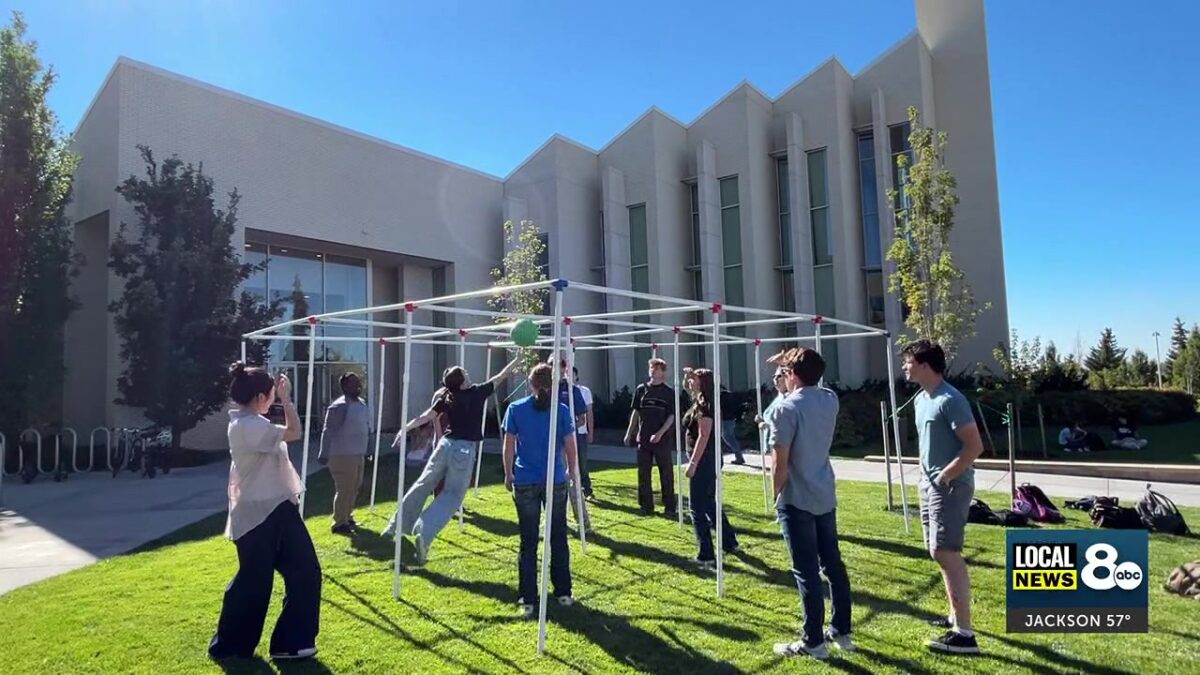
FORT HALL, Idaho (KIFI) – The Shoshone-Bannock Tribes held a grand opening for the new Fort Hall Fire Station at 70 Widowville Road in Fort Hall after approximately two years of construction. The new facility will serve as the headquarters for Fort Hall Fire, with over 25,000 square feet of expanded offices, training areas and fire truck bays.

The new station replaces the previous station as the Fort Hall Fire Department determined it no longer met the operational needs of the fire personnel. It is built directly across from the old station, maintaining the convenient location.

“The old facility didn’t have room for all of our apparatus, all of our equipment, so with having everything under one roof now, we can keep our state of readiness a lot more efficient,” said Eric King, Fire Chief with the Fort Hall Fire Department. “It’s a lot safer for our firefighters to not have to run across parking lots to get on the trucks and go.”

The project cost around $13 million in total, with the ground breaking almost two years ago in September 2024. It was funded through a combination of tribal and federal support, with $7 million coming from the efforts of Congressman Mike Simpson. The new facility serves 18 line personnel and four administrative staff.

“It’s a morale boost for the guys, for sure,” King said. “And it’s for the public. We’re excited to do a lot of things with the public so we have those accomodations to do community events in this building.”

Rather than a traditional ribbon-cutting, the Tribes held a celebration that featured the Fire Hose Disconnect Ceremony, which organizers say symbolizes the transition from the former station to the new one. They also did a Push-In Truck Ceremony, a long-standing tradition of placing a fire engine into its new home. Following the ceremony, guests were able to tour the new facility and meet members of Fort Hall Fire.

To the firefighters, this is their new home, and the crew couldn’t be more excited for the modern facility.

“The conditions that these guys work in day in and day out, they need something that they feel comfortable coming back to,” King said. “They’ve got to decompress from the stresses of the job and hopefully that’s what will happen here and be a little more comfortable.”

King also said the previous facility left their fire trucks outside through the seasons, increasing maintenance costs every year. The new headquarters will provide all the Fort Hall Fire services in one place, including six apparatus bays, meeting places, and expanded workspaces and training areas. Organizers say the state-of-the-art, modern station will support daily operations while reducing long-term costs.

Click here to follow the original article.

ITD announces nightly closures, crossovers near exit 80 for bridge demolition

Seth Ratliff

POCATELLO, Idaho (KIFI) — Starting next week, drivers along I-15 should prepare for nighttime lane closures and crossovers north of the Fort Hall Interchange.

The Idaho Transportation Department (ITD) announced it will begin demolishing the abandoned railroad bridge near Exit 80 on Interstate 15. The demolition is an important step in ITD’s ongoing project to widen I-15 to three lanes in each direction.

Crews expect the bridge removal to take four to five weeks to complete. Demolition work will begin on Thursday, July 16, at 7 p.m. and last until 6 a.m. each night. During the night, traffic will be redirected via crossovers from one side of the interstate to the other as each bridge section is dismantled.

The Exit 80 northbound on-ramp and southbound off-ramp may be closed intermittently overnight. During the closures, motorists will be detoured using the I-15 South Blackfoot Interchange (Exit 89).

“The safety of motorists and construction crews is ITD’s top priority during construction,” stated ITD in a press release. “When driving through the work zone, please stay alert, follow work zone signage, and drive the posted speed limit.

For more information and project updates, click HERE.

Click here to follow the original article.

AG Labrador files closing brief in Federal lawsuit defending Idaho’s Pro-Life law 

News Release

The following is a news release from Attorney General Raúl Labrador’s office:

BOISE, Idaho (KIFI) — Attorney General Raúl Labrador’s office filed its closing briefs in Seyb v. Members of the Idaho Board of Medicine, capping a trial in which a St. Luke’s physician asked a federal court to strike down Idaho’s Defense of Life Act. The full closing brief is available to the press here.  Four years ago, the U.S. Supreme Court settled this issue for good. In Dobbs v. Jackson Women’s Health Organization, the Court held the Constitution says nothing about abortion and left the decision on how to regulate abortion to the states. Relying on that authority, Idaho enacted laws to defend unborn children while still allowing mothers to make difficult decisions when their own lives are at risk.  Dr. Stacy Seyb is now asking a federal judge to defy that ruling and hand doctors the power to decide when an unborn child’s life ends, based on nothing more than their own shifting, undefined standards. Seyb also asked the Court to allow abortions when a doctor diagnoses an unborn child with a significant disability. He told the court he sees no point in continuing a pregnancy under such circumstances, questioning at trial, “What is the point?” Attorney General Labrador’s filing calls this exactly what it is: an attempt to use the courts to grant legal cover for eugenics, a position that has no place in Idaho.  Seyb’s testimony at trial shows that he failed to learn what Idaho’s laws actually required, and that he operated on a fundamental misunderstanding of the requirements of the law. That failure to understand Idaho’s law is actively harming women. Idaho law already allows doctors acting in their good faith medical judgment to save a mother’s life, without requiring a physician to wait until her death is imminent before performing a life-saving abortion. The Idaho Supreme Court settled that standard more than three years before this trial began. But Seyb testified that he never read that ruling and remains confused about Idaho’s laws. That misunderstanding led Seyb to fly a patient to Utah for care he could—and should—have given her in Idaho, resulting in the patient being septic when she arrived in Utah. Unrebutted expert testimony at trial confirmed that Seyb’s decision to fly that patient to Utah, instead of legally performing the life-saving abortion in Idaho, increased her risk of complications and death.  “For years, pro-abortion advocates, the medical establishment, and the mainstream media have pointed to Dr. Seyb’s claims to allege that Idaho’s pro-life laws forced women out of state and put their lives at risk. The sworn testimony in this case tells a very different story. Dr. Seyb refused to understand the law and created the danger for his patients,” said Attorney General Labrador. “Idaho law allows physicians to make good faith medical judgments to perform abortions when necessary to save the life of the mother. It does not require death to be imminent as suggested by Dr. Seyb. We will continue to defend this truth against misinformation and deception.”  The brief also notes that Idaho’s law has coincided with a dramatic drop in maternal deaths since Dobbs. Idaho’s pregnancy-related mortality rate has plummeted from 18.7 deaths per 100,000 live births in 2018 to 4.29 in 2024, and Idaho’s combined rate over the past two years runs well below the national average.  Finally, the brief explains in depth that there is no historical support in the history and traditions of the United States to support Seyb’s arguments that Idaho’s laws are unconstitutional. Rather, the clear history in the U.S. prior to the now overturned Roe v. Wade decision is that states were always free to regulate abortion. Idaho’s laws protecting unborn life, while allowing for an abortion when necessary to save the life of the mother, are consistent with centuries of U.S. legal history and tradition. 

Click here to follow the original article.

Family seeks support after 6-year-old Skylee seriously injured in Island Park dirt bike crash

Par Kermani

ISLAND PARK, Idaho (KIFI) — A six-year-old girl was hospitalized after an off-highway vehicle crash in the Mill Creek camping area near Island Park on July 2.

According to the Fremont County Sheriff’s Office, emergency crews responded to the area around 7 p.m. The child was airlifted to a hospital for treatment.

RELATED: Juvenile hospitalized following OHV accident in Island Park

A GoFundMe page created by family members identifies the girl as Skylee and says she was involved in a dirt bike accident. The fundraiser states that although she was wearing a helmet, she suffered serious injuries and was flown to Primary Children’s Hospital in Utah.

The fundraiser page says Skylee sustained a fractured skull, fractured orbital bone, and fractured collarbone. Family members say she faces a long recovery that will include medical treatment, follow-up care and rehabilitation.

According to the Fremont County Sheriff’s Office, the incident serves as a reminder to wear protective gear and remain aware of one’s surroundings while operating off-highway vehicles.

Family members have launched the fundraiser to help cover medical expenses. According to family members who set up the GoFundMe, Skylee’s parents do not have health insurance and are facing significant costs associated with the helicopter transport, emergency treatment, hospitalization, and ongoing care.

The Fremont County Sheriff’s Office is also offering free OHV safety classes throughout the summer. The classes were announced in May, following several off-highway vehicle accidents in the area.

Anyone interested in learning more about the classes can contact the Fremont County Sheriff’s Office or visit its social media pages for additional information.

To support Skylee’s recovery or learn more about the fundraiser, visit the family’s GoFundMe page.

Click here to follow the original article.

Burn ban issued by Bonneville County Commissioners

News Release

IDAHO FALLS, Idaho (KIFI) – A burn ban has been issued for Bonneville County as of July 9.

Due to higher-than-average temperatures and low moisture levels, the Bonneville County Board of Commissioners determined the need to implement a burn ban. The purpose of the ban is to reduce the risk of wildfire and the damage it can bring to lives, property, and the economy. This burn ban will last until September 30, 2026, unless amended by resolution.

 In addition to the burn ban, the Board of Commissioners would like to remind everyone in the county to use safe practices with all fires and possible sources of ignition for wildfire. This includes not using fireworks or exploding targets where prohibited, not parking hot vehicles in tall grass, and ensuring all campfires are completely extinguished before leaving them.

The ban applies to all open burning except campfires built within an approved pit at improved campgrounds or picnic areas and smoking, except within an enclosed vehicle, building, or developed recreation site. This ban will impact private property in the unincorporated sections of the County. This ban does not include State or Federal public lands in Bonneville County. Burn permits are required for agricultural burning; however, when a burn ban is in place, no permits will be issued.

Click here to follow the original article.

Charlie Kirk’s accused killer ‘said he wishes he hadn’t done it,’ roommate told Utah prosecutors

CNN

Originally Published: 09 JUL 26 13:16 ET

Updated: 09 JUL 26 15:41 ET

By Andi Babineau, Nicki Brown, CNN

Provo, Utah (CNN) — The former roommate of Tyler Robinson, the man accused of killing conservative activist Charlie Kirk, told investigators Robinson “said he wishes he hadn’t done it” the day after the fatal shooting.

“He started crying a little bit and said he wishes he hadn’t done it, and then kept going around and just doing stuff, I think to keep himself busy or distracted or something,” the roommate, Lance Twiggs, told prosecutors in a videotaped interview shown in court Thursday, as part of a multiday hearing.

“Eventually he said that he would talk to his parents or turn himself over,” Twiggs said.

Officials testified Robinson surrendered to police later that day.

Utah prosecutors this week are displaying some of their evidence to try and convince a judge there’s enough to proceed to trial: Robinson, 23, faces charges of aggravated murder and six other counts stemming from the fatal shooting of Kirk last September. Robinson has not yet entered pleas.

The hearing comes about ten months after Kirk, the 31-year-old conservative firebrand and co-founder of Turning Point USA, was fatally shot as he addressed a crowd of roughly 3,000 people during an event on Utah Valley University’s campus. News of his death – one example of the political violence roiling America in recent years – quickly went global, with graphic videos flooding social media and politicians on both sides of the aisle swiftly condemning the killing.

The roommate is likely a key component of the state’s case, with prosecutors alleging text messages between Twiggs and Robinson amount to a confession by the defendant thathe is responsible for Kirk’s killing.

Prosecutors granted the roommate limited immunity in exchange for the videotaped statement. Twiggs’ attorney told CNNhis client has “cooperated consistently with the investigation.”

Attorneys for the state, defense, the media and Kirk’s widow, Erika Kirk, spent much of Wednesday’s session arguing over whether the roommate’s interview could be played in court and published to the news media.

Judge Tony Graf ultimately ruled parts of the statement could not be played publicly, and those segments were redacted from the video shown in court Thursday.

Erika Kirk’s attorney asked the judge to allow the statement by Robinson’s roommate to be played in full.

“The Kirk family believes strongly that if the evidence is being admitted at this preliminary hearing, it should be made public for the world to see. No redactions,” the attorney, Jeffrey Neiman, said.

“you weren’t the one who did it right????”

Robinson and his roommate met around 2023 and started dating about two or three months after Robinson moved into their shared apartment in St. George, Utah, Twiggs told prosecutors in the interview, which was conducted and recorded in April.

The pair did not discuss politics “super consistently,” the roommate said. Twiggs never heard Robinson mention Charlie Kirk and said Robinson didn’t talk much about LGBTQ issues.

“Usually, if he did talk about politics stuff, it was relating to Trump or current, like, policies being, like, issued or voted on,” the roommate said.

About a month before Kirk’s killing, Robinson asked his roommate for a Dremel so he could engrave bullets for an upcoming hunting trip with his family, Twiggs said.

“I just told him where the Dremel was and told him to make sure he doesn’t, like, set off a bullet on accident in the house,” Twiggs said. “But I didn’t really think about it until then.”

Investigators said in charging documents the alleged murder weapon – a Mauser Model 98 .30-06 caliber bolt-action rifle with a mounted scope – contained one spent round and three unspent rounds, which were each engraved with messages.

On September 10, 2025 – the day of the fatal shooting – Robinson left their apartment early in the morning, saying he had a long drive to work, the roommate said.

Robinson didn’t contact Twiggs directly until late that night, the roommate said. Prosecutors displayed a text conversation they said shows messages between the two beginning around 11 p.m.

Robinson texted his roommate to “drop what you are doing, look under my keyboard,” according to messages read aloud in court Thursday.

Investigators previously said in charging documents there was a handwritten note under the keyboard that read: “I had the opportunity to take out Charlie Kirk and I’m going to take it.”

“you weren’t the one who did it right????” the roommate texted Robinson, according to the messages shown in court.

“I am, I’m sorry,” Robinson allegedly replied.

Twiggs later asked, “why?” according to the messages presented in court.

“why did I do it?” Robinson allegedly responded. He added, “I had enough of his hatred. some hate can’t be negotiated out,” according to the texts presented in court.

Robinson discussed engraving bullets and needing to retrieve a rifle wrapped in a towel in other messages displayed Thursday.

The day after the shooting, Robinson spoke with his roomate at their apartment, Twiggs said.

“I just asked him in person if what he said was true the night before, and he said it was,” the roommate said.

Later that day, Robinson texted Twiggs saying he was going to turn himself in willingly, according to messages presented in court.

“One of my neighbors here is a deputy for the sheriff,” Robinson allegedly wrote. “We hope to keep things sort of quiet here.”

Investigators testified Robinson surrendered to police around 9 p.m. the same day.

This story has been updated with additional information.

The-CNN-Wire™ & © 2026 Cable News Network, Inc., a Warner Bros. Discovery Company. All rights reserved.

Click here to follow the original article.