Artemis II Splash Down

Seth Ratliff

SAN DIEGO, CA (KIFI) — History is just hours away. NASA astronauts Reid Wiseman, Victor Glover, and Christina Koch, alongside CSA (Canadian Space Agency) astronaut Jeremy Hansen, are entering the final stages of their record-breaking journey. After traveling deeper into space than any humans in history, the Artemis II crew is scheduled to splash down off the coast of San Diego today, Friday, April 10, at approximately 8:07 p.m. EDT (6:07 p.m. MDT).

Watch the recording Artemis II Splashdown below:

This mission marks the first human return to lunar orbit in over 50 years, signaling a pivotal milestone in humanity’s quest to establish a long-term presence on the Moon.

NASA has outlined the following critical milestones for the Orion Spacecraft’s return:

NASA has provided the following timeline for the Orion Spacecraft’s final stages of descent:

7:33 p.m.: Orion’s crew module will separate from the service module, exposing its heat shield for the spacecraft’s return through Earth’s atmosphere, where it will encounter temperatures of about 3,000 degrees Fahrenheit.

7:37 p.m.: Following separation, Orion will perform an 18 second crew module raise burn beginning to set the proper entry angle and align the heat shield for atmospheric interface.

7:53 p.m.: When Orion reaches 400,000 feet above Earth’s surface while traveling nearly 35 times the speed of sound. The crew is expected to experience up to 3.9 Gs in the planned entry profile. This moment marks the spacecraft’s first contact with the upper atmosphere and the start of a planned six-minute communications blackout as plasma builds around the capsule.

8:03 p.m.: Around 22,000 feet in altitude, the drogue parachutes will deploy, slowing and stabilizing the capsule as Orion nears splashdown.

8:04 p.m.: At around 6,000 feet, the drogues will release, and the three main parachutes will deploy, reducing Orion’s speed to less than 136 mph.

8:07 p.m.: Slowing to 20 mph, Orion will splash down in the Pacific Ocean off the coast of San Diego, completing the Artemis II crew’s return to Earth and a 694,481-mile journey.

From there, teams from NASA and the U.S. military will extract the crew from Orion and fly them via helicopter to the USS John P. Murtha.

Within two hours after splashdown, the crew will be extracted from Orion and flown to the USS Murtha. Recovery teams will retrieve the crew, assist them onto an inflatable raft, and then use helicopters to deliver them to the ship. Once aboard, the astronauts will undergo post‑mission medical evaluations before returning to shore where awaiting aircraft will take them to NASA’s Johnson Space Center in Houston..

For more information on the Artemis II mission and return, click HERE.

Click here to follow the original article.

Investigation confirms “Snake Fire” sparked by out-of-control burn

Seth Ratliff

RIGBY, Idaho (KIFI) — New details have emerged surrounding the origins of the Snake Fire, which consumed 30 acres in Jefferson and Madison Counties before crews gained the upper hand late Thursday night.

According to the Central Fire District, the blaze began in the river bottoms near 4250 E 650 N in Rigby. Wildland firefighters confirmed the fire began as a controlled burn that quickly spread to the surrounding river bottom due to the dry conditions and shifting winds.

Between 50 and 75 personnel from local fire districts, the Bureau of Land Management (BLM), and the Idaho National Laboratory (INL) Fire worked to stop the spread.

“Thanks to the coordinated response and extensive collaboration among all responding agencies, the fire was successfully controlled and contained later in the evening,” the Central Fire District confirmed in a news release.

Fire crews remained on site overnight to monitor hotspots and ensure the fire was fully contained. Central Fire District extended its gratitude to the assisting agencies for their swift teamwork in protecting the area.

Click here to follow the original article.

Idaho passes law reforming youth treatment home oversight

InvestigateWest

By Wilson Criscione/InvestigateWest

IDAHO FALLS, Idaho (InvestigateWest) — A bill recently signed into law by Gov. Brad Little will boost Idaho’s oversight of youth residential treatment homes and create a “youth bill of rights” meant to protect kids in those facilities from abuse. 

The reforms come roughly 2 ½ years after InvestigateWest’s “Cruelest Lie” series exposed child abuse and neglect at such facilities, which state officials took minimal action to prevent or stop. 

House Bill 723, signed by Little on March 26, requires state licensors to conduct an annual unannounced inspection of each youth treatment home that include interviews with randomly chosen residents. The state’s child welfare agency also must develop a “youth bill of rights” — distributed to each child and their legal guardian upon admission to these homes — that outlines a clear process to report complaints and contact the child abuse reporting hotline. And it mandates that each licensed youth home report critical incidents such as suicide attempts, use of physical restraint, hospital visits or abuse allegations to the state starting in July. 

The changes closely align with recommendations from a June 2025 report by the Idaho Office of Performance Evaluations. Prompted by InvestigateWest’s reporting, lawmakers ordered the independent government watchdog agency to examine oversight gaps of Idaho’s roughly 30 children’s residential care facilities.

“It certainly addressed a lot of the recommendations we made and a lot of the gaps that we found,” said Ryan Langrill, director of the Idaho Office of Performance Evaluations. “Establishing the youth bill of rights was something we explicitly recommended. Creating oversight for treatment of kids in residential care is something we recommended that hadn’t been addressed before outside of foster care.” 

The bill had no fiscal note, and its sponsor, Rep. Marco Erickson, R-Idaho Falls, said he crafted it in consultation with the Idaho Department of Health and Welfare, which assured him the legislation would not require additional staffing capacity. Some of the statutory changes, such as the annual unannounced inspections of facilities, have already been implemented by the department since 2023. Before then, facilities were notified ahead of time of annual inspection dates, allowing programs to potentially hide problems. 

Erickson said he wanted to make sure that the changes were written into Idaho code regardless, saying it “directs them a little bit more to do what they already were doing.” Asked how the bill might impact the department’s current practices, a spokesperson told InvestigateWest simply that“the Legislature sets policy and DHW implements it. DHW will implement HB 723 no later than July 1, 2026.”

Some Republican Idaho lawmakers pushed back on the bill, wondering if parental rights would be impacted or if the unannounced inspections — standard in states like Utah and Montana — would violate Fourth Amendment protections against unreasonable search and seizure. The bill passed the House with 42 in favor, 25 against and three lawmakers absent, before overwhelmingly passing the Senate with only three “nay” votes. 

“I was very happy about it,” Erickson said. “We put three years of work into that.” 

Cornerstone Cottage, at 820 N William Street in Post Falls, Idaho. (Erick Doxey for InvestigateWest) Erick Doxey

Lawmakers plan to keep monitoring the state’s oversight of youth facilities. The Office of Performance Evaluations will release another report in June evaluating how the department has implemented their recommendations, many of which are no longer optional under Erickson’s bill. 

Importantly, the office has been monitoring how the state penalizes facilities for violations. In 2023, InvestigateWest found that the Department of Health and Welfare had no record of shutting down any youth treatment facility by revoking its license despite serious violations risking child safety. One facility, Cornerstone Cottage, was the subject of several investigations alleging child abuse and neglect, including one in which a staff member had admitted to raping a child who’d been sent there after experiencing sexual trauma in her past. Cornerstone Cottage shut down voluntarily months after InvestigateWest’s reporting. 

The department created a risk assessment matrix in 2024 meant to help staff decide when to issue enforcement actions. But in September, the Idaho Health and Social Services ombudsman called out the department for failing to penalize facilities that place kids at risk. 

Langrill said his office’s report in June should offer more insight into the gaps remaining. 

He added that someone in charge of treatment oversight can’t just “flip a switch” with a whole new set of standards. 

“A lot of times, the bill is the easy part,” Langrill said, “and the implementation is the hard part.”

InvestigateWest (investigatewest.org) is an independent news nonprofit dedicated to investigative journalism in the Pacific Northwest. Contact Wilson Criscione at wilson@investigatewest.org

Click here to follow the original article.
Find out what passed and what didn’t. A look back to the 2026 legislative session

Kevin Richert

BOISE, Idaho (KIFI) —

Originally posted on IdahoEdNews.org on April 9, 2026

UPDATED, 10:30 a.m., Friday, after Gov. Brad Little vetoed cuts to medical residencies. 

The 81-day legislative session wrapped up last week, eight days shorter than last year’s session.

Shorter sessions are typical in election years, but 2026 wasn’t any less hectic.

It started and ended with fiery debates over budget cuts to address a revenue deficit after last year’s tax cuts. While K-12 was largely spared, colleges and universities face the brunt of the cuts.

Then there were policy bills, from mandatory moments of silence in schools to new transgender bathroom restrictions. Many bills passed, but some — including mandates on recess, school start dates and student absences for protesting — failed. They could resurface next year.

A handful of the session’s most significant policy debates are unresolved. When the Legislature adjourned, sine die, last week it gave Gov. Brad Little an extra 10 days to take action on bills that have reached his desk. The Republican has yet to act on bills restricting teachers’ union activities and enacting reforms and budget cuts to virtual education.

Here’s where things stand, as of Thursday:

K-12 funding. Virtual education cuts aside, K-12 public school funding remained flat this legislative session. 

Public schools were spared from 3% cuts proposed by Little along with deeper cuts passed by the Legislature, and they’ll get $2.75 billion in fiscal year 2027. 

But even a flat budget is effectively a cut as the costs to operate schools — utilities, fuel, food, etc. — have increased amid inflation. For the second consecutive session, public schools didn’t see an increase in state discretionary money, which they typically use for operating costs. 

Some schools also face a shortfall in employee insurance funding — a $9 million hit.

Senate President Pro Tem Kelly Anthon, R-Rupert, shrugs while the Senate is in recess on Thursday, April 2, 2026. (Sean Dolan/EdNews)

Higher education funding. Because Little and legislative leaders spared K-12 from cuts — and lawmakers also exempted Medicaid, prisons and Idaho State Police — a disproportionate share of the cuts landed on colleges and universities.

Higher education will take a 4% budget cut this year. For next budget year, beginning July 1, the four-year schools will face a 5% cut, while the two-year schools absorb a 3% cut. On top of that, Little zeroed out a $9.5 million line item designed to cover the costs attached to enrollment increases.

Career-technical education. CTE is still subject to Little’s 3% budget reductions. But $2.8 million in spending bills spared CTE from most of the Legislature’s proposed cuts. 

Idaho Launch. Little’s vaunted postsecondary aid program took a pair of budget cuts — $10 million for this year and $10 million for next year. Next year’s cuts will leave the state with about $65 million to award to the Class of 2026. Little didn’t recommend next year’s cut, but since then, he has said he believes this reduced budget will be enough to cover Launch applications.

One Big Beautiful Bill. This year’s tax debate came early, pitting legislative leaders against Little. There was no question that President Donald Trump’s tax cuts would find favor in a GOP-dominated Statehouse, but timing was the issue. Lawmakers wanted to conform with the federal cuts, and make them retroactive to 2025. And they overcame Little’s resistance. The cuts will take an estimated $155 million out of this year’s budget — casting another cloud on the state’s uncertain bottom line.

Sen. Scott Grow, left, and Rep. Josh Tanner, both R-Eagle, listen to testimony at a JFAC meeting on Wednesday, Jan. 21, 2026. (Sean Dolan/EdNews)

HB 93 followup bill. Pitched as a cleanup to the private education tax credit program, House Bill 934 did a little more than that. 

The bill ensured that students between 5 and 18 years old at any time during the tax year qualify for the Parental Choice Tax Credit. And it clarified that education-related purchases can be made from more than one vendor. 

But it also allowed tax credit recipients to participate in non-academic activities at public schools, including sports. It also made Idaho Digital Learning Alliance course fees an eligible expense that can be reimbursed by the tax credit. 

Virtual schools. From controversy to collaboration.

In December, a scathing state report put Idaho’s largest virtual school under a harsh spotlight. 

But lawmakers managed to come together on House Bill 624, a policy bill addressing many of the concerns raised in the report. The bipartisan team of legislative sponsors worked with officials from the Idaho Home Learning Academy, the focal point of the December study.

The bill passed unanimously, and Little signed it in March. Meanwhile, Little got only a fraction of the $23 million in virtual school budget cuts he sought at the beginning of the session. The Legislature signed off on a $3 million cut.

Little has until Tuesday to take action on the $3 million reduction.

IDLA legislation and budget. It took five iterations, but lawmakers ultimately passed a bill reforming state funding for the Idaho Digital Learning Alliance (IDLA) — and cutting its budget in half.  

But the governor has yet to sign the bills, as of Thursday. 

House Bill 940 would take about $13.4 million from IDLA and limit the scope of the state’s online learning platform after its budget surged amid the COVID-19 pandemic. The legislation would eliminate IDLA’s elementary programs along with state funding for driver’s education courses. And it would limit “custom sections” — online courses in which all students come from one school district — to instances when districts can’t find a qualified teacher. 

A separate budget bill, Senate Bill 1438, would effectively cap IDLA’s enrollment next fiscal year by blocking the agency from tapping an education stabilization fund to cover enrollment increases. 

Little has until Tuesday to take action on the bills. 

Special education. After ignoring Idaho’s special education shortfall in 2025, a breakthrough came this year. Lawmakers created a $5 million high-needs program — geared toward students who require full-time staff support or specialized equipment. State superintendent Debbie Critchfield sold the program, in part, by paying for it with one-time money from her department budget.

Lawmakers also approved a nonbinding memorial urging the feds to increase special education spending.

Neither measure will immediately erase Idaho’s special education shortfall — the gulf between local costs and state and federal dollars.

Idaho Governor Brad Little after signing an AI education bill on March 26, 2026 at the Idaho Capitol. (Kaeden Lincoln/IdahoEdNews)

University president searches. One of the first education laws of the session moves the presidential search process almost entirely behind closed doors. 

The State Board of Education will now have to name only one presidential finalist, not the five that had been required previously. 

Senate Bill 1225 is in effect now, as the State Board revives its stalled search for a new Boise State University president.

College athletics. The Senate Education Committee killed a bill that would have limited athletic scholarships for foreign students.

The Legislature approved a nonbinding memorial urging Congress to address college athletics — and a financial framework and conference configuration that could leave institutions like Boise State on the outside looking in.

Medical education. Lawmakers did — and didn’t — address Idaho’s physicians’ shortage.

They approved House Bill 920, a $900,000 plan to add Idaho residencies for medical school graduates, one of the few growth areas in Little’s budget.

However, they did nothing to fund additional seats at out-of-state medical schools, ignoring a 2025 law that called for doing just that.

Legislators have said a five-year, $930 million federal rural healthcare grant program could help address the physicians’ shortage. A nine-member committee, made up largely of legislators, will oversee the grants. 

Medical residencies. The governor vetoed one decision by lawmakers affecting medical education — budget cuts to residencies.

In the last week of the session, the Legislature’s Joint Finance-Appropriations Committee voted to cut $478,600 from the Idaho Department of Health and Welfare’s budget for next fiscal year. The Idaho Capital Sun reported on the cuts here

DHW Director Juliet Charron told the budget-setting committee that the cuts would force the department to defund graduate medical education (GME) programs. 

On Friday, Little used his “line-item veto” authority, rejecting the $478,600 GME cut while approving the rest of the appropriations bill, House Bill 978. Little wrote in a veto letter that Idaho is facing “one of the most severe physician shortages in the nation,” and he has “consistently recommended” investments that expand the state’s physician pipeline. 

The Legislature’s action would have stripped funding for eight medical residents amid their three-year residencies, Little noted. 

“This disruption in funding is extremely problematic,” he wrote. “It is not only unjust to the physicians in training and the residency programs we have spent years developing, but it also undermines Idaho’s credibility, signaling that the state may not honor its commitments.”

Funding flexibility for high-performing schools. A handful of public schools will have more flexibility to spend state funds — if they meet performance benchmarks. 

House Bill 883 gives districts and charters more leeway to spend state funding, including discretionary and salary dollars. Districts would have to post high marks on test scores and graduation rates while charters would be graded on academics and financials. 

The bill’s sponsors estimated that about 10 districts and 15 charters would qualify.  

Teachers’ union activities. Public schools could soon be barred from using taxpayer dollars to subsidize teachers’ unions. 

This includes allowing unions to automatically deduct dues from paychecks or giving teachers paid leave for union activities, among other restrictions in House Bill 516. The legislation — years in the making — was based on a report from the Washington-based Freedom Foundation, an anti-union think tank, which alleged that public schools have spent more than $1 million subsidizing teachers’ unions. 

After Rep. Judy Boyle’s original bill — House Bill 745 — cleared the House but stalled in a Senate committee, Senate Republicans used a controversial method known as “radiator capping” to bypass the committee process and approve the teachers’ union restrictions. 

Little’s deadline to take action on the bill is Tuesday.

Rep. Judy Boyle, R-Midvale, sits in the House on Tuesday, March 10, 2026. (Kaeden Lincoln/IdahoEdNews)

Moment of silence. Schools will begin their day with a mandatory 60-second period of silence. Under House Bill 623, students can spend this time in prayer or quiet reflection. 

‘Social transition’ reporting. Public school officials will have to notify parents within 72 hours if their child requests help with “social transitioning” if Little signs House Bill 822

This includes when a student asks to go by a different pronoun or use a bathroom or participate on a sports team that doesn’t align with their birth sex.

HB 822, from Rep. Bruce Skaug, R-Nampa, imposed $100,000 fines on schools and health care providers that fail to comply with the reporting requirement. 

Transgender bathroom crime. Transgender individuals were already prohibited, through civil penalties, from using their preferred restrooms in public schools, colleges and universities. This year, lawmakers made it a crime. 

Sagle Republican Rep. Cornel Rasor’s bill made it a misdemeanor for someone to “knowingly and willfully” enter a public restroom that doesn’t align with their birth sex. A second offense within five years is a felony, punishable by up to five years in prison. 

Libraries. Idaho’s “harmful” materials library law could be rewritten with language proposed by Attorney General Raúl Labrador’s office. 

The changes would align the library law with recent court rulings from federal courts covering Idaho and Texas. The updates would also spare Idaho from attorney fees in a case challenging the “harmful” materials law. 

Little’s deadline to take action on the bill is Tuesday.

Sexual abuse reporting and investigation. In the session’s final days, the Legislature unanimously passed a sexual abuse disclosure law. Under Senate Bill 1412, schools can no longer conduct an internal abuse investigation, in lieu of reporting a case to law enforcement. The new law also strengthens whistleblower protections.

The law is a response to sexual abuse complaints involving former special education assistant Gavin Snow, and the Boise School District’s $7 million civil settlements with affected families.  

Parental rights. With no opposition, the Legislature updated a 2024 parental rights law on medical care.

The changes in House Bill 860 include a so-called Band-Aid provision, which makes it clear that schools can provide non-emergency care such as bandaging. Additional language says staff at the state’s 988 suicide hotline can make a followup call to a child “experiencing suicidal ideation,” without parental consent.

LGBTQ+ instruction in schools. Before it was “radiator capped,” House Bill 516 would have prohibited LGBTQ+ instruction in public schools. 

Rep. Dale Hawkins, R-Fernwood, said his proposal was designed to update a 2025 law that includes an unintentional loophole. It allows for instruction on sexual orientation and gender identity that’s “age-appropriate.” 

HB 516 cleared the House and reached the Senate floor before it was replaced with the teachers’ union bill.

Chairman Rep. Dale Hawkins, R-Fernwood, at the House Education Committee on Thursday, March 19, 2026. (Sean Dolan/EdNews)

Civics. Idaho public school students will no longer be required to understand how the “manly spirit of the American people” is a fundamental principle of the republic. But they would be responsible for everything else in a far-reaching civics bill that garnered near-unanimous support among Statehouse Republicans after it was heavily amended late in the session. 

Little has until Tuesday to take action on Senate Bill 1336

The legislation codified a number of new requirements for public schools’ civics instruction, from key historical documents that must be understood to virtues that students must exemplify by the time they graduate. It was co-authored by state superintendent Debbie Critchfield’s office and the Idaho Freedom Foundation, with input from others. 

Military preference for charter waitlists. Charter schools can now place students from active-duty military families third among categories of students given preference on waitlists. Military students could be next in line behind the children of the charter school’s founders and siblings of current students. 

Military scholarships. It took a while, but the Legislature finally did approve $190,800 in scholarships for Idaho National Guard members. The Joint Finance-Appropriations Committee twice voted down the scholarships, before putting the line item into House Bill 908.

AI in schools. The Legislature has a plan for AI in schools. Senate Bill 1227 requires Critchfield’s office to come up with a statewide framework for AI, while districts and charter schools are required to come up with local plans for AI use.

State sport. Thanks to Twin Falls fourth grader Betty Grandy, Idaho now has an official state sport: hunting. The Legislature unanimously passed her House Bill 652, which puts the designation on the books. 

Speeding in school zones. House Bill 570 makes it a misdemeanor to drive more than 20 mph over the speed limit in school zones or construction zones. Little signed it into law in March.

Funding formula. The session came and went without changes to Idaho’s K-12 funding formula — a topic legislators have been discussing for a decade.

Senate Education Committee Chair Dave Lent wanted to put Critchfield’s Idaho Department of Education on the clock, assigning a rewrite for the 2027 Legislature’s consideration. Lent’s Senate Concurrent Resolution 121 passed the Senate but stalled in the House.

Immigrant students. A bill requiring the state to collect data on the immigration status of public school students failed in the House Education Committee. 

But the Legislature later passed a nonbinding resolution calling on Congress to cover the cost for states to educate undocumented students. 

Hispanic affairs commission repeal. House Republicans and DOGE Task Force members introduced a pair of bills that would have eliminated or defunded the Idaho Commission on Hispanic Affairs. Both proposals failed to clear House committees. 

Student protests. Like many bills this session, one that would have punished students for leaving school to attend political protests died on a tie vote in the House Education Committee. The proposal, from Rep. Steve Tanner, R-Nampa, would have required public schools to count protesting as an unexcused absence.

Rep. Steve Tanner, R-Nampa, sits in the House on Tuesday, March 10, 2026. (Kaeden Lincoln/IdahoEdNews)

Blaine Amendment repeal. It’s starting to become an annual tradition. A proposal to repeal the Blaine Amendment failed again this session. 

The provision in the state constitution — which prohibits taxpayer resources from benefitting religious organizations — has long been an annoyance for private school choice advocates. 

In February, most House members supported House Joint Resolution 7, a Blaine Amendment repeal proposal, but it fell short of the required two-thirds majority. 

Homeschooling amendment. In another repeat from 2025, legislators rejected a constitutional amendment that would have deleted language on required school attendance. The failed House Joint Resolution 9 says, “The right of the people to educate their children without government regulation outside of the public schools of the state shall not be infringed.” It fell short of the two-thirds supermajority needed to pass the House.

Medical freedom. A House committee rejected this year’s version of a medical freedom bill. House Bill 808 would have made a major change to the Immunization Reminder Information System, or IRIS, a registry widely used in schools. The bill would have changed the registry from an opt-out program to an opt-in program.

LC State name change. Idaho did not add a fourth university — in name, anyway.

The Senate unanimously approved Senate Bill 1234, which would have rebranded Lewis-Clark State College as a university. The bill never got a hearing in the House.

Recess. Mandatory recess will have to wait until 2027 at the earliest. The House unanimously passed House Bill 915, requiring at least 20 minutes of recess in grade schools. The bill stalled in the Senate. 

Mandated start date of school year. Retiring Rep. John Vander Woude wanted to establish a statewide school starting date: the Tuesday after Labor Day. The House Education Committee killed his House Bill 710.

PROM bill. A bill to allow homeschoolers to buy high school social passes — dubbed the “Participation in Recreation Outside of Matriculation Act,” or “PROM Act” — stalled out in the Senate Education Committee. 

Click here to follow the original article.

Ex-city council candidate charged with 12 counts of child exploitative material

Megan Lavin

IDAHO FALLS, Idaho (KIFI) — A former candidate for the Idaho Falls City Council is facing a dozen felony charges after a tip from the National Center for Missing and Exploited Children led to a cache of disturbing content on his phone.

Christopher Brunt has been charged with 12 counts of felony possession of sexually exploitative material.

Case Background

According to court documents, the case began in early March after the Attorney General’s Internet Crimes Against Children (ICAC) Task Force received a a “CyberTip” from the National Center for Missing and Exploited Children (NCMEC). The tip originated from Google flagging a user for uploaded several images containing child pornography to its servers.

The tip contained eight images of suspected Child Sexual Abuse Material (CSAM) uploaded between 2022 and 2025. The account was tied to a verified email address and a registered phone number belonging to Brunt.

Several of the photos depicted an adult man naked from the waist down, performing sex acts on a child’s doll while in the play area of a business.

“While this image isn’t criminal per se, it is disturbing that it is occurring in the play area of a business where children are probably the clientele,” states the probable cause affidavit.

On March 18, detectives from the Bonneville County Sheriff’s Office joined the investigation and used Google reverse image searches to match the playground equipment to a local therapy center in Idaho Falls. While the center’s owners confirmed they once owned the equipment, they told police they’d gotten rid of it years prior following a flood.

Determining the photos were taken after business hours, detectives contacted the center’s contracted cleaning company. The owner of the cleaning service confirmed that Brunt had been employed as a supervisor from August 2020 through September 2023.

Forensic Investigation Uncovers Disturbing Images

On April 8, members of the Eastern Idaho ICAC Task Force and local sheriff’s deputies executed a search warrant at Brunt’s home along Canal Ave, taking him into custody. fter being read his Miranda rights, Brunt refused to speak to police without an attorney present.

During the search, court documents indicate Brunt asked detectives what could happen. A detective explained that he would either be released pending a full review of his phone or taken to jail. According to court documents, Brunt responded by telling the investigator he ‘didn’t think he’d be going home.’

Forensic examiners recovered over 100 images of child pornography on Brunts phone. The content contained explicit photos, some altered and others AI generated, depicting infants and juveniles engacing in sexual activities with adult men.

One particuarly distrubing image depicted Brunt himself in the nude wearing a santa hat, edited to include 11 juvenile boys under the age of 10 surrounding his genitles.

Brunt’s Preliminary Hearing has been set for April 22 at 1:00 PM before Judge Michael Kirkham in Idaho Falls.

Click here to follow the original article.
Immediate burn ban issued for Jefferson County following 30-acre Snake Fire

Seth Ratliff

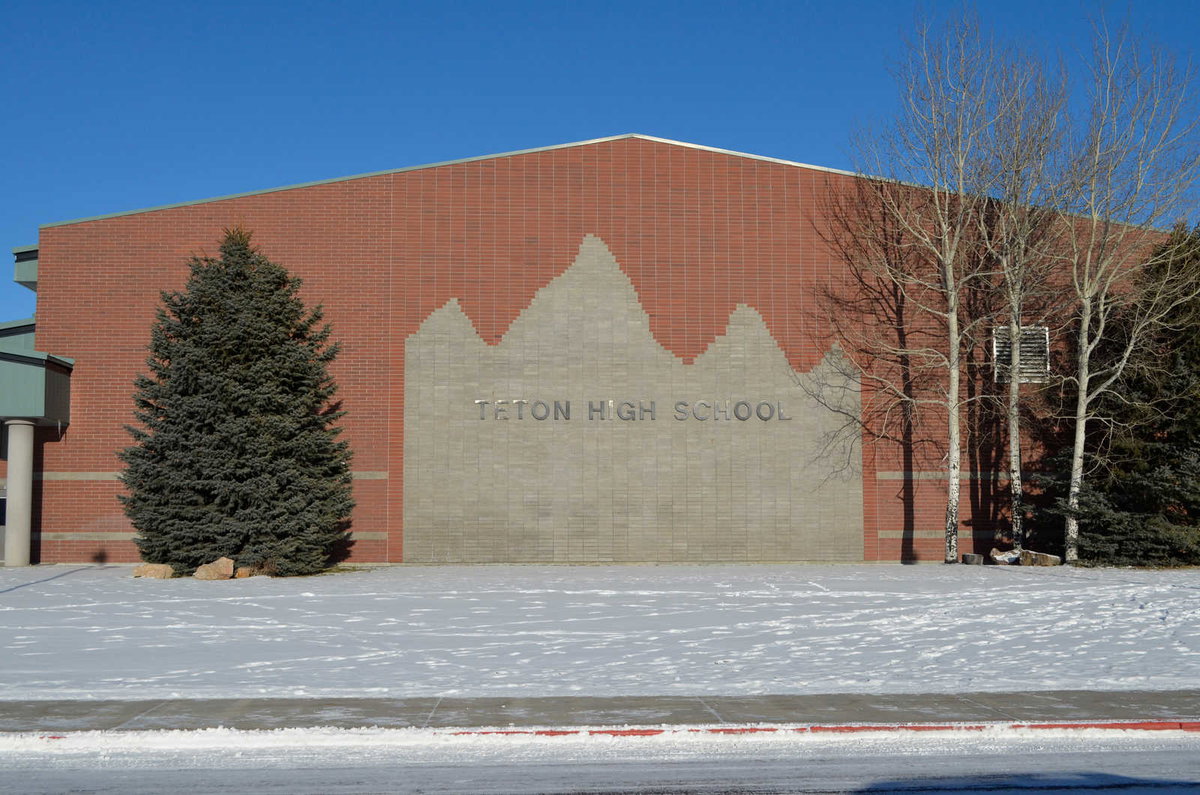
RIGBY, Idaho (KIFI) — Following a massive multi-agency response to the Snake Fire on Thursday night, the Central Fire District in Jefferson County has issued an immediate burn ban for the surrounding area.

The fire consumed an estimated 30 acres along the border of Jefferson and Madison counties, prompting fire managers to issue the ban to prevent further incidents and protect fire personnel.

RELATED: Snake Fire: Madison Sheriff lifts evacuation order as fire is contained

Wildland fire crews returned to the scene Friday morning to patrol the perimeter, manage hotspots, and secure the area.

“We appreciate your cooperation and support as we work to fully contain this incident,” stated the Central Fire District.

Click here to follow the original article.
ISP investigates I-84 hit-and-run involving school bus

Seth Ratliff

HEYBURN, Idaho — Idaho State Police is investigating a hit-and-run crash that left a school bus crippled and several students stranded on Interstate 84 Thursday evening.

The crash took place around 8:23 p.m. on April 9, 2026, near milepost 208 on eastbound I-84. According to ISP, the bus struck a series of concrete “jersey” barriers, causing significant damage to the front and undercarriage and leaving it stranded, blocking the left lane.

Fortunately, police say no passengers were seriously injured, and all students were taken by ground ambulance to reunite with school officials and their parents. The driver of the bus suffered minor injuries and had to be taken to a local hospital for further evaluation.

While the bus was the only vehicle on the scene when police arrived, troopers quickly determined that another vehicle was involved. After further investigation, a second driver was identified and cited in connection with the hit-and-run.

“ISP reminds all drivers to remain at the scene of a crash and report the incident as required by law,” stated the agency in a news release. “Leaving the scene increases risk to others and may result in criminal charges.”

The crash remains under investigation.

Click here to follow the original article.

Need help filing your taxes? Award-winning financial coach Kim Scouller shares encouragement with the community

Danielle Mullenix

Idaho Falls, ID (KIFI) – With the IRS tax deadline just around the corner, excitement filled the air as author and financial coach Kim Scouller made a special stop in Idaho Falls during her book tour. Yesterday, she engaged and inspired the audience at the “How Money Works for Women” Luncheon, held at the Residence Inn and hosted by WealthWave, to empower local women through financial literacy. Local News 8 caught up with Scouller, who shared valuable insights on the best strategies for filing taxes and highlighted essential resources to enhance financial knowledge.

Kim Scouller, Author of “How Money Works for Women” and award-winning financial coach

“Taxes are at the top of everyone’s mind,” Scouller said. “They create a time when you’re kind of taking an inventory of your income. What I would encourage everyone to do is not to stop at your income. Let’s take an inventory of your entire financial picture. What’s coming in, what’s going out, and what you’re growing…Do your research or work with a financial professional to figure out what the tax consequences are for you and growing wealth.”

The luncheon, featuring a presentation by Scouller on the current state of female financial literacy, was an inspiring event aimed at helping women take control of their financial futures. Scouller also shared valuable insights on the best strategies for filing taxes and highlighted essential resources to enhance financial knowledge.

“There are a lot of great resources online,” said Scouller. “Investopedia has some great articles in there. I would also say AARP is another really good resource for people in retirement. Another surprising resource is the IRS: you could do a whole lot of research on its website to better understand your situation.”

Scouller also took time to share more about her publication “How Money Works for Women”, a collaboration with coauthor Sharon Lechter to help women in all demographics better understand their sources of income and how to utilize them toward successful avenues.

“Money doesn’t care whether you’re a man or a woman, but the way women approach money, and the situations that women find themselves in, are so much different, especially because for most women, we are the caregivers of our family, and that can hurt us financially,” said Scouller. “This book is a real-life resource for women to use to celebrate that we are the caregivers and the educators, and to help women understand how they can improve their financial situation and take care of their family at the same time.”

Heather Goodworth, a financial educator with Wealthwave and organizer of the Idaho Falls luncheon, says this event with Kim Scouller marks the beginning of a long-term financial literacy campaign that will launch across Idaho and Utah.

“We started with women because really, we are so influential in what happens in our homes and what happens in our communities,” said Goodworth. “And, where Kim is such an advocate for women in finance, it just made sense to begin there and then branch out.”

When asked for parting advice on tax filing and increasing savings, Scouller shared this wisdom for anyone looking to better understand their finances.

“There are things that are taxed at the beginning, and there are things that are taxed at the end, and there are things that are taxed all along the way. Do your research or work with a financial professional to figure out what the tax consequences are for you and your growing wealth,” said Scouller.

“For people who are just starting out or starting over, or maybe you haven’t started yet because you think it’s overwhelming and you’re never going to achieve success: just start,” said Scouller. “Whatever it is, a little bit out of time, whether that little bit is what you’re saving for the future or that little bit is what you’re using to pay off that.”

The IRS tax deadline is on Wednesday, April 15th, which is also known as the 15th day of the fourth month following the fiscal year. For those who still need more time, you can fill out an extension by visiting the IRS website here.

For those interested in learning more about Kim Scouller’s financial literacy courses, book, and involvement with Wealthwave, click here.

“How Money Works for Women” is available for preorder at a bookstore near you.

Click here to follow the original article.

100-year-old woman receives high school diploma

David Pace

IDAHO FALLS, Idaho (KIFI) – 100-year-old Norma Morton Parker received her high school diploma on Thursday, proving it’s never too late to finish your education.

“I was ready to graduate, but my husband was going into the army, so we got married,” said Parker, the honorary South Fremont High School graduate.

Parker was scheduled to graduate from St. Anthony High School in 1943, but World War II threw her plans in turmoil.

In 1942, she married her husband Ray Parker before he was deployed as a tank destroyer to the European Theater, serving in Italy, France, Austria, Belgium and Germany.

“After he’d gone [to war] and my class graduated, I was pregnant with my first son, and so it took me this long to get it [the diploma].”

Norma Parker in the 1940s.

Parker has two sons and a daughter who passed away three years ago of cancer.

Today, the family has expanded to 90 members, with twin great-grandchildren on the way. A large gathering of them reunited to honor her Thursday.

“You made the selfless decision to leave school early,” said granddaughter Karen Ramsay. “Not because you didn’t value education, but because you value family, sacrifice and doing what was needed in a moment that mattered. You stepped into responsibility, strength, and into a life that would go on to bless all of us.”

While her husband was in the war, she worked in a dried peas factory in St. Anthony.

“Usually, I would say something at a graduation like, ‘Now with this diploma, we’re going to need to go out and make something of ourselves in the real world,’ right?” said Fremont County Joint School District #215 Superintendent Brandon Farris. “But you’ve been out in the real world already for many, many years.”

Farris and School District #251 Trustee Julieann Hill presented Parker with the diploma.

“It makes me pretty proud and happy,” Parker said. “I didn’t ever feel bad because I got married and didn’t get my diploma, but there was times I wished I had it. So this day means a lot to me.”

She has a word of advice for those following in her footsteps.

“Do the right thing and smile,” Parker said. “They are always telling me to smile, you know? That must be important.”

The Parker family rallies around their exceptional mother, grandma and great-grandma.

Click here to follow the original article.

Dry Winter, Thirsty Spring: When should you start watering your lawn?

Kaelyn Blessinger

IDAHO FALLS, Idaho (KIFI) — The weather has been unseasonably warm and dry this year. With the lack of snowpack and many plants starting to come out of hibernation, it might be time to start watering your lawn.

“So usually we get that snow, and then it melts, and it saturates the soil with water. We didn’t have that option this year. So a lot of plants are starting to require moisture,” said James Flemming, supervisor of Town & Country Gardens.

When it comes to actually watering your plants, here are some tips from Flemming: “Lawns, you’re looking at watering maybe once or twice a week. With trees, I would, especially with the evergreens, I would give them a deep soak at least once a week.”

However, this comes with some precautions. Due to the lack of snowpack, we will be experiencing a drought, so being conservative with our water is very important.

From a statement from Falls Water Co. “It is necessary to implement a restriction for outside watering of lawns and landscaping. Starting April 15th through October 15th each year, outside water use will be limited to every other day”

This schedule will be based on the last number of your home address. The watering schedule will look like this:

Even numbered homes (0, 2, 4, 6, & 8)

Water lawns on Monday, Wednesday, and Friday

Odd-numbered homes (1, 3, 5, 7, & 9)

Water lawns Tuesday, Thursday, and Saturday

Anyone may water on Sunday

“As we increase our daytime temperatures and we get more and more into the season, they just need to increase the watering,” Flemming said.

Just be mindful of how much water you use, as we are in a drought. Follow your region’s water regulations to ensure we have enough water to last the season.

Click here to follow the original article.