Three Colorado River states must take big water cuts as biggest US reservoirs plunge to record lows

CNN Newsource

By Laura Paddison, CNN

(CNN) — Arizona, California and Nevada will be forced to make deep cuts to the water they draw from the imperiled Colorado River under a new two-year operating plan published Friday, intended to help stave off an escalating crisis in the beleaguered waterway.

The long-awaited plan from the Department of the Interior comes after years of fraught negotiations between the seven states that rely on Colorado River water failed to produce a deal. And it arrives at a time when the river’s two key reservoirs, Lake Mead and Lake Powell, have both fallen to record lows — threatening water and power supplies for tens of millions of people.

🌧️ Get your local forecast with the CNN Weather app

In July, the US Bureau of Reclamation published an operating framework for the waterway which set out the broad parameters of water sharing over the next 10 years, including a provision that cuts be set out every two years.

The new plan covers the first of these two-year periods, stipulating cuts for the three lower basin states through 2028. California will have the smallest at 440,000 acre-feet; Nevada will take 50,000 acre-feet less water; and Arizona will endure the steepest cuts at 760,000 acre-feet. It sets out no mandatory cuts for the upper basin states of Utah, Colorado, Wyoming and New Mexico.

These cuts translate into about a 27% cut to Arizona, 10% cut to California and 16% reduction in water flowing to to Nevada, according to Sarah Porter, director of the Kyl Center for Water Policy at Arizona State University.

Arizona authorities have responded positively. Tom Buschatzke, director of the Arizona Department of Water Resources, told CNN the water cuts to his state take into account previous discussions and recommendations between the three downstream states. “It could have been draconian,” he said. “I would like the reductions for Arizona to be zero but that’s not the reality we’re facing,” he said. “It’s a pretty good outcome.”

Arizona’s Democratic Senators Ruben Gallego and Mark Kelly issued a joint statement also expressing support of the new operating guidelines. But Nevada and California have expressed disappointment, and even dissent.

The plan is the latest stage in the quest to divvy up the shrinking water of the Colorado River. Some experts expressed relief that something is finally in place, even if it only covers a short period, but others say it is far from enough as water levels reach record lows with little chance of relief anytime soon. There are also fears the plan may spark a lawsuit as tensions between the states over who shoulders the cuts bubble over.

“We are at a time of tremendous change in how we are managing water in this system and what that means for both communities and the river itself,” said Celene Hawkins, director of the Colorado River Program at the Nature Conservancy.

The Colorado River is a lifeline for the Southwest, providing water to around 40 million people and irrigating more than 5 million acres of farmland. For more than two decades, it has shrunk dramatically due to a climate change-fueled megadrought, high temperatures and years of heavy demand.

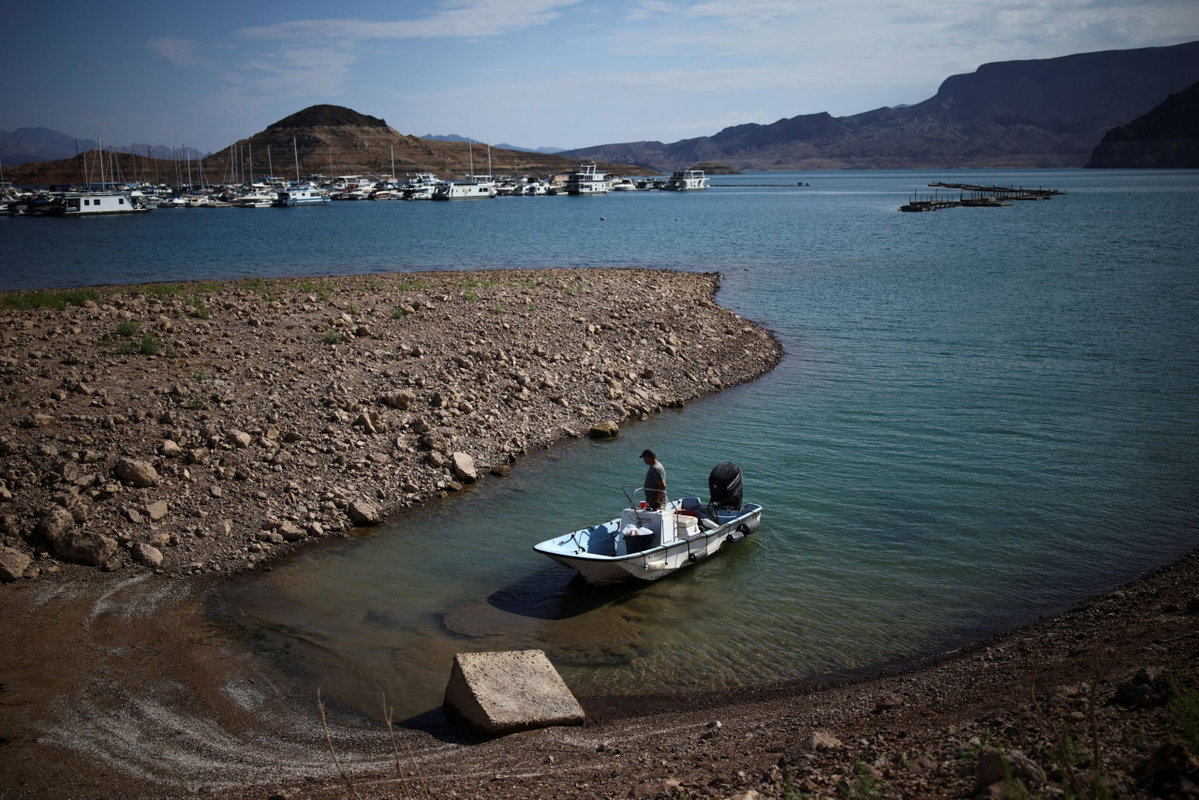
Water levels in its two key reservoirs plummeted to a combined record low last month. Lake Mead, the country’s largest reservoir, is now lower than it’s ever been since it was created nine decades ago, and Lake Powell reached a record low on August 15.

It’s “a dramatic signal that the system is at risk of crashing, meaning reservoir levels so low that water cannot be delivered from them,” Porter told CNN previously.

Colorado River water is divided between states under the 1922 Colorado River compact, which allots 7.5 million acre-feet of water yearly to the upper basin and another 7.5 million to the lower basin. The agreement was made at a time when the region had a smaller population and benefited from wetter years, with much more snow to feed the river’s headwaters in the Rocky Mountains. As water levels dwindle, it is no longer workable.

So, states have been locked in negotiations over how to share what remains. The lower basin states, which have historically used the most water to support vast farms and booming cities, have proposed cuts in their water use over the past few years but want the upper basin states to share in the pain.

California’s agriculture and urban water users will negotiate a plan to make the required cuts, Metropolitan Water District of Southern California General Manager Shivaji Deshmukh said in a statement. But, he added, “water users across the Basin must make a renewed effort to forge a longer-term agreement that produces additional reductions, including through participation of all seven Basin states.”

Nevada authorities echoed California. “… the federal government has produced a plan that provides little certainty for Nevada and other Lower Basin users,” said Nevada Governor Joe Lombardo in a statement. Over the long term, he said, this plan is “sacrificing the health and safety of Nevadans before requiring equal water responsibility for our shared water resources from the Upper Basin.”

The upper basin states — which, unlike the lower basin, cannot be compelled by federal authorities to reduce water use — have resisted cuts, arguing drought has already reduced the water available to them and that the lower basin uses far more water and should shoulder the cuts.

The new two-year guidelines provide an interim plan up to 2028 in the absence of a state-led agreement. Cuts will then be reassessed every two years.

In the meantime, the seven states can keep negotiating between themselves for a deal that would supersede the federal plan. “It’s very clear that a consensus is needed for us to manage the basin through what will likely be a permanently hotter and drier future,” TNC’s Hawkins said. But experts aren’t confident an agreement will be forged anytime soon.

A big fear is that the issue will wind up in court; states could sue each other or the federal government. “We definitely have seen some indications that some of the basin states are preparing for litigation,” TNC’s Hawkins said.

Nevada authorities have hinted as much in the wake of the announcement. “… in the absence of science-based operating regimes that demand reasonable water use reductions by all seven states, Nevada will fight to protect our community’s water supply,” said Southern Nevada Water Authority General Manager John Entsminger in a statement.

Arizona, which will experience the biggest cuts, has previously made noises about opting for a legal route and authorities there have previously criticized federal plans for the river. Last month the Arizona Department of Water Resources said the cuts proposed in the 10-year framework were “unacceptable” and “would devastate Arizona’s water users and its economy.”

Any lawsuit would likely rumble on for many years, during which the Colorado River looks set to continue its downward trajectory. “Renegotiating these issues every year means we could be one dry year away from crisis and one legal battle away from system failure,” California’s Deshmukh said.

Correction: A previous version of this story misstated statistics about who would be affected by water-use reductions in Arizona.

Additional reporting by Andrew Freedman

The-CNN-Wire™ & © 2026 Cable News Network, Inc., a Warner Bros. Discovery Company. All rights reserved.

Click here to follow the original article.
Sheriff’s ask for publics help finding missing man

Tommy Gallegos

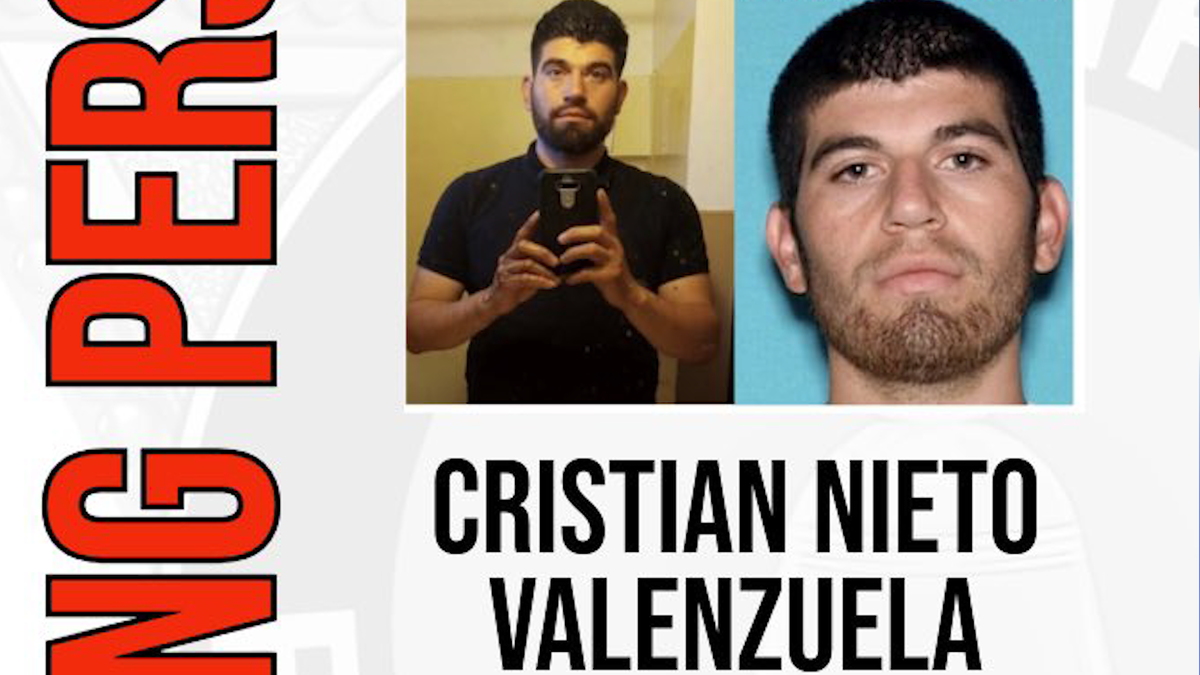
Cabazon, CA (KESQ) — The Riverside County Sheriff’s Department is asking for the publics help to locate a missing 33 year old man.

Sheriff’s say Cristian Nieto Valenzuela, 33, was last seen on Tuesday, August 11th, in the Cabazon Area.

Valenzuela is listed at 6 foot tall, around 190 pounds and has black hair and green eyes.

If you have any information, Riverside County Sheriff’s ask you call their dispatch at 800-950-2444.

Click here to follow the original article.

Riverside County deputies investigate hit-and-run near John Glenn Middle School

Tommy Gallegos

INDIO & LA QUINTA, CA (KESQ) — Emergency crews responded Friday morning to a reported vehicle-versus-bicycle collision near John Glenn Middle School in Indio, where several juveniles were struck by a vehicle.

Cal Fire says firefighters were dispatched at approximately 8 a.m. following reports of the collision. CAL FIRE later said its resources were canceled at the scene.

The school notified families that three students were involved in the incident and that all were okay. No injuries were reported.

According to the Riverside County Sheriff’s Office, deputies were dispatched at 9:17 a.m. to the 43000 block of Galaxy Drive regarding a reported hit-and-run collision.

When deputies arrived, they learned that four juveniles, including one who was riding a bicycle, had been struck by a vehicle. Authorities said no injuries were reported.

The driver involved in the collision was not immediately located, and no suspects are currently in custody, according to the Sheriff’s Office.

The Riverside County Sheriff’s Office is continuing to investigate the incident. Authorities said no additional details are available at this time.

The incident remains under investigation.

Click here to follow the original article.

Riverside County’s jobless rate rises in July

Tommy Gallegos

RIVERSIDE (CNS) – Payroll losses in multiple sectors of the regional economy pushed Riverside County’s unemployment rate up to nearly 6% in July, according to figures released today by the California Employment Development Department.

The countywide jobless rate last month, based on preliminary EDD estimates, was 5.9%, compared to 5.4% in June.

According to figures, the July rate was three-tenths of a percentage point lower than the year-ago level, when countywide unemployment stood at 6.2%.

The latest EDD estimates indicated Cherry Valley and Coachella were tied for the highest unemployment rate within the county in July at 10.8%, followed by Blythe at 10.6%, March Air Reserve Base and Rancho Mirage, both at 8.5%, Cabazon at 8%, and Palm Desert at 7.6%.

The combined unemployment rate for Riverside and San Bernardino counties — the Inland Empire — was 5.7%, up from 5.3% in June, the EDD said.

Bi-county data indicated payrolls shrank by the widest margin in the public sector, where about 15,400 positions were recorded as lost, mainly in education, reflecting summer inactivity on campuses.

Additional losses posted last month in the agricultural, construction, hospitality and professional business services sectors, which altogether shed 4,600 jobs, according to the EDD.

Payrolls expanded in the financial services, health services, information technology, manufacturing, and warehousing sectors, along with miscellaneous unclassified industries, which altogether added 4,100 positions, figures showed.

The mining sector was unchanged.

The statewide non-seasonally adjusted unemployment rate in July was 5.3%.

Click here to follow the original article.
Cabazon man seen repeatedly hitting dog in viral video arrested on suspicion of animal cruelty

Garrett Hottle

RIVERSIDE, Calif. (KESQ) The man seen punching and throwing his dog in a viral video out of Cabazon is now under arrest.

The Riverside County Department of Animal Services arrested Craig Vincent Dallesandro on Aug. 13 with help from the Riverside County Sheriff’s Office, the department announced in a statement to News Channel 3.

He was booked into the Larry D. Smith Correctional Facility in Banning on suspicion of violating Penal Code 597(a), the state’s animal cruelty law.

The department released the following statement to News Channel 3:

“Following the removal of two dogs from a property in Cabazon on July 9th, the Riverside County Department of Animal Services arrested Craig Vincent Dallesandro on Thursday, August 13th, with assistance from the Riverside County Sherriff’s Office. Dallessandro was taken into custody without incident and booked into the Larry D. Smith Correctional Facility in Banning on Penal Code 597 (a) crimes against animals.

“This arrest is related to a social media video where one of the dogs was seen being repeatedly hit and thrown by the suspect. The two dogs remain on a confiscate hold and are currently not available for placement. This is an open investigation.”

The arrest comes more than a month after the video spread across social media in early July, showing a man repeatedly striking a dog and throwing it to the ground at a Cabazon property.

Animal Services officers, assisted by sheriff’s deputies, removed two dogs from the property on July 9. Both dogs remain on a confiscate hold and are not available for placement, according to the department.

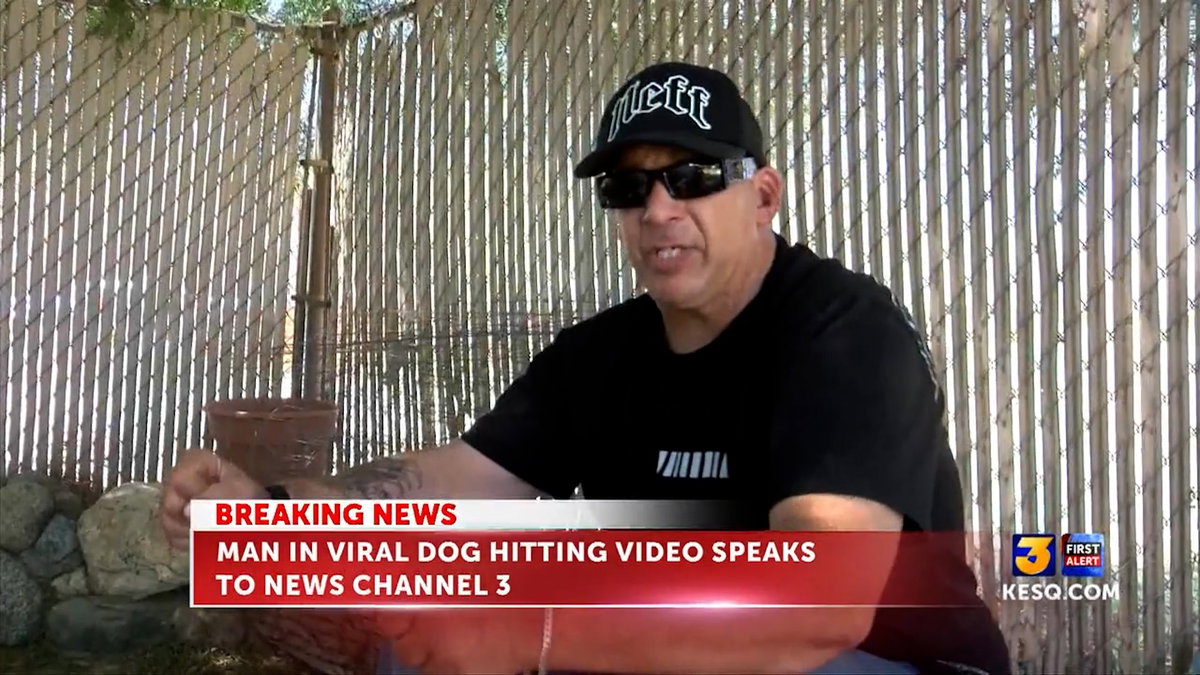
Hours before the dogs were taken, Dallesandro spoke exclusively with News Channel 3. He confirmed he is the man in the video and admitted to hitting the dog, named Brody, and throwing him calling it the first and only time he had ever put his hands on one of his animals.

“That dog wasn’t hurt physically, but that dog’s pride was hurt,” he said at the time.

He refused to apologize and said he would never contact the county about the incident.

Animal Services calls this an open investigation.

It is unclear whether the Riverside County District Attorney’s Office has filed formal charges. News Channel 3 has reached out for Dallesandro’s custody status and any upcoming court date.

This is a developing story. Stay with News Channel 3 for updates.

Click here to follow the original article.

PSUSD launches new attendance texting system to better support families

Raymond Kalra

PALM SPRINGS, Calif. (KESQ) — Palm Springs Unified School District is preparing to launch a new attendance communication system next week that officials say could make reporting an absence easier for parents while also helping schools identify when a family may need additional support.

Under the new system, parents and guardians will receive a text message when their student is marked absent. Instead of having to call the school or download a separate app, families can respond directly to the message and explain the absence in their own words.

For parents like Marisol Guerrero, the change could make a difference during mornings when caring for a sick child takes priority over everything else.

“I’m thinking more about, like, ‘Oh, how is my child doing? Is their fever going down? I need to get the medication,’” Guerrero said. “Being able to just answer to this text message, I think is going to make it a lot easier.”

District leaders say that convenience is one of the main reasons for the change. Garrett Schaperjahn, coordinator of student services for PSUSD, said the district is trying to communicate with families in the way many already communicate throughout their day.

“We all text, and you don’t have to download an app. You don’t have to do anything like that,” Schaperjahn said. “You’re just going to get a text message that says, ‘We noticed your kid’s out today. Do you mind telling us why?’”

Parent Sal Cavazos said being able to respond immediately could keep attendance reporting from getting lost in a busy schedule.

“If I see that text message come through, I can respond to it right away with a simple word,” Cavazos said. “It’s so helpful to be able to respond in that moment.”

But district officials say the system is intended to go beyond documenting whether a student is sick or has a doctor’s appointment.

If a response points to a larger issue — such as transportation problems, a family crisis or a mental health concern — community liaisons can follow up with the family and determine what additional help may be available.

Leslie Coronado, a district community liaison with the Student Services Department, said that could include connecting families with transportation assistance, counselors, school administrators or other district resources.

“We provide services. We connect families with resources,” Coronado said. “When it comes to transportation, we’re able to connect families with transportation as well depending on their needs.”

Coronado said having that information earlier gives staff a better opportunity to understand what may be keeping a student out of class and respond before the problem grows.

“It gives us a heads up on what the family is going through,” Coronado said. “And so we’re able to work with the school and just connect them, whether it’s with the school site counselor, or it could be with administrators.”

The district says the level of support will depend on each family’s individual circumstances. In some cases, the response may simply explain a one-day absence. In others, it could begin a larger conversation about barriers that are making it difficult for a student to regularly attend school.

PSUSD also told News Channel 3 that responses sent through the attendance texts will go directly to staff handling the communication at the student’s school and will not be shared outside of those community liaisons.

The new system will launch district-wide for parents and guardians next week.

Click here to follow the original article.
Big rig driver killed in crash on I-10 near Chiriaco Summit

City News Service

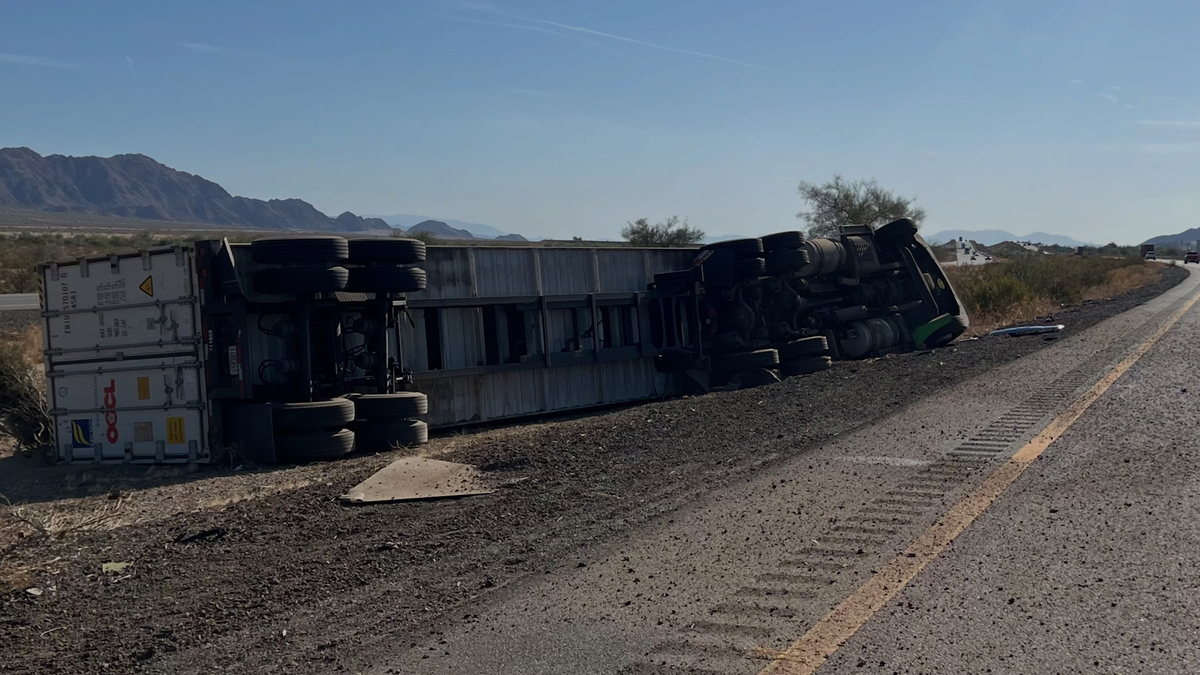
HAYFIELD (CNS) – The driver of a semi truck was killed after the vehicle overturned on its side today on eastbound Interstate 10 in the community of Hayfield near Chiriaco Summit, prompting a Sig Alert for several hours.

The crash was reported shortly before 7:30 a.m. Friday west of Red Cloud Mine Road, according to the California Highway Patrol.

A green Freightliner tractor hauling a trailer drove into the median, causing the big rig to overturn and land on its left side, the agency stated. It was unclear how fast the vehicle was going.

The driver was pronounced dead at the scene. He was identified as Marco Rodriguez-Lopez, 41, of Los Angeles.

A Sig Alert was issued shortly after 8:40 a.m., but all lanes were back open by 4 p.m.

The cause of the crash was under investigation.

Click here to follow the original article.

Why routine eye exams matter

Dakota Makinen

COACHELLA VALLEY, Calif. (KESQ) – August is National Eye Exam Month, a reminder that routine eye exams are about more than checking whether you need glasses or contacts.

Optometrists can identify vision problems and detect certain eye conditions that may not cause noticeable symptoms at first.

Eye exams are also especially important for children heading back to school. Undiagnosed vision problems can make it harder for students to read, focus and keep up in the classroom.

Doctors recommend routine eye exams even for people who feel like they see well, with how often you need one depending on your age, health and individual risk factors.

For anyone who hasn’t had an eye exam recently, National Eye Exam Month is a good reminder to schedule a checkup.

Stay with KESQ for the latest updates.

Click here to follow the original article.
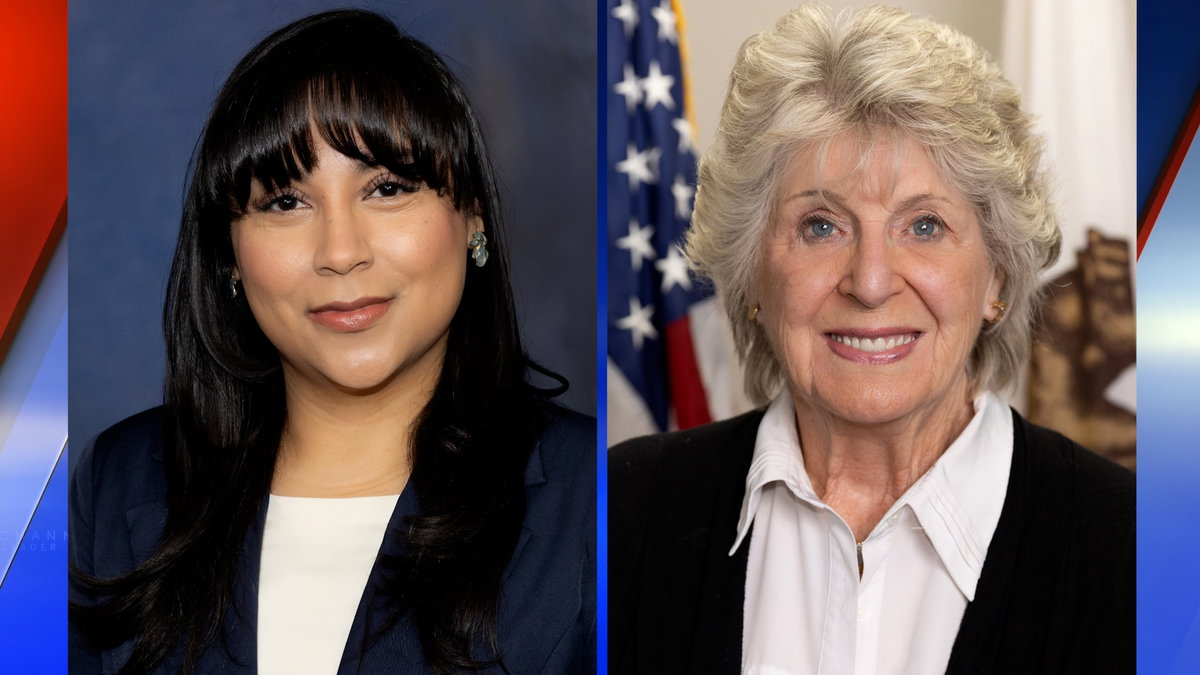
Two incumbents will not seek re-election to the Desert Healthcare District board

Jesus Reyes

PALM SPRINGS, Calif. (KESQ) – Two more incumbents will not be seeking re-election to their positions on the Desert Healthcare District & Foundation board in the upcoming election.

Carole Rogers, the longest-serving member of the current Board, and Kimberly Barraza, who serves as board president, will not be on the November ballot.

‘It has been a tremendous honor to serve my community on the Desert Healthcare District & Foundation Board and to help advance its mission across the entire Coachella Valley,” Board President Kimberly Barraza said about her decision. “I am incredibly proud of what we have accomplished over the past four years and grateful to have played a role in strengthening the District and positioning it for a strong future.

“While I have decided not to seek another term, my work is not finished, and I look forward to continuing to serve as Board president through December,” Barraza added. “I have great confidence in the District’s future and its ability to bring our communities and partners together, expand access to care, and ensure our resources have the greatest impact where the need is highest.”

“My service on the Desert Healthcare District & Foundation Board has been an absolute honor,” Director Carole Rogers said. “It’s allowed me to share the knowledge and experience I’ve gained during more than 50 years as a registered nurse, healthcare executive, patient advocate, and as a resident of Desert Hot Springs, a community I love. However, after 12 years on the Board and 20 years total in public service, I’ve decided to not seek re-election.

“It’s time to bring new ideas and energy to the future of our Healthcare District and its important role in our community’s well-being,” Rogers said. “I will continue to support our nonprofit friends in their mission and plan to volunteer for District & Foundation programs in the future.”

Earlier this year, Greg Rodriguez resigned from the board as he seeks to apply for the vacant CEO position.

The remaining incumbents whose terms are ending — Evett PerezGil and Anyse Smith — have filed to run again. The other two seats of the seven-member Board — occupied by Dr. Daniel Logsdon and Leticia De Lara — are not up for election this year.

Each Board Director is a citizen of one of the District & Foundation’s seven geographical areas or zones, each of which consists of about 60,000 residents. Please see the zone descriptions to help determine which zone you live in:

Zone 1 (now vacant) encompasses the communities of Palm Springs, parts of Cathedral City and Rancho Mirage

Zone 2 (Carole Rogers, RN) includes the communities of Desert Hot Springs, Garnet, Desert Edge and Sky Valley

Zone 3 (Dr. Daniel Logsdon) encompasses La Quinta, Indian Wells and parts of Indio south of Highway 111

Zone 4 (Evett PerezGil) primarily encompasses Cathedral City

Zone 5 (Anyse Smith, esquire) covers parts of Palm Desert, Bermuda Dunes and Indio

Zone 6 (Kimberly Barraza) encompasses the communities of Coachella and Indio

Zone 7 (Leticia De Lara, MPA) includes parts of Coachella as well as Thermal, Mecca and other unincorporated communities in eastern Coachella Valley

Still uncertain? Find your zone on our interactive District map (Please select the “Hummingbird Plan.”).

To see all the candidates who have filed in the Desert Healthcare District & Foundation races and other Riverside County elections, visit the county registrar’s website.

Click here to follow the original article.

Hanson House gala to recognize nonprofit supporters from Coachella Valley

City News Service

PALM SPRINGS, Calif. (KESQ) – Five Coachella Valley residents who have made charitable contributions benefiting people whose loved ones were hospitalized or in need of other assistance will be recognized during a fall gala.

The Hanson House Foundation will present its 23rd annual gala on Oct. 24 at the Palm Springs Air Museum, honoring community leaders while raising money for families in crisis.

“We are honored to recognize individuals who demonstrate what it means to lead with generosity and purpose,” Hanson House Foundation Executive Director Ivonne Moreno said. “Their impact reaches far beyond Hanson House and reflects the incredible spirit of service throughout our community.”

Dick Shalhoub, Gerald Keller, Linda Evans and Oliver Jack will receive special recognition for their efforts in the last year, while Sherman Tam will receive the “Dr. Ercoli Impact Award” for his volunteer services and dedication to Hanson House work.

“The Hanson House’s mission is to provide a `home away from home’ for families in their time of need,” La Quinta Mayor Linda Evans said. “The staff and volunteers are compassionate and caring people, who positively impact those who stay at the Hanson House.”

The organization has, for more than two decades, sought to furnish assistance to Coachella Valley residents through affordable lodging, family-centered support, resource navigation and community partnerships, according to the organization.

The gala is being sponsored by Desert Care Network and will feature dinner, entertainment, silent auctions and stories from those who have received assistance from the nonprofit. The evening’s goal will be to raise $200,000 to provide care and safe spaces for recipients in need.

In 2025, Hanson House provided more than 4,400 room nights to over 1,100 individuals and helped families with loved ones requiring medical procedures save an estimated $633,600 in lodging costs, according to the organization.

Tickets for admission to the event run $225 per person. Additional information is available at https://www.hansonhouse.org/2026gala.

Click here to follow the original article.