Driver arrested after hit-and-run crash on I-10 near Date Palm Drive

Jesus Reyes

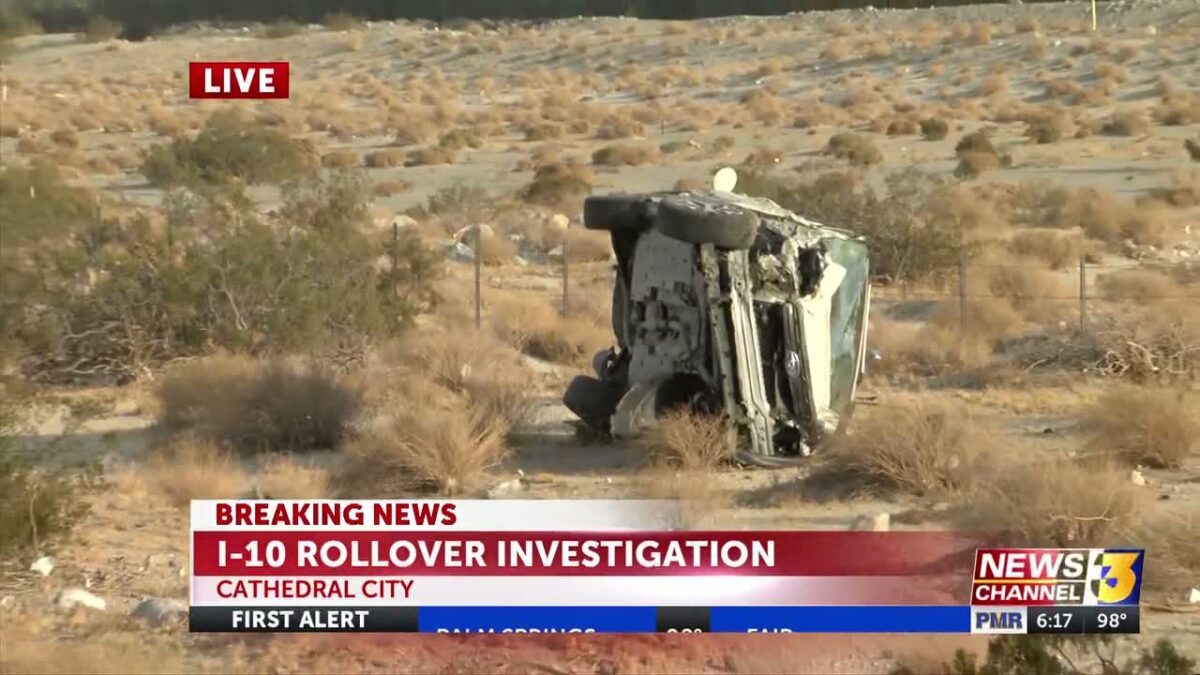
CATHEDRAL CITY, Calif. (KESQ) -A driver was arrested after a two-vehicle crash on Interstate 10 near Date Palm Drive that left another driver injured, according to the California Highway Patrol.

CHP said officers responded at about 5:44 p.m. Tuesday to a crash on eastbound I-10, west of Date Palm Drive.

When officers arrived, they determined one of the vehicles involved had left the scene. The driver who remained at the crash site was taken to Desert Regional Medical Center with cuts and scrapes.

Investigators identified the vehicle that left the scene as a 2025 Land Rover.

CHP said officers later located the Land Rover and its driver at a residence in La Quinta. The driver was taken into custody on suspicion of hit-and-run causing injury.

The Land Rover driver was not injured in the crash.

Stay with News Channel 3 for any additional updates.

Click here to follow the original article.

Local community reacts to deadly earthquake in Colombia

Luis Avila

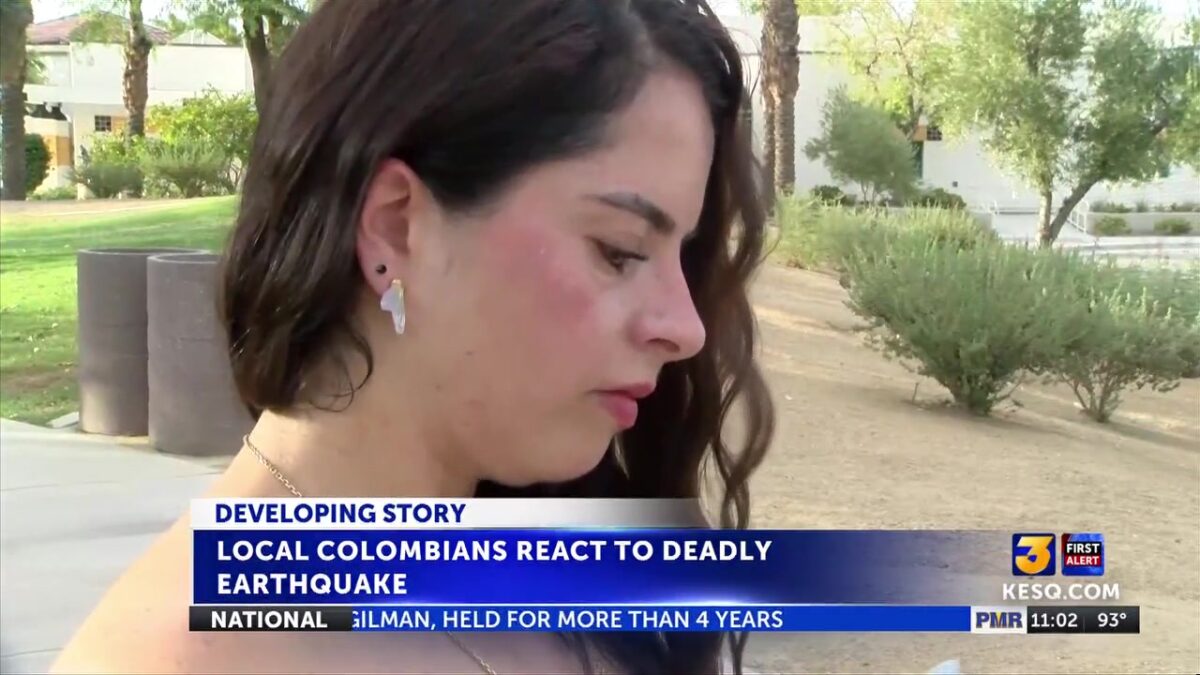
COACHELLA VALLEY, Calif. (KESQ) – The shockwaves from a powerful earthquake in Colombia are being felt here in the Coachella Valley — where local residents with family and friends back home are watching the destruction unfold.

A 7.4-magnitude earthquake struck Colombia Monday, damaging buildings, tearing apart roads and leaving communities facing a long recovery.

For Vanessa Vasco, the disaster is personal.

Vasco is from Manizales, Colombia, one of the areas most affected by the earthquake. She recently returned to the Coachella Valley after visiting her hometown and says it has been painful to watch the destruction from afar.

“I was in Colombia like two weeks ago and my city so beautiful, I left everything okay, and now my city is destroyed, all the people in pain, it’s very painful for me,” Vasco said.

Her family is safe, but she says one of her friends lost her home after the earthquake struck.

“My friend she just run away to save her life and her home collapsed and lost everything,” Vasco said.

Vasco says people in Colombia remain worried another earthquake could happen, but she is also seeing people come together to help those affected.

“All the people are very concerned because they are afraid it will happen again, but all the people are helping,” she said.

She says the road to recovery will be long, with many buildings damaged and families left trying to rebuild their lives.

For information on how you can help people affected by the earthquake, click here.

Stay with News Channel 3 for more.

Click here to follow the original article.

Jackie, Big Bear’s famous bald eagle, died after a blood clot and failing blood values, state wildlife officials say

KESQ News Team

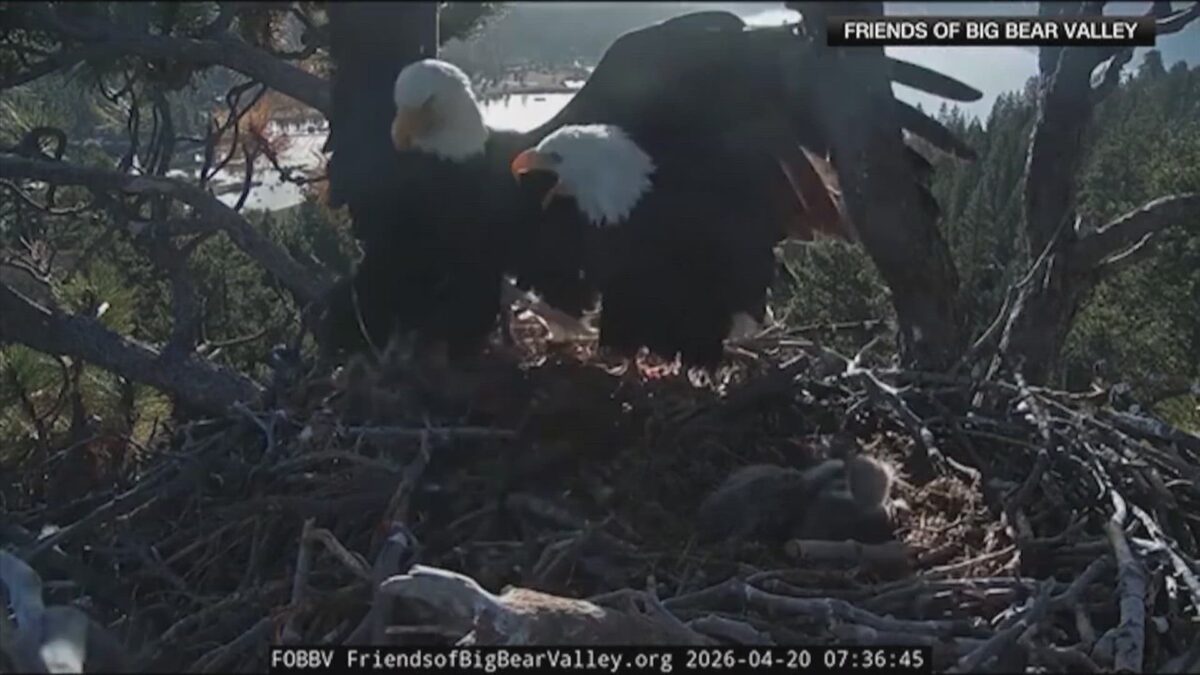
BIG BEAR, Calif. (KESQ) Jackie, the Big Bear Valley bald eagle watched by millions on a live nest camera, died in the overnight hours of Aug. 9 while receiving intensive medical care at the Ojai Raptor Center, the California Department of Fish and Wildlife announced.

Her condition continued to deteriorate after more than three weeks of intensive care, despite periods of temporary improvement, according to CDFW. In her final days, Jackie developed a large blood clot in her wing and kidney, along with another decline in her blood values.

Following a necropsy performed by veterinary pathologists at the San Diego Zoo Wildlife Alliance, Jackie’s remains will be transported to the National Eagle Repository, a facility operated by the U.S. Fish and Wildlife Service’s Office of Law Enforcement. The repository receives, evaluates, stores and distributes eagle remains, parts and feathers to enrolled members of federally recognized tribes throughout the United States for religious, cultural and ceremonial purposes.

“California mourns Jackie, the Big Bear bald eagle who reminded us of the beauty and wonder of California’s wildlife, and our shared responsibility to protect the habitats that sustain it,” Gov. Gavin Newsom said in a statement.

Jackie, identified by CDFW as Patient 26-519, was admitted to the Ojai Raptor Center on July 18 after being found grounded. An initial examination found her thin and dehydrated, suffering from severe anemia, low blood protein, and kidney and lung abnormalities. Treatment included fluids, oxygen therapy, nutritional support and round-the-clock monitoring.

According to CDFW, Jackie received a blood transfusion July 22 using donor blood from Spirit, an ambassador bald eagle at the California Living Museum Zoo in Bakersfield. She initially showed temporary improvement, but her packed cell volume declined again by Aug. 3. Advanced diagnostic testing showed thrombosis in her wing and near one kidney.

Veterinarians also performed a contrast CT scan, a bone marrow biopsy and specialized testing for heavy metals, working with specialists across the country. Some test results remained pending, and her prognosis grew increasingly poor.

“Throughout Jackie’s time at Ojai Raptor Center, every decision was guided by the available medical evidence, her welfare, and our responsibility to do what was in her best interest,” said Chris Eksteen, the center’s executive director. “Though our team is heartbroken, it has been an extraordinary privilege to care for her.”

Jackie became the first documented bald eagle chick hatched in Big Bear Valley in summer 2012, according to CDFW. In October 2015, the Friends of Big Bear Valley installed a livestream nest camera offering an intimate view of wild eagles. CDFW said people around the world watched as Jackie and her mate, Shadow, hatched and raised eaglets beginning in 2018. For several years, Jackie and Shadow were the only year-round bald eagle residents at Big Bear Lake.

“Millions of people who will never set foot near Big Bear have watched, for years, as this eagle and her mate raised eaglets, lost eggs, survived extreme weather, fought for their nest — and, most recently, as the eagle fought for her own life,” CDFW Director Meghan Hertel said. “While this eagle’s story has ended, the inspiration and the lessons she gave so many people won’t be forgotten.”

Paul Souza, regional director of the U.S. Fish and Wildlife Service’s Pacific Southwest Region, called the public’s connection to Jackie “a powerful reminder of why the conservation of bald eagles matters.”

Click here to follow the original article.

1974 homicide victim identified after more than 50 years

Tommy Gallegos

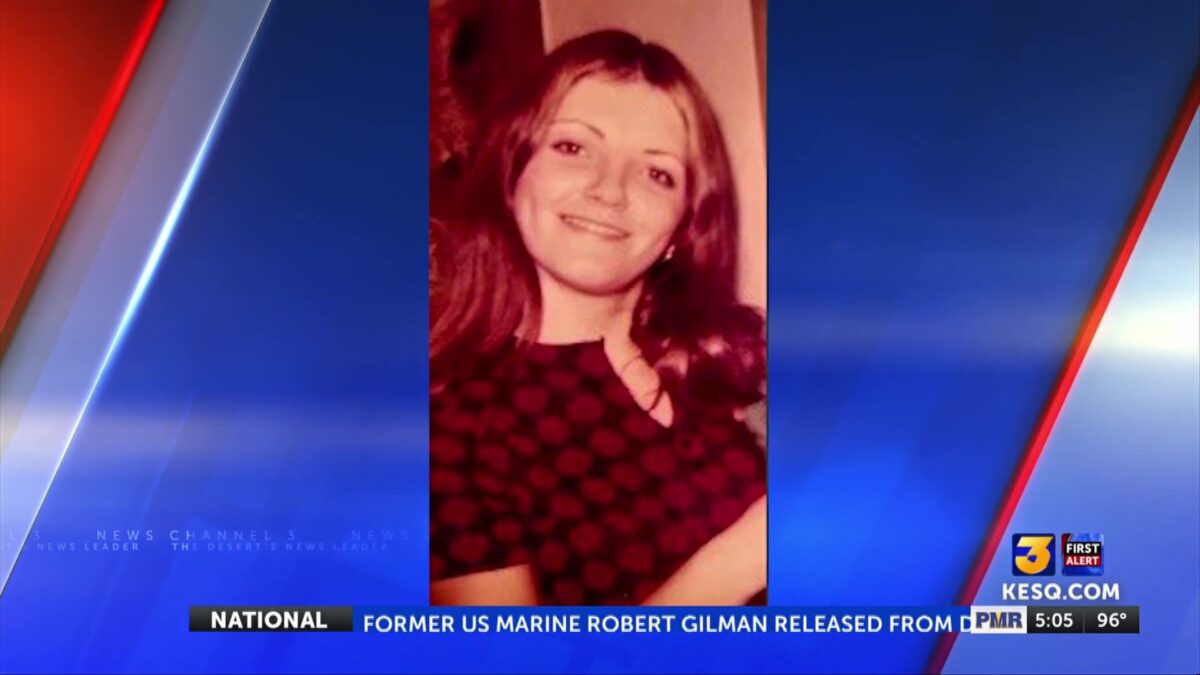
RIVERSIDE, Calif. — Riverside County investigators have identified a woman whose partially buried body was found in the Desert Hot Springs desert in 1974, more than 50 years after her death.

The victim was identified as 19-year-old Rebecca Jean McMahan, also known as Becky McMahan and Becky Solis. McMahan was reported missing by her family on July 3, 1973, after she was last seen June 11 in Bell Gardens. She had told family she planned to travel to Palm Springs for vacation.

Despite years of efforts, including fingerprint and dental-record comparisons, investigators were unable to identify her.

The case was reopened in 2024 by the Riverside County Regional Cold Case Homicide Team. Investigators used forensic genetic genealogy, with DNA testing conducted by Othram Labs, to develop a profile from bone samples collected by the Riverside County Coroner’s Office.

A genealogist identified a potential close relative in California. DNA testing of that relative, along with confirmation from the California Department of Justice, ultimately identified the victim as McMahan.

McMahan was described as a white female with long brown hair and hazel eyes. She was about 5-foot-3 to 5-foot-4 and weighed between 120 and 145 pounds. She had an “SS” tattoo on her ankle and a butterfly tattoo on the right side of her chest.

Investigators are now seeking information about McMahan and the circumstances surrounding her death. Anyone with information is asked to contact Investigator Ebony Caviness at 951-955-0257 or by email at coldcaseunit@rivcoda.org.

The Regional Cold Case Homicide Team includes investigators from the Riverside County District Attorney’s Office, Riverside County Sheriff-Coroner Department and Riverside Police Department.

Click here to follow the original article.

Case dismissed for man arrested outside Trump rally with gun in Coachella in 2024

Tommy Gallegos

The misdemeanor case against Vem Miller, who was arrested outside a Donald Trump rally in Coachella in October 2024 after authorities said he was carrying a loaded firearm without a permit, has been dismissed following the successful completion of his diversion requirements.

The charges against Miller were dropped after completing a six-month misdemeanor diversion program.

As a result, the case was dismissed. The Riverside County District Attorney’s office also explained that when a case is dismissed after misdemeanor diversion, it is generally sealed, which is why the court system now shows “access denied” when attempting to view the case.

Miller was arrested in October 2024 outside the Trump rally in Coachella. The incident drew national attention after authorities said he was found with a loaded firearm and was taken into custody before the event.

Click here to follow the original article.

California bill seeks changes to weather guidelines impacting local high school athletes

Blake Arthur

COACHELLA VALLEY, Calif. (KESQ) — As high school sports return across the Coachella Valley, student-athletes are once again facing one of their biggest opponents – the heat.

California Interscholastic Federation guidelines require schools to monitor environmental conditions and heat stress using the Wet Bulb Globe Temperature, or WBGT, to help determine when outdoor practices and competitions can safely take place.

Most local schools now use Perry Weather systems on campus to provide real-time readings and help athletic programs determine if conditions are within the allowable threshold.

California divides schools into three heat categories based on region. The Coachella Valley falls into Category 3, the highest heat category.

Under the current guidelines, outdoor practices and competitions must be stopped when the WBGT reaches 92 degrees until conditions cool.

While the guidelines are designed to protect student-athletes from heat illness, some local coaches and school officials say the rules can also create significant challenges.

“A lot of people think it’s the heat. It’s actually the humidity, and it takes that measurement,” said Estevan Valencia, Palm Desert high school athletic director. “And so for us, the wet bulb keeps those kids from being out in a lot of the humidity, and basically keeps us safer.”

The issue has now reached Sacramento.

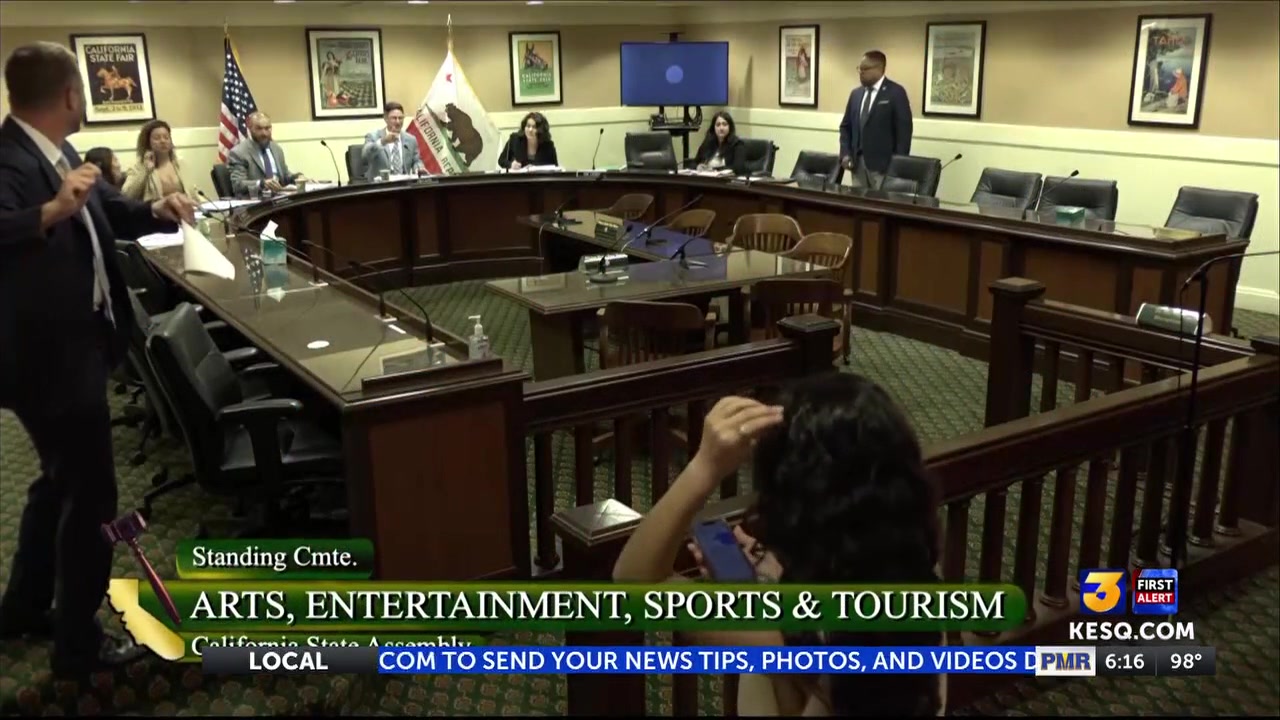
Assemblymember Greg Wallis authored AB 2503, a bill that would require the CIF to review and update its heat-illness prevention guidelines, with special consideration for regions of California that experience higher average temperatures.

Wallis said the current guidelines can create challenges for student-athletes who already have long school and practice days.

“When you’re looking at kids who have to get to school by 8 a.m., if they’re there till 8-9 p.m., it takes away from family time, studying time,” Wallis said. “And what we want is well-rounded student athletes.”

Wallis said the goal is to create guidelines that continue to protect student-athletes while recognizing the unique climate in the desert.

The issue also goes beyond scheduling.

Local teams can find themselves at a competitive disadvantage when extreme heat prevents them from practicing or competing while schools in other parts of Southern California, operating under the same regional category, are able to continue.

“If you go over to Redlands or Yucaipa or Riverside, their teams are getting a chance to play or practice while we’re not,” Valencia said.

Wallis notes that some local programs have seen a significant percentage of practices canceled because of the heat restrictions.

“Obviously we want to protect our student athletes. We want to make sure that they’re safe out there,” Wallis said. “But we also want to make sure they’re able to get out on the field. We’ve seen in certain sports up to 40% of practices canceled, and that’s just not the right thing to do,” said Wallis.

AB 2503 passed the California Assembly and later advanced through the state Senate. The measure would direct the CIF to review and update its heat-illness guidelines, including consideration of regions with higher average temperatures.

For desert schools, the debate comes down to finding a balance between protecting student-athletes from dangerous heat and allowing them the opportunity to practice and compete.

For more information on AB 2503, click HERE.

Stay with KESQ News Channel 3 for continuing coverage of local high school athletics.

Click here to follow the original article.

Coachella man reported missing after release from Kern County prison

Tommy Gallegos

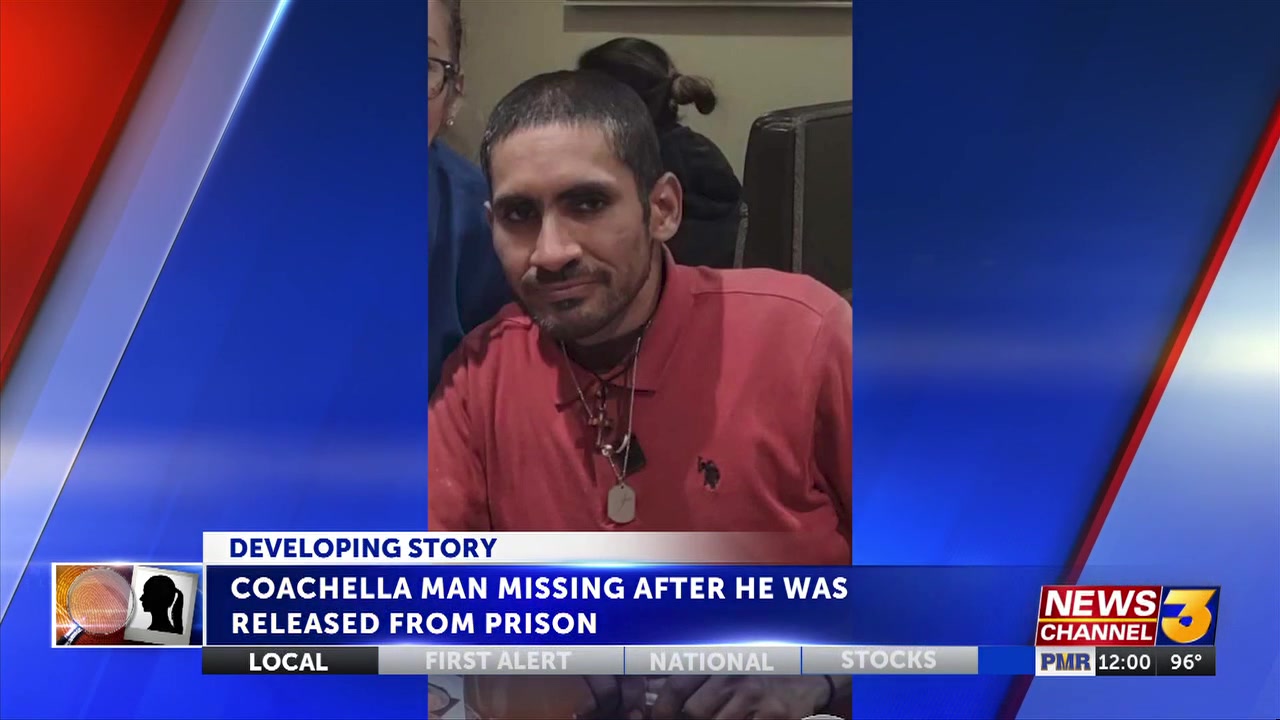
COACHELLA, Calif. (KESQ) — A Coachella man has been reported missing after his release from a prison in Kern County, according to the Riverside County Sheriff’s Department.

Deputies responded July 31 to a report of a missing person along Julia Drive in Coachella after the family of Arturo Reyes Aispuro said they had been unable to contact him following his release from custody.

According to authorities, Aispuro was released from North Kern State Prison on July 20 and was expected to be transported back to Riverside County, where he lives.

Officials say prisoners released from the facility can be transported by train to the county where they reside. However, Aispuro did not make contact with his family after his release, prompting them to report him missing.

Aispuro is described as approximately 5 feet 4 inches tall and weighing about 180 pounds. He has dark brown eyes, dark brown hair and a small scar on his face. Authorities also said he is right-handed.

The circumstances surrounding Aispuro’s disappearance remain unclear, and the investigation is ongoing.

Anyone with information that could help authorities locate Aispuro is urged to contact the Riverside County Sheriff’s Department.

Click here to follow the original article.

How road rage goes out of control

Kiera McKinney

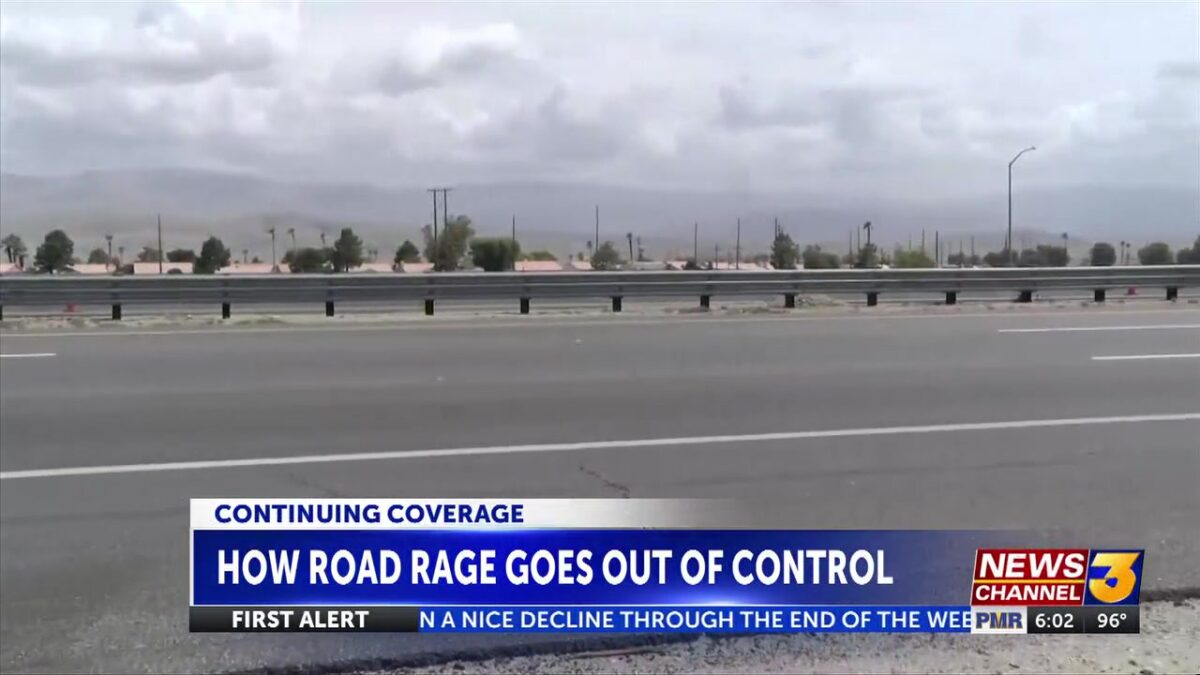
INDIO, CALIF. (KESQ)- Two recent road-rage incidents involving guns are putting a spotlight on how quickly frustration behind the wheel can turn dangerous.

The California Highway Patrol said it is not seeing an increase in road rage compared with previous years – including incidents involving weapons. Officers say crashes caused by road rage are not common, but when they do happen, they can involve intentional impacts that could lead to felony charges.

Seargent Abe Plata of the Indio Police Department said, “Motorists get annoyed with other drivers who maybe change lanes in front of them or driving too slow. They get very angry and they’ll start following them or pull up next to him and start yelling things at them. ”

One study shows that 34 percent of drivers admit to tailgating on purpose, and 32 percent of drivers say they’ve used rude gestures or honked out of anger, according to Nextbase.

In California, there isn’t a standalone crime called road rage, but police say that behavior can lead to serious chargers.

The main takeaway for drivers: If someone is aggressively following or confronting you, don’t engage. Get out of the way and call 911.

Click here to follow the original article.

AI scams are becoming more personalized. Here’s how to spot one

Angela Chen

COACHELLA VALLEY, Calif. (KESQ) – AI scams are on the rise, and with recent scams in which a Palm Desert man learned about his own funeral and another in which the caller impersonated Palm Springs police officers for extortion, law enforcement is urging the public to stay skeptical when anyone comes calling for money.

According to the FBI, Americans had nearly 21-billion-dollars stolen in cybercrimes last year.

In the past, scams were much more straightforward. Emails promising riches and a Nigerian prince on his deathbed were the stuff of comedic fodder, and it was relatively easy to laugh off these attempted cons.

These days — with AI personalizing scams — it can be a lot tougher to make out what’s made up.

“AI is being used to scrape the internet and find information about you. Sometimes they’ll even get your stolen Social Security number and make it seem very legitimate when they contact you,” said Michael Lebowitz, a national security attorney who used to work at the Department of Justice, National Security Division, focusing on digital crimes and cyberwarfare.

Lebowitz is also the author of Second Wave: Inside Al Qaeda’s Post-9/11 Attack Plan and America’s Secret Effort to Stop It.

AI can impersonate your loved ones — even producing the same voices or fake video of them. Recent scams have preyed on the fears of parents or grandparents.

“Sometimes it’ll be like a grandparent or a parent, and then there’ll be a college-aged student, and their their voice will be cloned, and the AI will be like, ‘Hey, I’m in really big trouble. I need money right now. So what families can do is they can get their loved ones together, and they can come up with a password, like a verbal password. Do not record it anywhere,” said Lebowitz. “It’s a very analog, retro way of protecting yourself from sophisticated AI. So if all the loved ones have this secret password amongst them, and you get a high, urgently panicked phone call saying, ‘We need money right now,’ [you can] say, ‘What’s the password?’ And if they hedge and they say, ‘There’s no time for that,’ then it is a scam. Hang up.”

Lebowitz has analyzed schemes from all over the world — and he says there are some telltale signs of an AI scam.

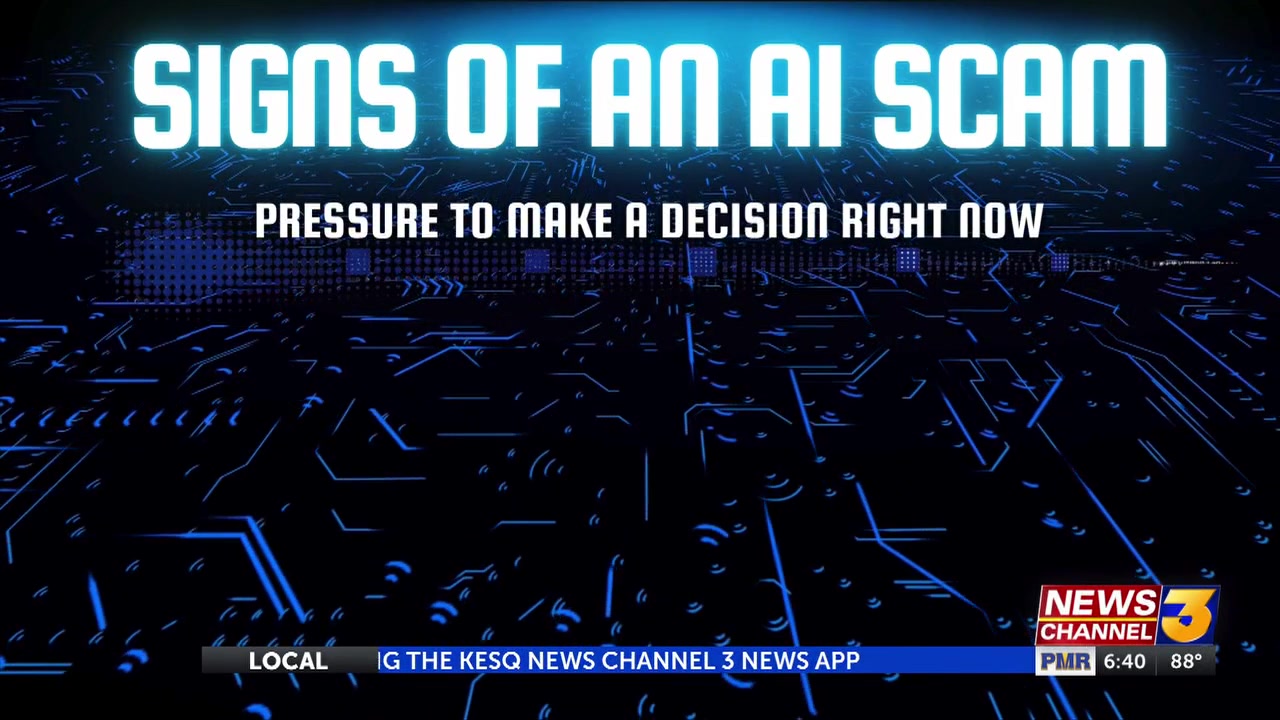
One, scammers will pressure you to make a decision right in the moment. Their goal is to get you to hand over money while they have you panicked.

Two, the caller will try to prevent you from hanging up the phone to verify what they’re saying. They might even threaten you if you try to do so. The more urgent that phone call is, it’s more likely it’s a scam. But any legitimate person will let you hang up.

Three — anytime they ask for payment in gift cards or crypto — it’s an immediate red flag. Government agencies or utilities will never ask for payment in that form.

Finally — if video is involved, look for subtle inconsistencies in lip, synchronization and micro expressions. You can often see glitches around the eyes, hairline, neck, and jaw. In our News Channel 3 news story, you can see an example of an AI video in which the neck muscle flex in a strange way for a split second before smoothing out.

It’s also not just the elderly being scammed in this modern age. Lebowitz said victims are from every age range, and that even very sophisticated people that are falling for cyberscams because AI makes it so much more believable.

According to CrowdStrike, AI has helped hackers increase scams and attacks by 89% compared year-to-year to 2025, because AI has been able to magnify the skills and reach of a range of scammers, from the less skilled to the advanced.

Seeing is not believing — not in this day and age. And AI is just getting started.

“This doesn’t even get into more emerging cyber technology like quantum computing, which some people think might be available beginning the 2030s,” said Lebowitz. “And if that happens, that’s going to be AI on steroids, where any regular computer or network can be hacked and everything’s stolen within seconds.”

AI is evolving so fast that legislation has not been able to keep up. Lebowitz says legislation on anything digital has always been 10 to 15 years behind — but that it is crucial for lawmakers to take action now and anticipate how AI might endanger our systems and societal well-being.

Click here to follow the original article.

Renting or buying: Where do Coachella Valley residents stand?

Matthew Pearce

THOUSAND PALMS, Calif. (KESQ) — Whether you’re renting or buying, one thing remains consistent: The desire for affordable housing.

California ranks second in average home price, behind only Hawaii, according to a SmartAsset study.

Additionally, California ranks No. 48 when it comes to homebuyers under the age of 35. So, what does this mean?

Well, trends show renting has become a undesirable, but necessary, compromise. And with rent prices becoming more expensive than home buying, it’s become more difficult for people to save for a down payment, according to Southern California Association of Governments.

Additionally, homeowner ship by inheritance in California is at an all-time high, with 18% or 60,000 of all property transfers being from inheritance in 2025, according to the California Land Title Association.

To manage high costs, an increasing number of residents are opting to live together or move in with family members rather than pay market-rate rents.

“Unfortunately, there’s a lot of high percentage of families who are paying more than 30% of their income in housing,” CEO of Coachella Valley Housing Coalition Pedro Rodriguez said. “They pay 50%, sometimes 70%, which kind of takes away money that they need to live.”

To combat this, CVHC is developing affordable housing when and where they can.

“We have the multifamily development where we build apartments for farmworker families, for hardworking families,” Rodriguez said. “We have housing for seniors. We have housing for homeless veterans, housing for people with special needs… These are affordable housing developments where the families only pay 30% of their income in housing.”

For more information on CVHC, find their website here.

Click here to follow the original article.