Tina Cordova to address United Nations

By Kara Mihm

Click here for updates on this story

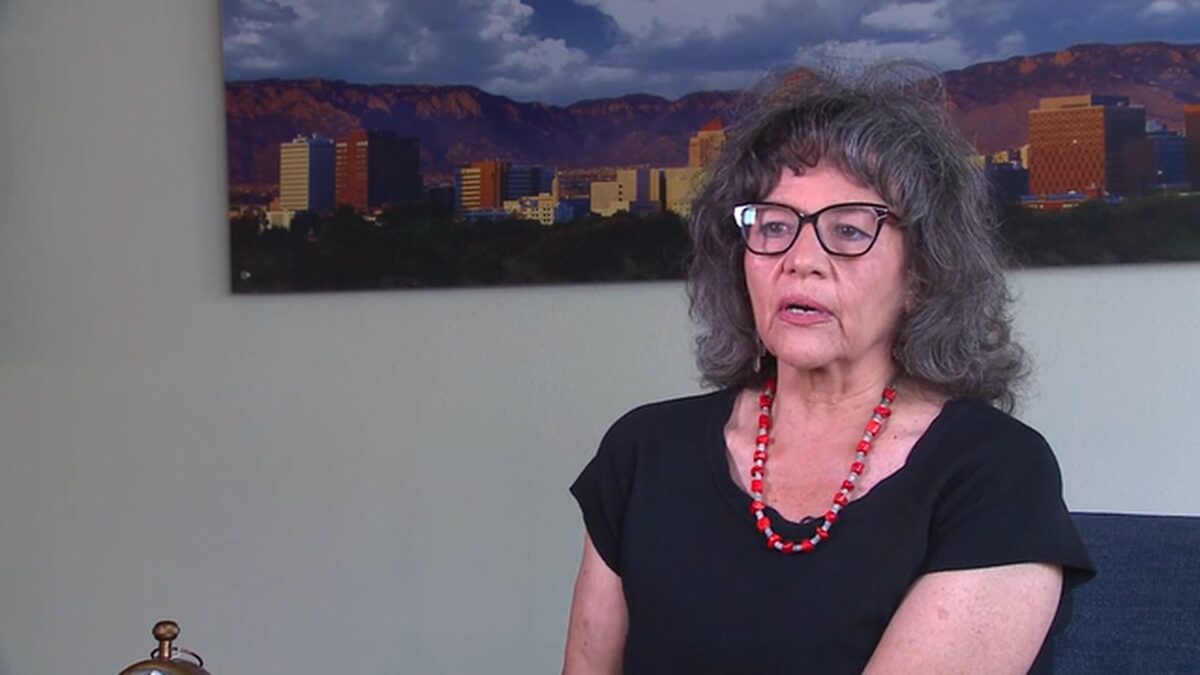
    NEW MEXICO (KOAT) — Tina Cordova, co-founder of the Tularosa Basin Downwinders, will speak at the United Nations General Assembly on Monday as part of the International Day Against Nuclear Tests, highlighting the health impacts of the 1945 Trinity nuclear test near White Sands.

“For the first time ever, people from all over the world will hear what this has been like for us,” Cordova said. “It’s incredible to have this happen for all the people whose voices were silenced.”

The Trinity test, conducted on July 16, 1945, was the first detonation of a nuclear weapon, exposing local residents, many of whom were Native American, to radiation without warning or evacuation.

Cordova said the fallout has caused generations of New Mexicans to suffer from illnesses and cancers linked to radiation exposure. She said she plans to highlight those communities in her address.

“This [address] is not about me. It’s about the thousands of voices that have been silenced,” Cordova said. “We were overexposed to radiation and we were the collateral damage to the Trinity bomb.”

She described the opportunity to speak at the U.N. as “historic and monumental.”

Cordova also criticized the Radiation Exposure Compensation Act (RECA), which was expanded last year under President Donald Trump’s One Big Beautiful Bill. She said the legislation excluded key provisions, such as adequate deadlines, proper compensation and a comprehensive list of qualifying cancers.

“We get the bill passed as an addition to the One Big Beautiful Bill Act, and all of these important aspects of the first bill were left out,” she said. “No health care coverage, two and a half years to apply, which is very inadequate. People in New Mexico waited 80 years, 80 years.”

Cordova and other anti-nuclear advocates are pushing for further expansion of RECA to address these shortcomings. She also pointed to a soon-to-be-released study that could reveal the extent of Trinity’s fallout, suggesting it may have spread radiation across the entire country.

“The government essentially exposed almost everybody in the United States to radiation as a result of those tests,” Cordova said. “Depending on where you lived and what the weather was like, it’s going to show that we spread radiation across the entire country, and some areas got more than others.”

Cordova hopes her U.N. address will inspire global leaders to commit to permanent nuclear testing bans and work toward disarmament. Her speech is scheduled for Monday at 8 a.m. Mountain Time.

Meanwhile, New Mexicans who qualify can apply for up to $100,000 in compensation through RECA, either for themselves or on behalf of deceased loved ones.

Please note: This story was provided to CNN Wire by an affiliate and does not contain original CNN reporting. This content carries a strict local market embargo. If you share the same market as the contributor of this article, you may not use it on any platform.
Here’s why Richmond prosecutors didn’t charge the police sergeant who broke state laws on Flock

By SAMUEL B. PARKER Richmond Times-Dispatch

Click here for updates on this story

    RICHMOND, Virginia (Richmond Times-Dispatch) — Earlier this year, a Richmond Police Department sergeant broke the law.

In an April 30 news release, police spokesperson James Mercante said the sergeant had been caught sharing images taken from one of the department’s 99 Flock cameras with the Federal Bureau of Investigation to assist in a murder investigation.

That’s despite the fact that state law forbids Virginia law enforcement from sharing automatic license plate reader (ALPR) data with out-of-state agencies.

Under that law, the prohibited disclosure of ALPR images or data is a Class 1 misdemeanor — punishable by up to a year behind bars and a fine of up to $2,500. But Richmond prosecutors, led by Commonwealth’s Attorney Colette McEachin, declined to charge the sergeant in connection with the incident.

Why?

In a statement to The Times-Dispatch, McEachin, who has been Richmond’s top prosecutor since 2019, said the decision not to file criminal charges was due to “a lack of criminal intent.”

“(That’s) the foundation for a criminal charge against an individual,” McEachin said. “Factors that would lead to a different decision would include evidence of criminal intent, or evidence that the dissemination was done for personal or pecuniary interest.”

Criminal intent is a legal doctrine that describes the mental state behind an act that renders the act criminal. In order to show criminal intent under Virginia’s ALPR law, prosecutors would have to show that the data disclosure was done “wilfully and intentionally,” and was not simply an accident or oversight.

Police, on the other hand, characterized the issue as more intentional.

Mercante, in the April news release, explained that the sergeant had been “asked by a special agent with the … FBI for an image of a vehicle believed to be connected to a homicide investigation in Washington D.C.,” and had complied with that request. Police Chief Rick Edwards, meanwhile, noted that he “appreciated the sergeant’s willingness to assist in a homicide investigation,” but stressed the importance of following the law.

Asked to clarify, McEachin explained that “an act can be purposeful without having criminal intent.”

For example, a person might “throw a ball” without meaning to “hit (or) hurt any specific person,” she said.

Criminal intent is distinct from ignorance of the law, which does not eliminate criminal liability. In order to show criminal intent, prosecutors must demonstrate only that the act itself was purposeful, regardless of whether the alleged perpetrator knew it was unlawful.

Across the country, prosecutors have taken different approaches to handling violations of state ALPR laws.

Officers in California, Florida, Georgia, Illinois, Kansas, Kentucky, North Carolina, Ohio, Pennsylvania, Tennessee, Texas and Wisconsin have been charged or indicted for unlawful use of ALPR technology, including in some cases to track or stalk family members, friends or past partners. In other cases, officers have been fired or resigned for misuse.

The Richmond police sergeant still works for the department.

“An internal investigation was conducted by RPD’s Office of Professional Standards,” Edwards said at the time. “The sergeant’s authorization to access ALPR data has been deactivated.”

Please note: This story was provided to CNN Wire by an affiliate and does not contain original CNN reporting. This content carries a strict local market embargo. If you share the same market as the contributor of this article, you may not use it on any platform.
A lake by many names: How Lake Ontario got – and kept – its name

By Dan Higgins, The Buffalo News, N.Y.

Click here for updates on this story

    NEW YORK (The Buffalo News) — Lake Ontario has carried several names over nearly four centuries. French kings and colonial governors had names attached to it, while Jesuit missionaries preserved versions of its Indigenous-derived name. Eventually, Ontario outlasted the alternatives.

BEFORE EUROPEAN SETTLEMENT: The name Ontario comes from an Indigenous language, although sources differ on its precise derivation. Canadian place-name scholar Alan Rayburn traced it to the Mohawk kanyatariiya, meaning “handsome lake.” Natural Resources Canada gives the Iroquois kanadario, meaning “sparkling” water.

1632: French explorer Samuel de Champlain labels the lake Lac St. Louis, honoring the French king.

1635: Jesuit missionary Jean de Brébeuf refers to it as the Lake of the Iroquois.

1639: Dutch geographer Johannes de Laet uses Ontario.

1641: Jesuit Jérôme Lalemant uses Ontario but also gives St. Louis as an alternative.

1647-48: Jesuit missionary Paul Ragueneau describes it as “a lake named Ontario which we call Saint Louys.”

1654: Jesuit missionary Simon Le Moyne refers simply to “a great lake called Ontario.”

1688: Italian cartographer Vincenzo Coronelli captures the unsettled naming on a single map, labeling the lake “Lac Frontenac ou Ontario et Skaniadorio ou St. Louis.” Frontenac honored Louis de Buade, Count of Frontenac and governor general of New France.

1688: Jesuit cartographer Pierre Raffeix produces a manuscript map titled “Le lac Ontario avec les lieux circonvoisins et particulièrement les cinq nations iroquoises” – “Lake Ontario with the surrounding places and particularly the Five Iroquois Nations.”

LATE 1600s: The Indigenous-derived Ontario increasingly displaces the competing European names. Great Lakes scholar Ivan H. Walton later wrote that it “superseded all others.”

1867: The newly created Canadian province of Ontario takes its name from the lake, rather than the other way around.

AUG. 27, 2026: President Trump signs an executive order directing the U.S. federal government to rename Lake Ontario “Lake America.” The order requires the Interior Department to begin changing federal maps, databases, documents and communications within 30 days. The order only applies to the U.S. federal government.

Please note: This story was provided to CNN Wire by an affiliate and does not contain original CNN reporting. This content carries a strict local market embargo. If you share the same market as the contributor of this article, you may not use it on any platform.
Apple Says “Surprise and Shine”: September 9 Event Sets the Stage for Apple’s Next Big iPhone Era

By Francis Page Jr.

Click here for updates on this story

    August 31, 2026 (Houston Style Magazine) — HOUSTON, TEXAS — August 31, 2026 — Apple is heading into September with something it knows how to manufacture almost as well as technology: anticipation.

The company has officially confirmed its next Apple Event for Wednesday, September 9, 2026, teasing the occasion with two irresistible words: “Surprise and shine.”

Apple has not officially announced the iPhone 18, iPhone 18 Pro or iPhone 18 Pro Max. No official specifications, prices or release dates have been published. But nearly two decades after Steve Jobs introduced the original iPhone, September and Apple have developed a rhythm of their own.

And this September arrives with Apple firing on considerably more than one cylinder.

photo Apple-AirPods Pro 4 launching next month with cameras

From the Original iPhone to an AI Supercomputer in Your Pocket When Jobs unveiled the original iPhone in 2007, he described three revolutionary products—a widescreen iPod, mobile phone and internet communicator—before revealing they were all one device.

Today, that little revolution has become our camera, newsroom, wallet, television, navigation system, editing suite and mobile office.

Now comes the next transformation: artificial intelligence.

Apple spent WWDC26 positioning Apple Intelligence and the next generation of Siri as increasingly central to the experiences spanning iPhone, iPad, Mac and Apple Vision Pro. The question surrounding September 9 therefore isn’t simply, What will the next iPhone look like?

It is increasingly: What will Apple’s next iPhone be capable of doing? M6 Has Already Entered the Building Apple supplied an enormous clue August 25 by unveiling its M6 chip and a more powerful Mac mini.

The company says M6 delivers a major leap in AI compute, with Neural Accelerators incorporated into its GPU architecture. Apple simultaneously introduced a new Mac Studio powered by M5 Max and M5 Ultra, making late August unusually hardware-heavy before its traditional September spotlight.

Translation: Apple isn’t strolling into fall.

Cupertino is coming in hot.

And Houston has suddenly become part of that technology story. Houston Is Helping Build Apple’s AI Future On August 13, Apple opened its new 20,000-square-foot Advanced Manufacturing Center in Houston, offering free advanced-manufacturing training for small- and medium-sized businesses.

But the bigger headline is literally under the same roof.

The Houston facility already builds and ships Apple’s advanced AI servers, and Apple says Mac mini manufacturing will begin here later this year.

CEO Tim Cook said Apple invested hundreds of millions of dollars in the Houston facility in less than nine months, established the factory, started production and shipped its first advanced AI servers.

For Houston, that’s more than another ribbon cutting.

The Bayou City now has fingerprints on Apple’s AI future.

Apple Isn’t Waiting Until September 9 to Have Fun Apple’s late-summer push isn’t limited to silicon and factories.

In an official August 27 update, Apple announced a new Sneaky Sasquatch and Subway Surfers+ crossover on Apple Arcade, available through October 7. Players can unlock four character skins and two hoverboards while racing through a reimagined environment inspired by Sasquatch Valley.

Then on September 17, Sneaky Sasquatch gets an unexpectedly charming new obsession: birdwatching.

More than 30 bird species will populate the game, allowing players to photograph, catalog and earn rewards for their sightings. Apple also released 11 new Sneaky Sasquatch Messages stickers.

photo Sneaky Sasquatch fans can jump into an exciting crossover with Subway Surfers+ today and check out the new birdwatching update arriving September 17

It sounds whimsical—and it is—but there’s a larger point.

Apple increasingly sells an ecosystem rather than an individual device. Arcade Originals span iPhone, iPad, Mac, Apple TV and Apple Vision Pro. Apple Intelligence stretches across Apple’s major computing platforms. Services, silicon, hardware and entertainment increasingly reinforce one another.

That makes whatever happens September 9 about considerably more than another smartphone.

So, Is iPhone 18 Coming? Maybe.

But Apple has not officially said so.

As of August 31, anyone presenting iPhone 18 specifications, camera configurations, prices or release dates as confirmed Apple information is getting ahead of Cupertino.

What we do know is compelling enough.

M6 is here. Apple’s AI ambitions are accelerating. Houston is producing Apple AI servers. Mac mini manufacturing is coming to Texas. Apple Arcade is expanding. And Apple has summoned the technology world for September 9 with the words “Surprise and shine.”

Houston Style Magazine will be watching.

Because if Apple’s history teaches us anything, the most interesting part of a September invitation is often what Apple deliberately doesn’t tell us.

Charge your iPhone. Clear your calendar. Houston—don’t blink.

OFFICIAL APPLE LINK September Apple Event: Apple Events

Please note: This story was provided to CNN Wire by an affiliate and does not contain original CNN reporting. This content carries a strict local market embargo. If you share the same market as the contributor of this article, you may not use it on any platform.

Kierra Lee
KIELEESTYLE@GMAIL.COM
3465287733

Two Civil Rights Men, Different Parties, One Bill of Rights

By Ben Jealous

Click here for updates on this story

    August 31, 2026 (Houston Style Magazine) — When I was a boy two brothers lived on our block and we ran together every weekend. Ball in the street, made-up games, War!

Then one day they were gone. My buddy said their father had lost his job at the tire factory and taken his own life in the basement, with a gun the family already owned.

That was a gun death in America. Quiet street, good schools. In all my years arguing guns, a death like that almost never came up.

Our children are back in school, and September is Suicide Prevention Month.

Guns, children, and despair are one subject. We rarely treat them so.

My friend Lenny McAllister has never made me pick. He is a Black Republican, a voice on Rust Belt radio from WVON in Chicago to KDKA in Pittsburgh. I was the Democratic nominee for governor of Maryland. We have gone at each other’s parties twenty years and stayed friends.

What people miss is that we are both civil rights men, and civil rights work is Bill of Rights work.

The First Amendment is why we could march. The Fourth is why an officer needs a reason to search you. The Second sits in that same document, and we believe in all of it.

Lenny’s father was shot on a Rust Belt street and spent nearly a year in the hospital. In 2001 a man broke into Lenny’s home and tied him up. He tells it in his new book, “A Venn Diagram of One”, an honest book about refusing to be one thing in a country that insists you choose.

My cousin was shot and killed at a gas station in Columbia, Maryland, at noon. A cousin I called uncle agreed to testify against a Prince George’s County drug dealer, who shot him at his door. He lived. At the hospital they would not let us up to his room, for fear the shooter’s friends would come finish the job.

When Lenny writes that we can respect the Second Amendment and still use common sense about who buys a gun, I hear no man splitting a difference. I hear a man who has waited on word about his father, and lain on his own floor with a gun at his head.

Then he writes this. “There is a right greater than the right to bear arms; it is the right to a liberty-filled life.”

Now let me tell you what I got wrong.

Thirty years ago at Oxford I needed a thesis topic. A headline in the International Herald Tribune stopped me on the sidewalk. Black teen suicides were surging. I was sure I knew why. Handguns were flooding the inner cities.

I was wrong. The children dying were not in the cities. They were in the suburbs.

Black families moved out there in the late sixties and seventies. Twenty years later their children began killing themselves. Children like me, with the big backyard and the shiny bike.

Our mothers gave us what they had been denied in the projects and tenements and row houses they came up in. Without meaning to, they cost us the one thing those places had, a house full of family who would listen no matter what.

One of the strongest predictors of a suicide attempt is isolation. Ask a woman how many people she talks to after her worst day and she names two or three. Ask a man and he names one, or nobody. Her circle grows all her life. His shrinks toward zero.

That headline should have said the Black teen suicide rate was catching up to the White one. Among young Black men it has passed it.

About nine in ten suicide attempts with a gun end in death. With most other methods people live, and most who live never die by suicide.

In 2024 there were 27,593 gun suicides, well over half of all gun deaths.

Money is no shield. A gun in a cul-de-sac is as final as a gun on a corner.

The Bill of Rights is not a menu. You do not get to order the Second and send the rest back to the kitchen. None of it means much to a child who does not live to grow into the promise of life, liberty, and the pursuit of happiness.

So set partisanship aside. Lock your own guns in a safe at home. Keep them away from people in crisis. And build friendships across party lines that bind this nation back together for all our children.

Ben Jealous is a professor of practice at the University of Pennsylvania and former president and CEO of the NAACP.

photo

Please note: This story was provided to CNN Wire by an affiliate and does not contain original CNN reporting. This content carries a strict local market embargo. If you share the same market as the contributor of this article, you may not use it on any platform.

Kierra Lee
KIELEESTYLE@GMAIL.COM
3465287733

Community continues to grapple with crash that left 1 dead, injured 5

By Tyler Melito

Click here for updates on this story

    FORT COLLINS, Colorado (KMGH) — Twenty-four hours after one person was killed and five others were hurt in Fort Collins after a driver drove their pickup truck onto a sidewalk along Mountain Avenue in Old Town Fort Collins, the community is shaken to its core.

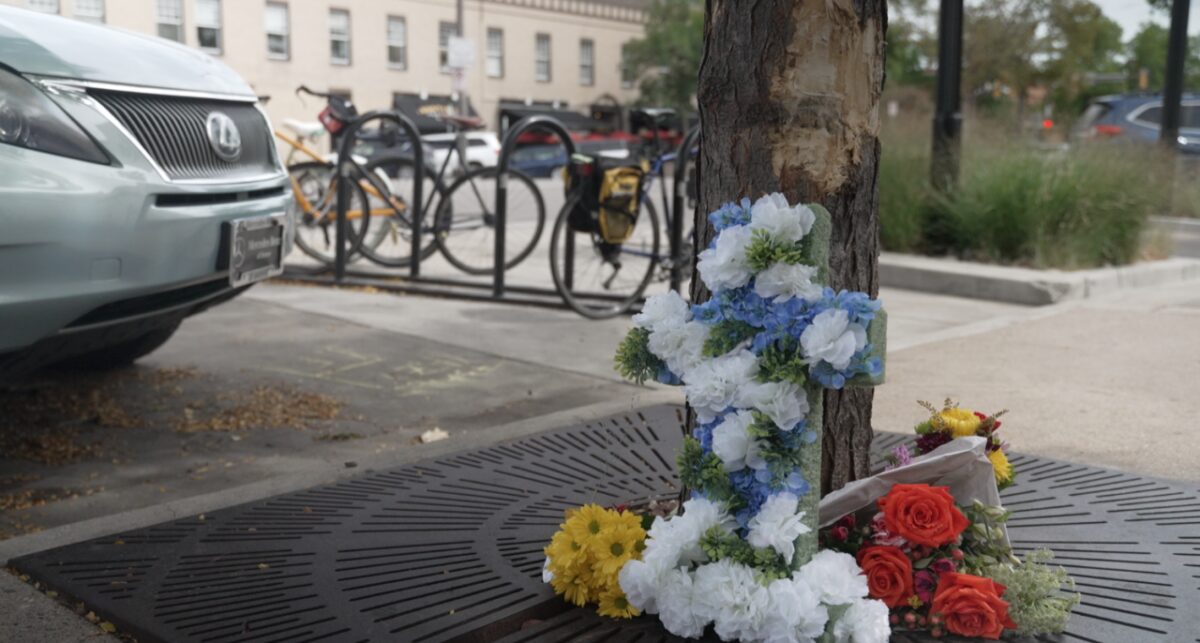
The tragedy happened outside Walrus Ice Cream shop in Fort Collins. Outside the shop, a small memorial is slowly taking shape.

Details are still limited as Fort Collins police continue to investigate what led up to the crash. Cpl. Brandon Barnes told Denver7’s Tyler Melito that detectives are still actively calling witnesses for information.

“One of the things that we do in any investigation is we look at the entire picture,” Barnes said. “We’re very early on in the investigation, but we’re looking at all sorts of factors right now.”

Barnes did share some more insight into the condition of the five victims.

“Three of those people that were transported to area hospitals that have serious injuries, however, they are stable,” Barnes detailed. “The others, they suffered minor injuries.”

The identities of the victims, including the one person killed, have not been released at this time.

Barnes says in the time since the crash, there have been a number of people posting on social media, specifically about the driver, whose identity has not been released. Barnes wants to dispel some information the department has seen.

“Our entire crash team came out and is currently investigating this incident,” Barnes detailed. “There’s nothing that we’ve discovered at this point of time in the investigation that has led us to believe that this was a intentional or a deliberate act.”

At the memorial site, Cassidy Dellemonache took some time out of her day Sunday to pay respects to the victims and spread a little joy with her art that she left at the memorial.

“We all have so much grief in all of our lives, which is why days of joy are so important. And that’s why celebrations like the Tour de Fat are important, is so that we can celebrate the joy when life is so hard,” Dellemonache told Melito.

Dellemonache owns an ice cream shop near the site of the accident. She shared what was going through her head when everything happened.

“I was sitting at work, and so my shop is just around the corner, and heard all of the sirens,” Dellmonache described. “Watching from our windows, I knew how many pedestrians were out yesterday and how many bikers and how many families and people were celebrating, and so it was immediately scared of what had happened because we knew it was so close and where everybody was gathered.”

She says the Tour de Fat, which happened on Saturday, is a special event for Fort Collins.

“I moved here 18 years ago on Tour de Fat Day, and my dad was driving the U-Haul back down here in Old Town and said, “what in the world? Where did you move to? All of these people are on their bikes and in costumes and filling the streets,'” Dellemonache recalled. “It really is like Mardi Gras type celebration where we all come together and are out in the streets and celebrating.”

She says she hopes her contributions to the memorial will help bring some positivity to someone who sees it.

“We have a very strong community and very loving and caring,” Dellemonache said.

Although, she knows it won’t be a quick process for the community and herself to heal.

“I walk down the street almost every day, and it will be filled with grief knowing the pain that our community experienced right here,” Dellemonache said.

Barnes mentioned they know that there were hundreds of people in the area of the incident Saturday and are asking for anyone with information to call 970-221-6540.

Please note: This story was provided to CNN Wire by an affiliate and does not contain original CNN reporting. This content carries a strict local market embargo. If you share the same market as the contributor of this article, you may not use it on any platform.

Homeowner in high fire risk area finds new way to protect property

By Kenny Choi

Click here for updates on this story

    NAPA COUNTY, California (KPIX) — As wildfire risk and rising insurance costs put increasing pressure on California homeowners, some residents in high-risk areas are looking for new ways to protect their properties.

In the Napa County mountain community of Angwin, burn scars from past wildfires remain visible. They’re reminders of what happened and what could strike again.

The 2020 Glass Fire ravaged parts of Napa County, destroying homes and vineyards. For Diane and Philip Steinschriber, the fire came frighteningly close.

“It looked like an atom bomb. It was a mushroom cloud,” Diane Steinschriber recalled.

As the flames moved closer to their home, the couple realized they had to evacuate.

“We could see the fire was coming up the woods behind us,” she said. “Phil said to me, ‘This is close. We gotta go.'”

Their home survived, but the Steinschribers believe another wildfire could eventually threaten their property.

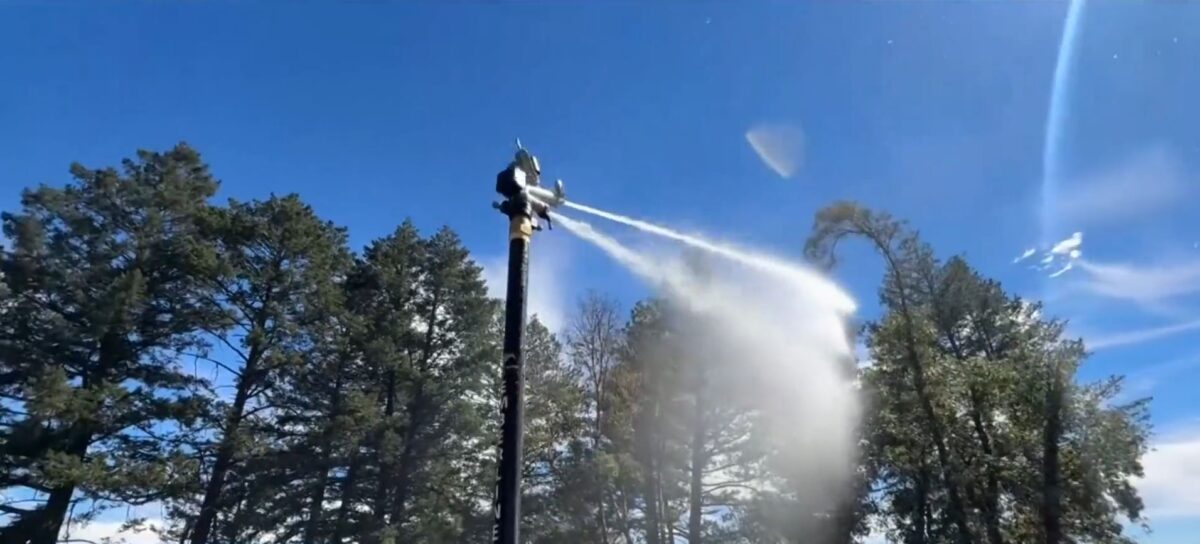
They have since added a personal wildfire defense system designed to pull water from their swimming pool and distribute it through sprinklers positioned around their home.

Nick Faulkner, founder of Response Ready Fire Systems, engineered the system. He said homeowners can store the equipment in a garage and deploy it in less than an hour when a wildfire threatens.

“With the wildfire crisis, all of the craziness with insurance premiums spiking, people are looking at ways to protect themselves,” Faulkner said.

The system uses propane to power an engine-driven pump, meaning it does not have to rely on municipal water pressure. Water pressure and supply have become concerns during some major California wildfires.

“When we can come out and put a 360 coverage zone around someone’s house and run it for eight to 10 hours, we’ve gotten an excellent response,” Faulkner said.

The Steinschribers understand that a personal fire suppression system provides an additional layer of protection, and not a guarantee that their home will survive a wildfire.

At the same time, rising homeowners insurance costs have led Philip Steinschriber to consider an even bigger financial decision.

“I’m toying with the idea of paying off our mortgage and going without,” he said.

Most consumer advocates and insurance experts strongly discourage dropping homeowners insurance solely to save money, even when a house is paid off. Without insurance, homeowners can be left responsible for the entire cost of rebuilding or replacing their property after a disaster.

For Diane Steinschriber, having another tool to defend their property provides at least some sense of control while living with wildfire risk.

“You don’t want to live under that cloud,” she said. “You want to feel like you have a road to protect yourself and that you’re doing the best you can.”

Please note: This story was provided to CNN Wire by an affiliate and does not contain original CNN reporting. This content carries a strict local market embargo. If you share the same market as the contributor of this article, you may not use it on any platform.

California adoptees push for bill that would allow them to access birth certificates

By Steve Large

Click here for updates on this story

    STOCKTON, California (KOVR) — California adoptees are pushing for a bill that would give them access to their birth certificates, which are currently sealed by the state when adoption is finalized.

“I was born in Fort Bragg, California, and was given another name,” said Paul Kimball.

Kimball, 63, is on a mission to see his own birth certificate in his lifetime.

“This is something that states that I am a true full human being, and at 63, I still don’t want the state to have that control over something that’s mine,” he said.

For nearly 100 years, California has sealed adoptee birth certificates in an effort to protect the identity of birth mothers.

Kimball was adopted at 1. He described his upbringing in his adopted family as fantastic. Still, seeing his birth certificate would give him a sense of completion.

“It’s almost this biological pull and holding that piece of paper in my hand would just mean the world to me,” Kimball said.

Kimball testified along with others supporting a proposed law that would allow California adoptees access to their birth certificates.

Despite no formal opposition, state Democratic Sen. Caroline Menjivar expressed concern for birth mothers who were not voicing opposition.

“It would be very difficult to come here and say I’m against this bill because I gave up someone at adoption,” Menjivar said. “We’re not going to hear that side of the story for this bill.”

Supporters said DNA testing, now available through Ancestry.com and 23andMe, allows adoptees to find biological relatives without seeking vital records. A point Kimball said lawmakers should consider.

For now, this legislation is not getting Kimball any closer to his own birth certificate. Legislative leaders are not calling it to the full floor for a vote.

“It would mean a sense of wholeness of who I am,” Kimball said.

Kimball said he is hoping that this bill will be sponsored by another lawmaker to take it over the finish line in the next legislative session, to help adoptees like him find that closure.

Please note: This story was provided to CNN Wire by an affiliate and does not contain original CNN reporting. This content carries a strict local market embargo. If you share the same market as the contributor of this article, you may not use it on any platform.

Crash at Newark Airport injures 13 after employee shuttle bus hits concrete wall

By Christina Fan

Click here for updates on this story

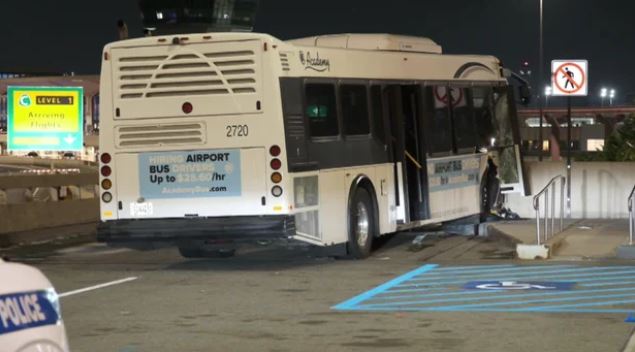
    NEWARK, New Jersey (WCBS) — Thirteen people were hurt when a shuttle bus crashed at Newark Airport early Monday morning, according to transportation officials.

A Port Authority spokesperson said an employee shuttle bus was involved in an accident at 3 a.m. on the Terminal B Departures Level 3 roadway.

Video from the scene shows the bus appears to have hit a concrete wall as it was trying to exit the terminal. The windshield and passenger door were mangled, and the front wheel well was heavily damaged.

Police and EMS responded to the scene and found multiple people with non-life-threatening injuries. They were transported to the hospital for treatment, a spokesperson said.

Transportation officials are investigating the incident. The Level 3 roadway was closed while crews worked to clear debris but reopened at 9:30 a.m.

Please note: This story was provided to CNN Wire by an affiliate and does not contain original CNN reporting. This content carries a strict local market embargo. If you share the same market as the contributor of this article, you may not use it on any platform.

Teens riding e-bikes on runway cause pilot to abort landing at Oakland County airport

By Alysia Burgio

Click here for updates on this story

    Detroit (WWJ) — A near miss at an Oakland County airport when a pilot was forced to avoid landing after a group of teenagers on e-bikes took over the runway. The incident has led airport authorities to increase security.

“It’s horrific. The thought of what a catastrophic incident that this could have been,” said Oakland County Airports director of aviation Cheryl Bush.

Bush says on Aug. 19, around 2 p.m., a group of at least 18 teenagers riding e-bikes trespassed on the property at Oakland Southwest airport in New Hudson.

“They were approaching our runway protection zone, and in fact, a small group of that 18 actually got onto the runway and were popping wheelies on the runway unbeknownst to them the danger they were in at the time,” Bush said.

Bush tells CBS News Detroit that a pilot was intending to land on the runway. The airport operations coordinator used his radio to contact the pilot who was forced to abort his landing. Eventually, the teens sped off, clearing the runway, and the pilot landed safely.

“It was really … a near miss,” said Bush.

The Oakland Southwest Airport is not your traditional commercial airport. It serves private pilots and has about 35 planes taking off or landing each day.

The Oakland County Sheriff’s Office is investigating the incident and working to identify the teens involved.

Public information officer Tyler Sweers sent CBS News Detroit the following statement:

“The incident occurred at approximately 2 p.m. Wednesday, Aug. 19, when several juveniles riding e-bikes were reportedly observed unlawfully on the airport runway. We are working to identify those involved and encourage them, or their parents or guardians, to contact us. Our primary goal is not to impose severe consequences, but to identify those responsible, reinforce the serious safety risks associated with entering an active runway and ensure this type of dangerous behavior does not happen again.”

Meantime, Bush says the airport is stepping up security to install surveillance cameras, fencing, and no trespassing signs and says they will hold the juveniles accountable if caught.

“We’ve never had any incident like this before. It is not a fenced-in airport. The potential of what could have happened in this incident could have been devastating for many families,” Bush said.

In Michigan, trespassing on airport property is punishable by up to one year in prison, a $1,000 fine, or both.

Please note: This story was provided to CNN Wire by an affiliate and does not contain original CNN reporting. This content carries a strict local market embargo. If you share the same market as the contributor of this article, you may not use it on any platform.