Man fights to save his childhood home as city pushes toward demolition of the property

By Vannia Joseph

Click here for updates on this story

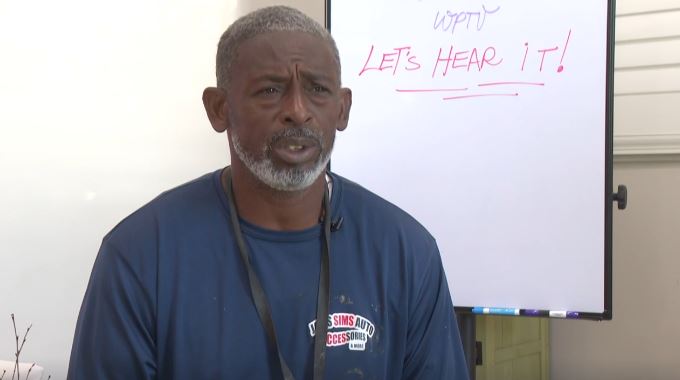
    BOYNTON BEACH, Florida (WPTV) — A Boynton Beach man says he is running out of options to save his childhood home from demolition, turning to a recent “Let’s Hear It” community forum as a last resort.

Javis Sims says the house on Northwest 11th Avenue has been in his family for decades. For years, it has also been at the center of an ongoing dispute with the city.

“The house has been sitting empty since 2009,” Sims said.

Sims inherited the property after his mother passed away, hoping to one day restore it and move back in. More than a decade later, that goal remains out of reach. He says the process has been filled with setbacks.

“I’ve been going back and forth with the city for years now,” Sims said.

Sims says he attempted to comply with city requirements by applying for permits and investing thousands of dollars into surveys, contractors, and engineers. Still, he says he was never able to begin renovations.

“They’ve been giving me fines and penalties, I’ve been paying them… they said to put grass in the yard,” Sims said.

Adding to the challenge, Sims says he discovered significant liens tied to the property. He says the liens have led to loan denials, making it even harder to secure funding for repairs.

For Sims, the home represents more than just property. It is the last physical connection to his childhood and his mother.

“I just want to fix it and live there,” Sims said.

In a petition filed Dec. 5, 2025, in Palm Beach County Circuit Court, the city of Boynton Beach states the home has been considered unsafe for years.

According to an affidavit from the city’s building director, the property was officially flagged in November 2022 under the Florida Building Code and deemed unlivable. The city says Sims was given 30 days to submit a plan to repair, rehabilitate, or demolish the structure.

Court documents indicate that while some steps were taken, deadlines were missed and progress was incomplete.

The city says a building permit issued in October 2023 eventually expired in April 2024 without required inspections being completed. A final demolition notice was later issued in August 2024, with a deadline that also passed, according to the filing.

While the legal process unfolds, Sims says he feels stuck. He maintains he has been trying to meet the city’s requirements, providing documentation of his efforts over the years, but says each attempt has led to new obstacles.

After years of back and forth, both sides now appear to be waiting on the court’s next move. Sims says he is hoping for a path forward.

“I need this to be done. I just want to move on. It’s a big standstill in my life right now,” Sims said.

We reached out to the city of Boynton Beach’s building department to better understand what options, if any, may still be available for Sims to move forward with rehabilitation. As of publication on Wednesday, we have not yet received a response.

Please note: This story was provided to CNN Wire by an affiliate and does not contain original CNN reporting. This content carries a strict local market embargo. If you share the same market as the contributor of this article, you may not use it on any platform.
Man sues sheriff’s office after a database error leads to 14 days in jail for a felony

By Meghan McRoberts

Click here for updates on this story

    MARTIN COUNTY, Florida (WPTV) — A Martin County man is suing the Martin County Sheriff’s Office after he says he spent 14 days in jail for a crime he never committed.

Michael Brewer said it all stemmed from deputies mistakenly identifying him as a felon because of an error in a national crime database.

Brewer filed a lawsuit against the Martin County Sheriff’s Office and the deputies involved in his arrest, accusing them of false arrest, false imprisonment, and malicious prosecution.

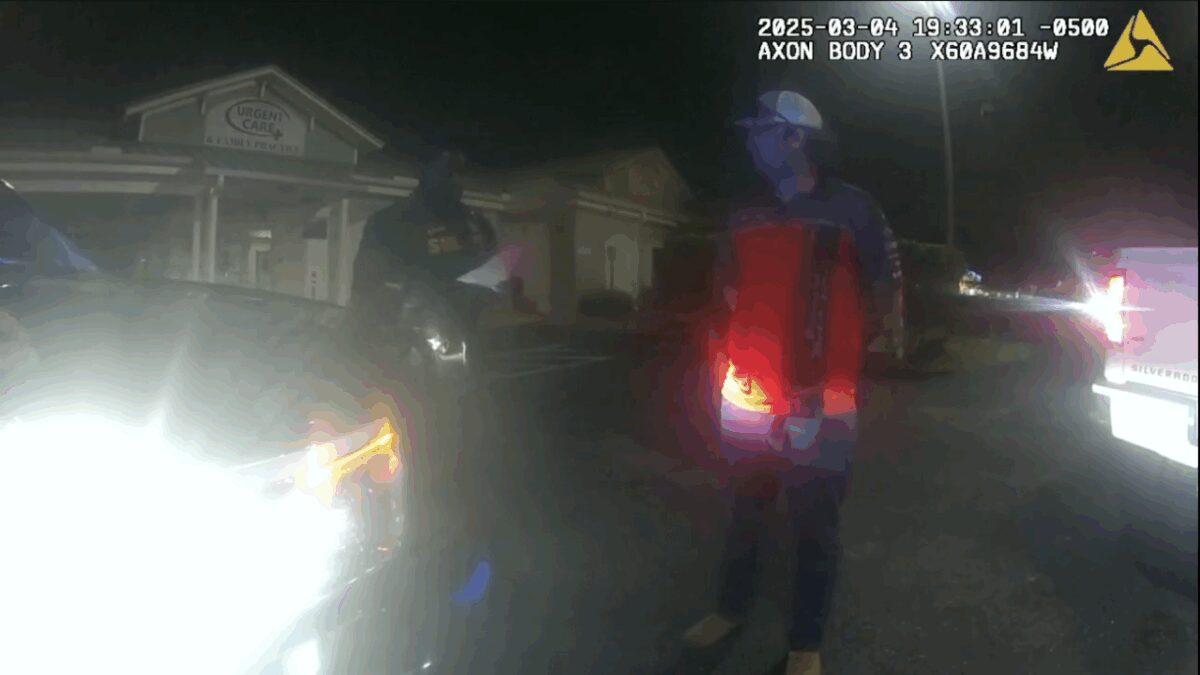
Body camera video shows Brewer in March 2025 pleading with Martin County deputies not to arrest him after they pulled him over, believing he was a felon in possession of a firearm.

“They asked me immediately about firearms and I told them I did have a firearm in my work bag and I was taken out of the vehicle, I was handcuffed and I was told I was under arrest as a felon in possession of a firearm,” Brewer said.

“I’m not a felon, I have a real estate license, I have a concealed carry license out of Kentucky,” Brewer said.

The investigation started days earlier when Brewer went to Lotus Gunworks in Jensen Beach to buy a gun. Surveillance video shows him talking to staff and looking at a gun display.

Brewer said he put down a deposit and filled out paperwork for a background check.

“I went home and was told it was denied,” Brewer said.

“I didn’t know why. I went back and got my refund… I didn’t think anything of it, just kind of went about my day and said I would look into it another time,” Brewer said.

The failed background check was flagged by the Florida Department of Law Enforcement, alerting the Martin County Sheriff’s Office. Deputies believed Brewer was a felon trying to buy a gun, but Brewer and his attorney say that was not the case.

The confusion came from the FBI’s National Crime Information Center database, used nationwide by law enforcement agencies to check criminal records. Brewer’s NCIC record showed a felony arrest in Kentucky more than a decade ago, but court documents from Kentucky confirm the charge was reduced to a misdemeanor.

That update was not reflected in the NCIC.

“I said this has to be a mistake. I’m sure they hear that from every body I was adamant,” Brewer said.

The State Attorney’s Office told me they, the FDLE, and the sheriff’s office all saw the same NCIC record regarding the Kentucky arrest, which read the severity was a felony and the disposition was guilty. NCIC had no mention of the felony charge being amended down to a misdemeanor.

As a result, Brewer spent 14 days in jail.

“The whole time I thought my life was over,” Brewer said.

His attorney, Andrew Strecker, said his team worked to prove otherwise.

“We were able to show original documents establishing Mr. Brewer is not a felon…the remedy we were offered was to reduce the monetary bond and to release him on an ankle monitor,” Strecker said.

Brewer felt he should have been immediately released without having to pay any money for a bond, and without having to wear an ankle monitor.

“So I’m dealing with clients and my ankle monitor is going off constantly, it was making noises,” Brewer said.

That immediately hurt his job and reputation.

“People are going to make up their own assumptions, they’re going to say to themselves well he had to have done something if it went that far,” Brewer said.

Assistant State Attorney Kristen Chase said prosecutors needed certified official records from Kentucky, which can take time.

“I can understand the defendant’s frustration but at the same time, the system did exactly what it’s supposed to do. As soon as we were alerted to the issue, we agreed to a bond reduction so he wasn’t sitting in any longer than necessary but still gave the community the benefit of having a bond in place and GPS monitoring,” Chase said.

Prosecutors eventually dropped the case after receiving certified records showing the misdemeanor conviction.

“I mean that’s all it would take is one phone call to verify I’m not a felon,” Brewer said.

Sheriff John Budensiek defended the actions of his deputies.

“At the end of the day, the deputies did their job, enforcing the law like they’re empowered to do and used the mechanisms in place. If bad information is in the database, it was not information input by MCSO,” Budensiek said.

The FBI, which maintains the NCIC, told me it is up to the agency that made the arrest or that court system to update the database when a case changes.

“Whoever reported it into NCIC reported it as a felony conviction,” Chase said.

I learned it would have been the authorities in Kentucky who were responsible for updating Brewer’s case outcome.

I reached out to Kentucky authorities to ask whether Brewer’s record was properly updated.

“We have reviewed the electronic record response, which reflects a felony charge. However, the disposition section indicates that the charge was later amended to a misdemeanor,” Kentucky State Police said.

Kentucky State Police could not confirm when the NCIC record was updated to reflect the change, but for Brewer, it did not come soon enough to keep him out of jail.

“I’m speaking out because I don’t want anyone else to have to go through this,” Brewer said.

Chase stressed it is very rare for NCIC data to be wrong. She said the system is used in nearly every criminal investigation, and this is the first error like this she has seen in her more than 12 years on the job.

Brewer has started a GoFundMe account to help cover ongoing legal expenses.

Please note: This story was provided to CNN Wire by an affiliate and does not contain original CNN reporting. This content carries a strict local market embargo. If you share the same market as the contributor of this article, you may not use it on any platform.
Baltimore County Animal Services officers save injured dog after 100-foot fall

By Dominick Philippe-Auguste , Raven Payne

Click here for updates on this story

    BALTIMORE (WMAR) — *Editor’s Note*: Baltimore County initially stated that Trooper was thrown after being struck by a vehicle but later stated that this was not accurate. It was also confirmed that a fourth person was involved in the rescue. All newly given details have been added.

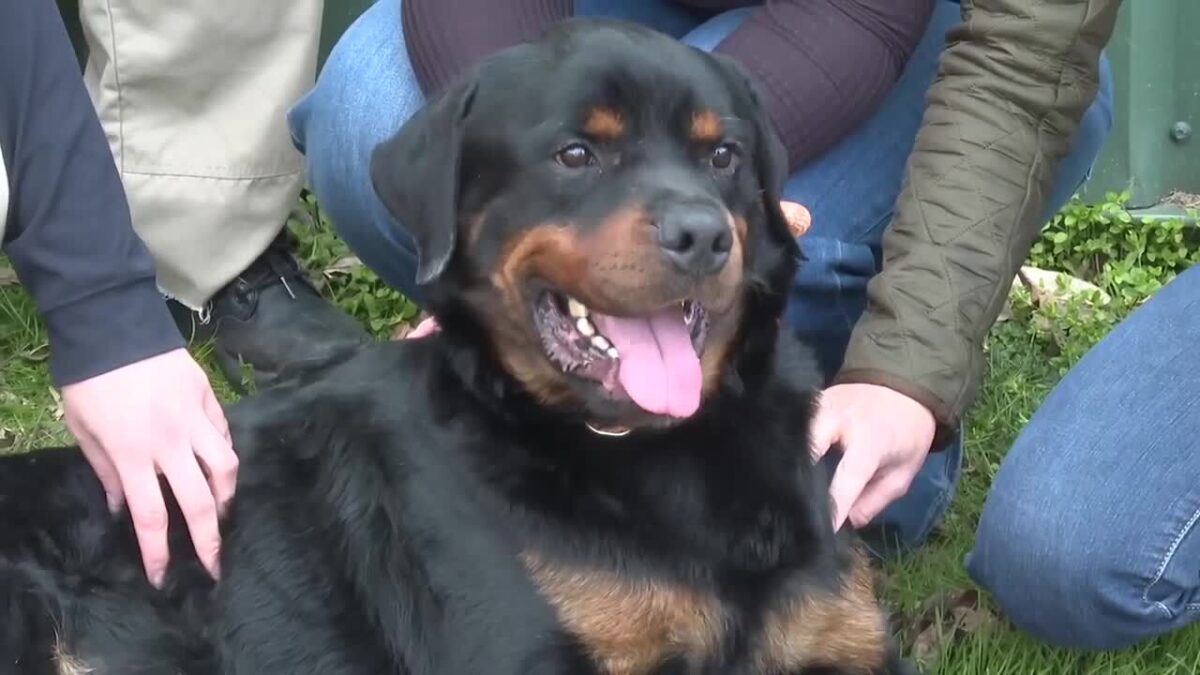
Baltimore County Animal Services officers recently rescued a dog from a dangerous situation, and now he needs a home.

On March 12, a rottweiler now named Trooper was spotted on the roadway near the I-695/I-795 overpass and was followed by good Samaritans who stopped to help.

In fear, Trooper ran and jumped over the railing, falling nearly 100 feet down a steep and muddy embankment.

Officers Jacob Collins, Hannah Sterrett, and Hope Nesbitt, along with their supervisor, Shelby Schultz, responded in the middle of a rainy, snowy day to reach the injured dog.

Schultz said it wasn’t easy.

“It was, I would say, about 100 feet down an embankment of straight mud and ice,” she said. “We were able to safely set him up in a harnessing position, and the four of us were able to maneuver him up the hill.”

Wednesday, the officers involved were honored by County Executive Kathy Klausmeier for their work.

“They are very, very hardworking, and they take excellent care of their pets, not just dogs but cats, guinea pigs,” Klausmeier said.

Surprisingly he had no broken bones, but Jamie Hundt with Lazy Days Rescue told us that he’s not out of the woods yet.

“There might be some ligament issues in both of his front paws, so we’ll probably need some more orthopedic follow-up care that we’re hoping to fundraise to provide,” Hundt said.

Lazy Days connected Trooper with Kelly Mayer, who will foster the 2-year-old pup as he recovers.

“I had pulled a dog with Jamie a few years ago that was the same situation, and he was the best dog, so these ones kind of speak to me, and I messaged Jamie and said, ‘Do you really wanna get that dog?'” Mayer said.

After Trooper finishes crate rest, Lazy Days will follow up with its own vet and continue his care from there.

Please note: This story was provided to CNN Wire by an affiliate and does not contain original CNN reporting. This content carries a strict local market embargo. If you share the same market as the contributor of this article, you may not use it on any platform.
Vehicle safety isn’t a game, but researchers are using one to give AI ‘guardrails’ for self-driven cars

By Blair Sabol

Click here for updates on this story

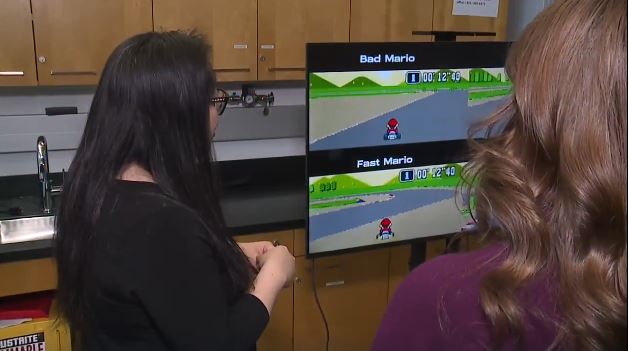
    COLLEGE PARK, Maryland (WMAR) — A 2D blast from the past is now training the future of what 3D AI vehicles may look like on the roads: Super Mario Kart.

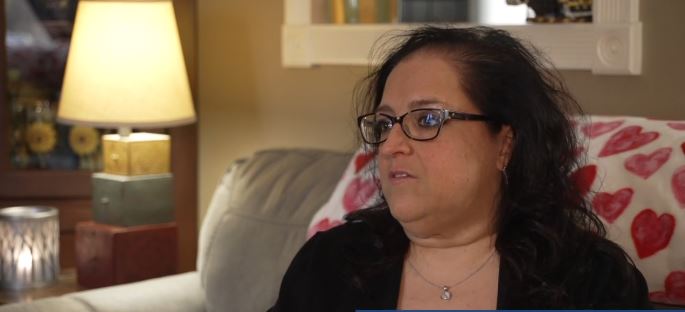
“It’s like our Tamagochis back in the day,” associate professor at the University of Maryland Dr. Mumu Xu said. “We’re trying to provide mathematical guardrails to show that AI systems can be safe.”

Xu studies aerospace engineering and is running the study with her students. They “teach” Mario to drive himself using artificial intelligence, by gamifying the system.

“We give positive points for finishing the lap, negative points for going off the road, negative points for going backwards,” Xu explained. “[Mario] will overtime… will learn what gives him more points and what doesn’t and he eventually learns that if you finish a lap you get the most amount of points.”

It’s all in the name of safety.

“Right now AI is such a black box that there’s no formal way to show that something is safe. And so, it’s a little bit scary if you’re thinking about putting these cars on the roadway because I can’t guarantee that it’s going to perform well every single time,” Xu said.

There were a few road bumps along the way.

“It started out where he was hopping and just wouldn’t move at all. Because he didn’t want to get penalized,” Xu explained. “He ‘reward hacked’ and just basically made loops over and over again to checkpoint one and would come back to the start and come back again.”

But after some trial and error, AI Mario figured out how to finish a lap. Xu says it took six months.

“We train Mario for millions of millions of times,” she explained.

Now that he’s fully on track, they can take the data to figure out which path he takes is the safest, or what needs to change in order to do so.

Notably, Waymo has been seeking state approval in Maryland for clearance for its vehicles to drive in Baltimore.

The company has already been mapping out parts of Baltimore City with human drivers supervising.

The bills are unlikely to pass this session.

The company’s cars have been hitting the roads in 11 other cities, like Austin, TX and Phoenix, AZ. But, in some cases its cars have faced real life obstacles that are more serious than just banana peels or turtle shells.

“Those are all the corner cases that you can’t really hard to predict and so you want to be able to find them before you deploy these vehicles,” Xu said.

Now for the final lap of the game, Dr. Xu says they’re looking to go multi-player.

“One of the things we’re looking at is this notion of transfer learning. It’s that, if you train Mario here, without anybody else. Now we put him in an environment with other players. How’s he going to do?”

Please note: This story was provided to CNN Wire by an affiliate and does not contain original CNN reporting. This content carries a strict local market embargo. If you share the same market as the contributor of this article, you may not use it on any platform.
Woman raising awareness for kidney donations while waiting on her own

By Pheben Kassahun

Click here for updates on this story

    WEST SENECA, New York (WKBW) — March is National Kidney Month, a time to raise awareness about kidney health and the urgent need for living donors.

As of September 2024, nearly 90,000 people were waiting for a kidney, according to the Health Resources and Services Administration. While a record 6,800 living donors donated a kidney in 2019, the waitlist remains extensive.

For patients like Nichole Jenson, finding a donor is a chance at a full life. Jenson has faced numerous health challenges since 2017, beginning with lipedema and lymphedema, a swelling disorder.

“In 2021, I ended up having sepsis, and I was hospitalized for 11 days in the ICU and then had to go into rehab, basically to relearn to walk and have lymphoedema therapy. And at that time, my kidneys almost went into full renal failure,” Jenson said.

Jenson learned her kidneys were functioning at around 15 percent. Following the diagnosis, she shifted her lifestyle, lost 200 pounds, and focused on her health. She is now on the kidney transplant list and advocates for others on the same journey.

“That’s probably the scariest part of it all, I’ve been through so many surgeries, and I can handle all that, but I think being on dialysis is the scariest thing for me,” Jenson said.

Kidney disease is often described as the “silent killer” because symptoms rarely appear until the disease reaches advanced stages, making dialysis a necessity.

“When the kidney is starting to get scarred down and you don’t have a 100 percent function, you go down to 90 percent, you don’t notice it. You go down to 80 percent, you don’t notice it, 70 percent, 60 percent, 50 percent, actually, you don’t start noticing it until your kidney function is around 20 percent or less,” Dr. Liise Kayler said.

Kayler is the division chief of transplantation at ECMC. She said that without functioning kidneys, people die within about three weeks.

“It eliminates toxins and fluids from your body. If you don’t have something doing that, then the toxins and fluids build up,” Kayler said.

Symptoms of kidney failure include puffy ankles, shortness of breath, itching, nausea, and vomiting. Because these mirror other illnesses, doctors emphasize the importance of regular checkups.

“They can see your kidney function very easily with a simple blood test; they can see it every year and see which direction it’s trending and how good or good it is or not,” Kayler said.

If a patient’s kidney function trends in the wrong direction, they are referred to a specialist. Most people waiting for a transplant rely on dialysis to survive.

“It is a great treatment in terms of it keeps people alive, but it’s hard on a person’s body,” Jeremy Morlock said. “It’s hard on a person’s mental health. Most people on dialysis are treated four hours a day, three days a week. It’s exhausting.”

Morlock, the director of the Kidney Foundation of Western New York, aims to raise awareness about the life-changing benefits of becoming a living donor.

“It’s a pretty wonderful thing. If you want to be a kidney donor, the transplant center will do a really thorough medical workup to make sure that the person is able to undergo that surgery, that they’re going to be able to function well long term with just one kidney,” Morlock said.

For patients waiting on the list, the support of medical teams and potential donors makes all the difference.

“They’re so supportive and they make the process supportive and they make the process just so much better, and I’m so thankful for all of them,” Jenson said.

Becoming an organ donor requires extensive testing to ensure the donor’s safety and the compatibility of the organ.

For patients on the waiting list, the support of medical teams and potential donors makes all the difference.

Please note: This story was provided to CNN Wire by an affiliate and does not contain original CNN reporting. This content carries a strict local market embargo. If you share the same market as the contributor of this article, you may not use it on any platform.
Western New Yorkers donate more than $16K in gift cards to TSA agents

By Maki Becker

Click here for updates on this story

    CHEEKTOWAGA, New York (WKBW) — Western New Yorkers are stepping up to help TSA agents at the Buffalo Niagara International Airport who have been working without a paycheck for more than five weeks.

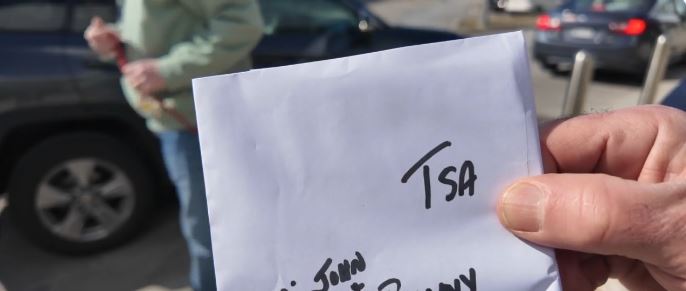
The airport put out the word on Monday, and by 8 a.m. Tuesday, dozens of people began dropping off gift cards of all kinds to support the workers.

According to NFTA’s Kelly Khatib, the Buffalo Niagara International Airport recieved $16,000 in gift card donations during Tuesday’s drive.

“There’s people in Western New York that care more than the darn government,” one person said.

Volunteers whose usual job is to bring their therapy dogs to the terminal were busy collecting the cards on Tuesday.

“We’ve had McDonald’s, we’ve had Aldi’s, we’ve had Tops,” a volunteer said.

“I feel uplifted by all this generosity. I’m just amazed by how generous people are,” a volunteer said.

“This is phenomenal. The people just keep coming,” a volunteer said.

So far, the Buffalo Niagara International Airport isn’t seeing the long lines like at other airports, but the TSA agents here are nevertheless not getting paid as the partial government shutdown drags on.

This story was reported on-air by a journalist and has been converted to this platform with the assistance of AI. WKBW verifies all reporting on all platforms for fairness and accuracy.

Please note: This story was provided to CNN Wire by an affiliate and does not contain original CNN reporting. This content carries a strict local market embargo. If you share the same market as the contributor of this article, you may not use it on any platform.
Oregon woman faces hundreds of felony animal cruelty charges over alleged mistreatment of dairy goats

By Don Nelson

Click here for updates on this story

    VALE, Oregon (KIVI) — A mother and her son are facing hundreds of felony animal cruelty charges for the alleged mistreatment of dairy goats at their Nyssa, Oregon farm.

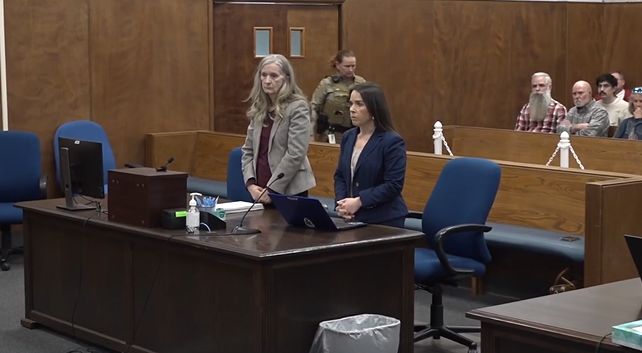
Taunia Barr appeared in Malheur County Court on Tuesday, one week after her son, Aaron Barr, was arraigned on the same 249 felony charges.

With the words “All rise,” Tuesday’s arraignment began.

The arraignment follows an Eastern Oregon Grand Jury indictment that levied more than 400 animal cruelty charges against Taunia and Aaron Barr, the owners of the Grand Barr Dairy in Nyssa.

As they did during last week’s arraignment, prosecutors asked Judge Erin K. Landis to bar Taunia Barr from possessing any animals until her June trial.

Barr’s defense attorney asked for one exception.

“Miss Barr has experienced some trespass to her property, which she only became aware of because her dog barked and alerted her to that fact. So, we would ask permission from the court to retain her dog as a form of personal protection.”

The judge and prosecution agreed to allow the exception.

As we previously reported, Dan Baden from PETA told Idaho News 6 the seizure in this case was significant and claims the charges stem in part from two PETA undercover investigations, which prompted the Malheur County Sheriff’s Office to seize hundreds of goats in February.

Malheur County Sheriff Travis Johnson says the Barrs are entitled to their due process.

In the meantime, an operation in California has agreed to take in the goats.

Sheriff Johnson tells us their health is improving.

“Keep in mind these are milking goats, so they require a little different care; you just can’t stop milking a milking goat and expect it to be OK,” explained Sheriff Johnson.

In Oregon, a felony animal cruelty charge typically constitutes a Class C felony, which carries a maximum penalty of five years in prison and a fine of up to $125,000.

Taunia Barr is expected back in court for a status hearing on April 1st.

Please note: This story was provided to CNN Wire by an affiliate and does not contain original CNN reporting. This content carries a strict local market embargo. If you share the same market as the contributor of this article, you may not use it on any platform.

Mesa grandmother ghosted by contractor over grandkids’ wrestling ring

By Jordan Bontke

Click here for updates on this story

    MESA, AZ (KNXV) — A Mesa grandmother who spent hundreds of dollars on materials to build a mini wrestling ring for her grandchildren says the contractor she hired took the items and disappeared. Lisa Boshears has four grandsons and one granddaughter, ages 2 to 9, who love WWE wrestling. She shared videos of her grandchildren’s reaction of pure joy when they were surprised with a wrestling-themed Christmas tree.

Boshears said when the kids recreate wrestling moments in the house, it increases the ‘wear and tear’ on the furniture.

“They’ll jump on the furniture and go up, and just dive on the other boy on the ground. Then they’ll say, I got the smack down for you, I got the smack down for ya,” Boshears said with a smile on her face.

Last fall, Boshears thought of an idea to build a mini, padded wrestling ring for her grandkids to play on and practice their favorite wrestling moves.

“I’m going to make a ring for them, I’ll be the best grandma ever,” Boshears said.

Boshears had the space all figured out for the project. “Move that tent out of the way and that right there out of the way and we’ll have all that room right there,” Boshears said.

She also planned out the design.

“I’m getting these colored…” Boshears said.

Boshears hired a friend of a friend who works in construction. She bought about $500 worth of materials and dropped them off with the contractor.

As Christmas came and went, Boshears said the contractor ghosted her after the holiday and stopped replying to her messages.

“I want to tell him, no hard feelings, my grandkids did nothing to you, don’t take it out on them,” Boshears said.

ABC15 reached out to the person Boshears hired but have not heard back yet.

Please note: This story was provided to CNN Wire by an affiliate and does not contain original CNN reporting. This content carries a strict local market embargo. If you share the same market as the contributor of this article, you may not use it on any platform.

In Ethan Ardrey’s memory, community walks for mental health awareness

By Athena Kehoe

Click here for updates on this story

    TUCSON, Ariz. (KGUN) — At Cienega High School, the community is coming together this Saturday for an annual mental health walk.

In 2020, 13-year-old Ethan Ardrey died after a mental health struggle. Now, his family is working to make sure other kids and their parents have access to the support they need.

“This is him. Truly him. Fun, silly, always having a good time.”

That’s how Ethan’s mom, Christina Winner, remembers him.

She says her son was in therapy, but now wishes she had known more about what other help was out there.

“I would have never guessed it was ever going to happen just because of how well he was doing. After losing Ethan though and talking to all these people, there are just so many other options out there that I felt we could have done instead of just therapy that I didn’t even know about,” Winner explains.

After Ethan passed, Winner says support came from everywhere, even strangers.

“Just so kind and supportive and loving when they didn’t have to be and that obviously stuck with us really hard,” Winner explains, “on the other side of that we had a lot of people reaching out to us letting us know that their children were struggling too and that they didn’t know what to do.”

As she heard from more families searching for answers, the idea for the mental health walk took shape. The Ethan Ardrey Project was also formed.

“The money goes towards scholarships for high schoolers in the Vail School District and then it also goes to therapy costs for any kids in the district at any age level,” Winner says.

Since then, the walk has grown into something bigger than she ever imagined. “I really hope that people leave here feeling that they are cared for, they’re appreciated, they’re loved, and that there’s a team of community members that really want people to stay another day to be here.”

So far, the event has raised more than $100,000 over the years.

“Even if they feel no one’s going to understand, there is somebody who’s going to care enough that wants to help them,” Winner says.

Please note: This story was provided to CNN Wire by an affiliate and does not contain original CNN reporting. This content carries a strict local market embargo. If you share the same market as the contributor of this article, you may not use it on any platform.

LA model accused of meeting men online, burglarizing their homes faces 6 felony charges at trial

By Marc Cota-Robles and Michelle Fisher

Click here for updates on this story

    LOS ANGELES (KABC) — A Los Angeles model accused of meeting men online and burglarizing their homes has been ordered to stand trial on on six felony charges, prosecutors said Tuesday.

Adva Lavie, also known as Mia Ventura, was held to answer on two counts of unauthorized use of personal identifying information, two counts of grand theft, one count of first-degree residential burglary with person present and one count of first-degree residential burglary.

She previously pleaded not guilty to all charges.

“This ruling means the evidence in this case will now be presented before a jury,” said Los Angeles County District Attorney Nathan Hochman. “At her trial, we will prove beyond a reasonable doubt that this defendant exploited trust built through online relationships to gain access to victims’ homes and steal from them. Her ability to deceptively influence others, whether in person or online, has now come to an end. Our office is committed to holding accountable anyone who uses deception and manipulation to prey on others.”

Lavie is scheduled to be arraigned on April 6 in Van Nuys. She has been released from custody on an ankle monitor and is ordered to stay away from the named victims.

Detectives say Lavie used dating apps and developed friendships to rob, steal and extort wealthy older men and younger women in Westlake Village, West Hollywood, Los Angeles and Beverly Hills.

They say she posed as a girlfriend or travel companion, then stole cash, credit cards and high-end designer items.

If convicted on all counts, Lavie faces up to over 11 years in state prison.

Michael Sartain, host of the podcast “Access Vegas,” spoke with Eyewitness News in October and accused Lavie of raiding women’s purses, pocketing cash and credit cards during the recording of an episode.

The allegations of deception stretch beyond Southern California, with police reports filed against Lavie in Nevada, Florida and even overseas in France and Italy.

“Even though L.A. County might not have jurisdiction over the cases overseas or in different states, they can actually bring in those witnesses to come in and testify in their case to show this wasn’t just a one-time thing, that this was part of a broader course of conduct,” former prosecutor RJ Dreiling said.

Please note: This story was provided to CNN Wire by an affiliate and does not contain original CNN reporting. This content carries a strict local market embargo. If you share the same market as the contributor of this article, you may not use it on any platform.