5-year-old Kauai boy hospitalized after Kuhio Highway crash; family overwhelmed by community support

By Kimber Collins

Click here for updates on this story

    HONOLULU (KITV) — A Kauai family is facing an unthinkable road to recovery after a single-vehicle crash left a five-year-old boy with serious injuries just days before Christmas.

Police said the crash happened on Tuesday, Dec. 23, around 5 p.m. on Kuhio Highway near the Wailua Golf Course. According to investigators, a 2025 Toyota SUV traveling northbound sideswiped a guardrail, struck a utility pole and spun. During the crash, a child was ejected from the vehicle.

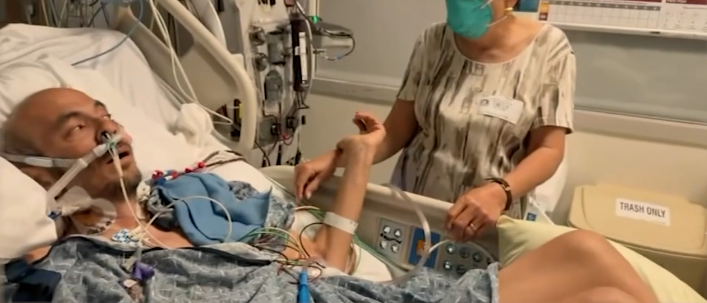
The child, identified by family as Mateo, was initially taken to Wilcox Medical Center before being life-flighted to Kapiolani Medical Center for further treatment.

Police said a 35-year-old woman from Wailua may have been driving the vehicle. Two other passengers were not injured. No other vehicles were involved. The cause of the crash remains under investigation, and toxicology results are pending. Kuhio Highway was closed for approximately two hours while Kauai Police conducted an on-scene investigation.

Mateo’s uncle, Chase LaMadrid-Engel, said the past few days have been filled with uncertainty, but also hope.

“He’s doing a lot better than the past few days,” LaMadrid-Engel said. “The doctors told us this morning he’s looking good, but we’re not out of the woods yet.”

Family members said Mateo has already undergone multiple surgeries to address injuries to his internal organs, which his uncle says were damaged during the crash. Doctors are also continuing to monitor injuries to his arm and shoulder.

“They’re working on helping his arm recover the best they can,” LaMadrid-Engel said.

While police reports indicate the child was ejected from the vehicle, the family said they are still searching for answers.

“It was a freak accident,” LaMadrid-Engel said. “We don’t really know what happened.”

Family said Mateo was in the vehicle with his parents, his mother, Leeanna and his father, along with his three-month-old baby sister, Aliana. Everyone else in the vehicle was unharmed.

“They’re hanging in there,” LaMadrid-Engel said of Mateo’s parents. “They’re being strong for him. We’re all trying to be strong.”

Doctors said Mateo has shown encouraging signs, including responding to family members and nodding to acknowledge them. His uncle said scans show no traumatic brain injury, and medical staff are working to slowly wean him off a ventilator.

“We’ll take any good news we can,” he said.

Family members describe Mateo as an active, stubborn and determined five-year-old who loves being outside.

“He loves soccer. He loves riding his bike,” his uncle said. “He’s on his third bike already. He’s a little hard-headed, and I think that trait is going to help him get through this.”

One of LaMadrid-Engel’s last memories with Mateo came just the night before the crash.

“He was trying to help cut my hair in the garage,” he said. “We kept telling him no, but he kept trying anyway. That’s just who he is.”

As medical bills continue to grow, the family has launched a GoFundMe that has already raised more than $21,000. LaMadrid-Engel said the outpouring of support has been overwhelming.

“Thank you so much for your support, all the texts, all the messages,” he said. “We may not be responding to everyone, but we see it. We feel it. We love Kauai.”

He said family and friends, including relatives on the mainland, have stepped in to help with lodging and expenses while Mateo remains hospitalized on Oahu.

“This isn’t where we wanted to spend Christmas,” LaMadrid-Engel said. “But we’re thankful for the love we’re surrounded by.”

Police ask anyone who may have witnessed the crash to contact Officer Henshaw at 808-241-1616. Anonymous tips can also be submitted to Crime Stoppers Kauai at 808-246-8300, online at crimestopperskauai.org or through the P3 Tips mobile app.

As for Mateo, his family said the journey ahead is still uncertain, but they’re holding onto faith, strength and the support of the Kauai community.

“We’re going to fight through this together,” his uncle said. “There’s no other option.”

Please note: This story was provided to CNN Wire by an affiliate and does not contain original CNN reporting. This content carries a strict local market embargo. If you share the same market as the contributor of this article, you may not use it on any platform.

Video shows off-duty NYPD officer saving choking 1-year-old

By Dave Carlin

Click here for updates on this story

    NEW YORK (WCBS, WLNY) — An off-duty NYPD helped a frantic mother whose infant was choking.

If not for his brave actions, the baby girl might not be alive.

“I went out and saw the mom with the baby lifeless in her arms” Video from a home surveillance camera shows NYPD Officer Freddy Cerpa saving the life of the unresponsive 1-year-old girl. He checked her airway and then patted her on the back until she was breathing again. It happened on Dec. 7 at around 2 p.m.

Friday at NYPD headquarters, he spoke about his heroic actions, which he called just part of his job.

“I was home getting ready to go to work,” Cerpa said. “I hear banging on my door … ‘Please help my baby.’ I went out and saw the mom with the baby lifeless in her arms.”

The taps to the baby’s back he learned during police academy training about a year ago.

“I felt her chest go up and down, meaning that she’s starting to breathe again,” Cerpa said. “It’s an amazing feeling to know I was able to help save a baby’s life before Christmas.”

The parents knew they could get help by running to his front door because they are longtime family friends. The couple asked not to be identified.

“They gave me their gratitude about helping them and just let me know the baby’s fully recovered,” Cerpa said.

That very same week there was a similar save. On Dec. 10, NYPD Det. Michael Greaney saved a choking 8-month-old girl. That impressive rescue witnessed by many driving by along the Bronx River Parkway.

“Our mission is to preserve life, and I feel that’s the most Important part of being a police officer,” Cerpa said.

He said he will remember forever the rush of relief he felt.

Cerpa is assigned to the 43rd Precinct stationhouse in the Bronx. There’s one thing he wants every member of the public to know.

“If you have any precautions you want to take, like taking a CPR class there are resources you can find online,” Cerpa said.

That’s advice from an officer who knows when he’s off duty, he’s always on call.

Please note: This story was provided to CNN Wire by an affiliate and does not contain original CNN reporting. This content carries a strict local market embargo. If you share the same market as the contributor of this article, you may not use it on any platform.

Running helped turn her life around, now it’s helping her help others

By Edie Kasten, Joe Donlon

Click here for updates on this story

    CHICAGO (WBBM) — An Indiana woman who found inner peace and her mission in life by running is changing the world one footstep at a time.

“I am not an elite runner. I am not a fast runner. I am just a person who knows that running can change so much,” Judy Kupsik said.

Running has changed so much in Kupsik’s life, but first there was so much pain.

“I lived a pretty quote-unquote normal life here in Highland. I had a pretty stable household growing up. … My mom was always sick, though, so that always caused a lot of fear and anxiety to build up within me,” she said. “When you’re filled with that much anxiety and fear, it has to go somewhere, and it can lead to dangerous things.”

In Kupsik’s case, it led to an alcohol addiction that began in her teens and went on for years.

“It was drinking to numb the pain, and to numb the hurt,” she said.

In 2012, desperate to find her footing, she returned to a childhood hobby – running. At first it, was just for fun. Then it hit her.

“I felt good, and I’m like, ‘You know what? I think I can do this. I think I can run a half marathon,'” she said. “So I did. I just went out and ran a half marathon.”

She ran her first full marathon in Chicago in 2014 as her 13-year marriage was ending.3

“There was just something inside of me that just needed to keep running and keep moving forward instead of backward into the pain and into the hurt,” she said.

But that race wasn’t enough.

“That high wore off very quickly, and I was still left seeking,” she said. “All of a sudden, going to be a single mom. How was I going to do this? I was at the end of myself. Completely at the end of myself.”

It all began to change on Christmas Eve 2014, when Kupsik walked into Faith Church in Highland.

“I knew about this church was here, but I had never been here before,” she said. “The music and the message just broke through my heart, and I surrendered my life to God that night.”

One Sunday in 2016, she heard about a church mission trip to help an orphanage in Haiti.

“I had never been out of the country before, but I want to go. I want to do that,” she said. “I want to go help these kids if I can help these kids.”

But first, she had to stop drinking, and she did with the help of a dedicated mentor. She took the trip to Haiti, and it had a profound impact.

“Haiti is one of the poorest countries in this Western Hemisphere. I had never seen anything like that before in my life. I literally held children in my arms, and I felt their bones in my hands where there should have been fat,” she said. “This should not be like this. It shouldn’t be happening. So, when I got back, that resolve of, like, ‘What can I do in this world to help this?'”

In 2017, she joined the church running team, which raises funds for World Vision, a nonprofit that brings clean water and other resources to places that desperately need them.

“When clean water comes into a community, that’s where everything starts to change; when people are no longer getting sick, when they no longer have to walk miles for dirty water,” she said. “Moms are able to stay home or start small businesses and raise funds for their family.”

Kupsik is determined to help make it all happen. This year, she ran the Chicago Marathon to raise funds for World Vision.

She also ran marathons in Fox Valley and in Nairobi, Kenya, to benefit Hope Mobility, a nonprofit which provides wheelchairs and other equipment for people in need. She did all three big runs in just 35 days.

On any given day, you can still find Kupsik pounding the pavement and finding grace.

“I will run for hours, no music, no other people with me; just me, my breath, my body, my surroundings, and it literally shuts everything off,” she said. “Everything just stops, and it’s just, like, this calm and this peace.”

Please note: This story was provided to CNN Wire by an affiliate and does not contain original CNN reporting. This content carries a strict local market embargo. If you share the same market as the contributor of this article, you may not use it on any platform.

Boy with autism, 6, rescued from Florida pond 15 months after similar incident

By Kerry Breen

Click here for updates on this story

    FLORIDA (WFOR) — A boy with autism, 6, was rescued from a pond on Christmas Day by Florida police, fewer than 18 months after a similar incident led to the child being enrolled in swimming lessons.

The boy, identified by police as Coco, was found in chest-deep waters, the Volusia County Sheriff’s Office said in a news release shared Friday morning. Deputies in a sheriff’s helicopter helped lead officers to the child.

Video shared by the sheriff’s office shows the police searching the area for Coco before the helicopter crew spots him in the water. The child was cold but unharmed, police said.

Coco is nonverbal and known to be attracted to water, police said.

In August 2024, Coco, then 5, escaped his home through a second-story door. His escape set off an alarm inside the house and led his family to call the police. Coco’s family said at the time he was attracted to water.

Volusia County Sheriff’s Deputy Wes Brough found Coco clinging to a branch in a pond in his Deltona neighborhood, the office said on social media at the time. Brough carried the boy to dry land, where he was medically cleared and returned to his family.

After the incident, Coco started swimming lessons, the sheriff’s office said. Deputies also spoke with his family about improving precautionary measures on the house and having Coco wear a GPS tracker at all times.

Authorities urge families of children with autism or special needs to use multiple layers of protection, including door alarms, secure fencing, and wearable tracking devices, CBS affiliate CBS12 reported.

“Most importantly, we’re just glad he’s back home safe,” the sheriff’s office said.

Please note: This story was provided to CNN Wire by an affiliate and does not contain original CNN reporting. This content carries a strict local market embargo. If you share the same market as the contributor of this article, you may not use it on any platform.

Harford County family displaced after Christmas Eve fire searching for missing dogs

By Ashley Paul, Adam Thompson

Click here for updates on this story

    BALTIMORE (WJZ) — A family of six are displaced, and two of their dogs are missing, after a fire destroyed their Harford County home on Christmas Eve.

People driving around looking at holiday lights alerted emergency responders to the fire in the 500 block of Flintlock Dive in Bel Air. Officials said the fire appeared to have been sparked by an electrical issue with the Christmas tree.

Fire officials said witnesses driving through the neighborhood noticed the fire in the living room of the home and stopped to tell the owners, who weren’t home at the time.

They reported hearing dogs inside the home and attempted to save them by kicking the front door open, while another neighbor broke the back door window in an attempt to save the pets, according to fire officials.

The estimated cost of damage is about $500,000.

Please note: This story was provided to CNN Wire by an affiliate and does not contain original CNN reporting. This content carries a strict local market embargo. If you share the same market as the contributor of this article, you may not use it on any platform.

Wrong-way driver arrested on Christmas Day after chase through several Massachusetts towns

By Matt Schooley

Click here for updates on this story

    BOSTON (WBZ) — Massachusetts State Police arrested a Worcester resident after troopers say they were driving the wrong way on Interstate 95 and several communities on Christmas Day while under the influence of drugs.

Paulius Balciunas, 36, was arraigned in Newburyport District Court Friday on charges of operating under the influence of drugs, negligent operation, failure to stop for police, resisting arrest, and speeding.

It happened Thursday when Balciunas was allegedly driving south on I-95 North in Newbury.

Witnesses said the wrong-way driver used Exit 83 to get onto Scotland Road in a black Subaru Legacy. Balciunas was allegedly driving erratically, switching lanes, and driving in the breakdown lane on the wrong side of the road.

Troopers followed the Subaru on local roads. Officers from Newburyport, West Newbury and Groveland attempted to stop Balciunas, who police say refused to pull over.

The Worcester resident eventually passed the Newburyport rotary on Route 1, then stopped on High Street.

State police said Balciunas sat in the driver’s seat and waved an unknown item. He allegedly ignored police commands to get out of the car, show his hands and turn off the car.

Several minutes later, troopers approached the Subaru and pulled Balciunas from the car.

Balciunas asked for medical attention. The driver was taken to an area hospital by ambulance and treated before being brought to police barracks for booking.

Massachusetts State Police said they later determined Balciunas was allegedly under the influence of drugs.

No injuries were reported during the police chase.

Please note: This story was provided to CNN Wire by an affiliate and does not contain original CNN reporting. This content carries a strict local market embargo. If you share the same market as the contributor of this article, you may not use it on any platform.

Avalanche danger to increase in Colorado’s high country

By Austen Erblat

Click here for updates on this story

    COLORADO (KCNC) — A recent thaw-freeze cycle, coupled with the high chance of a snowstorm, is making the avalanche danger jump from a level 1 to a level 3 this weekend, according to the Colorado Avalanche Information Center.

CAIC says avalanche danger has been low for much of the month.

Officials say that’s unusual and largely due to warm weather and a lack of snow.

They anticipate the danger level will rise from Level 1, where it is now, to Level 3 by Sunday.

“Most of the avalanches are going to be breaking on the old snow surface,” CAIC director Ethan Greene said. “So not huge avalanches, but big enough to injure or kill you. If you’re headed into the mountains, you should check the avalanche forecast. Make sure you know what the danger is, where you’re going, and if you’re going into avalanche terrain, make sure you carry rescue equipment.”

That equipment should include a transceiver, probe pole, and shovel.

As of Saturday morning, CAIC’s avalanche forecast showed “considerable” avalanche danger north of Steamboat Springs, moderate danger throughout the high country, as far west as Grand Mesa and as far south as the area just north and east of Pagosa Springs.

The rest of the state showed low or no danger, but the weather was set to change later in the weekend, highlighting the importance of checking that forecast.

Please note: This story was provided to CNN Wire by an affiliate and does not contain original CNN reporting. This content carries a strict local market embargo. If you share the same market as the contributor of this article, you may not use it on any platform.

Accumulating snow expected across Colorado; atmospheric river on the West Coast sending leftover moisture to Rockies

By Joe Ruch

Click here for updates on this story

    COLORADO (KCNC) — A tale of two forecasts is shaping up across Colorado this weekend.

The next system approaches with an atmospheric river currently impacting California, sending some leftover moisture into Colorado. Accumulating snow begins across the high country early Saturday morning, with impacts increasing by Saturday evening along the I-70 corridor and during peak ski traffic.

Confidence is high in the mountains. Most locations in the high country should see 4 to 8 inches, with 6 to 12 inches common at higher elevations. Snow totals closer to 12 inches are likely near Vail Pass and the Eisenhower Tunnel, while the far northern mountains, including Rabbit Ears Pass, could see up to 18 inches by Sunday morning.

Travel impacts are expected to be significant late Saturday night into early Sunday. Delays are likely, and overnight closures on Interstate 70 cannot be ruled out. If possible, delaying mountain travel until later Sunday morning is advised. Given how warm conditions have been recently, roads should improve relatively quickly once snowfall tapers off.

Forecast confidence decreases for the Front Range, including downtown Denver. The realistic range remains anywhere from a trace to 5 inches, but confidence is higher that snowfall will land somewhere in the middle of that range. Current projections call for 1 to 3 inches along the I-25 corridor, with up to 5 inches possible in the foothills.

The biggest challenge will be temperatures. Highs reach 59 degrees on Saturday, with snow arriving roughly 12 hours later. Much of the initial snowfall will be lost to melting, especially on roadways. While snow may fall for several hours overnight, one to two inches could melt on contact.

Expect a messy, slushy accumulation. Most roads should remain wet to slushy, with localized slick spots, especially on bridges, overpasses, and untreated surfaces.

Please note: This story was provided to CNN Wire by an affiliate and does not contain original CNN reporting. This content carries a strict local market embargo. If you share the same market as the contributor of this article, you may not use it on any platform.

New report paints grim picture of water use problems with Colorado River

By Alan Gionet

Click here for updates on this story

    COLORADO (KCNC) — A new report compiled by the University of Colorado’s Colorado River Research Group warns that threats to the river’s water supply are now so severe that they pose a significant risk to the water supply in seven Western states and tribal areas, potentially impacting the economy and governance.

The report is titled “Colorado River Insights 2025: Dancing with Deadpool.” It is a compilation of reports by a variety of experts looking at different aspects of high demand and supply shortages that have led to low water levels in places like Lake Powell and Lake Mead. These issues threaten both power generation and supply.

“What’s missing is urgency. The window for decisive, collaborative action is closing fast,” said Douglas Kenney, director of the Western Water Policy Program of the Getches-Wilkinson Center at the University of Colorado Law School and chair of the Colorado River Research Group.

This warning comes after more than two years of re-negotiation of a 100-year-old water use pact that sets aside water for use by Western States, native tribes, and even Mexico, missed a November deadline for cutting a deal. That deadline is now pushed back to Feb. 14, 2026.

“The Colorado River Compact of 1922 has some language in it about how much water must move from the upper states to the lower states, and we’re getting very close to dropping below the threshold specified in that compact,” said Kenney.

At a conference in Las Vegas, Kenney said he was reading the room, and there were still vast divides.

The lengthy report has a series of conclusions that paint an ugly picture of the future. Reservoirs that formerly stored four years of river flows are currently more than two-thirds empty. The report indicates that a single dry year or two could jeopardize hydropower, water deliveries, and even physical conveyance downstream as Lake Powell and Lake Mead fall below critical thresholds.

“The problem is that there is more water that’s been promised to people than has ever existed, and that will ever exist. I mean, it’s just a simple case of everyone can’t have what they were promised, and so the solution to that is everyone needs to agree to take less than they were promised,” said Kenney.

But the political will to do so has been hard to generate. The Upper basin states – those that use less water than they add to the river system, Colorado, Utah, Wyoming and New Mexico- are loath to give up rights to claim water for use. Colorado maintains that it has never used all the water it was allowed to under the 1922 pact.

Lower basin states are primarily consumers of Colorado River water. They are Arizona, Nevada and California. California is a major consumer, and much of the water goes to agriculture, over 70%. California uses more than 50% of the power from the Hoover Dam on Lake Mead. There are half a million acres of high water-consuming alfalfa, as well as winter vegetables and other crops, in the state’s Imperial Valley. Farmers are faced with the potential of growing less thirsty crops, but say they should not be alone in cuts.

The original pact was negotiated at a time when the Colorado River had more water, and there was far less population in the Western States. Experts in the report note that climate change has been part of the cause of reductions in available water.

“In the last 25 years, the flows in this basin are down about 20% from what they were the previous century,” said Kenney. “And that correlates quite closely with the fact that this basin got a couple degrees hotter. You know, the whole world got hotter, but parts of this basin got even hotter than that.”

The report indicates that more heat means more rapid evaporation of snowpack, so even if the snowpack is the same, less gets into the basin. Growing seasons are longer, and the vegetation takes more moisture for growth, rather than re-supplying the basin.

Kenney says the Federal Bureau of Reclamation may need to play a bigger role.

“I’ve been writing about this since 1991. I mean, my God, that’s 35 years ago,” said Kenney.

“This is just like driving a car at two miles an hour toward a cliff in the distance, and now we’re right up against that cliff, and we still don’t have the good sense to put our foot on the brake. I mean, it’s just so frustrating, because we’ve had so much warning that this was coming.”

Please note: This story was provided to CNN Wire by an affiliate and does not contain original CNN reporting. This content carries a strict local market embargo. If you share the same market as the contributor of this article, you may not use it on any platform.

Chinook salmon returning to Alameda Creek in Niles Canyon

By Ryan Yamamoto

Click here for updates on this story

    SAN FRANCISCO (KPIX) — Almost every day, you will find amateur photographers Dan Sarka and David Young traversing the trails around Alameda Creek, looking to capture and document the return of Chinook salmon in the Niles Canyon area.

“I catch more fish with cameras than I do with a hook,” joked Young. “I used to liken it to a kid in a candy factory, but it’s better, it’s better.”

Sarka would agree, and will patiently spend two to three hours staring at the creek, hoping for any sign of salmon.

“We are looking for ripples in the water,” Sarka said. “And when you see it, it is total excitement to see those fish struggling to make it up into the watershed and beyond. It is a fabulous experience.”

Together, the pair have taken dozens of photos of salmon, including the most recent migration through the creek, which began this fall.

Young even recorded a video of a salmon leaping over a weir.

“I got the final leap,” said Young. “I have several leaps before that that weren’t successful, but the very last one, he leapt all the way across and made it by, you know, a good 2 to 3 feet.”

The return of Chinook salmon has been a historical and pivotal moment for the region after a community of environmentalists, scientists and researchers spent the past several decades trying to restore the area’s natural habitat.

In 2022, the Alameda County Water District completed a massive infrastructure project downstream that included a series of fish ladders to help with the migration of Pacific lamprey, endangered steelhead trout and, of course, salmon.

“They’ve been showing up in big numbers, and the unique thing about them is they are highly visible,” said ACWD water planning manager Thomas Niesar. “They’re just an enigmatic fish, and they are energizing for people.”

No one is more energized than Jeff Miller with the Alameda Creek Alliance, whose group has worked with other environmental organizations to clear dams along the creek, including the final unnatural fish barrier that was removed by CalTrout and PG&E this year, creating nearly 20 miles of potential spawning habitat.

“This is the biggest run of Chinook we’ve seen,” Miller said. “And this is the first time we know since the 1950s that showed Chinook salmon could swim on their own, all the way up as far as they’ve gotten to the Sunol Valley.”

The return of the salmon is already having an impact on the ecological health of the region.

“We have already seen a family of river otters move in, there is a local bald eagle pair that comes in and gets the salmon carcasses,” said Miller. “Turkey vultures, raccoons, and we may have bears here in the next couple decades in the Bay Area.”

It will only mean more natural wildlife for Sarka and Young to document, and whose work capturing the migrating salmon has been more than just a hobby, but also an invaluable piece of research for scientists.

“We actually refer to them as citizen scientists,” said Niesar. “Those early photographs that Dan captured were critical for biologists to determine when we would expect to see the fish. If we didn’t have that data, we would have been shooting in the dark.”

ACWD is encouraging other photographers to upload their photos and videos of wildlife to study and share with researchers.

Please note: This story was provided to CNN Wire by an affiliate and does not contain original CNN reporting. This content carries a strict local market embargo. If you share the same market as the contributor of this article, you may not use it on any platform.