Purim celebration at Palm Beach synagogue brings joy amid Middle East conflict

By Ari Hait

Click here for updates on this story

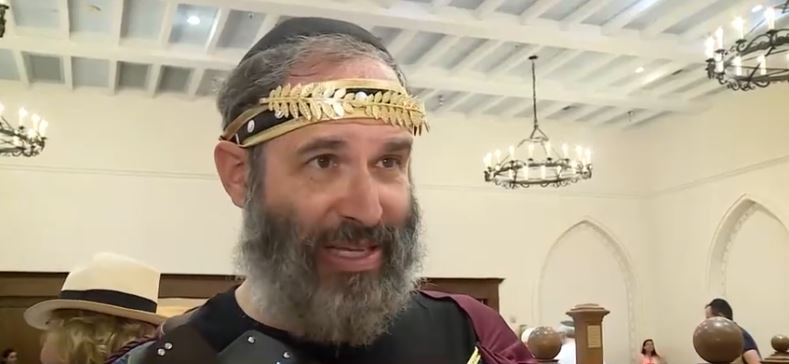
    PALM BEACH, Florida (WPBF) — Hundreds of people celebrated the Purim holiday at Palm Beach Synagogue Monday night.

The rabbi there said not only did the Iran war not dampen the celebration, but it actually achieved the exact opposite.

The Purim holiday began with the reading of the Megillah, recounting the story of how the Jewish people survived a ruler in ancient Persia who sought their destruction.

The congregation engaged in the tradition of spinning noisemakers and booing whenever the ruler’s name was mentioned, a story that dates back more than 2,300 years.

Rabbi Moshe Scheiner of Palm Beach Synagogue said he believes history is repeating itself, as once again a ruler in Persia (now Iran) who sought the destruction of the Jews has been defeated.

“The Jewish people are saved, and the lesson of the Purim story is that God watches over us and ultimately, goodness and righteousness prevails over evil,” Scheiner said.

After the reading, the party moved to a courtyard outside, where there was food, drinks, and music, along with a comedian who flew in from Israel for the holiday.

And most people were talking about the parallels in history.

“The Megillah tells the story of us being saved in ancient Persia, and it’s being played out now in real life, what’s going on in the Middle East,” said Max Rayden, a congregant. “It’s amazing to see that duality.”

“This year, for the first time, it’s in real time,” said Lisa Schreier, another congregant. “And we’re seeing it unfold before our very eyes. This is absolutely historic.”

For Schreier, the celebration holds even more significance as her son recently moved from Palm Beach to Israel.

Despite her concerns about the ongoing conflict, she believes he is where he should be.

“When you’re there, you feel part of something. You feel like you’re living a life with purpose. And I think that’s how he feels,” Schreier said.

The people at Palm Beach Synagogue remain aware of the war going on and say they pray every day that it ends as quickly as possible.

Please note: This story was provided to CNN Wire by an affiliate and does not contain original CNN reporting. This content carries a strict local market embargo. If you share the same market as the contributor of this article, you may not use it on any platform.

Women keep Black history alive through line dancing

By Steven Graves

Click here for updates on this story

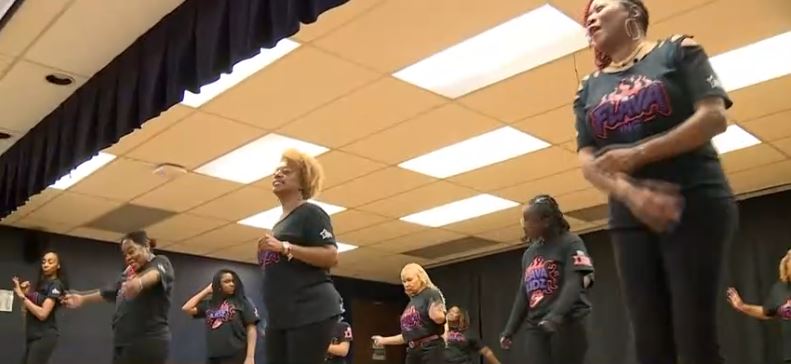
    FORT PIERCE, Florida (WPBF) — A group of women in Saint Lucie County, Florida, known as “Flava Inc.” is preserving Black history and promoting health through line dancing.

Founded by DeRhonda Jackson, who is affectionately called the “Diamond Diva,” the group aims to promote health and happiness in the community through dance.

Jackson started the group about three years ago after noticing that people were sitting down too much following the COVID-19 pandemic.

“Most people want to exercise and not feel like you’re exercising,” Jackson said. “I wanted my community to be happy and healthier.”

The “Flava Divas,” consisting of about 70 members, perform at nonprofit events and have multiple practices and public appearances.

Member Lakeitha Jackson shared how the dance connects her to emotions and history, saying, “The movement of the beats…the spiritual aspect of how it can uplift your soul.”

Line dancing has historical roots with enslaved Americans and is noted for its African and Caribbean origins. Historians document the dancing at Black family reunions, which symbolize the meeting of family after freedom from slavery.

Popular hits like the viral sensation “Boots on the Ground” have created a surge of excitement, with classes and clubs popping up, including one in West Palm Beach, “Steady Rhythms.” Its creator says the club has been going strong for a year.

The Diamond Diva emphasized the importance of family legacy in the group, stating, there are three generations of her family in the group and added, “We are Black history, and we’re making it here.”

The group got its start in church, and while men are welcome, most husbands come as moral support.

They meet twice a week in Fort Pierce to practice and hope to reach more people with a healthy lifestyle podcast in the future.

Please note: This story was provided to CNN Wire by an affiliate and does not contain original CNN reporting. This content carries a strict local market embargo. If you share the same market as the contributor of this article, you may not use it on any platform.
Vaping is so bad at a school, principal is closing some bathrooms, using metal detector wands

By Meghan Moriarty

Click here for updates on this story

    MELBOURNE, Florida (WESH) — The Brevard County School Board said it is seeing a steady rise in the number of students bringing vapes to school and using the devices on campus.

“This is a pandemic that I would say is worse than cigarettes,” school board Chairman Matt Susin said. “It’s so available to children, and there are things inside those vapes that nobody even knows what they are.”

The school board voted last week to put specific disciplinary actions in place that also tie into educational resources.

“They have to go through classes that help them understand what they did. They have to make sure they’re not addicted, and if they are, then we find them that career path and counseling,” Susin said. “It’s a whole system that’s set up so that the student is actually improved and brought back into the school.”

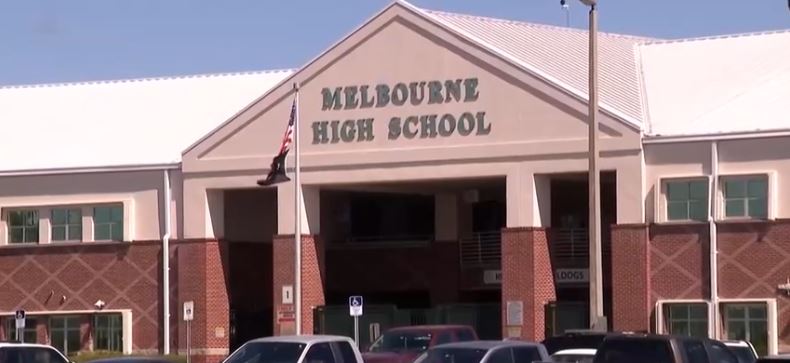
At Melbourne High School, the principal has taken even stricter measures.

In a letter to parents, the principal said he is taking steps to address vaping on campus by doing two things.

First, the school recently decided to close a limited number of restrooms to monitor student behavior and reduce vaping incidents. Staff will monitor the restrooms during class periods and passing times. Custodial teams will also check in.

“There’s multiple people going into a stall, and then inside the stall, they’re vaping and passing the vape to each other,” Susin said.

Additionally, Melbourne High School will now use handheld metal detector wands to conduct searches related to possible drugs or weapons.

Districtwide, new technology could be implemented to help detect vape use inside restrooms.

“We’re going to ask the Legislature to pass a law that states that we’re able to monitor through AI devices, not record,” Susin said. “It’s constantly monitoring, and once it detects a sound, it triggers and alerts school district employees.”

Susin acknowledged this could be controversial and that there might be legal limitations. For now, it is under review.

Students caught with a nicotine vape could face in-school suspension. Students found with a marijuana vape will be suspended and required to take classes virtually, according to Susin.

Please note: This story was provided to CNN Wire by an affiliate and does not contain original CNN reporting. This content carries a strict local market embargo. If you share the same market as the contributor of this article, you may not use it on any platform.
Woman with children in car accused of DUI, kicking boyfriend out door along I-75

By Carson Zorn, Muhammad Abdul Qawee

Click here for updates on this story

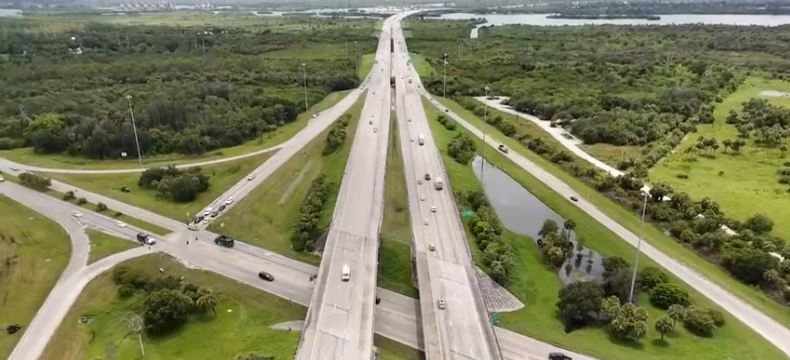
    FORT MYERS, Florida (WBBH) — A woman is accused of DUI after kicking her boyfriend and his son out of the car on Interstate 75 in North Fort Myers and continuing to drive with two 4-year-olds in the backseat.

According to the Florida Highway Patrol, troopers responded to a call for service regarding a man and a young boy standing on the right grass shoulder of I-75 near mile marker 148.

The man told the trooper that he had been arguing with his girlfriend, who pulled over during the argument and told him and his son to get out of the car onto the interstate. The man said his girlfriend then drove off, FHP said.

While speaking with the man, a white Lexus pulled up behind the trooper’s car. The Lexus was being driven by the man’s girlfriend, Sandy Marcela Laverde, 39, FHP said.

Troopers began speaking with Laverde when they noticed a strong odor of alcohol coming from the interior of the car and also saw two 4-year-old twins in the rear seat of the car, FHP said.

Troopers also found open containers and a small amount of marijuana in the car, according to FHP.

Laverde told the troopers she had her boyfriend and his son exit the car because she was arguing with him. She said her plan was to drop them off temporarily, loop around the interstate, and return to pick them up, FHP said.

Troopers had Laverde conduct field sobriety exercises and then placed her under arrest for DUI. Laverde refused a breathalyzer test and was booked into Lee County Jail for DUI and child neglect.

According to FHP, in a spontaneous post-arrest statement, Laverde said, “Give me life in prison because I was drinking and had a little cocaine… This is a [expletive] circus.”

A routine license check revealed that Laverde had four driver’s license suspensions dated in 2025 and 2026, FHP said.

The Department of Children and Families and the twins’ biological father were contacted.

Please note: This story was provided to CNN Wire by an affiliate and does not contain original CNN reporting. This content carries a strict local market embargo. If you share the same market as the contributor of this article, you may not use it on any platform.
Teacher turns personal journey into pathway for students

By Britt Leoni

Click here for updates on this story

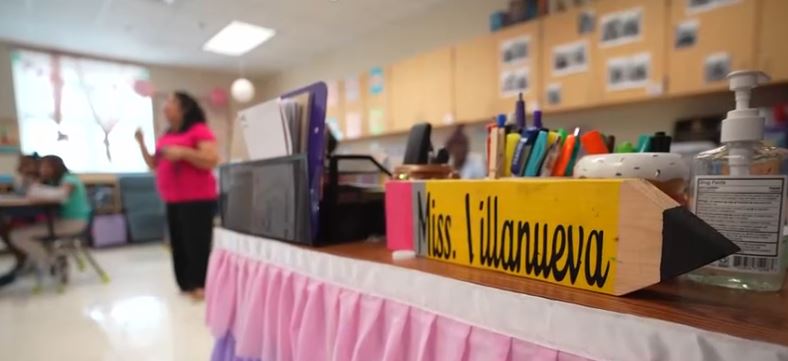
    IMMOKALEE, Florida (WBBH) — Inside Adriana Villanueva’s Village Oaks Elementary classroom in Immokalee, kids aren’t just learning how to speak English. They’re learning how to seize opportunities they can’t see.

“There’s doctors and lawyers in this room right now, guarantee,” Villanueva said.

For Villanueva, this confidence isn’t born from wishful thinking. It’s built from experience learned first-hand.

“My parents were also farm workers, so there was a point in my life where we would travel. That’s until my parents decided we need to make sure they get an education, and we’re going to set our roots in Immokalee,” Villanueva said.

Villanueva went on to be the first in her family to graduate from college.

“It wasn’t until I saw my mom that it really hit me. She started crying, and then I started crying, and I was like, ‘Woah, this is big.’ Like, no one else in my family has done it,” Villanueva said.

It wasn’t just family cheering her on, but nonprofit “Guadalupe Center” that provides tutoring and programs for local students, helping them achieve higher education.

“Over half of them have come back to work with them in Southwest Florida, so the tri-county area has different professions, which is really cool to see,” Villanueva said.

Now, she gets to guide these students in ways she needed when she was in their shoes.

Villanueva proves no matter our circumstances, and no matter the possibilities we can’t see, what matters is that we’re given the tools to succeed.

“I love seeing these kids grow,” Villanueva said. “Like when I see all of a sudden, something clicked in them, and I’m like, oh my gosh, that’s so much fun to see. I want to do it again.”

Please note: This story was provided to CNN Wire by an affiliate and does not contain original CNN reporting. This content carries a strict local market embargo. If you share the same market as the contributor of this article, you may not use it on any platform.
Why a 6-year-old with diabetes is pushing for change in Virginia

By Jessica Kronzer

Click here for updates on this story

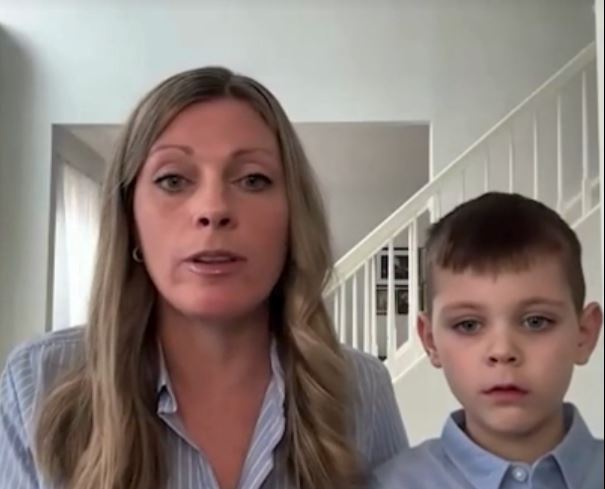
    VIRGINIA (WTOP) — Speaking in front of Virginia lawmakers, 6-year-old Ruston Revell needs a wooden stool to reach the microphone for his testimony about diabetes.

Dressed in his blue suit and red tie, he’s there on a mission.

“Living with diabetes isn’t easy, there are lots of ups and downs — just like my blood sugar,” Ruston told legislators in the Virginia General Assembly.

The legislation that brought Ruston from Prince William County to Richmond would update an existing law to specify how Virginia schools handle accommodations for students with diabetes.

“When I’m at school, my nurse and all my teachers help me when I need it, but not all kids like me are that lucky,” Ruston told WTOP. “These bills change that, so kids with diabetes can be safer in schools.”

He’s testified before committees in both chambers as corresponding bills move through the Virginia General Assembly. HB1301 and SB122 have both earned support in their respective chamber.

“Although, I’m small, my voice is big and it can change the world,” Ruston said.

In his testimony, the first grader clearly explained the care he requires to manage his Type 1 diabetes during the school day.

“He just pops up on his little stool and takes control of the room,” said Kelly Revell, Ruston’s mom. “It’s usually a little quiet, and after he finishes, he gets a whole room full of applause.”

Today, Ruston enjoys playing baseball, swimming and spending time at the playground.

But things were different before his diagnosis five years ago.

During the summer of 2020, Kelly said her son started showing signs of diabetes, such as extreme thirst — symptoms she recognized because her father had been diagnosed in his 20s.

“He would just lounge around the house and have no interest in playing with his sister,” Kelly said. “He stopped eating, so he was eventually airlifted to Children’s National in D.C., where he was admitted to the pediatric ICU for nearly a week.”

At just 15 months old, Ruston was diagnosed with Type 1 diabetes. Kelly said that news was life-changing.

“Now, in order to keep him alive, we have to hurt him multiple times a day, by giving him four to five shots and even a dozen finger pricks just to make sure his blood sugar is in range,” she recalled.

Type 1 diabetes is an autoimmune disease where the body attacks cells that make insulin. A lack of insulin can lead to high blood sugar, which could cause serious health issues or be deadly.

“We had to wake up at 2 a.m. every night for six weeks, before we started utilizing technology, just to make sure that he was safe and healthy with his blood sugar,” Kelly said. “A lot of times, it resulted in phone calls to the hospital because he was at a dangerous level, and then we would be up for hours making sure he was back in range.”

For the Revell family, managing Ruston’s diabetes looks different nowadays.

Please note: This story was provided to CNN Wire by an affiliate and does not contain original CNN reporting. This content carries a strict local market embargo. If you share the same market as the contributor of this article, you may not use it on any platform.
This Potomac native doesn’t have the coolest job on the planet because he’s not on the planet

By Luke Lukert

Click here for updates on this story

    POTOMAC, Maryland (WTOP) — One Potomac, Maryland, native’s job isn’t exactly in the D.C. region because sometimes he is working 250 miles above it.

Christopher Williams is one of the seven astronauts and cosmonauts currently aboard the International Space Station.

“I’m approaching three months in space now, which is hard to believe, but it’s been, it’s been a really wonderful experience,” Williams told WTOP, while keeping his feet under a small bar on the floor of the space station so he wouldn’t float around during the interview.

He said it takes a few weeks to acclimate to life in space but said his years of training are paying off.

“It’s something I trained for for a long time and it’s feels really nice to be doing it, and to feel like you’re really doing it at a high level and contributing to our mission up here,” Williams said.

Williams has an expansive educational background that fits right in aboard the space station. He studied physics during his undergrad at Stanford University and received his doctorate from the Massachusetts Institute of Technology. He then completed residency training at the Harvard Medical Physics program.

Williams described himself and others on the micro gravity lab as the hands, eyes and ears of thousands of researchers from around the world participating in numerous experiments utilizing the low gravity conditions.

“I was helping to do some work on an experiment where we’re looking at the physics of different noncondensable fluids at different temperatures, and helping to set up that experiment, and that’s going to help inform us how we can store different fuels for future space travel,” he said.

Williams also put his medical knowledge to the test recently in a biology experiment, where they looked at ultraviolet light and how it affects the formation of biofilms, which helps scientists learn about water purification.

Beyond completing experiments, Williams said he himself is somewhat of a broader science experiment on the conditions of space on the human body.

“We’re looking at things like how does microgravity affect the human body. How do our bones get affected by weightlessness, which can help us not only understand future space travel, but help us understand things like aging on Earth and folks that have limited mobility, how their bones might get it get impacted,” he said.

Williams grew up in Potomac, Maryland, and credits the D.C. area with fostering his love of science and dreams of becoming an astronaut.

He attended the magnet program at Montgomery Blair High School in Silver Spring, Maryland.

“The science education that I got there was just absolutely unparalleled. And it really helped me, from a young age, realize the extent of what you could do as a scientist,” Williams said.

He told WTOP that he took advantage of the “immense resources” in the D.C. area. He got an internship at the Navy Research lab in D.C., where he worked with a professional astronomer.

“Not that many places have opportunities like that for high schoolers to work as a scientist,” Williams said.

“Nobody in my family was a scientist, and seeing that as a high schooler. What does a scientist do? That was something that gave me the confidence to think that maybe this is something that I could pursue as a career.”

He also said growing up in an incredibly diverse area with people from all over the world has prepared him to work aboard the Space Station with an international crew.

“I’m standing right now in the Japanese module. I’m staring at the European module. The station is a collaboration with the Russian Space Agency. So you’re working with folks from all over the world, and just the diversity of the Washington area, I think, was really helpful in being prepared to work with people from all sorts of different backgrounds, and to be able to thrive in that kind of environment,” Williams said.

Working in the area also inspired him to change career paths and get into the medical field. In between college and graduate school, he volunteered at the Rockville Volunteer Fire Department, where he got his certification as an EMT.

“I really loved the fact that at the end of the day, you had directly and immediately helped somebody. And so I kind of got this bug in my head that medicine is something that was really interesting to me,” Williams said.

He would go on to work as a medical physicist in the Radiation Oncology Department at the Brigham and Women’s Hospital, Boston, and Dana-Farber Cancer Institute, where he helped develop new image guidance techniques for cancer treatments.

Now aboard the space station, he puts all his past experiences to the test as a science “Swiss Army knife” from 7:30 a.m. to 7:30 p.m.

“It’s honestly one of the things I think is most fun about being an astronaut is you really are a jack of all trades. I was working on fixing or maintaining the water reclamation system this morning, I’m going to be doing some science in a glove box tomorrow, and it just keeps it exciting, because it’s not the same thing every day,” Williams said.

When he isn’t working, he is exercising to maintain his muscle mass and is sleeping in his quarters.

“It’s about the size of a telephone booth. But it’s your own sort of room,” Williams said.

The “mummylike” sleeping bag stands on the wall of the room.

“Because of weightlessness, being floating on the wall is just about the same as lying down on a bed,” Williams said. “It’s actually been some of the most comfortable sleep of my life.”

He has also delved into the world of photography while aboard the space station snapping shots of the curvature of the Earth and major landmarks.

“You can plainly see entire countries … and it’s one of those things where it’s looking out the window, it’s hard to capture just the scale and just beauty of our planet,” Williams said.

He has taken photos of the Aurora Borealis as well as large cities and their lights.

“I’ve actually gotten a couple of good pictures of D.C. already. I took one right after the big snowstorm that we just had and it’s really cool because you could see the whole area blank and white but the outlines of the city streets become very clear,” Williams said.

Williams is scheduled to return to Earth this summer.

Please note: This story was provided to CNN Wire by an affiliate and does not contain original CNN reporting. This content carries a strict local market embargo. If you share the same market as the contributor of this article, you may not use it on any platform.
‘Not enough to trigger a recession’: Nebraska feels oil blowback from Iran-US conflict

By Madison Perales

Click here for updates on this story

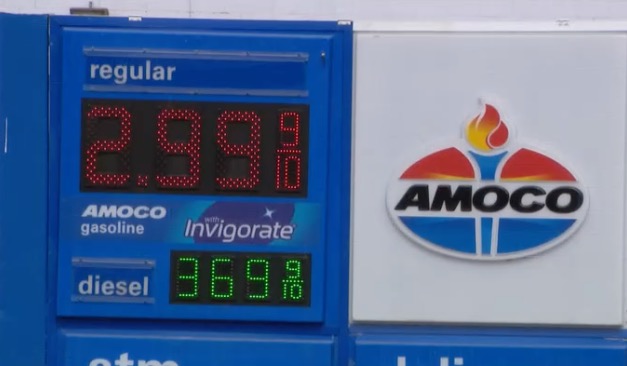
    NEBRASKA (KETV) — America is already feeling the impact of the Iran-U.S. conflict as oil prices soar. It has already gone up 6% since the missile strikes early Saturday morning. Trickling down to your local gas station, going from the pump to your wallet.

“We will see diesel prices move higher and gasoline moving higher, and we could see as much as $0.50 to a dollar per gallon on that,” Creighton economist Dr. Ernie Goss said. “Depending, again, on the length of this conflict.”

Goss said the oil market was beginning to bounce back, but military action overseas muddied the water.

A week ago, AAA Fuel Prices showed Nebraska’s average gas prices were right around $2.55, with the national average at $2.94.

As of Monday, the state’s lands at $2.72, compared to the $2.99 nationally.

Goss and UNO economist Dr. Jane Liu said the oil impact will naturally bleed into the agriculture and manufacturing industries.

“The agriculture economy depends on the oil prices hugely, not just transportation, but fertilizer, input costs,” Liu said.

Nebraska farmer Matthew Erickson said they haven’t felt the blowback yet.

“The past couple of years in farming have been very thin on margins, and this is another year where farmers are looking to cut costs anywhere,” he said.

He said farmers diversifying their craft helps with uncertainties.

“About a month ago today me and my family officially became chicken tenders,” Erickson said.

Liu said the American economy is resilient.

“So, one geopolitical factor is not enough to trigger a recession,” Liu said.

Goss said the Federal Reserve may buy bonds as a potential move to balance prices; however, people may see prices in the grocery store at higher-than-normal prices.

Please note: This story was provided to CNN Wire by an affiliate and does not contain original CNN reporting. This content carries a strict local market embargo. If you share the same market as the contributor of this article, you may not use it on any platform.
‘Bake Ability Bakery’ offers treats made with love by people with intellectual disabilities.

By Nick Iadonisi

Click here for updates on this story

    HOLICONG, Pennsylvania (WPVI) — Bake Ability Bakery offers treats made with love by people with intellectual disabilities.

The Bucks County business offers them employment opportunities while developing life skills.

“We want them to come in and feel like this is somewhere where they’re included and they’re special. And we take that extra 5 minutes to have that conversation with the customers here at Bake Ability,” said Store Manager, Savannah Raphial.

“People genuinely are really receptive to the idea and come back because of that. So that’s really what my goal is,” she continued.

Also, check out their bakeabilities.com.

Please note: This story was provided to CNN Wire by an affiliate and does not contain original CNN reporting. This content carries a strict local market embargo. If you share the same market as the contributor of this article, you may not use it on any platform.
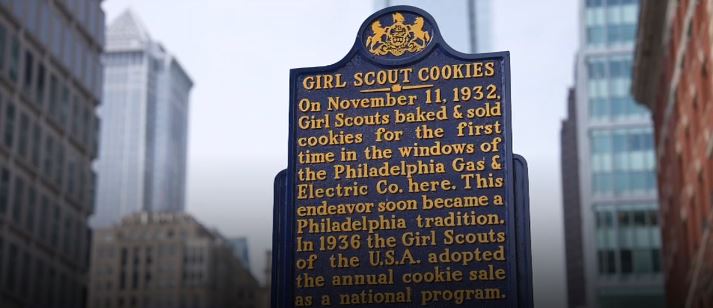
Corner where Girl Scout cookies began marks legacy of a nationwide fundraiser

By Christie Ileto

Click here for updates on this story

    PHILADELPHIA (WPVI) — The sale of more than 200 million boxes of Girl Scout cookies each year can be traced back to a single experiment at Broad and Arch streets in 1932, where a group of Philadelphia Girl Scouts and their parents launched what would become the most successful youth-led fundraiser in the country.

Long before online ordering and cookie-tracking apps, the first batches were baked in ovens at Philadelphia Gas and Electric, now PECO.

Kim E. Fraites-Dow, CEO of Girl Scouts of Eastern Pennsylvania, said the idea came from parents who worked at the company and volunteered with the Girl Scouts.

“So in 1932, there were girls and parents in Philadelphia who, the parents worked at what is now PECO. So, Philadelphia Gas and Electric at the time, and they were volunteers for Girl Scouts, and they had ovens at their location on North Broad Street. And so they asked the company, would you mind if we try to bake, you know, in bulk, some cookies to help these girls with their fundraisers?” she said.

Fraites-Dow said the aroma drifting down the street quickly drew customers.

“And people were walking by, and they’re like, ‘What’s that smell? OK, we need some of that,'” recalled Fraites-Dow.

The following year, cookies were baked again at the same location.

By 1934, the Girl Scouts of Greater Philadelphia partnered with Keebler to produce Refoils, launching the first commercial cookie sale. Promotions went out to churches, streetcars, radio stations and newspapers. Boxes held 44 cookies, and at six boxes for $1.35, buyers saved three cents. Between 110,000 and 114,000 boxes were sold, helping pay off a balance for Camp Indian Run.

“They saved money to do programs, to travel, to do amazing projects,” Fraites-Dow said. “And so the first year was kind of an experiment, and the second year was a commercial cookie sale.”

The success quickly spread.

“So it was so successful that it was picked up by our national organization just two years later. And now it’s the largest girl in business in the world,” she said.

Today, cookie shipments arrive by helicopter or truck, and troops nationwide sell roughly 200 million boxes annually at an average of $6 each. Seventy-five cents of every dollar earned is reinvested into the Girl Scouts organization.

Fraites-Dow said the tradition continues to honor the “entrepreneurship and vision and revolutionary spirit of people in the city.”

This year’s cookie season began in mid-January, but cold weather prompted an extension.

“We actually extended our sales through March 22nd this year,” she said. “So if you see a girl in your neighborhood, please talk to her, ask her about what she’s planning to do with her cookie proceeds, and buy a box of cookies during cool.”

The business model now used nationwide still traces its roots to that Center City corner where a few determined Girl Scouts first turned baking into a movement.

Please note: This story was provided to CNN Wire by an affiliate and does not contain original CNN reporting. This content carries a strict local market embargo. If you share the same market as the contributor of this article, you may not use it on any platform.