Elderly man and woman rescued from partially submerged car

By Audra Schroeder

Click here for updates on this story

    PORT ST. LUCIE, Florida (WPTV) — An elderly man and woman were rescued from a vehicle that had rolled into a pond in Port St. Lucie early Wednesday morning.

Port St. Lucie police say a single-vehicle crash was reported just after 4:30 a.m., near the intersection of East Caribbean and Cam De Entrada.

Investigators say the driver, an elderly woman, made a wrong turn and attempted to reverse back onto the road when the car slid down an embankment and into a pond.

Officers arrived and found the car submerged up to its windows. They were able to remove the driver and the passenger, and elderly man, and transport them to St. Lucie Medical Center. The driver and passenger are said to be OK.

Please note: This story was provided to CNN Wire by an affiliate and does not contain original CNN reporting. This content carries a strict local market embargo. If you share the same market as the contributor of this article, you may not use it on any platform.


Millions of Californians still have money on inflation relief debit cards — they expire April 30

By Stephanie Sierra and Renee Koury

Click here for updates on this story

    SAN FRANCISCO (KGO) — You’d think it would be easy to give away billions of dollars for disaster relief, but hundreds of thousands of people in California still haven’t taken their share.

Nearly one million Californians never cashed in the inflation relief debit cards the state gave out four years ago. The cards are still loaded with $400 million. And if they’re not cashed by April 30, all that money goes back to the state.

If that’s you, time is running out to cash in — or that money will be gone forever.

The state’s Franchise Tax Board (FTB), which oversees the relief funds, said it’s tried to alert residents that they have money available.

“The FTB does not have knowledge as to why some cardholders are not activating their cards, but we worked to engage them with letter campaigns and social media campaigns reminding them to activate and spend,” the agency wrote in an email to ABC7 Eyewitness News.

The payments were meant as emergency inflation relief four years ago as the state was emerging from the pandemic. Prices were surging at gas stations and grocery stores.

In response, California lawmakers tapped its then-healthy budget surplus and handed $9.2 billion to struggling residents. About $4 million was directly deposited into bank accounts of 7.2 million taxpayers. The remaining $5.2 billion was mailed out on debit cards.

Governor Gavin Newsom announced the program on social media.

“Millions and millions of Californians are now getting up to $1,050,” Newsom said in a YouTube post in 2022. “It’s called the Middle Class Tax Refund, and it’s our way of getting money back into your pockets to help with everyday expenses. So look out for a debit card in your mailbox or a direct deposit.”

Debit cards loaded with hundreds of dollars each were mailed to 9.6 million Californians beginning in October 2022.

But four years later, statistics show nearly one million Californians — roughly 960,000 — never activated their debit cards. And 4.5 million still have money left on their cards, totaling about $260 million. So why haven’t folks cashed in?

Cardholders like David Kennedy of Daly City tell us they didn’t need emergency funds in spite of the surging prices.

“It was nice to have the debit card, but I didn’t need it. I figured I’d keep it as an emergency in case something happens,” Kennedy said.

He just found his card stashed in a drawer, still loaded with $350.

“I just happened to stumble on it, and I said, ‘Oh, shoot, it’s going to expire,'” Kennedy said.

Jennifer Gee of Concord also didn’t need extra cash back then. She just found her debit card stored in a basket among her collection of coupons. It’s still loaded with $500.

“Gosh, I don’t even remember when it was, but I just set it aside and kind of forgot about it,” Gee said.

Both realized they better use the cards or lose the money.

But it was surprisingly difficult to finally use their cards.

“I took the card and went to Safeway to try to buy some groceries, and it got rejected. Then I went to an ATM, put in the card, then entered the PIN, and it said, ‘Denied by the bank,'” Gee said.

“I tried to get gas with it, did not work,” Kennedy said. “Then I went on Amazon.com to buy groceries. It got denied. I thought, ‘This is a Visa. It should be accepted.’ Then I thought, ‘OK, maybe it’s too good to be true.”

Both tried calling the debit card company, Money Network, to find out what was wrong.

“It’s completely an automated number. You cannot talk to anybody,” Kennedy said.

“The recording said I have $500 on it and I can use it. That’s what made me angry, because it didn’t give me the opportunity to talk to someone to find out what was wrong,” Gee said.

“This is not OK,” Kennedy said. “The government says I have this money, and yet they don’t want to release it.”

Officials at the Franchise Tax Board said the bank likely deactivated those cards to prevent fraudsters from getting the money.

The debit cards were meant to help low and middle-income residents get through the pandemic when prices spiked for everyday goods. Those earning up to $250,000 a year qualified for payments ranging from $200 to $350 per person. Families could receive up to $1,050.

There were problems from the start. Many people tossed out the cards thinking they were junk mail or scams. Others were skeptical about having any account at an unknown bank. Money Network is based in New York.

Others reported hackers had drained the funds from their cards before they received them.

Now that they’re expiring, it may be hard to get the unclaimed money since Money Network has deactivated dormant accounts.

“And that’s why I contacted 7 On Your Side,” Gee said.

“Thank goodness I reached out to ABC News,” Kennedy said.

After 7 On Your Side stepped in, Money Network reactivated Kennedy’s card. Gee says she finally reached someone at Money Network and got her card reactivated too.

And both used the cards, ironically, just as inflation and gas prices are surging again.

“I cashed out, and I just put it right into my Wells Fargo account,” Kennedy said.

“I went to Sam’s Club and used it to buy some gift cards,” Gee said.

If your debit card doesn’t work, officials say contact Money Network at 1-800-240-0223 and follow the prompts to activate your card.

If you have trouble getting through to Money Network, contact 7 On Your Side and we can help get through. If you lost your card or threw it out by mistake, which many people did, let us know about it. We can help.

And remember, time is running out. That money disappears April 30, 2026.

Please note: This story was provided to CNN Wire by an affiliate and does not contain original CNN reporting. This content carries a strict local market embargo. If you share the same market as the contributor of this article, you may not use it on any platform.

Man plans to appeal after judge rules he can’t land his helicopter at his Gull Lake cabin

By Frankie McLister

Click here for updates on this story

    GULL LAKE, Minnesota (WCCO) — A man who has fought to use his private chopper up in cabin country has been grounded. A judge sided with the city, ruling he can’t use his cabin as a helipad, but he’s not giving up.

“I’ve been wronged,” Doug Schieffer, a concrete company CEO, said in a 2024 interview.

Schieffer says he has concerns with the city of East Gull Lake, Minnesota.

“I spend a lot of money and designed this whole property to get this hangar built,” he said.

His lakefront property isn’t his permanent address.

“I haven’t flown in there since probably September of last year. October, maybe,” Schieffer added.

When he does, he normally takes his chopper, which some neighbors don’t appreciate, with it breaking the peace and quiet of cabin country.

Schieffer argues the water in front of his property is a public seaplane base. The Minnesota Department of Transportation doesn’t agree.

In a 2024 court filing, the city said he’d been using his property “for airport activity,” which isn’t permitted. Shieffer claimed he does “not violate the city code” during his visits. He even created a website to make his case to the public.

“They told me I was going to be able to do this,” said Schieffer.

On March 31, a Cass County judge ordered Schieffer to immediately cease any use of his property as an airport.

“For all intents and purposes, they’ve screwed me a few different times and I feel very strongly about that,” Schieffer told WCCO.

An attorney for East Gull Lake said in a statement that it is “very pleased” with the court’s decision.

“Throughout the enforcement process, the City has taken a close look at the actions of Mr. Schieffer and compared them to what is or is not allowed under the City’s ordinances. The Court recognized the City correctly interpreted its ordinances. Additionally, the voluminous evidence from the neighbors and MnDOT supported the City’s request for injunctive relief. The City is hopeful Mr. Schieffer will comply with the Court’s Order,” the statement continued.

“I get that it’s a first-world problem; it’s not that big a deal whether I win or lose the actual ability to use my helicopter at my cabin,” said Schieffer. “This is about the principle of how this is handed from the city. It’s about property rights.”

“I want to do this in the safest, least intrusive manner possible,” Schieffer said when asked what outcome he is looking for.

The city attorney says they’re not surprised Schieffer intends to appeal. Schieffer previously stated at city council meetings that he would fight all the way to the Supreme Court.

Please note: This story was provided to CNN Wire by an affiliate and does not contain original CNN reporting. This content carries a strict local market embargo. If you share the same market as the contributor of this article, you may not use it on any platform.

Minnesota businesses opening doors for workers with autism thanks to specialized education, training

By Derek James

Click here for updates on this story

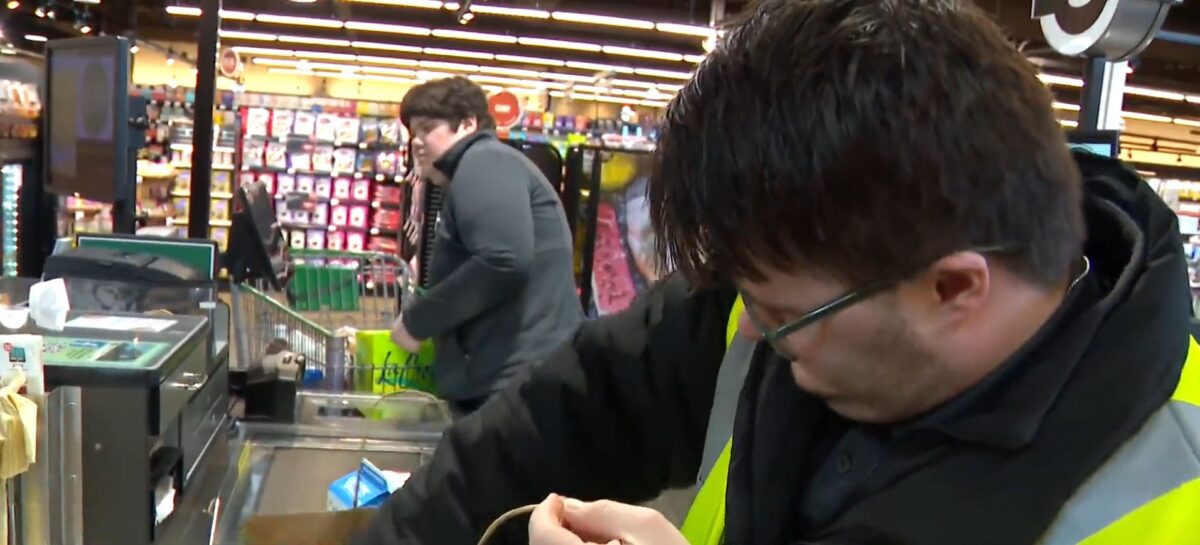
    MINNESOTA (WCCO) — April is Autism Acceptance Month, and businesses across the Twin Cities are opening doors for workers with autism through partnerships with a college program providing specialized education and training.

Inside Lunds & Byerlys, you’ll hear the familiar beeps of scanned groceries, and feel a warm greeting from cashiers.

Graham Wagner and Ann Meehan are both graduates of Minnesota Independence College and Community, or MICC, where job training meets independence.

For operations manager Nina Erman, what stands out isn’t difference — it’s dependability.

“They are fantastic. Graham is the heart and soul of the store. He’s never in a bad mood. He’s always smiling,” Erman said. “Ann has this thirst for curiosity about everything we do in the store.”

Adults with autism face steep barriers to employment even as they bring strengths like focus, reliability and attention to details. MICC aims to close the gap not by placing students in jobs, but by preparing them to earn them.

“Our individuals are finding their own jobs,” said Melissa Hudson, MICC’s director of programs. “We’re there for that little extra support and to really just help and guide them and support them through that process.”

On the floor, that partnership translates into confidence.

“This allows me to just be social with customers and employees and people I come across with here on a daily basis,” Wagner said.

Meehan didn’t always imagine herself in this role.

“I never thought that I would be a cashier because I have a hard time counting change. But these registers help,” Meehan said. “I like meeting all the new customers and then just seeing everyone’s faces.”

Today, she’s not only working — she’s living independently.

“Now I can live on my own, and then I can go places on my own without my parents,” she said.

They both say employers may be underestimating what neurodivergent workers bring.

“People with autism or learning disabilities can be some of the hardest-working people. We can be on time, we can have a great work ethic,” Wagner said.

“Just because we have a disability, it doesn’t mean that we can’t do anything. We can do anything that we try,” Meehan said.

Ninety-nine percent of MICC participants are employed by graduation.

Please note: This story was provided to CNN Wire by an affiliate and does not contain original CNN reporting. This content carries a strict local market embargo. If you share the same market as the contributor of this article, you may not use it on any platform.
Siblings share journey of survival after tragic murder-suicide

By Mya Constantino

Click here for updates on this story

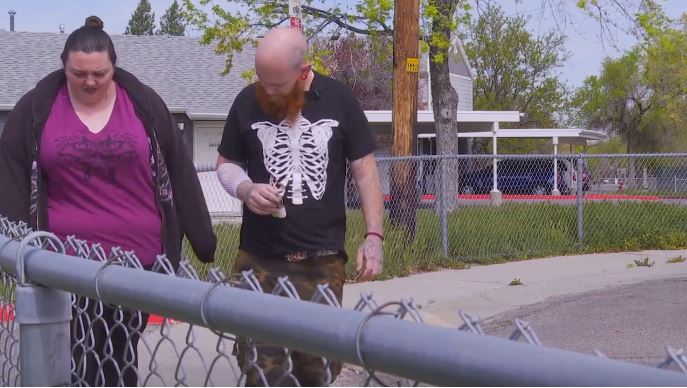
    KEARNS, Utah (KSTU) — Christian Timothy is one of two siblings who survived a horrific murder-suicide that claimed the life of their mother, Kaylene Allred.

Now recovering from gunshot wounds, he is opening up about his path toward healing and the emotional weight he carries. “The people who I’m staying with are constantly like, ‘You need to rest, you need to take it easy,’ and I can’t,” Christian said. “I have to be doing something to keep my mind busy… It’s gonna be a long road.”

That long road began with a phone call. Christian was speaking with his friend Tricia Cruikshank when chaos erupted inside his home in Kearns.

“I was like, ‘What’s going on? What happened?” Tricia recalled. “He’s like, ‘He shot me, he shot me.’”

Christian says his stepdad, 64-year-old Floyd Allred, came up behind him and opened fire. “It didn’t dawn on me until probably the second or third bullet hit me that he was shooting at me,” Christian said. “At that point, it was just about taking cover and getting him away from my family.”

Both Christian and his sister, Brittany, were shot but managed to escape that night. Investigators say Floyd Allred killed 61-year-old Kaylene Allred before taking his own life.

Christian revealed that he had long feared such an outcome. “The sad truth is, for the past year I’ve feared that something like this was coming,” he said, explaining that his stepdad struggled with addiction and mental health. “I even expressed my concern to my dad that he was losing it… His addiction took over.”

As Christian heals from his physical injuries and prepares funeral services, he admits grief comes in waves. “It hasn’t fully set in yet,” Christian said. “There are moments where I think, ‘Oh I can ask my mom, oh I want to call my mom… and I can’t.’ It even feels that way with my dad, too. No matter how mad I am over the situation, he was still my dad.”

Friends, neighbors, and supporters are rallying behind the siblings. A fundraiser will be held at Liquid Joe’s in Salt Lake City on April 26 at 1:00 p.m., with all proceeds going toward mental health awareness and victims of domestic violence.

A GoFundMe has also been launched for anyone wishing to help: Support Brittany & Christian After Shooting

Christian says his mother was a warrior in life. “She went through so much in her life that she didn’t deserve, and she fought so hard for us kids,” he said. “We tried to save her, and she tried to save us… it cost her a life.”

Please note: This story was provided to CNN Wire by an affiliate and does not contain original CNN reporting. This content carries a strict local market embargo. If you share the same market as the contributor of this article, you may not use it on any platform.
In their 70s, brother, sister earn degrees after 40-year journey

By Scott McKane

Click here for updates on this story

    BOX ELDER COUNTY, Utah (KSTU) — It was a secret they kept even from their family members.

A pair of Box Elder County siblings in their 70s is about to achieve a milestone no one saw coming.

Stephen Ball and his sister, Bonnie Jean Ashby, have always been close, said Bonnie Jean as she showed off old photos of the two.

“I’m a baby, like I say, we’re 15 months apart in age,” she said.

Later this month, Stephen, who is 77, and Bobbie Jean, now 76, will don caps and gowns and receive college degrees from Utah State University.

It’s a graduation that’s more than four decades in the making.

Right out of high school, Bonnie Jean had two scholarships to Utah State, but got married and became a full-time mom. She first tried to resume college in the early 1980s, but it was difficult.

“I had five kids and a foster daughter at the time,” she said.

After completing a few classes, Bonnie Jean had twins, and a couple more decades passed by. It wasn’t until earlier this year that she became determined to enroll again and learned she only needed one more credit hour. That’s when a university advisor stepped in.

“And he says, ‘You know what? Just let her graduate with what she has.’ So I had enough credits 40 years ago, it just never happened,” Bonnie Jean explained. “So I told my brother, guess what? I’m graduating! And he’s like, ‘I wonder if I can graduate?’”

In a friendly bit of sibling rivalry, Stephen decided to check into his own credit allocation and wound up with a similar, pleasant surprise.

After years of working, raising his family and taking occasional classes, Stephen learned he also had enough credits for an associate’s degree.

“So they turned it into the advancement committee, and they said, sure,” Stephen recalled. “I didn’t even have to take another class.”

The brother and sister will walk together at the end of this month to receive their degrees. All of it came as a pleasant surprise to their families, which, between them, number nearly 90 children, grandchildren, and great-grandchildren.

Stephen said the family reaction was super positive, and Bonnie knows it’ll be a perfect ending to a very long journey.

“…we just love each other, and I’m excited we get to do this together,” said Bonnie.

Please note: This story was provided to CNN Wire by an affiliate and does not contain original CNN reporting. This content carries a strict local market embargo. If you share the same market as the contributor of this article, you may not use it on any platform.

‘Bench Bunny’ overpopulation causes property damage and ongoing frustration for residents

By Sahana Patel

Click here for updates on this story

    BOISE BENCH, Idaho (KIVI) — Feral rabbits are causing chaos and property damage for residents living on the Boise Bench.

Data from the Idaho Humane Society shows a heat map of stray rabbit intake from 2018 through March 2026. The highest concentration is on the Boise Bench.

“They ate my shrub,” Melody Haile, a Boise Bench neighbor, said. “It’s a problem. I don’t know what can be done.”

What started as pet rabbits released into the area has turned into an overpopulation issue, as the animals breed quickly. Neighbors say they have been dealing with the frustrations for years.

“They’re really, really taking over now,” added Haile.

Haile has lived in her Boise Bench neighborhood for over 16 years. She said the rabbits started burrowing underneath her house and right next to the foundation more than six years ago, leaving behind large holes.

“Now, we routinely walk the house and make sure they’re not digging at the house,” Haile said.

The damage has spread to her front yard, where bunnies have been digging under a tree. Just the other day, when Haile walked outside to scare the bunnies away, they started tackling each other and chewing on her macrame chair.

“It’s been a little bit frustrating. I don’t know how to make it stop. Probably going to put the chair away or throw it away,” Haile said.

Kristine Schellhaas with the Humane Society said spring weather and the Easter holiday could lead to even more rabbits.

“They are really great gifts when in chocolate form, so not necessarily an animal you want to get. We do see an uptick of rabbit surrenders,” Schellhaas said.

Haile said she has already tried using repellent to keep the rabbits away.

“I’ve sprinkled it in the areas where they were actively digging. I’ve kind of tried to create a perimeter. It’s extremely costly to keep buying that and just putting it down every time the grass gets wet,” Haile said.

Schellhaas said the best thing neighbors can do is focus on long-term deterrents to keep the rabbits out of their yards.

“There are sprinklers that can go off automatically, you can build a little fence up,” Schellhaas said. “Even if you have an HOA that doesn’t allow you to have a specific fence. Those wire ones tend to be decorative and can help to keep the rabbits out.”

Haile said she also hopes her neighbors stop feeding the rabbits.

“Let nature take its course— if you truly want to be kind. Don’t promote the breeding of the rabbits. It’s making the problem worse,” Haile said.

Instead of letting a pet rabbit loose, the Humane Society asks people to responsibly surrender their pets at the shelter or reconsider whether they are ready to house a rabbit before making the long-term commitment.

This story was initially reported by a journalist and has been, in part, converted to this platform with the assistance of AI. KIVI verifies all reporting on all platforms for fairness and accuracy.

Please note: This story was provided to CNN Wire by an affiliate and does not contain original CNN reporting. This content carries a strict local market embargo. If you share the same market as the contributor of this article, you may not use it on any platform.

High school students offer discounted car maintenance to neighbors

By Katrina Markel

Click here for updates on this story

    COUNCIL BLUFFS, Iowa (KMTV) — Students at Thomas Jefferson High School in Council Bluffs are offering discounted car maintenance to the community through the school’s TradeWorks program.

TradeWorks instructor, Dean Giese, said the automotive students are ready to put what they have learned in class into action.

“Change the oil, check the tires, we can rotate the tires,” Giese said, describing just some of what they do.

The career exploration program allows students to experience various trades, including construction, electrical work, and plumbing. Sophomores Alayna Myer and Charley Sharp say the skills learned are also everyday life skills.

“If you wanted to like plumb something and it’s too expensive you can do it yourself,” Sharp said.

Giese said getting more young women, such as Sharp and Myer, into professions that used to be male-dominated is important.

“It makes me wanna show more girls that they can do this so that they don’t have to rely on someone,” Myer said. “And, it makes me feel smart.”

Giese reminds neighbors that they will have ninth and 10th graders working on their cars, but he is there to make sure things are done right.

“This vehicle is gonna take somebody up and down the road today,” Giese said, while standing in front of an SUV in his classroom. “So we have to make sure that it’s road worthy. I tell the students I’m not doubting their ability, I’m just double-checking.”

There are different fees for different services, and neighbors who are interested can email Giese: Dgiese@CBCSD.org

This story was reported on-air by a journalist and has been converted to this platform with the assistance of AI. KMTV verifies all reporting on all platforms for fairness and accuracy.

Please note: This story was provided to CNN Wire by an affiliate and does not contain original CNN reporting. This content carries a strict local market embargo. If you share the same market as the contributor of this article, you may not use it on any platform.

Suspect in cold case killings of Marebeth Welsh and Jennifer Persia identified after yearslong investigation

By Stephanie Ballesteros, Joe Holden, Joe Brandt, Sean Tallant

Click here for updates on this story

    New Jersey (KYW) — More than 30 years later, a suspect has been linked through DNA evidence to the previously unsolved killings of two young women in Camden County, New Jersey, in the 1990s.

Francis Schooley is believed to have killed 24-year-old Marebeth Welsh and 16-year-old Jennifer Persia, Camden County Prosecutor Grace MacAulay announced in a news conference.

The work to find a suspect in Welsh’s and Persia’s killings took years and was only possible thanks to investigative techniques that utilized the DNA evidence found at each crime scene and carefully maintained over the years.

Investigators believe Schooley killed Welsh on Nov. 14, 1993, at a home where she was living in Woodlynne, and later dumped her body on Jackson Street in the city of Camden. Almost five months later, on April 4, 1994, Persia was found stabbed to death in her home in Magnolia.

Schooley died by suicide in 2000. He was 39 years old at the time, according to MacAulay’s office. Investigators who spoke at the news conference say the evidence they have is strong enough that, were he alive today, Schooley would be charged in both murder cases.

“We recognize that identifying Schooley as responsible for the deaths of Jennifer and Marebeth cannot restore these young women to their families, who have endured the profound loss of their loved one for more than 30 years,” MacAulay said. “However, we hope this development offers a measure of justice as well as some comfort to their families.”

In January 2024, the Camden County Prosecutor’s Office created a full-time Homicide Cold Case Unit, with investigators finding cases that can make use of recent advances in DNA testing and genetic genealogy.

Analysis by the New Jersey State Police Office of Forensic Sciences in August 2025 found that spermatozoa and blood found on Welsh’s clothes, and blood found at the scene of Persia’s murder, matched the same DNA profile belonging to an unknown male, later discovered to be Schooley.

A parent and a sibling of Schooley submitted DNA samples that were then analyzed and found to closely resemble the DNA found at both crime scenes, an indicator that the unknown male was Schooley.

Schooley also had a connection to the suspects, detectives learned: he had performed construction work for Persia’s stepfather and at an autoshop the stepfather owned. He was also a part-owner of a race car sponsored by the auto shop.

Additionally, one of Schooley’s siblings was shown a photo of Welsh and said she had been seen with Schooley in the past, officials said.

Please note: This story was provided to CNN Wire by an affiliate and does not contain original CNN reporting. This content carries a strict local market embargo. If you share the same market as the contributor of this article, you may not use it on any platform.

Sheriff updates community on injuries, bond in Lao Festival crash

By Joshua Moton

Click here for updates on this story

    IBERIA PARISH, Louisiana (KATC) — The Iberia Parish Sheriff’s Office held a news conference Wednesday to update the community on Todd Landry and the crash at the Louisiana Lao New Year Festival that injured nearly 20 people. Romero outlined the charges Landry is facing, the condition of the victims, and his bond, which was set at $247,500.

“He was booked into the Iberia Parish Jail on the following counts: DWI, 18 counts of first-degree negligent injury, careless operation, and an open container violation,” Romero said.

The sheriff also updated the community on the victims’ conditions, confirming that three remain in critical condition while others have been treated or transferred to additional facilities.

“This was a tragic event, in which an individual decided to operate his vehicle while intoxicated, drive in a reckless manner and strike multiple pedestrians,” Romero added.

Romero said investigators have found no evidence to suggest the crash was intentional.

“At this point in our investigation we have no evidence to support this as being a hate crime or a terrorist act,” he said.

Following the news conference, KATC reviewed court records for Landry and found no attorney listed for him. Efforts to speak with individuals connected to him at a listed property were unsuccessful, as we were asked reporters to leave.

The investigation is ongoing and records show that Landry remains behind bars as the investigation continues.

This story was reported by a journalist and has been converted to this platform with the assistance of AI. KATC verifies all reporting on all platforms for fairness and accuracy.

Please note: This story was provided to CNN Wire by an affiliate and does not contain original CNN reporting. This content carries a strict local market embargo. If you share the same market as the contributor of this article, you may not use it on any platform.