Condo owners stunned by sudden $26,000 HOA fee for emergency roof assessment

By Leanne Suter

Click here for updates on this story

    SAN CLEMENTE, California (KABC) — Homeowners at the Villa Moura condominium complex in San Clemente are pushing back against a more than $26,000 emergency assessment for roof replacements, saying the cost is placing a financial burden on residents and questioning whether the assessment was legally imposed.

For Beverly Albright, an 81-year-old resident in the complex, the assessment has created uncertainty about her future.

“I will have to move. And this was my… I’ve worked very hard to make it so that I could be here,” Albright said.

Residents at the 198-unit complex said each homeowner received a $26,000 emergency assessment for new roofs.

Some neighbors said they believe many residents will struggle to pay the cost.

“They’re not going to be able to afford this, and the board’s response is to take out a loan, or take out equity of your house, or dip into your retirement, and I feel like that’s just unacceptable,” homeowner Megan Blanda said.

Homeowners said they are fighting the assessment by seeking to recall members of the homeowner’s association board and by filing a claim alleging the board violated the law.

Noah Martin, a homeowner at Villa Moura, argued that the project does not qualify as an emergency under state regulations, and said residents should have been allowed to vote on how to address the roofing work.

“It didn’t fit under the California Code of Regulations, 5610. Clearly, it was not an emergency; it’s a deferred maintenance. And so, then we as members should have a vote on how we want to take care of the roofs,” Martin said.

Residents also said they have been warned that liens could be placed on properties if owners do not pay the assessment.

“They’re threatening, also, to put a lien on our property if we don’t comply and we don’t pay,” a resident said during a gathering of homeowners.

Residents said the HOA board has known for several years that repairs would be needed to the tile roofs. They contend the roofs are not leaking and that only the underlayment needs replacement, not all of the tiles.

“What we would like to do is have multiple bids competitively submitted and actually negotiate those bids in the best interest of the homeowners. As the board should be doing with their fiduciary responsibilities to us,” said homeowner Adam Dubin.

Michael Kushner, an attorney and HOA expert with MBK Chapman who is not involved in the dispute, said large special assessments have become more common and that homeowners generally must pay assessments even while challenging them.

“Homeowners have to pay those, even if they’re completely illegal. They have to pay them and then dispute them. California law doesn’t recognize the right of offsets, and you can’t withhold payment,” Kushner said.

According to residents, homeowners were given three payment options: pay the more than $26,000 assessment in full, split the amount into two payments, or add more than $2,000 to their monthly payment for six months and $400 thereafter.

The financial impact has left some residents uncertain about how they will cover the cost.

“Retired, single, what, lose my house? I wouldn’t qualify for a loan to refinance. So where do you go?” Albright questioned.

Homeowners have created a GoFundMe page to help the residents who can’t pay.

The HOA board said it could not comment because of ongoing legal matters. Residents said they are considering filing a lawsuit against the board.

Please note: This story was provided to CNN Wire by an affiliate and does not contain original CNN reporting. This content carries a strict local market embargo. If you share the same market as the contributor of this article, you may not use it on any platform.
The Next Industrial Age: Peter Huntsman & Ryan Sitton Take the Stage at Gulf Coast Industry Forum

By Francis Page Jr.

Click here for updates on this story

    September 2, 2026 (Houston Style Magazine) — HOUSTON/PASADENA, TEXAS — The Gulf Coast has never been shy about building big things. Refineries. Chemical plants. Ports. Pipelines. Careers. Communities. And, increasingly, the technology powering America’s next economic chapter.

On Thursday, September 17, 2026, two Texas industrial heavyweights will sit down for a timely fireside conversation about what comes next.

Peter Huntsman, Chairman, President and CEO of Huntsman Corporation, will join Ryan Sitton, founder and CEO of Pinnacle, for “The Next Industrial Age: A Conversation with Peter Huntsman” at the Gulf Coast Industry Forum at Pasadena Convention Center. Huntsman and Sitton take the stage at 1:40 p.m.

Houston Style Magazine, serving as a media sponsor, is proud to help amplify a conversation that directly affects Houston-area families, businesses, workers and the next generation of innovators.

And the timing could hardly be better.

Just weeks before the forum, shareholders of Huntsman Corporation and Olin Corporation approved their proposed merger of equals, moving the companies another major step toward creating OlinHuntsman, a North American chemicals powerhouse with more than $12 billion in annual revenue. Upon completion of the transaction, Peter Huntsman is expected to become non-executive chairman of the combined company.

Translation: Huntsman isn’t simply coming to Pasadena to predict industrial change. He is living it.

The fireside chat will range from the future of Gulf Coast manufacturing and American industrial leadership to the global competition surrounding artificial intelligence, technology, energy, talent and innovation.

Sitton brings an equally Houston-sized résumé to the conversation. An engineer, entrepreneur and former Texas Railroad Commissioner, he co-founded Pasadena-based Pinnacle in 2006. The industrial reliability company applies data, engineering and risk analysis to help large processing facilities operate more safely and efficiently.

Together, Huntsman and Sitton can tackle a question that is becoming impossible for American industry to ignore: What must the United States get right now to lead the next industrial age? That question reaches well beyond petrochemicals.

Artificial intelligence is reshaping manufacturing, data analysis, research and productivity. Advanced materials remain essential to everything from automobiles and electronics to construction and medicine. Meanwhile, global competition is putting renewed emphasis on American manufacturing capacity, supply-chain resilience, skilled workers and innovation.

For Huntsman, innovation also carries a deeply human dimension.

He serves as Chairman and CEO of the Huntsman Cancer Foundation, continuing his family’s extraordinary commitment to cancer research. Huntsman Cancer Institute is an NCI-designated Comprehensive Cancer Center where research now includes precision oncology, genomics, data science and artificial intelligence.

The fireside chat is part of the 2026 Gulf Coast Industry Forum, the Economic Alliance Houston Port Region’s largest annual event. For 17 years, the forum has connected industry, government and community leaders around the petrochemical, maritime, logistics and manufacturing sectors that make the Houston Port Region one of the world’s most consequential industrial corridors.

Doors open at 7 a.m., with networking, breakfast and exhibitor visits before the program begins at 9 a.m.

In Houston, we understand something the rest of the country occasionally needs reminding about: America’s industrial future isn’t arriving someday.

Much of it is already being built right here along the Gulf Coast.

photo

EVENT DETAILS – Gulf Coast Industry Forum Thursday, September 17, 2026 • Doors Open: 7 a.m. | Program: 9 a.m. Peter Huntsman & Ryan Sitton Fireside Chat: 1:40 p.m. Pasadena Convention Center 7902 Fairmont Parkway, Pasadena, Texas 77507 Registration & Information: Gulf Coast Industry Forum — Economic Alliance Houston Port Region

Please note: This story was provided to CNN Wire by an affiliate and does not contain original CNN reporting. This content carries a strict local market embargo. If you share the same market as the contributor of this article, you may not use it on any platform.
Kierra Lee
KIELEESTYLE@GMAIL.COM
3465287733

Houston Public Library Hits All the Right Notes With MYLink Card Campaign

By Francis Page Jr.

Click here for updates on this story

    September 2, 2026 (Houston Style Magazine) — HOUSTON, TEXAS — Before there were smartphones, streaming subscriptions and search engines answering questions in seconds, there was the library card — a little rectangle that quietly gave generations of Americans access to worlds they had never seen.

This September, the Houston Public Library (HPL) is giving that old-school passport to knowledge a decidedly modern remix.

HPL’s “A Library Card Hits All the Right Notes!” campaign celebrates Library Card Sign-Up Month by encouraging Houstonians to sign up for — or rediscover — the free MYLink library card, one of the most useful cards you can carry without receiving a bill at the end of the month.

And in 2026, that card does considerably more than check out a hardcover novel.

MYLink provides access to books, e-books, e-audiobooks, digital magazines, streaming music and movies, research databases and online learning resources. Texas residents can apply for a MYLink card free of charge and receive digital access after approval, while customers seeking physical materials can visit an HPL location to obtain their physical card.

That makes the library card part reading pass, part classroom, part movie ticket, part music subscription and — increasingly — part technology lab.

Through HPL’s TECHLink centers, customers can explore creative and emerging technologies including 3D printing, audio and video production, embroidery equipment, laser cutters and other makerspace tools. Houston’s FY2026 budget underscores how important that digital mission has become: the city projected approximately 3.7 million virtual library visits and targeted 27,000 TECHLink visitors during the fiscal year.

Then there is HPL’s increasingly popular Library of Things, where “checking something out” may mean much more than taking home a book. The collection includes items connected to science, technology, arts, crafts, hobbies, games and household projects — giving families opportunities to experiment without purchasing equipment they may only need occasionally.

In other words: your library card may actually save your wallet from hitting a few sour notes.

“Our library card is one of the most powerful tools Houston residents can use for learning, creativity, and discovery,” said Houston Public Library Director Sandy Gaw. “Whether you’re streaming music, exploring new skills, researching your family history, or checking out something fun from the Library of Things, a MYLink card opens the door to endless opportunities.”

The Houston campaign also connects with a nationwide tradition.

Library Card Sign-Up Month grew from a national American Library Association initiative launched in 1987 to encourage children and families to make library membership part of the back-to-school experience. Nearly four decades later, the mission has expanded far beyond children’s reading.

The 2026 honorary chair is Grammy-winning singer, songwriter and multi-instrumentalist Laufey, whose own love of books helped inspire this year’s musical theme. The American Library Association describes libraries as places where residents can find everything from classic stories and makerspaces to clubs, technology, tools and creative discovery.

That message feels especially appropriate in Houston.

Serving approximately 2.3 million city residents, HPL has evolved into a sprawling civic network encompassing neighborhood and regional libraries, history research centers, TECHLink facilities, outreach programs and the flagship Central Library.

Yet its fundamental mission remains wonderfully unchanged: give people access to knowledge regardless of the size of their bank account.

For students, that can mean homework resources. For job seekers, it can mean technology and workforce tools. For entrepreneurs, it can mean research. For families, entertainment. For history lovers, Houston’s remarkable archival collections. And for a curious kid discovering a favorite author for the first time, it might mean something even bigger — the beginning of a lifelong relationship with learning.

So this September, Houston Public Library is reminding the Bayou City that sometimes the most valuable upgrade does not require a monthly subscription.

It just requires a library card.

photo

Get your free MYLink library card: houstonlibrary.org/mylink

Please note: This story was provided to CNN Wire by an affiliate and does not contain original CNN reporting. This content carries a strict local market embargo. If you share the same market as the contributor of this article, you may not use it on any platform.
Kierra Lee
KIELEESTYLE@GMAIL.COM
3465287733

From Candidate to Civic Organizer: Amanda Edwards Takes Do Something Houston Into Houston’s Neighborhoods

By Francis Page Jr.

Click here for updates on this story

    September 2, 2026 (Houston Style Magazine) — HOUSTON, TEXAS — Democracy works best when people actually participate in it — and former Houston City Council Member Amanda K. Edwards is taking that message from the campaign trail directly into Houston neighborhoods. After suspending her 2026 campaign for Texas’ 18th Congressional District, Edwards turned her attention back to Do Something Houston, the voter-registration initiative she originally launched in 2024. The community-centered effort focuses on meeting potential voters where they already live, worship, eat and gather — including churches, restaurants and neighborhood spaces. It is a simple strategy with potentially powerful consequences: make voting personal, accessible and part of everyday Houston life. At Houston Style Magazine, we believe democracy should never become something citizens simply watch from the sidelines. Voting is not a spectator sport. Registration gets you on the roster; showing up at the polls puts you in the game. And for Texans who want to participate in the November 3, 2026 – General Election, the calendar is moving quickly. The deadline to register to vote is Monday, October 5. Early voting begins Monday, October 19, and continues through Friday, October 30. Election Day is Tuesday, November 3, 2026. Harris County Early Vote Centers are scheduled to operate from 7 a.m. to 7 p.m. Monday through Saturday and noon to 7 p.m. Sunday during the early-voting period. Election Day Vote Centers will be open from 7 a.m. to 7 p.m.

photo

That gives Do Something Houston and other civic organizations an important September mission: find the unregistered, reach the disengaged and remind longtime voters to check their status before deadlines arrive. But registering voters is only half the job. The real victory comes when registered Houstonians become actual voters. Check your registration. Update your address if necessary. Look at your sample ballot before Election Day. Talk with your children who recently turned 18. Check on the new neighbor down the street. Call the relative who always has plenty to say about politics but somehow never makes it to the polls. Because democracy is strengthened one conversation — and one ballot — at a time. Amanda Edwards may have stepped away from being a candidate, but through Do Something Houston, she is continuing something equally important: helping create more voters. Houston has the people. Houston has the power. USEFUL VOTER LINKS Register or Update Your Harris County Voter Registration: Harris County Voter Registration Portal Check Registration / View Your Sample Ballot: Harris County Voter Search Early Voting, Vote Centers and Election Information: HarrisVotes.com Official Texas Voter Information: VoteTexas.gov

Please note: This story was provided to CNN Wire by an affiliate and does not contain original CNN reporting. This content carries a strict local market embargo. If you share the same market as the contributor of this article, you may not use it on any platform.

Kierra Lee
KIELEESTYLE@GMAIL.COM
3465287733

Keep It Lake Ontario: MapQuest Finds a New Route to the Top by Standing With History

By Francis Page Jr.

Click here for updates on this story

    September 2, 2026 (Houston Style Magazine) — Sometimes the best way forward is knowing when not to change directions.

That lesson arrived with a splash this week after President Donald Trump ordered the U.S. federal government to rename Lake Ontario “Lake America.” The August 27, 2026, executive order directs the Interior Department and U.S. Board on Geographic Names to replace Lake Ontario in the federal Geographic Names Information System and require federal agencies to use the new designation.

The administration framed the decision through an America-first lens, emphasizing the United States’ economic, environmental and strategic investments in the Great Lakes, including shipping, Coast Guard icebreaking, energy production and billions of dollars spent on ecosystem protection.

But there is one geographic wrinkle large enough to see from space: Lake Ontario is shared with Canada.

Approximately 52% of its surface is Canadian territory, and Canada has emphatically declined to play the name game. Prime Minister Mark Carney said the centuries-old Lake Ontario name will remain, while New York Gov. Kathy Hochul also rejected the change.

Then came MapQuest.

Yes, that MapQuest — the online mapping pioneer many of us remember from the glorious days of printing six pages of directions before leaving the house.

Its response was remarkably uncomplicated: “We’re not changing it.”

And suddenly, everybody remembered MapQuest.

The company decided to continue labeling the Great Lake Lake Ontario, saying it wanted to preserve names familiar to its users. The reaction was extraordinary. Hundreds of thousands of downloads followed, usage reportedly jumped to roughly 50 times normal levels, and MapQuest climbed to the top of the U.S. navigation-app rankings. Sensor Tower data cited by TechCrunch estimated 162,000 U.S. downloads during the week beginning August 24 — more than ten times the previous week’s level.

By September 1, CBS News reported that MapQuest had reached No. 1 among free apps in Apple’s U.S. App Store.

Talk about recalculating the route.

Meanwhile, Google Maps followed the federal designation for American users, and Apple Maps subsequently began displaying Lake America in the United States. Canadian users continue to see Lake Ontario, while international users may encounter both names.

That leaves us with the unusual reality of one enormous body of water and multiple digital identities. A Name Older Than the United States There is another reason MapQuest’s decision resonates beyond politics.

The word Ontario has Indigenous roots. Canada traces it to an Iroquoian word associated with sparkling water, and Indigenous nations lived around the lake long before either the United States or Canada existed as modern countries.

And American history itself provides an interesting witness. The 1783 Treaty of Paris, which formally recognized U.S. independence, specifically refers to “Lake Ontario” while establishing the young nation’s boundaries. John Adams, Benjamin Franklin and John Jay negotiated that treaty.

In other words, calling it Lake Ontario is hardly anti-American. America was born with Lake Ontario written into its founding diplomatic paperwork.

Public sentiment appears to recognize that distinction. A Reuters/Ipsos survey released September 1 found 63% of Americans opposed the renaming, while just 14% supported it.

For Houston Style Magazine, the bigger lesson is refreshingly simple: history does not have to become collateral damage in contemporary political disagreements.

Presidents change. Trade disputes change. Technology certainly changes.

But some names become part of our shared cultural vocabulary because generations carried them forward.

MapQuest made its choice — and consumers answered by downloading.

Thirty years after helping America find its way, the original digital mapmaker may have discovered its most memorable route yet: Sometimes standing still is exactly how you move forward.

Download MapQuest from the App Store Read the White House executive order

Please note: This story was provided to CNN Wire by an affiliate and does not contain original CNN reporting. This content carries a strict local market embargo. If you share the same market as the contributor of this article, you may not use it on any platform.

Kierra Lee
KIELEESTLYE@GMAIL.COM
3465287733

First in the nation: Utah launches digital apostille service to cut Capitol trips

By Suzanne Stevens

Click here for updates on this story

    SALT LAKE CITY, Utah (KSTU) — Utahns who need documents authenticated for use in another country will soon have a new option that could eliminate a trip to the state Capitol.

Beginning Thursday, Utah will allow eligible documents to be submitted electronically and returned with a digital apostille, creating what state officials say is the nation’s first fully digital apostille process.

An apostille is an internationally recognized certification that verifies the authenticity of a public document so it can be accepted in another country. Utahns use them for purposes including missionary service, marriage, adoption, education and international business.

For Dakota Harward, the process is personal. Harward is returning to Guatemala next week, where his fiancée lives. Before leaving Utah, he came to the Capitol to have an employment verification letter authenticated for use there.

“I can either wait without her here or I can go down there and be with her,” Harward said.

Getting the paperwork completed, however, has not always been simple.

Harward said appointments can be difficult to secure, particularly for people who need a document quickly.

“You just can’t get an appointment unless you’re already there on the website at 10:01,” he said. “It’s like buying Taylor Swift tickets.”

The demand for apostilles and other authentications has increased sharply in Utah.

Lt. Gov. Deidre Henderson said her office handled about 18,000 apostilles and authentications in fiscal year 2020. That number climbed to more than 45,000 in fiscal year 2026 — an increase of about 250%. The new system is intended to give those customers another way to complete the process.

“This digital service really will provide a seamless transaction, something that is convenient, that’s secure and just one more way for people to get served,” Henderson said.

Utah already allows customers to receive some apostille certificates digitally. Beginning Sept. 3, eligible documents can also be submitted electronically, allowing the process to be completed without bringing paperwork to the Capitol or sending it through the mail.

The digital service comes at an additional cost to the customer. Henderson said the state continues to collect its regular $5 apostille fee, while the additional digital service is paid for by the customer. That total comes out to $75.00.

She said the option is intended to give Utahns a choice between the cost of the digital service and the time and expense involved in traveling to Salt Lake City or mailing documents.

Not everyone is immediately sold on going digital.

Harward said he has encountered strict paperwork requirements while dealing with authorities overseas and wondered whether digital apostilles would be accepted everywhere they are needed.

“I think I would worry about these other countries like Guatemala that may not accept a digital apostille,” he said.

Utah officials said the state tested the technology by issuing more than 1,200 digital apostilles during an international pilot program and reported a 100% acceptance rate.

Harward said the digital option could become more appealing once he is outside the country.

“If I’m out of the country and I need something apostilled, that would be a great option because I’m not here to organize it all,” he said.

Utah partnered with government technology company @Gov to implement the system. State officials said the platform reduces processing time by approximately 80%.

Traditional apostille services will remain available for customers who prefer paper documents or whose documents are not eligible for the digital process.

Please note: This story was provided to CNN Wire by an affiliate and does not contain original CNN reporting. This content carries a strict local market embargo. If you share the same market as the contributor of this article, you may not use it on any platform.

Speed cameras shot up hours after going live

By Peyton Spellacy

Click here for updates on this story

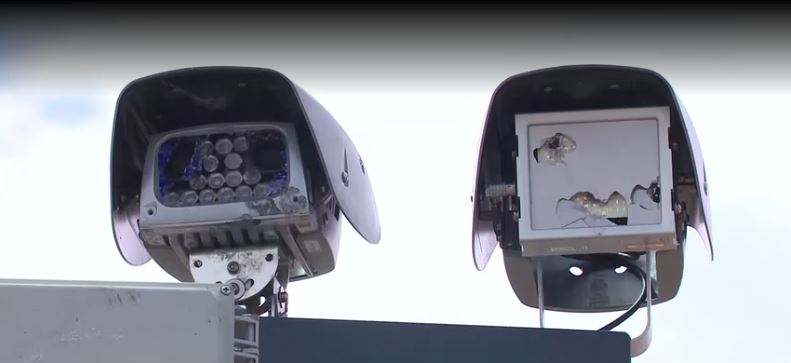
    SANTA FE, New Mexico (KOAT) — Three speed cameras in Santa Fe, two on Zia road and one on Rodeo Road, were damaged by gunfire just hours after going live Monday morning, but police say the devices are still functioning and issuing citations.

The newly activated cameras issued about 500 citations by 8 a.m. Monday. Two hundred of those citations were generated by a cameras on Zia Road. Just hours later, gunshots damaged the Zia Road camera, though it never stopped working.

“One of them was at Zia Road, which was also our highest violation location, where we recorded a violation of 67mph in a 35mph zone,” Santa Fe’s Interim Police Chief Ben Valdez said.

Valdez said the city brought the cameras back after noticing a lot of dangerous driving following the pandemic. The goal of the program is to change dangerous driving habits and help everyone get to their destinations safely. The city placed three cameras on the east side of Santa Fe and three on the south side.

“As for deployment locations, when we looked at was crash data, speeding complaints and where people have concerns of unsafe driving,” Valdez said.

Valdez noted that the city of Santa Fe owns any data collected by the cameras, not a third party.

“As they know in our contract we have spelled out that the data is the property of the city of Santa Fe, and it’s not being shared with any third parties,” Valdez said.

He also clarified how the technology operates, noting that confusion over the type of cameras being used may be the reason they were targeted.

“First of all, these are not Flock Cameras. Secondly, what the device does is when it detects a speeding violation, it then triggers the recording device which captures the violation, then it stops recording. So they’re not recording street activity 24/7,” Valdez said. “I think because of the concerns nationwide about Flock Cameras, that could be one driving reason. I know some people are not pleased with having these devices up because of privacy concerns.”

Police are now examining shell casings found at the scene to link the bullets and the gun to the shooter.

“In addition, we’re looking at other things such as Ring cameras, surveillance and also information from the public. If someone is out there boasting that, hey, I just damaged these cameras, we intend to file charges and hold them accountable,” Valdez said. “If you’re speeding, it’s a civil penalty for your first time is 50 bucks. Now, if you use a firearm and destroy a camera, that’s a felony offense and it’s going to be more than 50 bucks in penalties are much steeper than the initial violation.”

Please note: This story was provided to CNN Wire by an affiliate and does not contain original CNN reporting. This content carries a strict local market embargo. If you share the same market as the contributor of this article, you may not use it on any platform.

Family grieves husky found dead in backyard construction hole

By Nick Bohr

Click here for updates on this story

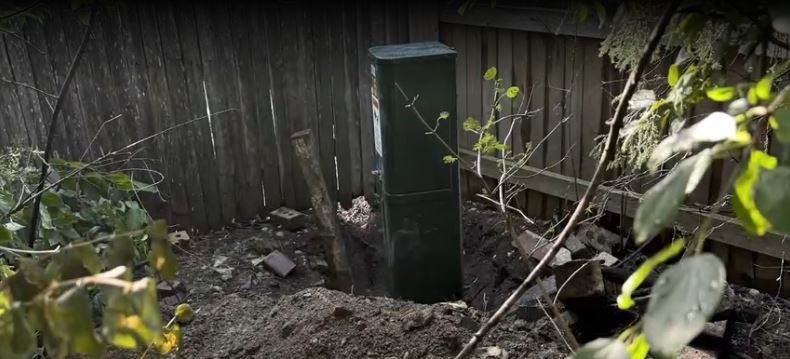
    RACINE, Wisconsin (WISN) — A Racine family is mourning the loss of their 14-year-old husky, Lia, who was found dead Saturday in a construction hole dug by electrical utility workers in a wooded corner of their fenced-in backyard.

“My wife calls me from outside, in a panic, saying she’s dead. She’s laying in a hole,” Brandon Wissmar said.

Wissmar said the hole was left uncovered, and he was unaware of its location until Lia was found. He rushed her to the vet, searching for answers.

“Petting her, she’s laying there, I put my head to her, and I said you got to see all the boys grow up, and I’ll take care of mom now,” Wissmar said.

Wissmar expressed concern that the uncovered hole could have posed a danger to his children as well.

In a statement to WISN 12 News, the contractor M.J. Electric said the work was for a new “not-yet-energized utility connection” and added. “We are conducting a thorough review of this incident to understand what occurred and to reinforce safety expectations across our crews.”

Wissmar said lawyers informed him that he has limited legal options because state law considers dogs property.

“I understand that while my dog might not be equivalent to my child, it’s closer to my child than my mailbox, and you’re basically telling me that they’re the same thing and I don’t agree with that,” Wissmar said.

He hopes contractors will improve communication and safety measures to prevent similar incidents.

“There just is no transparency; they’re just telling us we’ll be there at some point to do something. And we don’t know what that is, and in our case, since we didn’t know what that was, we lost our dog because of it,” Wissmar said.

The cause of Lia’s death remains unknown, as the family chose not to pursue a necropsy.

M.J. Electric issued to following statement to WISN 12 News:

“MJ Electric was saddened to learn that a customer’s family pet passed away over the weekend near one of our work sites. Our thoughts remain with the family during this difficult time.

“MJ Electric crews had been performing routine underground utility work at the residence as part of a new, not-yet-energized utility connection. We have reached out directly to the family to express our condolences and offer our support.

“We are conducting a thorough review of this incident to understand what occurred and to reinforce safety expectations across our crews. Safety is a core value at MJ Electric, and that commitment extends to every property and community where we work.”

Please note: This story was provided to CNN Wire by an affiliate and does not contain original CNN reporting. This content carries a strict local market embargo. If you share the same market as the contributor of this article, you may not use it on any platform.

Mother and son arrested after yearslong child sexual abuse investigation

By Jason Burger

Click here for updates on this story

    GUTHRIE, Oklahoma (KOCO) — A lengthy Guthrie Police Department investigation found years of abuse and ended with two people arrested after authorities said hundreds of files containing child sexual abuse material were found.

Those two suspects were a mother and her son, and Guthrie police said they have worked the investigation since 2024.

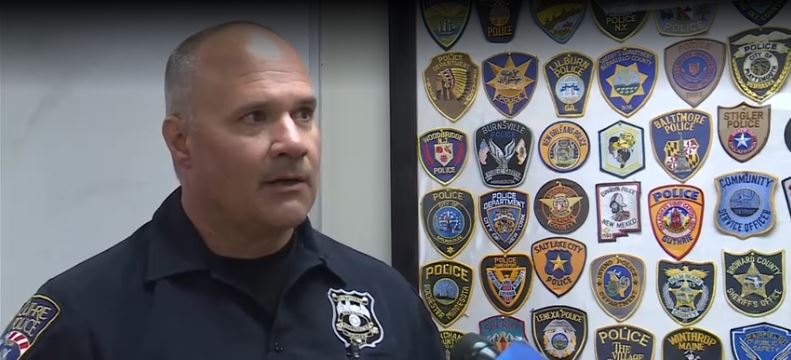
“A concerned mother called us and stated that Mr. Powell had sent an inappropriate voice message to their child,” said Lt. Jason Hamilton with the Guthrie Police Department.

Hamilton said that’s how the case began in 2024. Two years later, 31-year-old Erin Taylor-Powell and his mother, Daisy Powell, were arrested.

Erin was charged with first-degree rape, pornography and aggravated possession of child sexual abuse material. Daisy was charged with enabling child sexual exploitation.

“I’ve been here for a little over 20 years, and they’ve been here the entire time,” Hamilton said.

Court documents said the abuse goes as far back as 2015. Guthrie police started looking into the allegations in Aug. 2024.

Police obtained search warrants for the house where both suspects were living. Erin’s phone was a key part in the case, and after warrants were executed for his iCloud account, investigators found multiple files and text conversations with buyers.

After his phone was pinged, investigators found Erin in Guthrie getting out of a semi-truck that he was driving.

Just last week, he pleaded not guilty to the crimes.

“It was Detective Solomon’s tenacity for this case, and she’s had it since 2024. She has done multiple search warrants on phones, on iClouds, to find the evidence that was needed, and she found a lot,” Hamilton said.

In a probable cause affidavit for Daisy, it said multiple victims were interviewed, and when one of them told Daisy about a situation in which they were abused, court records said she did not act.

“Daisy did nothing but tell (the victim) to calm down, (the victim) was just dreaming or imagining things,” court documents said.

An investigator also wrote one of the victims said, “Daisy keeps everyone quiet, when I asked why she thought no one ever reported these incidents.”

Erin’s bond has been set at $5 million. Daisy’s is set at $2 million.

Both are in custody.

“I don’t know if we are looking for other victims, but if anybody wants to make contact, they can contact Detective Solomon at the police department number, and they’ll transfer them to her phone,” Hamilton said.

Those with information can contact the Guthrie Police Department at (405) 282-3535.

Please note: This story was provided to CNN Wire by an affiliate and does not contain original CNN reporting. This content carries a strict local market embargo. If you share the same market as the contributor of this article, you may not use it on any platform.

‘Lowest level of force that we have’: Program demonstrates shock gloves, uses it on volunteering teens

By Waverle Monroe

Click here for updates on this story

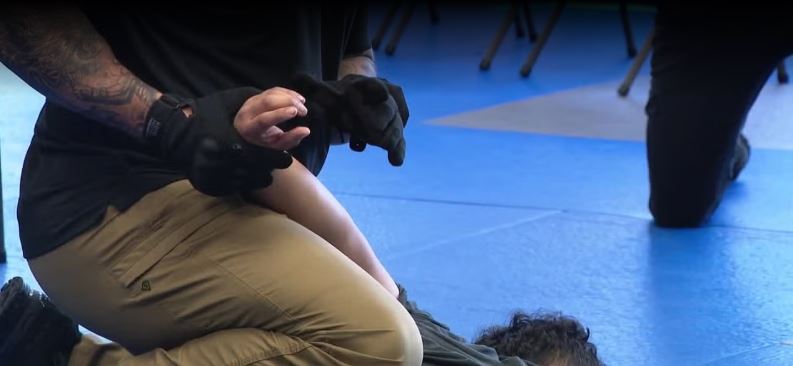
    OMAHA, Nebraska (KETV) — Some school resource officers in Omaha-area school districts are using shock gloves to manage dangerous situations, a controversial tool that some districts have adopted while others have rejected.

The G.L.O.V.E was designed to help officers gain compliance quickly and reduce the risk of injury.

John Stuck, co-creator of the Tactical Athlete Program, trains school resource officers (SROs) and other agencies on how to use the gloves.

“We’re trying to do it as quickly as you possibly can, again, lowering the risk of injury to a child,” Stuck said.

Stuck described the shock gloves as “the most effective tool” he has seen in his 30 years of law enforcement.

The program not only trains officers but also demonstrates the gloves’ effects.

During a training session, a 16-year-old named Oscar experienced the gloves firsthand.

“He grabbed my arm, and then I felt this really intense shock, buzzing and did not like it. Yeah, it hurt. I immediately complied,” Oscar said.

Oscar added that the pain didn’t last long.

“Do you feel anything else?” Stuck asked.

“No,” Oscar replied.

“Did your body lock up?” Stuck asked

“No,” Oscar said.

Kylie, a 15-year-old, also tried the gloves.

“It kind of felt like a burning sensation, but it didn’t hurt where I would start screaming,” Kylie said.

Stuck explained that the gloves are designed to minimize harm compared to previous methods of gaining compliance, such as physically forcing arms out or striking motor nerve points.

“Some of the other things we deal with is when we get people turtled down on the ground with their hands underneath them,” Stuck said. “We would try to hit motor nerve points on the body to try and get some compliance.”

Kylie said the experience was enough to deter her from wanting to try it again.

“I didn’t want to do it again,” she said.

KETV anchor and reporter, Waverle Monroe, also tested the G.L.O.V.E, describing the pain as sharp but short-lived.

“The whole thing lasts about three seconds,” Monroe said. “Once the glove was off, the pain was gone in an instant.”

Stuck emphasized that the gloves are designed to be a low-level force option.

“This is the lowest level of force that we have in what we use,” he said.

Jason Cvitanov, vice president of operations at Complete Tactical Consultants, said the gloves are safe and effective.

“The problem gets solved literally in seconds, and then we’re out of the incident, and that is a distinct advantage to everyone involved,” Cvitanov said.

After families voiced frustrations about the gloves being used in Omaha Public Schools, the superintendent asked the Omaha Police Department not to use them.

However, districts like Bellevue Public Schools and Westside Community Schools will have the gloves.

Please note: This story was provided to CNN Wire by an affiliate and does not contain original CNN reporting. This content carries a strict local market embargo. If you share the same market as the contributor of this article, you may not use it on any platform.