Caledonia Senior Living seeking volunteers for cycling program

By Noel Brennan

Click here for updates on this story

    RIVERSIDE, Illinois (WBBM) — You don’t need to pedal to feel the rush of a bike ride.

Some residents at a senior living center in the western suburbs know that well.

“This is a little piece of Scotland hidden away in the forest preserve of North Riverside,” said Gus Noble, president of Caledonia Senior Living. “We take care of seniors with a lot of love. We’ve been around for over a century.”

No matter your age, fresh air always feels good.

“Nature is a big part of life here,” he said. “We like to bring the forest preserve into the home and the home into the forest preserve.”

For Noble, he says it’s the most wonderful experience in his life—making sure his residents get a healthy dose of fresh air, along with wind in their hair.

“It invigorates you a little bit,” said resident Rich Desimone.

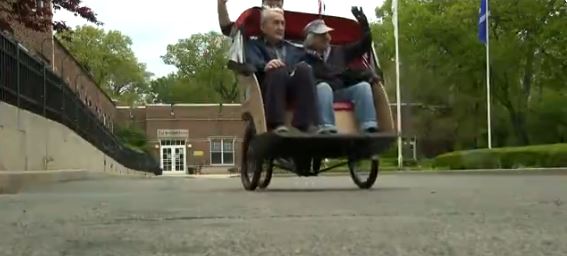
Desimone, 81, cruises like the old days. He can hitch a ride thanks to the program, Cycling Without Age.

“Cycling Without Age gives us an opportunity to keep us all fit and vital,” Nobel said.

It’s a worldwide movement in 41 countries, but Caledonia Senior Living started the first chapter in Illinois—bringing joy to residents and staff at the facility. Donors helped the facility buy two electric trishaws and a wheelchair bike.

“I love the wind. It’s probably messing up my hair,” said resident Lynn Sullivan.

Staff and trained volunteers steer the specialized bikes for any resident who wants a ride.

“For day trips, for ice cream, just wherever our whim takes us. It’s great fun,” Nobel said.

“It was fun and bouncy at times and interesting, and it was beautiful,” said resident Darlene Downs.

Nobel says what they need now is more volunteers—calling out to anyone with a little time to spare and want to help others enjoy the rush of wind in their hair.

Please note: This story was provided to CNN Wire by an affiliate and does not contain original CNN reporting. This content carries a strict local market embargo. If you share the same market as the contributor of this article, you may not use it on any platform.

TBM Avenger Reunion, air show featuring WWII vets and planes, takes of

By Noel Brennan

Click here for updates on this story

    PERU, Illinois (WBBM) — The TBM Avenger Reunion, an air show featuring historic World War II planes, kicked off on Friday in Peru, Illinois, about 90 miles southwest of Chicago.

The event is also a special reunion for veterans who once flew the warbirds.

Weathered warbirds from World War II still have life and lift under their wings as they put on a show at the TBM Avenger Reunion.

“Every airplane that you see out here is a veteran military airplane,” said coordinator Tim Gillian.

But more impressive than the planes is one veteran hanging in the hangar.

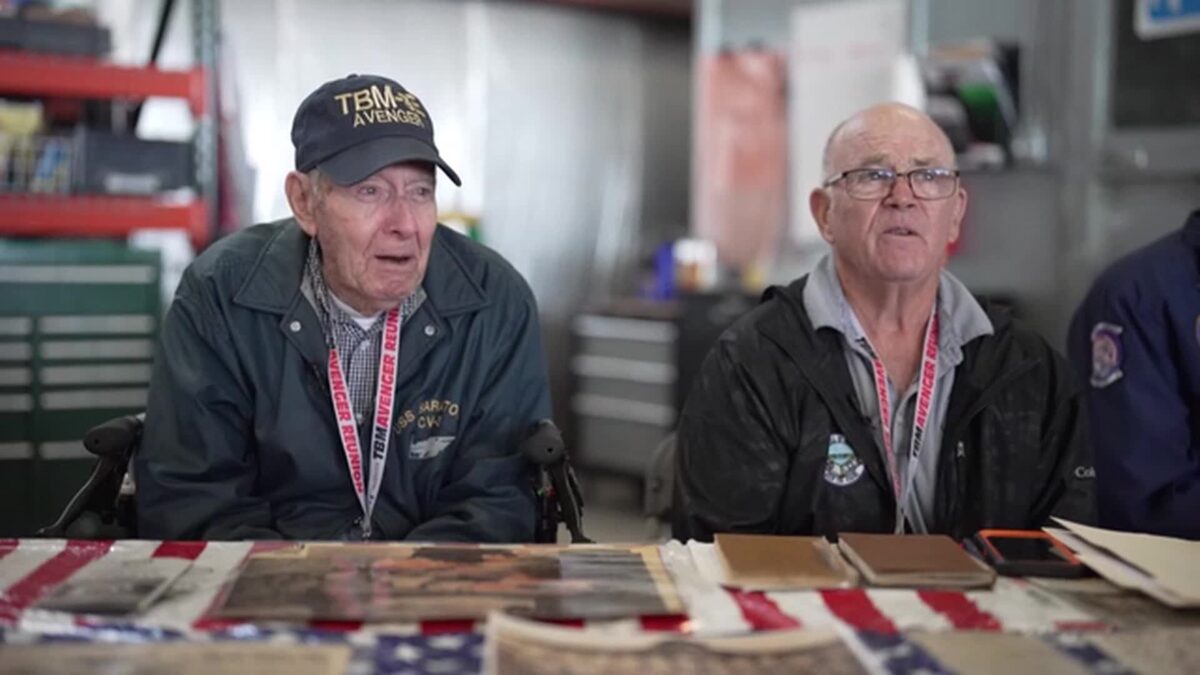
Alvin Gould is 100 years old now, but he was once a 17-year-old in the Navy – more nervous around girls than torpedo bombers.

“I’m not that shy around them now,” he said.

A lifetime later, he still lives for the feeling of flying in a warbird.

“I probably have thousands of hours, as old as I am. I started at 17; been flying for 83 years,” he said.

His plane of choice hasn’t changed – the TBM Avenger, the Navy’s main torpedo bomber during World War II, particularly in the Pacific theater.

Gould swears he’s in better shape than the aircraft.

“I’m not that rusty yet,” he said.

During the war, Gould was a turret gunner, and he can still show off exactly what that was like.

Every year of the TBM Avenger Reunion, it’s like a tight squeeze back in time, and suddenly, a 100-year-old is 17 again – almost.

“I was a lot younger then, and more resilient,” he said.

It’s hard to imagine anything more resilient than a veteran or the vintage planes they once flew. The TBM Avenger Reunion reunites them both.

Is there an air show like it anywhere else in the country?

“I don’t believe so that really honors veterans quite as much as we do,” Gillian said.

Peru will keep the show going for vets like Gould as long as there’s life to live and lift under wings.

Please note: This story was provided to CNN Wire by an affiliate and does not contain original CNN reporting. This content carries a strict local market embargo. If you share the same market as the contributor of this article, you may not use it on any platform.
How businessman Julius Rosenwald used his fortune to transform education

By Edie Kasten, Joe Donlon

Click here for updates on this story

    CHICAGO (WBBM) — In the early 1900s, a brilliant Chicago businessman set the standard for corporate success and used his fortune to help transform education across the U.S.

At the turn of the 20th century, Chicago was the place to be.

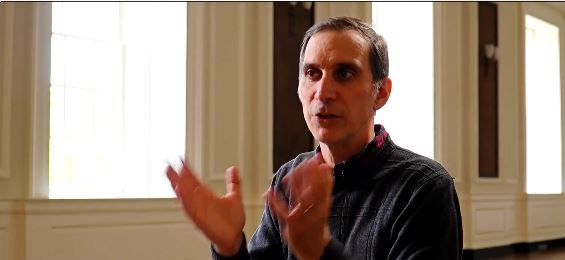
“It was one of the fastest growing if not the fastest growing city in the world,” said Nicholas Foster, Assistant Instructional Professor in Chicago Studies at the University of Chicago.

As the city grew, so did the career of Julius Rosenwald, the major force behind retail giant Sears, Roebuck and Co.

His beginnings were simple. The son of Jewish immigrants, he was born in 1862, in a house in Springfield, Illinois.

He dropped out of high school after two years to apprentice at his uncle’s clothing business in New York.

“Then moved back to Illinois, settling in Chicago, where he started a clothing business, and he made readymade suits,” said Chicago History Museum director of exhibitions Paul Durica. “And it was this business that brought him into the orbit of R.W. Sears and really kind of changed Rosenwald’s destiny.”

Sears pioneered the mail order catalogue.

“Sears essentially took the department store and put it in a catalogue that you could reach from home. So, you could buy the goods available in big cities. You didn’t have to travel to Chicago,” foster said.

In 1895, Rosenwald bought a stake in Sears, and by 1908 he was president of the company.

“He grew Sears from a secondhand department store to a national model of logistical empire,” Foster said.

Despite his top position, Rosenwald referred to the thousands of Sears’ employees as his co-workers. He soon became a multi-millionaire and a major philanthropist.

“He felt that as long as he was able to meet the needs of himself and his family, whatever else he had, he should give back, whether it was giving it back to his co-workers at Sears or to the larger community,” Durica said.

When hard financial times hit the nation, Rosenwald used his own money to keep the company and his co-workers afloat. He also was a pioneer of company profit sharing, but his concerns reached beyond the corporate world.

“He was also willing to confront and admit that there are deep racial problems in the United States,” Durica said. “You have to look it directly, and you have to confront it, and the only way for the country to overcome it is if everybody is engaged and involved in it.”

In 1910, Rosenwald met author and Tuskegee Institute founder Booker T. Washington.

“He visits Tuskegee Institute, he becomes close friends with Washington, and he invites Washington to come back and stay at his home in Kenwood,” Durica said.

Together, they created a plan to build schools for Black children throughout the segregated South, but Rosenwald believed in helping people to help themselves.

“Local communities would raise part of the funds, and they would really help to kind of develop and design the schools,” Durica said. “Then Rosenwald would match what they were doing to make sure that the schools get built and were sustained.”

The schools inspired learning, featuring gardens and tall windows to let in light.

Over 30 years, the Rosenwald Fund helped build more than 5,000 schools, community shops, and homes for teachers in 15 states. Graduates of those schools included author Maya Angelou and Congressman John Lewis.

A fellowship program offered grants to promote education and achievement. Recipients included singer Marian Anderson, authors Ralph Ellison and Langston Hughes, and the first African American to win the Nobel Peace Prize, Ralph Bunche.

“The fund is set up in such a way that all of it has to be expended within 25 years of his death, and that was intentional,” Durica said. “He wanted to make sure the fund was providing immediate support in the areas where it was most needed, and then he also wanted to basically put it forward as a challenge to future and fellow philanthropists.”

Rosenwald died in 1932. In his lifetime, he donated the equivalent of more than $1 billion in today’s money. Giving to others was one of his greatest joys.

“So few people had done so much public good – not just in Chicago, but across the country – and received so little public recognition,” Durica said. “But, being the humble man he was, that’s exactly the way he wanted it.”

Rosenwald also funded construction of YMCAs across the county, founded the Museum of Science and Industry, and was an early supporter of the NAACP.

There is a campaign to recognize him and the Rosenwald schools as a national historic park. A visitor center in Chicago and several schools are on the wish list.

Please note: This story was provided to CNN Wire by an affiliate and does not contain original CNN reporting. This content carries a strict local market embargo. If you share the same market as the contributor of this article, you may not use it on any platform.
America’s first coast-to-coast road still runs through western Pennsylvania

By Christopher DeRose

Click here for updates on this story

    PITTSBURGH (KDKA) — Though gas prices are a bit high right now, you may still be planning a summer road trip. And if you have the time, why not take a spin on the old Lincoln Highway, America’s first coast-to-coast road that still runs right through the heart of the Pittsburgh region.

In the five years after the first Model T Ford rolled off the assembly line in Detroit in 1908, Americans became obsessed with the automobile.

But while cars were becoming more common in cities and towns across the country, decent roads were not.

“In the early years, if you owned an automobile, you could only really get around a little bit in the town because you couldn’t drive to the next town,” said Brian Butko, director of publications at the Heinz History Center and author of several books on the Lincoln Highway.

He says that before automobiles, if you wanted to travel long distances, you either took a train or tried your luck on dirt wagon roads never designed for cars.

Thankfully, he says, there were visionaries like automotive pioneer Carl Fisher, who rallied the auto industry and car clubs alike to create America’s first coast-to-coast highway named in honor of President Abraham Lincoln.

“The Lincoln Highway Association was incorporated on July 1, 1913,” said Butko. “And I am sure that is not a coincidence because that would have been the 50th anniversary of the battle of Gettysburg. And there was a real push at that time to bring the country together. And what better way than a highway that would join east to west, and people from the north and south could go on it.”

The Lincoln Highway was completely privately funded and stretched more than 3,000 miles from New York City to San Francisco, crossing 12 states and running right through the heart of Pennsylvania.

The Lincoln Highway Association had a string of local ambassadors along the highway’s route to represent their association in local affairs, assist visitors, and monitor and maintain their portion of the road.

Communities from Gettysburg to Greensburg and beyond experienced a tourism boom as motorists traveling east and west stopped along the way.

Travelers spent money at quirky roadside attractions like Bedford’s Coffee Pot gas station and the famous S.S. Grand View Point Hotel, perched high atop the Allegheny Mountains.

The highway lasted roughly 15 years before being numbered and absorbed into the federal highway system, and today, much of the Lincoln Highway is known as U.S. Route 30.

But historians say the roughly 200-mile stretch that cuts across Pennsylvania remains one of the best-preserved Lincoln Highway corridors in the country.

If you want to experience that history for yourself, just outside Latrobe sits the Lincoln Highway Experience Museum, where visitors can learn about what still survives from the old road and what has been lost to time.

Spencer Simpson, the manager of visitor services at the museum, is one of many people dedicated to preserving the legacy of the Lincoln Highway. Simpson says part of the Lincoln Highway’s charm is that even today, there is still something for everyone willing to leave the interstate behind and take the scenic route.

“There is something about American life that is fairly consistent over the last century where there is a touchpoint for everybody,” Simpson said. “And finding the point that everyone can relate to as an individual, and expanding upon that. Thinking, what might it be like for you if you were traveling the Lincoln Highway back in the 1920s or 1930s, and what would you find interesting as you are driving along? It might not be the Ship Hotel or the giant Coffee Pot, but it might be the beautiful state parks and forests we have in Pennsylvania. There is something here for everybody because life is very different from it was back then in some ways, in other ways it is very much the same.”

So whether you want to “see the USA in your Chevrolet,” or explore Pennsylvania from a different perspective, consider taking a modern-day trip into the past, on the road that helped change America forever.

Please note: This story was provided to CNN Wire by an affiliate and does not contain original CNN reporting. This content carries a strict local market embargo. If you share the same market as the contributor of this article, you may not use it on any platform.

Meta glasses may have captured shooting that left man with head wound

By Kerri Corrado

Click here for updates on this story

    PHILADELPHIA (KYW) — Police are investigating whether a pair of smart glasses captured video of a shooting that left a man wounded in South Philadelphia on Thursday night. Authorities say the suspects fired several gunshots, striking the man in the head.

It was a close call for one man who lives on Kater Street in Philadelphia’s Bella Vista neighborhood. He showed CBS News Philadelphia multiple bullet holes that ripped through his home following the shooting.

“This one here. If it would have gone a-little bit further it would have gone into the bedroom,” he said.

He did say that he heard the shots and when he looked outside, he saw a man on the ground. Police say one man in his 20s was shot in the head and taken to Jefferson University Hospital in critical condition.

“Next thing I know my house is a crime scene on each side. And police are knocking on my door and everything. It’s crazy,” he said. “I’m a little nervous now because it’s like 10-feet away from where I was at.”

Police say officers were in the area of 12th and Bainbridge when they heard the shots. They also say they found a car abandoned up the street with bullet holes in it. They do not believe anyone was injured.

As police try to piece together exactly what happened, they say they did find a pair of Ray-Ban Meta glasses that may have recorded the incident.

Neighbors say they heard it all too and the police response was quick.

“It was very loud. And I think half the neighborhood came out,” Sunny Payne said. “And there as a massive police response I mean almost instantaneously.”

Neighbors say the shooting is upsetting, but say despite that, they still feel safe and love their neighborhood.

“This is the safest neighborhood. I’ve been here forty years and it has, over time, gotten better and better and it’s so safe here. We don’t ever have problems,” Payne said.

Please note: This story was provided to CNN Wire by an affiliate and does not contain original CNN reporting. This content carries a strict local market embargo. If you share the same market as the contributor of this article, you may not use it on any platform.

LIRR strike has many worrying about Monday’s commute. Here’s the latest.

By John Dias, Jeff Capellini, Kristie Keleshian

Click here for updates on this story

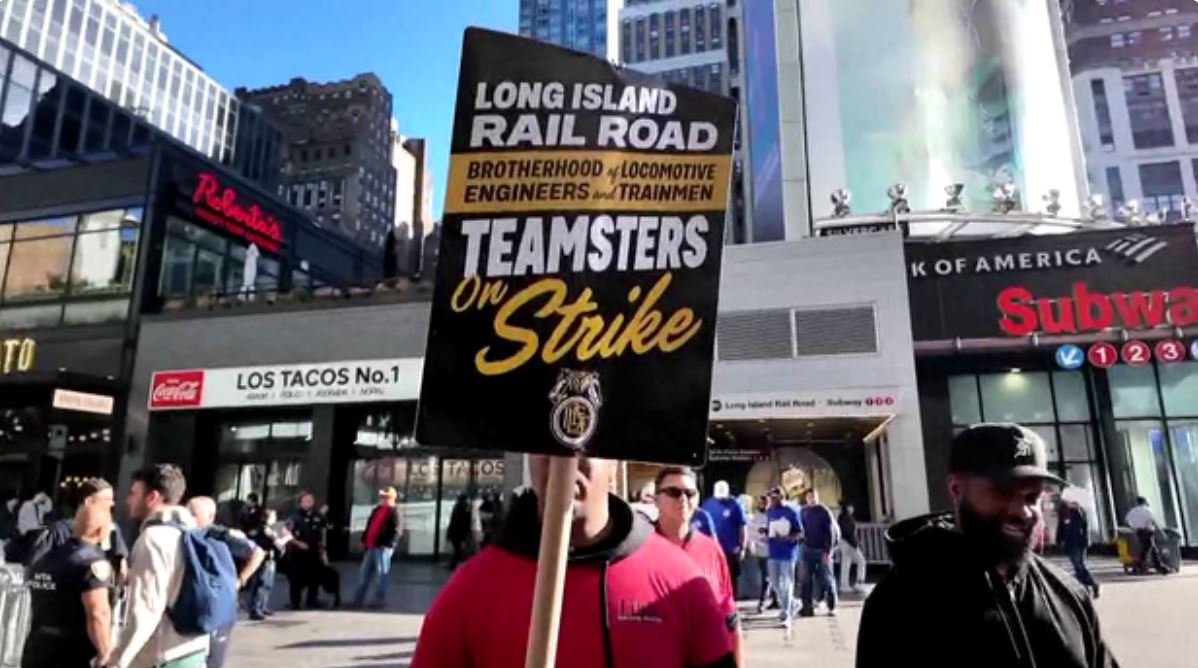
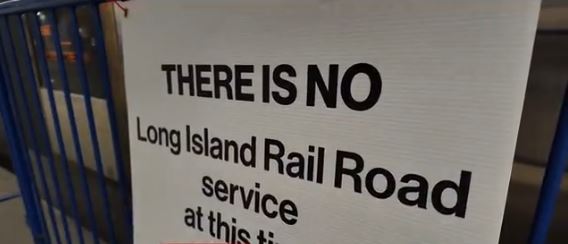
    NEW YORK (WCBS) — Long Island Rail Road workers were back on the picket lines at various spots in New York City and on Long Island on Sunday, voicing their concerns and demands as the strike continues for a second day.

While the work stoppage has caused a mess for people heading to weekend events, the real concern is Monday morning’s commute. The LIRR is the busiest commuter rail system in North America, with roughly 250,000 weekday riders. The strike is expected to force many to find alternative routes into the city from the Long Island suburbs.

The Metropolitan Transportation Authority says it has activated its contingency plan, which includes recommended subway stations as passenger drop-off points to get into the city. However, if you don’t have a ride, there will be limited, free shuttle buses from several Long Island train stations to subway connections in Queens. Bay Shore, Hicksville, Mineola and Lakeview will go to Howard Beach-JFK Airport, while Ronkonkoma and Huntington will be bound for Jamaica-179th Street.

The MTA says it intends to issue pro-rated refunds to may monthly ticket holders.

For months, the railroad’s unions and the MTA have been negotiating a new contract, but talks have repeatedly stalled over workers’ salaries and healthcare premiums.

With no deal, workers went on strike just after midnight Saturday and no new negotiations are currently scheduled.

“The MTA never really came to the table to negotiate until we had to call them out at their last board meeting,” said Karl Bischoff, president of the Brotherhood of Locomotive Engineers and Trainmen. “There is no sense or urgency, as has been said before. It just seems like the MTA board is never held accountable. My members are always held accountable for their actions.”

MTA President and CEO Janno Lieber issued a response on CBS News New York on Sunday morning.

“Just to be perfectly clear, we never broke off negotiations. The union elected to cut off negotiations and go on strike and inconvenience everybody. That was their choice,” Lieber said. “We have been available every minute of every day, if they are serious about trying to bring this to a close. These are by far the best-paid workers in the entire national railroad system, and they want a better deal than every other MTA worker. That’s not fair.

“These guys seem to think they are special, they are better than everybody else, and we’re not going to blow the MTA’s budget and put more burdens on taxpayers and riders because they think they are special,” Lieber added.

Asked how long the MTA can sustain such a standoff financially, Lieber said, “Listen, the MTA is a big organization and if we don’t have ridership, obviously, that hits the bottom line. It’s not a secret that fares don’t cover the entire amounts, so this is not a financial crisis right now for the MTA. It would be a financial crisis if we gave in and gave them, and then everybody else, a ton more money.”

Gov. Kathy Hochul and Nassau County Executive Bruce Blakeman, her opponent in the upcoming November election, each addressed the strike late Sunday morning.

Flanked by Lieber and other MTA officials, Hochul praised LIRR workers and said they deserve fair wages and benefits, but added, “The strike has put all that at risk. Just three days of a strike would erase every dollar of additional salary that workers would receive under a new contract.

“We don’t need to be here. Workers deserve better, but also New Yorkers deserve better. That’s why today, I am urging all parties once again to bargain at the table and get a deal done,” Hochul said.

The governor also went into further detail on the MTA’s contingency plan and urged all non-essential workers to work from home Monday if they can.

Speaking at the Long Beach station, Blakeman again blamed Hochul for the strike, calling it “a failure of leadership.”

He also lauded the unions and called for congestion pricing, the controversial Manhattan tolling program, to be suspended for at least the duration of the strike, if not completely after the work stoppage ends.

“We shouldn’t have to finance our state government with a toll on a road that we already paid for in our tax dollars,” Blakeman said.

Blakeman then took aim at Lieber, saying he’s mismanaging the MTA and that a change of leadership is necessary.

Though Monday’s expected chaos looms, many weekend travelers have been left feeling confused and frustrated.

At the Jamaica station, normally a main transit hub in the city for LIRR riders and expected to be a main picketing location for workers, many commuters arrived Sunday morning unaware that trains were not running.

While the MTA has those contingency plans, the shuttle bus service doesn’t start until Monday.

So weekend events like the Subway Series between the Yankees and Mets at Citi Field, the Bruce Springsteen concert on Saturday night at Madison Square Garden, and the Brooklyn Half Marathon, not to mention graduations and other events across the city, have been a real struggle to get to for Long Islanders who normally would get around on the LIRR without an issue.

“It would’ve been a 15-minute train ride. Instead, it was like an hour and a half to get here,” Alex Lupo said at Citi Field on Saturday night.

“It’s pretty annoying. I hope they could figure this out. It’s really poor timing for this to happen during the Subway Series,” Ryan Mattel added.

And with another Yankees-Mets game set to start at 1:40 p.m., the same travel scenario is likely to unfold. In other instances, some ticketholders for other concerts and Broadway shows had no choice but to give up their tickets because of the strike.

Please note: This story was provided to CNN Wire by an affiliate and does not contain original CNN reporting. This content carries a strict local market embargo. If you share the same market as the contributor of this article, you may not use it on any platform.
Long Island Rail Road strike leaving riders with marathon travel times to NYC

By Kristie Keleshian, Andrew Ramos

Click here for updates on this story

    NEW YORK (WCBS) — On Day 1 of the Long Island Rail Road strike, riders reported their regular trips to and from New York City turned into marathons.

Long Island drivers also faced heavy traffic Saturday, as people who would’ve taken the train were forced to hit the road, including Mets and Yankees fans heading to Citi Field for the Subway Series.

While there’s been no word from the MTA or unions about when negotiations will pick up, the National Vice President of the Brotherhood for Locomotive Engineers and Trainmen gave some new insight on why talks fell apart.

“We thought we were going to have something, and at the last minute, the MTA, in their usual fashion, wanted to throw in new items that were never discussed during any type of the negotiations, regarding healthcare, and that blew everything off the table,” Jim Louis said.

“We want a contract, we want something that’s fair and equitable to be able to live here on Long Island and support our families,” said one LIRR worker who was picketing Saturday.

Gov. Kathy Hochul said she received an update from MTA leaders on the status of negotiations and plans for alternate service.

“The MTA remains ready to negotiate, and I continue to urge both sides to stay at the table and work around the clock toward a deal that ends this strike,” Hochul said in a social media post Saturday.

“We refuse to make a deal that puts it on riders and taxpayers to fund outsized wage increases – far beyond what anyone else at the MTA is getting – and for folks who are already the highest-paid railroad workers in the country,” MTA Chair and CEO Janno Lieber said in an earlier statement about the strike.

It’s all quiet on the rails after LIRR union workers walked off the job amid the failed contract negotiations with the MTA.

“Woke up this morning, got to the LIRR and I was like, ‘Oh s***, it’s not running,'” said a rider named Devin from Port Washington.

Devin had to take two buses to visit his friend in Manhattan, which meant he had a longer day ahead of him than if the trains were running.

He didn’t know how he’d get back home.

“I might crash at a friend’s house tonight,” he said.

Ramses Brye, of Queens Village, was on his way to work the overnight shift at a Syosset Amazon warehouse when he found out about the strike.

“I took the train at midnight. That was the last time, and then I looked at the [TrainTime] app at like 12:30, and, like, yeah, they’re definitely on strike,” Brye said.

MTA workers posted signs at Mineola Station, where starting Monday shuttle buses will take essential workers to and from New York City subway stations in Queens.

The MTA’s strike contingency plan designates five subway stations as drop-off locations, which are also near major roadways to and from Long Island.

Over the weekend, however, the Nassau Inter-County Express bus is all the area has.

“Fortunately the buses are reliable, but the trains would’ve been better,” Brye said.

It means riders will be dealing with excess travel times.

“The train ride itself is 36 minutes. So, it turns out now an hour and 36 minutes instead of 36 minutes,” said a rider named John from Mineola.

Max Rallo, of Dix Hills, and his friends spend over $100 on an Uber ride from Long Island to Jamaica, Queens.

“Now the plan’s all messed up because I can’t take a 45-minute train ride anymore. It’s a two and a half hour trip,” said Rallo, who said it was too early to think about how he’ll get home.

The Subway Series at Citi Field this weekend might be the unofficial litmus test for what commuters can expect Monday if the strike spills into the workweek.

Even with the Mets expanding their direct shuttle service for the series against the Yankees, fans faced obstacles getting to Saturday’s game.

Chopper 2 video showed backups on the Long Island Expressway, Grand Central Parkway and Northern State Parkway.

“Everyone has to use the LIE instead of mass transit. So the LIE was all backed up,” said Ryan Mattell. “It’s pretty annoying. I hope they can figure this out. Really poor timing for this to happen during the Subway Series.”

“It was smooth, but it was bumper-to-bumper. It was like a parking lot,” Ed Owens said.

“It would’ve been a 15-minute train ride. Instead, it’s like an hour and a half to get here,” said Alex Lupo.

“I heard my neighbor earlier, he was just like, ‘Yeah, I’m giving up my tickets for Sunday because it’s not worth driving,” a fan named Daniel said.

Fans leaving Friday night’s game had to catch the last train before midnight in order to beat the strike.

Please note: This story was provided to CNN Wire by an affiliate and does not contain original CNN reporting. This content carries a strict local market embargo. If you share the same market as the contributor of this article, you may not use it on any platform.
New lawsuit filed by a group of residents seek to block “outrageous” Trump Presidential Library

By Jim DeFede

Click here for updates on this story

    MIAMI (WFOR) — The Trump Presidential Library is facing a new legal challenge. A group of Miami residents, including historian Marvin Dunn, filed suit last week in federal court to block the transfer of land for the proposed library.

The downtown Miami site, located next to the Freedom Tower, was originally controlled for Miami Dade College for future growth, but Governor Ron DeSantis demanded the college surrender the three-acre parcel so that it could be used by the Trump family to build Trump’s presidential library.

The lawsuit argues the land transfer would constitute a gift, and violates emoluments clause of the U.S. Constitution, which specifically prevents the president from receiving financial benefits – so-called emoluments – other than his salary. The Founding Fathers believed it would be wrong for groups to be able to provide gifts and other financial benefits to a president to curry favor.

The suit argues that since the plans for the 47-story tower call for not just a library but also a Trump hotel, condos and commercial offices for lease, it constitutes a financial gift to the President and is therefore illegal.

On Sunday’s Facing South Florida, one of the attorneys bringing the lawsuit, Gerald Greenberg, spoke to CBS Miami’s Jim DeFede about what makes this presidential library different than others.

“This is not, by any stretch, a presidential library,” Greenberg argued. “You know, I’ve been to a number of them. The Harry Truman Library in Independence, Missouri, doesn’t have a 47-story skyscraper. I happened to go last year to the George W. Bush Library in Texas. It’s a library and it’s a museum. Same with the Clintons, Obamas, the Reagans. If this were just a library, we would not have this lawsuit, but they’ve made it crystal clear. This isn’t a library. The president himself said, I don’t do libraries and museums. He said he expects it to be a hotel. They released this well-documented and well-produced video showing what it’s going to be. It’s going to be hotel. It is going to a commercial center.”

Added Marvin Dunn: “Miami-Day College will get nothing back from this highly commercial pitch of the Trump family. That’s outrageous, absolutely outrageous.”

Please note: This story was provided to CNN Wire by an affiliate and does not contain original CNN reporting. This content carries a strict local market embargo. If you share the same market as the contributor of this article, you may not use it on any platform.
How Boston health clinics are using ketamine to help treat mental health. “It’s worth it.”

By Paula Ebben

Click here for updates on this story

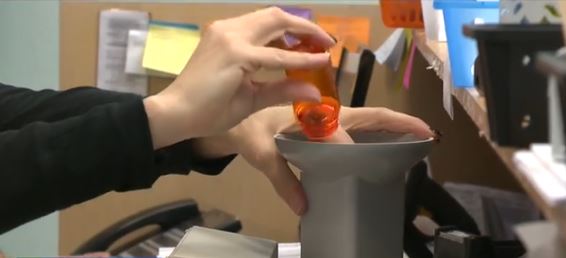
    BOSTON (WBZ) — Many people struggle with getting mental health care, whether it is too slow for their recovery or just not accessible to them. Lumin Health, a Ketamine clinic in Boston’s Fenway neighborhood, hopes to change that.

Linda Deveraux has struggled with depression most of her life, turning to therapy and prescription medications with no luck.

“The side effects alone will discourage you, like the weight gain, the nausea, the constipation, the fogginess,” Deveraux said. “Sadness, hopelessness, fatigue, sleeping all the time, not being interested in doing anything pleasurable or anything. It was hard. The struggle is real.”

So her medical provider recommended ketamine therapy and her mental state finally started to improve.

“Everything feels lighter, lighter, like I pushed that, you know, my best friend, my sadness, best friend off my shoulder, he’s not there anymore,” she explained.

The medical director at Lumin Health, Dr. Aakash Sathappan, explained that ketamine therapy doesn’t come with many side effects.

“In general, the treatment is well tolerated. There are some time-limited side effects; most people feel a little bit tired, a little bit drowsy, perhaps a bit dizzy after treatment. That tends to wear off with time,” Dr. Sathappan said.

But the treatment comes with misconceptions and a stigma, following its connection to Matthew Perry’s sudden death in 2023. Dr. Sathappan explained that Perry’s addiction problems likely led him to be quickly hooked on the drug. He emphasized that supervision is key when getting treated with ketamine.

“The treatment does impair you, similar to another substance like alcohol,” Dr. Sathappan said.

“I think the biggest misconception is that ketamine is either purely a biologic or purely this thing that’s meant to give you a trip. It’s neither. It’s really a combination of both of them,” said Dr. Benjamin Yudoff.

It works by using a low dose to block certain signals in your brain, helping nerve cells form new connections.

“It allows people to reconnect with a version of themselves that’s often lost with depression,” Dr. Sathappan said. “We think that the treatment is basically creating biological conditions to help the brain grow and restore in a way that was once damaged with depression.”

Dr. Sathappan said that the stimulation of the brain can help lead to changes in mood, behavior, energy levels, and overall outlook on life. He emphasized that ketamine is a treatment, not a cure.

“They want something that works quicker. They want something that works more reliable. They don’t want to feel the same way that they have for the past three, four, five years. They have goals. They have desires. They have dreams. And they want something that might actually compel a different kind of change,” Dr. Yudkoff explained.

Deveraux is ready to embrace that change, even if it means she has to continue the treatment for the rest of her life.

“You have to be 100% committed to this. For me, it’s worth it, like I’m in this because I have not felt like this for so long,” she explained.

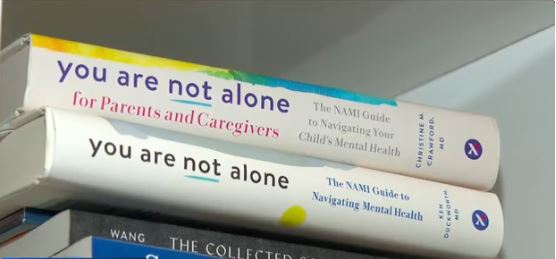
If you or someone you know is struggling with mental health, you can reach out to NAMI Massachusetts by calling them at 617-580-8541 or visiting their website.

Please note: This story was provided to CNN Wire by an affiliate and does not contain original CNN reporting. This content carries a strict local market embargo. If you share the same market as the contributor of this article, you may not use it on any platform.
Woman struggled with mental health her whole life. Now she’s helping others seek help at NAMI Massachusetts

By Mike Sullivan

Click here for updates on this story

    MASSACHUETTS (WBZ) — Eliza Williamson has struggled with mental health all her life, but after undergoing recovery, she made it her mission to help others struggling in Massachusetts.

She now works as the executive director of the National Alliance on Mental Health in Massachusetts, a nonprofit that helps people access mental health support. Her own struggles with mental health began in middle school when she turned to self-harm and eating disorders to cope with her mental state.

During her sophomore year of high school, her doctors believed she had mononucleosis, but it turned out she was struggling with complex post-traumatic stress disorder (PTSD).

“I was describing all of the physical symptoms. I was tired. I had headaches. I had no energy. It didn’t occur to me that it was about feelings,” she explained.

Williamson said that by the end of college, she had hit rock bottom as she struggled with her relationships and began making mistakes at work. She believed there were no options left and attempted to take her own life.

“I got very lucky that day, my Mom was worried and asked the police to do a wellness check. They, you know, kicked in my apartment door. I was able to get help,” she said.

She was admitted to a medical hospital before being transferred to a psychiatric hospital. She then continued her recovery in a group home.

“A big piece of that for me was being in support groups and listening and learning from other people about their own experiences,” she explained.

Williamson joined NAMI Massachusetts as a volunteer in 2012 before becoming a staff member in 2015. Two years ago, she became the executive director, and now that support she received is a key pillar of the way NAMI helps people dealing with mental health.

“The support that can come from being with other people who had similar experiences can be life-altering,” Williamson said. “I know how hard it is to navigate systems. I know how complicated things are.”

She said that it can take someone eight to ten years before they seek help for a mental health condition, which can be someone’s entire childhood. She hopes that her story and work can help encourage people struggling that there is light at the end of the tunnel and they can make a recovery to live a happy life.

“There are spots in my life where I think ‘Oh, if I had gotten help, then the trajectory of things might have been different,” she said.

Williamson now relies on her wife and two dogs as her support system. She explained that her niece is her inspiration now to help make mental health resources accessible and encouraged.

“My great hope is that Tabina or other kids, if they are struggling, that they will know how to get support if they need it,” she said.

If you or someone you love is struggling with mental health, you can call the NAMI Compass hotline at 1-800-370-9085. For more information on navigating a mental health crisis, head to the NAMI Massachusetts website.

Please note: This story was provided to CNN Wire by an affiliate and does not contain original CNN reporting. This content carries a strict local market embargo. If you share the same market as the contributor of this article, you may not use it on any platform.