Residents blast mayor, council over viral video, ‘broken trust’ at City Hall meeting

By Kirsten Maselka

Click here for updates on this story

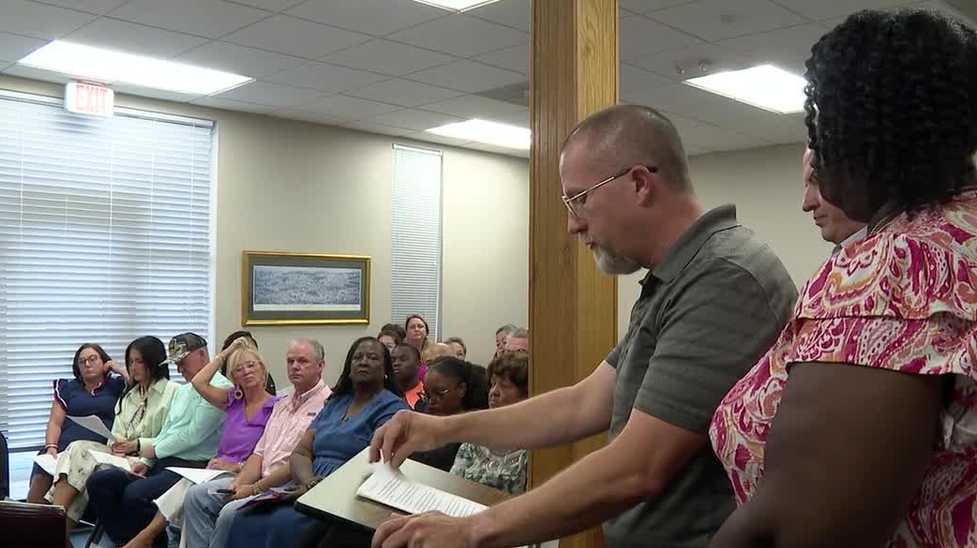
    GLENNVILLE, Georgia (WJCL) — Residents packed Glennville City Hall on Tuesday night for a tense public meeting as city leaders faced mounting backlash over a viral video that captured the mayor and three council members making derogatory remarks about community members.

Every seat in the chamber was filled, with attendees spilling into the hallway for what many saw as the first real opportunity for the public to confront city officials directly since the video began circulating online weeks ago.

“You have broken the trust of the citizens and taxpayers,” resident and pastor Reba King Feliciano told city leaders during public comment.

The video, which has fueled weeks of controversy in the city, prompted residents to demand accountability from elected officials. Feliciano called for both an apology and resignations, saying, “We are sick and tired of being sick and tired.”

Public comment was limited to residents who signed up in advance, allowing only a small number of people to speak. Several who addressed the council said the remarks heard in the video were unacceptable.

“Citizens should never have to question if they will be treated differently simply because of their religion,” said resident and pastor Roger Nelson.

Not all attendees agreed on how the city should respond. Resident Donna Blocker urged the community to show restraint, saying, “I do not believe that anyone should be judged solely by their worst moment.”

When council members addressed the crowd, however, residents received little in the way of explanation. The mayor and two council members allegedly heard in the video declined to comment. One council member thanked attendees for coming, but no one issued an apology.

Council member Cynthia Miller, who was not a part of the video but was the subject of some of the derogatory comments, thanked residents who spoke in her defense.

The meeting did little to settle the controversy. Some residents left City Hall angry and disappointed.

“It was a spit in the face,” resident Jo Ann Anderson said.

Others said the city must find a way to move forward together.

The uproar has dominated public discussion in Glennville for weeks, and Tuesday’s standing-room-only meeting suggested the divide in the community remains deep — and unresolved.

Please note: This story was provided to CNN Wire by an affiliate and does not contain original CNN reporting. This content carries a strict local market embargo. If you share the same market as the contributor of this article, you may not use it on any platform.

Alabama community prays for missing Auburn student as search continues in Japan

By Ayron Lewallen

Click here for updates on this story

    BIRMINGHAM, Alabama (WVTM) — The search continues for missing Auburn student James “Weston” Higginbotham who was last seen five days ago at a train station in Kyoto, Japan.

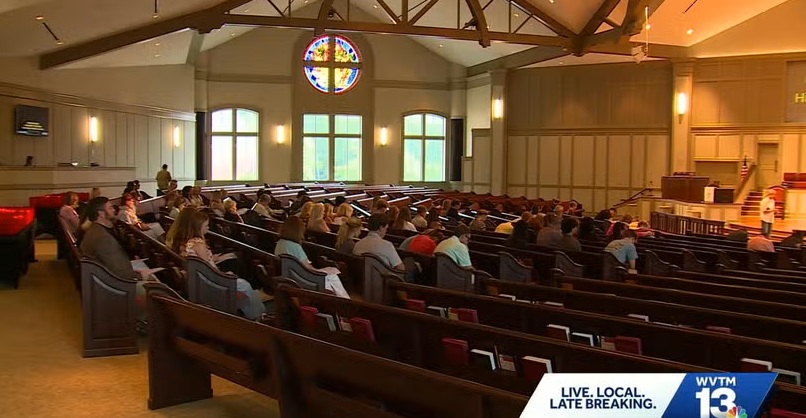
As his family searches for answers overseas, support is growing back home in Central Alabama, where loved ones, friends and community members gathered Tuesday at Asbury United Methodist Church to pray for his safe return.

With heads bowed and eyes closed, the church sanctuary was filled with prayers for Higginbotham and for the family members desperately waiting. Dozens came together to ask for strength, comfort and hope as the search stretches into another day.

Higginbotham’s grandfather, Robert Holt, said the family is facing obstacles but is deeply grateful for the support pouring in from so many people.

“Try to assure them that they’re not alone—that they have a whole lot of people—and most importantly, they’ve got God,” he said. “It’s his decision on how things go in our daily lives—period. Whatever your beliefs may or may not be, mine is very simple. God is in control, and with that said, ‘God, please.’”

Holt described his grandson as a strong young man who just finished an Ironman triathlon and said the family is doing everything possible to bring him home.

Family friend Clay Farrington described Higginbotham as a smart, kind and respectful athlete. He said the uncertainty has been heartbreaking, but the community is determined to stand beside the Higginbotham family. He still believes there is reason to hope.

“Keith and Nancy and Grayton, we love y’all,” he said. “Weston, if you see this, buddy, love y’all. Can’t wait to see y’all back in Birmingham.”

At the prayer gathering, that hope was at the center of every message. Higginbotham’s family is working to spread word of his disappearance as widely as possible and hopes anyone with information will come forward. They say they are thankful for the support they have received so far and are asking people to continue praying for his safe return.

Please note: This story was provided to CNN Wire by an affiliate and does not contain original CNN reporting. This content carries a strict local market embargo. If you share the same market as the contributor of this article, you may not use it on any platform.
Auburn University student missing in Japan: What we know about the search

By Riley Conlon, Lisa Crane, Ayron Lewallen

Click here for updates on this story

    KYOTO, Japan (WVTM) — An Auburn University student is missing in Japan. Authorities and family members are searching after he disappeared during a family trip.

James “Weston” Higginbotham, 20, was last confirmed in the Kyoto area on May 29 while traveling with his family, according to information released on social media by his mother, Nancy Higginbotham.

What we know

James Higginbotham, 20, was last seen in the Kyoto area on May 29 Because of his hiking experience, family members believe he may have traveled into wooded or trail areas near Yamashina. A typhoon moved through the region Tuesday, complicating efforts to search trails and wooded areas near where Weston was last known to be. Police are using surveillance video to follow his last-known movements. His mother, Nancy Higginbotham, said she is concerned he may be in emotional distress. Because of his experience and independence, Nancy said there was little reason for concern when he spent time on his own during the family’s trip. Anyone who sees Higginbotham is asked not to publicly post his location but instead contact local police immediately and then notify the family.

The search

Local police have been reviewing surveillance video and other evidence as they work to piece together his movements. A police report has been filed.

As the search continues, the family is also dealing with difficult weather conditions. A typhoon moved through the region Tuesday, complicating efforts to search trails and wooded areas near where Weston was last known to be.

The latest information from investigators places Higginbotham at Yamashina Station east of Kyoto. Surveillance footage reviewed by police shows he made it to the station, according to his family, but it remains unclear whether he got back on a train after that.

His family said he arrived at Kyoto Station around 8:15 p.m. on May 29. His phone last showed activity at 8:29 p.m.

Before that, Higginbotham was confirmed to have made a purchase at a Kohnan hardware store in the Kyoto area. Family members believe he was traveling east from Kyoto on a local train along the Biwako Line, also known as the Tokaido Main Line, or the Kosei Line.

His mother said she is concerned he may be in emotional distress.

Speaking from Kyoto, Nancy and Keith Higginbotham said volunteers, social media users and complete strangers have played a critical role in helping the family search for Weston.

Now, she says, the family’s biggest challenge is getting Weston’s photo and story in front of more Japanese residents.

“I need Japanese media contacts,” she said. “My biggest hurdle is getting it out to Japanese residents.”

While social media has helped spread information across the United States, Keith believes reaching more people in Japan is imperative, because they are the ones most likely to encounter Weston if he is moving through the area.

“He stands out in the crowd, because he looks nothing like everyone else here, with his blond hair and his height,” he said. “So he is easy to locate if you just know to look for him. So getting in front of more people here so that they know to look for him is key.”

About James Higginbotham

Higginbotham is described as 6 feet, 1 inch tall with long blond hair and blue eyes. He was last seen wearing a shirt with a white front and the words “Save the Bees” with two bumblebees on the back, lavender corduroy pants with a large cuff, and worn white Adidas shoes with black stripes and wide shoelaces.

He was carrying a shoulder bag featuring the outline of the state of Alabama.

“If anyone knows Weston, he’s a vegan pacifist. He doesn’t even kill mosquitoes,” his mother said. “He’s the nicest child.”

Because of his experience and independence, Nancy said there was little reason for concern when he spent time on his own during the family’s trip.

A Spain Park High School graduate and Auburn student studying environmental engineering, Higginbotham is described by his mother as an excellent student, experienced traveler and skilled navigator. He is also an avid hiker.

Because of his hiking experience, family members believe he may have traveled into wooded or trail areas near Yamashina.

Support in Alabama

Alabama State Rep. Mike Shaw said he and State Rep. Susan DuBose have been in contact with Mark B. Jackson, honorary consul general of Japan, and the Consulate General of Japan in Atlanta regarding the search.

Shaw, who chairs the Japan Legislative Exchange in the Alabama House of Representatives, said officials have been assured that “appropriate resources” have been engaged in the search for Higginbotham.

“Let’s all pray for Weston’s safe return, for strength and peace for his family, and for wisdom and endurance for everyone involved in the search,” he said.

As his family searches for answers overseas, support is growing back home in Central Alabama, where loved ones, friends and community members gathered Tuesday at Asbury United Methodist Church to pray for his safe return.

At the prayer gathering, that hope was at the center of every message. Higginbotham’s family is working to spread word of his disappearance as widely as possible and hopes anyone with information will come forward. They say they are thankful for the support they have received so far and are asking people to continue praying for his safe return.

Please note: This story was provided to CNN Wire by an affiliate and does not contain original CNN reporting. This content carries a strict local market embargo. If you share the same market as the contributor of this article, you may not use it on any platform.
California north coast shaken by magnitude 5.1 earthquake near Eureka

By Cecilio Padilla

Click here for updates on this story

    California (KOVR) — A series of offshore earthquakes shook near California’s North Coast early Wednesday morning.

The quakes included a magnitude 5.1 earthquake about 40 miles west of Petrolia, which struck at 5:45 a.m., and a larger magnitude 5.7 earthquake that struck just before 4 a.m. farther offshore, west-southwest of Pistol River, Oregon.

Minutes after the Petrolia-area quake, an apparent aftershock registering as a magnitude 4.5 earthquake struck in nearly the same area.

The Petrolia-area quakes were very shallow, with preliminary depths of less than a mile below the seafloor.

USGS impact estimates for the larger quakes were low, and no major damage was expected. No tsunami warning, advisory, watch or threat was in effect, according to the U.S. Tsunami Warning Center.

Please note: This story was provided to CNN Wire by an affiliate and does not contain original CNN reporting. This content carries a strict local market embargo. If you share the same market as the contributor of this article, you may not use it on any platform.
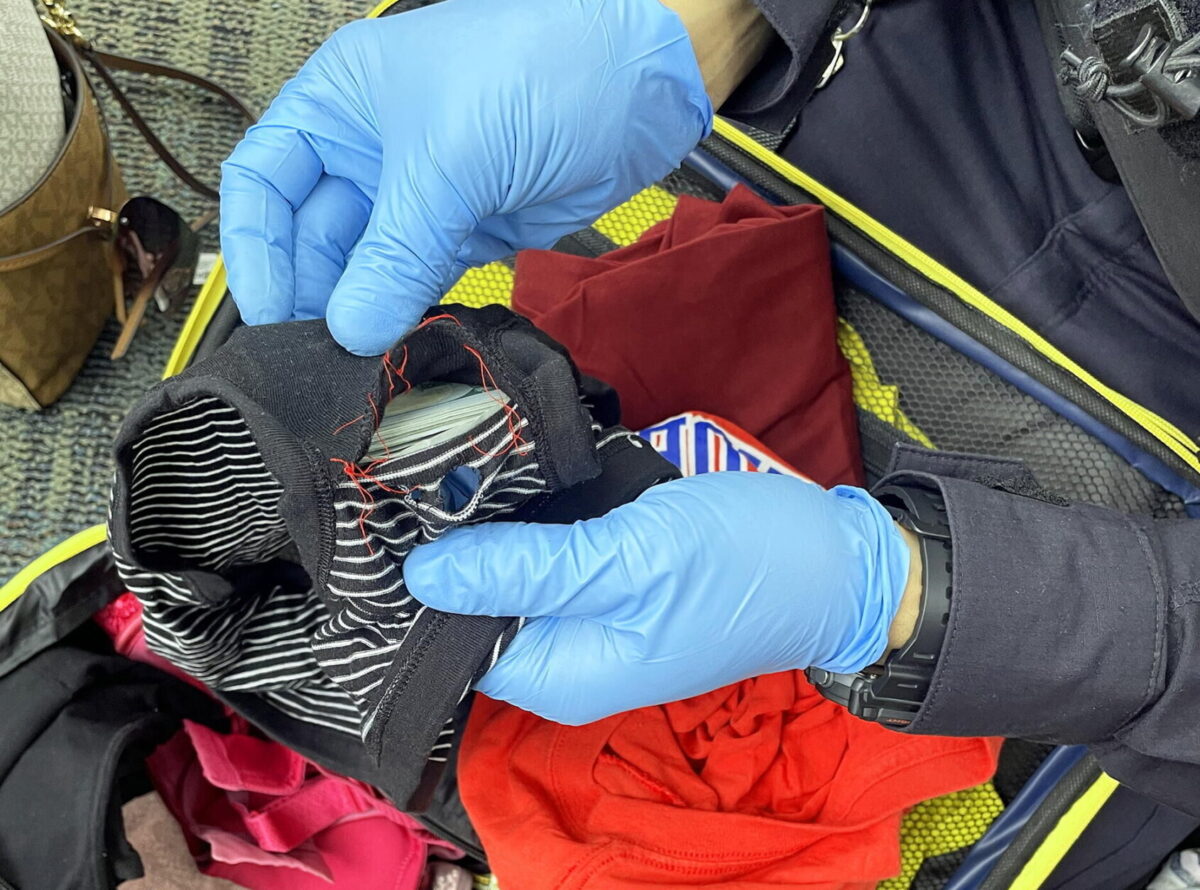
Table tennis helps metro Atlantans with neurological disorders bounce back

By Madeline Montgomery

Click here for updates on this story

    ATLANTA (WUPA) — In metro Atlanta, the game of table tennis is helping people with Parkinson’s disease, Alzheimer’s, and people who have had strokes.

Linda Bramhall was once a wallflower when it came to playing the sport.

“I just wanted to do nothing but sit on the sidelines the first few times that I came, and I kind of gradually worked my way into playing. But it was scary at first,” she said.

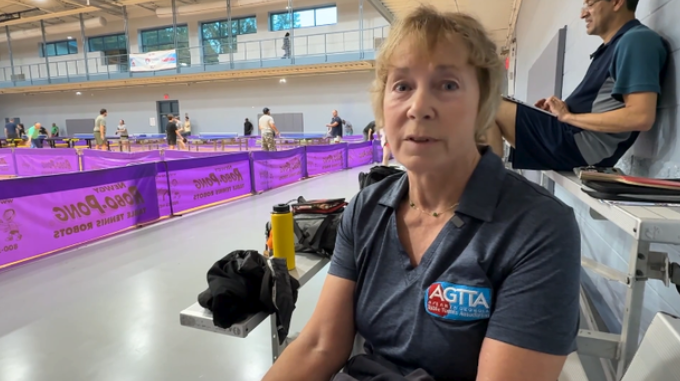
Bramhall now comes to the Lucky Shoals Park Community Recreation Center in Norcross twice a week for table tennis.

“Everybody’s very supportive of one another. And we all play one another. We all play the children, we all play the elderly,” said Bramhall.

For Bramhall, table tennis is also physical therapy. She was diagnosed with Parkinson’s disease eight years ago, a neurological disorder that damages brain cells, leading to symptoms like uncontrollable movements, tremors, and balance issues.

She decided to start playing table tennis when she saw one of Nenad Bach’s videos. Bach is the founder of PingPong Parkinson. He started playing on a whim with a friend and noticed a difference in his Parkinson’s symptoms.

“I said, ‘If it can help me, why not others?’ So it was March 1, 2017, when we started, and nine years later, we are on six continents, in 36 countries, and around 4 to 500 chapters in the world,” Bach said.

One of those chapters is in Norcross and plays along with the Atlanta Table Tennis Association.

“It kind of makes me feel strong again. Not feeble or fragile. But you feel a sense of strength. Confidence, it gives you confidence, it just helps… You just generally feel overall much better,” said Bramhall.

Coach Oscar Rodriguez coaches every level of player in the high-speed game.

“Five-year-old, 6-year-old girls that are quite good. They will beat you. And then we have octogenarians,” said Rodriguez.

Rodriguez sees the healing across the table.

“I think this is helping with the neurons firing in the people’s brains in the people that have Parkinson’s,” he said.

Doctors agree, saying sports like table tennis are beneficial for more than just Parkinson’s patients. People who’ve suffered a stroke or have alzheimers also benefit.

“You’ve got a lot of evidence that has accrued that shows that it’s likely that exercise slows down the progression of these neurodegenerative conditions,” said Dr. Madeleine Hackney, a research scientist with Emory School of Medicine’s Center for Visual and Neurocognitive Rehabilitation.

Hackney works with people with Parkinson’s, Alzheimers, and people who’ve had strokes. She encourages movement as a form of medicine and even teaches dance to help ease symptoms.

“Try to find something that’s fun. Something that will engage your mind. Something that will make you feel good about yourself, something that will make you feel good throughout the day,” said Hackney.

That fun keeps Bramhall bouncing back.

“Having a purpose, every week, two days a week, you know you’re going to be somewhere, you’re going to be doing something fun, doing something good for your health, around your friends, people that you like to be with, so there’s that consistency,” said Bramhall.

It’s consistency that’s been key to keeping her healthy.

Please note: This story was provided to CNN Wire by an affiliate and does not contain original CNN reporting. This content carries a strict local market embargo. If you share the same market as the contributor of this article, you may not use it on any platform.
Hidden in underwear: CBP seizes nearly $100K from Dulles travelers

By Diane Morris

Click here for updates on this story

    DULLES, Virginia (WTOP) — Two groups of travelers leaving Dulles International Airport over Memorial Day weekend had nearly $100,000 in cash seized after authorities said they went to unusual lengths to hide money — even though carrying large amounts of currency out of the United States is legal.

On Saturday, May 23, U.S. Customs and Border Protection officers and Vito, a nearly 2-year-old German Shepherd trained to sniff out currency, stopped a U.S. citizen and his family before they boarded a flight from Dulles to Brussels, Belgium, CBP wrote in a statement Monday.

Officers said the man initially said he and his wife were each carrying $7,000. After CBP officers explained the reporting requirement, the family revised the total to $20,000, then listed $22,500 when completing the official currency reporting form, the agency said.

But a later inspection found additional cash concealed inside a small purse, CBP said. Officers also reported frisking the man and finding another $1,450 hidden in the pockets of a second pair of pants he was wearing. Their final count: $46,520.

The next day, officers came across another case involving a woman and her mother, who’s from Cameroon — also attempting to board a flight to Brussels, CBP said.

After officers explained the currency reporting rules, the pair at first said they had $15,000, the agency said. The daughter, a U.S. citizen, then wrote $22,361 on the required reporting form, CBP said. Then, during a baggage inspection, CBP officers said they discovered even more money stitched inside women’s undergarments.

Their final count in that case totaled $52,923.

CBP seized the cash in both cases, totaling $99,443. The travelers were released and were not criminally charged.

“These are two seizures in which travelers went to extreme measures to unnecessarily conceal currency from Customs and Border Protection officers during a departure inspection,” said Christine Waugh, CBP area port director for D.C., in a news release.

Waugh said the currency reporting requirement is not designed to stop travelers from carrying their own money abroad.

“Currency reporting laws don’t restrict how much currency people can take overseas, nor is the currency taxed,” she said. “The law is focused on identifying bulk currency smuggling attempts that may be associated with illegal activity.”

CBP emphasized that the travelers were not accused of breaking the law by carrying large sums of money. Federal rules allow travelers to move any amount of cash internationally, but anyone carrying more than $10,000 must accurately report it to the U.S. Treasury.

According to CBP, both groups would have been allowed to keep their money and continue their trips if they had accurately reported the full amounts they were carrying. Instead, they both faced delays or missed flights.

The agency said Dulles officers have repeatedly encountered similar cases this year. In April, officers seized more than $163,000 in unreported currency from four travelers, and in January seized more than $119,000 from four others, CBP said.

Nationwide, CBP officers and agents seized more than $182,000 per day in unreported or illicit currency from October 2024 through September 2025, according to filings from the U.S. Border Patrol and CBP’s Office of Field Operations.

Please note: This story was provided to CNN Wire by an affiliate and does not contain original CNN reporting. This content carries a strict local market embargo. If you share the same market as the contributor of this article, you may not use it on any platform.

Pennsylvania men shot during Trump rally in Butler sue the United States

By Lauren Linder

Click here for updates on this story

    Pennsylvania (KDKA) — The two men who were wounded in a shooting during then-presidential candidate Donald Trump’s 2024 rally at the Butler Farm Show grounds are suing the United States.

James Copenhaver and David Dutch were shot during the attempted assassination of Trump on July 13, 2024, in Butler County, Pennsylvania. Their attorneys filed federal lawsuits against the United States for their “life altering physical and emotional injuries,” claiming those injuries were a direct result of negligence on the part of the United States Secret Service. Dutch was shot in the stomach, while Copenhaver was shot twice.

The complaints said, “The assassination attempt on President Trump’s life was entirely preventable and was caused, in whole or in part, by the failures of the USSS in the days leading up to the event as well as on the day of the assassination attempt.”

The families allege the lack of action by the Secret Service allowed the shooter, Thomas Crooks, who was seen “acting erratically in the hours before the shooting,” to climb onto the roof of the AGR building and fire eight shots before being killed by a countersniper.

They said in the lawsuit that agents failed to secure the roof of the AGR building, had “inadequate and improper lines of communication” with local and state agencies, failed to find and question Crooks, and failed to use “drone technology” that would have located Crooks “more than two hours prior to the shooting.”

The plaintiffs said when local law enforcement saw Crooks “acting erratically” and using a range finder, they shared an alert with a photo of him, but because of “USSS policies and procedures this information was not widely disseminated to all USSS personnel.”

The suit also referenced congressional investigations revealing a “cascade of preventable failures” and the Secret Service acknowledging them. They said if the Secret Service followed its policies and procedures, the shooting wouldn’t have happened, and the plaintiffs wouldn’t have been injured or had to undergo the many more surgeries expected in their future.

Both families are seeking in excess of $150,000. A spokesperson for the Secret Service told KDKA that it does not comment on pending litigation. KDKA also reached out to the U.S. Department of Justice for a statement but has not heard back as of Tuesday evening.

Please note: This story was provided to CNN Wire by an affiliate and does not contain original CNN reporting. This content carries a strict local market embargo. If you share the same market as the contributor of this article, you may not use it on any platform.
Woman faces upgraded charges after Baltimore DOT worker’s death ruled homicide

By Tara Lynch

Click here for updates on this story

    BALTIMORE (WJZ) — The death of a Baltimore Department of Transportation (DOT) worker who was attacked during a parking dispute in 2025 has been ruled a homicide.

Kiannah Bonaparte, 49, denied a plea deal on Tuesday. State prosecutors said she will now face more serious charges.

The new charges have not yet been served to Bonaparte, the Baltimore City State’s Attorney’s Office said Wednesday morning.

The charges come after 71-year-old Gregory Turnipseed, a transportation investigator with the Baltimore DOT, was beaten in October 2025 while on the job, according to investigators. He died from his injuries in November 2025.

Bonaparte and her daughter are accused of punching and kicking Turnipseed after a verbal dispute.

“I just can’t believe he’s not here. It’s just different,” the victim’s daughter, La’Cheryl Turnipseed-White, said outside of court Tuesday.

DOT worker dies after parking dispute Court records say Turnipseed was at work when he walked up to an SUV on St. Paul Street. He asked the driver, Bonaparte, to move her vehicle because another car was waiting for the parking space.

Bonaparte’s daughter, who was 15 years old at the time, got out of the car and began punching Turnipseed in the face, according to court documents. Later, as Turnipseed tried to restrain the teen, Bonaparte also exited the vehicle and jumped on Turnipseed’s back, causing him to fall, according to investigators.

Bonaparte is accused of kicking Turnipseed in the head multiple times while he was on the ground.

Turnipseed was able to give statements to police and even identify his attacker out of a photo lineup. His family reported to investigators that he had memory loss and slurred speech from the altercation. He died the day before Thanksgiving from a brain bleed.

Woman arrested Bonaparte was arrested and charged with assault before Turnipseed’s death. She has been in custody since November 2025.

In court Tuesday, the defense requested that the case be postponed to give their experts more time to review the victim’s autopsy and medical records. That request was denied by the judge.

Instead, Bonaparte was given an option to accept a plea deal offered by prosecutors or allow the state’s attorney’s office to file new charges in the case.

The medical examiner’s office finished its review in early May, which was revealed in court. The officer ruled Turnipseed’s death a homicide.

The elevated charges, which prosecutors say will be filed on Tuesday, will be in connection with the homicide. Investigators are slated to bring the new charges before a district court commissioner Tuesday afternoon, who will then decide what charge is appropriate.

The public defender representing Bonaparte said an expert has been retained to review the manner and cause of death. A private investigator was also contracted to review the scene and other evidence.

Family reacts to Turnipseed’s death Turnipseed is remembered as a loving father, grandfather and even great-grandfather. His family described the moment they learned their father was allegedly attacked.

“I just thought it wasn’t real. I didn’t believe it until I actually saw him, so I just couldn’t believe that someone would do that to him,” Turnipseed-White said.

The family says justice needs to be served in this case.

“It’s very emotional seeing Miss Bonaparte today. Justice would mean that she would meet the fate that she should for doing such a horrendous thing,” Deborah Carrington, the victim’s cousin, told WJZ.

Bonaparte is still being held behind bars. She will be before a judge again once the new charges are filed.

It is unclear if the 15-year-old faced any charges in this case.

Please note: This story was provided to CNN Wire by an affiliate and does not contain original CNN reporting. This content carries a strict local market embargo. If you share the same market as the contributor of this article, you may not use it on any platform.

Survivor, advocate: Inexpensive radon test can head off lifelong lung cancer battle

By Neal Augenstein

Click here for updates on this story

    WASHINGTON, D.C. (WTOP) — Cary Hatch was enjoying retirement after years as a marketing strategist in D.C. Then, she got diagnosed with Stage 4 lung cancer.

With one-pill-a-day targeted therapy, her EGFR-mutated lung cancer is “in check.”

Now, she’s raising awareness about radon, which is the No. 1 cause of lung cancer in people who don’t smoke and the No. 2 cause overall, according to the National Institutes of Health.

“I didn’t see this one coming at all,” Hatch said; she had no symptoms. After her diagnosis in 2024, she and her husband bought an inexpensive radon monitoring kit. It came back with double the Environmental Protection Agency’s recommended safe threshold.

“Many people don’t know it’s a radioactive gas that’s naturally occurring,” said Hatch, making it “tricky because you can’t see it, smell it or taste it — but you can test for it, inexpensively and easily.”

Hatch is pulling together a public awareness coalition, called “People vs. Radon,” in an effort to make radon testing as routine as changing the batteries in a smoke detector.

Radon testing and mitigation Radon testing kits are available at hardware stores, and are often provided free by jurisdictions, Hatch said.

“You put it in the lowest part of your home, most likely in a basement or the lowest level, close to the slab,” she said. Even in an apartment building, Hatch said, “I would encourage people to do testing, just to make sure.”

Depending upon the test, after a period of time “you’ll get a reading, and if your home levels are over four, you definitely want to have that eradicated in a way that can make your air safe again, because you’re breathing radioactive gas, potentially,” Hatch said.

After living in her current home for 25 years, she had a reading of 8 picocuries per liter, twice the EPA threshold.

“You have to have a certified examiner come in and look at your home to see where this could be coming from,” Hatch said. “This gas can come in through any avenue — it could be cracks in your foundation, it could be through plumbing, there’s gas that comes out in your shower water.”

If a home tests high for radon, Hatch said mitigation in the D.C. area costs between $800 and $1,500 — a fraction of the human and financial cost of a late-stage lung cancer diagnosis.

Hatch recommends going to an online resource, The EPA Map of Radon Zones, and consulting your jurisdiction “to see a map with the hot spots.”

The National Cancer Institute and American Cancer Society also provide resources about radon.

“Get a test kit,” Hatch said. “You have to test your home in a way that allows you to take action.”

Please note: This story was provided to CNN Wire by an affiliate and does not contain original CNN reporting. This content carries a strict local market embargo. If you share the same market as the contributor of this article, you may not use it on any platform.

How 911 dispatchers are preparing for World Cup fans unfamiliar with Gillette Stadium: “A much bigger stage”

By Juli McDonald

Click here for updates on this story

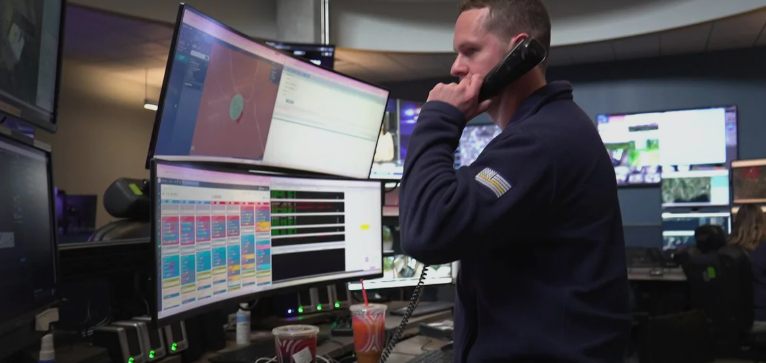
    FOXBORO, Massachusetts (WBZ) — The first World Cup match at Gillette Stadium in Foxboro, Massachusetts is on June 13, and hotels, restaurants and first responders are getting ready for a surge in tourism.

Any 911 call coming from Foxboro, Mansfield, Easton, Norton, and even other parts of Bristol County is answered at SEMRECC, the Southeastern Massachusetts Regional Emergency Communication Center. And as you might imagine, their busiest neighbor is right off Route 1.

“We’re very familiar with large crowds, dynamic events like we’ve seen at Gillette from concerts to NFL games to playoffs, soccer included. This is definitely a much bigger stage,” said executive director Rob Verdone.

Call volume during a typical Patriots game can more than double – hundreds of additional calls for help; Some true emergencies, others accidental pocket dials. But unlike Pats fans, emergency responders do expect many of this summer’s spectators will be first-timers at so-called “Boston Stadium.”

“We’re certainly preparing for the influx of people who aren’t familiar with the stadium. I think about a third are New Englanders, the rest are from different parts of the world and different parts of the country. The beautiful thing about 911 is it doesn’t matter where you’re from, who you are, you call 911, we’re here to help,” Verdone said.

The plans in place for the next few weeks have been months and years in the making. Everything from enhancing local security, monitoring global threats and infectious disease data, and training with assistive technology to better accommodate fans.

“They’re spending a lot of money to be here. We recognize they’re coming from all over the world. We want to give them a good experience. We’ve done everything we can, invested in things like pocket translators so we can communicate with guests. There are nuances with the U.S. health care system that people from other countries might not be used to,” explained Foxboro Fire Chief Michael Kelleher.

And while the first game kicks off at 9 o’clock on a Saturday night, other matches will impact weekday commuters.

“Traffic on a good day is bad; Adding another 70,000 people into that mix causes some issues,” the chief said.

Issues that emergency responders are ready for – with increased staffing spanning the 39-day window for the World Cup; all the while responding to the everyday emergencies of Massachusetts neighbors.

“It’s definitely been a lot of work but it’s going to be worthwhile,” he said.

Please note: This story was provided to CNN Wire by an affiliate and does not contain original CNN reporting. This content carries a strict local market embargo. If you share the same market as the contributor of this article, you may not use it on any platform.