New gym opening uses AI to help people rethink their workout

By Derek James

Click here for updates on this story

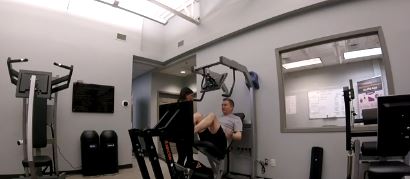
    WOODBURY, Minnesota (WCCO) — Twenty minutes, twice a week — that’s the promise behind The Exercise Coach, where artificial intelligence and robotics are helping people rethink what a workout can look like.

“We always start with a leg press, and we get a really good workout on those hamstrings, the quads, the glutes,” said Erica Bennett, trainer at The Exercise Coach.

The workouts are designed for all ages and fitness levels, but many clients are 40 and older. That’s where maintaining strength, balance and muscle mass often becomes a bigger focus.

The proprietary “Exerbotic” machines first measure your strength and range of motion.

“The machine will then use that to create the workout for you, so that you are always spending the most time under tension and the right amount for you,” said Bennett.

The goal is to keep muscles working continuously while the machine adjusts resistance and movement by staying within the lines of the digital graph above you.

“That’s reducing some of that wear and tear on the joints. That’s creating a little bit of a safer experience, especially for somebody who’s looking at some age-related muscle loss,” said Bennett.

Owner Chris Geiser says the technology is what first caught his attention.

“I love data, I love systems, and this had both of those, but also allowed us to help transform people’s lives, have an impact on their health,” said Geiser.

While the tech drives the workout, every session is still guided by a coach.

The workout may be short, but it doesn’t feel easy.

The studio also incorporates balance and cognitive training to help clients maintain stability and coordination as they age.

“We don’t need to accept a casual decline of muscle mass. We can keep it up with the right level of intensity and the right frequency,” said Geiser.

For anyone who’s fallen out of an exercise routine, Geiser has a simple invitation.

“You might be surprised what your body can still do. We invite you to give it a shot,” he said.

The Exercise Coach studio at 8425 Seasons Parkway in Woodbury, Minnesota, opens Friday.

One-on-one coach-led training is $35 to 45 dollars per session.

Please note: This story was provided to CNN Wire by an affiliate and does not contain original CNN reporting. This content carries a strict local market embargo. If you share the same market as the contributor of this article, you may not use it on any platform.
Rancher offers reward as Utah County deputies work to solve cattle theft

By Andrew Adams

Click here for updates on this story

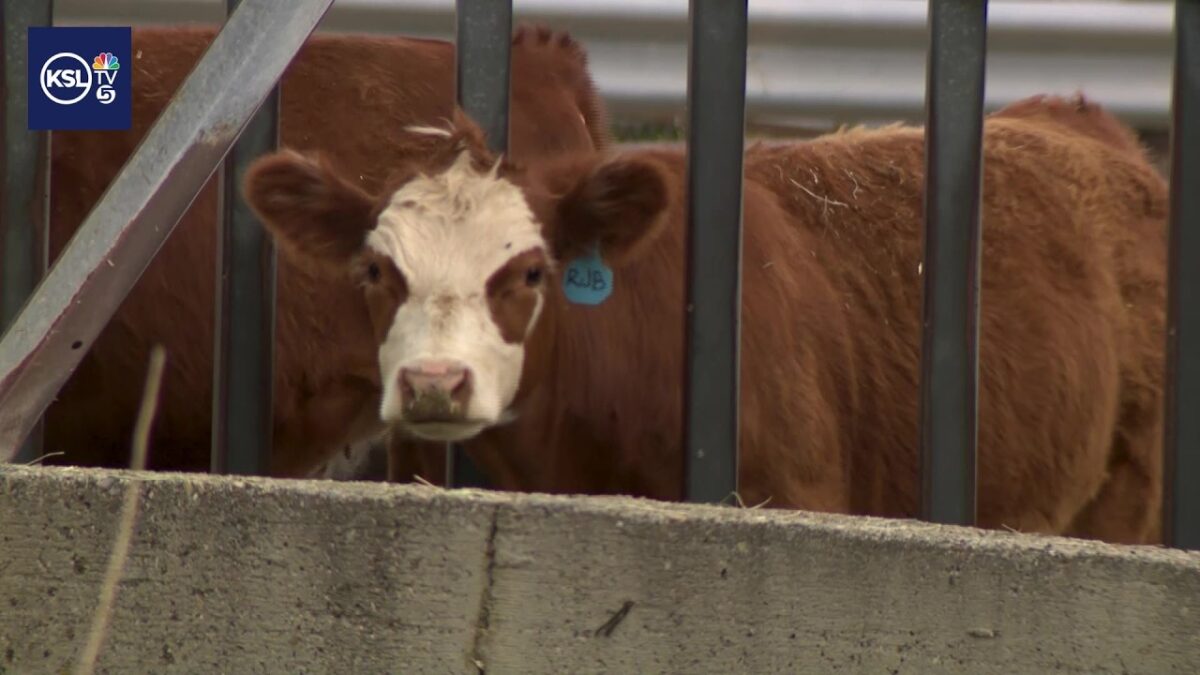
    GENOLA, Utah (KSL) — Sheriff’s deputies on Monday said they were hoping to get to the bottom of a cattle theft that took place on land near the Goshen Bay and White Lake area.

According to Sgt. Ray Ormond with the Utah County Sheriff’s Office, four cows and four calves were stolen around May 25, and the calves still had not been located.

Meanwhile, the rancher said his company was preparing to post a $10,000 reward in the case.

“We’re pushing hard, going to try to bust these people,” said Alan Steele, a fifth-generation cattleman. “If we do, I think justice will take it from there.”

Steele said he first learned of the problem from a friend, who recognized the brand on four cows that turned up near him.

“He says, ‘I’ve got four cows of yours in my corral — you better come look,'” said Steele during an interview Monday evening with KSL. “I have a white tag that identifies them — my brand on them and stuff — and they’d cut the tags out of the ears. They were all tight-bagged. The one was squirting milk — she was so tight.”

He said the calves had not yet been branded and have not been found.

“What kind of ring we have here, where the calves went — who knows,” Steele said.

Steele and Ormond acknowledged cattle “rustling” still happens from time to time, even in 2026, and possibly more than anyone realizes.

“This rancher has said that he has had cattle taken before but just hasn’t reported it,” Ormond said. “It does make me wonder how many of these ranchers are having this happen to them and they’re just not reporting it because they don’t know what can be done.”

Steele said he had heard anecdotally that another neighboring rancher had two calves turn up missing this spring, and he and his brother each lost a bull last year.

The rancher estimated a $10,000 financial loss from the four missing calves.

“Calves are something that can be around for a long time, generationally potentially, and producing offspring, so that’s something this rancher has to take into account for his livelihood,” Ormond said.

Ormond said livestock theft by statute is a felony and with the values involved the theft could amount to a second-degree felony.

“Back in the old days they’d just shoot ’em right on the spot or hang ’em,” said Steele, who noted his family had been raising cattle “ever since they pulled the handcarts into Goshen Valley.”

Ormond urged anyone with information or who noticed anyone loading cattle in the Goshen Bay and White Lake area or dropping off cattle near the Little Sahara area to contact Central Dispatch at 801-798-5600 and ask to speak with a Utah County Sheriff’s deputy about case 26UC07158.

“The more these cattle get worth, the more it’s going to happen,” Steele said. “I think it’s important to get these guys, get ’em caught and let justice do its job.”

Please note: This story was provided to CNN Wire by an affiliate and does not contain original CNN reporting. This content carries a strict local market embargo. If you share the same market as the contributor of this article, you may not use it on any platform.

Family violently assaulted while fishing in Placer County; bystanders tackle and restrain suspect

By Daniel Macht, Esteban Reynoso

Click here for updates on this story

    AUBURN, California (KCRA) — Bystanders tackled and restrained a man who was assaulting a family at Chana Park in North Auburn last month, the Placer County Sheriff’s Office said.

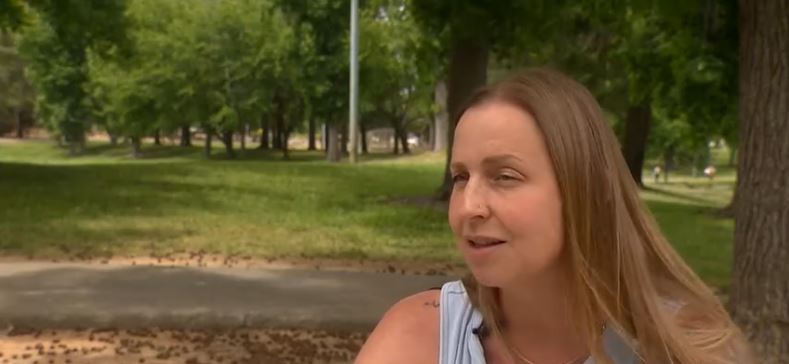
Alli Reagle, a frequent visitor to the park, expressed her disbelief upon hearing the news.

“My gut reaction was, oh my gosh,” Reagle said.

Reagle, who regularly brings her family of five to the park, emphasized its significance to the Auburn community.

“For the Auburn community, this is the one big park we have,” she said.

A woman had been fishing with her son and her elderly mother on Saturday when they were violently attacked by a 49-year-old man, according to the sheriff’s office. The man knocked over the grandmother, who was in a wheelchair, and she briefly lost consciousness. The woman was repeatedly punched in the head.

Elise Soviar, a spokesperson for the sheriff’s office, said the reason for the attack remains unclear.

“That’s the crazy thing about this attack, the motive is unclear. Appeared to be unprovoked,” Soviar said.

One good Samaritan heard the woman’s cries for help and tackled the attacker. Another man at the park helped restrain the man until deputies arrived.

“They did exactly what I think all of us would want,” Soviar said.

She added, “Having good Samaritans, good neighbors who spring into action and protect one another until official help can arrive, is wonderful.”

The suspect, Michael Appleberry, resisted arrest and later spit blood on medical personnel, according to the sheriff’s office.

“When something like this happens, it does paint it in a bad light, and like oh my gosh, don’t go there. But like I told my daughter, we are gonna go, because if people stop going then the park is going to stop being used,” Reagle said.

The sheriff’s office confirmed that Appleberry had been staying at The Gathering Inn, a homeless shelter in Auburn that partners with Placer County to provide services.

In a statement, The Gathering Inn said, “Because this matter is part of an active law enforcement investigation and involves privacy considerations, we are unable to comment on any individual’s circumstances. Safety is one of The Gathering Inn’s core values.”

He was booked into jail on four felony charges that include battery and causing injury to an elder adult, as well as two misdemeanor charges.

Please note: This story was provided to CNN Wire by an affiliate and does not contain original CNN reporting. This content carries a strict local market embargo. If you share the same market as the contributor of this article, you may not use it on any platform.
Researchers have found a new way to detect self-harm history

By Hamilton Kahn

Click here for updates on this story

    ALBUQUERQUE, New Mexico (KOAT) — A new study analyzing the health records of 1.3 million patients of the Veterans Health Administration is developing ways to fill gaps in the ability of health providers to detect a history of self-harm, according to an article on the University of New Mexico Health Sciences website.

History of self-harm is the best predictor of future self-harm and suicide risk, but clinicians’ dependence on diagnosis codes come up short on finding this important information in years of medical records, according to Christophe Lambert, corresponding author of the study and interim chief of the Division of Translational Informatics in the UNM School of Medicine’s Department of Internal Medicine.

“Better measurement can help health systems plan better, help researchers study care more accurately, and eventually help clinicians know when a patient may need a closer look,” Lambert said.

The new method being developed is called Positive Unlabeled Learning Selected Not At Random, or PULSNAR, which “learns” from patients that have a diagnostic code, then estimates how many similar patients might be among those who doesn’t have one.

“Our method can help flag both patterns for review,” said Praveen Kumar, the study’s first author. “The study could verify the first pattern, because evidence was already in the notes. The second pattern might be just as important, but confirming it would require talking with patients or using information beyond the medical record.”

The research team has also published a related study using this approach to detect under-coded opioid use disorder. It will also be apply the method to detect PTSD, depression, bipolar disorder, and sleep disorders, which otherwise may not be recognized because they aren’t in the patient’s medical record.

Please note: This story was provided to CNN Wire by an affiliate and does not contain original CNN reporting. This content carries a strict local market embargo. If you share the same market as the contributor of this article, you may not use it on any platform.
Algeria national team making Lawrence home before first World Cup match

By Eric Graves

Click here for updates on this story

    LAWRENCE, Kansas (KMBC) — The Algeria national team was greeted by a more than 300-person crowd of supporters overnight as the team pulled into its Lawrence, KS hotel.

A spokesperson for the Lawrence Police Department said the crowd waited in the rain until after midnight when the team arrived.

Algeria touched down at Kansas City International Airport after 10 p.m. Sunday and was escorted to Lawrence by LPD and other assisting agencies.

“Doing an escort that large and that far takes a lot of moving parts, and so it went really well,” said Lawrence Police Chief Rich Lockhart. “We were really happy to get everybody here safely and had about 300 fans here welcoming the team.”

For the next month or more, wherever team Algeria goes, the Lawrence Police will go with them.

“We’ll be responsible for getting them from the hotels to the practice facility and then also from the hotel or practice facility up to Arrowhead for games,” Lockhart said. “For the local movements, it’ll be mostly our department doing it. For the movements up to the stadium we’ll have support from our Topeka partners, Kansas Highway Patrol and Olathe, as well.”

Algeria is staying at the DoubleTree by Hilton hotel off McDonald Drive and 2nd Street. Algeria has a private entrance to the hotel that has a fence with a privacy screen around the parking lot. Surrounding the fence are multiple cement road blocks.

Lockhart said it’s taken two years of planning to prepare for the police escorts and additional security, while still serving the people of Lawrence.

“We’re using our detectives in more traditional patrol roles,” Lockhart said. “And then we’ve also canceled vacations for officers during this six-week time frame, so we’ve got all of our people on duty, available for whatever may happen.”

It’s not just the DoubleTree or Rock Chalk Park that have Algerian flags and banners waving, the city of Lawrence has been decorated, as well.

Mass Street in Lawrence has flags welcoming Algeria, trees are lit up with red, white and green for the team and local stores want to welcome the team and their fans.

“I just think that it just shows when those people come in, they see that you’ve taken a little bit of thought about how far they have to travel and what they’re going through,” said Curtis McCoy, the showroom manager at Waxman Candles.

The small business has been making candles in Lawrence for more than 50 years. The team got creative this year to craft something special for Algeria and their fans.

Waxman Candles created a fennec fox candle. The small, but big-eared fox is native to the Sahara Desert and the mascot for the Algeria national team.

“We took our regular fox candle and kind of designed it up, made some modifications,” McCoy said. “And it’s been a real hit. The city has loved it. They ended up buying 70 candles to give to the hospitality staff from team Algeria.”

Waxman is far from the only business catering toward the team and their fans. The Yarn Barn just down Mass Street has yarn kits with instructions on how to make your own hat or scarf. The kits come in different colors for each of Kansas City’s base camp teams.

Over at Johnny’s Tavern, there’s a sign outside showing how far Algeria, Argentina, Netherlands and England are from Lawrence.

McCoy said he thinks all of Lawrence will be pulling for Algeria in the World Cup. He’s hoping their fans will stop by the town if they come to watch Algeria practice.

“We hope that they all come down and would love to meet them, share stories,” he said.

As Lawrence Police prepare for Algerian fans, or any others from outside the country, officers have a new tool to break through any language barriers.

“Our body cameras have a language translation feature that the companies unlocked for us for this World Cup,” Lockhart said. “So, you can push a button on the camera and tell it what language you want to use. If we’re going from English to French, we just say, ‘English-French,’ we push the button, I talk, it spits it out in French.”

Algeria is expected to have an open practice at Rock Chalk Park. Lockhart said they’re preparing for a capacity crowd. As soon as public details about the open training session are released, KMBC will pass them along.

Algeria will face the defending World Cup champions Argentina in the first-ever World Cup match at Arrowhead Stadium on June 16.

Please note: This story was provided to CNN Wire by an affiliate and does not contain original CNN reporting. This content carries a strict local market embargo. If you share the same market as the contributor of this article, you may not use it on any platform.
Omaha Baseball Village vendors prepare for College World Series

By Beth Carlson

Click here for updates on this story

    OMAHA, Nebraska (KETV) — Omaha Baseball Village is preparing to welcome fans for the College World Series, with vendors setting up tents and new additions planned for this year’s event.

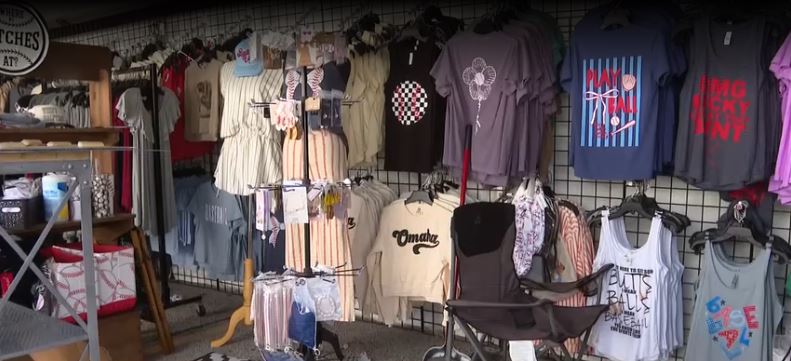
Dozens of local vendor tents were set up this weekend, signaling the arrival of the College World Series.

“The beer is going to be cold. The food’s going to be great, the fans are going to be happy,” Omaha Baseball Village marketing director Jenny Peters said.

But of course, the atmosphere will change as crowds arrive.

“It’s almost like an eerie feeling because usually it’s just so busy. You can’t even like walk,” vendor Melanie Rezac said.

Omaha Baseball Village is ready to host hundreds of thousands of fans, with new features this year.

“The Omaha Baseball Village is going to essentially look the same to fans coming through, except when you look in the tents, because we have about 35 new vendors,” a representative said.

Melanie Rezac, owner of 555 Boutique in Lincoln, has been coming to the College World Series for the past four years.

“This is our first year where we upgraded. I feel like every year we’ve kind of just moved up, but it’s just a great investment for my business. I probably do a fourth of my year’s business just here in these two weeks. So, it’s definitely worth the investment. And then exposure, branding as well,” Rezac said.

Preparations for the event involve a detailed process, according to Peters.

“We let the vendors kind of run their way through here and get unloaded, go through inspections, and then we put the final pieces in. So that’s the decorative things, the fun zones, you know, the golf, the baseball, the batting cages, things like that, and then all the signage to direct people where to go,” Peters said.

Omaha Baseball Village opens Thursday evening, with Fan Fest and all the action beginning Friday.

Please note: This story was provided to CNN Wire by an affiliate and does not contain original CNN reporting. This content carries a strict local market embargo. If you share the same market as the contributor of this article, you may not use it on any platform.
Michigan State University researchers helped create the grass for all 16 FIFA World Cup stadiums

By Tony Geftos

Click here for updates on this story

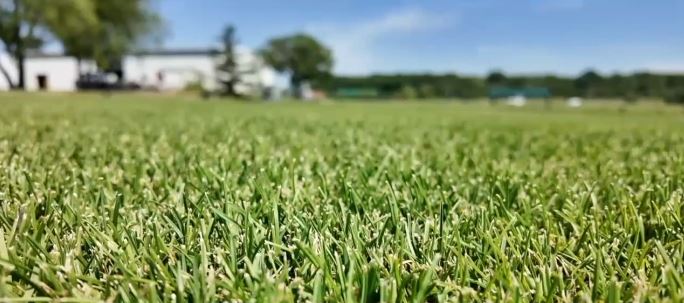
    EAST LANSING, Michigan (WXYZ) — Turfgrass researchers at Michigan State University played a key role in creating the playing surfaces for all 16 FIFA World Cup stadiums.

For the past 5 years, Trey Rogers III, a professor of turfgrass research at MSU, worked on the right mixture of grasses for this summer’s tournament.

“Our job was to make the recipe and then to make sure that the sod farms took the recipe,” Rogers said.

The process starts in East Lansing, where researchers develop a seed blend, then send it out to sod farms. The sod is then rolled up and shipped to the stadiums.

“We transport it all the way from Colorado to Atlanta,” Rogers said.

Rogers settled on hybrid Bermuda grass for warm-weather stadiums. For cool weather venues, the blend is a mixture of Kentucky Bluegrass and Perennial Ryegrass.

“This grass isn’t any different than what’s in Spartan Stadium. It isn’t any different than what’s in Tiger’s Stadium. It isn’t any different than what’s in your yard. It all boils down to the intensity of the management,” Rogers said.

The work doesn’t stop at the seed blend. Ryan Bearss, a research assistant and Ph.D. candidate at MSU, tests the durability of the turf using a robotic foot to collect data and make proper adjustments.

“Got a 3D molded size 10 US Foot. And it’s going to fire at a force equivalent to a 160-175 pound athlete,” Bearss said.

The device can simulate both acceleration and deceleration on the turf surface.

“There’s just about 100 pitches worldwide they’ve tested this thing on, so they’ve been able to develop some pretty cool standards and baselines from it,” Bearss said.

Bearss also measures how high soccer balls bounce off the surface, dropping them from 2 meters and using audio recordings to calculate the rebound height.

Rogers said the years of research have paid off, and now it’s time to watch the results on the world stage.

“It’s been installed correctly. Got some world-class field managers that are going to take care of it. So, let’s play,” Rogers said.

This story was reported on-air by a journalist and has been converted to this platform with the assistance of AI. WXYZ verifies all reporting on all platforms for fairness and accuracy.

Please note: This story was provided to CNN Wire by an affiliate and does not contain original CNN reporting. This content carries a strict local market embargo. If you share the same market as the contributor of this article, you may not use it on any platform.
Family carries on father’s mission to restore historic 1929 Mack fire truck

By Tony Geftos

Click here for updates on this story

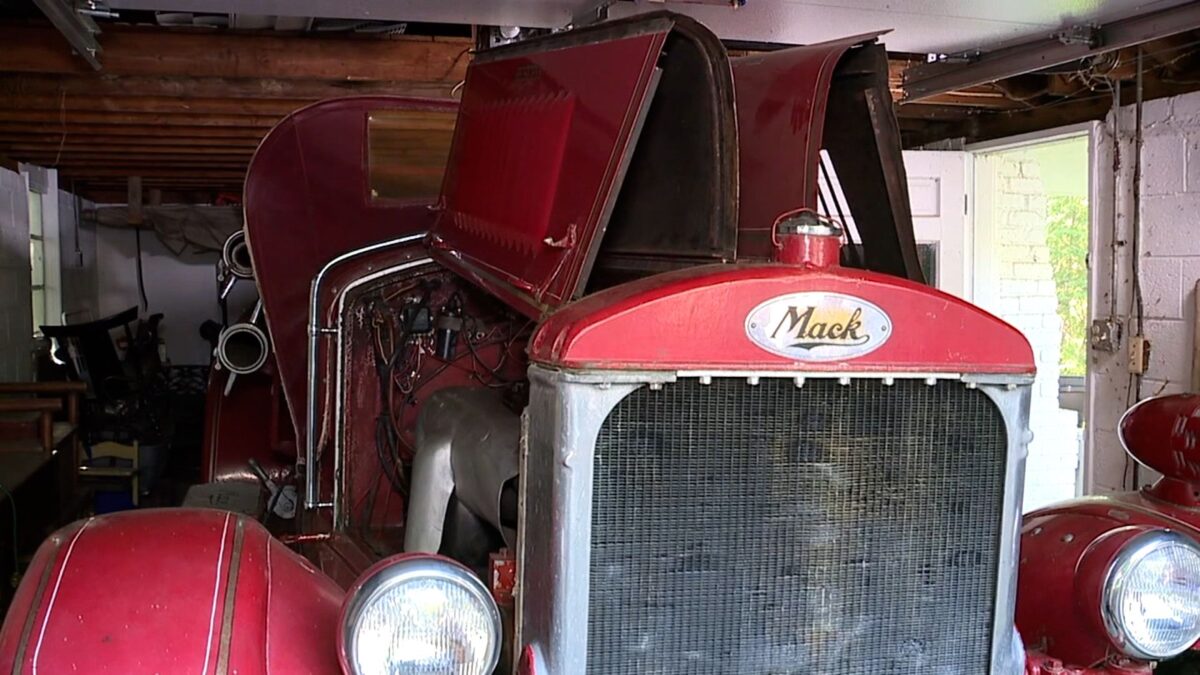
    FRANKLIN, Michigan (WXYZ) — A 1929 Mack fire truck that served the Detroit Fire Department, the Detroit Zoo, and the Franklin-Bingham Farms Fire Department is at the center of a community restoration effort — and a family’s tribute to the man who dedicated himself to bringing it back to life.

Gary Roberts, a Franklin firefighter and self-described gearhead, spent years working to restore the historic truck before dying of esophageal cancer at age 70 a few weeks ago. Now, his children are picking up where he left off and launching an online fundraiser to get the Mack parade-ready within the next two years.

The truck’s connection to the Roberts family spans generations. Gary’s father, David, was also a Franklin firefighter who rode the Mack in parades and worked to keep it running after the engine gave out. When David died, Gary took over the restoration.

Gary’s son Ben Roberts grew up watching his grandfather tinker with the truck and has his own memories tied to it.

“This has always been part of the family. Been very much engaged on playing with it. I remember very much as a little kid, there used to be a bell that was about right here. You’d ding it all the time. Kids love climbing on this thing in parades. It’s a huge, basically a centerpiece for the Franklin community,” Ben Roberts said.

Roberts said the mechanical heritage runs deep in his family.

“Being a gearhead is kind of in the Roberts blood. My grandfathers fell in love with anything antique, especially vehicles and by default, my dad kind of followed suit,” Roberts said.

The truck is 95% original, according to Roberts, with some modernized fittings added to accommodate modern oil filters.

Bill Lamont, treasurer of the Franklin Historical Society and a friend of Gary’s, said the truck has long been a community fixture.

“This one was a big draw that we always have in the Labor Day parade. Kids riding on the Mack Fire Truck,” Lamont said.

Lamont described the truck’s history: it began its service with the Detroit Fire Department in 1929, then moved to the Detroit Zoo, and eventually came to the Franklin-Bingham Farms Fire Department. After it was retired from active service, it became a staple of local parades and town gatherings — until it was no longer running.

Lamont reflected on what the truck meant to Gary.

“This was his baby,” Lamont said.

Franklin-Bingham Farms Fire Chief Tony Averbuch said getting the truck back on the road requires both expertise and funding.

“We’d love to see the proper place, the proper home, the proper operational attributes to it. Something fitting for this piece of history,” Chief Averbuch said.

This story was reported on-air by a journalist and has been converted to this platform with the assistance of AI. WXYZ verifies all reporting on all platforms for fairness and accuracy.

Please note: This story was provided to CNN Wire by an affiliate and does not contain original CNN reporting. This content carries a strict local market embargo. If you share the same market as the contributor of this article, you may not use it on any platform.

The story of the American traffic light starts with a Detroit police officer more than 100 years ago

By Ali Hoxie

Click here for updates on this story

    DETROIT (WXYZ) — Some of the everyday technology we see across our country was invented right here in Detroit, including the traffic lights drivers use every single day in America.

We see traffic lights every day, and most of the time, we think nothing of it. But the story of the traffic light starts with a Detroit police officer more than 100 years ago.

We all know the meaning of traffic lights, but rarely do we think of it’s backstory.

“Did you know that the first tri-colored light in America was installed right at this intersection?” I said to Stephanie Kaiser while we spoke in Detroit.

“Really? No. I didn’t, tell me more,” she replied.

On December 20th, 1920, the first tri-colored light was installed in the heart of downtown Detroit, at the intersection of Woodward and Fort.

“I didn’t know that. That’s new news to me,” said Roseville resident Sheila Clemente.

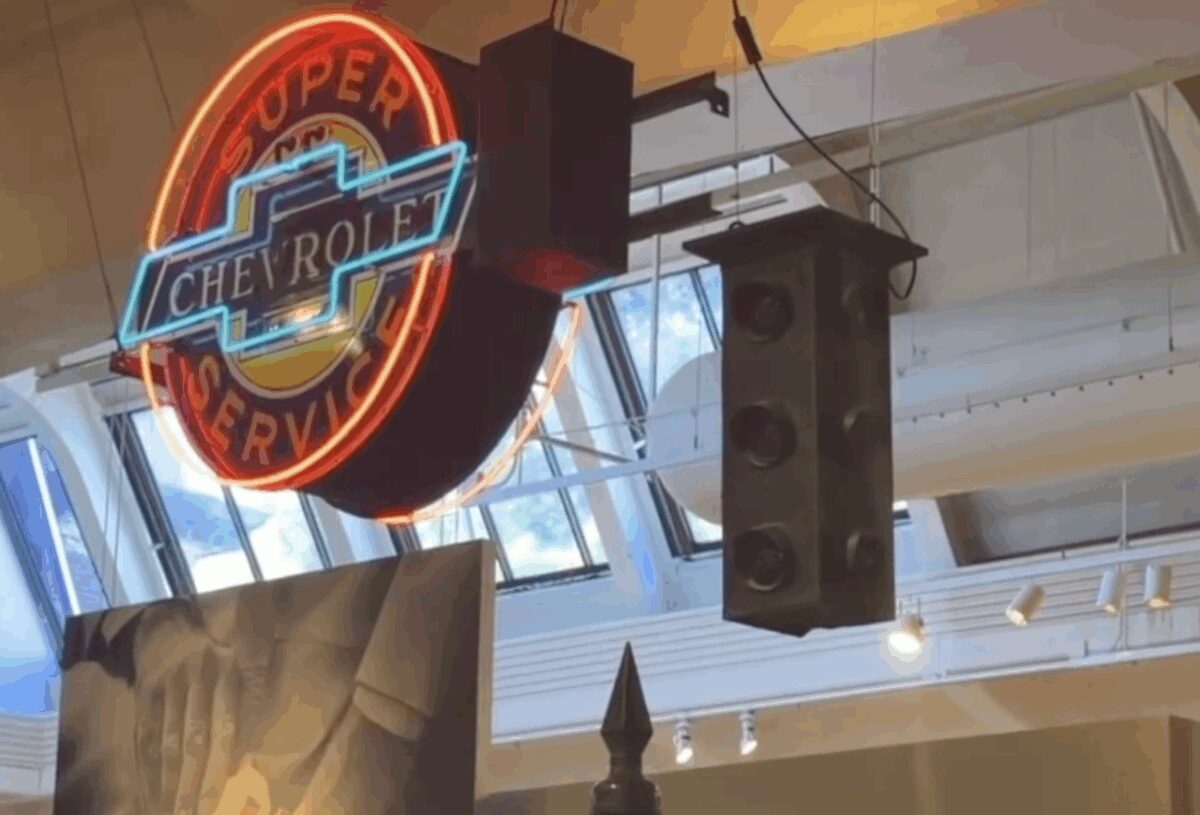
And if you’re a history buff, you can see the light that started it all inside the Henry Ford Museum in Dearborn.

Matt Anderson is the Curator of Transportation at the museum.

“This light was invented by a fella named William L. Potts, who was the head of traffic signaling for the Detroit Police Department,” Anderson said. “Before the traffic lights the only way to control traffic was either to have an officer physically standing in the intersection with a whistle or maybe a flag or some kind of a hand signal or up in a tower, manually controlling a semi-floor signal or lights, it was a lot of risk to the officer, but also a lot of labor involved.”

And while there had been experiments using colored traffic lights at the time, it was Potts who incorporated the yellow light, warning drivers to get ready to slow down.

“That caution light is so important, because it lets you know that the red light is coming, so you don’t have to slam on the brakes and stop right on a dime, and it creates a safer intersections in all directions. If you have the red light come on right away and then the green light simultaneously, you’re going to have some overlap which could be very dangerous and led to a potential collision,” Anderson said.

This wooden box, covered in tin and built in a basement workroom, has come a long way in Detroit and across our country.

“It’s something for the kids to grow up to see and learn from,” said Detroiter Sandy Sullivan.

If you would like to see this traffic light for yourself, it’s at the Henry Ford Museum in the “Driver America” section.

Please note: This story was provided to CNN Wire by an affiliate and does not contain original CNN reporting. This content carries a strict local market embargo. If you share the same market as the contributor of this article, you may not use it on any platform.

French woman walks America to honor the flag discovered in her father’s pocket

By Jordan Bontke

Click here for updates on this story

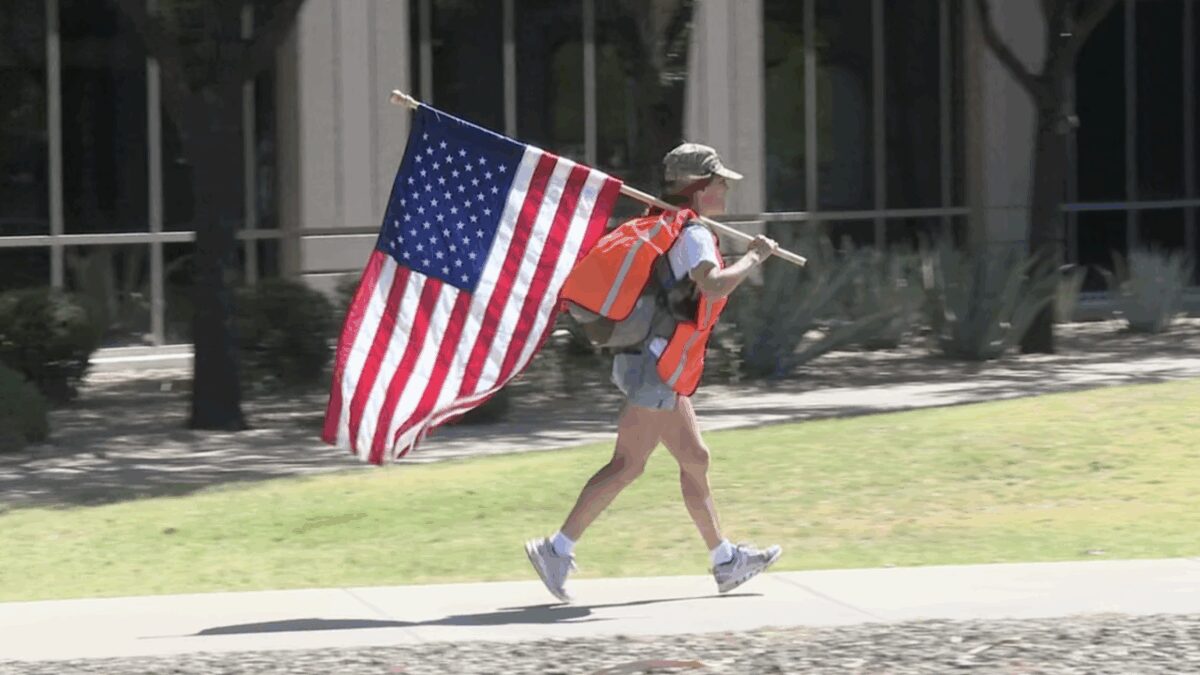
    PHOENIX (KNXV) — A French woman has made it her mission to walk and run across the United States — American flag in hand — as an act of gratitude toward a country of which she is not a citizen.

Starting Memorial Day weekend, Ingrid Moncuit completed a four-day journey on foot, running and walking nearly 200 miles from Lake Havasu City to Chase Field in Phoenix. A small duo, including her rescue dog Charlie and her friend, Jeff, also of Lake Havasu City, rode alongside her for safety.

Even after falling near downtown Phoenix with just miles to go, leaving a fresh scrape on her knee, Moncuit pushed through to the finish line.

“I did it! Ah!” Moncuit said as she hugged the American flag and looked to the sky.

When asked how she stays motivated under the brutal Arizona sun in the middle of the desert, Moncuit recalls the many people who passed her showing their support for carrying the flag.

“So many people: ‘USA! USA! God Bless the flag, God bless USA, America!'”

Moncuit’s love for the United States traces back to a discovery she made after losing her father. When she was 7 years old, her father, Daniel Pilcer, died. Pilcer was one of more than 4,000 Jewish children who were hidden in France to keep them safe while their parents were imprisoned or murdered in Nazi concentration camps. Finding that small American flag in her late father’s pocket sparked an interest in the U.S. and a deep appreciation for what American forces did to liberate France during World War II — one that never faded.

“I put my foot on American soil, and I can’t describe, but I knew I was at my home,” Moncuit said.

Since 1994, Moncuit has traveled to America every year to walk across cities like Atlanta, Miami, and Los Angeles. She even trekked from Amarillo to Dallas — always carrying the American flag.

Along the way, she learns American stories, stops at war memorials, and shares them online.

It is her way of saying “merci” — or, in this case, “thank you.”

“I’m French but American in my heart,” Moncuit said.

This story was reported on-air by a journalist and has been converted to this platform with the assistance of AI. KNXV verifies all reporting on all platforms for fairness and accuracy.

Please note: This story was provided to CNN Wire by an affiliate and does not contain original CNN reporting. This content carries a strict local market embargo. If you share the same market as the contributor of this article, you may not use it on any platform.