Feeding Our Future ringleader Aimee Bock challenges conviction and 500-month sentence in federal appeal

By Eric Henderson

Click here for updates on this story

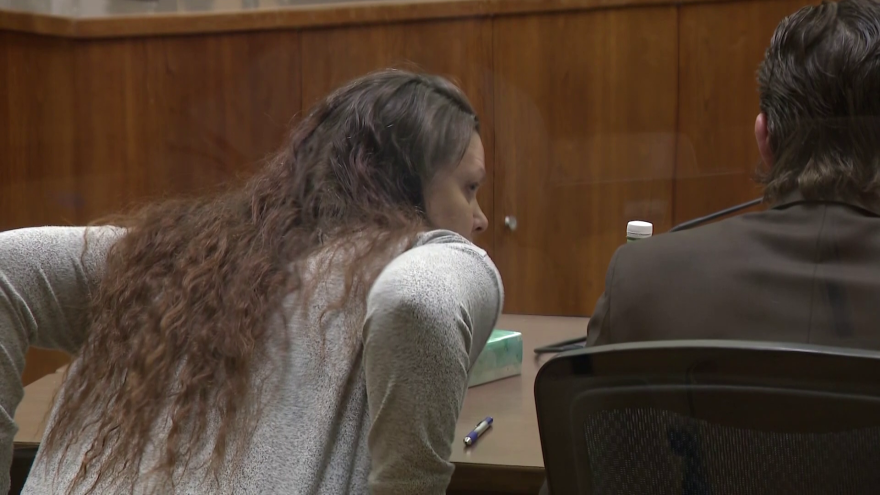
    Minnesota (WCCO) — Aimee Bock, the Minneapolis woman convicted as the ringleader of the $250 million Feeding Our Future pandemic fraud scheme, has filed an appeal of her conviction and four-decade prison sentence, according to court documents filed June 16.

Bock appealed to the U.S. Court of Appeals for the Eighth Circuit, challenging both her conviction and the sentence imposed by Judge Nancy E. Brasel on June 5.

The 500-month sentence came after a jury found Bock guilty on multiple counts, including conspiracy to commit wire fraud and conspiracy to commit federal programs bribery. Brasel also ordered Bock to repay nearly $243 million to the federal government.

Prosecutors described the case as the largest pandemic fraud scheme in the country, saying Bock diverted tens of millions in federal money intended to feed hungry children.

“Aimee Bock didn’t participate in fraud; she orchestrated it, profited on it,” Assistant U.S. Attorney Rebecca Kline said at sentencing.

Before handing down the sentence, Brasel said Bock “acted as a gatekeeper” and “had an integral role in planning the scheme.” The judge also said Bock lied on the stand during her trial.

Prosecutors had sought a 50-year sentence, citing what they described as a lack of accountability and remorse, as well as allegations that Bock leaked protected documents while in custody. Court filings say Bock used recorded jail calls to instruct her son to send case-related documents to political figures and media outlets. A judge called those actions “really disturbing” during a hearing in April.

At her sentencing, Bock addressed the court directly.

“I don’t have the words to express just how horrible I feel,” she said. “I know I’m responsible. It’s never been my goal to shift responsibility. I understand I failed to protect the program I was supposed to protect.”

Her attorney, Kenneth Udoibok, argued her conduct amounted to “a case of gross negligence” rather than intentional wrongdoing.

Court records indicate that trial transcripts spanning the extensive jury proceedings have been ordered as part of the appellate process.

Dozens of others have also been convicted in connection with the Feeding Our Future scheme.

Beret Leone and Anthony Bettin contributed to this report.

Please note: This story was provided to CNN Wire by an affiliate and does not contain original CNN reporting. This content carries a strict local market embargo. If you share the same market as the contributor of this article, you may not use it on any platform.
Family questions official account of inmate death at police lockup

By Shannon Brinias

Click here for updates on this story

    MINDEN, Louisiana (KTBS) — A 23-year-old Homer man is dead following an apparent suicide while in custody at Minden Police Department headquarters, but his family is questioning the circumstances surrounding his death.

Authorities say the initial investigation indicates that Demonta Reshawn Tate died by suicide early Tuesday while being held in a cell at the police department. However, Tate’s father, Roy Hibble, said he does not believe his son would have taken his own life.

According to Hibble, Tate had much to live for, including his young daughter.

“He loved the little girl, he loved her,” Hibble said.

The news of Tate’s death has left family members searching for answers. Hibble said he plans to visit the Webster Parish Sheriff’s Office, the outside agency that has been brought in to investigate the incident.

“Yeah, that’s what they say, but I don’t feel like he did that, because there ain’t no way he gonna hang hi(m)self,” Hibble said. “He don’t think about doing nothing like that.”

According to Minden Police Chief Jared McIver, Tate was taken into custody on a minor traffic violation and was being held at police headquarters because of an outstanding warrant from Claiborne Parish.

McIver said Tate was compliant and showed no signs of anxiety or distress when he was placed in a holding cell.

In the early morning hours, a person monitoring surveillance cameras reportedly noticed Tate standing upright near the cell’s cot for an extended period. A welfare check was conducted, and officers allegedly discovered that Tate had hanged himself using a blanket, according to the chief.

Hibble said he hopes investigators will review and release evidence that could help explain what happened.

“So they should be able to show video footage of all of that then,” he said.

The investigation into Tate’s death remains ongoing. Officials have not released additional details, and the Webster Parish Sheriff’s Office is expected to continue reviewing the circumstances surrounding the incident.

If you or someone you know is experiencing thoughts of suicide or self-harm, help is available by calling or texting 988, the Suicide & Crisis Lifeline, or by contacting local emergency services.

Please note: This story was provided to CNN Wire by an affiliate and does not contain original CNN reporting. This content carries a strict local market embargo. If you share the same market as the contributor of this article, you may not use it on any platform.

“I didn’t think twice:” Oklahoma police sergeant rescues woman from flooded car

By Jonathan McCall

Click here for updates on this story

    BOSSIER CITY, Louisiana (KTBS) — An Oklahoma police sergeant visiting northwest Louisiana is being credited with rescuing a woman trapped inside a vehicle during Monday’s severe flooding in Bossier City.

Sgt. Joe Williams of the Lexington Police Department in Oklahoma was in Bossier City with his family when heavy rain caused flash flooding across the area, leaving roads impassable and several vehicles stranded in rising water.

Williams said he and his family had just finished lunch and were returning to their hotel when they came across a vehicle partially submerged beneath the Traffic Street underpass.

“Everybody’s just turning around, and turning around and didn’t stop,” Williams said.

As the floodwaters continued to rise, Williams spotted a woman trapped inside the vehicle. He said he immediately got out of his own vehicle and entered the water, despite conditions that he described as dangerous.

“I didn’t think twice,” Williams said. “Was it crazy for me to do? Yeah. The water was up to my neck.”

Williams said he found the driver panicked as water filled the vehicle.

“I found a young female in the car, frantic, screaming,” he said. “Water was in the car halfway up her waist in her seat. I knew I had to get her up out of that car to higher ground, some shape, some form.”

Using his law enforcement training, Williams helped guide the woman to safety with assistance from a Bossier City police officer.

His wife captured the rescue on her cell phone as widespread flooding impacted the region. Some areas received several inches of rain in a short period, causing streets to flood and leaving numerous motorists stranded.

Williams said a personal philosophy of serving others guided his decision to help.

“God has given me a life to serve other people, no matter where I’m at,” he said. “You can be a beam of light in someone’s chaos to flip their day 180 degrees.”

The father of five said that outlook has also helped his family navigate challenges involving his 10-month-old son, Greyson, who is receiving treatment at Shriners Children’s Hospital in Shreveport for Möbius syndrome, a rare congenital neurological disorder.

Despite being hailed as a hero, Williams said he remains focused on the woman he rescued.

“I wish I would’ve gotten her name to check to see how she’s doing,” he said.

Williams and his family were in Louisiana for his son’s medical treatment when the rescue occurred. No injuries were reported.

Please note: This story was provided to CNN Wire by an affiliate and does not contain original CNN reporting. This content carries a strict local market embargo. If you share the same market as the contributor of this article, you may not use it on any platform.
Man going through state’s unclaimed property process to help family

By Brad Hamilton

Click here for updates on this story

    SAN FRANCISCO (KPIX) — It’s become an all-too-familiar routine for Doug Brown. He loads his car with stacks of paperwork, drives to his childhood home, unloads it all, and sorts through what needs to be signed.

It’s a process, he says, that isn’t easy, but one he believes is worth it.

Brown is trying to recover roughly $18,000 in estate funds tied to his late father. It’s money that was never claimed and eventually turned over to the state.

Now, it’s meant for his 96-year-old mother and his older brother, a veteran with medical needs.

“I mean if you don’t read AARP, if you aren’t reading money magazines, if you really don’t care much about your finances at all, how would you know?” Brown said. “It’s kind of every man for themselves.”

Brown believes the money went unclaimed after his father passed away, and with his mother now suffering from dementia, he says she likely never remembered it existed.

That’s how it ended up in the state’s unclaimed property system, where it sat for years until Brown decided to search for it himself. Now, getting it back has proven to be a challenge.

“They need the death certificate. I’ve got that,” he said. “They want proof of the trust ID number. I have no idea how to get that other than going through the IRS somehow.”

Brown’s story is far from unique.

Across California, billions of dollars sit in unclaimed property accounts, from uncashed checks and dormant bank accounts to insurance payments and other financial assets.

Even cities like Oakland and San Francisco have unclaimed funds listed in their names.

According to the State Controller’s Office, the state safeguards unclaimed property on behalf of individuals, businesses, and public agencies. In some cases, funds can come from routine financial activity that was never reconciled or claimed.

A newer program now allows some government agencies to automatically receive certain unclaimed funds, but not all property qualifies. For many claims, the process still requires documentation and can take months to complete.

As for Brown, he says the process may be frustrating, but he doesn’t necessarily blame the state.

Instead, he hopes sharing his story encourages others to check for themselves. He still doesn’t know when or if his family will see that money.

But if it helps someone else find what’s theirs, he says, it’s worth it. For now, it’s back to paperwork and signatures.

Please note: This story was provided to CNN Wire by an affiliate and does not contain original CNN reporting. This content carries a strict local market embargo. If you share the same market as the contributor of this article, you may not use it on any platform.

Closing arguments begin in trial of woman accused in crash that killed MU students

By Montse Ricossa

Click here for updates on this story

    MILWAUKEE (WDJT) — The defense rested Wednesday, and closing arguments began in the trial of the woman accused of causing a crash that killed two Marquette students last September. Forty-two-year-old Amandria Brunner could face life in prison as she faces six felony charges.

Her has relied heavily on the speed of the other driver involved — Peter McColgan. In fact, he appeared in court Wednesday with his attorney, though he didn’t testify.

“Respectfully, I will be asserting Fifth Amendment right,” McColgan said.

McColgan was driving the vehicle with five other Marquette University lacrosse players inside when it crashed with Brunner’s vehicle in the intersection of N. 27th St. and W. St. Paul Avenue.

A reconstruction engineer showed us how Brunner was fully stopped at a left turn lane, driving through a yellow light, which then turned red as she got to the intersection. She hits the car driven by McColgan, which then hits a pole.

Twenty-year-old Noah Snyder and 19-year-old Scott Michaud were killed.

Brunner’s blood alcohol content came back above the legal limit at .133. She also had THC in her system.

The defense made sure to point out that there were six people in McColgan’s car, though there were only five seats, also noting he was speeding, going 53 miles per hour in a 30 mile per hour zone.

“Even 2.7 seconds before the second when he was going 56 mph and he was transitioning from accelerate to brake, if he had braked hard at that point, he would’ve been able to stop before impact area?” defense attorney Abigail Ruckdashel asked.

“Probably would’ve been at the intersection, but would’ve been further south,” said Zachary Bingen, reconstruction engineer with Skogen Engineering.

Of note from the gallery, there have been about five people sitting on the side of the defendant the past two days, but on Wednesday, as her defense team makes its case, that was tripled, with 15 people sitting in her support.

There’s been a large crowd on behalf of the two victims of the crash–about 40 people– especially as McColgan took the stand.

Before closing arguments began, two jurors were dismissed for two alternates. Jury instructions were read and closing statements began.

“We can all agree he was a bad driver,” prosecutor Emily Zimmel said. “That’s not your decision to make. Your decision is to make if that woman — the defendant — exercised due care. It doesn’t matter what he did, her actions are what mattered for your decision. His bad driving, anything he did is another decision for another juror.”

“Is Ms. Brunner’s drinking responsible for those deaths? The answer is no, because this would’ve happened at whoever is in this position in that line of cars,” defense attorney Abigail Ruckdashel said. “Because that’s true, you must find Ms. Brunner guilty — not guilty. What we’re asking you to do is hard.”

Please note: This story was provided to CNN Wire by an affiliate and does not contain original CNN reporting. This content carries a strict local market embargo. If you share the same market as the contributor of this article, you may not use it on any platform.

6 women and girls splashed with acid in apparent targeted attack in Jersey City, officials say

By Jesse Zanger, Nick Caloway

Click here for updates on this story

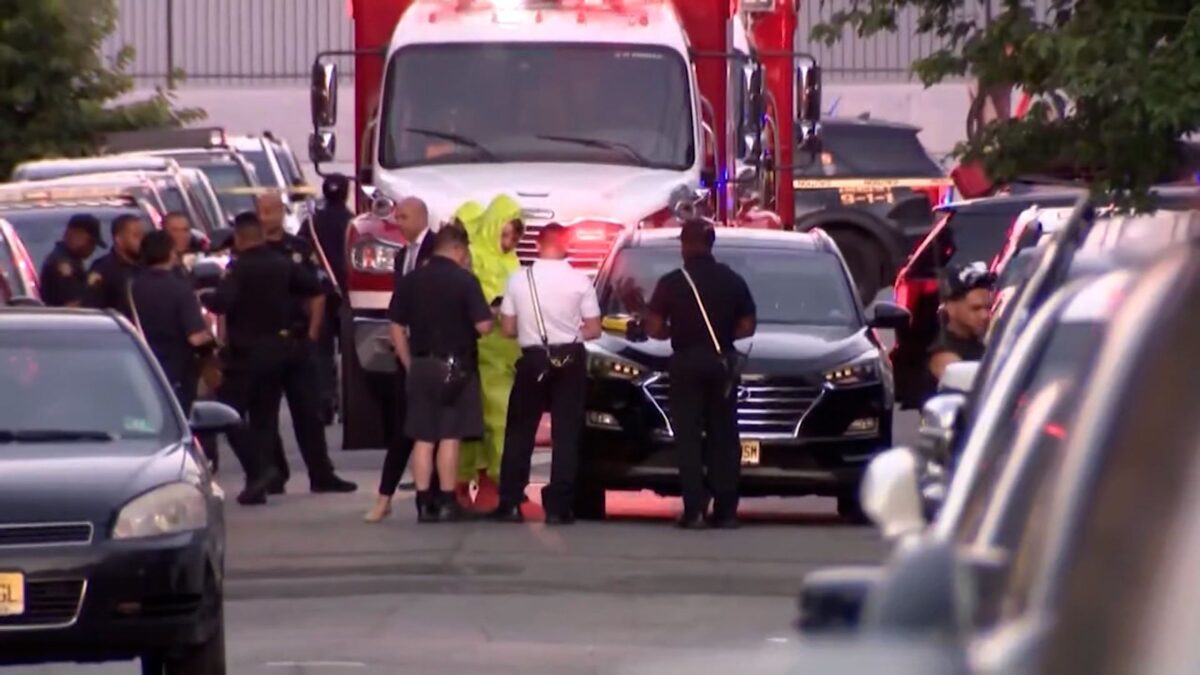
    JERSEY CITY, New Jersey (WCBS) — Six women and girls had acid thrown on them in Jersey City on Monday night, officials said.

It happened at around 7:30 p.m. in front of a house on Wilkinson Avenue near Ocean Avenue in the Greenville neighborhood.

Here’s what we know

The victims, which include three teenagers, were standing outside the building when two suspects drove past them on a moped and threw what police believe was sulfuric acid at them.

The six were rushed to the hospital for treatment and are expected to survive, but suffered skin burns and peeling, police said. One victim, a 21-year-old, was transferred to the burn unit at St. Barnabas on Tuesday to be treated for second-degree burns to her face and scalp.

A juvenile was arrested in connection to the attack, police said.

Police believe the attack was not random and that the women were targeted after an argument earlier in the day.

“My thoughts are with those hurt in this horrific attack, and I want our communities to know that violence like this has absolutely no place on our streets,” Jersey City Mayor James Solomon said.

Solomon said the police department will have all the resources it needs to find those responsible.

“I heard some girls screaming, ‘It burns! It burns!'”

Neighbors described the scene to CBS News New York’s Nick Caloway.

“I overheard one of the girls say. ‘They threw acid at us!'” Emilia Sanchez said. “I heard a lot of commotion, girls fighting, doors slamming. Minutes after the fighting and the screaming, I heard some girls screaming ‘It burns! It burns!'”

“And there were two guys over here using a machine, testing something, trying to figure out what type of chemical it might have been,” neighbor Vantisha Govia added.

Govia said the attack seems to illustrate an underlying issue in society right now.

“People just don’t have that compassion for other people anymore. It just seems like people are out to get each other and get revenge. We just need God,” Govia said.

Please note: This story was provided to CNN Wire by an affiliate and does not contain original CNN reporting. This content carries a strict local market embargo. If you share the same market as the contributor of this article, you may not use it on any platform.

How Yuba-Sutter chickens serve on front line against West Nile virus

By Kayla Moeller

Click here for updates on this story

    YUBA-STUTTER, California (KOVR) — Chickens are a common sight in the Yuba-Sutter region — wandering neighborhoods, perching in trees, and sometimes causing a little trouble. But some have a much bigger job.

During this time of year, the Sutter-Yuba Mosquito and Vector Control District uses them to test areas of the region for West Nile virus.

“They all sound completely different and have very different personalities,” said Moriah Garrison, an entomologist with the control district.

From April through November, Garrison is chasing chickens to test their blood. She teams up with Zach Samay, an ecologist, to get the task done.

“We do a quick alcohol swab, we take a sterile lancet and he’ll poke to try to get a blood sample,” Garrison said.

The control district partners with landowners and farmers. Farmers supply the chickens and there are seven coops strategically placed around the Yuba-Sutter area to test from.

“Usually, we will see chickens get infected before we see people, so this gives us an extra bit of knowledge to be extra vigilant. We need to tell the public to wear long sleeves, use repellent, stay indoors dusk to dawn,” Garrison said.

The process allows the control district to know which areas to focus on. After the rainbow-colored samples are collected, the chickens go back into the coop for the night.

“Then Zach will package up everything and send off the samples. In about a week, we’ll find out if any of them have tested positive,” Garrison said.

So far, so good this season, but Garrison said they don’t usually start seeing positive samples come in until July.

Once the chickens retire for the season, they go to good homes.

“There are a few of them I can identify by just the sound of their voice,” Garrison said.

After last year’s chicken program ended, Garrison took home three of them, who are now her pets.

“They’re kind of doing an extra special little favor for us. They’re our little working chickens. Not only do they lay eggs and pay rent that way, but they also make it so we can find West Nile in areas where we might not by just capturing mosquitoes and testing them,” she said.

Mosquitoes that prefer feeding on birds are also more likely to carry West Nile virus. So if they’re biting these chickens, it’s a sign the virus could be circulating in the area.

Between 2003 and 2021, there were 74 cases across Yuba-Sutter.

“It’s kind of a debilitating disease. Some people, when they get it, are asymptomatic. But for some people, it can be fatal. So I love having a part in making sure more people don’t get infected,” Garrison said.

Please note: This story was provided to CNN Wire by an affiliate and does not contain original CNN reporting. This content carries a strict local market embargo. If you share the same market as the contributor of this article, you may not use it on any platform.

Woman killed after car crashes into home planned to donate kidney to son

By Steve Large

Click here for updates on this story

    MODESTO, California (KOVR) — New details are emerging about the woman killed when a suspected DUI driver crashed into a Modesto home during a law enforcement chase last week.

Family members identified the victim as 73-year-old Carla Zepeda, a mother, grandmother and great-grandmother who was housesitting for friends when a vehicle slammed through the home on Tuxford Lane while she was asleep inside.

Her son, Steve Cox, said the loss is especially painful because Zepeda had recently volunteered to donate one of her kidneys to him after he was diagnosed with end-stage renal disease.

“I didn’t know who to turn to or where to go,” Cox said. “So I told her what was going on and she said, ‘You can have one of mine.’ “

That planned gift of life was tragically taken away when authorities say a vehicle driven by 20-year-old Zachariah Knobel crashed into the home following a California Highway Patrol pursuit.

According to investigators, officers attempted to stop Knobel’s vehicle before he fled, leading to a pursuit that ended when the car crashed into the residence near Robin Hood Drive and Tuxford Lane in the middle of the night. The CHP said Knobel was suspected of driving under the influence and was later arrested.

Authorities have since booked Knobel on charges including second-degree murder, driving under the influence and driving on a suspended license.

We reached out to the CHP about the pursuit in this residential neighborhood. They referred us to their online policy which says officers are required to balance the risks of a pursuit to the public.

“I don’t want to blame the police for doing their job,” Cox said. “It’s their job to take people like Zachariah Knobel off the streets.”

Cox said his mom loved to travel, had several camping trailers, and had worked for Stanislaus County for more than two decades before retiring.

“We are deeply saddened to learn of the tragic passing of Carla Zepeda, a retired Stanislaus County employee who dedicated approximately 27 years of service to our community,” the county said in a statement to CBS News Sacramento. “Carla retired in 2017 as a Fiscal Manager II with our Community Services Agency. On behalf of Stanislaus County, we extend our heartfelt condolences to her family, friends, former colleagues, and all who knew and loved her during this difficult time.”

For Cox, his mother will be remembered for her generosity and willingness to help anyone in need.

“She was kind and gentle and nice to everybody,” he said. “She was just a real salt-of-the-earth kind of woman who would help anybody who needed it — including me.”

Please note: This story was provided to CNN Wire by an affiliate and does not contain original CNN reporting. This content carries a strict local market embargo. If you share the same market as the contributor of this article, you may not use it on any platform.

World Cup fans, NYC commuters deal with travel impacts during match day

By Elijah Westbrook, Christine Sloan, Ali Bauman

Click here for updates on this story

    NEW YORK CITY, New York (WCBS) — It was a Gridlock Alert Day in New York City for the second 2026 Men’s World Cup match at MetLife Stadium on Tuesday afternoon.

World Cup fans and New York City commuters were urged to plan ahead. Officials warned international soccer fans and New Yorkers alike not to drive around Midtown.

The evening rush coincided with the end of the 3 p.m. match between Senegal and France.

Traffic was impacted in Midtown Manhattan, with several streets around Penn Station closed off. Others had restricted access throughout the day, until 8 p.m.

NJ Transit service at Penn Station was reserved for ticketholders for several hours before the match to accommodate the crowd. Non-ticketholders needed to take an alternate route.

Thousands headed home at the same time

Commuters at Penn Station on Tuesday morning said they expected crowded conditions later, but some were optimistic after Saturday’s opening match went smoother than expected.

“I feel NJ Transit is going to be prepared for it. They’ve been planning this for a long time, and I think everything should work out fine,” said one rider.

“It’s going to be hectic. But you gotta do what you gotta do…at the end of the day, it is what it is,” said commuter Anindita Holder.

Fans urged to use NJ Transit Officials have been urging fans attending the matches at MetLife to arrive early and purchase transportation tickets. It’s also recommended to use mass transit and avoid non-essential driving.

Tuesday was true test for NJ Transit, one it believed it passed with flying colors. Officials said it carried 26,000 people from MetLife on its rail and bus system in approximately 70 minutes.

“Everyone was there like helping people get through. The police were really good. It was really easy,” one fan said.

The train to the stadium were up and running hours before kickoff.

“We saw a significant number of ticketgoers buying their tickets for mass transit just in the hours before the game,” Mayor Zohran Mamdani said. “We’d also say that there continues to be additional capacity on NJ Transit, and so for those who have yet to buy their tickets, that is one way that we are going to encourage them to do so.”

Official stadium shuttle buses were completely sold out.

Some fans shelled out $250 for parking at the American Dream mall and walked through a tunnel to MetLife, while others hoofed it to the stadium. Restaurants inside the American Dream were expected to stay open through midnight.

Commuters were cautioned to brace themselves for longer travel times throughout the region.

The impact was expected to be so significant that Jersey City Public Schools dismissed students at 12:45 p.m. to avoid the afternoon traffic crunch.

The first World Cup match at MetLife on Saturday brought more than 80,000 fans, with 21,000 of them taking trains and buses. But it also bought severe gridlock, with many fans stranded. Even rideshare apps could not handled the surge, and that was over the weekend.

Adi Guajardo contributed to this report.

Please note: This story was provided to CNN Wire by an affiliate and does not contain original CNN reporting. This content carries a strict local market embargo. If you share the same market as the contributor of this article, you may not use it on any platform.

Neighborhood frustrated with home taken over by content creators

By Nicole Comstock

Click here for updates on this story

    ENCINO, California (KCAL, KCBS) — On a quiet street in Encino, one massive modern home stands out from the rest. It’s not because of the curb appeal, but because of the content allegedly created on the property.

“We could just see these girls,” said one neighbor who didn’t want to share her name. “They have like a gym in front of the garage, and they were doing handstands on each other in g-strings. I mean, they just looked nude.”

Neighbors said the content creators come to the home, seeking a place to film viral videos and large parties, which have drawn unwanted attention to the community.

“There was a swatting incident here,” another neighbor said. “We had to hide in the back of the house with our animals because police were here, SWAT teams.”

CEO of Creators Inc Andy Bachman, who owns the home, said his talent agency manages digital content creators and changed their policy after the swatting incident “because that’s obviously an annoyance and something I can’t have happening.”

Bachman admitted that many of the creators have OnlyFans accounts. He added that they are welcome to shoot their own videos at the house, but said no adult content is filmed there.

“We’re really proud of the work we do,” Bachman said. “We’re really proud of the work we do. We support content creators. We comply with the law. We respect our neighbors. And we’ll continue advocating for the rights of entrepreneurs to build businesses in the modern economy.”

Neighbors argued that the activities at the home conflict with residential zoning laws and are better suited for a commercial property.

“It’s not just the morality,” a neighbor said. “It’s the fact that they’re running a business in a residential neighborhood. It’s not like they’re baking bread. There’s a constant stream of people coming in and out.”

Another neighbor said the home has hosted events that bring “50 to 100 cars or more.”

“Using the street as a bathroom,” the neighbor said. “It’s just kind of gross.”

The residents said they have filed complaints with the City of Los Angeles but believe they’re getting the runaround. Bachman said that it’s because his company is not doing anything wrong.

“Content creators work from home as well. Millions of Americans work from home today,” Bachman said. “The question isn’t whether someone works from home, it’s whether they’re complying with local laws.”

Please note: This story was provided to CNN Wire by an affiliate and does not contain original CNN reporting. This content carries a strict local market embargo. If you share the same market as the contributor of this article, you may not use it on any platform.