Kansas City boy recovering from burns sends birthday message to Lionel Messi

By Andy Alcock

Click here for updates on this story

    KANSAS CITY, Mo. (KMBC) — A young Kansas City fan of Argentina’s superstar Lionel Messi is on the road to recovery after accidentally falling into a fire pit Saturday.

According to his parents, Christian Holmes, 6, was more upset about his Messi jersey being destroyed than his injuries.

From his hospital bed, Christian delivered birthday greetings to Messi, who turned 39 on Wednesday.

“Hi Messi. I watched the World Cup. Hope you have a good birthday. Go Argentina,” Christian said in a video.

In another video, the boy explained what happened to him.

“I was at my friend’s house; there was a bonfire. I fell into the bonfire, and I burnt my Messi jersey,” he said.

Christian’s parents, Andrea and Matt Holmes, said the quick response from a fire chief neighbor who saw what happened helped get their son immediate care and a quick ambulance response.

“The first words he said to me were, I’ve ruined my life. I ruined my life. And, he was like, so mad. And I burned my Messi jersey,” said Andrea Holmes, Christian’s mother.

She said Christian suffered burns on his back, legs, hands, and arms.

Christian’s parents said having World Cup games on in his hospital bedroom has helped.

And they said Messi is inspiring Christian on the challenging and sometimes painful path in front of him.

“He has like a sticker chart with Messi’s name on it that says, you can do it, Christian for little things like getting out of bed or finishing a meal. So that’s been important,” Andrea said.

Christian also had his own inspirational message for Messi in his video.

“I like when you play the World Cup and good luck on your goals,” he said.

Christian’s parents are waiting on word from doctors about what’s next for their son.

They’re hoping he won’t need skin grafts, but said it’s likely. Christian is the youngest of five children.

His parents said they’re grateful for the help they’re getting from the community as they focus their attention on Christian.

Please note: This story was provided to CNN Wire by an affiliate and does not contain original CNN reporting. This content carries a strict local market embargo. If you share the same market as the contributor of this article, you may not use it on any platform.

Oklahoma football legend Steve Zabel dies at 78

By Bryan Keating

Click here for updates on this story

    Oklahoma (KOCO) — Steve Zabel, a former Oklahoma football legend, has died at the age of 78.

Zabel was an All-American in 1969 and a two-time Big 8 champion. He played for the Sooners from 1967 to 1969 as both a tight end and a linebacker, earning All Big-8 honors twice.

Zabel was the sixth pick in the NFL Draft. He would go on to play 10 seasons for the New England Patriots, Philadelphia Eagles, and Baltimore Colts.

Zabel was a member of the Patriots’ 1970s All-Decade Team.

He leaves behind his wife, 3 children, several grandchildren and a great-grandchild.

Please note: This story was provided to CNN Wire by an affiliate and does not contain original CNN reporting. This content carries a strict local market embargo. If you share the same market as the contributor of this article, you may not use it on any platform.

‘It just makes no sense whatsoever’: Escaped inmate set for October release captured in Florida

By Angela Rozier

Click here for updates on this story

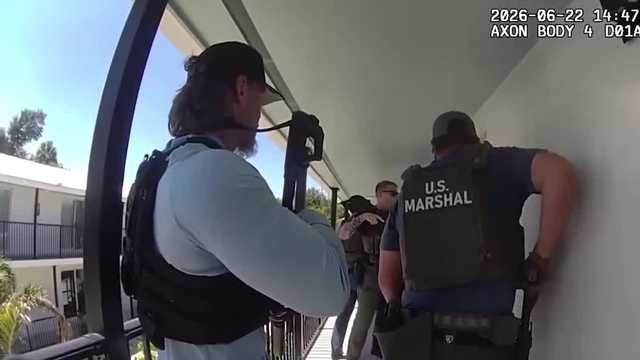
    INDIAN RIVER COUNTY, Florida (WPBF) — An escaped inmate who fled a Department of Corrections prison camp in Volusia County was captured in Vero Beach by Indian River County Sheriff’s deputies and U.S. Marshals.

Deputies and members of the U.S. Marshals Fugitive Task Force arrived at an apartment complex in Vero Beach to locate Jalyn Binion.

One neighbor described the scene as looking like something from a movie.

Investigators said Binion reportedly walked away from the prison camp in Daytona, and a woman who lives in the apartment unit allegedly picked him up.

“His girlfriend from Vero drove up to the camp in Volusia County, picked him up, and they had her car. They knew it was her,” Sheriff Eric Flowers said.

Authorities monitored the apartment and confirmed Binion was inside the unit. When members of the U.S. Marshals Fugitive Task Force attempted to make contact, Binion tried to escape through a second-floor window.

“He’s taking the window,” deputies said, as the sound of breaking glass was captured on body camera footage.

Binion was later taken into custody and booked into the Indian River County Jail.

“This one just happened to be a hometown fugitive that came back to Vero, and our folks did a great job. They were able to take him into custody without any major incidents,” the sheriff said.

The sheriff said Binion now faces escape charges and will have to complete the remainder of his original sentence.

“His original charge was grand theft, and so literally this guy is in on a grand theft charge. He was going to get out in October. I mean, why not just hang out there until October and then go see your girlfriend? And now, he’s going to spend years in prison. It just makes no sense whatsoever,” Flowers said.

Please note: This story was provided to CNN Wire by an affiliate and does not contain original CNN reporting. This content carries a strict local market embargo. If you share the same market as the contributor of this article, you may not use it on any platform.

Jury deliberating in case of man accused of killing his ex-girlfriend

By Lakyra Banks, Tia Greene

Click here for updates on this story

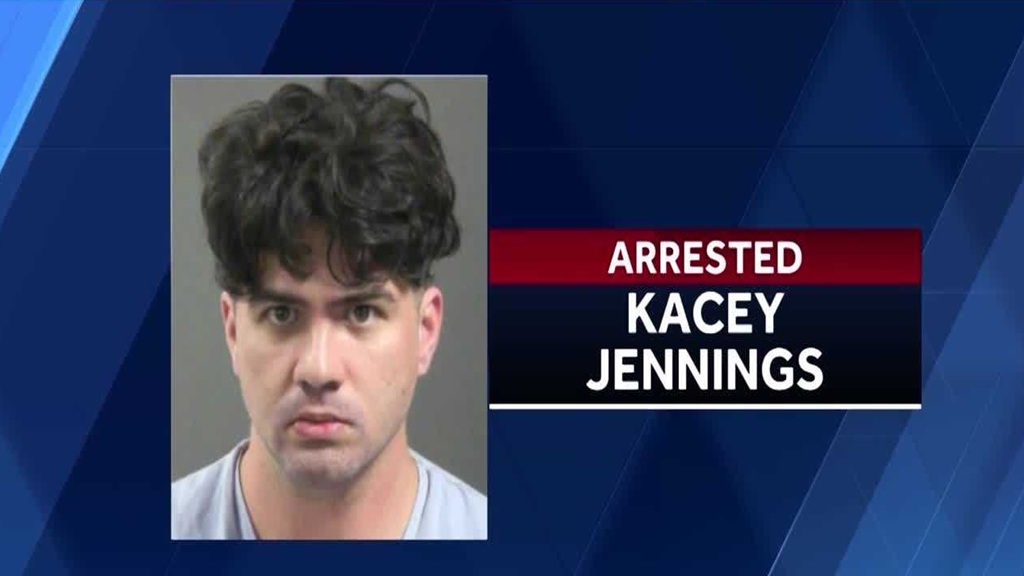
    WASHINGTON COUNTY, Arkansas (KHBS, KHOG) — A Washington County jury is deliberating in the capital murder trial of Kacey Jennings, the Fayetteville man accused of killing his ex-girlfriend, Allison Castro, in 2022.

If convicted of capital murder, Jennings could face the death penalty.

Last week, testimony focused on evidence prosecutors say links Jennings to efforts to conceal the crime and dispose of Castro’s belongings after her death.

Last Thursday began with testimony from forensic DNA analysts. Jurors heard that DNA recovered from human remains found near Beaver Lake matched Castro’s mother, helping investigators identify the remains as Castro’s.

According to testimony presented in court, only portions of Castro’s legs below the knees have been recovered. Earlier in the trial, jurors viewed videos recorded by Jennings in which he described dismembering Castro’s body and disposing of remains in multiple locations, including Beaver Lake.

Prosecutors also called witnesses from resale and trade-in businesses. Jurors heard testimony that Jennings attempted to sell items belonging to Castro after her death. Witnesses said Jennings told employees the items belonged to his sister.

The state argues those actions show Jennings was attempting to get rid of evidence connected to Castro.

Jurors were also shown text messages between Jennings and another man who was casually dating Castro while she was living with Jennings. In the messages, Jennings referred to Castro as a “serial dater” and told the man to leave her alone “if you know what’s good for you.”

Prosecutors contend the messages demonstrate strain in the relationship between Jennings and Castro before her death.

Another witness testified that he sold Jennings the shotgun investigators say was used in the killing. Jurors were shown messages arranging the sale in a Fort Smith parking lot.

After the jury was excused for the day, defense attorneys asked the court to consider lesser charges, including manslaughter and negligent homicide. The defense pointed to Jennings’ recorded statements claiming the shooting was accidental and that he did not intend to kill Castro.

The judge denied the request, ruling that it will be up to the jury to determine whether the evidence supports a capital murder conviction.

Jennings also informed the court last Thursday that he does not plan to testify in his own defense.

Please note: This story was provided to CNN Wire by an affiliate and does not contain original CNN reporting. This content carries a strict local market embargo. If you share the same market as the contributor of this article, you may not use it on any platform.

City seeks $1.2 million refund after security breach involving 911 software vendor

By Brett Rains

Click here for updates on this story

    FORT SMITH, Arkansas (KHBS, KHOG) — The City of Fort Smith is seeking a $1.2 million refund from the software provider used for emergency dispatch services over claims that a security breach violated state and federal rules for accessing criminal information systems.

Fort Smith Director of Public Safety Communications Wes Milam told 40/29 News the breach happened when the software vendor allowed a technician from India to access the Arkansas Crime Information Center and the FBI’s Criminal Justice Information Services system. Milam said the access violated the rules and had to be addressed immediately.

“A violation of this nature could threaten the ability of Fort Smith police to be able to utilize the ACIC link for running license plates, driver’s license,” Milam said. “So this was a serious incident that had to be addressed immediately.”

Milam described the Pro Phoenix platform as the central system that was planned to be used by public safety agencies across Sebastian County. The software supports computer-aided dispatch, mobile data, records and jail management and is used by dispatchers, police, fire and EMS.

The city and county have spent about $1.2 million since 2023 to implement the system. Now, they’re asking for a refund, saying the company violated its obligations by allowing a non-U.S.-based technician to access protected systems.

“The amount of work to select this vendor placed an enormous amount of trust in them to uphold the security principles that every software vendor having access to this material has,” Milam said. “By their breach, that has put the City of Fort Smith Public Safety in a very precarious position that we had to address immediately.”

According to Milam, plans are to move to a similar platform provided by CentralSquare at a comparable cost.

“However, these negotiations take some time and police, fire, EMS and dispatch, we don’t have time to wait,” Milam said.

The issue surfaced just days before the deadline for the consolidated 911 call center to be fully online and in service for Fort Smith and all of Sebastian County.

State law required 911 consolidation by 2025 in an effort to reduce dropped calls and limit transfers between agencies. For Fort Smith and Sebastian County, that deadline was extended to June 6, 2026.

Milam said the city would meet the deadline, but ambulance calls would still need to be transferred because plans to build a new dispatch center were cut.

“There should be no hiccup, there should be no change in service,” Milam said. “If you call in Fort Smith, you’re going to get Fort Smith response. If you call from Sebastian County, you’ll get a Sebastian County response. The citizens will see no change.”

Backup plans are in place in case problems come up during the transition to the new software. According to Milam, there’s currently no timeline for when ambulance dispatch services would be consolidated into one location, because that would require more space, a new building, additional staff and more training.

Please note: This story was provided to CNN Wire by an affiliate and does not contain original CNN reporting. This content carries a strict local market embargo. If you share the same market as the contributor of this article, you may not use it on any platform.

Texas Southern’s Earl Carl Institute Receives $300,000 Rockwell Fund Grant to Protect Homes, Heirs’ Property and Generational Wealth in Northeast Houston

By Francis Page Jr.

Click here for updates on this story

    June 25, 2026 (Houston Style Magazine) — HOUSTON — In a city where land tells family stories, Texas Southern University’s Earl Carl Institute for Legal & Social Policy is stepping forward with both legal muscle and hometown heart.

The Earl Carl Institute, housed at TSU’s Thurgood Marshall School of Law, has received a $300,000 grant from the Rockwell Fund to expand heirs’ property and estate planning services in Northeast Houston’s historic Kashmere Gardens community over the next two years. The award builds on a previous $300,000 Rockwell Fund grant received in 2025, creating a powerful two-year investment in housing stability, family legacy, and generational wealth preservation.

For many Houston families, especially Black families and low-to-moderate income homeowners, the home is more than an address. It is memory, sacrifice, Sunday dinner, storm recovery, and the first real rung on the ladder of wealth. But when property is inherited without a will, clear title, probate guidance, or family agreement, that cherished home can become legally vulnerable. Heirs’ property complications can prevent families from qualifying for tax exemptions, disaster assistance, home repair programs, or even the simple peace of knowing the family house will stay in the family.

Sarah Guidry, executive director of the Earl Carl Institute, said the work is urgent and deeply personal for communities that have too often been targeted, overlooked, or legally underserved.

photo

“Heirs’ property challenges disproportionately affect Black families and low-to-moderate income households, limiting their ability to build and preserve generational wealth while increasing vulnerability to property loss,” Guidry said. “Through this work, we aim to help families stabilize ownership, protect their homes, and preserve long-term wealth in Kashmere Gardens.”

That mission comes with practical, boots-on-the-ground support. The grant will fund a dedicated attorney who will meet weekly with Kashmere Gardens residents at a central community facility. That consistent legal presence is designed to make help easier to reach, less intimidating to access, and more responsive before small legal questions become family crises.

In plain Houston terms: this is legal help coming to the neighborhood, not asking the neighborhood to fight through red tape alone.

The program will assist residents with title clearing probate alternatives, estate planning, foreclosure prevention, property tax exemptions, home repair eligibility, disaster relief access, and family agreements that help keep inherited property from being lost to confusion, conflict, or predatory investors.

“Through this program, we will help families with inherited properties secure tax exemptions, home repairs, and disaster relief,” Guidry said. “We will also provide services to help prevent foreclosures, confirm family agreements to keep family property in the family, and prevent the loss of the family legacy to predatory investors who intentionally target Black family properties. We are grateful to the Rockwell Fund for its partnership in advancing this important effort.”

That gratitude reflects a larger civic truth: legal access is housing access. Estate planning is economic development. Clear title is community protection. And in a neighborhood like Kashmere Gardens—rich in culture, resilience, and family roots—this kind of investment can help residents preserve what generations worked hard to build.

The Earl Carl Institute has long served as one of Houston’s most important justice-centered institutions, combining advocacy, research, education, and direct legal services for underserved communities. Its work allows law students, attorneys, and community partners to transform legal knowledge into neighborhood impact. Through initiatives such as heirs’ property support, estate planning workshops, foreclosure prevention, and property preservation services, the Institute continues TSU’s proud legacy of producing leaders who do not merely study justice—they practice it.

Texas Southern University, one of the nation’s leading historically Black universities, was founded in 1927 and remains a cornerstone of academic excellence, civic engagement, and leadership development in Houston. Through the Earl Carl Institute, TSU is once again proving that a university can be more than a campus. It can be a community anchor, a legal lifeline, and a guardian of legacy.

photo

For Houston Style Magazine readers, the message is simple and serious: do not wait until a family property matter becomes an emergency. Ask questions. Get documents in order. Talk to loved ones. Seek help early. A will, a clear title, and a family plan may not sound glamorous, but they can be the difference between keeping a home and losing a legacy.

For more information or to seek legal services through the Earl Carl Institute, visit: tsulaw.edu/centers/ECI earlcarlinc.org/apply-for-help

Please note: This story was provided to CNN Wire by an affiliate and does not contain original CNN reporting. This content carries a strict local market embargo. If you share the same market as the contributor of this article, you may not use it on any platform.

Kierra Lee
KIELEESTYLE@GMAIL.COM
4096658446

Family says they tried to get man mental health help before alleged beating

By James Stratton

Click here for updates on this story

    MILWAUKEE (WISN) — A new video that 12 News Investigates obtained from Milwaukee Police shows an attack inside Columbia St. Mary’s Hospital in Milwaukee in the early morning hours of May 4. The suspect’s family says they tried to get him mental health help hours before.

Kenneth Flagg, 36, is charged with battery to a health care provider or family, use of a dangerous weapon, and substantial battery, use of a dangerous weapon. He is currently held on a $10,000 bond.

Prosecutors say a 38-year-old physician assistant was treating Flagg for anxiety and insomnia on Monday, May 4. Prosecutors say Flagg had a large Milwaukee Tool battery with him in the hospital. His brother, James, says Flagg uses it to charge his phone.

Video from inside the hospital shows the pair talking for 36 seconds until prosecutors say Flagg repeatedly struck the physician assistant in the head with the power block. Police heavily redacted the video sent to 12 News Investigates in a public records request.

Video then shows hospital workers and security swarm the pair, subduing Flagg. Prosecutors say the physician assistant suffered four cuts to his scalp that required 11 staples, another cut on his jaw that required medical glue and a chipped tooth.

James says his brother Kenneth has bipolar disorder and PTSD. He says his brother served in Afghanistan in the Army. Flagg served in the army for six years including two tours in Afghanistan, from August 2009 to August 2010 and from June 2012 to March 2013, and left the army as a sergeant, according to U.S. Army spokesperson Christopher Surridge. He earned a plethora of awards, including three Army Commendation Medals, two Army Good Conduct Medals and more.

James says he took the 36-year-old to Milwaukee’s VA medical center hours before the encounter inside Columbia St. Mary’s.

“My understanding is they [the VA] gave him a prescription of whatever prescribed medicine they giv him generally and just sent him about his way,” he said. “So, nothing really.”

A spokesperson for the Milwaukee VA did not answer questions Tuesday.

James says after leaving the VA, the pair were together for hours. Then, after spending the night in a hotel, he believes his brother walked to Columbia St. Mary’s for more mental health help.

Ascension, which owns Columbia St. Mary’s, did not have a representative available for an interview Tuesday, but an Ascension Milwaukee spokesperson did send the following statement.

“We have no tolerance for violence in the workplace and take threats and acts of violence seriously. We have increased security presence at this hospital and, in response to acts of violence in healthcare facilities across the nation, we are actively discerning additional security measures. Our hospitals and facilities are focused on healing, and we are committed to fostering a safe, welcoming environment for all. We stand firmly with our caregivers and associates, whose safety is our top priority. Across our Ascension Wisconsin facilities, we continually assess and adapt our violence prevention and security protocols which include strategies such as visible security measures, de-escalation training, threat assessment tools to identify risks early, and guidance from cross-functional Workplace Violence Prevention Committees.”

The public defender’s office appointed an attorney for Flagg on June 18. He is currently held on a $10,000 bond.

“To my knowledge, from him, he’s getting better help from the jail nurses than he’s ever had from the VA,” James Flagg said.

This story has been updated to add Flagg’s service from the U.S. Army.

Please note: This story was provided to CNN Wire by an affiliate and does not contain original CNN reporting. This content carries a strict local market embargo. If you share the same market as the contributor of this article, you may not use it on any platform.

Fort Ord the first U.S. Army base to fully integrate after desegregation order

By Lauren Seaver

Click here for updates on this story

    MARINA, California (KSBW) — Fort Ord, a U.S. Army base founded in 1917, made history as the first military base to implement full racial integration following President Harry Truman’s 1948 executive order to desegregate the armed forces.

From his business, The Brass Tap in Marina, Karl Waller reflects on his childhood home at Fort Ord, where his father, Samuel James Waller, was stationed in the mid-1970s.

“I remember him getting up in the morning, running with the soldiers along the beach,” Waller said.

For more than 80 years, Fort Ord served approximately 1.5 million soldiers. Marina local Howard Gustafson, whose father was one of those men, has since become a historian and written three books about the base and its soldiers.

“It started out with 15,000 and quickly escalated as the draft continued to 25-30,” Gustafson said.

The base housed thousands of soldiers training for World War II, the Korean and Vietnam Wars, and the invasion of Panama.

President Truman’s executive order in 1948 abolished segregation in the armed forces and mandated full integration across all branches. Fort Ord was the first to implement these changes.

“It opened up the military. Everybody saw it as a chance to get a hold on life, and military was a good way to go, and it didn’t matter who you were,” Gustafson said.

Waller shared how his father, originally from the South, valued the sense of equality fostered by the integrated military.

“My dad often talked about being from the South—how important that was for him to feel equal and part of one military,” Waller said.

However, integration faced initial resistance. According to the National Archives, the process took time, and by the end of the Korean conflict, almost all of the military was integrated.

“There must’ve been a lot of meetings with the captain and lieutenant amongst guys when you started integrating,” Gustafson said. “But as time went on, they started the first classes on race relations in 1952.”

Lyndon Tarver, president of the NAACP Monterey County, highlighted Fort Ord’s broader impact.

“That started basically here and then spread across the United States,” Tarver said.

“Locally it impacted the community because we had a lot of Black folks here. Seaside was probably about 35% Black,” Tarver added.

Waller noted the base’s role as a “pipeline of diversity,” particularly for Black Americans, and how its closure shifted local demographics.

“Fort Ord was a pipeline of diversity—particularly for Black Americans. Once that pipeline died, you could see the demographics for the Blacks in particular, just shift,” Waller said.

President George H.W. Bush signed the Base Realignment and Closure Act in 1988, leading to Fort Ord’s official shutdown in 1994.

Despite its closure, Fort Ord’s legacy endures through the stories of those who lived and served there, including Waller and Gustafson, who continue to honor their fathers’ contributions.

“Remember Fort Ord for all the people, remember what it contributed to the area, and how much it helped the United States,” Gustafson said.

“Those soldiers are the ones who defend our rights and sometimes we take for granted,” Waller said. “As I look back, I try each and every day to reflect on that.”

Please note: This story was provided to CNN Wire by an affiliate and does not contain original CNN reporting. This content carries a strict local market embargo. If you share the same market as the contributor of this article, you may not use it on any platform.

As people with Down Syndrome grow older, their chances of obtaining Alzheimer’s increase, new research says

By Lauren Pastrana

Click here for updates on this story

    MIAMI, Florida (WFOR) — Advances in health care have helped people with Down syndrome live longer, healthier lives. But that increased longevity also brings a new challenge: a significantly higher risk of developing Alzheimer’s disease.

For Gina El Hassan, the issue is personal. Her brother, Rudolph Vincent Perez, has always loved music and dancing. The 56-year-old shares a close bond with El Hassan, who was 13 when he was born.

“When he was born, I was 13, so he became my baby doll,” El Hassan said. “So for me it was great.”

Decades ago, people with Down syndrome typically lived into their 30s, often before the age when Alzheimer’s disease commonly develops. Today, longer life expectancy means more individuals are reaching ages associated with dementia.

El Hassan said she first noticed warning signs years ago.

“Every 10 or 15 years, he has psychological testing done, and when we went, the psychologist told us he was already seeing signs,” she said.

Now, she says her brother sometimes forgets where things belong and has withdrawn from activities he once enjoyed. The changes remind her of their mother, who also developed Alzheimer’s disease.

“He stopped wanting to go in the car. He got scared of cars,” El Hassan said. “He also got withdrawn, stopped watching TV. Little things like that that my mother suffered.”

According to the Alzheimer’s Association, people with Down syndrome face a substantially higher risk of Alzheimer’s disease as they age. Some studies estimate a lifetime risk as high as 90%, with most cases appearing in a person’s 50s.

By comparison, the lifetime risk for Alzheimer’s in the general population is estimated at about 20% for women and 10% for men.

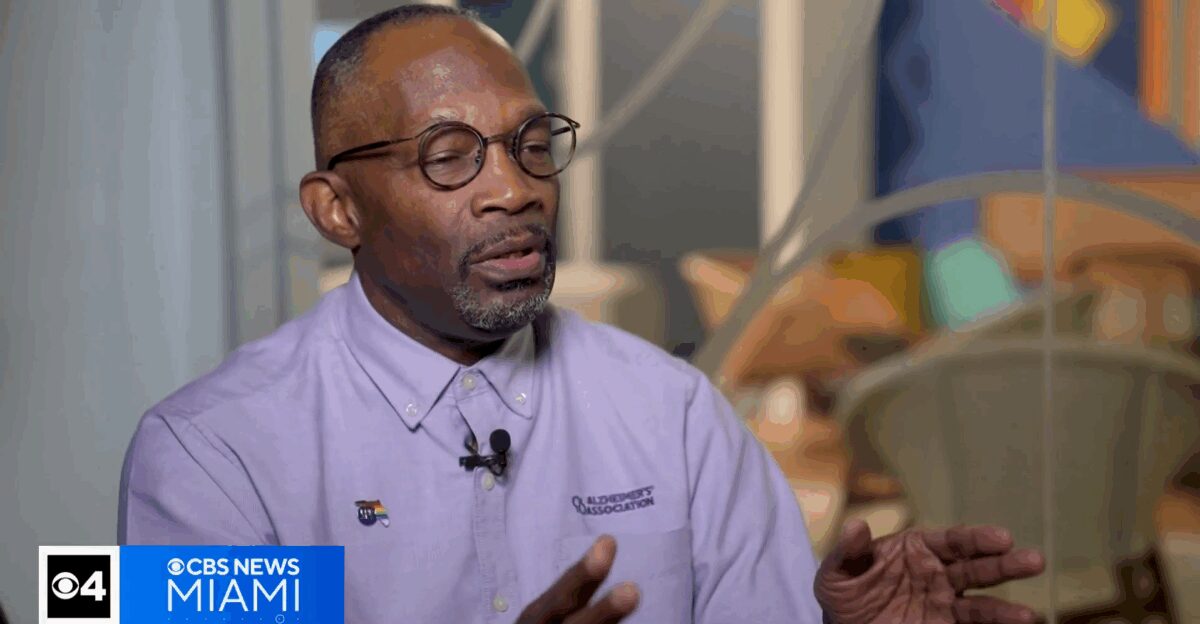
Keith Gibson with the Alzheimer’s Association said brain changes linked to dementia can begin much earlier in people with Down syndrome.

“They want to be proactive because usually an individual who has Down syndrome, their brain will start changing and they’re developing symptoms at age 40,” Gibson said.

He said research focused specifically on people with intellectual and developmental disabilities is essential.

“When we say ‘a world without Alzheimer’s and all other dementias,’ we need to look at all communities,” Gibson said. “The Down syndrome community is one that we need to be more intentional about because their needs are different.”

For caregivers like El Hassan, the uncertainty can be overwhelming.

“I’m 70, and I worry,” she said. “Of course, I worry if I get it, but I worry more about him. How to take care of him and deal with it again. I don’t want him to go through something else.”

Down syndrome affects how the brain and body develop, but people with Down syndrome can live healthy and fulfilling lives with supportive care.

Resources for families are available through the National Task Group on Intellectual Disabilities and Dementia Practices.

Please note: This story was provided to CNN Wire by an affiliate and does not contain original CNN reporting. This content carries a strict local market embargo. If you share the same market as the contributor of this article, you may not use it on any platform.

Albuquerque braces for continued heat as families and construction workers navigate rising temperatures

By Peyton Spellacy

Click here for updates on this story

    ALBUQUERQUE, New Mexico (KOAT) — Albuquerque highs are expected to reach the upper 90s again Wednesday, prompting many to look for ways to stay cool.

Meteorologist Eric Green said the metro area typically sees about two or three days where temperatures reach triple digits, based on readings taken from the Sunport. Green noted that starting the day at 70 degrees and reaching the high 90s by noon can take a huge toll on the body.

Some families have been participating in Operation Cooldown, a city-run initiative. When Albuquerque is forecast to hit 100 degrees or higher, the city rotates sprinkler play at select city parks from 1 p.m. to 1:30 p.m.

However, not everyone can escape the heat. Noah Woisin with New Mexico Concrete said his demanding work on any day, but triple-digit temperatures make the job even tougher.

“That’s brutal, sun baking down on you, it always makes the day a little more difficult,” Woisin said. “It makes a big difference. The sun really takes it out of you.”

Construction crews protect themselves by using UV-blocking long-sleeve shirts, sunscreen, cooling towels, and plenty of water.

Bob Genoway, deputy director for the Compliance and Enforcement Division under Occupational Safety and Health Administration, said those practices align with official safety standards.

Genoway said there are “three basic pillars of protecting workers from heat, and that’s water, rest, and shade.”

Employers are responsible for training and educating their workers on the symptoms of heat-related illnesses, which include fatigue, nausea, and headaches.

“There’s no set number of breaks, but it’s important for an employer to recognize that as it gets hotter and hotter, more breaks might be necessary,” Genoway said.

In 2023, when Albuquerque experienced 17 days of 100-degree temperatures, OSHA reported that 50 workers statewide ended up in the emergency room for heat-related illness. If temperatures hit 100 degrees Tuesday, it will mark the second triple-digit day of the summer. Signs of heat-related illness are fatigue, headaches, and nausea.

Woisin said that with the right gear and preparation, his crew works hard to keep heat-related illnesses rare.

“We don’t see them as often as you would think, just by taking precautions and making sure you’re hydrated and staying, staying out of the sun in direct sunlight,” Woisin said.

OSHA advises workers who are feeling the effects of extreme heat to alert their employer first. If nothing changes, the agency encourages workers to reach out to them for help.

Please note: This story was provided to CNN Wire by an affiliate and does not contain original CNN reporting. This content carries a strict local market embargo. If you share the same market as the contributor of this article, you may not use it on any platform.