Small business owners skeptical about getting tariff refunds

By Kimberly King

Click here for updates on this story

    ASHEVILLE, N.C. (WLOS) — Small business owners across the mountains say they’re cautiously optimistic after learning they can now apply for tariff refunds from the federal government, though many aren’t expecting quick payouts.

Benjamin Colvin, founder and CEO of Devil’s Foot Beverage Co., said tariffs have significantly increased his business’s costs, as it imports aluminum cans and lids from China.

“Eight to 9 cents a can,” Colvin said of his pre-tariff costs. “But now, like 11, 12 cents a can.”

Colvin said the company has paid tens of thousands of dollars in related fees. While he welcomed news that U.S. Customs and Border Protection has opened a refund portal, he remains skeptical.

“It’s great news. Are we holding our breath, thinking it’s gonna happen? I don’t know,” Colvin said.

Because his company purchases materials through middle vendors, Colvin said any refund would have to be passed along.

“The way I’m going to be able to recoup anything is through larger middle vendors we purchased cans and lids from,” he said.

Other small business owners in Asheville, though, have paid China tariffs directly and are applying for refunds.

“We were charged tariffs since February of last year,” said Erik Fabian, the founder of DoughBed. Fabian said his company has paid more than $170,000 in tariffs for his sourdough home-baker products manufactured in China.

“I’m still skeptical whether we will see this or how much. I feel things change every day,” Fabian said.

Fabian said he has already opened a refund account but described the process as cumbersome.

Brian Pittillo of Southern Alarm and Security said his company has paid about $50,000 in tariff-related surcharges on equipment such as cameras.

“Just because we’ve spent so much of our own money — if that means we have to sit down with pencil and paper and calculators to get it worked out so we can recoup, we will,” Pittillo said.

Pittillo said the company plans to find a way to get refunds, even though many imported products had vendors charging tariff surcharges rather than direct tariff fees.

Officials say the federal government expects to process refunds in phases, prioritizing companies with more recent tariff payments.

Fabian advised that businesses applying for refunds should make sure their banking information is correct when they open an account to ensure any refunds are transferred back into their bank accounts.

Please note: This story was provided to CNN Wire by an affiliate and does not contain original CNN reporting. This content carries a strict local market embargo. If you share the same market as the contributor of this article, you may not use it on any platform.


Woman receives kidney from surprise Facebook donor 40 years after they met

By Luke Lukert

Click here for updates on this story

    VIRGINIA (WTOP) — There are few greater gifts someone can give another than themselves, but that is just what one woman did for a Virginia Navy friend that she hadn’t seen in four decades. The two reconnected on Facebook and just months later both went under the knife.

“Kidney disease has been in my family for at least five generations that we know of. And before that, I think they were just undiagnosed,” Debbie Winkfield, who lives in the northern Shenandoah Valley in Virginia, told WTOP. “I found out about 20 years ago that I would need a transplant.”

Now, in April, which is National Donate Life Month, Winkfield decided to share her story to help others because her donor match turned out to be quite a surprise. And not only that, her surgery at MedStar Georgetown University Hospital marked a milestone use of new technology at the hospital.

Winkfield said she was doing well until last spring, when doctors told her that they’d need to conduct a serious search to find her a kidney, whether it be through a family member or friend or someone on the transplant list.

Last March, she started a new Facebook group, updating friends and loved ones about her situation and asking for help to find a new kidney. Only 19 people were linked to the page.

“I reached out to some folks that I knew may qualify and may be willing to donate, and I really didn’t know if anyone would be willing or even consider it. It was just a chance I took,” Winkfield said.

Last May, MedStar Georgetown contacted her to say someone had come forward offering their kidney.

“I was very humbled and a little bit in shock because I wasn’t sure that anyone would be willing to do that,” Winkfield said.

The donor, however, was kept anonymous at first as the volunteer underwent a month of tests to see if they were a qualified match. Winkfield was not sure who was making the sacrifice to save her life.

After four weeks of testing, the anonymous donor turned out to be a match.

MedStar Georgetown’s transplant coordinator told Winkfield the donor would contact soon.

An old friend from her Navy days, Lora Booher, called her just two days later.

“The true hero in this story is Lora,” Winkfield said. “Lora did something that she didn’t have to do.”

Booher and Winkfield both served aboard the U.S.S. Sierra — in 1984 they were among some of the first female sailors let aboard ships, and, according to Booher, “apparently both of us were a little crazy, because we’re like, ‘send me.’”

Both said they developed a personal bond on that ship.

“There were several situations, and Debbie and I had each other’s back, and that was a big bond between us, that we took care of each other,” Booher said.

After Booher, a Dayton, Ohio, native, left the ship after a year, the two lost contact until they became Facebook friends years later, keeping an eye on each other from afar, Booher in Ohio and Winkfield in Virginia. Then one day, Booher stumbled upon Winfield’s kidney donation page.

“I think this is meant for me. I got to do this, to help out my shipmate here,” Booher said.

While undergoing tests to make sure her kidney would match, Booher said she was frustrated that she couldn’t talk to her friend just a few states away.

“It was just amazing to me, how it all just worked out perfectly, and I don’t know what made me do it,” Booher said. “I’ve been doing some soul searching, and I haven’t said this out loud, but it was kind of like a reason to live for a while.”

She and Winfield met in D.C. on the night before the surgery and had dinner. Their conversation flowed like they had just seen each other just days ago instead of 40 years ago.

Dr. Talal Al-Qaoud was the surgeon at MedStar Georgetown who completed the kidney transplant surgery last September.

“I believe this is the only field in medicine where it really takes one human being to cure another human being,” Dr. Al-Qaoud told WTOP.

Winkfield’s surgery was the first kidney transplant performed at that hospital using a surgical robot.

“The whole point of this was really to kind of benefit Debbie from the recovery standpoint,” Al-Qaoud said.

Usually, a kidney transplant requires a large incision in the back, but with the robot, it’s a much more minimally invasive procedure, according to Al-Qaoud, and Winkfield said she had relatively no pain due to the small incision.

Months later, both women are healthy and are encouraging others to look into becoming organ donors this National Donate Life Month.

“I don’t think there’s any more gratification you can get out of any gift you can give to somebody. It’s priceless,” Al-Qaoud said.

“People are always amazed or thankful or just in awe that I would do something like that, and I’m like, ‘You too, can do this.’ Help somebody out. You never know,” Booher said.

“It’s hard to describe the feeling, because there really are no words for someone to think enough of me, care enough for me, and to sacrifice themselves to go through this surgery,” Winkfield said with emotion in her voice. “To offer an organ is just a feeling you can’t describe. I just don’t have the words. I thank her so much.”

Please note: This story was provided to CNN Wire by an affiliate and does not contain original CNN reporting. This content carries a strict local market embargo. If you share the same market as the contributor of this article, you may not use it on any platform.
College students save man trapped in apartment fire

By Grace Monk

Click here for updates on this story

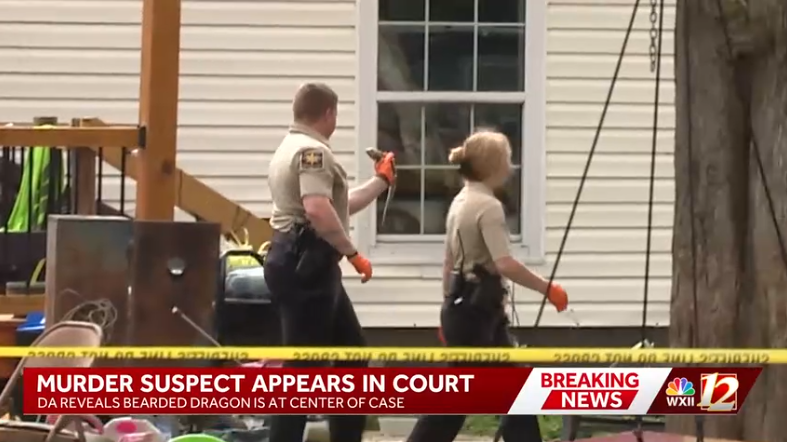
    LA CROSSE, Wisconsin (WKBT) — Two college students helped rescue a tenant from an apartment fire on Saturday.

UWL student Kaiden Brenneman-Sorenson and UW-Eau Claire student Charles Mroz were sitting in his apartment when they noticed smoke coming from a building on Zeisler St.

But as they got closer to the building, their curiosity quickly turned into a rescue mission.

“That’s when we kind of realized like, oh my gosh, it’s an actual fire. And then when we approached it is when we realized how big it actually was becoming,” said Mroz.

The students began knocking on doors and attempting to activate fire alarms to alert residents.

“The smoke really started to build up, and the fire started to expand,” Brenneman-Sorenson.”We all kind of started to back up because it really caught a blaze and some lady said there’s a dude in the bottom window,” Mroz said.

When they heard about the trapped resident, Mroz and Brenneman-Sorenson ran toward the window and instructed the man to try exiting through a nearby door.

Brenneman-Sorenson says the fire had already reached the door, forcing them to come to up with a new plan.

“That was when me and [Mroz] knew we had to bust open the screen and pull him out.”

The students broke open the window screen, and with help from two additional community members who rushed over, they successfully pulled the man to safety through the window.

“I was kind of just in shock that about everything that happened,” said Mroz. “But also proud of myself, too. Proud of everybody else that stepped up too.”

Please note: This story was provided to CNN Wire by an affiliate and does not contain original CNN reporting. This content carries a strict local market embargo. If you share the same market as the contributor of this article, you may not use it on any platform.

Prince died 10 years ago; his last concert was at Atlanta’s Fox Theatre

By John Dodge

Click here for updates on this story

    ATLANTA, Georgia (WXIA) — First, it was a tip from police sources in Minneapolis — a death at Paisley Park, Prince’s home and studio.

Then the news, made official later that morning: Prince was dead. It was 10 years ago today, April 21, 2016.

The week before, on April 14, Prince performed two shows at the Fox Theatre in Atlanta. That 10 p.m. performance was his final public concert. He took the stage with a cane.

The intimate Atlanta shows were part of Prince’s Piano and A Microphone Tour, featuring classic hits, B-sides, and other surprises from his vast catalog, including tracks from his 39th studio album, HITnRun Phase II. After his death, it was revealed that he had hundreds of unreleased songs in his archive.

The Atlanta shows were originally scheduled for April 7, but Prince canceled because he was suffering from the flu, according to his PR team.

Prince performed solo with a purple piano. According to reviews of the concert in the Atlanta Journal-Constitution, the set list included “Nothing Compares 2 U,” “Controversy,” “I Would Die 4 U,” and a surprise David Bowie cover of “Heroes”.

The final song was “Purple Rain.”

“I literally went to his last concert,” said AJC reporter Ernie Suggs, who said he had seen Prince 20 times live. “It was a fantastic concert. To see him at the Fox Theatre. It was just him with a piano and a microphone. It was a brilliant show. God knows, nobody thought it would be his last concert.”

“This is a place where creativity is abundant,” Suggs said. “So for Prince to come here, a person who was the living definition of creativity, the living definition of diversity, the living definition of living his life the way he wanted to live … that Atlanta ended up being some kind of spiritually or cosmically the perfect place to have that last concert because Atlanta kind of represents everything that he wanted to be.”

The day after the Fox shows, Prince was hospitalized after his plane made an emergency landing at Quad City International Airport in Moline, Illinois.

TMZ reported that Prince, 57, was treated at a local hospital after becoming ill on the plane. It was originally reported that Prince was still suffering from the flu. Still, sources close to the Hall of Fame singer reportedly said paramedics administered Narcan, which is used to revive patients overdosing on opioids.

According to witnesses, Prince admitted that he took “1 or 2” pain pills. According to search warrants released in 2017, Prince was prescribed oxycodone on April 7 and April 20, the same day as the emergency landing.

Deputies and medics were dispatched to Paisley Park, in suburban Minneapolis, around 9:43 a.m., where they found the singer unresponsive in an elevator. He was pronounced dead at 10:07 a.m.

Prince Rogers Nelson died of a fentanyl overdose, according to the autopsy report. His death was accidental, and Prince took the drug himself.

The autopsy was one page, but referenced a scar on his hip, likely from surgery to relieve chronic pain after years of performing. He weighed 112 pounds, according to the report.

Investigators found “numerous narcotic controlled substance pills in various containers” in Prince’s bedroom, according to search warrants.

Please note: This story was provided to CNN Wire by an affiliate and does not contain original CNN reporting. This content carries a strict local market embargo. If you share the same market as the contributor of this article, you may not use it on any platform.
Baby Jaxon: San Jose teen charged with sexually assaulting, killing his 2-year-old cousin

By Dustin Dorsey

Click here for updates on this story

    SAN JOSE, California (KGO) — A San Jose teen is charged with sexually assaulting and killing his 2-year-old cousin and foster brother earlier this month, the Santa Clara County District Attorney’s Office said Monday.

Family and friends were distraught at a court hearing Monday, weeks after Jaxon was found unresponsive and injured in his crib on Easter Sunday. Jaxon’s cause of death is still under investigation after passing away in the hospital days later.

“I can’t imagine what this sweet little baby went through,” Evangeline Dominguez-Estrada said. “Who can hear a baby crying and continue to harm them, let alone kill them?”

Police say Jaxon’s then-17-year-old foster brother, his cousin, had sexually and physically abused the toddler, leading to several suspicious traumatic injuries.

“He was only two, and he did not deserve this,” Dominguez-Estrada said.

Monday morning, the suspect was formally charged with murder, as well as multiple other felonies, including child assault causing death and sexual assault.

“This was a 2-year-old child who was horribly abused and viciously murdered,” Rosen said. “And we want to make sure that the level of accountability is the right level.”

Evidence suggests that Jaxon had been repeatedly sexually and physically abused by his cousin after being placed with the family by the county in February.

Our partners at the Mercury News report the cousin’s mother also had a previous conviction of felony child endangerment in 2014 – a crime that should have disqualified her from being a foster parent.

County Spokesperson Peter Gallotta told ABC7 Eyewitness News in a statement the Department of Family and Children Services is conducting its own investigation while requesting that the California Department of Social Services do the same.

Gallotta added, “The county is committed to swiftly investigating every aspect of this horrific tragedy and publicly sharing the results of these investigations when available and to the extent allowable by law.”

DA Rosen says he will investigate whether or not anyone else is responsible for Jaxon’s death, even the county he represents.

“This is the third child in the past couple of years under the care and custody of the Department of Family and Children Services who has been murdered,” Rosen said. “Change needs to come, and it needs to come fast – and it needs to happen now.”

The suspect has since turned 18, and Santa Clara County District Attorney Jeff Rosen is seeking to try him as an adult.

The suspect in this case will be back in court on May 21.

At that time, the probation department will make its recommendations on whether this case should be tried in adult court.

Please note: This story was provided to CNN Wire by an affiliate and does not contain original CNN reporting. This content carries a strict local market embargo. If you share the same market as the contributor of this article, you may not use it on any platform.
Santa Rosa’s Safari West bottle‑feeds baby giraffe goat milk from Coke bottle to keep it alive

By Anser Hassan

Click here for updates on this story

    SANTA ROSA, California (KGO) — Goat milk from a Coke bottle is not how most baby giraffes have their first meals. But at Safari West Wildlife Preserve in Santa Rosa, that’s how a baby giraffe got the help he needed from the start.

The unnamed male giraffe was born Sunday at the wildlife preserve, where staff quickly realized something was wrong.

“It is definitely not normal for us to intervene and bottle feed,” said Nikki Smith, the animal collections manager at Safari West. “But in his case, he was very small. Giraffes are born 6 feet tall. And his maybe 5-5? And a little under 70 pounds.”

Veterinarians stepped in after the calf failed to stand within a normal timeframe.

“When he wasn’t standing up, close to a regular timeline, we went and checked on him. Got a temperature. He was hypothermic, so he wasn’t regulating his temperature like he should. And that’s when we decided to intervene,” said Ashley Foster, a veterinarian at Safari West.

Staff say the baby giraffe is now making tremendous progress. He shares a pen with a premature calf and is expected to gain about 10 pounds a week. He could remain on the bottle for up to nine months or longer before being gradually introduced back to the giraffe herd, which includes his mother. She didn’t feed him at birth, which is part of the problem.

“She definitely seems like she is interested. She does nuzzle him and all the normal behaviors. But she goes to connect to her udder, she seems to not want to do that,” Smith said.

Safari West staff noted giraffes have a high mortality rate in the wild. Another giraffe at the preserve, Safeera, was born with an infection and also failed to bond with her mother. She was bottle-fed and is now 2 years old, giving staff hope for the new arrival.

“Hopefully he will actually start to get a little taller, little wider, little stronger. He is already strong. They are surprisingly strong for their size, especially him being as small as he is,” Smith said. “He has got a lot of fight in him. And that’s definitely what we need to help him survive.”

Please note: This story was provided to CNN Wire by an affiliate and does not contain original CNN reporting. This content carries a strict local market embargo. If you share the same market as the contributor of this article, you may not use it on any platform.
Bay Area marijuana growing business still awaiting policy changes to ease industry woes

By John Ramos

Click here for updates on this story

    SONOMA COUNTY, California (KPIX) — November will mark 10 years since the passage of Prop 64, which legalized recreational marijuana in California. But rather than celebrating a thriving industry, one North Bay cannabis grower says hard lessons were learned about the realities of politics in the marketplace.

On Monday, rain was falling at the 3-acre farm in Glen Ellen in Sonoma County. Inside a greenhouse, Erich Pearson examined the 30,000 seedlings that just sprouted five days ago. The owner of the SPARC cannabis company began growing medical marijuana on the down-low in 1998.

So, when Prop 64 passed in 2016, legalizing weed, he considered it a great cause for celebration.

“It was, at the time,” he said, laughing. “You know, it’s been a challenge. But all in all, it had to happen, right? It needed to happen because it also gets people out of jail, which is the foremost important thing.”

But as a business, it simply hasn’t panned out the way insiders thought, or hoped it would.

“I think we had bigger eyes than the reality of it,” Pearson said. “Everybody, from the investment folks coming out to invest in the industry, to founders who were in business, had bigger plans than the regulations would allow.”

First, there were the regulations, which allowed counties to drag their feet on permitting farms and dispensaries. Then, of course, there were the taxes.

Prop 64 was sold to the voters as a cash cow of revenue for schools and services. But as more competition came into the market, the price dropped dramatically. With taxes staying fixed, the growers struggled to survive with that added cost. Of course, that only fueled the black market, which didn’t have to pay the taxes.

“They say 60 percent of all cannabis in California still goes through the illicit market,” Pearson said. “They still produce cheaper, they have less regulatory burden, they have no taxes. We need to see tax reform still, until we’re going to see more consumers in this legal market.”

“It is my goal to look at tax policy to stabilize the market,” said Governor Newsom at a budget news conference in 2022. But because the taxes were written into Prop 64, they can only be changed by another vote of the people. At one time, cannabis was selling for as much as $1,300 per ounce. Now it’s bottomed out at about $300, and many growers have given up and dropped out of the market. But Pearson sees that as a good and necessary thing. Just like during the dot-com bust, the easy investment money is all gone, leaving only those with a solid business plan to carry the legal industry forward as the price rises. But that doesn’t solve the tax problem.

“Had the legislature been able to vote for the same legalization that said, ‘We’ll control the tax,’ I don’t think we’d have a problem right now,” Pearson said. “I think the legislature would have reduced the tax. The governor supported reducing taxes. He just can’t. You know, going to the voters is a whole other level.”

Like the Grateful Dead said, it’s been a long, strange trip. Still, just like every other farmer, Pearson is looking forward to a brighter day.

“I’m optimistic. You have to be, otherwise work is no fun.”

Please note: This story was provided to CNN Wire by an affiliate and does not contain original CNN reporting. This content carries a strict local market embargo. If you share the same market as the contributor of this article, you may not use it on any platform.
4 birds still missing after break-in at Marysville falconry facility

By Richard Ramos

Click here for updates on this story

    MARYSVILLE, California (KMAX, KOVR) — A Yuba County falconry said someone broke into the facility and intentionally released nearly a dozen birds from their enclosures on Thursday night.

Staff at West Coast Falconry say the incident happened overnight, when someone entered the property, cut off tracking gear attached to the birds and forced them out of their enclosures.

The facility said 11 birds were released during the break-in. Most have since been recovered, but four remain missing: a barn owl, a great horned owl, a peregrine falcon and a dark morph red-tailed hawk.

Officials say the birds may resemble native species commonly seen in the area, but stress these animals were bred in captivity and are not capable of surviving on their own.

West Coast Falconry said the birds are imprinted on people and may behave differently from wild birds.

Authorities, including the Yuba County Sheriff’s Office, the California Department of Fish and Wildlife and federal wildlife officials, have been notified and are assisting in the response.

Search efforts are ongoing.

Please note: This story was provided to CNN Wire by an affiliate and does not contain original CNN reporting. This content carries a strict local market embargo. If you share the same market as the contributor of this article, you may not use it on any platform.
California lawmaker introduces bill to protect wildlife from euthanasia, create coexistence program

By Dean Fioresi, Lesley Marin

Click here for updates on this story

    CALIFORNIA (KCAL, KCBS) — A Southern California state senator has proposed a new law that would prevent euthanasia in the state’s wildlife just a month after a mother bear was put down for swiping at a woman in Monrovia, feet away from where her two cubs were located.

The legislation, SB 1135, which was introduced by Sen. Catherine Blakespear (D-Encinitas), calls for the establishment of a state program that promotes the coexistence with wildlife and codifies a wolf-livestock coexistence and compensation program. The move comes two years after funding for a similar wildlife coexistence program expired.

“We can and must responsibly support people and wild animals to exist in a California where we are all under growing pressures and cumulative threats like extreme heat, frequent drought and intense wildfires that animals respond to by moving in search of resources to survive,” Sen. Blakespear said in a statement. “That means investing in science-based, situation-specific, proactive strategies to minimize negative interactions and prevent escalation to conflicts that pose risks for people and animals. SB 1135 proposes a program to better protect people, wildlife and communities.”

The proposed coexistence program, which would be allocated nearly $50 million through the state’s 2026-27 budget, would build on the previous version, which deployed trained regional human-wildlife conflict staff around the state. The absence was noted by CDFW leaders during a state Assembly meeting in January, according to Blakespear.

“Over the last five years, wildlife incident reports logged by the California Department of Fish and Wildlife (CDFW) increased by 31 percent and calls, emails and field contacts rose by 58 percent,” Blakespear’s proposal says.

She noted the recent headline across the state, including “Blondie,” the Monrovia mother bear who was captured and put down by wildlife officials in March after it swiped at a woman near the home it was living under with its two cubs.

The home in question belongs to Richard Franco. He, along with many other Monrovia residents, has documented his encounters with bears over the years, even setting up a system of trail cameras to track the bears’ movements.

“Getting to know her, you could see what a devoted mother she was,” Franco said. “She was always building a nest.”

Franco and many of his neighbors were angered upon learning that CDFW officials had euthanized Blondie after her capture, which they credited to the fact that she had swiped at the woman days earlier and another person in 2025.

“Forcing them out, and then euthanizing the mom was just traumatic for us,” said one Monrovia couple. “It was just tragic, and there was no need for it; it was completely unnecessary.”

Situations like this are what caught Blakespear’s attention, leading to her proposal last week.

“It is really my desire to make sure that wild places stay wild, and not be having to resort to lethal measures like killing bears or killing wolves,” Blakespear said, while speaking with CBS LA. “We need to have a program that is up and going so we can be educating people.”

The program calls for focus on public education, maintaining a statewide incident reporting system and deploying devices like barriers, noise and light machines and other technology that would deter predators from places where they shouldn’t be.

SB 1135 passed on a 5-1 vote and will now be considered by the Senate Appropriations Committee.

Please note: This story was provided to CNN Wire by an affiliate and does not contain original CNN reporting. This content carries a strict local market embargo. If you share the same market as the contributor of this article, you may not use it on any platform.

Fish struggle in Jordan River as low runoff leaves water dangerously shallow

By Nate Larsen

Click here for updates on this story

    MURRAY, Utah (KSTU) — What should be the height of spring runoff is telling a very different story along the Jordan River — and it’s a concern that first came to light thanks to a local viewer.

After noticing something unusual, Murray resident Chelsea LaRoe reached out to FOX 13 News, sharing video of fish struggling in shallow water along the river. In some areas, water levels have dropped so low that parts of the river are only a few inches deep, creating challenges for fish trying to survive.

“I was walking the trail today and I just kind of heard this ‘flip-flop’ noise in the water,” LaRoe said. “I looked over and noticed all the fish flopping around in the water… and I realized the water levels were very low.”

LaRoe says the shallow conditions are striking and concerning.

“You could probably walk to the middle of that and be less than knee-deep high in the Jordan River,” she said. “To have our waters down to nothing… it’s very frightening for Utah.”

After hearing from LaRoe, FOX 13 took a closer look at conditions along the river and found that the issue goes far beyond a single stretch. Hydrologists say low flows are being seen across much of the state.

“It’s a direct feedback loop from our record low snowpack that we saw this winter,” said Glen Merrill, a hydrologist with the National Weather Service.

Merrill says the lack of snow has already had a major impact on runoff timing.

“Many [rivers] have already been through their peak flows about a month to a month and a half early,” he said.

With less water moving through rivers and streams, fish are being forced into smaller, more crowded spaces — adding stress to already difficult conditions.

“There’s going to be lesser flows in streams… less area in the stream… same number of fish, less space for each of them,” said Trina Hedrick, Cold Water Sport Fish Coordinator with the Utah Division of Wildlife Resources.

As temperatures rise, the situation can become even more dangerous.

“As the water warms, it’s holding less oxygen as well,” Hedrick said.

Wildlife officials say that combination — low water, warmer temperatures, and reduced oxygen — can make it much harder for fish, especially cold-water species like trout, to survive. They’re encouraging anglers to take extra precautions, including fishing during cooler parts of the day and minimizing how much fish are handled before being released.

“If you are going to catch and release, don’t even take it out of the water,” Hedrick said. “The less you can handle a fish, the better.”

Experts also stress the importance of conserving water at home, noting that many of Utah’s rivers and reservoirs serve as key water sources for communities.

“The less we use in our homes, the more stays in those water bodies,” Hedrick said.

With streamflows already running well below normal, and little relief in sight, conditions like those seen on the Jordan River will likely continue, or worsen, in the coming months.

Please note: This story was provided to CNN Wire by an affiliate and does not contain original CNN reporting. This content carries a strict local market embargo. If you share the same market as the contributor of this article, you may not use it on any platform.