Westminster looking to fill every pothole in the city during Pothole Palooza

By Ethan Carlson

Click here for updates on this story

    WESTMINSTER, Colorado (KMGH) — The City of Westminster is asking residents to help locate and report road damage during its third annual Pothole Palooza.

Street operations superintendent Brock Hufford is overseeing the event, relying on the watchful eyes of the people who live in the city to track down potholes before they become bigger issues.

“If you left a pothole alone, it’s going to keep growing and getting bigger and larger and cause more problems,” Hufford said. “Our goal is to get all the potholes filled so we’re caught up for the season to where we can put our efforts towards milling, paving streets, and other road maintenance that needs to happen.”

Westminster City Councilor Jack Johnson said the four-day pothole purge aims to save money by tackling the road damage from last winter all at once.

“We have bulk purchased the materials to fill all the potholes, so they’re saving in bulk purchasing,” Johnson said.

He also said a major goal of the event is to urge the residents of Westminster to report any and all potholes they come across.

“We get the calls here and there, especially if it’s in front of your driveway, but there are plenty of roads that people drive where they don’t even think about reporting it to the city,” Johnson said.

Residents have until Thursday, April 30 at 2 p.m. to report any potholes. Requests can be submitted online at Access Westminster or through the Access Westminster app for iPhone or Android. Every resident who reports a pothole will be nominated for a drawing to receive a personalized street sign from the City of Westminster.

The city’s goal is to fix potholes within 24 hours of being notified, long after Pothole Palooza ends.

“It’s one of the most rewarding things about being on council,” Johnson said. “People say… where it’s ‘I have a pothole’ or ‘I have a leak,’ or whatever it is… as a city and as a council, we’re able to just immediately respond to their needs.”

This story was reported on-air by a journalist and has been converted to this platform with the assistance of AI. KMGH verifies all reporting on all platforms for fairness and accuracy.

Please note: This story was provided to CNN Wire by an affiliate and does not contain original CNN reporting. This content carries a strict local market embargo. If you share the same market as the contributor of this article, you may not use it on any platform.

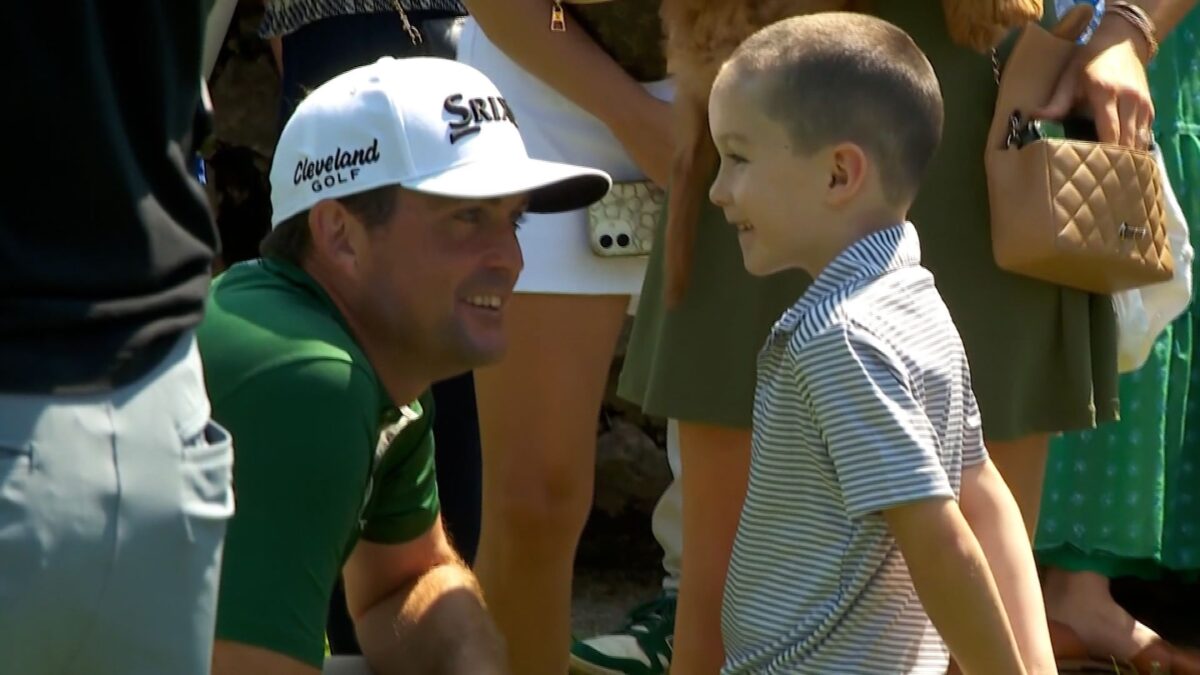
Sonoita vying to become next Napa

By Pat Parris

Click here for updates on this story

    TUCSON, Arizona (KGUN) — What do Sonoita, Arizona, and Napa, California, have in common? A lot more than you might think.

Sonoita is one of the fastest-growing wine regions in the country, although it was once devoid of wineries.

“Wow, why (are) there no wineries in Arizona,” asked Lori Dutt-Reynolds, owner and winemaker of Sonoita Vineyards.

That is the same question her grandfather, Gordon Dutt asked more than 60 years ago.

A soil scientist at the University of Arizona, Dutt focused his research on growing wine grapes in the Four Corner states of the desert southwest. The results helped prove the soil is perfect for growing grapes.

“The Four Corner states all have wine industries because of grandpa,” said Dutt-Reynolds.

Her grandpa is often called the father of Arizona’s wine industry.

In 1973, Gordon Dutt’s research took him to Sonoita and the Babocomari Ranch.

“Grandpa came down here and took soil samples, and went back to the U of A to test them; and was blown away because it was a 99% match to Burgundy, France,” explained Dutt-Reynolds. “He was like, ‘No way!'”

Dutt and his partner Blake Brophy, planted an experimental vineyard in 1973 and it was a success.

They proved the nearly 5,000-foot elevation was suitable for growing grapes and that the nearly identical soil to Burgundy made for intense color and acidity.

“You get this beautiful essence to Arizona wine, especially in the Sonoita (American Viticultural Area), and that’s just the terroir we’re in; and it’s one hundred percent the soil,” Dutt-Reynolds said.

Terroir is a French word for soil, used to describe how the environment shapes wine.

In 1979, Gordon Dutt planted Arizona’s first commercial vineyard. By 1983, he opened the winery. Sonoita Vineyards produced 300 gallons of wine.

Today, Lori Dutt-Reynolds is the winemaker. She and her husband, Robi Reynolds, have roughly 25 acres of vines and produce more than 7,000 gallons of wine each year.

Lori continues the legacy of her grandfather at Arizona’s oldest vineyard.

“It was a passion and it was a love of wine that he had,” said Dutt-Reynolds. “He definitely instilled it in me. I love what I do. I love farming, I love making wine. Just like how I was brought up in the business; my kids are here and the business is, too. So, things have changed, but not a lot.”

They have not changed a lot at Sonoita Vineyards, but the industry in Arizona has changed.

According to a 2025 report, the wine industry generates nearly $5.68 billion in economic activity in the state.

A recent article by Wine Enthusiast Magazine is highlighting wineries in Sonoita, saying the area is vying to become the next Napa.

“It’s just bringing a lot of focus to a beautiful art that we have down here in Southern Arizona,” Dutt-Reynolds said.

She says there are now 24 tasting rooms in Sonoita. That includes Dos Cabazas WineWorks.

“What’s important in Arizona is to get up out of the heat,” said Todd Bostock.

As winemaker and owner of Dos Cabezas, Botock has vineyards in both Willcox and Sonoita.

“It has a spot that nothing else can fit,” explained Bostock. “It can play nicely with all of those other great wines from around the world, but ultimately it’s its own thing. What we do best they can’t do, and what they do best we can’t replicate.”

It would be hard to replicate what Dos Cabezas has done for the past 30 years. Bostock and his wife took over in 2006, moving the winery to Sonoita and opening Dos Cabezas WineWorks.

His operation produces some 5,000 cases of wine and sparkling wine each year. Bostock has watched the industry in Southern Arizona explode over the last 20-plus years, as the wines have matured as well.

“It may not be ours, but if you like wine, there’s a wine in Southern Arizona that you will like,” Bostock said. “Across the board, the quality is high and the wines are delicious.”

Bostock has the added advantage of having a memorable tasting room experience complete with wood-over pizzas. They use fresh Arizona-sourced ingredients, which pair well with his wines.

Like many of the Sonoita wineries, Dos Cabezas has been recognized both nationally and internationally. But Bostock says that doesn’t mean they’re standing still with his winery.

“Trying to move forward, tyring new things, learning, refining and just incrementally getting better.”

Please note: This story was provided to CNN Wire by an affiliate and does not contain original CNN reporting. This content carries a strict local market embargo. If you share the same market as the contributor of this article, you may not use it on any platform.

K9 Zona’s new children’s book promotes online safety

By Claire Graham

Click here for updates on this story

    TUCSON, Arizona (KGUN) — An essential part of the Tucson Police Department is working to solve a growing problem in a new way.

Zona, the electronics detection K9 and her handler have written a children’s book to help you talk to your kids about staying safe online.

Zona is trained to sniff out a chemical used in making electronics, and she’s become an extremely effective asset in helping the department find and arrest child predators.

“She looks for anything that can store transmit data, such as hard drives, cell phones, micro SD cards, hidden cameras, tracking devices, USB flash drives, you name it. If it can store data, she can find it,” explained Gayle Warren. She’s a digital forensic examiner with Tucson Police, and together the two of them mostly work with the department’s Internet Crimes Against Children Unit.

Warren says all too often, they’re seeing kids trading inappropriate photos of themselves for online gaming money, not realizing how dangerous that can be.

“Wherever your kids are at, the predators are going,” Warren said. “They’re looking for kids. And so whether it’s Roblox or Minecraft, these kids are vulnerable.”

That’s why she’s using her unique position to do something.

“When I started doing this with Zona, I found we were able to go in and talk to kids and teens, and they want to meet this sweet dog, and they are all online. And I realized we can’t stop going online. we can’t take tell our kids, ‘Nope, you can’t go online. You can’t be on a digital device,'” Warren explained. “So how can we teach them to be safe?”

Now, the literary Zona is spreading the same message in their new children’s book, Zona’s Lab Report: The Birthday Suit Dispute.

In it, three girls find themselves talking to a predator online, who wants a photo in their “birthday suit.” They realize it’s wrong, but send one in a bathing suit. They later tell their parents and police. Zona actually finds the predator’s phone in a shoe, much like she has before in real life.

Through adorable illustrations and funny commentary from Zona, the book tackles layers of lessons. It also includes talking points, tips and questions for parents to get the conversation started.

“I want you to be the little girl in this story who says, ‘Oh, my mom says, “That’s not okay. Our bodies are private. They’re not meant to be shared.”‘ So we start talking to kids like, use your intuition. Start remember the Spidey senses, the hair on the back of the neck, the goosebumps, like something feels wrong.”

Much like Zona’s ability to bridge the gap as a therapy dog when needed, this book aims to do that for families, encouraging kids and parents to speak up.

“I want them to feel comfortable and confident to come to us, and I want parents to be brave,” said Warren. “While it’s hard content for parents to talk about, it’s like, how can I make it so you can be brave and have a conversation?”

That conversation could be the thing that someday protects them.

“For me personally, I would have been talking to my kids about this by age seven,” Warren said. “So I would do that all the way up through our pre-teens and early teens. Because obviously it’s a picture book, but the message is still super relevant for them and what they’re doing and what they’re looking at.”

Please note: This story was provided to CNN Wire by an affiliate and does not contain original CNN reporting. This content carries a strict local market embargo. If you share the same market as the contributor of this article, you may not use it on any platform.

Bison ranch fights to preserve a nearly extinct American icon

By Sharon Phillips

Click here for updates on this story

    OWASSO, Oklahoma (KJRH) — Massive bison are roaming just minutes from downtown Owasso at a ranch fighting to save an American icon that was nearly lost forever.

At Dynamite Bison Ranch on Mingo and 66th Street, Tilda Hensley is doing more than just raising livestock. She is helping save a species that once thundered across the Great Plains by the millions.

“A lot of people don’t realize that bison, they were almost extinct at one time and they were brought back with the few that remained they bred them with cattle and the few that remained, most of our herd is going to be 99% per bison,” Tilda Hensley said.

Today, Hensley’s herd represents hope for future generations. Spring brings new life to the ranch, and the owners said that in just a few months, the field will be full of “red dogs,” the nickname for baby bison.

“Hoping to have 90 head of calves this year and we got our first one in three days ago,” Hensley said. “Usually it takes them awhile to introduce them to the herd but she’s already brought hers out and we are excited about that.”

“They call them red dogs because they are born red and they’re little and they look like dogs… hopefully, in a few months, this whole field will be covered with red dogs,” Hensley said.

The ranch has become a weekend destination for curious onlookers, including one devoted elderly couple who make it their Sunday tradition.

“We get a lot of people,” Hensley said. “We are on Mingo and 66th street and on the weekends the street is just lined with cars, people pulled over on the side of the road just watching the bison.”

For Hensley, the ranch is about more than just the spectacle. It is a mission to preserve a piece of heritage for the next generation.

“We can help preserve something like I said that was almost extinct,” Hensley said. “We almost lost the privilege of being able to see these animals and here we are. We get to come out every day and care for them and make sure that the next generation is able to see this.”

This story was reported on-air by a journalist and has been converted to this platform with the assistance of AI. KJRH’s editorial team verifies all reporting on all platforms for fairness and accuracy.

Please note: This story was provided to CNN Wire by an affiliate and does not contain original CNN reporting. This content carries a strict local market embargo. If you share the same market as the contributor of this article, you may not use it on any platform.
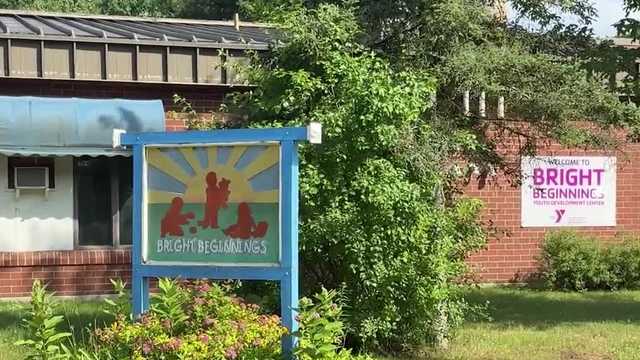
Family shares their story behind the push for the Purple Alert bill

By Rae Daniel

Click here for updates on this story

    KANSAS CITY, Missouri (KSHB) — Two-year-old Hudson loves to play games with his sisters, Abigail and Evelyn, make silly faces and share a laugh that is contagious.

“He is one of the most curious kids that I’ve ever met,” Hudson’s mom, Hali Rauer said. “He does like his routines, but he wants to explore everything and anything.”

For Hudson, communication looks a bit different. He’s nonverbal and has level three autism.

“This is how he communicates,” Rauer said. “He is learning it quite a bit at Easterseals Midwest.”

Hudson uses his AAC (Augmentative and Alternative Communication) device to communicate.

“He has learned colors and his name and family so if he’s missing family members, he can tell us,” Rauer said. “Usually, it’s ‘momma’ to go home.”

It’s one of the reasons why Rauer and Hudson’s sister, 10-year-old Abigail, testified in support of the Purple Alert bill, to be a voice for Hudson.

“Danielle posted in a group saying ‘I’m looking for volunteers, anyone with kids with autism’ so I wanted to go there and be his voice until he’s able to use his own voice with the AAC.

It’s similar to an Amber Alert, however it’s specifically designed to identify missing people with developmental disabilities.

Throughout the hearing in February, many families who testified used the word, ‘elopement.’

“Elopement happens when their nervous system goes into flight mode,” Rauer said. “It can be out of nowhere. So they can be with you, be engaged and then all of the sudden, they are off to the races and you don’t know where they’re going, you don’t know what triggered it and so they can be lost. They don’t know who to turn to because they don’t know danger so they will run towards danger. They really love water, they’re just drawn to it, so if there’s any ponds or lakes or anything around, that’s usually where they’ll go first.”

It’s what Rauer experienced with her son just a few weeks ago.

“I was actually outside with him, playing with a basketball. He was engaged with me, we were just playing and then all of a sudden what I think is he heard a car, because one of his hyper fixations is spinning wheels, he loves them, and then all of the sudden his nervous system went into flight and I feel like they go a lot faster when they’re in the flight response,” Rauer said. “I ran after him, I was able to lunge and grabbed his arm, I fell. Head hit the concrete and I was knocked out and when I came to, he was standing next to me. He really liked the blood on my face, so when I tried to stand up it started going down my face and I got a little dizzy and I started calling for help, and luckily a neighbor came out and knew about Hudson, knew about autism, so she didn’t go and grab him , she just tried to redirect him to go up to the house so I could try and stop the bleeding.”

She said the feeling was terrifying.

“There were two possibilities,” she said. “He could’ve been in front of the car, and it could’ve been the worst day of my life or it could be the second worst day of my life, the car would’ve passed, he would’ve ran, kept running and I don’t know if I would’ve come to in time and it could’ve been just word of mouth, just trying to find him and he wouldn’t of had his words.”

Rauer said without his device, he has no words.

“He can’t say my mom’s looking for me, my dad’s looking for me, I have a family, this is my address, none of that is in his vocabulary,” Rauer said. “He is completely alone.”

“It scares me every single time he runs away,” Hudson’s sister, Abigail said.

She says it’s why she uses her voice, when her brother can’t.

“He can’t stick up for himself so I want to stick up for him whenever I can,” Abigail said.

“He can’t stick up for himself so I want to stick up for him whenever I can,” Abigail said.

Please note: This story was provided to CNN Wire by an affiliate and does not contain original CNN reporting. This content carries a strict local market embargo. If you share the same market as the contributor of this article, you may not use it on any platform.
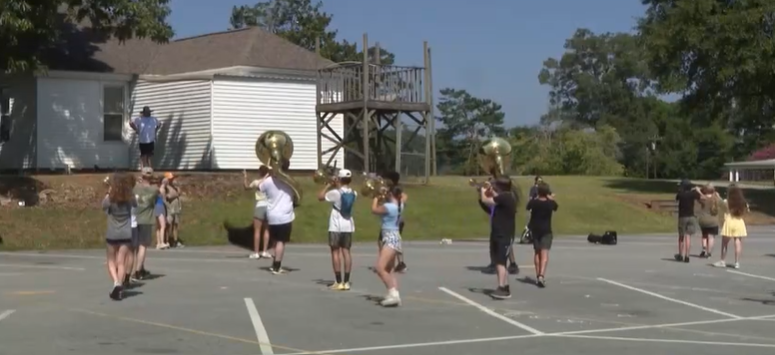
Daughter remembers father killed in North Texas tornado as family faces unimaginable loss

By Amelia Mugavero

Click here for updates on this story

    Texas (KTVT) — A 51-year-old North Texas man was killed when an EF-2 tornado tore through his family’s home over the weekend, leaving his wife and children injured and his daughter grappling with the sudden loss.

Juan Madrid, 51, was one of two people killed in Saturday’s storm in Runaway Bay. His daughter, Jackeline Madrid, said the family was inside their mobile home when the tornado hit.

“He’s gone. And I’m still in shock,” she said.

Jackeline Madrid described her father as playful and devoted, someone who was always there, even in the smallest moments.

“My dad was always playful… kind of annoying in the best way,” she said. “He’d come into my room just to bug me… and now I’d give anything to have that back. I’ll never have that again.”

She said the storm struck suddenly, lifting and flipping their home within seconds.

“Everything happened so fast… it felt like we were lifted and flipped,” she said. “I was trapped. I didn’t know what was on top of me… it was so heavy, and I just kept asking God to help us.”

In the chaos, she said she saw her father run to help her mother.

“I started calling for him… but I didn’t hear anything,” she said.

The family’s home, where they had lived for two decades, was reduced to debris. While searching through the wreckage, Jackeline Madrid said she found a small but meaningful reminder of her father.

“I found his hats, the ones he wore for fishing and for work,” she said. “I’m going to keep them.”

Jackeline Madrid said her father loved fishing and worked as a landscaper, but above all, he was devoted to his family.

“Anything I needed, I always had him… I didn’t have to worry,” she said.

Jackeline Madrid suffered a fracture and required stitches. Her mother sustained more serious injuries, and her younger brother remains hospitalized.

Despite the devastation, the family has received an outpouring of support from the community, something Jackeline Madrid said reflects who her father was.

“He always put others before himself. He loved helping people,” she said.

Please note: This story was provided to CNN Wire by an affiliate and does not contain original CNN reporting. This content carries a strict local market embargo. If you share the same market as the contributor of this article, you may not use it on any platform.
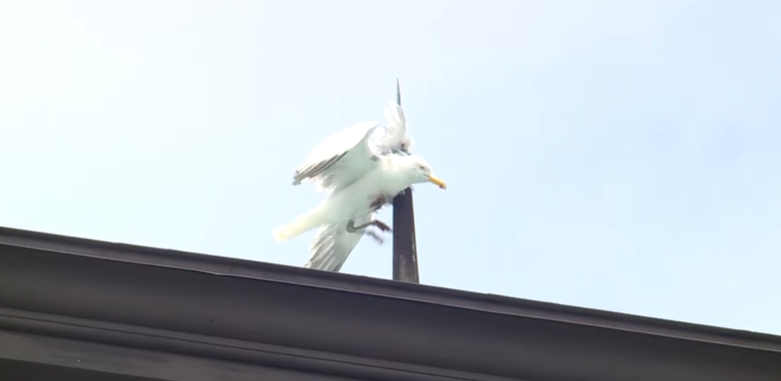
Nonprofit brings aging horses into mutually-therapeutic contact with seniors

By Nick Lunemann

Click here for updates on this story

    Minnesota (WCCO) — On a rainy spring day, residents from Friendship Village of Bloomington, Minnesota, spent time brushing, walking and connecting with horses as part of an equine-assisted therapy experience at Hold Your Horses.

The visit came ahead of Mental Health Awareness Month in May and focused on supporting emotional well-being through mindfulness, connection and hands-on interaction with animals.

For resident Karnie Moesenthin, the experience was calming.

“Calm and very, very happy, because it’s just so nice to be able to touch an animal,” Moesenthin said.

Moesenthin, who lives with Parkinson’s disease, said brushing the horses gave her a chance to do something she cannot easily do on her own.

“This is fun. It’s things that I can’t do on my own,” she said.

Hold Your Horses is a local nonprofit that provides therapy alongside horses and the natural world for people of all ages and abilities. Kenz Becco, its executive director, said the organization works with people navigating physical disabilities, trauma, grief, loss, major life transitions and other challenges.

Becco said horses can help people slow down and focus on the present moment.

“Being present, being grounded with the horses, letting the past be the past, letting the future be the future and just being in the moment,” Becco said.

According to information provided by Friendship Village, more than 5.5 million older adults in the U.S. report frequent mental distress. The World Health Organization also reports more than 14% of adults age 70 and older live with a mental health condition.

For Friendship Village residents, the visit offered a quiet way to connect with animals, nature and each other. Resident Barbara Bartholomew said the experience brought back memories from her years around horses.

“It feels good,” Bartholomew said.

Moesenthin said her favorite part was brushing the horses.

“Oh, it’s very smoothing, very soothing. It’s just, it’s soft,” she said.

Hold Your Horses offers programs for people of all ages, including children, adults and seniors. With its herd of therapy horses aging, the organization is working to bring in new horses to continue providing services in the years ahead.

Please note: This story was provided to CNN Wire by an affiliate and does not contain original CNN reporting. This content carries a strict local market embargo. If you share the same market as the contributor of this article, you may not use it on any platform.
Construction contractors agree to giving more than $1M in back pay for denying overtime, other wages

By Esme Murphy

Click here for updates on this story

    Minnesota (WCCO) — More than $1 million will be repaid to construction workers in one of the largest settlements of its kind in Minnesota history.

The consent decree spells out the back pay 26 workers will get for work they should have been paid between 2019 and 2023.

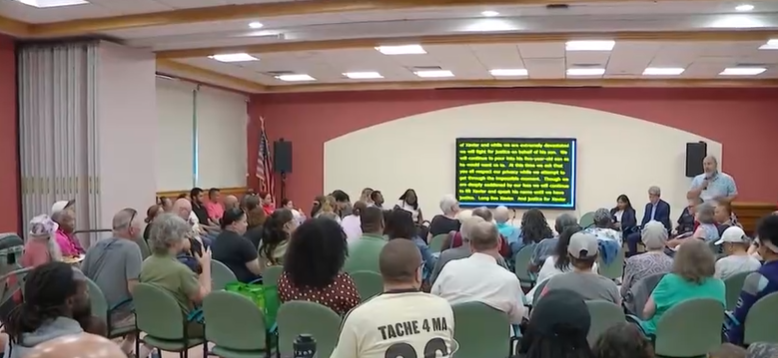
“When wages are stolen, it hurts the families of the workers. The taxes that are not paid on those wages hurts taxpayers who have to pick up the tab and it hurts workers who play by the rules,” attorney Burt Johnson said.

One construction company owner explained how wage theft hurts her business, saying she loses out on contracts that are underbid because the company plans to cheat.

“When contractors commit wage theft or misclassify workers, what many of us call employment fraud, they are not competing on skill. They are competing on whether they can get away with breaking the law,” Katie Kunshier, CEO of Crossroad Construction, said.

There were 19 projects investigated, including the development of the Viking Lakes project in Eagan.

“Advantage Construction Inc. agreed to pay full back wages in the amount of $1.24 million,” said Nicole Blissenbach, commissioner of the Minnesota Department of Labor and Industry. “They were the first-tier contractor that hired PMC. PMC agreed to pay $39,000 in liquidated damages.”

The most common methods of wage theft include not paying overtime and misclassifying employees as contractors, so they earn less.

More recent laws will hold not just contractors but developers responsible. Several people at Monday’s press conference on the settlement say they are optimistic there will be more large settlements in the future because of those laws.

Please note: This story was provided to CNN Wire by an affiliate and does not contain original CNN reporting. This content carries a strict local market embargo. If you share the same market as the contributor of this article, you may not use it on any platform.

5 bald eagles found dead in Michigan’s Upper Peninsula, prompting DNR investigation

By Paula Wethington

Click here for updates on this story

    Michigan (WWJ) — State wildlife officials are seeking information on why multiple eagles were recently found dead in an area of Michigan’s Upper Peninsula.

The Michigan Department of Natural Resources says a total of five deceased eagles were found between April 3 and April 17 in Garden Peninsula, an area that includes part of Delta County. It is bordered by Lake Michigan to the east and Big Bay de Noc to the west.

“We can confirm that the eagles did not die from natural causes, predators or vehicle collisions,” said First Lt. Mark Zitnik, a DNR law enforcement supervisor in Newberry.

The question remains: what killed the birds?

Michigan was home to about 900 breeding pairs of bald eagles in 2023, according to Bird Chronicle. They can be seen in areas such as Pointe Mouille State Game Area in South Rockwood and Maple River State Game Area in East Lansing.

Hazards to the species that were previously documented in Michigan include poisoning via mercury-contaminated fish, along with lead-related poisoning.

State officials ask that anyone who has information about the series of Upper Peninsula eagle deaths send those tips via the DNR’s poaching tipline, call or text 800-292-7800. The U.S. Fish and Wildlife Service, along with local tribes, is assisting the DNR in the investigation.

Eagles are a federally protected species, the DNR says. Penalties for interfering with the birds can include 90 days in jail, fines of up to $1,000, and a reimbursement of $1,500 per eagle.

Please note: This story was provided to CNN Wire by an affiliate and does not contain original CNN reporting. This content carries a strict local market embargo. If you share the same market as the contributor of this article, you may not use it on any platform.

Car slams into home on Detroit’s west side, bursts into flames

By Gino Vicci

Click here for updates on this story

    DETROIT, Michigan (WWJ) — Detroit police said a reckless driver lost control and slammed into a home on the city’s west side, causing the vehicle and the home to erupt in flames on Sunday afternoon.

Police said the fiery crash happened at a home on the corner of Puritan and Harlow avenues.

“When I heard the second boom, I thought, ‘Oh, this is serious, cause we felt it,'” said Anthony Harris, who lives next door.

Harris captured footage from his Ring doorbell camera moments after the crash occurred.

After hearing the loud crashes, Harris said he ran outside to see what it was.

Detroit police said a man in his 20s sideswiped an oncoming vehicle on Puritan and then lost control, crashing into the home. Seconds later, Harris said the car and the house erupted in flames.

“I was looking to see had anybody gotten hurt, but the flames were just tremendous, ’cause you could feel the heat from here,” Harris said.

On Monday afternoon, crews from DTE Energy, the Detroit Fire Department and contractors worked to secure the structure of the home and turn off utilities.

Detroit police said the family living there was not home at the time, and the driver of the vehicle suffered only minor injuries.

“This is totally unbelievable,” said Stephen Grady Muhammad, a community activist with Detroit 300.

Grady Muhammad said he stopped by the home to check on the family and to offer any support they need. He also said what happened is unacceptable and drivers have to be more responsible, especially in neighborhoods with lots of children.

“Think about what you’re doing; it’s ok to have fun out here, but you got to be careful in everything you do because your fun can end up harming somebody else,” Grady Muhammad said.

Moving forward, Harris said something has to be done about speeding here on Puritan and is making a plea — a plea for everyone to slow down.

“Speed kills. You got to come through here like you got some sense; people be flying through here,” Harris said.

Please note: This story was provided to CNN Wire by an affiliate and does not contain original CNN reporting. This content carries a strict local market embargo. If you share the same market as the contributor of this article, you may not use it on any platform.